
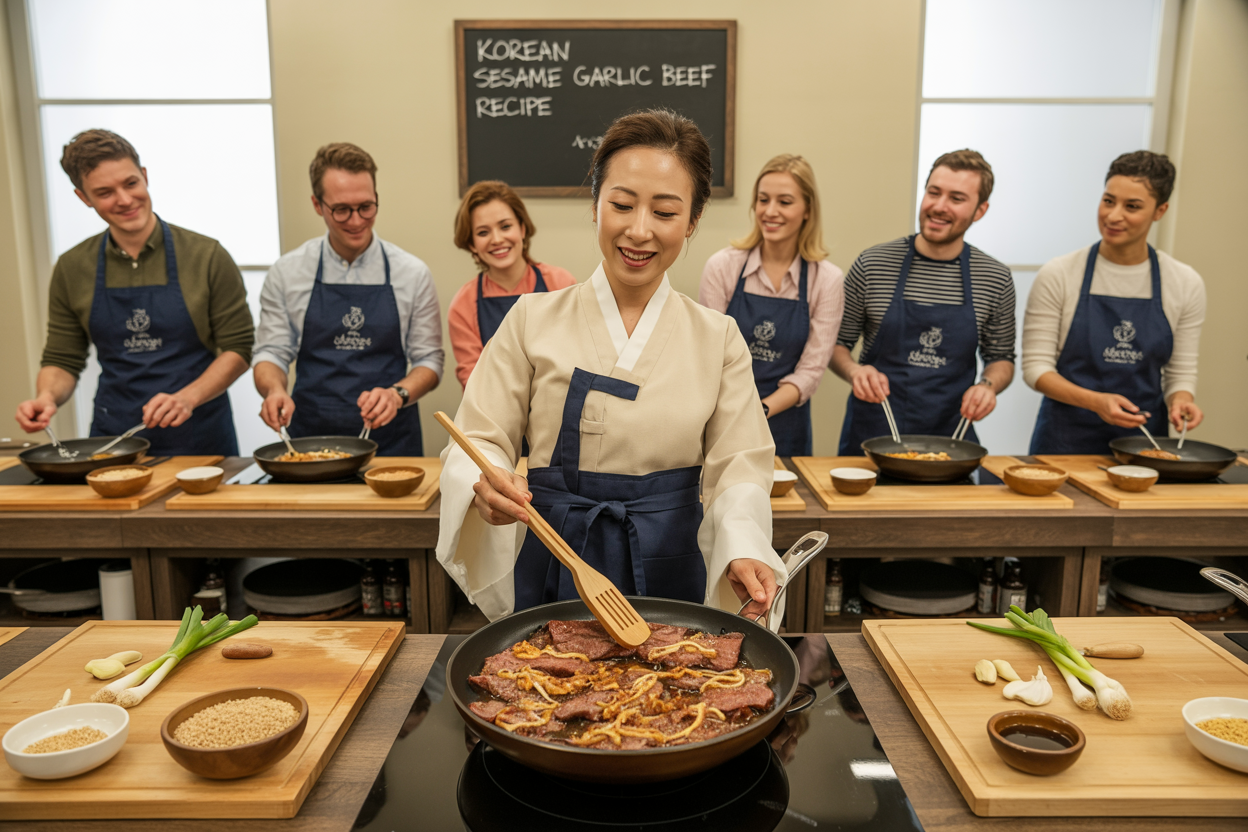
Alright, I’ll admit it—when I first heard about Korean Sesame Garlic Beef, also called yukhoe, the thought of eating raw beef kinda freaked me out. Korean Sesame Garlic Beef is a traditional Korean raw beef dish, seasoned up with sesame oil, garlic, soy sauce, and sugar. You’ll usually see it topped with a raw egg yolk and skinny slices of Korean pear. Picture steak tartare but with way more garlic and a sweet-savory punch that’s honestly pretty addictive.
This isn’t just some trendy experiment. Korean Sesame Garlic Beef has deep roots in Korean cuisine, and after one bite, you’ll get why it’s stuck around so long. The cold, tender raw beef seasoned with sesame oil and garlic gives you a nutty, garlicky flavor that’s just different from anything else.
If you’re nervous about making raw beef at home, I totally get it. But with the right cut and a little care, you can whip up Korean Sesame Garlic Beef in your kitchen. It takes about 20 minutes, which is honestly less time than I spend watching YouTube recipe videos.
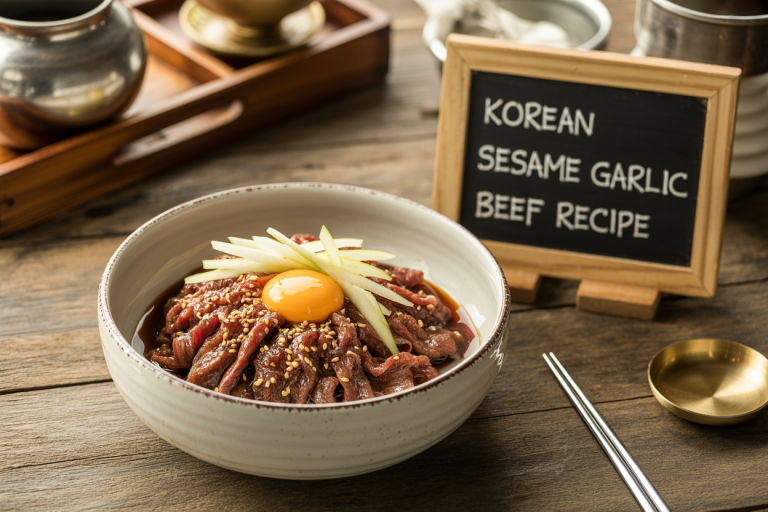
Korean Sesame Garlic Beef Recipe
Key Takeaways
- Korean Sesame Garlic Beef is a raw beef dish with sesame oil, garlic, and soy sauce, served cold with egg yolk and pear.
- You need high-quality beef and good food safety habits to make Korean Sesame Garlic Beef at home.
- You can tweak your Korean Sesame Garlic Beef with different toppings, but the sesame-garlic base is key.
A Culinary Time Machine: History & Backstory
Honestly, when I found out Korean Sesame Garlic Beef has royal 17th-century origins, I felt a little fancy just reading about it. This wasn’t a dish for regular folks to make after work—it was part of royal court cuisine, reserved for kings who liked their beef raw and their dinners extra special.
According to a 19th-century cookbook called Siuijeonseo, the prep was serious business. Thin beef slices got soaked to remove blood, then shredded and marinated with spring onion, garlic, pepper, oil, honey, pine nuts, sesame, and salt. I mean, my meal prep is nowhere near this detailed.
Now, Korean Sesame Garlic Beef is way more accessible. You’ll see it as anju—those tasty Korean dishes meant to go with soju. I love that what was once a royal treat is now perfect with Korea’s favorite booze.
Where to Find It:
- Gwangjang Market (Seoul’s street food heaven)
- Traditional Korean restaurants
- Modern Korean BBQ joints
The Korean beef traceability system keeps track of quality from farm to table. So now, I can eat Korean Sesame Garlic Beef without wondering if my beef had a sketchy backstory. It’s like the royal standards never left, just with more paperwork.
Tips for Nailing Your Korean Sesame Garlic Beef
Let me save you from my rookie mistakes—making good Korean Sesame Garlic Beef takes more than just tossing raw beef on a plate.
First rule: always use tenderloin. I tried a cheaper cut once, and it was like chewing on a shoe. Tenderloin is tender (surprise!) and safe for raw dishes like Korean Sesame Garlic Beef.
The raw egg yolk goes on top right before you dig in. I made the mistake of mixing it in early, and ended up with beef soup. Don’t be me.
Here’s what you need, no shortcuts:
- Toasted sesame oil (not the regular stuff—trust me, it matters)
- Fresh minced garlic (skip the jarred stuff)
- Good soy sauce
- Korean pear cut into skinny matchsticks for crunch
- Sesame seeds to sprinkle on top
I pop my beef in the freezer for about 30 minutes before slicing. It firms up just enough for thin, clean cuts—no mushy mess.
The pear matchsticks should be thin and crisp. They bring a sweet bite that really makes Korean Sesame Garlic Beef pop. When I skip it, the dish feels incomplete.
Mix the sesame oil, garlic, and soy sauce before you add the beef. That way, every piece gets coated. And please, use toasted sesame oil—the flavor is totally different, and regular oil just doesn’t cut it for Korean Sesame Garlic Beef.

Plot Twists: Fun Variations to Try
I’ve had plenty of Korean Sesame Garlic Beef bibimbap adventures, and honestly, this dish loves a remix. The classic is awesome, but sometimes you just want to switch things up.
Protein Swaps That Work
If you can’t get tenderloin, don’t worry. I’ve made Korean Sesame Garlic Beef with sirloin and flank steak, and both worked well. Just make sure your beef is super fresh and safe to eat raw.
Fruit Experiments Gone Right
No Korean pear? I’ve swapped in bosc pear, and honestly, nobody noticed. The crunch and sweetness are pretty much the same in Korean Sesame Garlic Beef.
Spicy Situation
Want heat? Stir in a little gochujang to your seasoning for a spicy-sweet kick. It adds a whole new layer to Korean Sesame Garlic Beef.
Creative Serving Ideas
- Korean Sesame Garlic Beef tacos: Scoop the seasoned beef into lettuce cups or tortillas
- Bibimbap style: Pile it on warm rice with veggies and a fried egg
- Fancy garnish: Switch sesame seeds for toasted pine nuts, and throw on some green onion
My favorite twist? More garlic. Korean Sesame Garlic Beef can’t have too much. And pine nuts add this buttery crunch that just feels a little extra.
Keeping It Fresh: Clever Storage Solutions
I’ve learned the hard way that raw beef doesn’t play around with freshness. Since Korean Sesame Garlic Beef is a raw beef dish seasoned with sesame oil and garlic, you really have to be careful with storage.
Refrigerator Storage
I keep my Korean Sesame Garlic Beef in an airtight container in the coldest part of my fridge. My rule? Eat it within 24 hours, but honestly, same-day is best.
For the ingredients, I stash them separately:
- Raw beef: Keep it in the original wrap or tightly sealed on the bottom shelf
- Korean pear: Store whole in the crisper until you need it
- Garlic and aromatics: Keep away from the raw meat in a small container
The Golden Rules
Never leave Korean Sesame Garlic Beef or any raw beef out for more than 30 minutes. I set a timer because I always lose track of time.
Cross-Contamination Prevention
I use separate boards and knives for raw beef and everything else. My color-coded system (red for meat, green for produce) has saved me from a few disasters.
If you mix up the sesame oil and soy sauce ahead, keep it in a jar in the fridge for up to three days. Only mix it with the beef when you’re ready to eat Korean Sesame Garlic Beef.
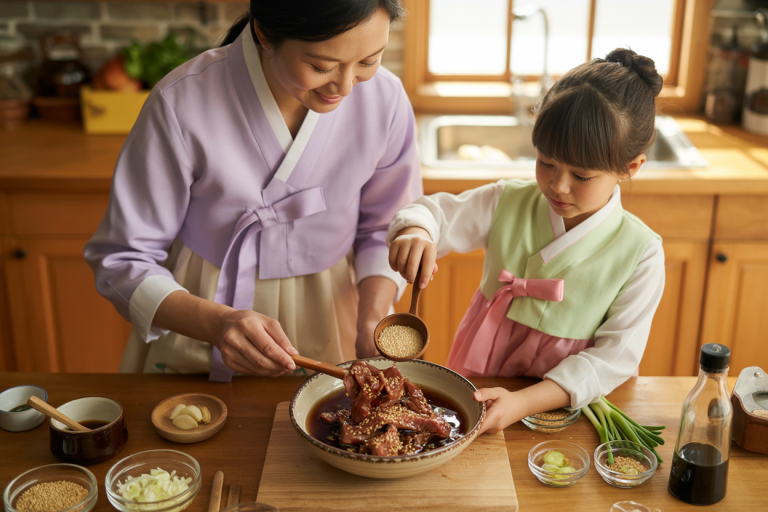
Korean Sesame Garlic Beef Recipe – Prep
Preparation Tips For the Korean Sesame Garlic Beef (Yukhoe)
• Use only very fresh, high-quality beef obtained from a trusted source suitable for raw preparation.
• Keep the beef refrigerated until immediately before preparation.
• Slice the beef thinly and evenly for consistent texture.
• Use clean utensils and preparation surfaces to reduce contamination risk.
• Mix seasonings gently so the beef maintains its texture.
• Prepare the dish close to serving time for the best quality.
• Keep the beef cold throughout preparation and serving.
• Taste seasonings carefully before serving and adjust if needed.
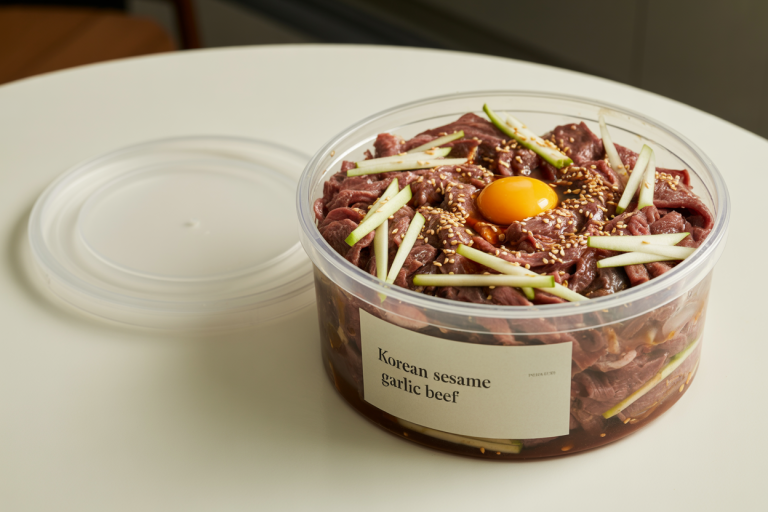
Korean Sesame Garlic Beef Recipe – Storage
Storage Tips For the Korean Sesame Garlic Beef (Yukhoe)
• Consume the prepared dish as soon as possible after preparation.
• Keep the beef refrigerated at all times before serving.
• Do not leave raw beef at room temperature for extended periods.
• Store leftovers only if absolutely necessary and keep them refrigerated immediately.
• Use airtight containers if storing briefly before consumption.
• Do not freeze prepared yukhoe expecting the same texture after thawing.
• Avoid repeated temperature changes because they increase food safety risks.
• Keep raw beef separate from ready-to-eat foods during storage.
• Follow all applicable food-safety guidelines for handling raw beef.
• Discard the beef immediately if it develops an off odor, slimy texture, discoloration, or any sign of spoilage.
Korean Sesame Garlic Beef (Yukhoe)
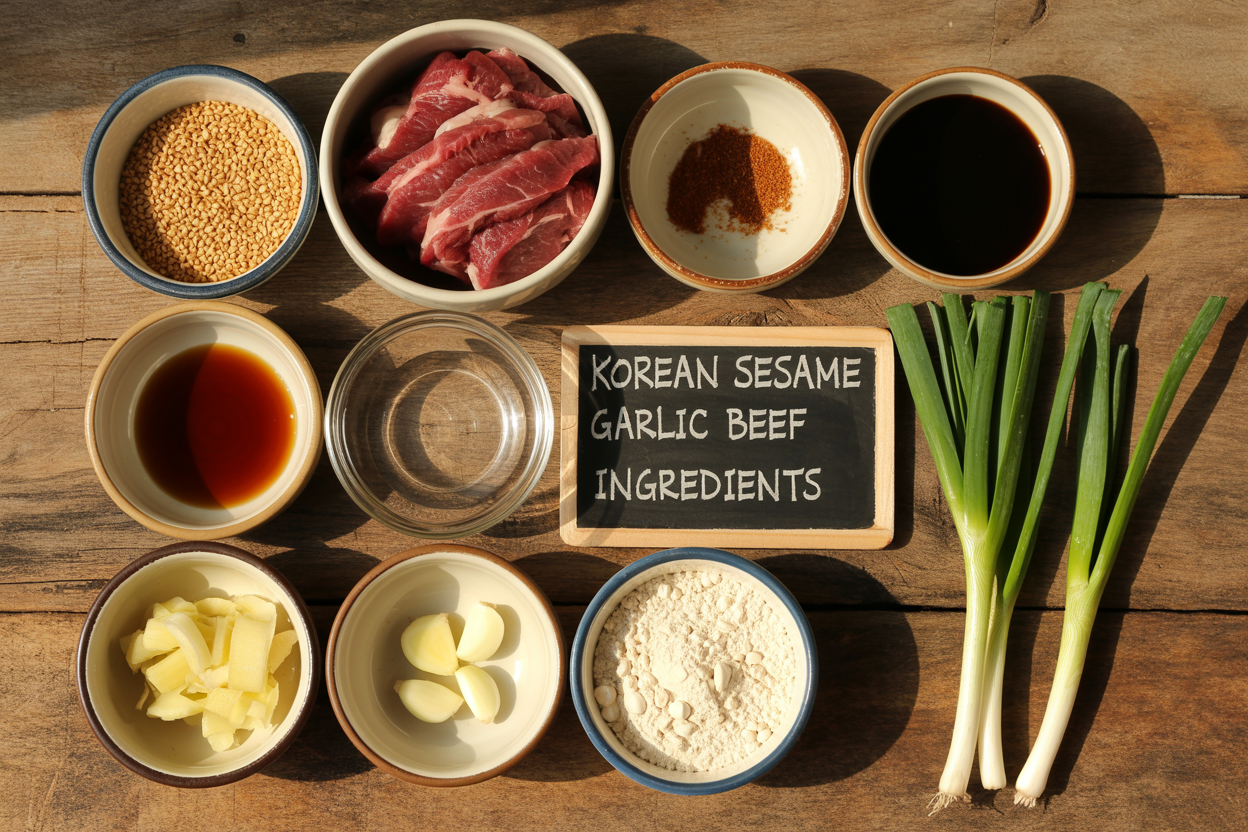
Ingredients
- 4 tbsp sesame seeds toasted
- 3 lb beef sirloin tip roast top round roast or chuck roast, sliced into thin strips (or chunks)
- 1/2 cup brown sugar
- 1/2 cup soy sauce
- 1/2 cup water
- 1/4 cup sesame oil
- 2 tbsp ginger freshly grated
- 6 cloves garlic minced
- 2 tbsp all-purpose flour
- 4-6 stalks green onions sliced thinly
Instructions
- If the sesame seeds are not already toasted, place them in a dry skillet over medium heat and cook while stirring frequently until they become lightly browned and fragrant. Watch them carefully to prevent burning. Once toasted, divide the seeds into two portions and set them aside for later use.
- Slice the beef into thin strips and place it in a large bowl. In a separate bowl, combine the brown sugar, soy sauce, water, sesame oil, half of the toasted sesame seeds, ginger, garlic, and flour. Stir until the marinade is smooth and well blended. Pour the mixture over the beef and mix thoroughly so all of the meat is evenly coated. Cover and refrigerate for several hours or overnight for the best flavor. If time is limited, allow the beef to marinate for at least 1 hour.
- Transfer the marinated beef and all of the marinade to the Instant Pot. Secure the lid and make sure the valve is set to the sealing position. Select the Manual setting and cook on high pressure for 20 minutes. If using larger beef chunks instead of thin strips, increase the cooking time to about 35 minutes. Once the cooking cycle is complete, allow the pressure to release naturally before carefully removing the lid.
- If you prefer a thicker sauce, switch the Instant Pot to the Sauté setting after opening the lid. Allow the cooking liquid to simmer until it reduces slightly and reaches your desired consistency, stirring occasionally as it thickens.
- Transfer the cooked beef to a serving dish and sprinkle it with the remaining toasted sesame seeds and sliced green onions. Serve immediately while hot alongside steamed rice.
Frequently Asked Questions
Raw beef sounds risky, but Korean Sesame Garlic Beef uses specific prep and ingredients to keep it safe and seriously tasty when done right.
How do you pronounce “yukhoe” without summoning a Korean grandma’s side-eye?
So, yukhoe is pronounced “yuk-hø”, with a soft “ø” at the end—kind of like “uh” and “oh” mixed together. The “yuk” rhymes with “book” if you say it quickly.
No need to stress about nailing it. Most Korean restaurant staff have heard every version, and nobody’s judging your attempt at ordering Korean Sesame Garlic Beef.
What ingredients do you need for a proper sesame-garlic raw beef situation (and what’s just wishful thinking)?
For real Korean Sesame Garlic Beef, I grab fresh beef tenderloin or rump, sliced thin, plus sesame oil, soy sauce, minced garlic, sugar, and salt. Most recipes add a raw egg yolk and Korean pear slices on top.
Sesame seeds are a nice touch. Some add chili for heat, but that’s not the classic Korean Sesame Garlic Beef.
The wishful part? Thinking any grocery store beef will do. You need the freshest, highest-quality cuts for Korean Sesame Garlic Beef—this isn’t the time to cut corners.
How do you make raw beef taste ridiculously good in a yukhoe-style recipe?
The beef gets tossed with sesame oil, soy sauce, garlic, and sugar to create that rich umami flavor. When you add sesame oil, you get this nutty vibe, and the soy sauce brings a salty depth that just works. Honestly, Korean Sesame Garlic Beef is one of those dishes that surprises you with every bite.
I like to slice the beef into thin matchsticks or strips so the marinade coats every piece. Korean Sesame Garlic Beef needs that even coverage. The Korean pear? It adds this crisp, sweet bite that balances out all the richness in the Korean Sesame Garlic Beef.
And that raw egg yolk on top—don’t skip it. Once you mix it in, Korean Sesame Garlic Beef turns creamy and just a little decadent. I can usually prep the whole thing in about 20 minutes if I have everything ready to go.
Is it actually safe to eat raw beef at home, or is this how my fridge becomes a villain origin story?
Eating raw beef at home is safe if you stick to proper food safety rules. You need to buy the freshest beef from a trusted butcher or a place you really trust. Keep it cold until you’re ready, and use it right away for your Korean Sesame Garlic Beef.
Trim off all the fat, tendons, and sinew before slicing. I always grab a clean cutting board and knife that haven’t touched anything else. Korean Sesame Garlic Beef is all about freshness and clean prep.
If the beef has been chilling in the fridge for a few days or smells off, just toss it. Fresh is fresh—no room for “maybe it’s fine” with Korean Sesame Garlic Beef.
What makes yukhoe safer than “I ate mystery tartare and now I regret everything”?
Korea has a Beef Traceability System that monitors quality from farm to table, which means the beef in restaurants is usually super safe. At home, Korean Sesame Garlic Beef gets safer when I pick premium cuts and handle them with care.
Is yukhoe safe? Well, it’s definitely safer than eating random raw beef. The freshest cuts like tenderloin are carefully trimmed to remove any questionable outer layers. Prepping and eating Korean Sesame Garlic Beef right away helps keep bacteria at bay.
I never let Korean Sesame Garlic Beef sit out. If I’m making it at home, I keep the beef ice-cold until it’s time to eat, and then I dig in immediately. Korean Sesame Garlic Beef is best when it’s fresh—no exceptions.
Where can you find a good spot to eat this near you without accidentally ordering something totally different?
If I’m craving Korean Sesame Garlic Beef, I start by looking for Korean restaurants that list yukhoe or beef tartare right on their menu. Usually, Korean BBQ places throw it in as an appetizer or a little side, which is always a nice surprise.
Honestly, I just call ahead. Not every Korean spot serves raw beef dishes, and I don’t want to end up with something random when I’m really just after Korean Sesame Garlic Beef. I make sure to ask for “yukhoe” or “Korean beef tartare,” so there’s no mix-up.
In Korea, especially around Seoul, you’ll find some of the best yukhoe places—it’s kind of their specialty. But if I’m outside Korea and still hunting for that perfect Korean Sesame Garlic Beef, I’ll scroll through reviews to see if anyone actually mentions the raw beef dishes being fresh and worth it. Trust me, nothing ruins your day like ordering Korean Sesame Garlic Beef and getting something else entirely.

Recipes are gathered in person and written for real-world cooking conditions.
- 10 Hungarian Dessert Recipes Passed Down Through Generations - July 25, 2026
- 11 Easy English Recipes Anyone Can Make - July 25, 2026
- Hungarian Kifli Recipe - July 25, 2026