
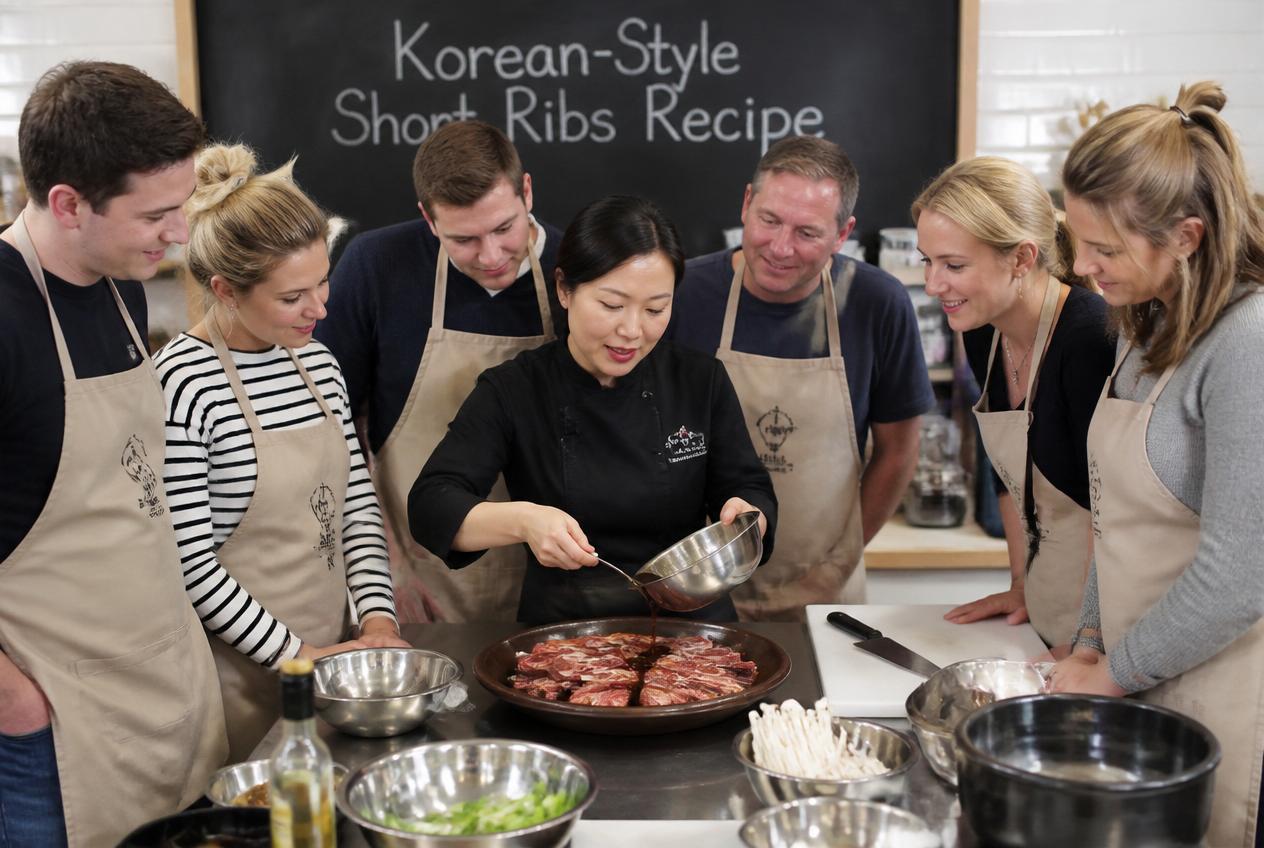
Korean BBQ Short Ribs, known as kalbi or galbi, are thin-sliced beef short ribs marinated in a sweet and savory sauce, then tossed right onto a hot grill. The meat gets cut lengthwise across the rib bones in that classic style, making tender, flavorful strips that just beg for a char. I’ve made these Korean BBQ Short Ribs more times than I can count, and honestly, folks always think I’m some kind of grill master—even though they’re way easier than they look.
Kalbi short ribs have a wild flavor profile—sweet, salty, fruity, umami, all coming together in a caramelized crust once you grill them. The marinade usually has soy sauce, garlic, toasted sesame oil, and sometimes fruit like pear or apple to help tenderize. Korean BBQ Short Ribs are a staple at Korean BBQ joints, but honestly, you can get that same crave-worthy taste at home without dropping a bunch of cash.
The best part? Korean BBQ Short Ribs only need about 5 minutes to prep the marinade and maybe 10 minutes on the grill. I like to marinate mine overnight, which gives me time to daydream about all the compliments I’ll get. Whether you grill, broil, or even air fry, you’ll get those restaurant vibes at home—no reservations needed.
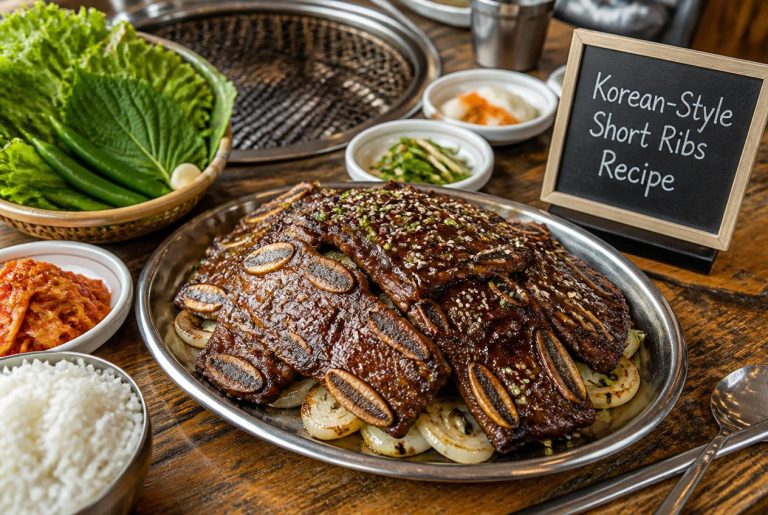
Korean-Style Short Ribs Recipe
Key Takeaways
- Korean BBQ Short Ribs are thin-cut, marinated in a sweet and savory sauce, and get that killer caramelized flavor when cooked hot
- The marinade is super quick to make and works best if you let the meat sit overnight or up to three days
- You can grill, broil, or air fry Korean BBQ Short Ribs—whatever suits your mood and setup
A Brief History Of Melting Taste Buds: The Origins Of Kalbi
Let’s talk about how galbi became a staple in Korean cuisine. “Galbi” literally just means “rib” in Korean, which makes sense—I mean, who doesn’t love a good rib?
This dish goes way back in Korea. Traditionally, families would make Korean BBQ Short Ribs for celebrations and big gatherings. I can almost picture someone looking at beef short ribs and thinking, “You know what? These need a sweet and savory soak before they hit the grill.”
Key Components That Made Kalbi Famous:
- The Meat: Beef short ribs, cut from the rib section
- The Magic Marinade: Soy sauce, sugar, garlic, and toasted sesame oil
- The Method: Grilling over open flames
The dish really blew up in the 20th century. Korean BBQ spots started popping up everywhere, and Korean BBQ Short Ribs became the main event. People loved grilling their own meat at the table—honestly, it’s just fun.
What’s kind of wild is that Korean short ribs evolved differently depending on where you were. In Southern California, folks cut the ribs thinner across the bone, while in Korea, they kept them thicker and cut alongside the bone. Both are delicious. Don’t make me pick a favorite—that’s like choosing your favorite song.
The magic of Korean barbecue is how it turned a humble cut into a global obsession. Now, Korean BBQ Short Ribs have fans everywhere, and honestly, who can resist those caramelized, smoky edges?
Secrets For Achieving Ultimate Kalbi Greatness
Here’s what I’ve learned: the magic of Korean BBQ kalbi starts with the right cut. You want flanken-cut beef short ribs, sliced thin across the bone. Regular short ribs? Nope, they just don’t hit the same.
The marinade is where you can really show off. I always go for toasted sesame oil instead of the plain stuff—it adds a nutty depth that makes people think I know ancient Korean secrets. My go-to marinade for Korean BBQ Short Ribs is soy sauce, sugar, garlic, and a little Asian pear or kiwi for that natural tenderizing magic.
Marinating time is everything:
- Minimum: 4 hours
- Ideal: overnight (12-24 hours)
- Maximum: 48 hours (any longer and the meat gets weirdly mushy)
I’ve rushed this and ended up with sad, bland Korean BBQ Short Ribs. Don’t do it. Give them time to soak up all that flavor.
When it’s time to grill, I crank up the heat. These flanken-cut Korean BBQ Short Ribs are thin, so they need just 2-3 minutes per side. I keep a close eye because the sugar in the marinade can go from perfect to burnt faster than you’d think.
One trick: I always save a little marinade before adding the raw meat. I boil it separately and brush it on during the last minute of grilling. That’s how I get my Korean BBQ Short Ribs looking glossy and caramelized—makes everyone think I know what I’m doing.
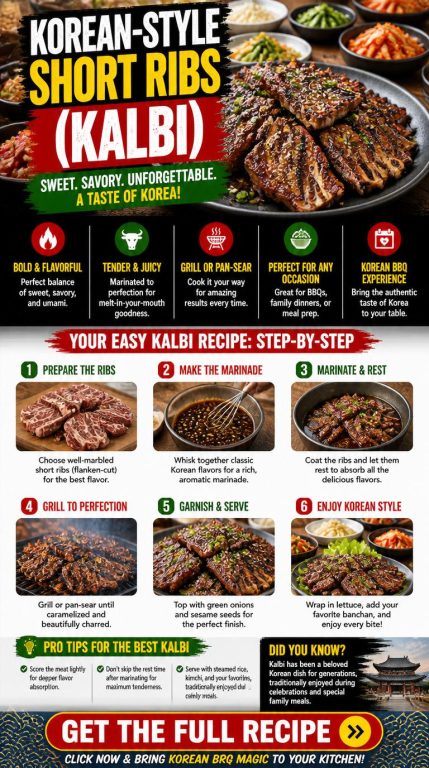
Kalbi With A Twist: Unexpected Variations
I’ve realized that traditional kalbi marinades are just the start. Sure, the classic sweet and savory combo is great, but sometimes I want to shake things up when I make Korean BBQ Short Ribs.
Some of my favorite twists on Korean BBQ Short Ribs:
- Gochujang Kalbi – Toss in some Korean chili paste for a spicy kick. It wakes up your taste buds, seriously.
- Pineapple Kalbi – Pineapple juice helps tenderize and adds a tropical vibe. It’s kind of addictive.
- Coffee Kalbi – Espresso in the marinade sounds odd, but it gives Korean BBQ Short Ribs a deep, almost smoky richness.
- Miso Kalbi – White miso paste brings extra umami. People always ask what the secret is.
Sometimes I skip the grill and use my air fryer for Korean BBQ Short Ribs when I’m not feeling the whole outdoor BBQ thing. I know some folks slow-cook their ribs, but honestly, that feels like cheating to me.
Mixing up the twists is where things get fun. Gochujang-pineapple kalbi tastes like a vacation. Coffee-miso kalbi? My kitchen ends up smelling like a fancy steakhouse.
My rule: if it sounds tasty, it’ll probably work with Korean BBQ Short Ribs. These flanken-cut short ribs can handle whatever wild ideas you throw at them.
How To Store Kalbi Without Attracting Hungry Roommates
Storing Korean BBQ Short Ribs takes some strategy. The smell alone wakes up anyone in the house.
Here’s what works for me: I use airtight containers with locking lids—seriously, double-seal if you can. Glass is better than plastic since it doesn’t grab onto the smell.
Hide cooked Korean BBQ Short Ribs in the back of the fridge so nobody spots them during late-night snack raids. I left mine out front once and, well, let’s just say I went hungry.
For raw marinated ribs, I use heavy-duty freezer bags and squeeze out all the air. I stash them in the veggie crisper—nobody checks there.
If you’re prepping grilled Korean BBQ Short Ribs for the week, label the container with something boring like “leftover liver” or “experimental tofu.” It’s not exactly honest, but hey, you gotta protect your stash.
The fridge shelf matters too. I keep my Korean BBQ Short Ribs on the top shelf in the far back. Most people won’t bother looking that deep.
Cooked Korean BBQ Short Ribs last 3-4 days in the fridge if you store them right. Marinated raw ribs stay good for up to 3 days. If you need to keep them longer, freeze them for up to 3 months in a solid freezer bag.
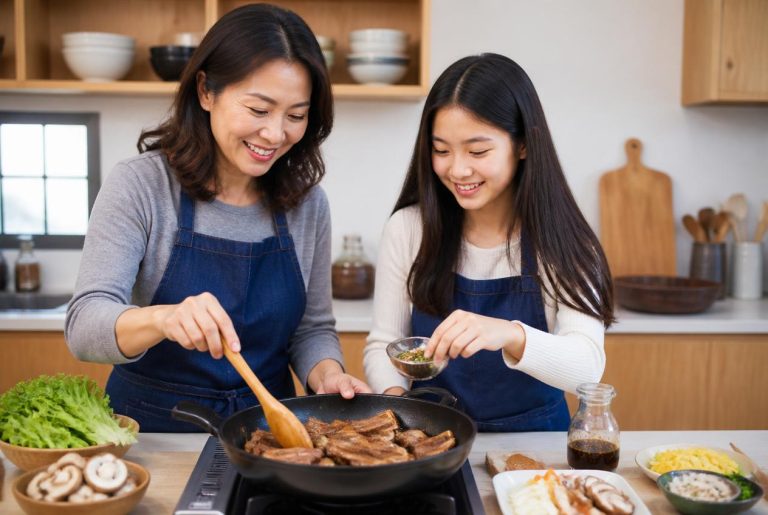
Korean-Style Short Ribs Recipe – Prep
Cooking Tips For the Korean BBQ Short Ribs (Kalbi)
• Marinate the short ribs long enough so the flavors penetrate the meat evenly.
• Pat excess marinade from the surface before grilling to help reduce burning.
• Cook over medium-high heat for better caramelization and grill marks.
• Turn the ribs frequently for even cooking and color.
• Avoid overcrowding the grill because excess moisture reduces browning.
• Allow the ribs to rest briefly after cooking so the juices redistribute.
• Taste before serving and adjust seasoning carefully if needed.
• Serve the kalbi hot for the best texture and flavor balance.
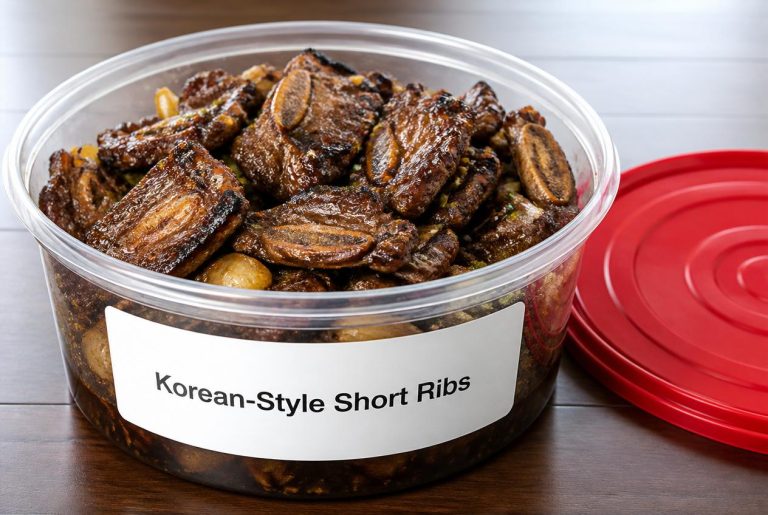
Korean-Style Short Ribs Recipe – Storage
Storage Tips For the Korean BBQ Short Ribs (Kalbi)
• Allow the ribs to cool slightly before transferring them into storage containers.
• Store leftovers in airtight containers to help retain moisture and flavor.
• Refrigerate leftovers within 2 hours of cooking for proper food safety.
• Reheat gently over medium-low heat to help prevent the meat from drying out.
• Add a small splash of broth during reheating if needed.
• Keep lettuce wraps, rice, and garnishes separate until serving time.
• Freeze cooked ribs in freezer-safe containers for up to 3 months if needed.
• Wrap portions tightly before freezing to help reduce freezer burn and moisture loss.
• Thaw frozen kalbi overnight in the refrigerator before reheating.
• Discard the ribs if they develop a sour smell, slimy texture, discoloration, mold, or unusual taste.
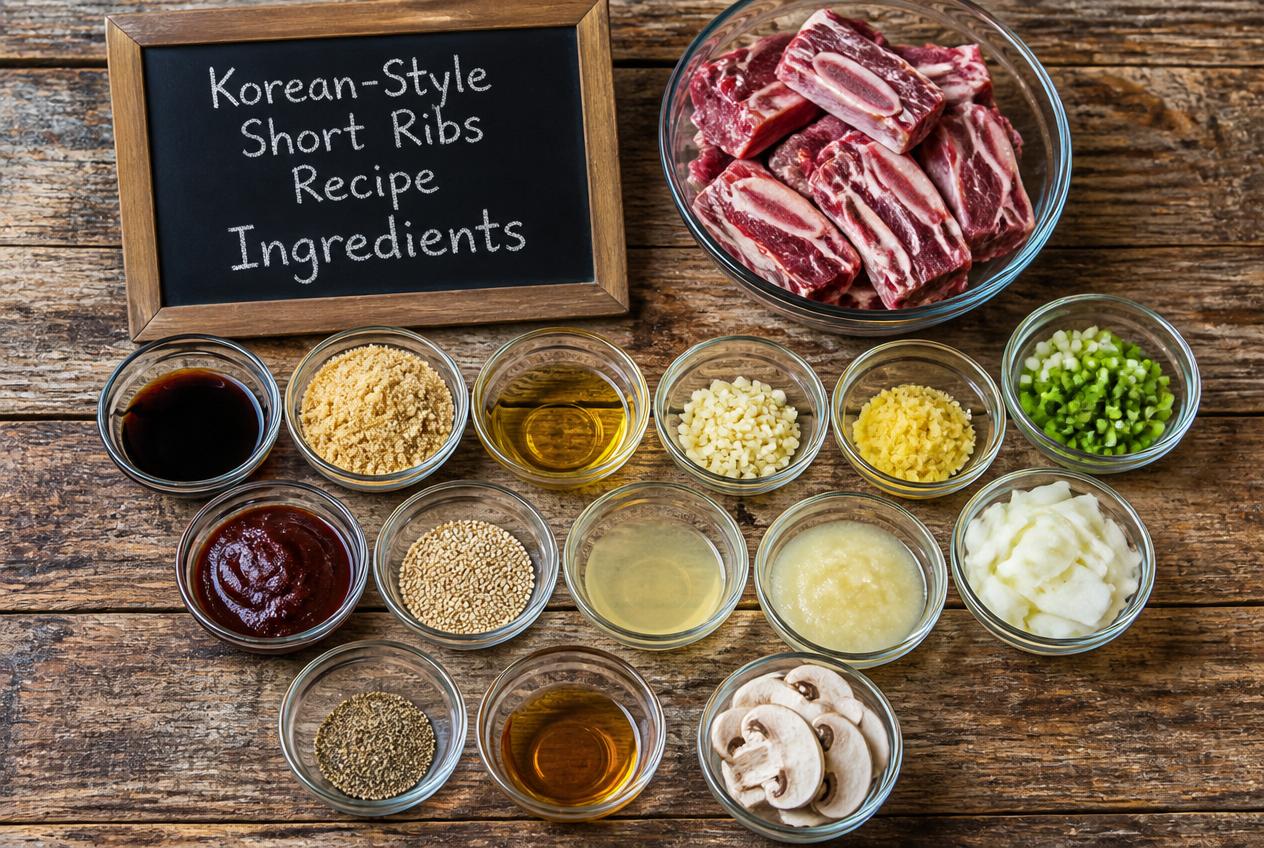
Korean BBQ Short Ribs (Kalbi)
Ingredients
- 2 pounds beef short ribs beef chuck flanken, cut ⅓ to ½ inch thick across bones
- ¾ cup soy sauce
- ¾ cup brown sugar
- ¾ cup water
- 2 green onions chopped
- 1 garlic clove minced
- 1 tablespoon sesame oil toasted Asian sesame oil
Instructions
- Gather all of the ingredients and combine the soy sauce, brown sugar, water, green onions, garlic, and sesame oil in a large bowl. Stir well until the brown sugar is fully dissolved and the marinade is smooth and evenly mixed.
- Place the short ribs into a large resealable plastic bag and pour the marinade over the meat. Seal the bag after pressing out as much excess air as possible. Turn the bag several times to ensure the ribs are evenly coated, then place it in the refrigerator for 3 hours. During the marinating time, the beef will absorb the sweet and savory flavors of the sauce.
- Preheat an outdoor grill to medium-high heat. Once heated, lightly oil the grill grate to help prevent the meat from sticking during cooking.
- Remove the ribs from the marinade and allow any excess marinade to drip off. Discard the used marinade. Arrange the ribs on the hot grill and cook for 5 to 7 minutes per side. The beef should develop a lightly charred exterior while remaining slightly pink near the bone without being bloody. Monitor the ribs closely, as the sugars in the marinade can caramelize quickly.
- Transfer the grilled short ribs to a serving platter and serve immediately while hot. These ribs pair well with rice, lettuce wraps, and a variety of Korean side dishes.
Frequently Asked Questions for the Korean BBQ Short Ribs (Kalbi)
Getting Korean BBQ Short Ribs just right means knowing your marinade, timing, and how to handle the grill. Here are some of the questions I get most about making these sweet and savory ribs at home.
What’s the secret to a kalbi marinade that makes the neighbors “accidentally” show up at dinner time?
Honestly, it’s all about the combo: soy sauce, brown sugar, toasted sesame oil, garlic, and Asian pear. I just blend them together and let the Korean BBQ Short Ribs soak it up.
Asian pear brings natural enzymes that break down the meat and add a subtle sweetness. I’ll sometimes splash in a little sake or mirin for extra depth. When those Korean BBQ Short Ribs hit the grill, the sugar caramelizes and the smell just drifts down the street.
Do I really need Asian pear in the marinade, or is that just the cow’s way of asking for a spa day?
Asian pear really does double duty: it tenderizes and sweetens. Those enzymes help break down the meat, and I can tell the difference in texture with Korean BBQ Short Ribs.
If I can’t find Asian pear, I use regular pear, kiwi, or pineapple. They all work pretty well for tenderizing. Some folks go with grated onion, but it won’t give you that subtle fruit sweetness Korean BBQ Short Ribs are known for.
How long should short ribs marinate before they become officially too delicious for self-control?
I marinate overnight for the best results. Four hours is the bare minimum, but honestly, 12 to 24 hours makes Korean BBQ Short Ribs taste incredible. The flavors just dig in deeper the longer you wait.
Sometimes I let Korean BBQ Short Ribs marinate for up to three days if I’m really planning ahead (or just forget about them in the fridge). The meat gets way more tender and the flavor is wild. Just keep everything cold and flip the ribs every so often so the marinade hits every side. That’s the secret for next-level Korean BBQ Short Ribs.
Can I make kalbi with boneless short ribs without disappointing my inner Korean BBQ grill master?
Honestly, boneless short ribs work just fine for kalbi. I slice Korean BBQ Short Ribs into thin strips, maybe a quarter-inch thick, before tossing them in the marinade. They cook super fast—blink and you’ll miss it—so keep an eye on them when you’re grilling.
The bones do add a little extra flavor and help keep Korean BBQ Short Ribs juicy, but boneless is easier to eat and still turns out delicious. I just shave a few minutes off the cooking time and try not to wander off while they’re on the grill.
Is kalbi typically made with beef or pork, and which one wins the “most likely to vanish first” award?
Kalbi usually means beef short ribs cut flanken-style. The butcher slices right across the bones, not between them, so you get those classic Korean BBQ Short Ribs you see at every good BBQ spot.
Pork kalbi is a thing, but you don’t see it as often. I always go for beef—Korean BBQ Short Ribs have that perfect marbling, and the sweet marinade just works better. I swear, beef kalbi vanishes almost instantly. You set a plate of Korean BBQ Short Ribs down and it’s gone before you know it. Maybe that’s just my friends, but honestly, who can blame them?
What’s the best way to grill kalbi without turning it into “charcoal chic” (a.k.a. oops)?
I like to crank up my grill to medium-high and give the grates a good oiling. Korean BBQ Short Ribs cook fast since they’re cut so thin—usually just two or three minutes on each side does the trick. I always keep an eye on the edges for that perfect caramelization. No one wants blackened ribs, right?
Since the marinade has a lot of sugar, it burns in a heartbeat. I keep a spray bottle of water handy in case the flames get out of control. I usually flip the Korean BBQ Short Ribs just once to get those beautiful grill marks. If I’m feeding a bunch of friends, I’ll throw together some kimchi and other Korean sides—rice, lettuce wraps, pickled veggies. It just rounds out the Korean BBQ Short Ribs feast and honestly, who could say no to that?

Recipes are gathered in person and written for real-world cooking conditions.
- 10 Hungarian Dessert Recipes Passed Down Through Generations - July 25, 2026
- 11 Easy English Recipes Anyone Can Make - July 25, 2026
- Hungarian Kifli Recipe - July 25, 2026