
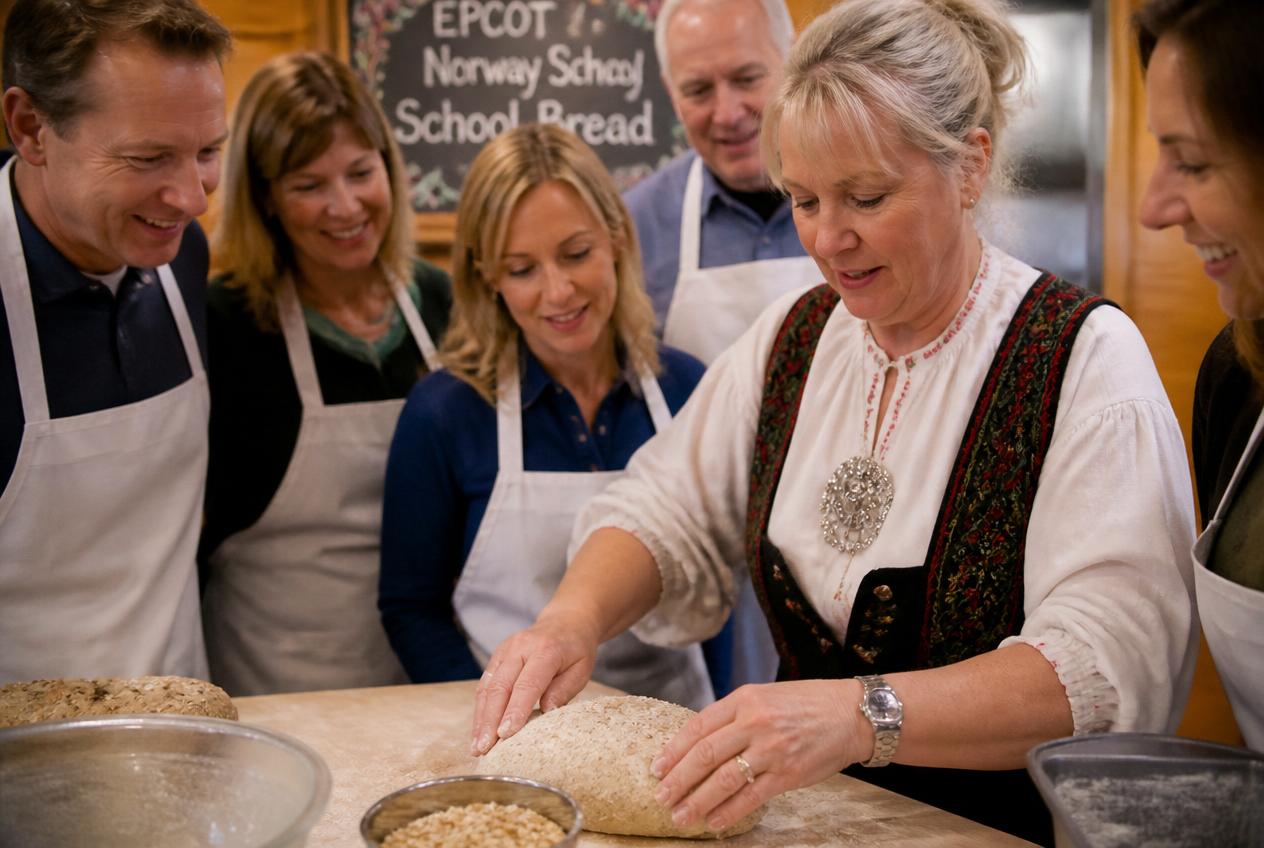
Look for the Epcot Norway School Bread if you ever wander through Kringla Bakeri Og Kafe in EPCOT’s Norway Pavilion, you’ll find a treat that gets people lining up like it’s the last cronut on earth. Epcot Norway School Bread is a cardamom-spiced sweet roll filled with vanilla custard and topped with coconut flakes and icing, originally a Norwegian lunchbox staple that Disney World somehow turned into a cult favorite snack. Disney even opened a dedicated kiosk just for grab-and-go School Bread because, honestly, one bakery couldn’t keep up.
The Norwegian name is Skolebrød, which literally means “school bread.” Norwegian kids grew up with these in their lunchboxes, while I got stuck with a soggy PB&J. I decided I needed to master this beloved Norwegian pastry at home, so here’s what I’ve learned about making, tweaking, and storing these little pillows of joy. Epcot Norway School Bread just hits differently.
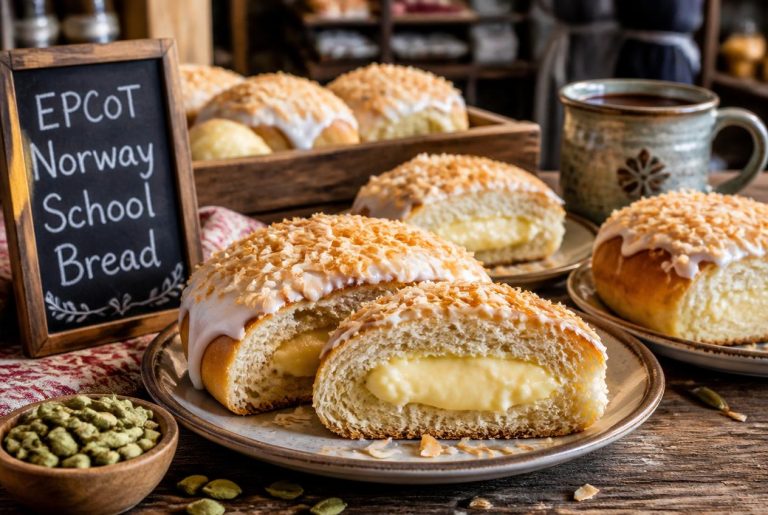
EPCOT Norway School Bread
Key Takeaways
- Epcot Norway School Bread is a Norwegian cardamom pastry filled with custard and topped with coconut, now an EPCOT icon
- Making Epcot Norway School Bread at home means being patient with the dough and using proper storage techniques to keep it soft
- You can get creative with fillings and toppings, but that cardamom-spiced base is non-negotiable
History and Mysterious Origins of Epcot Norway School Bread
I’ve always thought it was wild that one of EPCOT’s most beloved snacks started as a Norwegian schoolyard classic. School bread, or skolebrød, is a traditional Norwegian sweet roll made from yeasted dough, loaded with custard, and finished off with icing and coconut. Norwegian kids have been munching on these for generations.
No one seems to know exactly when Epcot Norway School Bread first hit the park, but it’s been at Kringla Bakeri og Kafé in the Norway Pavilion for decades. Now it’s one of those Disney snacks people plan their whole day around.
Regional Names in Norway:
- Skolebrød – northern and eastern Norway
- Skolebolle – western Norway
- Porke and tolvøres – southern Norway
It cracks me up that Disney took a basic school lunch item and made it a theme park sensation. The School Bread served at EPCOT’s Norway Pavilion follows the traditional Norwegian recipe, so you’re getting something pretty close to the real deal.
Even as the Norway Pavilion changed—Frozen Ever After, anyone?—Epcot Norway School Bread has stuck around. Sometimes, the simple things really are the best.
Tips and Tricks to Master Norwegian Magic
After some trial and error, I’ve picked up a few tricks for scoring Epcot Norway School Bread at EPCOT. The best move? Get there early, before the World Showcase crowds show up.
The Kringla Bakeri og Kafé is always my first stop for School Bread. But here’s a pro tip: there’s a grab-and-go kiosk in the Norway Pavilion that opened in February 2026. It runs from 11am until park close, so if the bakery line is wild, I just swing by the kiosk instead.
Here’s how I time it:
- Go to the bakery right at World Showcase opening
- Use the kiosk during peak hours
- Snag one before dinner for dessert (or, let’s be honest, a pre-dinner snack)
I always ask cast members when the next batch of Epcot Norway School Bread comes out. Nobody wants a dry, day-old pastry when you could have a warm, custard-filled one.
If I want a chill spot, the covered seating behind Kringla Bakeri is the move. I’ve tried eating while walking, but that coconut topping will betray you every time.
My last trick? Pair Epcot Norway School Bread with coffee. Cardamom and coffee together? It’s almost like being in Norway, but with more sunshine and fewer fjords.

Epcot Norway School Bread
Unexpected Norwegian Twists On This Classic
Honestly, the first time I tried Epcot Norway School Bread at the Norway Pavilion, I braced myself for something like a Norwegian cinnamon roll (skillingsboller). My friend from Norway swore by those. Turns out, I was way off.
The big surprise? Cardamom. Americans expect cinnamon in their sweet rolls, but this cardamom-spiced bun goes in a totally different direction. Cardamom gives it a warm, almost floral punch that’s hard to describe but easy to love.
And then—coconut. I’ve eaten a lot of pastries, but toasted coconut flakes on a school snack? That’s not something I grew up with. Somehow, the coconut and custard combo totally works. It’s like Norway went on vacation and brought back a tropical souvenir.
That vanilla custard in the middle isn’t like a Boston cream donut, either. It’s smoother, less heavy. The pastry itself? It’s dense, almost like a dinner roll with cardamom. Norwegian kids must have had stronger jaws than me—my lunchbox treats were always soft and squishy.
At $4.99, Epcot Norway School Bread is my go-to indulgence at Kringla Bakeri Og Kafe. I mean, how can you not?
Storing Your School Bread Without Turning It Into School Brick
Let’s get real—Epcot Norway School Bread doesn’t come with a magic spell to keep it fresh forever. If you want to enjoy it later, you’ve got to store it right or you’ll end up with something better suited for self-defense than dessert.
Most bread can last 5 to 7 days in a bread box, but Epcot Norway School Bread is best eaten within a day or two. That custard filling just doesn’t play well with time.
Here’s what really works for me:
- Wrap it tightly in foil or plastic wrap
- Stick it in an airtight container or big ziplock bag
- Leave it at room temp if you’ll eat it within 24 hours
- Refrigerate if you need it to last longer, but expect a firmer texture
People talk about packing Epcot Norway School Bread in a cooler to take home, which is honestly a smart move if you’re traveling. But just know, the fridge will make it a bit denser.
Whatever you do, don’t let your Epcot Norway School Bread sit out in the open. Covering your bread really does keep it from going stale. A stale Epcot Norway School Bread is just sad. Nobody wants that.
My real advice? Buy it, eat it, and enjoy the moment. Epcot Norway School Bread tastes best fresh from Kringla Bakeri. Wait too long, and you’ll regret it.
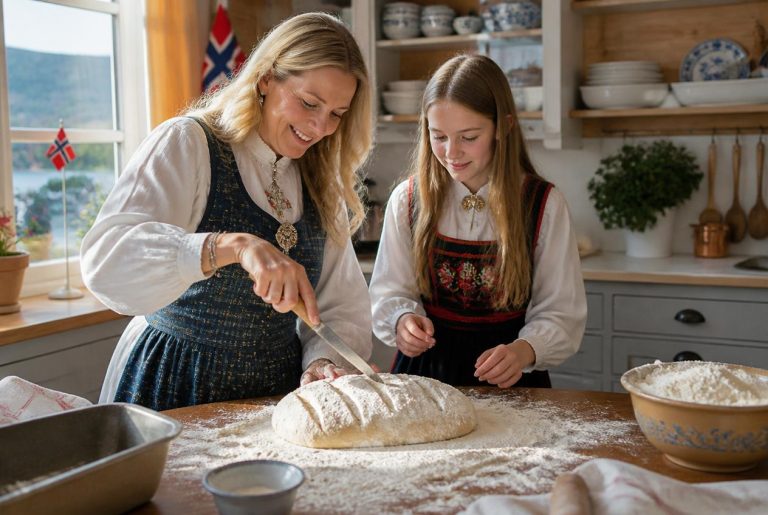
EPCOT Norway School Bread Cooking Tips
EPCOT Norway School Bread (Skolebrød) Recipe Cooking Tips
• Skolebrød is known for its soft cardamom bun, creamy vanilla custard center, and sweet coconut topping.
• The version sold at the Norway Pavilion in EPCOT has become one of the park’s most famous treats.
• Whole milk and butter help create a soft, rich yeast dough.
• Ground cardamom is a signature Norwegian flavor and should not be omitted.
• Knead the dough until smooth and elastic for the fluffiest buns.
• Allow adequate rising time so the buns become light and airy.
• Press a deep indentation into each bun before adding the custard filling.
• Thick vanilla pastry cream works best because it stays in place during baking.
• Avoid overfilling the custard centers to prevent spilling while baking.
• Bake until lightly golden while keeping the buns soft and tender.
• Once cooled, spread a ring of simple glaze around the custard center.
• Roll the glazed area in shredded coconut for the traditional finish.
• Serve fresh for the best texture and flavor.
• The flavor should balance sweet vanilla custard, fragrant cardamom, soft bread, and coconut sweetness.
• Skolebrød is traditionally enjoyed with coffee, tea, or as an afternoon treat.
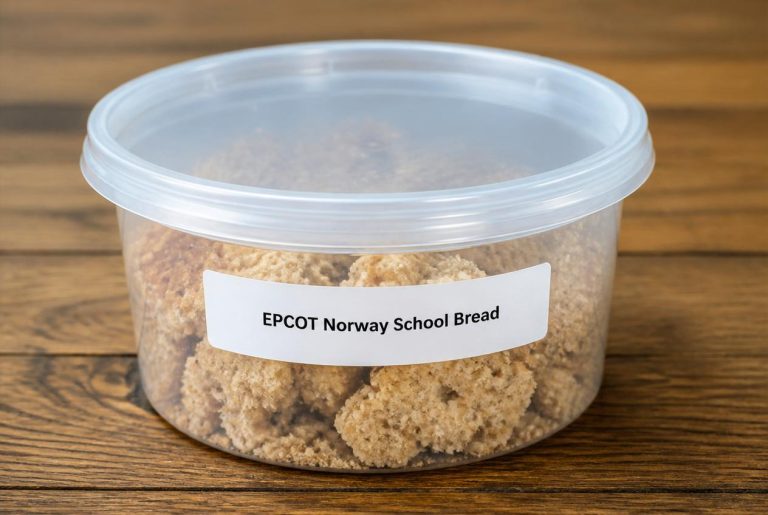
EPCOT Norway School Bread Storage Tips
EPCOT Norway School Bread Storage Tips
• Allow the buns to cool completely before storing.
• Because of the custard filling, store them refrigerated in airtight containers.
• Cover well to prevent the buns from drying out.
• Bring to room temperature before serving for the softest texture.
• A brief warming of the bread portion can refresh the texture, but avoid overheating the custard.
• The cardamom flavor often becomes more pronounced after overnight storage.
• Store coconut-topped buns in a single layer when possible to preserve appearance.
• Freezing is possible, though the custard texture may change slightly after thawing.
• Wrap each bun individually before freezing for best results.
• Defrost frozen buns gradually in the refrigerator.
• Use clean utensils when handling leftovers to help maintain freshness.
• Custard-filled pastries are generally best enjoyed within a short refrigerated storage period for ideal quality and safety.
• Keep away from strongly scented foods because the buns can absorb odors.
• Discard leftovers if the custard develops sour odors, separation, mold, or unusual texture changes.
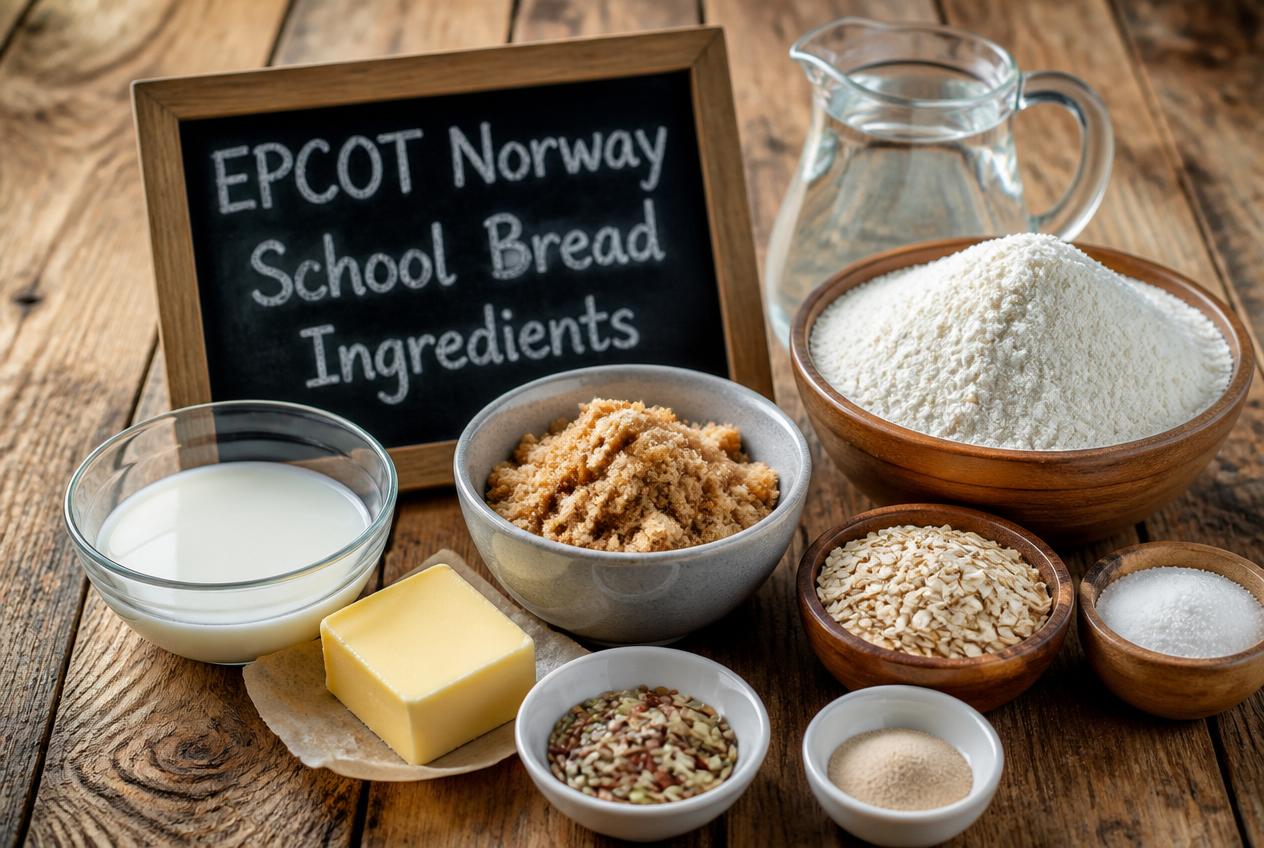
Epcot Norway School Bread
Ingredients
- ¼ cup granulated sugar
- 1 tablespoon cornstarch
- 1 cup milk
- 3 egg yolks
- 1 tablespoon butter
- 2 teaspoons vanilla extract
- 3 cups all-purpose flour
- 1 packet 2 ¼ teaspoon instant yeast
- ⅓ cup granulated sugar
- 1 ¼ teaspoon cardamom
- 1 egg
- 1 cup milk warmed
- 5 tablespoons unsalted butter at room temperature
- 1 cup powdered sugar
- 1 ½ tablespoons water
- 1 cup sweetened shredded coconut
Instructions
- In a medium saucepan, combine the sugar, cornstarch, milk, and egg yolks. Whisk thoroughly until the mixture is completely smooth and the cornstarch is fully dissolved. Place the saucepan over medium-low heat and cook while whisking constantly. As the mixture warms, it will gradually begin to thicken. Continue stirring to prevent the eggs from scrambling and to ensure a silky-smooth custard. Once the mixture reaches a gentle boil, continue cooking for about 1 minute, whisking continuously, until it becomes thick and pudding-like.
- Remove the saucepan from the heat and immediately stir in the butter and vanilla extract. Continue stirring until the butter has completely melted and the pastry cream is smooth, glossy, and fully incorporated. Transfer the pastry cream to a clean bowl and press a piece of plastic wrap directly onto the surface of the custard. This prevents a skin from forming as it cools. Refrigerate until completely chilled and ready to use. The pastry cream can be prepared several hours in advance or even the day before baking.
- In the bowl of a stand mixer fitted with the dough hook attachment, combine the flour, yeast, sugar, and cardamom. Mix briefly to evenly distribute the ingredients. Add the egg, warm milk, and softened butter. Begin mixing on low speed until a rough dough forms, then increase to a medium speed and knead for approximately 10 minutes.
- As the dough kneads, it will transform from shaggy and sticky into a smooth, elastic dough that pulls away from the sides of the bowl. Proper kneading develops the gluten structure, giving the finished school bread its soft, fluffy texture. If the dough feels excessively sticky after several minutes of kneading, add a small amount of flour, one tablespoon at a time. The finished dough should be soft and supple but not overly sticky.
- Transfer the dough to a lightly greased bowl, turning it once so the surface is lightly coated with oil. Cover the bowl tightly with plastic wrap or a clean kitchen towel. Place it in a warm, draft-free location and allow it to rise until doubled in size, approximately 1 hour. During this time, the yeast will create air pockets throughout the dough, producing the light and tender texture characteristic of Norwegian School Bread.
- Once the dough has doubled, gently punch it down to release excess air. Divide the dough into 12 equal portions for evenly sized rolls. Line two baking sheets with parchment paper or silicone baking mats.
- Working with one piece at a time, gently roll the dough against your work surface until a smooth, round ball forms. Place the shaped rolls onto the prepared baking sheets, leaving enough space between them for expansion during the second rise. Using your finger, thumb, or the back of a spoon, press a deep indentation into the center of each dough ball. This well will later hold the pastry cream filling and should be large enough to remain visible after the dough rises.
- Cover the baking sheets loosely with plastic wrap and place them back in a warm location. Allow the rolls to rise until they are noticeably puffy and nearly doubled in size, about 45–60 minutes. During this rise, the dough will become light and airy while maintaining the indentation in the center. If the wells begin to fill in, gently press them down again before adding the filling.
- While the rolls are finishing their second rise, preheat the oven to 400°F (200°C). Transfer the chilled pastry cream to a piping bag or a zip-top bag with the corner snipped off. Pipe a generous amount of pastry cream into the center indentation of each roll, filling the wells without overflowing.
- Place the baking sheets into the preheated oven and bake for 13–15 minutes, or until the rolls are beautifully golden brown and the pastry cream is set. The tops should be lightly browned while the interiors remain soft and fluffy. Remove the rolls from the oven and allow them to cool completely on wire racks before glazing.
- In a small bowl, whisk together the powdered sugar and water until a smooth glaze forms. The glaze should be thick enough to cling to the rolls but thin enough to drizzle easily. If needed, adjust the consistency with a few drops of additional water or a little extra powdered sugar.
- Glaze and Finish with Coconut
- Once the rolls have cooled, spoon or drizzle the glaze around the outer ring of each bun, avoiding the pastry cream center. Immediately sprinkle shredded coconut over the glaze while it is still wet so it adheres properly. The coconut creates the classic appearance and texture that makes Norwegian School Bread instantly recognizable.
- Serve the School Bread once the glaze has set slightly. The combination of soft cardamom-scented dough, creamy vanilla custard, sweet glaze, and coconut creates a classic Norwegian bakery treat. These rolls are best enjoyed the day they are made, but leftovers can be stored in an airtight container at room temperature for 1–2 days or refrigerated for up to 3–4 days. If refrigerated, allow them to come to room temperature before serving for the best flavor and texture.
Epcot Norway School Bread Frequently Asked Questions
Epcot Norway School Bread always brings up questions—where to find it, how many is too many, and whether it’s possible to make at home without a Norwegian grandma. Calories, storage, Disney magic—everyone’s got opinions.
Where exactly in the Norway pavilion do I track down this legendary bun like it owes me money?
I find Epcot Norway School Bread at Kringla Bakeri Og Kafe in the Norway pavilion at EPCOT’s World Showcase. There’s a walk-up counter, and if I want to devour it in peace, there’s covered seating out back.
Since February 2026, there’s also a grab-and-go kiosk in the Norway Pavilion. So if I’m in a hurry, I skip the bakery line and grab my Epcot Norway School Bread to go.
How much does this sweet little bread cost now—still snack-priced or full-on theme park mortgage?
Epcot Norway School Bread usually runs between $4 and $6, depending on Disney’s latest pricing mood. It’s still in snack territory, not “mortgage your house” territory.
If I’ve got a Disney Dining Plan snack credit, I use it on Epcot Norway School Bread. It almost feels free—which, in Disney math, is a magical feeling.
What’s actually inside it (and is that coconut trying to start a delightful fight with the custard)?
The Epcot Norway School Bread is basically a cardamom-spiced roll stuffed with vanilla cream, then topped with coconut. I mean, honestly, the coconut and custard don’t clash at all—they just sort of vibe together in a way you wouldn’t expect. There’s this mellow, spiced thing happening thanks to the cardamom, and the coconut just leans in, adding a chewy tropical twist that somehow works.
That cardamom gives Epcot Norway School Bread a subtle warmth you don’t get with your usual American pastries. The vanilla cream is sweet, smooth, and just a little decadent, while the coconut flakes on top bring in a texture that’s almost playful. I know, it sounds like too much, but Epcot Norway School Bread really nails it. If you’re not into coconut, you might hesitate, but honestly, it’s worth a try just for that blend of flavors.
How many calories am I eating here, and how many laps around World Showcase does that translate to?
Epcot Norway School Bread clocks in at about 380-400 calories per roll. Not exactly a salad, but hey, you’re at Epcot.
If you’re curious, walking World Showcase burns roughly 100 calories per mile for most folks. So, after eating Epcot Norway School Bread, you’re looking at maybe a lap and a half around the lagoon to break even. But let’s be real—most of us are already racking up the steps chasing rides and snacks, so I’m not sweating it. Epcot Norway School Bread is totally worth it, in my opinion.
Is it better fresh, or does it still slap after sitting in your backpack next to a melted souvenir?
Fresh Epcot Norway School Bread is just on another level. The bread’s soft, the custard is cool, and the coconut doesn’t get all soggy or weird. If you can, eat it right away.
But if you stash Epcot Norway School Bread in your bag for a few hours, it’s honestly still pretty good. Sure, the custard might warm up and the bread could get a little less fluffy, but it’s still tasty enough to finish. I wouldn’t recommend saving Epcot Norway School Bread overnight, though—some things just aren’t meant to last that long.
Can I make a convincing at-home version, or will it just taste like my kitchen’s disappointing cosplay?
Sure, I can whip up a homemade version of School Bread that actually tastes pretty good. The core pieces—sweet bread, vanilla custard, and shredded coconut—aren’t hard to tackle in a regular kitchen. Epcot Norway School Bread pops into my mind every time I start gathering ingredients, honestly.
But here’s the thing: getting the cardamom just right in the dough and nailing that pillowy bread texture takes some trial and error. My Epcot Norway School Bread might not match the Disney original bite for bite, but it’s close enough to scratch that itch between trips. There are a bunch of recipes floating around that swear they’ll help you recreate the legendary EPCOT snack, though the results are all over the place. If you’re craving Epcot Norway School Bread, you can get surprisingly close at home—just don’t expect perfection on the first try. Sometimes, chasing that Epcot Norway School Bread flavor is half the fun. I mean, who hasn’t wondered if their kitchen could ever really capture the magic of Epcot Norway School Bread? Give it a shot, and maybe you’ll find your own twist on Epcot Norway School Bread that you love even more.

Recipes are gathered in person and written for real-world cooking conditions.
- 10 Hungarian Dessert Recipes Passed Down Through Generations - July 25, 2026
- 11 Easy English Recipes Anyone Can Make - July 25, 2026
- Hungarian Kifli Recipe - July 25, 2026