
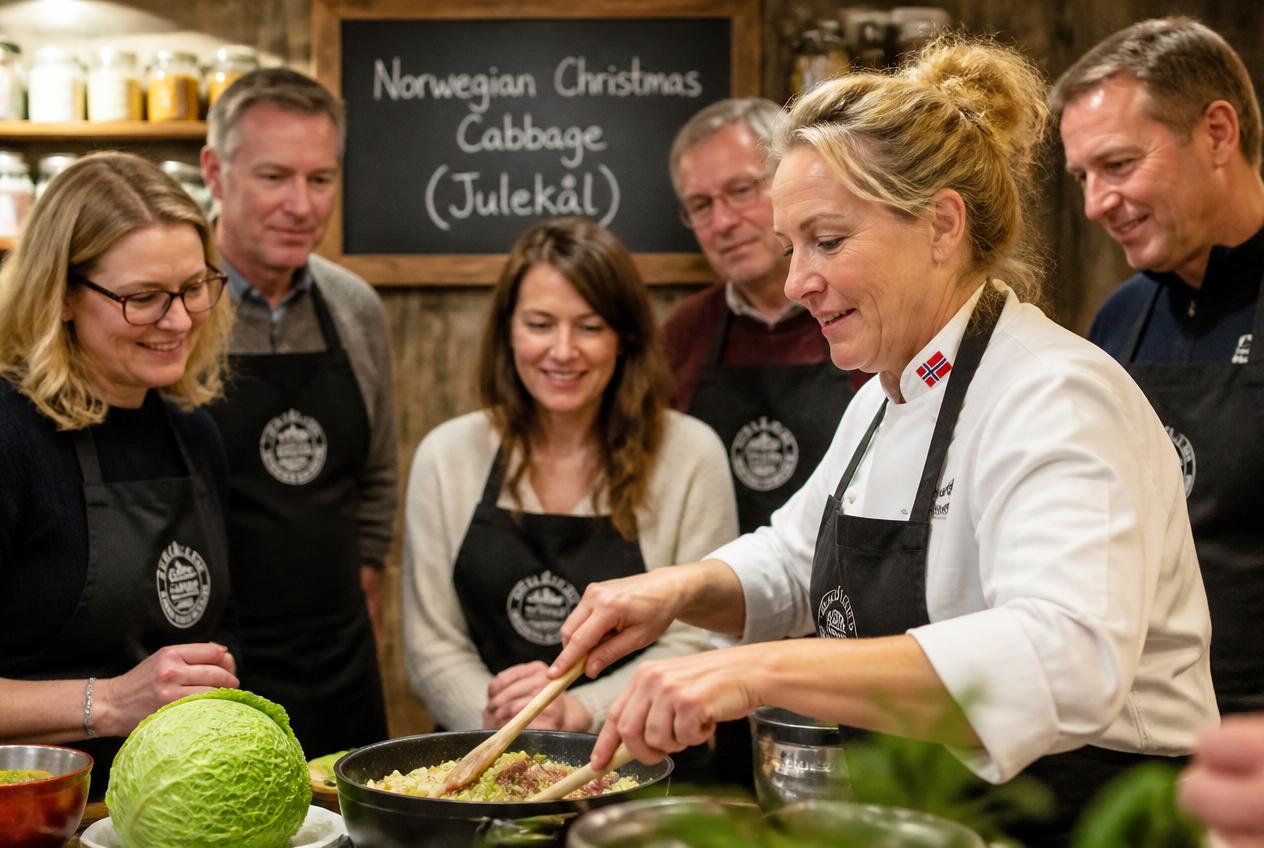
Norwegian Christmas Cabbage, or Julekål if you’re feeling extra Nordic, might sound like the blandest thing to ever hit a holiday table. But honestly? It’s nothing like the sad, overcooked cafeteria cabbage you might be picturing. Norwegian Christmas Cabbage is a classic holiday dish that pairs sweet and sour flavors with caraway seeds, landing somewhere between a spiced side and a shortcut sauerkraut—minus the weeks of waiting around for fermentation. I only found out about this gem after a Norwegian friend insisted I’d never really “done Christmas” until I tried it. I mean, who knew cabbage could steal the show?
This sweet and sour cabbage usually shows up with pork at Christmas feasts, and it’s honestly way easier to make than it sounds. You can skip the fermentation drama—just cook, season, and you’re done in about an hour. The aroma alone will have your kitchen feeling like a Norwegian farmhouse, even if you’re nowhere near a fjord.
I keep coming back to this dish because it’s my low-key secret for surprising dinner guests who expect the same old holiday sides. That mix of cabbage, bacon, and caraway seeds? It’s comforting, it’s got a little zing, and it’s definitely not boring. Plus, you can tweak it however you want and stash leftovers in the fridge for days—perfect for lazy holiday grazing or meal prep when you’re over cooking.
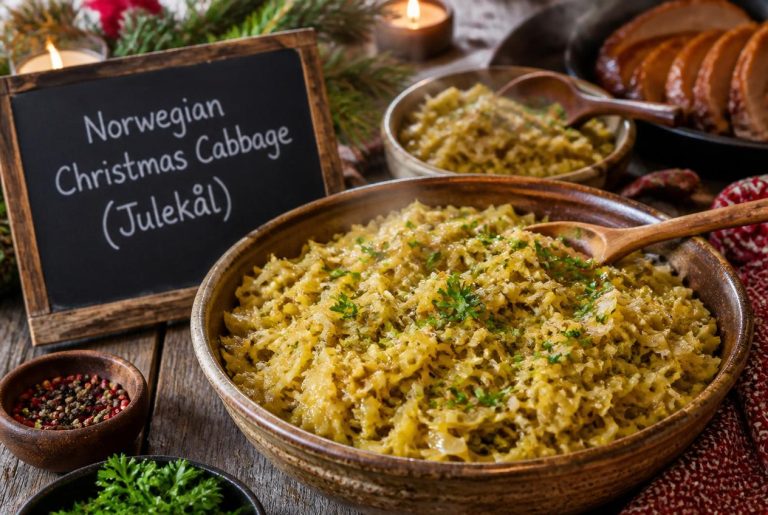
Norwegian Christmas Cabbage (Julekål)
Key Takeaways
- Norwegian Christmas Cabbage is a sweet and sour spiced cabbage dish with caraway seeds, ready in about an hour
- Traditionally served with pork during Norwegian holiday meals, and leftovers keep well in the fridge for several days
- You can play with the recipe—add apples, mess with the sweetness, or just follow your own taste
Norwegian Recipe Description and Historical Information
Honestly, Norwegian Christmas Cabbage (Julekål) is the Scandinavian hack for making cabbage actually interesting. And, let’s be real, that’s not easy.
This holiday staple feels like Norway’s answer to sauerkraut, just without the fermentation saga. Instead of waiting weeks, you just slice, season, and simmer. About an hour later, you’re done.
What Makes It Special
This dish is basically a sweet and sour sauerkraut with caraway seeds. The flavor is simple but, weirdly, kind of layered.
Here’s what sets Norwegian Christmas Cabbage apart:
- No fermentation – so you don’t have to plan ahead
- Quick prep – about an hour from start to finish
- Sweet and sour – with a little spice from the caraway
- Traditional Christmas side – best friends with pork
Norwegians call it surkål, and it’s a classic with ribbe (Christmas pork belly). Let’s be honest, pork and cabbage are a holiday match you didn’t know you needed.
A Quirky Tradition
Here’s a weird one: you’re supposed to use old cabbage—like, the kind that’s been sitting in your fridge for a bit. Supposedly, it works better. Norwegian grandmas swear by it, but I still can’t quite explain why.
You’ll find Norwegian Christmas Cabbage (Julekål) on tables across Norway, bringing a little extra warmth and comfort to those long, dark winter celebrations.
Tips for Channeling Your Inner Scandinavian Chef
Look, making Norwegian Christmas Cabbage (Julekål) doesn’t require Viking blood—just a few tricks.
I always reach for an older cabbage in my fridge. It’s not going to judge you for forgetting about it, and it actually works better in the pot.
Caraway seeds? Non-negotiable. Toast them in a dry pan first. Trust me, it cranks up the flavor and gives your Norwegian Christmas Cabbage (Julekål) that unmistakable Scandi vibe.
When I’m at the stove, I keep these in mind:
- Don’t rush—let it cook low and slow
- Taste as you go, and tweak the sweet/sour balance
- Medium-low heat is your friend for tender cabbage
- Stir now and then so nothing sticks
The sweet and sour balance is where you get to play chef. I add sugar and vinegar in small amounts, tasting between each addition. Too sweet? A splash more vinegar. Too tart? A pinch of sugar. It’s not science, it’s just…tasting.
Patience is key. I let the Norwegian Christmas Cabbage (Julekål) simmer for about an hour. It gives me time to daydream about snowy cabins, even if I’m just in my tiny apartment.
Bacon or butter? I lean bacon for that smoky kick, but butter’s great if you want something lighter. Either way, Norwegian Christmas Cabbage (Julekål) doesn’t judge.
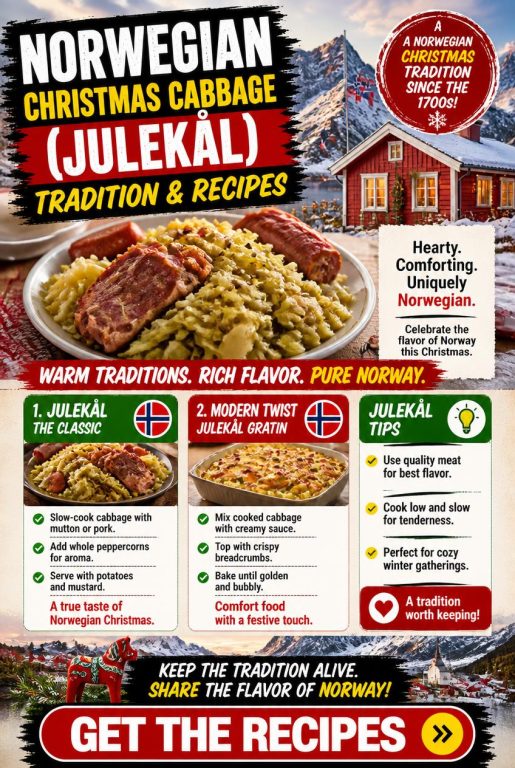
Norwegian Christmas Cabbage (Julekål)
Surprising Twists on the Classic
Norwegian Christmas Cabbage (Julekål) doesn’t have to be stuck in the past. Sometimes, a little kitchen rebellion leads to the best results.
Creative Add-Ins Worth Trying:
- Dried cranberries or raisins – For a pop of sweetness and color
- Orange zest – Adds a bright citrus note
- Juniper berries – If you want to go full Scandinavian forest
- Bacon bits – Because, well, bacon
- A splash of red wine – For a deeper, more complex tang
I’ve even swapped apples for pears once. It felt wrong, but tasted right.
If your Norwegian Christmas Cabbage (Julekål) turns out too sour, try a pinch of brown sugar or honey. Or toss in a bay leaf for a little extra depth.
The best part? This sweet and sour cabbage is forgiving. Adjust the flavors until you like them—no one’s going to show up and revoke your Scandinavian card.
I once added a drizzle of maple syrup. Maybe my ancestors would be horrified, but it was pretty great.
Just keep the core flavors of Norwegian Christmas Cabbage (Julekål) in mind, and have some fun with it.
The Saga of Stashing and Storing Your Cabbage Creation
Norwegian Christmas Cabbage (Julekål) deserves a little storage strategy if you want to enjoy it past day one. I’ve learned this the hard way—don’t let your masterpiece go to waste.
I let my Norwegian Christmas Cabbage (Julekål) cool to room temp before packing it up. Airtight container, straight into the fridge, and you’re set for 3 to 5 days.
Weirdly, the flavors get even better after a night in the fridge. I actually prefer it reheated the next day—it’s like the dish gets a second wind.
Freezer Storage
If you make a big batch (and you probably will), freeze the extras in portioned containers or freezer bags. Norwegian Christmas Cabbage (Julekål) holds up in the freezer for up to 3 months.
Leave a little space at the top, since cabbage expands when frozen. Trust me, you don’t want to deal with a cabbage explosion in your freezer.
Reheating Tips
| Method | Time | Notes |
|---|---|---|
| Stovetop | 5-10 minutes | Best for texture—my go-to |
| Microwave | 2-3 minutes | Quick fix, but stir halfway through |
| Oven | 20 minutes at 350°F | Works for bigger portions |
When I reheat Norwegian Christmas Cabbage (Julekål), I pour in a splash of water or broth to keep it juicy. Dry cabbage is a tragedy I refuse to repeat.
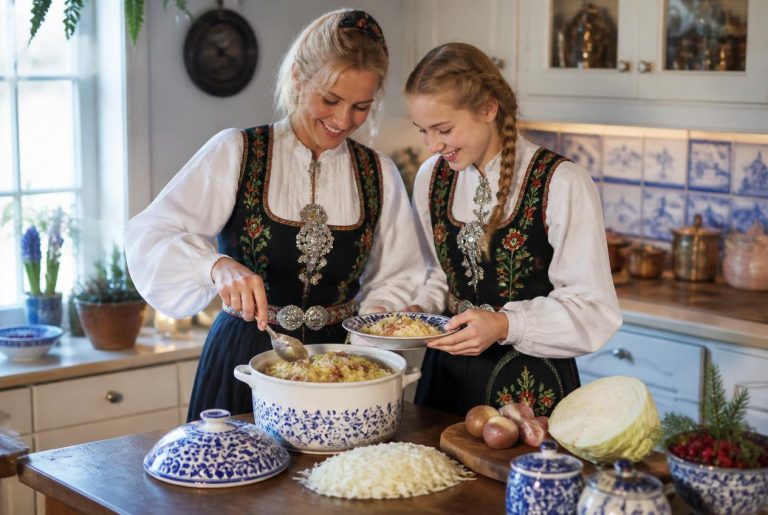
Norwegian Christmas Cabbage (Julekål) Cooking TIps
Norwegian Christmas Cabbage (Julekål) Recipe Cooking Tips
• Julekål is known for its sweet-and-savory flavor, tender texture, and importance on the Norwegian holiday table.
• Julekål is traditionally served during Christmas alongside pork, sausages, ribs, or other festive meats.
• Green cabbage is the most commonly used variety for this dish.
• Shred the cabbage evenly so it cooks consistently.
• Butter adds richness and helps develop the traditional flavor.
• Slow cooking allows the cabbage to become tender and slightly caramelized.
• A small amount of sugar helps create the characteristic sweet flavor.
• White pepper adds gentle warmth without overpowering the cabbage.
• Some regional versions include a splash of vinegar for balance.
• Stir occasionally to prevent sticking and promote even cooking.
• The cabbage should become soft and lightly golden rather than mushy.
• Salt enhances the natural sweetness of the cabbage.
• Serve hot as part of a traditional Christmas meal.
• The flavor should balance buttery richness, mild sweetness, and tender cabbage.
• Julekål is one of Norway’s classic holiday side dishes enjoyed during the Christmas season.
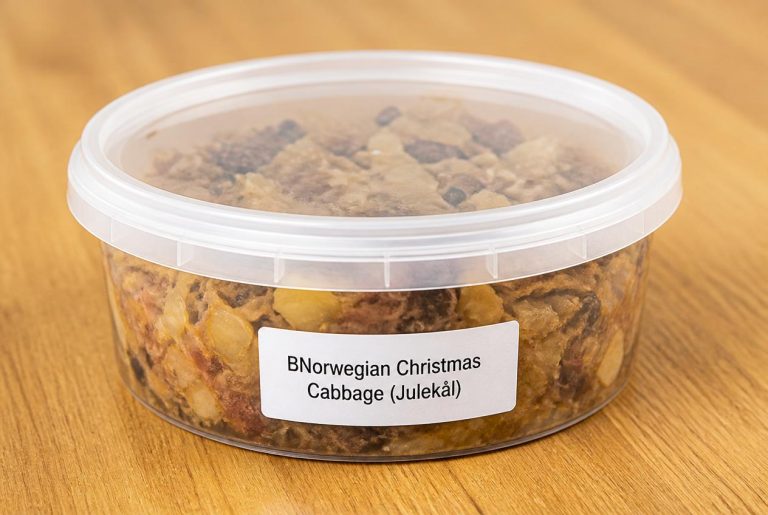
Norwegian Christmas Cabbage (Julekål) Storage TIps
Norwegian Christmas Cabbage (Julekål) Storage Tips
• Allow the cabbage to cool before transferring it into storage containers.
• Store refrigerated in airtight containers to preserve freshness.
• Refrigeration may slightly deepen the sweet and savory flavors, which is normal.
• Reheat gently in a skillet or saucepan over low heat until warmed through.
• Add a small amount of butter during reheating if desired to refresh the texture.
• Stir occasionally during reheating to ensure even warming.
• Freeze portions in airtight freezer-safe containers if desired.
• Defrost frozen cabbage gradually in the refrigerator before reheating.
• The cabbage may soften slightly more after freezing and thawing.
• Use clean utensils when handling leftovers to help maintain freshness.
• Cooked cabbage dishes are generally best enjoyed within a shorter refrigerated storage period for ideal quality and flavor.
• Keep away from strongly scented foods because cabbage can absorb odors easily.
• Slight darkening during storage is normal because of the caramelized sugars.
• Discard leftovers if the cabbage develops sour odors, slime, mold, or unusual discoloration.
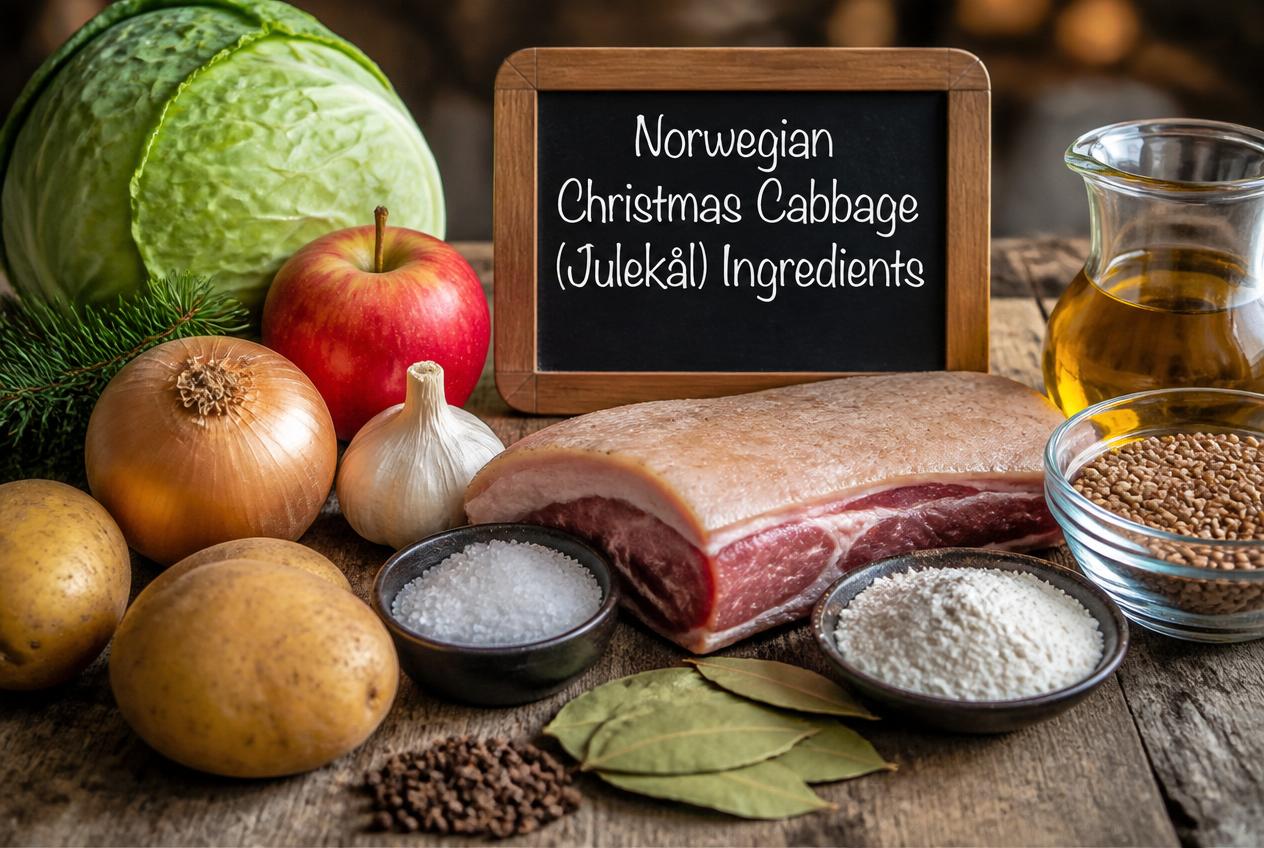
Norwegian Christmas Cabbage (Julekål)
Ingredients
- 1 small head red cabbage cored and finely shredded (approximately 1.5 – 2 pounds)
- 2 cups granulated white sugar
- 2 cups white vinegar 5% acidity
- 2 teaspoons kosher salt or slightly less if using table salt
- 3 cups water
Instructions
- Remove the tough outer leaves from the red cabbage, then cut it into quarters through the core. Carefully slice away the core from each section before shredding the cabbage into thin, even strips. A mandoline slicer is especially useful for creating uniform shreds quickly, but a sharp chef’s knife works perfectly if you prefer to cut it by hand. Try to keep the slices fairly thin so the cabbage softens evenly during cooking while still retaining a little texture. Once shredded, give the cabbage a quick rinse under cool water and drain thoroughly to remove any lingering grit or debris.
- In a large heavy-bottomed saucepan or Dutch oven, add the shredded red cabbage along with the granulated white sugar, white vinegar, kosher salt, and water. Toss everything together gently with a wooden spoon or tongs so the cabbage becomes evenly coated in the sweet-and-tangy mixture. Using a heavy pot helps distribute heat evenly and prevents the sugars from scorching during the long simmering process. At first, the pot may seem overly full, but the cabbage will cook down considerably as it softens.
- Place the saucepan over medium-high heat and slowly bring the mixture to a boil. Stir every few minutes to help dissolve the sugar and salt completely into the liquid while preventing the cabbage from sticking to the bottom of the pot. As the cabbage heats, it will begin releasing its natural juices and the vibrant purple color will deepen beautifully. Once you see a steady boil with bubbles rising throughout the pot, you’re ready to reduce the heat for simmering.
- Lower the heat to maintain a gentle simmer and cover the pot tightly with a lid. Allow the cabbage to cook slowly for 1 hour, stirring occasionally to ensure even cooking and to keep anything from sticking or caramelizing too much on the bottom. During this time, the cabbage will soften significantly while absorbing the sweet and tangy flavors of the vinegar mixture. The liquid will gradually reduce and become slightly syrupy, coating the cabbage with a glossy finish. If the pot begins to look dry before the hour is complete, add a small splash of water to maintain moisture.
- After the cabbage has simmered for the initial hour, you can enrich the dish with additional ingredients for deeper flavor and complexity. Stir in the unsalted butter, allowing it to melt fully into the cabbage for extra richness and a silky texture. Add the diced apple, which softens as it cooks and brings a subtle natural sweetness that complements the vinegar beautifully. Mix in the red currant jelly or black currant jam to create a deeper fruity flavor and glossy finish that is traditional in many Scandinavian versions of this dish. Sprinkle in the ground cloves and allspice for a gentle warmth and subtle spice that balances the sweetness.
- Cover the pot once again and continue simmering over low heat for another 30 minutes. During this final stage, the flavors meld together and intensify while the cabbage becomes even more tender. Stir occasionally and check the texture as it cooks. Some people prefer the cabbage with a slight bite remaining, while others enjoy it very soft and silky.
- Once the cabbage has reached your preferred texture, taste a spoonful and make any final seasoning adjustments. If you prefer a sweeter flavor, stir in an extra spoonful of sugar. For more tanginess, add a splash of vinegar. A pinch more salt can help balance and brighten all the flavors. Adjust gradually, tasting after each addition so the balance remains harmonious between sweet, tart, and savory.
- Serve the Danish red cabbage warm as a traditional side dish alongside roasted meats, sausages, pork, or holiday meals. The cabbage can also be cooled completely and refrigerated, where the flavors continue to develop and deepen overnight. Reheat gently on the stovetop over low heat before serving again. Store any leftovers in an airtight container in the refrigerator for up to 5 days. The dish often tastes even better the next day once the sweet, tangy, and spiced flavors have fully melded together.
Norwegian Christmas Cabbage Frequently Asked Questions
Norwegian Christmas Cabbage (Julekål) walks a fine line between sweet and sour, with caraway seeds doing most of the heavy lifting. You can use red or green cabbage, but the method matters if you want to avoid ending up with a mushy mess.
Is this festive cabbage supposed to be sweet, sour, or just aggressively cozy?
I’d say Norwegian Christmas Cabbage (Julekål) is sweet and sour, with caraway seeds making it extra cozy. The sugar and vinegar balance gives it that Scandinavian pickle feel, but you don’t have to wait for fermentation.
Basically, it’s like the cabbage version of a perfect Christmas sweater. Not too sweet, not too sour, just right for the holidays.
What kind of cabbage works best here—red, green, or whatever survived the week?
Red or green cabbage both work in Norwegian Christmas Cabbage (Julekål), but they give you slightly different results. Red cabbage makes rødkål, which is also sweet and sour and pretty common in Scandinavia.
Green cabbage is the go-to for traditional surkål. I actually prefer using the older, slightly wilted stuff from the back of the fridge. It just seems to hold up better and doesn’t turn to mush as fast.
So, Norwegian Christmas Cabbage (Julekål) is more versatile than you’d think. Try it once, and you’ll probably be hooked—at least until you run out of cabbage.
How do I keep the cabbage from turning into holiday mush?
Patience and low heat really do the trick with Norwegian Christmas Cabbage (Julekål). I like to layer the cabbage instead of dumping it all in at once, so it cooks more evenly. It’s tempting to blast the heat and hope for a quick fix, but trust me, that’s the fastest route to a pot of mush. Norwegian Christmas Cabbage (Julekål) deserves a little more care than that.
I try not to stir it constantly. Just let those layers settle in and do their thing. If you keep poking at it every five minutes, you’re more likely to end up with a soggy mess than proper Norwegian Christmas Cabbage (Julekål). Sometimes, less is more—especially with cabbage.
Can I make it ahead of time, or will it revolt if it sits overnight?
Honestly, Norwegian Christmas Cabbage (Julekål) is one of those rare dishes that gets even better after a night in the fridge. The flavors blend together and mellow out, almost like they’re catching up after a long year. I usually make my Norwegian Christmas Cabbage (Julekål) a day or two before Christmas and just stash it in the fridge. When the big meal comes around, I reheat it gently—no rush, no drama.
The vinegar and sugar keep it fresh for several days, so you don’t have to stress about it going bad. Unlike New Year’s resolutions, Norwegian Christmas Cabbage (Julekål) actually improves with a little time. It’s kind of magical, isn’t it?
What spices and add-ins are traditional—caraway, apples, cranberries, or pure Christmas magic?
Caraway seeds are the must-have for Norwegian Christmas Cabbage (Julekål). They give it that unmistakable Scandinavian kick that sets it apart from your average boiled cabbage. I’ve seen some folks add apples or lingonberries for a touch of sweetness and tartness. Personally, I like to toss in a chopped apple—it brings natural sugar and a bit of crunch to the Norwegian Christmas Cabbage (Julekål).
Salt, pepper, vinegar, and sugar round things out. Sometimes bacon sneaks in, if you’re feeling a bit extra with your Norwegian Christmas Cabbage (Julekål). There’s room for a little improvisation, but the heart of the dish stays the same. If you haven’t tried Norwegian Christmas Cabbage (Julekål) yet, maybe this is the year to give it a shot. It’s a tradition for a reason, right?
What should I serve it with so it feels like a proper Scandinavian feast and not a sad salad?
I always put my Norwegian Christmas Cabbage (Julekål) on the table next to heavy, savory meats like pork ribs, lamb, or those classic Norwegian meatballs. The sharp, tangy bite of Norwegian Christmas Cabbage (Julekål) slices right through all that richness—honestly, it’s the hero side dish nobody expects.
Norwegian Christmas Cabbage (Julekål) just belongs with traditional dishes like fårikål (that’s the lamb and cabbage stew, if you’re new here). It rounds out a proper Scandinavian Christmas spread, and if you bring out Norwegian Christmas Cabbage (Julekål), your family might start thinking you’ve got secret Norwegian ancestry or something. It’s that convincing.
And potatoes—please, don’t skip them. Boiled, mashed, roasted, whatever you like. Just trust me: Norwegian Christmas Cabbage (Julekål) should never try to be the star of the show by itself (unless you want raised eyebrows at the table). It’s a sidekick, but the kind you’d actually invite back. If you’re feeling bold, try sneaking Norwegian Christmas Cabbage (Julekål) into a sandwich the next day. Or maybe toss it with leftover potatoes? Honestly, there’s no wrong way to eat more Norwegian Christmas Cabbage (Julekål).

Recipes are gathered in person and written for real-world cooking conditions.
- 10 Hungarian Dessert Recipes Passed Down Through Generations - July 25, 2026
- 11 Easy English Recipes Anyone Can Make - July 25, 2026
- Hungarian Kifli Recipe - July 25, 2026