
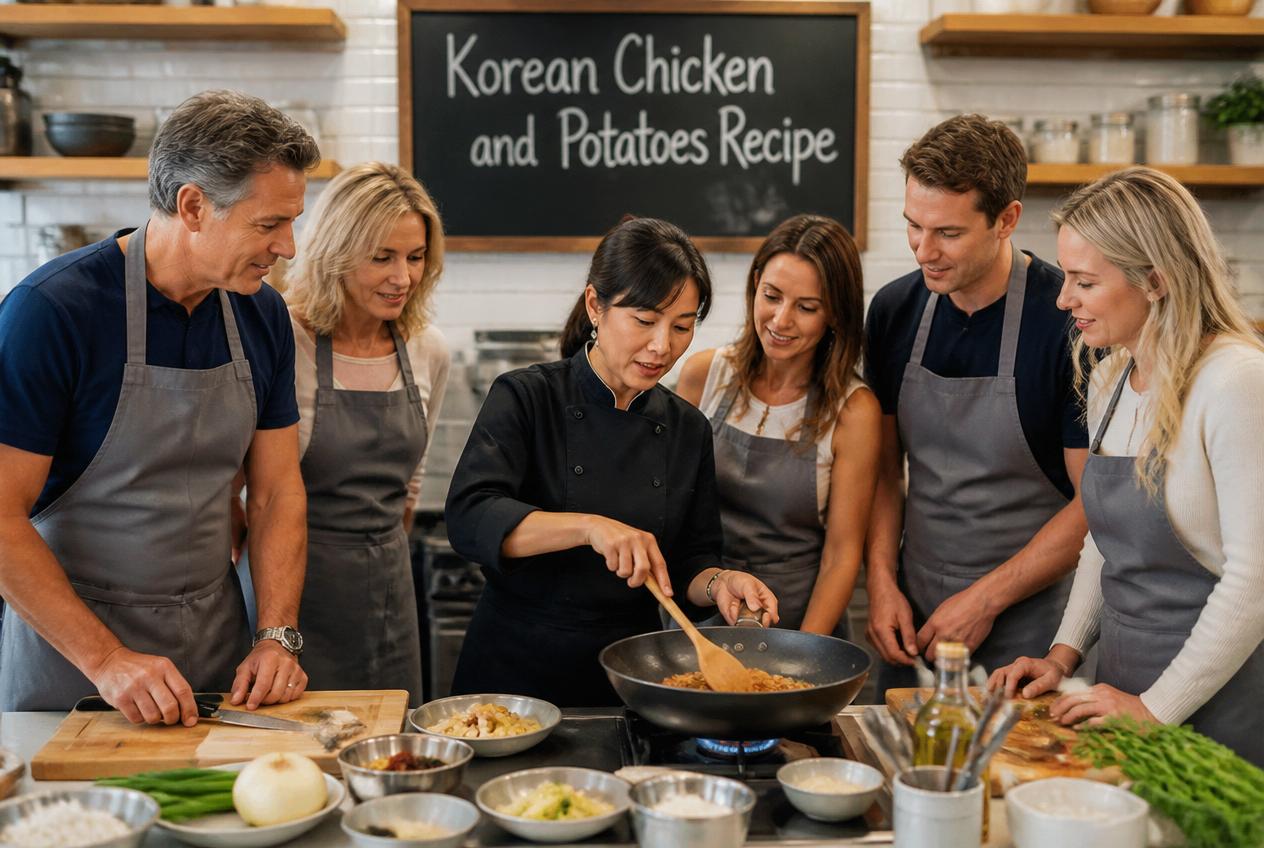
Alright, let me just say it—Korean Chicken and Potatoes or Dakdoritang is a spicy Korean chicken stew that mixes up tender bone-in chicken, potatoes, and carrots in a bold, red sauce full of heat and flavor. It’s one of those comfort meals I reach for when I want something hearty but don’t feel like scrubbing a mountain of dishes. The recipe’s way easier than it looks, and you get this impressive one-pot meal that’s good enough for guests, but honestly, it’s so forgiving that even my kitchen fails still taste great.
The best part about this Korean comfort food? It doesn’t care if you’re perfect. Use chicken thighs, drumsticks, wings—whatever you’ve got. The potatoes soak up that spicy sauce and turn into little flavor bombs. I’ve cooked Korean Chicken and Potatoes more times than I can count, and every time I think I’ve nailed it, I find a new trick for getting the sauce just right or keeping the veggies from getting mushy.
If you haven’t tried dakdoritang yet, you’re missing out. The spicy and savory combo is honestly addictive, especially with a bowl of steamed rice. And the leftovers? Somehow, Korean Chicken and Potatoes taste even better the next day, after all the flavors have had time to hang out together.
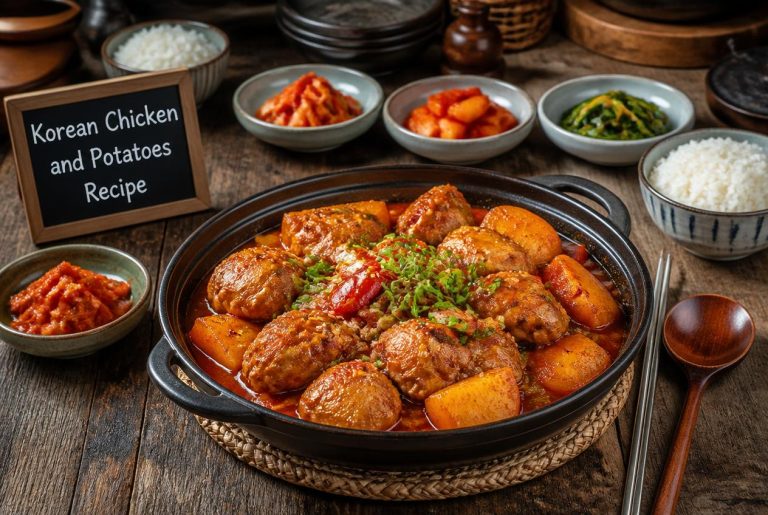
Korean Chicken and Potatoes Recipe
Key Takeaways
- Dakdoritang is a simple one-pot Korean chicken stew that balances spicy, sweet, and savory flavors
- The dish works well with different chicken cuts and gets even better after a night in the fridge
- You can tweak the spice level and avoid mistakes like mushy veggies or burnt sauce
A Brief Stroll Through History With Potatoes And Chicken
It cracks me up that dakdoritang, or dakbokkeumtang, brings together two ingredients that weren’t always staples in Korean cooking. Potatoes didn’t even show up in Korea until the late 1800s, which feels pretty recent, right?
Before that, Korean food got along just fine without them. But once potatoes arrived, they caught on fast—filling, easy to grow, and perfect for hearty dishes.
Chicken’s been around in Korean kitchens forever. People in Korea have raised chickens for centuries. The real magic started when someone thought to toss potatoes into a spicy chicken stew. That’s when Korean Chicken and Potatoes became a thing.
The Perfect Match:
- Potatoes soak up the spicy sauce and turn into flavor-packed bites
- Chicken adds protein and gets super tender from braising
- Both are budget-friendly and can feed a crowd
I love that this classic Korean braised chicken dish didn’t come from some royal kitchen. It’s just solid home cooking. The braising method makes the chicken fall-apart tender while the potatoes break down just enough to thicken the sauce.
I bet some clever home cook looked at their pantry, saw chicken and potatoes, and thought, “Why not make it spicy?” That’s how the best recipes get born—no fancy degrees, just good instincts and a hungry stomach.
Tips For Avoiding Common Kitchen Mishaps
I’ve made my fair share of mistakes learning how to cook Korean Chicken and Potatoes, so here’s what I wish I knew sooner.
Don’t skip prepping the potatoes. One time, I tossed raw potatoes straight in and ended up with crunchy bits while the chicken was perfect. If you parboil your potatoes for about five minutes first, they’ll cook through with everything else. Trust me, it’s worth the extra step.
Keep an eye on your spice levels. My first try had my friends reaching for tissues and milk. To dial down the heat in Korean Chicken and Potatoes, use less gochugaru but keep the gochujang for flavor.
Here’s what I’ve learned the hard way:
- Cut chicken pieces to the same size so they cook evenly
- Pick a wide, shallow pot for better braising—don’t use a tall, skinny one
- Keep the heat moderate or the sauce will burn before the chicken’s done
- Stir gently so the potatoes don’t fall apart
Don’t freeze leftovers. I learned this the hard way—frozen potatoes come out grainy and ruin Korean Chicken and Potatoes. Cooked potatoes just don’t survive the freezer.
Taste as you go. I once forgot salt completely because I was too busy worrying about the spice. Somehow, my family still ate it (they’re saints).
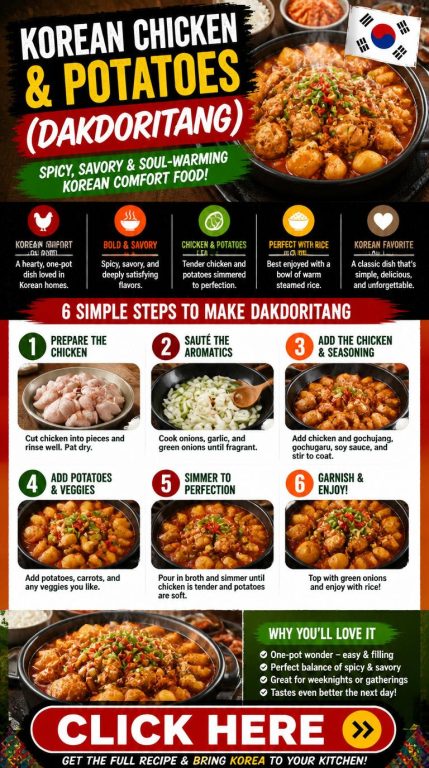
How To Give Traditional Flavors A Spicy Makeover
Want your Korean Chicken and Potatoes to bring the heat? I’ve got some tricks.
It all starts with gochugaru and gochujang together. I usually go for 2-3 tablespoons of gochugaru for a nice kick, then add 3-4 tablespoons of gochujang for that deep, sneaky heat.
Sometimes I get wild and toss in a diced jalapeño, just because I like to live dangerously. The fresh pepper gives a different kind of punch than the dried stuff.
My Spicy Upgrade Formula:
| Ingredient | Amount | Heat Level |
|---|---|---|
| Gochugaru | 2-3 tbsp | Medium |
| Gochujang | 3-4 tbsp | Medium-High |
| Jalapeño | 1 pepper | High |
| Black pepper | 1 tsp | Mild |
I balance the heat with mirin and a bit of sugar. Two tablespoons of mirin and a tablespoon of sugar keep things from getting too wild. Soy sauce, garlic, and ginger round out the flavor so your tongue gets a break between the spicy bites.
Don’t forget a drizzle of sesame oil at the end. It makes Korean Chicken and Potatoes smell amazing.
The spicy Korean chicken stew just gets better when the potatoes, carrots, and onions soak up all that flavor. I always scatter fresh scallions on top because they look nice and give your mouth a little relief from the spice.
The Great Leftover Dilemma: Storing Your Dakdoritang
I’ll be honest, leftover Korean Chicken and Potatoes is like finding a $20 bill in your jeans. It’s a little gift from your past self.
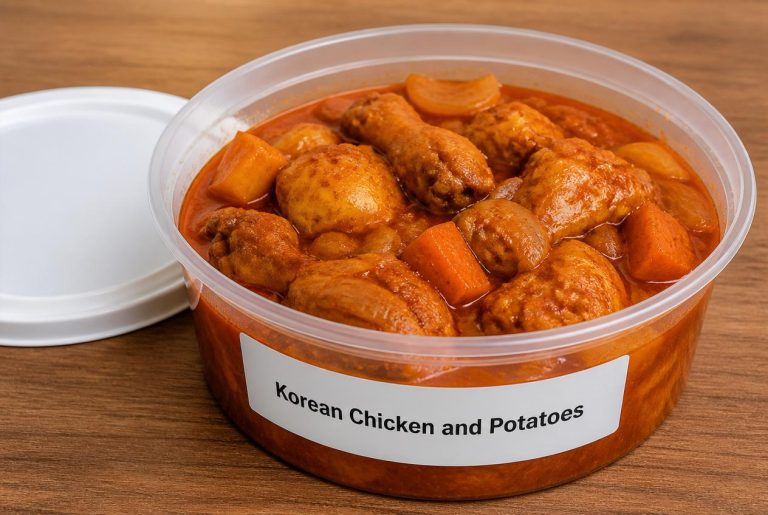
Storing dakdoritang is simple. I let the stew cool to room temp, then pop it in an airtight container and stick it in the fridge.
Korean Chicken and Potatoes will keep in the fridge for about three or four days. The flavors get even stronger overnight, which is honestly the best part.
Here’s how I store it:
- Use a container with a tight lid so your fridge doesn’t smell like spicy stew for a week
- Keep the rice separate if you can—nobody likes soggy rice
- Leave a little space at the top for the sauce to expand
If you need to keep it longer, freezing works—but only if you’re okay with the potatoes getting a bit weird. I portion out Korean Chicken and Potatoes into single servings before freezing, so I can grab lunch without thawing the whole thing.
Frozen Korean Chicken and Potatoes lasts up to three months. When I want some, I thaw it in the fridge overnight and reheat it on the stove. Sometimes I add a splash of water if the sauce thickened up too much.
Just don’t let your spicy chicken stew sit out for more than two hours. Food safety isn’t glamorous, but nobody wants to get sick from leftovers.
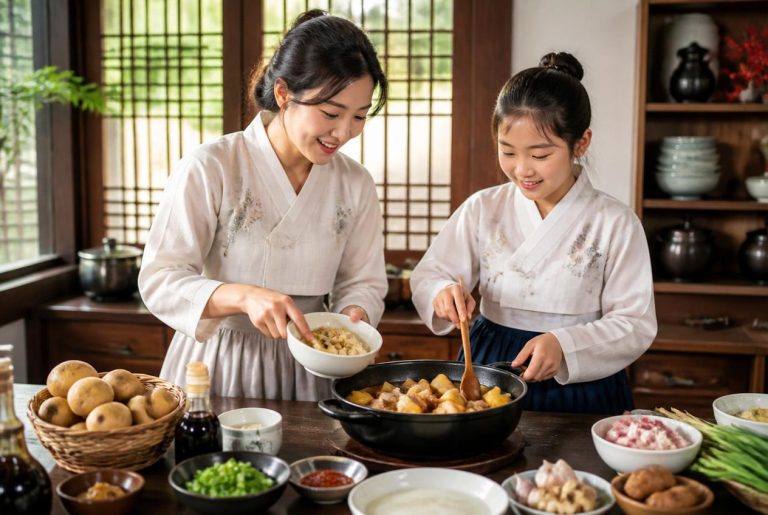
Korean Chicken and Potatoes Recipe – Prep
Cooking Tips For the Korean Chicken and Potatoes (Dakdoritang)
• Cut the chicken and potatoes into evenly sized pieces for more consistent cooking.
• Brown the chicken lightly at the beginning to help build deeper flavor.
• Simmer the stew gently so the chicken stays tender and moist.
• Add potatoes early enough so they cook through completely.
• Stir occasionally during cooking to help prevent sticking along the bottom of the pot.
• Use medium-low heat so the sauce thickens gradually without scorching.
• Taste before serving and adjust seasoning carefully if needed.
• Let the dakdoritang rest briefly before serving so the flavors settle together.
Korean Chicken and Potatoes Recipe – Storage
Storage Tips For the Korean Chicken and Potatoes (Dakdoritang)
• Allow the stew to cool slightly before placing it into storage containers.
• Store leftovers in airtight containers to help retain moisture and flavor.
• Refrigerate leftovers within 2 hours of cooking for proper food safety.
• Reheat slowly over medium-low heat while stirring occasionally.
• Add a splash of broth or water during reheating if the sauce thickens too much.
• Keep garnishes separate until serving time for fresher appearance.
• Freeze portions in freezer-safe containers for up to 3 months if needed.
• Leave slight space at the top of containers because sauces expand when frozen.
• Thaw frozen dakdoritang overnight in the refrigerator before reheating.
• Discard the chicken, potatoes, or sauce if they develop a sour smell, slimy texture, discoloration, mold, or unusual taste.
Korean Chicken and Potatoes (Dakdoritang)
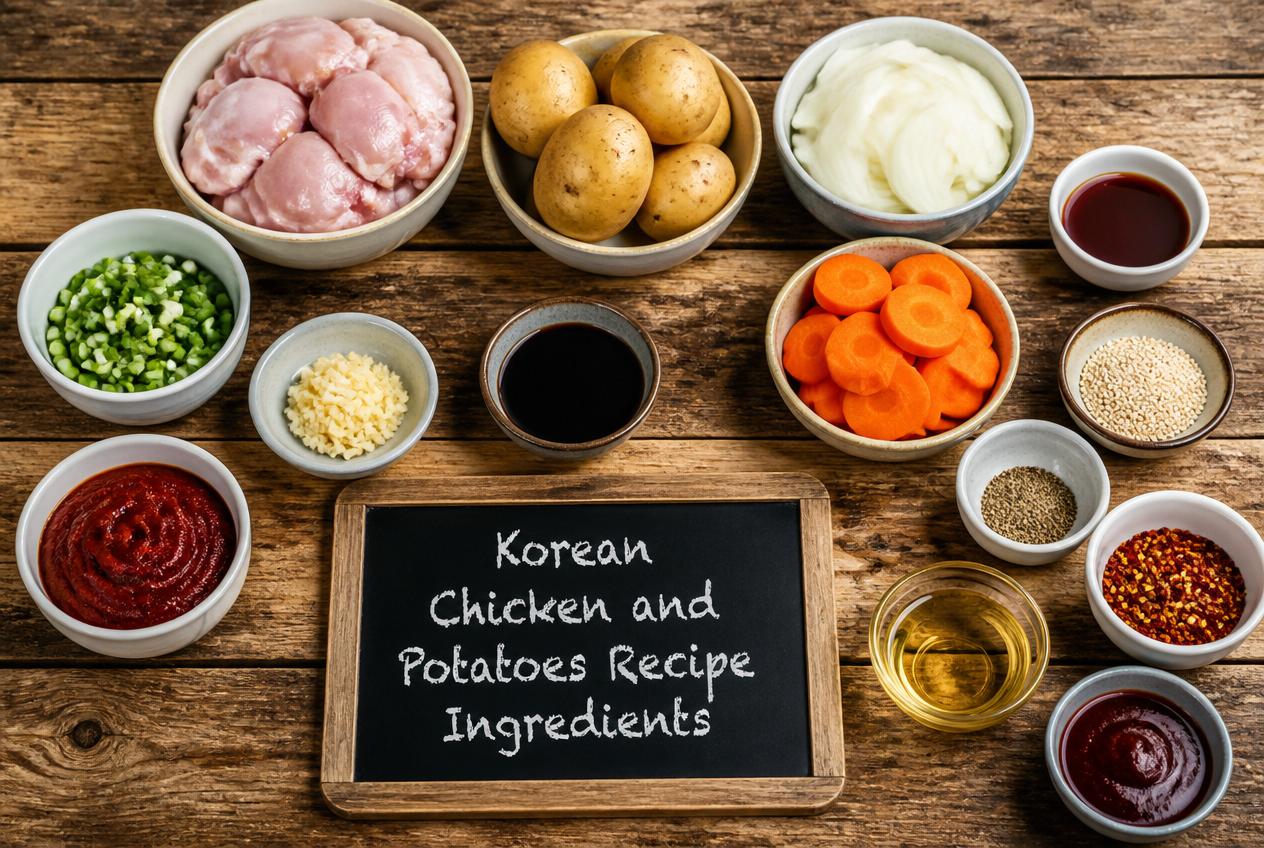
Ingredients
- 2 lbs chicken drumsticks
- 1 1/3 cup water
- 1/3 cup soy sauce
- 1/4 cup gochugaru red pepper powder
- 2 tablespoon gochujang
- 2 tablespoon brown sugar
- 8 cloves garlic grated
- 1 large onion cut into 1-inch chunks
- 1 large potato cut into 1-inch chunks
- 1 medium carrot cut into 1-inch chunks
- 1 jalapeño thinly sliced (optional)
- 1 tablespoon sesame oil
- 4 scallions sliced on the diagonal, for garnish (optional)
Instructions
- Bring a large pot of water to a boil and add the chicken drumsticks. Allow the chicken to poach for 5 minutes. The water may not return to a full boil after the chicken is added, which is perfectly fine. Once the time is up, drain the chicken and rinse it under cold running water. Return the cleaned chicken to the empty pot.
- In a small bowl, combine the water, soy sauce, red pepper powder, gochujang, brown sugar, and garlic. Stir until the ingredients are thoroughly blended. Pour the mixture over the chicken in the pot and bring everything to a boil. Once boiling, reduce the heat to medium and maintain a steady simmer for 10 minutes so the chicken can begin absorbing the flavors of the sauce.
- Add the onion, potato, carrot, and jalapeño if using. Continue simmering for an additional 20 minutes, stirring occasionally, until the chicken is fully cooked and the vegetables are tender. The sauce will continue to develop flavor as the ingredients cook together.
- Once the chicken and vegetables are cooked through, stir in the sesame oil. Mix gently to distribute the oil throughout the sauce and give the stew a rich finish.
- Ladle the hot chicken, vegetables, and broth into serving bowls. Garnish with sliced scallions if desired and serve immediately with white rice on the side.
- Add the chicken, water, soy sauce, red pepper powder, gochujang, brown sugar, garlic, onion, potato, carrot, and jalapeño, if using, to the Instant Pot. Use only 1/2 cup water rather than the larger amount used for the stovetop version. Secure the lid and cook on High Pressure for 30 minutes. Allow the pressure to release naturally for about 10 minutes before opening the lid. Stir in the sesame oil, garnish with scallions if desired, and serve with white rice.
Notes
Frequently Asked Questions for the Korean Chicken and Potatoes (Dakdoritang)
People ask a lot about Korean Chicken and Potatoes—how spicy it gets, what ingredients you need, how to cook it without ending up with mush, and how to nail that sauce. Here’s what I’ve figured out after plenty of kitchen experiments.
How do I make a comforting chicken-and-potato stew that won’t set my mouth on fire?
Not everyone wants to sweat at dinner, I get it.
The heat in Korean Chicken and Potatoes comes mostly from gochugaru (Korean red pepper flakes) and gochujang (Korean red pepper paste). I cut the gochugaru in half and use just 1-2 tablespoons of gochujang instead of the usual 3-4.
Adding a spoonful of honey or sugar helps take the edge off. It won’t make it sweet, just a little less fiery. You can also toss in extra potatoes and carrots—they soak up the spice and mellow things out.
What ingredients do I need so my chicken stew tastes like it knows what it’s doing?
You’ll want bone-in chicken, potatoes, carrots, and onions. But the sauce is where Korean Chicken and Potatoes gets its magic.
I always keep gochugaru, gochujang, soy sauce, garlic, and ginger around. Rice wine or mirin adds depth, and sesame oil gives that nutty finish. If you don’t have Korean rice syrup, honey or corn syrup works in a pinch.
Green onions and sesame seeds go on top at the end. Don’t skip the garlic—Korean Chicken and Potatoes needs at least 5-6 cloves to really shine.
Can I make this chicken stew in a slow cooker without turning the potatoes into mushy little sad clouds?
You can, but timing is everything. I learned the hard way after ending up with potato soup and chicken chunks.
I brown the chicken first, then add it to the slow cooker with the sauce. The trick is to add potatoes during the last 2-3 hours on low. Cut them a bit bigger than you think—they’ll shrink as they cook.
Carrots can go in with the potatoes. Slow cooker Korean Chicken and Potatoes comes out best on low for about 4-5 hours, with veggies added partway through.
What’s the best cut of chicken to use if I’m team chicken breast (and still want it juicy)?
Chicken breast can totally work for Korean Chicken and Potatoes, but honestly? It takes a bit more attention than bone-in thighs.
I usually chop the breasts into big chunks and cook them less than the recipe says for bone-in chicken. For Korean Chicken and Potatoes, I simmer the breast pieces just 20-25 minutes, not 40. I toss them in after the sauce has already been bubbling for about 10 minutes, so they don’t get overcooked and dry.
The real trick? Don’t walk away. Check the chicken at the 20-minute mark and pull the pot off the heat as soon as they’re cooked through. Bone-in thighs make Korean Chicken and Potatoes easier because the bones and fat help keep everything juicy. Still, if you’re set on breast, just keep an eye on it.
How do I thicken the stew sauce so it clings to everything like it pays rent?
I’ve got three ways to thicken the sauce for Korean Chicken and Potatoes without turning the whole thing into glue.
First, I just let it cook uncovered at the end for 10-15 minutes so the liquid can evaporate. I give it a stir now and then, and once the sauce looks glossy and sticks to a spoon, it’s perfect for Korean Chicken and Potatoes.
Another option is mixing 1 tablespoon of cornstarch with 2 tablespoons of cold water, then stirring it into the bubbling stew. It thickens up in about 2 minutes. Or, if you’re feeling lazy, just mash one of the cooked potatoes against the side of the pot and stir it back in. That thickens the sauce for Korean Chicken and Potatoes naturally—no extra ingredients needed.
What can I serve with this stew so dinner feels like a full-on feast and not a solo act?
White rice is a must in my house. Honestly, the sauce from Korean Chicken and Potatoes is too good to waste, and rice just soaks up every drop.
I always put out kimchi—there’s something about that tangy crunch that really balances the rich, spicy Korean Chicken and Potatoes stew. Pickled radish (danmuji) works too, bringing a sweet contrast that helps reset your palate between bites. For something lighter, I’ll throw together a cucumber salad with rice vinegar and sesame oil. It keeps the meal bright and fresh, which I love.
Sometimes, I make extra rice and toss some steamed veggies like bok choy or spinach on the table. When I’m in the mood, I’ll even add Korean sweet potato noodles right into the Korean Chicken and Potatoes stew during the last few minutes. It’s so satisfying. Korean Chicken and Potatoes really pairs well with all these sides, and honestly, it’s hard to go wrong. If you’re looking for a hearty, comforting meal, Korean Chicken and Potatoes with these sides is a winner every time.

Recipes are gathered in person and written for real-world cooking conditions.
- 10 Hungarian Dessert Recipes Passed Down Through Generations - July 25, 2026
- 11 Easy English Recipes Anyone Can Make - July 25, 2026
- Hungarian Kifli Recipe - July 25, 2026