
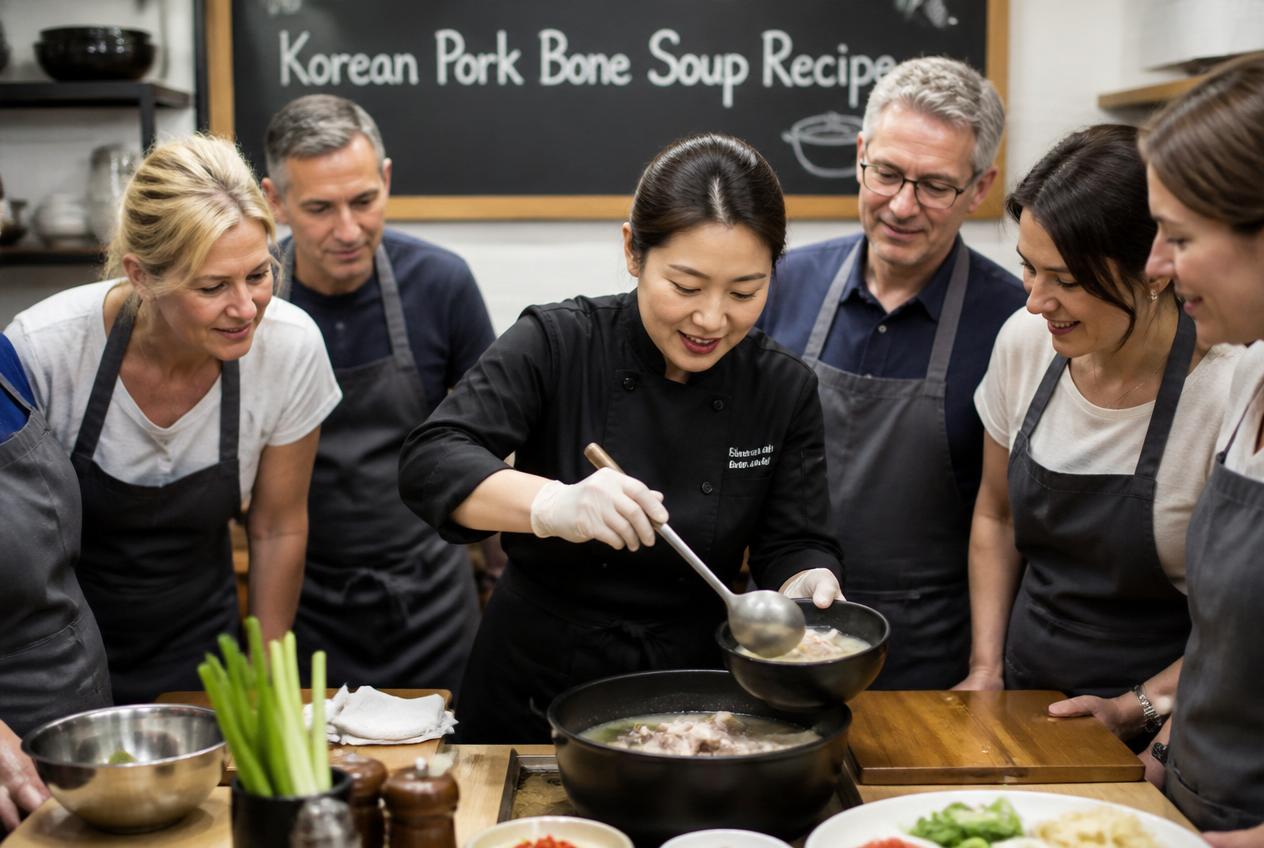
Okay, real talk: the first time I tasted Korean Pork Bone Soup or gamjatang, I was shocked that a soup could make me feel this good. This spicy Korean pork bone soup comes together by simmering pork neck bones until the meat gets ridiculously tender, then tossing in potatoes, veggies, and a deep, chili-spiked broth. It’s one of those meals that just hugs you from the inside, perfect for days when everything feels a little off.
The cool thing about this Korean soup is that it looks way fancier than it actually is. You do have to let the bones cook for a while, but honestly, most of that is just waiting around. What you get is a hearty, savory stew with meat that basically falls off the bone—super satisfying. And since it’s famous as a hangover cure in Korea, you can tell yourself it’s medicinal. That’s a win, right?
If you want to impress someone or just need a big pot of comfort food to last all week, Korean Pork Bone Soup (gamjatang) is the answer. I’ve picked up a few tricks to make this spicy pork bone stew even better, and I’m happy to spill them all here.
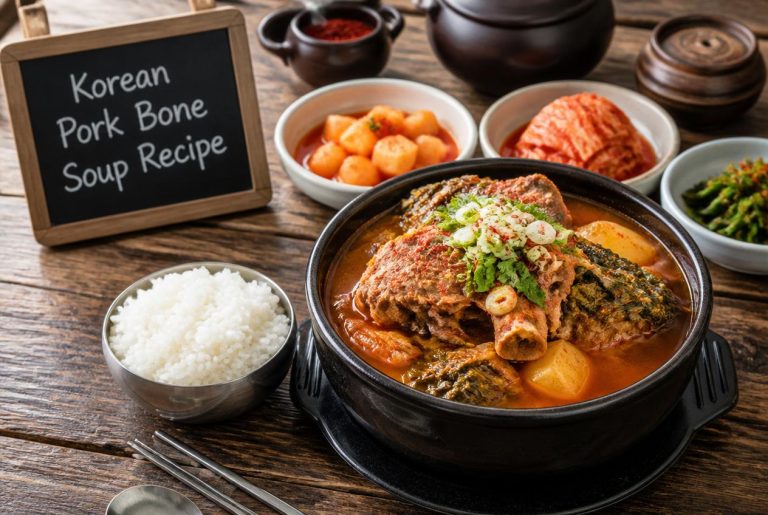
Korean Pork Bone Soup Recipe
Key Takeaways
- Gamjatang is a spicy Korean pork bone soup that’s easier to make than it looks and tastes like comfort in a bowl
- The key to great flavor is simmering the pork bones properly and using the right mix of Korean seasonings
- You can store leftovers for several days and the flavors actually get better over time
Backstory And Fun Facts
I have to share something funny about gamjatang’s name. “Gamja” means potato in Korean, so you’d think this dish is all about potatoes. But actually, the pork bones totally steal the show!
Some folks say the name might come from an old Korean word for the meat around pork spine bones, not potatoes at all. It’s a bit like calling pizza “Crust Pie” when everyone knows the toppings are what matter.
Here’s what makes this Korean Pork Bone Soup so special:
- Working-class roots: This wasn’t royal food. Regular people made this filling stew to use up every bit of the pig.
- Hangover cure: Lots of Koreans swear by Korean Pork Bone Soup after a night out. The rich broth is supposed to help you recover.
- Late-night favorite: You’ll find restaurants serving this classic all night long.
I love how Korean Pork Bone Soup shows off the practical side of Korean cooking. Why waste anything when you can turn pork neck bones into something so good?
The soup usually arrives bubbling hot in stone pots, with banchan (side dishes) and a bowl of rice. Some people have it as a main meal, while others enjoy it with drinks as a late-night snack.
One more fun tidbit: 감자탕 is so popular that some restaurants serve nothing else. That’s real dedication to Korean Pork Bone Soup, right?
Chef’s Secrets For Maximum Flavor
I’ve found that the real magic of authentic gamjatang starts with cleaning those pork neck bones really well. I rinse them under cold water and give them a quick blanch for about 10 minutes. That step keeps my broth nice and clear.
My secret weapon is ground perilla seeds (들깨가루, deulkkae garu). I mix the powder with a little hot broth, making a paste that takes Korean Pork Bone Soup from “good” to “I can’t stop eating this.”
Here’s what I always include:
- Doenjang (fermented soybean paste) – adds savory depth you just can’t get from gochugaru alone
- A splash of fish sauce for that umami punch
- Toasted sesame oil at the end for a nutty aroma
- Fresh perilla leaves (kkaennip), torn up just before serving
I stick with Yukon Gold potatoes because they hold their shape. Nobody wants mushy potatoes in their Korean Pork Bone Soup, right?
The broth needs at least 90 minutes to get that creamy, milky color from the bones. It’s tempting to rush, but trust me, waiting pays off when the meat practically slides off the bone.
I always grab soup soy sauce instead of the regular stuff. It’s lighter, so it doesn’t drown out the awesome flavors you worked so hard for.
Korean red pepper flakes (gochugaru) bring the heat. I add them in stages, so I control the spice and don’t turn my Korean Pork Bone Soup into a five-alarm fire.

Wild And Wondrous Twists
I can’t help but experiment with gamjatang because, honestly, Korean Pork Bone Soup is practically begging for new ideas. The traditional version is fantastic, but I always find an excuse to raid the fridge for extra goodies.
My favorite wildcard? Enoki mushrooms. I throw them in during the last five minutes, and they soak up the broth like little noodles. Makes me wonder why everyone doesn’t do this.
My go-to twists:
- Enoki mushrooms – for that silky, slurpable texture
- Extra napa cabbage – you can never have too much
- Sesame seeds powder – sprinkled on top for a nutty finish
- Mirin – just a splash to balance out the spice
Doubling the napa cabbage gives you more veggies to soak up that spicy, porky broth. It turns Korean Pork Bone Soup into a super hearty meal, but somehow it never feels too heavy.
The sesame seeds powder really deserves a shoutout. I grind it myself when I’m feeling fancy, but store-bought is totally fine. Either way, it adds a depth that people seem to love.
One night I ran out of sugar and grabbed the mirin instead. That subtle sweetness and tang changed everything for me. Now it’s kind of my signature move.
Here’s my experimental additions:
| Ingredient | When to Add | Why I Like It |
|---|---|---|
| Enoki mushrooms | Last 5 minutes | Adds texture |
| Mirin | With seasonings | Balances heat |
| Sesame seeds powder | Final garnish | Nutty finish |
Stashing And Reheating Like A Pro
I always make extra gamjatang because it tastes even better the next day. The flavors just hang out together overnight and get richer—kind of like leftovers at their best.
Let the Korean Pork Bone Soup cool down completely before you stash it away. Trust me, you don’t want a steamy fridge.
Storage Tips:
- Fridge: 3-4 days, airtight container
- Freezer: Up to 3 months, freezer-safe containers
I like to pull the meat off the bones before freezing. My future self is always grateful for that. You can prep the pork bones a day ahead, which makes planning easier.
For reheating, I add a splash of water or broth since the potatoes soak up a lot of liquid. I use the stovetop, medium heat, for about 10-15 minutes, stirring now and then.
If I’m in a rush, the microwave works, but I stop and stir every couple minutes. Nobody wants cold spots in their Korean Pork Bone Soup, right?
Perilla leaves get soggy after a night in the fridge, so I always add fresh ones before serving. It makes the soup taste like I just made it, and honestly, it feels like a little kitchen win.
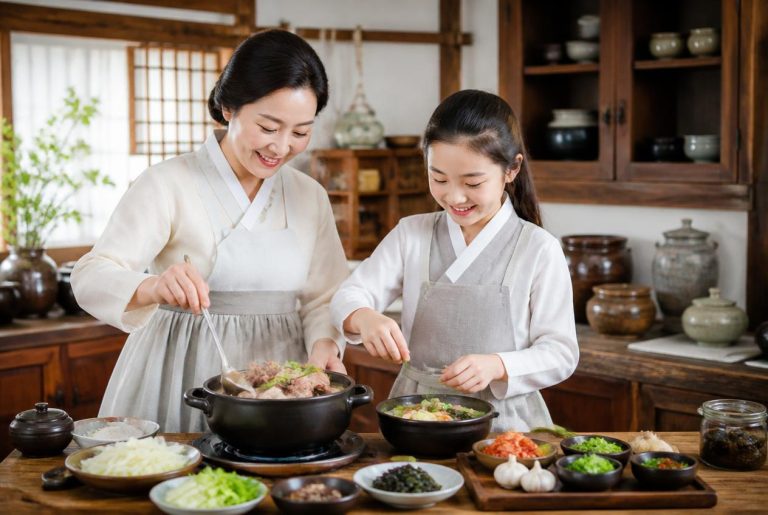
Korean Pork Bone Soup Recipe – Prep
Cooking Tips For the Korean Pork Bone Soup (Gamjatang)
• Simmer the pork bones slowly so the broth develops rich flavor.
• Skim foam and impurities from the surface during cooking for a cleaner broth.
• Add potatoes at the proper stage so they become tender without falling apart.
• Stir the soup occasionally to help distribute ingredients evenly.
• Use medium-low heat so the broth develops gradually without becoming cloudy.
• Add vegetables near the end if you want them to maintain more texture.
• Taste before serving and adjust seasoning carefully if needed.
• Serve the gamjatang hot for the best texture and flavor balance.
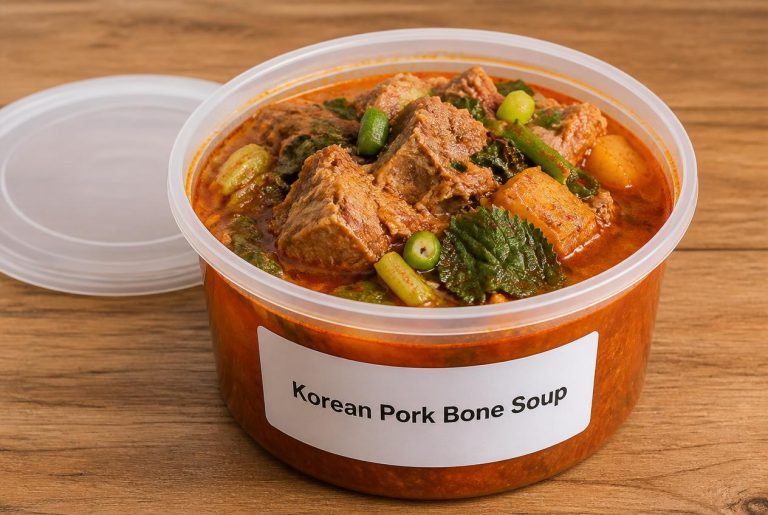
Korean Pork Bone Soup Recipe – Storage
Storage Tips For the Korean Pork Bone Soup (Gamjatang)
• Allow the soup to cool slightly before transferring it into storage containers.
• Store leftovers in airtight containers to help retain moisture and flavor.
• Refrigerate leftovers within 2 hours of cooking for proper food safety.
• Reheat slowly over medium-low heat while stirring occasionally.
• Add a splash of broth or water during reheating if the soup thickens too much.
• Keep garnishes separate until serving time for fresher appearance.
• Freeze portions in freezer-safe containers for up to 3 months if needed.
• Leave a little space at the top of containers because soups expand when frozen.
• Thaw frozen gamjatang overnight in the refrigerator before reheating.
• Discard the soup, meat, or vegetables if they develop a sour smell, slimy texture, discoloration, mold, or unusual taste.
Korean Pork Bone Soup (Gamjatang)
Ingredients
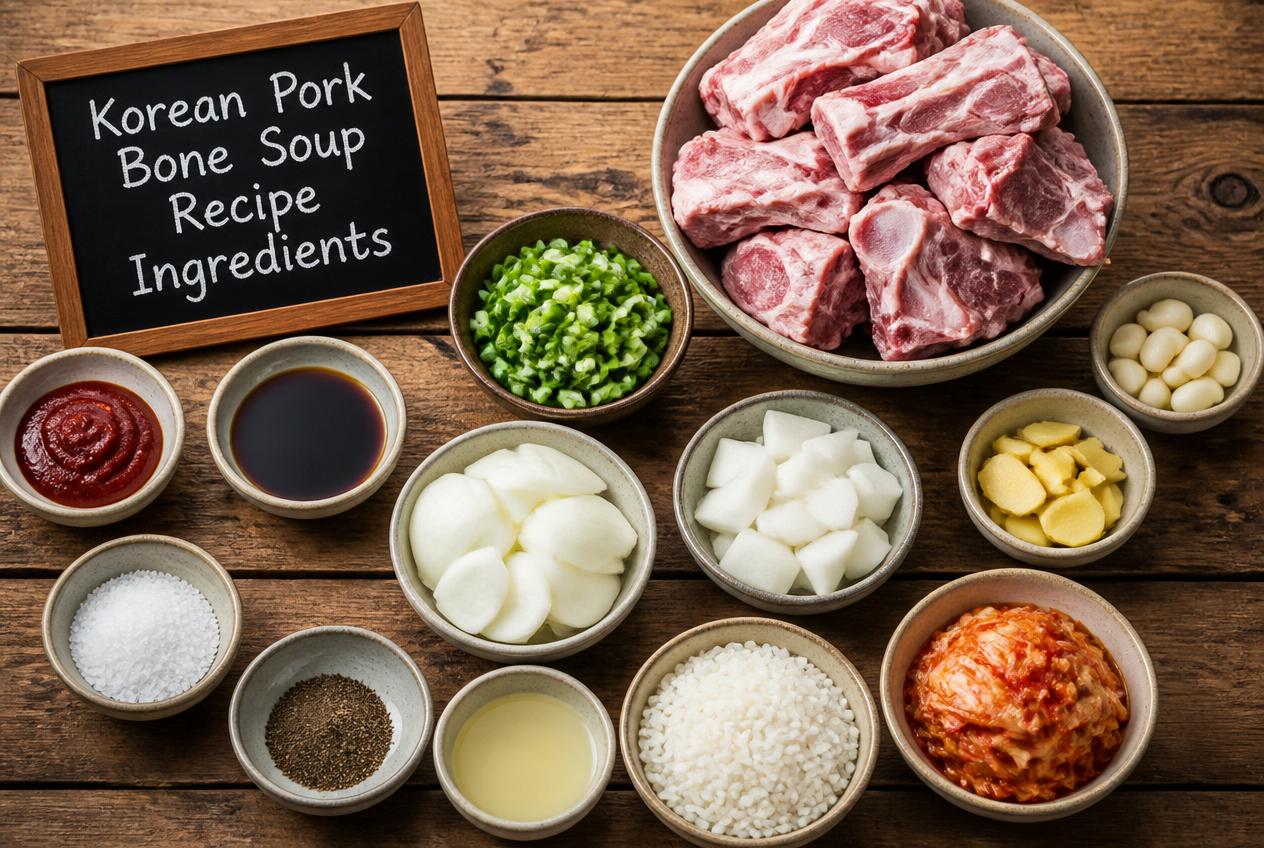
- 1.4 kg pork 3 pounds neck bone, (try to pick the bones with lots of meat on them)
- 7 cups water
- 3 potatoes 500 g / 1.1 pounds, peeled & cut into smaller chunks
- 6 napa cabbage leaves 300 g / 10 ounces, rinsed
- 100 g mung bean sprouts 3.5 ounces, rinsed
- 30 g crown daisy leaves 1 ounce, rinsed (optional)
- 6 perilla leaves thinly sliced (optional)
- 2 green chilies thinly sliced (optional)
- 1 onion 160 g / 5.6 ounces, peeled & halved
- 30 g green onion 1 ounce, white part only
- 5 cloves garlic 30 g / 1 ounce, peeled
- 1 ginger 5 g / 0.2 ounce, peeled & thinly sliced
- 1 tsp black pepper whole
- 3 Tbsp gochugaru korean chili flakes
- 2 Tbsp doenjang korean soybean paste
- 2 Tbsp rice wine
- 1 1/2 Tbsp garlic minced
- 1 Tbsp gochujang korean chili paste
- 1 Tbsp Korean fish sauce
- 1 Tbap water
- 1 tsp ginger minced
- A few sprinkles ground black peppers
Instructions
- Place the pork neck bones in a large bowl or container and cover them with cold water. Let them soak for at least 1 hour to help remove any excess blood and impurities. For the best results, change the water every 15 minutes if possible. Once the soaking time is complete, drain the water completely.
- Transfer the soaked bones to a large pot and add enough water to fully cover them. Bring the pot to a boil over medium-high heat and cook for about 10 minutes with the lid on. This step helps remove additional impurities from the bones. Drain the water and thoroughly rinse the bones under cold running water before continuing.
- Place the cleaned bones into a large pot and add the water along with all of the aromatic vegetables. Cover the pot and simmer over medium-low heat for 1 hour 30 minutes. During this time, the broth will gradually develop a rich flavor while the meat becomes tender.
- While the broth is simmering, place the potatoes in a separate pot and cover them with water. Boil over medium-high heat until they are nearly cooked through, about 90% done. Drain and set aside. In another pot, bring water and salt to a boil. Add the napa cabbage and parboil it for 1 to 2 minutes. Drain the cabbage and allow it to cool slightly before tearing each leaf lengthwise by hand or cutting it with a knife.
- Once the broth has finished simmering, strain it through a fine strainer into a large bowl. Reserve the pork bones and discard the cooked vegetables and spices. The finished broth should yield just under 5 cups. Transfer the strained broth into a clean pot.
- Return the pork bones to the pot along with the potatoes, cabbage, and prepared seasoning base. Bring everything to a boil over medium-high heat and continue cooking for 10 to 15 minutes, or until the potatoes are fully tender and the flavors have blended together.
- Reduce the heat to medium and add the mung bean sprouts, crown daisy leaves, perilla leaves, green chilies, and ground sesame or perilla seeds. Continue cooking for another 1 to 2 minutes, just until the vegetables soften and become tender.
- Serve the soup hot with steamed rice on the side. For the best experience, ladle plenty of broth, vegetables, and meaty pork bones into each bowl and enjoy while the soup is piping hot.
Notes
1/8 tsp fine sea salt
1 Tbsp toasted sesame seeds or perilla seeds, grounded
Frequently Asked Questions
Making Korean Pork Bone Soup at home brings up all kinds of questions—like which pork cuts to buy or how to say “gamjatang” without tripping over your tongue. Broth clarity, spice level, and picking the right ingredients all matter if you want the real deal.
What exactly is this pork bone soup, and why does it taste like a warm hug?
Gamjatang is a spicy Korean pork bone soup—think pork bones, potatoes, and vegetables simmered in a rich, flavorful broth. The name means “potato soup,” but really, the pork bones are the main event.
I’m convinced the comfort comes from simmering the bones for so long. You get a deep, savory broth and the meat is so tender, it’s kind of a celebration in a bowl.
Korean chili paste and peppers give the soup its signature kick, but it’s not overwhelming. Korean Pork Bone Soup is the kind of thing that lets you forget about your problems for a little while—at least until your bowl’s empty.
Which cut of pork works best if I don’t want to wrestle with bones at dinner?
Pork neck bones are the classic pick for authentic gamjatang and, honestly, they make the best Korean Pork Bone Soup broth. Pork spine works pretty well too if your butcher gives you a weird look when you ask for neck bones. I get it—some places just don’t carry them.
The bones have these little pockets of super tender meat that just fall off after simmering for hours. If you really can’t stand picking around bones, you could use bone-in pork shoulder, but you’ll lose some of that real-deal Korean Pork Bone Soup experience.
Some folks use a mix of bones and meatier cuts, and that’s a nice compromise. I’d still say, keep at least a few bones in there. They give Korean Pork Bone Soup its signature flavor—otherwise, it’s just spicy pork stew, right?
How do I make the broth clear instead of “mystery-cloudy”?
If you want a clear broth in your Korean Pork Bone Soup, blanch the bones first. I usually boil the pork bones for about 10 minutes, toss out that water, and then rinse everything well.
After blanching, I start again with fresh water and keep the heat low. If you boil it too hard, the broth gets cloudy—tiny bits of fat and protein just float around and ruin that clean look.
During the first half hour, I keep a ladle handy and skim off any gray foam that pops up. It’s a little tedious, but your Korean Pork Bone Soup will look and taste so much better.
Can I make it non-spicy without offending any Korean grandmas (real or imaginary)?
You can totally dial down the spice in your gamjatang recipe by using less gochugaru, the Korean red pepper flakes. I’ve cut the amount in half before—no angry grandmas showed up at my door.
Gochujang (that red pepper paste) brings both heat and flavor, so if you skip it, the soup changes a lot. You could swap it with a milder miso paste if you’re desperate, but at that point, is it still Korean Pork Bone Soup?
Adding extra potatoes and veggies helps mellow things out. I usually keep a little chili paste for that authentic flavor, but you don’t have to set your mouth on fire to enjoy Korean Pork Bone Soup.
What ingredients are absolutely essential, and which ones are just there to show off?
You really need pork bones, potatoes, and some type of Korean chili pepper for a legit spicy pork bone soup. Without those, you’re making something else—not Korean Pork Bone Soup.
Garlic, ginger, and green onions are must-haves for the base flavor. I tried skipping them once, and the broth just tasted sad. Korean Pork Bone Soup needs that punch.
Perilla leaves give the soup a unique herbal kick, but you can leave them out if you can’t find any. Sesame oil, sesame seeds, and all those fancy toppings? Nice, but honestly, not critical for good Korean Pork Bone Soup.
Napa cabbage and wild sesame seeds show up in a lot of how to make gamjatang recipes, but regular cabbage works fine. No one’s going to judge your Korean Pork Bone Soup if you use what’s at your local store.
How do I say its name in Korean without accidentally summoning something?
So, Gamjatang—yeah, that’s “gahm-jah-tahng.” Put a little extra oomph on the “gahm” at the start. The “g” is like in “game,” not a “j” sound, which trips some people up.
I usually break it into three chunks: “gahm” (think “mom” but swap the “m” for a “g”), “jah” (sort of like “ya,” but softer), and “tahng” (rhymes with “song”). Try saying it out loud a couple times. It gets easier, and suddenly you’re ready to order Korean Pork Bone Soup like a pro.
Honestly, if you mess it up, the worst you’ll get is a friendly correction from your server. I’ve butchered plenty of Korean words, and nobody’s ever summoned anything except a steaming bowl of spicy Korean Pork Bone Soup. Not a bad outcome, right?

Recipes are gathered in person and written for real-world cooking conditions.
- 10 Hungarian Dessert Recipes Passed Down Through Generations - July 25, 2026
- 11 Easy English Recipes Anyone Can Make - July 25, 2026
- Hungarian Kifli Recipe - July 25, 2026