
Korean BBQ Noodles might sound like a big grilled meat feast, but bibim guksu is actually a cold noodle dish that’s spicy, tangy, and just right when you want something quick and refreshing. This Korean BBQ Noodles recipe uses thin wheat noodles tossed in a gochujang-based sauce, with crisp veggies and toppings like cucumber and soft-boiled eggs. You can whip it up in about 10 minutes. I love that bibim guksu literally means “mixed noodles” in Korean—because honestly, that’s what it is. Just toss everything in a bowl and dig in. Simple, right?
The best thing about making Korean BBQ Noodles is you don’t need any fancy skills or weird ingredients. The sauce is just gochujang (that classic Korean red pepper paste), sugar, vinegar, and a few pantry staples. You end up with this sweet, spicy, and sour combo that’s hard to resist. I crave these spicy cold noodles on those sticky hot days when I want something tasty but don’t want to stand over a stove forever.
Whether you’re new to Korean food or you’ve been making kimchi since forever, Korean BBQ Noodles deserve a spot in your meal rotation. You can throw in whatever veggies you’ve got, and the spice level is totally up to you. Honestly, it’s way more exciting than a boring salad for lunch.
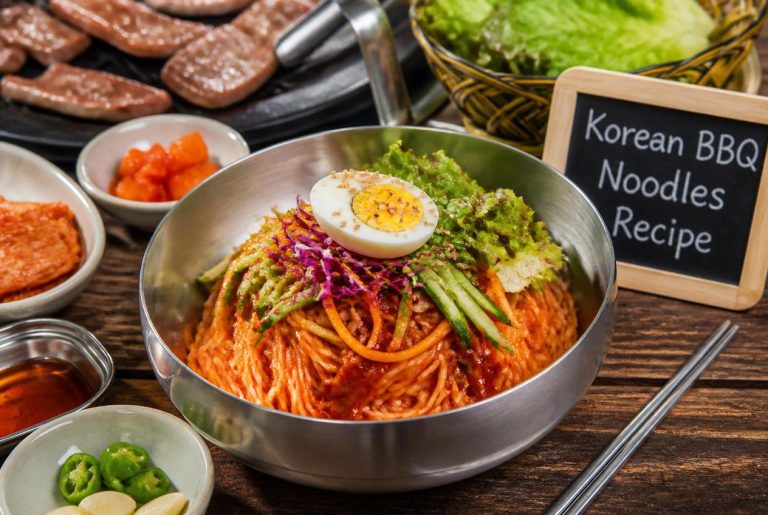
Korean BBQ Noodles Recipe
Key Takeaways
- Korean BBQ Noodles are a cold Korean noodle dish with a spicy gochujang sauce, ready in about 10 minutes
- You can swap out the veggies and tweak the spice however you like
- The leftover Korean BBQ Noodles sauce keeps well in the fridge and makes weeknight dinners a breeze
What’s The Scoop: Korean Recipe History And Lore
Let me tell you, bibim guksu is one of Korea’s most popular traditional noodle dishes. It’s been saving people from brutal summer heat for generations. Korean BBQ Noodles really have history on their side.
The name just means “mixed noodles” in Korean, which makes sense for a dish that’s all about tossing noodles with spicy sauce. I love how direct Korean recipes can be—no need for fancy names when you’re just mixing cold noodles and sauce and calling it a day.
Why Cold Noodles?
This cold noodle dish became a summer must-have in Korea for obvious reasons. When it’s hot, who wants soup? People want something cold, spicy, and refreshing—Korean BBQ Noodles hit the spot.
The dish uses somyeon, which are super thin wheat noodles. These noodles have been around in Korean kitchens for ages. It’s kind of funny how something so basic—thin noodles and spicy sauce—became a classic comfort food.
The Real Deal
Honestly, I laugh at how some folks start craving Korean BBQ Noodles if they go too long without them. Maybe it’s the magic of spicy gochujang, tangy vinegar, and a hint of sweetness, but the flavor is just addictive.
Traditional Korean families would make Korean BBQ Noodles during the hot months as a quick meal. It barely heats up the kitchen, which is just smart.
Don’t Boil Over: Top Tips For Korean Cooking
Making easy Korean BBQ Noodles is way less intimidating than it sounds. You just need a few tricks to keep things from going sideways.
Prep everything before you start cooking. I slice my garlic, measure out soy sauce (ganjang), and grab my rice vinegar before anything else. This isn’t French cooking—it’s just practical Korean efficiency.
When I cook noodles for 10-minute Korean BBQ Noodles, I always set a timer. Overcook them even a little, and you’ll end up with mush. Nobody wants that.
Here’s my sauce checklist:
- Toasted sesame oil (it’s way better than regular, trust me)
- Toasted sesame seeds for crunch
- Sugar for balance
- Garlic because, well, garlic makes everything better
- Soy sauce for depth
- Rice vinegar for tang
I keep these ingredients together in my kitchen so I’m not running around hunting for stuff while the noodles cook. It saves a lot of stress.
The biggest tip? Serve immediately after mixing. Korean BBQ Noodles are meant to be cold and fresh, not sitting around getting soggy while you try to take the perfect photo. Eat first, post later—your taste buds will thank you.
I rinse my cooked noodles under cold water to stop the cooking. It’s like hitting pause on the whole process.
Noodle-ing Around: Popular Korean Variations
I’ve found that Korean BBQ Noodles have a bunch of tasty variations besides the basic recipe. There’s a whole world of noodles out there.
Some people swap somyeon for soba or buckwheat noodles. These add a nutty flavor and a little more bite. I’m a fan of the earthy taste they bring to Korean BBQ Noodles.
Here are some of my favorite mix-ins and tweaks:
- Perilla leaves – They add this minty, almost licorice flavor that feels fancy
- Asian pear – Julienned, it’s sweet and crunchy but doesn’t get soggy
- Extra gochugaru – For those days when I want things extra spicy
- Honey instead of sugar – It gives a deeper, richer sweetness
- White vinegar – Some recipes use it for more tang, but it can be a bit sharp for me
Sometimes you’ll see Korean BBQ Noodles called bibimmyeon, which is just another way to say “mixed noodles.” Different parts of Korea change up the sauce ratios, too.
Northern versions of Korean BBQ Noodles tend to be less sweet, while southern ones use more garlic. The flexibility of Korean BBQ Noodles means you can raid your fridge and still end up with something delicious.
My rule? If it fits in a bowl and doesn’t fight back, it’s fair game for Korean BBQ Noodles.
The Leftover Legend: Storing Korean Dishes Without Tears
I’ve learned the hard way that Korean BBQ Noodles don’t age well. They go from amazing to sad pretty fast if you don’t store them right.
I used to store everything together and ended up with a mushy mess. The noodles turned into a science experiment, and not in a good way.
Here’s what works for Korean BBQ Noodles:
| Component | Storage Method | How Long |
|---|---|---|
| Cooked noodles | Rinse with cold water, store in airtight container | 2-3 days |
| Gochujang sauce | Separate container in fridge | Up to 1 week |
| Fresh vegetables | Unwashed, in crisper drawer | 3-4 days |
| Kimchi | Original container or jar | Several weeks |
Now I always keep the sauce separate from the noodles. Seriously, future me is grateful when the noodles aren’t drowning in a red puddle.
The veggies get their own space, too. I slice them fresh right before eating—no one wants soggy cucumbers in their Korean BBQ Noodles. Just, no.
My golden rules for Korean BBQ Noodles:
- Don’t mix the spicy cold noodles and sauce until you’re about to eat
- Keep everything cold—this dish is meant to be chilly
- Use glass containers if you can
- Label everything because I always forget what’s what
The cool thing? The gochujang-based sauce for Korean BBQ Noodles actually gets better after a day in the fridge. The flavors hang out and get friendlier overnight.
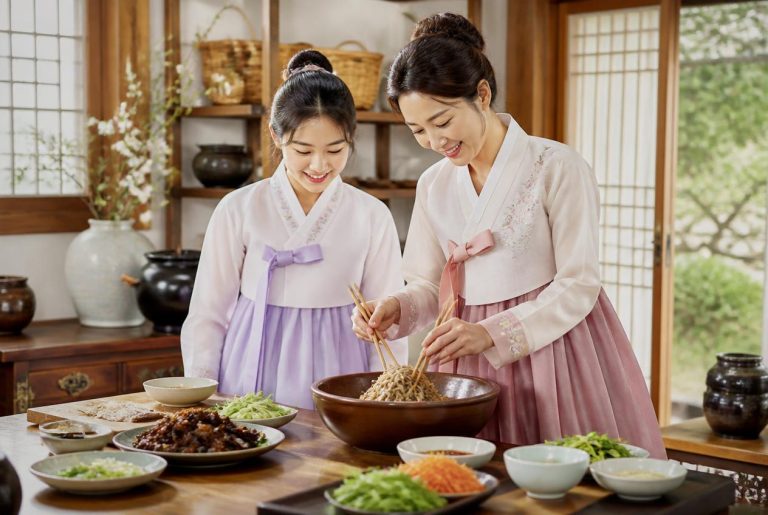
Korean BBQ Noodles Recipe – Prep
Cooking Tips For the Korean BBQ Noodles (Bibim Guksu)
• Cook the noodles according to package directions and avoid overcooking.
• Rinse the noodles thoroughly with cold water to stop the cooking process.
• Drain the noodles well before adding the sauce.
• Mix the sauce separately first so the ingredients combine evenly.
• Toss the noodles thoroughly so they are coated evenly with the sauce.
• Add vegetables and garnishes close to serving time for better texture.
• Taste before serving and adjust seasoning carefully if needed.
• Serve the bibim guksu chilled or slightly cool for the best texture and flavor balance.
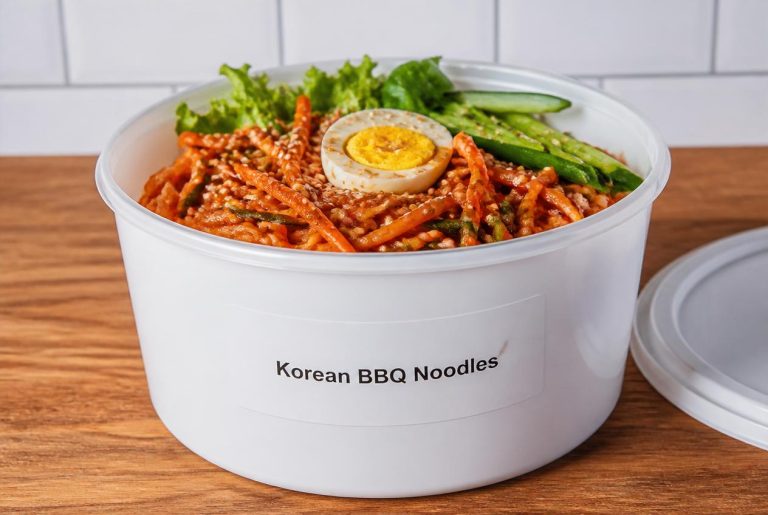
Korean BBQ Noodles Recipe – Storage
Storage Tips For the Korean BBQ Noodles (Bibim Guksu)
• Store leftovers in airtight containers to help preserve freshness.
• Refrigerate leftovers within 2 hours of preparation for proper food safety.
• Keep extra sauce separate if possible during storage.
• Stir the noodles gently before serving because they may clump together.
• Add a small amount of sauce if the noodles seem dry after refrigeration.
• Keep fresh vegetables, eggs, and garnishes separate until serving time.
• Freezing is generally not recommended because noodle texture can deteriorate after thawing.
• If freezing is necessary, freeze only the sauce or cooked meat portions separately.
• Consume refrigerated leftovers within a few days for best quality.
• Discard the noodles or toppings if they develop a sour smell, slimy texture, discoloration, mold, or unusual taste.
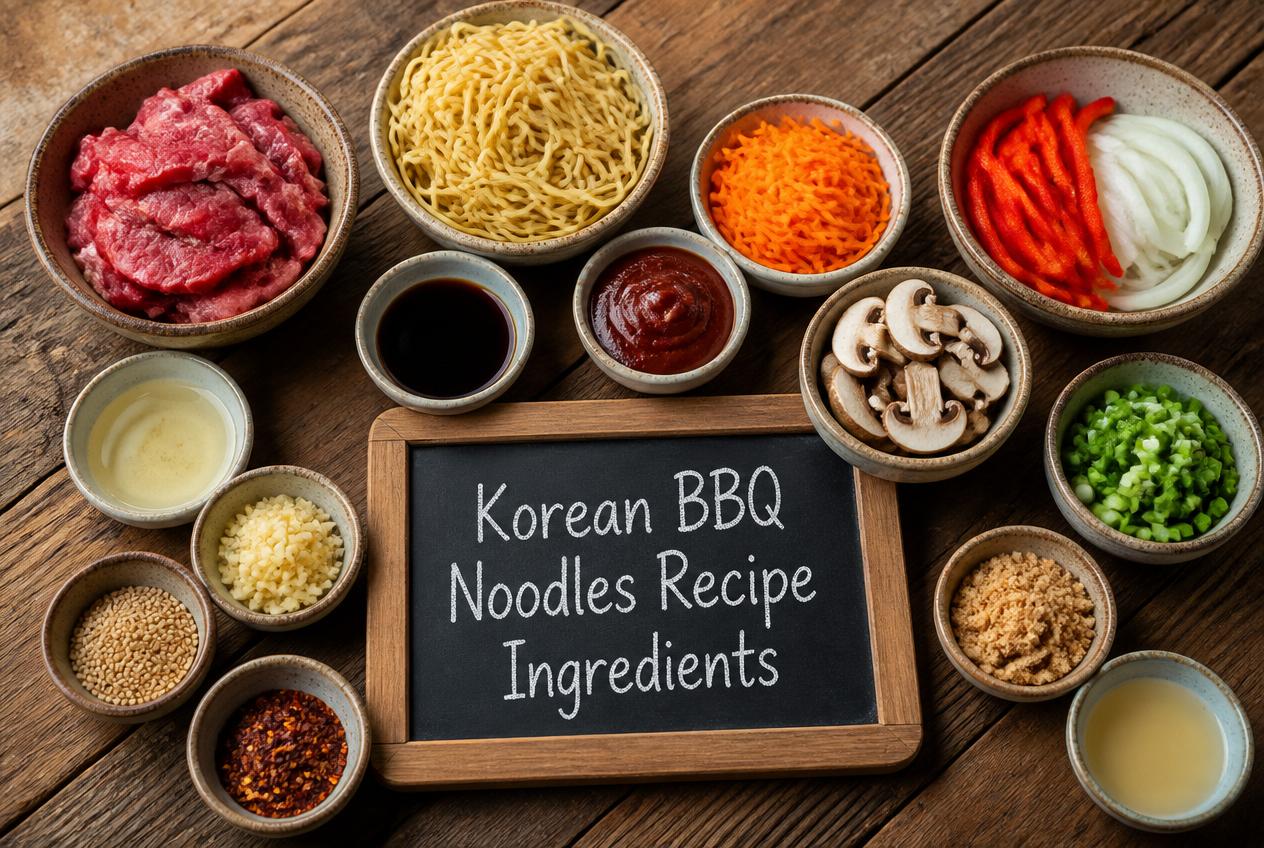
Korean BBQ Noodles (Bibim Guksu)
Ingredients
- 8 oz thin wheat noodles somyeon or buckwheat/soba noodles
- 3 tbsp Gochujang Korean chili paste
- 2 tbsp soy sauce
- 2 tbsp sesame oil
- 2 tbsp white vinega r or rice vinegar
- 3 cloves garlic minced
- 1 1/2 tbsp sugar or honey
- 1 tbsp sesame seeds toasted
Instructions
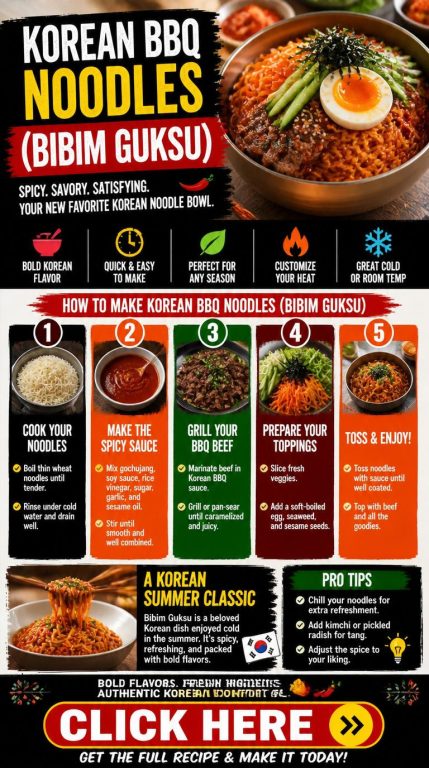
- In a small bowl, combine all of the sauce ingredients and mix until smooth and well blended. Stir thoroughly so the seasonings are evenly incorporated. Set the sauce aside while preparing the noodles.
- Cook the noodles according to the package directions. Once cooked, drain them and immediately rinse under ice-cold water. Gently rub the noodles with your hands while rinsing to remove excess starch and help create a better texture. Drain thoroughly so the sauce will cling properly to the noodles.
- Transfer the drained noodles to a serving bowl and pour the prepared sauce over the top. Toss and mix well until all of the noodles are evenly coated and the sauce is distributed throughout the dish.
- Top the noodles with your preferred garnishes, such as cucumber, kimchi, boiled egg, crushed sesame seeds, or other favorite toppings. Serve immediately and enjoy while the noodles are cool and the flavors are fresh and vibrant.
Frequently Asked Questions for the Korean BBQ Noodles (Bibim Guksu)
The right noodles and a little technique make all the difference between slurp-worthy Korean BBQ Noodles and a sad, mushy bowl. Nailing the sauce and picking good toppings turns Korean BBQ Noodles from a snack into a real meal.
What kind of noodles should I use if I want my bibim-style noodles to be chewy, not tragic?
I always grab somyeon noodles for Korean BBQ Noodles. These thin wheat noodles are perfect because they stay bouncy after chilling.
Korean somyeon is pretty much like Japanese somen, so either works. The important thing is to use thin wheat noodles—not thick udon or spaghetti, which just won’t work for Korean BBQ Noodles.
How do I make the spicy-sweet sauce taste legit without setting my face on fire?
I start with gochujang for Korean BBQ Noodles because it brings heat and depth without making me cry. The trick is balancing it with sugar and vinegar for that signature spicy-sweet-tangy flavor.
For a basic Korean BBQ Noodles sauce, I mix 2 tablespoons gochujang with 1 tablespoon sugar, 2 tablespoons vinegar, 1 tablespoon soy sauce, and a drizzle of sesame oil. If it’s too spicy, I add more sugar or a splash of water to tone it down.
Some recipes call for gochugaru (Korean chili flakes), but I skip it if I want a milder Korean BBQ Noodles experience.
Can I serve these noodles cold, and if so, how do I keep them from turning into a sticky noodle brick?
Absolutely, bibim guksu is all about those spicy cold noodles, making it a killer choice for hot days. Korean BBQ Noodles really shine when you serve them chilled. The trick to avoiding that dreaded noodle brick is simple: rinse the cooked somyeon thoroughly under cold water as soon as you drain them. Don’t skip this part or you’ll regret it later.
I usually run cold water over my noodles for at least 30 seconds, gently separating them with my hands. This helps wash away the extra starch that tries to glue everything together. Korean BBQ Noodles really need this step to stay light and slurpable.
Once they’re good and cold, I toss the noodles with just a little sesame oil if I’m not eating them right away. That keeps Korean BBQ Noodles from sticking together while they hang out in the fridge. Otherwise, they can become a solid block, and nobody wants that.
What toppings make these noodles feel like a full meal instead of a spicy snack attack?
I always throw a boiled egg into my bowl—there’s just something about that creamy yolk mixing with the spicy sauce that feels right. Sometimes I go for a soft-boiled egg with a runny middle, but a hard-boiled one works in a pinch. Korean BBQ Noodles pair perfectly with eggs, honestly.
Cucumber strips add a crisp, fresh bite that cools off the heat. I love tossing in some kimchi too, for that tangy, fermented punch. Korean BBQ Noodles with kimchi? It’s a match made in heaven if you ask me.
For extra protein, tofu is my favorite move. I’ll cube up some firm tofu and either chill it or give it a quick pan-fry for a bit of texture. Korean BBQ Noodles are super flexible—just add what you like and it somehow always works.
How do I cook somyeon so it stays springy and doesn’t dissolve into sad mush?
I start by bringing a big pot of water to a rolling boil before dropping in my somyeon noodles. Thin wheat noodles like these cook fast, usually three or four minutes tops, so I always set a timer. Seriously, don’t walk away or you’ll regret it—Korean BBQ Noodles can go from perfect to mush in a flash.
As soon as the timer dings, I drain them right away and hit them with cold running water. This stops the cooking and firms up the noodles. Korean BBQ Noodles really benefit from this quick chill—otherwise, they just get limp.
Overcooking is the real enemy here. If I leave somyeon in boiling water even a minute too long, Korean BBQ Noodles just fall apart and lose their magic. Nobody wants mush, right?
Is there a difference between these spicy mixed noodles and bibim naengmyeon, or are they just cousins at a family reunion?
Yeah, they’re definitely cousins, but not twins. Both dishes fall under the Korean cold noodles category and get tossed in spicy sauce. But bibim naengmyeon uses buckwheat noodles, which are chewier and honestly, kind of tough to bite through sometimes.
Bibim guksu, on the other hand, uses somyeon noodles. These are thin, wheat-based, and way softer—there’s a delicate bite to them that I prefer. The sauces? Pretty similar since both lean on gochujang and Korean chili paste, though naengmyeon sauce is usually a bit less sweet.
I always think of bibim guksu as the friendly cousin you actually want to hang out with at the family reunion. Naengmyeon, though, kind of demands more adventurous taste buds (and a bit more jaw power). If you ever toss some Korean BBQ Noodles into the mix, it gets even more interesting—trust me, Korean BBQ Noodles can really steal the show at any gathering. And honestly, I’ve found that Korean BBQ Noodles bring a whole different vibe, especially if you want something bold but not overly challenging. So, next time you’re craving something spicy and cold, maybe give Korean BBQ Noodles a shot. If nothing else, Korean BBQ Noodles will make you rethink the whole noodle family reunion.

Recipes are gathered in person and written for real-world cooking conditions.
- 10 Hungarian Dessert Recipes Passed Down Through Generations - July 25, 2026
- 11 Easy English Recipes Anyone Can Make - July 25, 2026
- Hungarian Kifli Recipe - July 25, 2026