
You’ll love how simple this Turkish Stew recipe comes together and how deeply it rewards your patience. This Turkish Stew recipe brings you tender, slow-cooked meat and a rich, tomato-forward sauce that turns everyday ingredients into a memorable meal.
There’s a bit of history here, plus some cheeky legends about how this Turkish Stew recipe earned its cozy reputation. I’ll toss in a few practical tips so your meat turns out fall-apart tender, no hovering over the pot required. And hey, I’ve got some flavor tricks and kitchen hacks that make the whole process easier—maybe even a little fun.
Sizzling Storytime: Origins, Legends, and Stew Accounts
Isn’t it wild how a stew can feel like a family story simmering on the stove? Turkish cuisine treats a Turkish Stew recipe as more than just dinner. Tas kebabı pops up in Ottoman cookbooks and in your grandma’s memories, each story with its own timeline but always ending in comfort.
Some say a shepherd, probably in a rush, tossed meat and veggies into one pot and—bam—Turkish Stew recipe magic. Others swear it was palace chefs or village cooks using a güveç, those earthy pots that make flavors cozy up together. Who’s right? I’m not sure anyone really knows.
Old Turkish Stew recipe books mention güveç a lot—those earthenware pots are heroes, keeping everything warm and letting the flavors get to know each other. Every region seems to have its own spin: one town throws in peppers, another insists on slow roasting. But everyone claims their Turkish Stew recipe is the best. Your pot? It’s part cookbook, part folklore, part experiment.
Family stories get pretty lively, too. One aunt swears the secret to a great Turkish Stew recipe is paprika. Someone else insists it’s all about timing. Honestly, you just get to stand there, taste everything, and pretend you’re the judge in a stew contest. Not a bad gig, right?
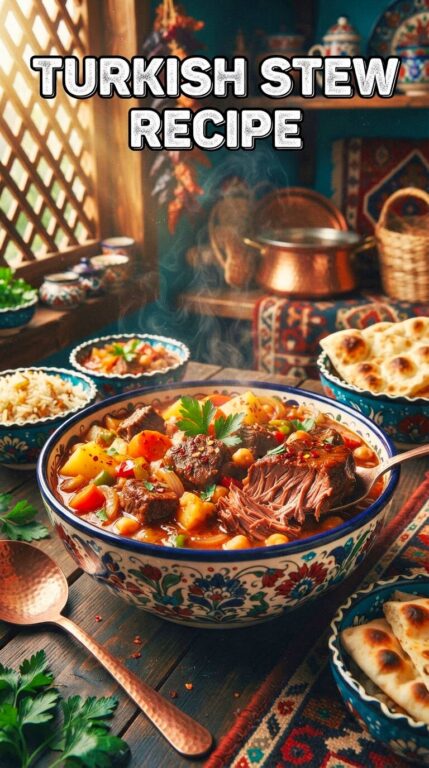
Kingdom of Cooking Hacks: Tips for Turkish Stew Triumph
Treat your stew like royalty: brown the meat first in a splash of good olive oil to lock in flavor. Searing delivers a savory base you just can’t get from boiling alone—honestly, it’s non-negotiable for any solid Turkish Stew recipe.
Sweat onion and garlic until they turn translucent, then toss in tomato paste and a bit of tomato for depth. Toasting tomato paste for a minute knocks off that raw edge and deepens the sauce’s color, which, if you ask me, makes the Turkish Stew recipe pop.
Carrots and potatoes work best in generous chunks so they hang onto their texture even after a long simmer. Thinking about switching things up? Lentils or chickpeas fit right in—just remember to add enough liquid because they soak up flavor like nobody’s business. Those tweaks can make your Turkish Stew recipe feel heartier and a little different every time.
Paprika, cumin, and oregano form the backbone of the spices; finish with a pinch of pul biber (Aleppo pepper) for gentle heat. Want it bolder? Stir in a spoonful of acı biber salçası (Turkish hot red pepper paste). It’s not a must, but it does wake up the Turkish Stew recipe in a way nothing else really can.
Try lamb instead of beef for your Turkish Stew recipe—just trim extra fat but leave a bit for that luscious mouthfeel. Red Romano or Turkish green peppers (çarliston biber) add sweetness and color; cut them bigger than you’d expect. Trust me, they shrink more than you think.
Serve your Turkish Stew recipe with bulgur pilaf or rice pilaf to soak up every last drop of sauce. If you’re in a rush, spoon it over plain rice or bulgur—classic Turkish move. It’s a combo that never disappoints.
Let your Turkish Stew recipe cool completely before stashing it in the fridge for up to three days, or freeze in portions for later. Reheat gently on low heat to keep the texture right; add a splash of stock or water if it thickened too much. I mean, nobody wants gluey stew, right?
When you’re after comfort, a Turkish Stew recipe is hard to beat. It’s flexible, forgiving, and somehow always fits the mood—whether you’re feeding a crowd or just yourself. Don’t be afraid to make it your own. Ten tries in, you’ll still find new ways to tweak your Turkish Stew recipe, and honestly, that’s half the fun.
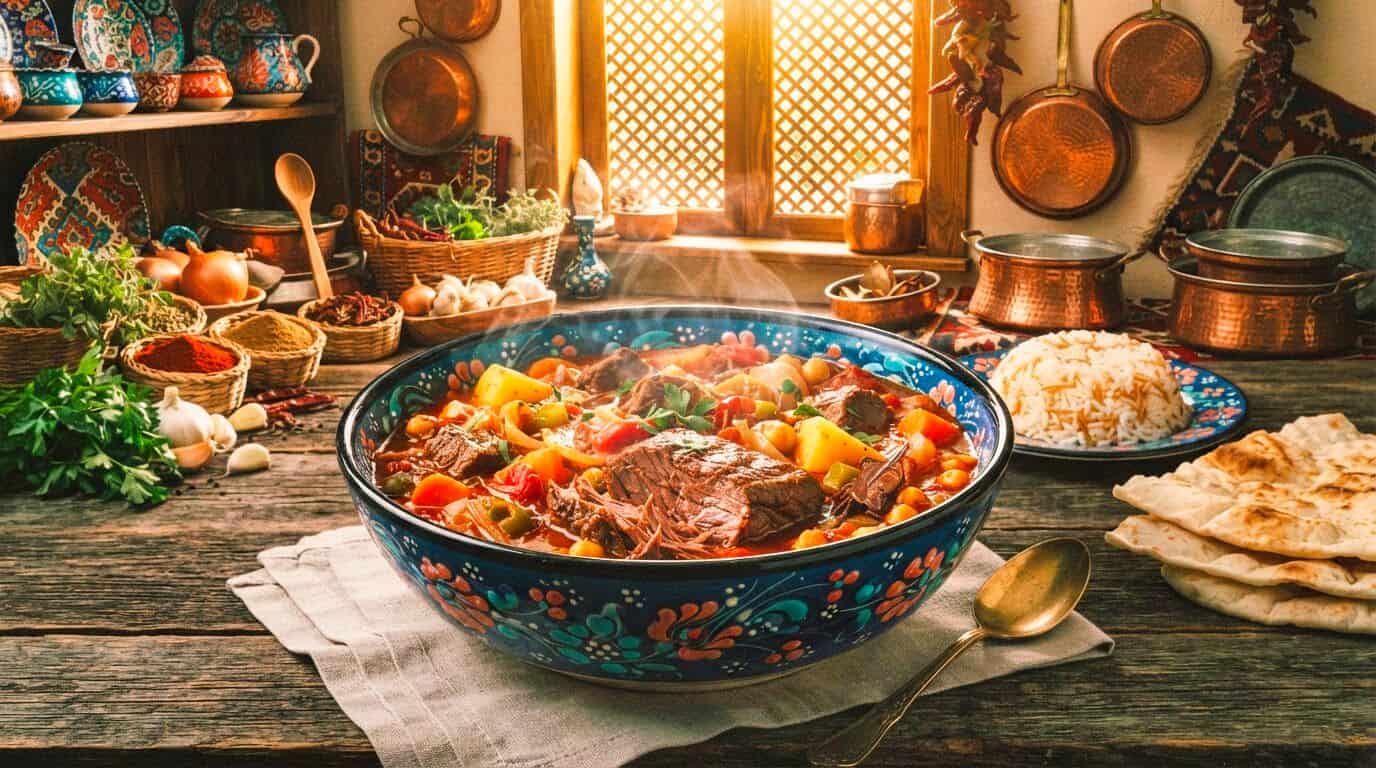
Turkish Stew Recipe
Ingredients
- 12 ounces beef chopped
- 1 onion chopped,
- 1 potato cut into cubes,
- 1 zucchini cut into cubes,,
- 1 eggplant cut into cubes,
- 1 red pepper chopped,
- 1 green pepper chopped,
- 2 tomatoes diced,
- 2 cloves garlic grated,
- 1,5 tbsps tomato paste
- 2 tsps red pepper ground
- Salt to taste
- 2 cups hot water
- 4-5 tbsps vegetable oil.
Instructions
- Heat a large pan over medium heat.
- Add the beef and cook for 10 to 15 minutes, stirring constantly.
- Transfer the cooked beef to a plate and set aside.
- Add the oil and tomato paste to the same pan.
- Sauté until the tomato paste becomes fragrant.
- Pour in the water and add the salt.
- Stir well, then remove the pan from the heat.
- Place the onion and garlic in the bottom of a stew dish.
- Add the beef, followed by the potato, zucchini, eggplant, and peppers, layering them in that order.
- Pour the prepared tomato paste sauce evenly over the top.
- Cover the stew dish with a lid. Alternatively, cover it with wax paper followed by aluminum foil.
- Place the dish in a preheated 200°C (392°F) oven.
- Bake for 2 hours.
- Remove the dish from the oven.
- Arrange the tomatoes over the top of the stew.
- Return the dish to the oven and bake for an additional 30 minutes.
- Remove the stew from the oven and serve while warm.
- This hearty beef and vegetable stew combines tender beef with layers of potato, zucchini, eggplant, peppers, onions, and garlic in a rich tomato paste sauce. Slowly baked until the vegetables are tender and the flavors have blended together, it's a comforting and satisfying dish finished with fresh tomatoes on top.

Recipes are gathered in person and written for real-world cooking conditions.
- 10 Hungarian Dessert Recipes Passed Down Through Generations - July 25, 2026
- 11 Easy English Recipes Anyone Can Make - July 25, 2026
- Hungarian Kifli Recipe - July 25, 2026