
You can make authentic, fluffy Turkish Rice recipe ( pilav ) at home with simple ingredients. Use butter-toasted rice, hot stock, and a short rest for the best Turkish Rice recipe results. These reliable techniques are what chefs in Turkey use for perfect grains.
This post covers what Turkish Rice pilav is and gives a straightforward recipe you can follow. You’ll also learn the historical and culinary context that makes Turkish Rice recipe a staple of Turkish cuisine. Practical cooking tips will help you adapt the dish to pair with grilled meats, stews, or meze.
Description, Recipe, and Historical Information
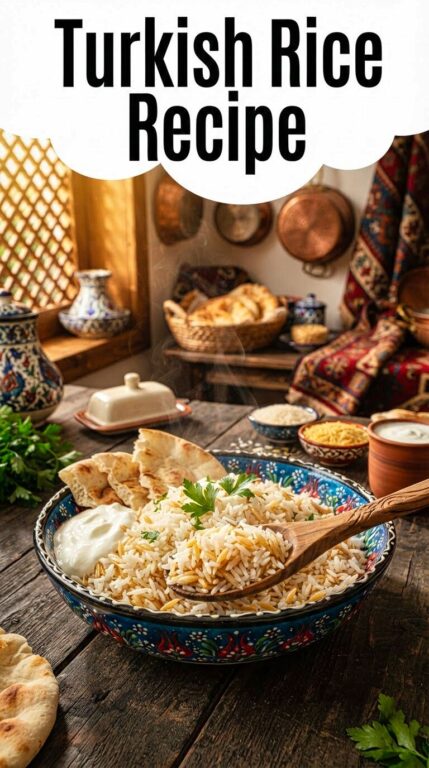
Turkish Rice recipe, commonly called pilav or şehriyeli pilav, pairs long-grain rice with small toasted noodles such as orzo (risoni) or tel şehriye (broken vermicelli). You’ll often cook Turkish Rice recipe in butter or olive oil. Simmer in water, chicken stock, or vegetable stock until fluffy.
For the Turkish Rice recipe, sauté orzo or vermicelli in butter or oil until golden. Add washed rice (long-grain, basmati, or traditional baldo rice), stir briefly, and pour in hot stock. Add salt, cover and simmer until absorbed, then rest and fluff for the perfect Turkish Rice.
Historically, Turkish Rice recipe pilaf entered Ottoman kitchens via trade routes and adapted to local tastes. Şehriyeli pilav became widespread because orzo adds color and a nutty dimension to Turkish recipes. Traditional Turkish pilaf often uses baldo pirinç and generous fats for authentic flavor.
For authenticity, seek şehriye (Turkish orzo) and use butter plus a little olive oil for flavor and sheen in your Turkish Rice recipe. Nutritional information varies by fat and stock choices, so using chicken stock increases protein and sodium. Turkish Rice is a compact, versatile dish: toasted orzo + rice + fat + hot stock + rest = classic Turkish Rice recipe.
Cooking Tips
Toast the vermicelli in butter until golden before adding rice; this builds nutty flavor and helps create buttery rice with depth. Watch it closely—vermicelli can brown fast. The Turkish Rice recipe benefits from this important first step.
Rinse long-grain rice until the water runs clear to remove excess starch. This step helps keep separate grains and prevents gummy texture. For the best Turkish Rice recipe, always ensure your rice is well-rinsed.
Use a 1:1.5 ratio of rice to hot stock for most long-grain varieties, and adjust for your rice type. Cooking time typically runs 15–20 minutes once simmering; avoid lifting the lid. This is crucial when preparing a Turkish Rice for perfect texture.
Bring the pot to a gentle simmer, then reduce to low and cover tightly. Let the rice steam undisturbed for 5–10 minutes after heat is off. This resting period is essential for any Turkish Rice recipe to finish cooking evenly.
If you want extra buttery rice, add a knob of butter or a drizzle of olive oil both before simmering and right after resting. Fold gently with a fork to separate grains without crushing them. This technique enhances the Turkish Rice recipe and ensures fluffy results.
Use a heavy-bottomed saucepan or a pot with a snug lid to maintain even heat and prevent burning. If you smell toasting too strongly, lower the heat. Consistent heat is key for a Turkish Rice recipe that cooks evenly.
For timing shortcuts, parboil briefly then finish in stock with toasted vermicelli to reduce prep time. Keep measurements consistent and note any adjustments for your stove and rice brand. This method can save time without compromising your Turkish recipe.
Always use fresh ingredients and quality rice for the best results. Experiment with different stocks or seasonings to personalize your Turkish Rice recipe. Serve warm and enjoy the classic flavors of this beloved dish.
Practice makes perfect—try the Turkish Rice a few times to master your technique. Share your results with friends and family for feedback. With these tips, your Turkish Rice recipe will impress every time.

Traditional Turkish Rice Recipe
Ingredients
- 3 tablespoons olive oil
- ½ cup onions minced
- ¼ cup orzo
- 1 cup rice ong-grain white rice or basmati
- 1 teaspoon mint dried
- 1 teaspoon coriander ground
- 1 tablespoon tatli biber salcasi or tomato paste
- 2 cups vegetable stock unsalted vegetable stock or water
- ¾ teaspoons salt or to taste
Instructions
- Place the rice in a bowl and cover it with cool water.
- Gently squeeze the grains between your hands to help release the excess starch.
- Transfer the rice to a fine-mesh strainer.
- Rinse thoroughly under cool running water until the water flowing through the rice becomes clear.
- Leave the rice in the strainer for several minutes so it can drain and dry slightly.
- Place a wide pot over medium heat and add the olive oil.
- Allow the oil to heat for approximately 90 seconds.
- Add the minced onion and orzo to the hot oil.
- Stir-fry for about 3 minutes, or until the onion becomes fragrant and the orzo develops a very light golden color.
- Add the drained rice to the pot.
- Stir in the dried mint, ground coriander, and pepper paste.
- Mix thoroughly until the rice grains are evenly coated with the seasonings.
- Pour in the vegetable stock or water.
- Add the salt and stir to combine.
- Increase the heat to high and bring the mixture to a boil.
- Cook the Rice
- As soon as the liquid reaches a boil, cover the pot securely with a tight-fitting lid.
- Reduce the heat to low.
- Cook for 17 minutes without removing or lifting the lid.
- Take the pot off the heat while keeping it covered.
- Allow the rice to rest undisturbed for 10 minutes.
- Remove the lid and gently separate the grains with a fork.
- If desired, finish the rice with fried onions and chopped parsley before serving.
- This flavorful Turkish Rice combines tender grains with lightly toasted orzo, fragrant onion, dried mint, coriander, and savory pepper paste. Slowly cooked in vegetable stock or water and rested before serving, the pilaf becomes light and fluffy with layers of warm, aromatic flavor.

Recipes are gathered in person and written for real-world cooking conditions.
- 10 Hungarian Dessert Recipes Passed Down Through Generations - July 25, 2026
- 11 Easy English Recipes Anyone Can Make - July 25, 2026
- Hungarian Kifli Recipe - July 25, 2026