
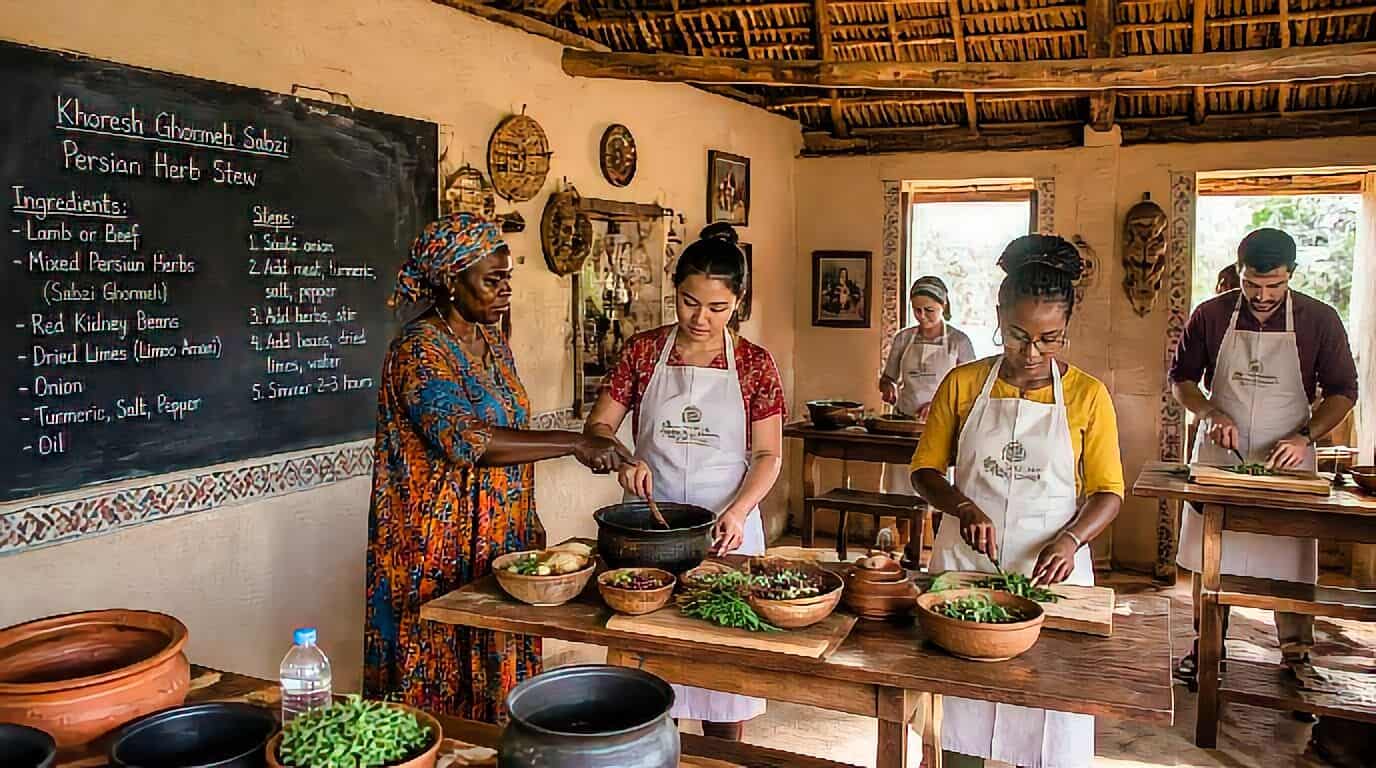
The Persian Khoresh Ghormeh Sabzi recipe is a slow-cooked herb stew known for its deep, aromatic flavors and tender ingredients. The dish is made with a blend of fresh herbs that are finely chopped and sautéed to release their essential oils, creating a rich base for the stew. The key herbs used in this recipe include parsley, cilantro, and fenugreek, which contribute to the dish’s distinct fragrance and taste.
To achieve the right texture, the Persian Khoresh Ghormeh Sabzi recipe requires slow simmering, allowing the flavors to fully develop. Dried limes, also known as limoo amani, are an essential ingredient that adds a tangy and slightly bitter note, balancing the richness of the stew. These dried limes are either punctured or broken before being added to the dish so their flavor can infuse the broth as it cooks.
The protein component in the Persian Khoresh Ghormeh Sabzi recipe varies, but it traditionally includes slow-cooked meat, which becomes tender during the simmering process. The use of kidney beans provides an additional layer of texture and helps absorb the flavors of the stew. The beans should be cooked until they are soft but still hold their shape, ensuring they do not disintegrate into the broth.
The Persian Khoresh Ghormeh Sabzi recipe requires careful monitoring of the heat to prevent the herbs from burning while allowing the sauce to reduce and thicken gradually. The stew reaches its optimal consistency when the oil from the herbs separates slightly on the surface. This indicates that the flavors have melded properly. The dish is typically served over steamed basmati rice, allowing the flavors of the stew to be fully enjoyed with each bite.
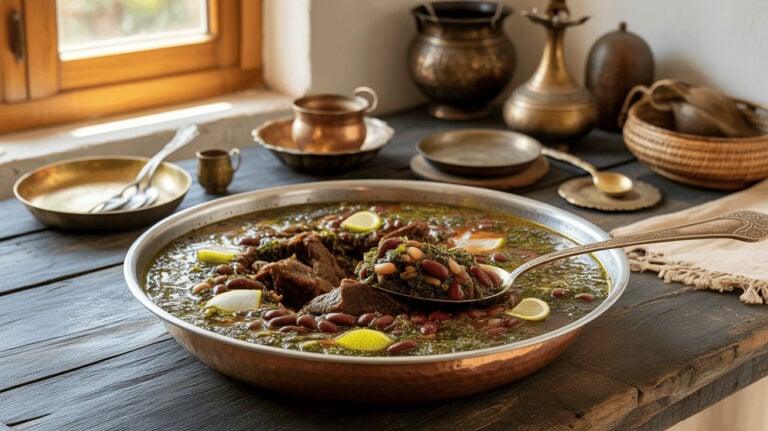
Why You’ll Love This Persian Khoresh Ghormeh Sabzi Recipe
We absolutely adore this Khoresh Ghormeh Sabzi recipe because it captures the essence of Persian cooking. The rich, herb-infused flavors bring a unique taste to our table.
One of the highlights is the use of fresh herbs.
We combine parsley, cilantro, and fenugreek for a vibrant and aromatic dish. This blend is not only flavorful but also packed with nutrients.
Pairing this stew with Persian rice takes it to another level. The fluffy rice perfectly absorbs the savory sauce, creating a delightful meal.
Another great aspect is the versatility of the recipe.
It can be made with meat, or a vegetarian version using mushrooms and artichokes. We love options!
Plus, it’s a crowd-pleaser. Whether for family dinners or gatherings with friends, this delicious stew will wow everyone.
Lastly, cooking this dish is a fun experience.
The process of frying the herbs and simmering the stew fills our kitchen with inviting aromas. We find joy in sharing this dish with others.
What Makes This Recipe Special
Persian Khoresh Ghormeh Sabzi is a beloved Persian herb stew that stands out for several reasons.
First, the combination of fresh herbs gives this dish a unique flavor. We use herbs like parsley, cilantro, and fenugreek that create a rich and aromatic base.
Next, the addition of dried limes (limoo amani) contributes a tangy depth that is hard to resist. This key ingredient sets ghormeh sabzi apart from other stews.
Traditionally made with lamb or beef, it is also perfect for vegetarians.
We can easily swap the meat for hearty vegetables or legumes to create a flavorful vegetarian version.
One of the best parts is how we serve khoresh ghormeh sabzi.
It’s typically paired with Persian steamed white rice (chelow) and crunchy rice (tahdig). This combination elevates the dining experience.
Recipe tips are essential in achieving the best results. We learn little tricks to enhance flavors and ensure that every bite is delicious.
This Persian Khoresh Ghormeh Sabzi is more than just a meal; it’s a comforting dish that warms the soul. Sharing it with loved ones makes it even more special. We often find ourselves reminiscing about family gatherings centered around this hearty khoresh.

Cooking Equipment Needed
When making Khoresh Ghormeh Sabzi, having the right tools can make cooking easier and more enjoyable. Here’s a list of what we need:
- Large Pot or Dutch Oven: This is essential for making the stew. It helps in even cooking and allows us to stir without spilling.
- Cutting Board and Chef’s Knife: We’ll need these for chopping herbs, onions, and any vegetables. A sharp knife makes the work quicker.
- Measuring Cups and Spoons: Precision is key, especially when adding spices and oils. We use them to ensure the right amounts.
- Wooden Spoon: This helps in stirring the stew without scratching our pots. A wooden spoon is perfect for reaching the corners without worries.
- Ladle: For serving the stew, a ladle will help us dish it out neatly.
- Bowls for Soaking Beans: We soak our beans in water the night before. A few bowls will do the trick.
- Skillet: We may use a skillet to sauté some ingredients before adding them to the pot.
Lastly, as for oils, we often use vegetable oil or extra virgin olive oil to sauté our onions and other ingredients. These oils enhance the flavors and keep everything from sticking.
With these tools, we’re ready to create a delicious Khoresh Ghormeh Sabzi!
Ingredients Needed for the Persian Khoresh Ghormeh Sabzi Recipe
extra virgin olive oil
onion
garlic clove
stewing beef
ground turmeric
small leek
fresh parsley
cilantro
dried fenugreek leaves
scallions
red kidney beans
limes
Kosher salt
Freshly ground black pepper
lime juice
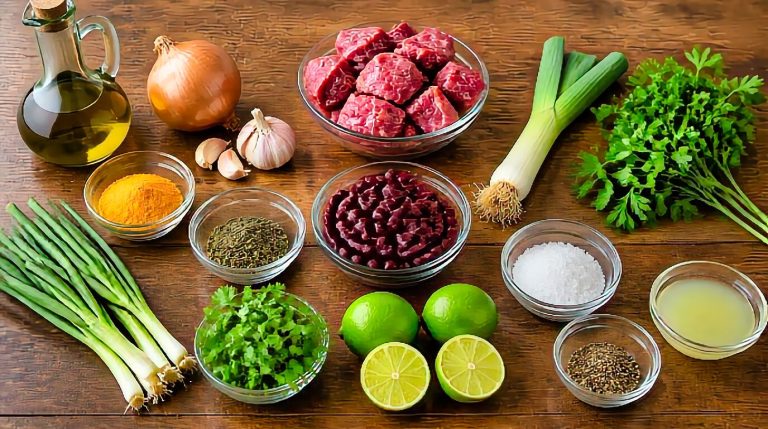
Persian Khoresh Ghormeh Sabzi Recipe Ingredients
Instructions For Preparing the Persian Khoresh Ghormeh Sabzi Recipe
Cooking the Onion & Beef
In a large pot over medium-high heat, heat 2 tablespoons olive oil. Once shimmering, add the onion and cook, stirring, until golden, about 8 minutes. Stir in the garlic, if using, and cook for another minute until fragrant. Add the beef and cook, stirring occasionally, until browned, about 10 minutes. Stir in the turmeric to coat the meat, then pour in 3 cups of water. Bring to a boil, reduce heat to a simmer, cover, and let it cook while preparing the herbs.
Frying & Stewing the Herbs
In a large frying pan over medium-high heat, heat the remaining 1/4 cup olive oil. Once shimmering, add the leek and cook for about 5 minutes until softened. Stir in the parsley, cilantro, fenugreek, and scallions, cooking for another 5 minutes, stirring frequently. Reduce heat to medium-low and continue cooking for 15 minutes, stirring occasionally, until the herbs are wilted, reduced in volume, and dark green. Remove from heat and set aside.
Simmering the Stew
Add the fried herbs, kidney beans, dried limes, and 2 cups of water to the pot with the beef. Increase heat to bring the stew to a simmer, then reduce to low and let it cook for at least 1 hour and 30 minutes until rich and flavorful.
Seasoning & Serving
Season with salt, pepper, and lime juice to taste. Adjust consistency by adding more water if needed—the stew should be thick with herbs but still have some broth to soak into the rice. Ladle into a serving dish and enjoy your Persian Beef Stew with Herbs.
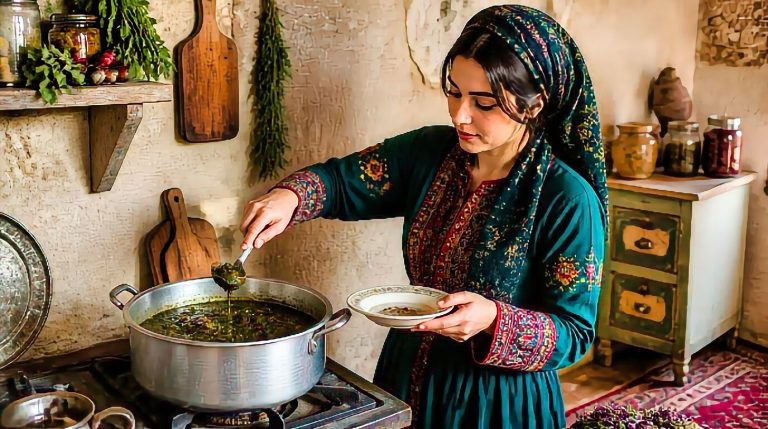
Persian Khoresh Ghormeh Sabzi Recipe Cooking Tips
Cooking Tips For the Persian Khoresh Ghormeh Sabzi Recipe
- Use a generous amount of fresh herbs for authentic flavor and aroma.
- Parsley, cilantro, green onions, and fenugreek are commonly used in the herb mixture.
- Fry the herbs slowly before simmering to deepen their flavor.
- Beef or lamb stew meat works well because it becomes tender during long cooking.
- Red kidney beans are traditional and add heartiness to the stew.
- Dried limes give khoresh ghormeh sabzi its signature tangy flavor.
- Pierce the dried limes lightly before adding them so the flavor releases gradually.
- Simmer slowly over low heat so the meat becomes tender and the flavors blend fully.
- Onions should be cooked until golden for a richer stew base.
- Add water or broth gradually to control the thickness of the stew.
- Taste before adding extra salt because dried limes intensify in flavor over time.
- Stir occasionally to prevent the herbs from sticking to the bottom of the pot.
- Let the stew rest briefly before serving so the flavors settle together.
- Serve with Persian rice for a traditional meal.
- Fresh herbs or sliced onions can brighten the final presentation.
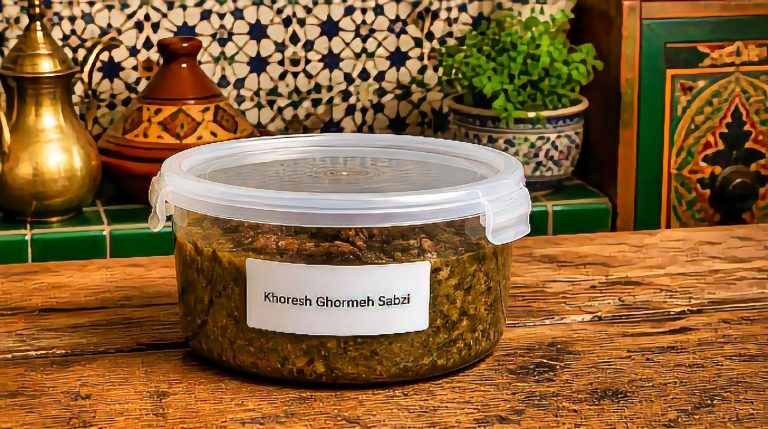
Persian Khoresh Ghormeh Sabzi Recipe Storage Tips
Storage Tips For the Persian Khoresh Ghormeh Sabzi Recipe
- Allow the stew to cool before placing it into storage containers.
- Herb-based stews often develop deeper flavor after resting overnight in the refrigerator.
- Store the meat, beans, and sauce together to help maintain moisture and flavor.
- Reheat slowly over low heat while stirring occasionally.
- Add a little warm broth or water if the stew thickens after refrigeration.
- Keep rice stored separately from the stew for better texture.
- Freeze leftovers in airtight containers for longer storage.
- Leave slight headspace in freezer containers because stews expand during freezing.
- Defrost frozen portions gradually in the refrigerator before reheating.
- Dried lime flavor may become stronger after storage.
- Fresh herbs or garnishes should be added after reheating for brighter flavor.
- Avoid repeatedly reheating the same batch, which may affect the texture of the herbs and beans.
- Use clean utensils when serving leftovers to help maintain freshness.
- Discard leftovers if the stew develops sour odors beyond the normal dried lime tang, bubbling, or unusual texture changes.
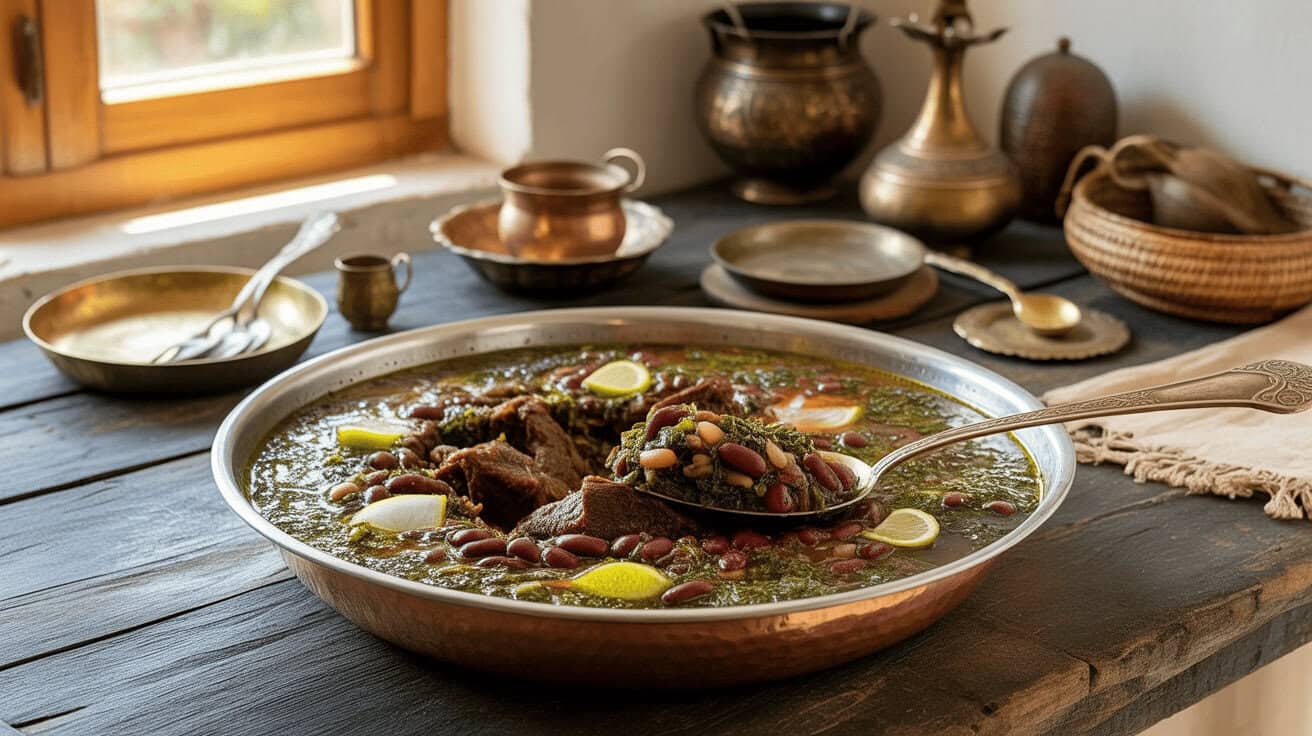
Persian Khoresh Ghormeh Sabzi Recipe
Ingredients
- 1/4 cup olive oil plus 2 tablespoons extra virgin divided
- 1 onion finely diced
- 1 garlic clove pressed or minced (optional)
- 1 1/2 pounds beef stewing cut into 2-inch pieces
- 1 teaspoon turmeric ground
- 1 leek small trimmed and tops discarded, white part finely sliced
- 1 pound parsley fresh woody ends removed and finely chopped (about 4 bunches)
- 1/2 pound cilantro woody ends removed and finely chopped (about 2 bunches)
- 2 tablespoons fenugreek leaves dried crushed with your hands or in a mortar and pestle
- 5 scallions green parts only, finely diced
- 30 oz red kidney beans 2 - 15 ounce cans drained and rinsed
- 4 limes dried poked several times with knife
- Kosher salt
- black pepper Freshly ground
- 2 limes juiced
Instructions
- In a large pot over medium-high heat, heat 2 tablespoons olive oil. Once shimmering, add the onion and cook, stirring, until golden, about 8 minutes. Stir in the garlic, if using, and cook for another minute until fragrant. Add the beef and cook, stirring occasionally, until browned, about 10 minutes. Stir in the turmeric to coat the meat, then pour in 3 cups of water. Bring to a boil, reduce heat to a simmer, cover, and let it cook while preparing the herbs.
- In a large frying pan over medium-high heat, heat the remaining 1/4 cup olive oil. Once shimmering, add the leek and cook for about 5 minutes until softened. Stir in the parsley, cilantro, fenugreek, and scallions, cooking for another 5 minutes, stirring frequently. Reduce heat to medium-low and continue cooking for 15 minutes, stirring occasionally, until the herbs are wilted, reduced in volume, and dark green. Remove from heat and set aside.
- Add the fried herbs, kidney beans, dried limes, and 2 cups of water to the pot with the beef. Increase heat to bring the stew to a simmer, then reduce to low and let it cook for at least 1 hour and 30 minutes until rich and flavorful.
- Season with salt, pepper, and lime juice to taste. Adjust consistency by adding more water if needed—the stew should be thick with herbs but still have some broth to soak into the rice. Ladle into a serving dish and enjoy your Persian Beef Stew with Herbs.
FAQs For the Persian Khoresh Ghormeh Sabzi Recipe
Question: What is the Persian Khoresh Ghormeh Sabzi Recipe?
A: The Persian Khoresh Ghormeh Sabzi recipe is a traditional Persian herb stew made with a blend of fresh herbs, kidney beans, dried limes, and tender meat, typically served with Persian rice.
Question: How can I make the Persian Khoresh Ghormeh Sabzi Recipe vegetarian?
A: To make a vegetarian version of the Persian Khoresh Ghormeh Sabzi recipe, simply replace the meat with mushrooms, tofu, or additional kidney beans while keeping the rich herb mixture and dried limes.
Question: What are the essential herbs used in the Persian Khoresh Ghormeh Sabzi Recipe?
A: The Persian Khoresh Ghormeh Sabzi recipe traditionally includes parsley, cilantro, fenugreek, and green onions, all finely chopped and sautéed to develop their deep, aromatic flavors.
Question: How long does it take to cook the Persian Khoresh Ghormeh Sabzi Recipe?
A: The Persian Khoresh Ghormeh Sabzi recipe typically requires slow simmering for at least 2 to 3 hours to allow the flavors to fully develop and the meat to become tender.
Question: Can I freeze the Persian Khoresh Ghormeh Sabzi Recipe for later use?
A: Yes, the Persian Khoresh Ghormeh Sabzi recipe freezes well; store it in an airtight container for up to 3 months, then reheat gently on the stovetop when ready to serve.

Recipes are gathered in person and written for real-world cooking conditions.
- 10 Hungarian Dessert Recipes Passed Down Through Generations - July 25, 2026
- 11 Easy English Recipes Anyone Can Make - July 25, 2026
- Hungarian Kifli Recipe - July 25, 2026
4 comments
The slow-cooked herbs created a beautifully fragrant stew with tender beef and perfectly cooked kidney beans. The dried limes gave it a slightly tangy finish that paired beautifully with fluffy rice. My guests were impressed with the depth of flavor and couldn’t stop talking about how delicious it was!
Im not convinced about the claim that this Persian Khoresh Ghormeh Sabzi recipe is the best. Have you tried any other versions that could top this one? Lets debate!
I cant believe they didnt include a step-by-step video tutorial for this recipe! It would make it so much easier to follow along. I hope they consider adding one in the future.
I cant believe they didnt include a vegetarian version of the Persian Khoresh Ghormeh Sabzi recipe! Why not cater to all dietary preferences? Disappointing oversight.
Comments are closed.