
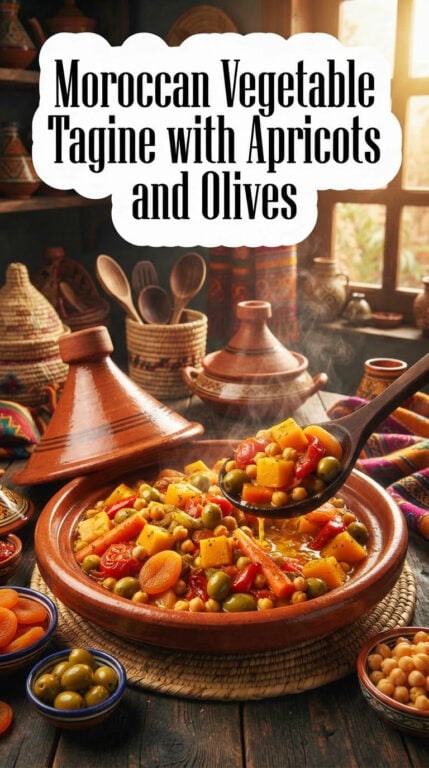
Moroccan Vegetable Tagine Recipe: Moroccan vegetable dishes are a vibrant celebration of flavors and textures. We have found that using ingredients like carrots, zucchini, bell peppers, and sweet potatoes creates a delightful balance in taste.
This recipe showcases how simple vegetables can transform into a hearty meal full of nutrients and rich flavors.
We’ve traveled across Morocco, learning from local chefs and collecting traditional recipes. We discovered that Moroccan cuisine often features spices like cilantro and parsley to enhance the natural sweetness of vegetables like pumpkin and eggplant. Each bite of this comforting dish transports us back to the bustling markets and lively kitchens of Morocco, filled with the rich aroma of fresh ingredients.
In our experience, this Moroccan vegetable tagine recipe is not only easy to prepare but also allows for creativity. Whether you choose to add turnips for texture or a sprinkle of red pepper for a kick, each version becomes a unique reflection of the region’s culinary heritage.

Moroccan One Pot Vegetable Tagine
Why You’ll Love This Moroccan Vegetable Tagine Recipe
We love this Moroccan vegetable tagine recipe for many reasons that delight our taste buds and nourish our bodies.
Bold Flavors: The use of spices like cumin and coriander creates a rich flavor profile. Every bite is packed with warmth and depth.
Vibrant Colors: The mix of vegetables, such as carrots, squash, and bell peppers, make this dish visually appealing. The colors brighten any table.
Easy to Make: This recipe is simple and perfect for busy days. It requires minimal prep and can be made in just one pot.
Healthy Ingredients: Packed with legumes like chickpeas or lentils, this dish is an excellent source of dietary fiber. These ingredients contribute to heart health and digestive wellness.
Vegetarian and Vegan-Friendly: This recipe is great for everyone. It fits perfectly into a vegetarian or vegan diet, making it inclusive for all eaters.
Main Dish or Side: Whether served as a main dish or a side, it’s versatile. We enjoy it on its own or alongside grains for a complete meal.
With all these wonderful aspects, we believe this Moroccan vegetable tagine recipe will quickly become a favorite in your kitchen.
What Makes This Recipe Special
Our Moroccan vegetable tagine recipe stands out for many reasons. Here’s what makes it unique and delightful:
- Variety of Vegetables: We use fresh veggies like carrots, zucchini, and pumpkin. This mix brings both flavor and nutrition to the dish.
- Aromatic Spices: The blend of spices is key. Ingredients like cumin, coriander, ginger, and turmeric add warmth and depth. Saffron and cardamom bring a touch of luxury.
- Ras El Hanout: This traditional Moroccan spice blend is essential. Each version is different, but it often includes a mix of spices like harissa and caraway, enhancing the soup’s flavor profile.
- Cultural Significance: This dish is not just food; it reflects North African cuisine’s richness. It’s a recipe we cherish, filled with cultural history.
- Health Benefits: Packed with vegetables and spices, our soup supports a healthy diet. The use of garlic and turmeric is known for its anti-inflammatory properties.
- Comforting and Versatile: This soup is perfect for any season. The warming spices make it comforting during colder months, while the fresh veggies offer a light, refreshing taste in warmer weather.
We believe that this combination of fresh ingredients and aromatic spices makes our Moroccan vegetable recipe truly special.
Cooking Equipment Needed
To prepare a delicious Moroccan vegetable dish, having the right equipment is essential. Here’s what we recommend:
- Dutch Oven
A Dutch oven is perfect for slow-cooking and simmering. Its thick walls and heavy lid retain heat well, ideal for developing flavors. - Knife and Cutting Board
A sharp knife is crucial for chopping vegetables. Use a sturdy cutting board to keep your workspace safe and organized. - Peeler
A peeler helps to easily remove skin from vegetables like potatoes and carrots, ensuring a smooth texture in your dish. - Immersion Blender
For a smooth soup or sauce, an immersion blender is handy. It blends without needing to transfer to another container. - Measuring Cups and Spoons
These tools are important for accurately measuring ingredients, especially spices and liquids. - Extra Virgin Olive Oil
This oil enhances flavor while cooking. We use it for sautéing vegetables and drizzling on finished dishes.
With these kitchen tools, we can create a vibrant and tasty Moroccan vegetable tagine recipe that showcases the rich flavors of North African cuisine. Having the proper equipment makes cooking enjoyable and efficient.
Ingredients For the Moroccan Vegetable Tagine Recipe
Olive Oil
Onions
Garlic
Carrots
Potatoes
Sweet Potato
Salt
Harissa Spice Blend
Coriander
Cinnamon
Turmeric
Tomatoes
Aricot
Vegetable Broth
Chickpeas
Lemon
Parsley Leaves
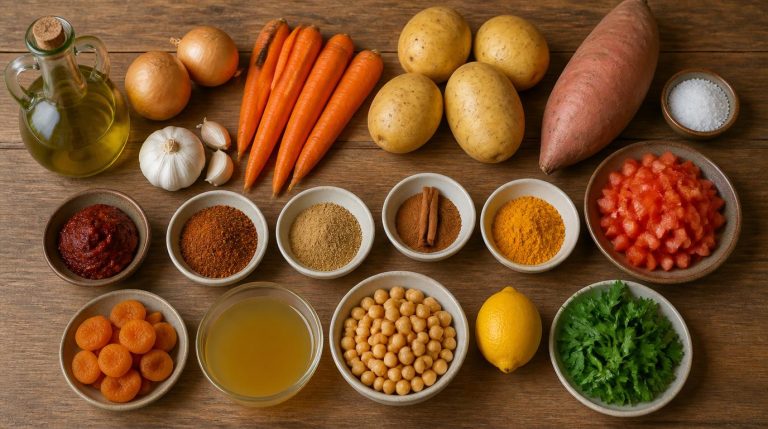
Moroccan One Pot Vegetable Tagine Ingredients
Cooking Instructions For the Moroccan Vegetable Tagine Recipe
Preparing the Vegetables
In a large, heavy pot or Dutch oven, heat olive oil over medium heat until it starts to shimmer. Add the onions and raise the heat to medium-high. Sauté for about 5 minutes, stirring occasionally.
Cooking the Veggies
Add the garlic and all the chopped vegetables, then season with salt and spices. Toss everything together to combine, and cook for 5 to 7 minutes on medium-high heat, stirring regularly with a wooden spoon.
Adding Liquids
Add the tomatoes, apricot, and broth to the pot, seasoning with a small dash of salt. Keep the heat at medium-high and cook for 10 minutes. Then, reduce the heat, cover the pot, and let it simmer for another 20 to 25 minutes, or until the vegetables are tender.
Final Steps
Stir in the chickpeas and cook for an additional 5 minutes on low heat. Then, add the lemon juice and fresh parsley. Taste and adjust the seasoning, adding more salt or harissa spice blend as desired.
Serving
Transfer the mixture to serving bowls and drizzle each serving with a generous amount of Private Reserve extra virgin olive oil. Serve hot with your favorite bread, couscous, or rice. Enjoy!

Moroccan One Pot Vegetable Tagine Cooking Tips
Cooking Tips For the Moroccan Vegetable Tagine Recipe
- Use a combination of colorful vegetables for balanced flavor and texture.
- Carrots, zucchini, potatoes, onions, tomatoes, peppers, and eggplant work especially well.
- Cut vegetables into similar-sized pieces so they cook evenly.
- Olive oil helps enrich the vegetables and distribute the spices.
- Common Moroccan spices include cumin, turmeric, paprika, cinnamon, ginger, and coriander.
- A tagine pot helps retain steam and cook the vegetables gently.
- Layer firmer vegetables at the bottom because they require longer cooking time.
- Preserved lemons or olives can add authentic tangy and salty flavor.
- Dried fruits such as apricots or raisins can balance savory spices with sweetness.
- Add only a moderate amount of liquid because vegetables naturally release moisture while cooking.
- Simmer slowly over low heat so the vegetables become tender without turning mushy.
- Stir carefully during cooking to keep the vegetables intact.
- Fresh cilantro or parsley brightens the finished dish.
- Taste before adding extra salt if using olives or preserved lemons.
- Serve with couscous, bread, or rice to enjoy the flavorful sauce.
-
Moroccan One Pot Vegetable Tagine Storage Tips
Storage Tips For the Moroccan Vegetable Tagine Recipe
- Allow the tagine to cool before transferring it into storage containers.
- Vegetable tagines often develop deeper flavor after resting overnight in the refrigerator.
- Store the vegetables together with the sauce to help maintain moisture.
- Reheat slowly over low heat to preserve the texture of the vegetables.
- Add a little warm broth or water if the sauce thickens after refrigeration.
- Stir gently during reheating so softer vegetables do not break apart.
- Store couscous, bread, or rice separately from the tagine.
- Freeze leftovers in airtight containers for longer storage.
- Leave slight headspace in freezer containers because sauces expand during freezing.
- Defrost frozen portions gradually in the refrigerator before reheating.
- Dried fruit and preserved lemon flavors may become stronger after storage.
- Fresh herbs should be added after reheating for brighter flavor and appearance.
- Avoid repeatedly reheating the same batch, which may soften the vegetables excessively.
- Discard leftovers if the tagine develops sour odors, bubbling, or unusual discoloration.
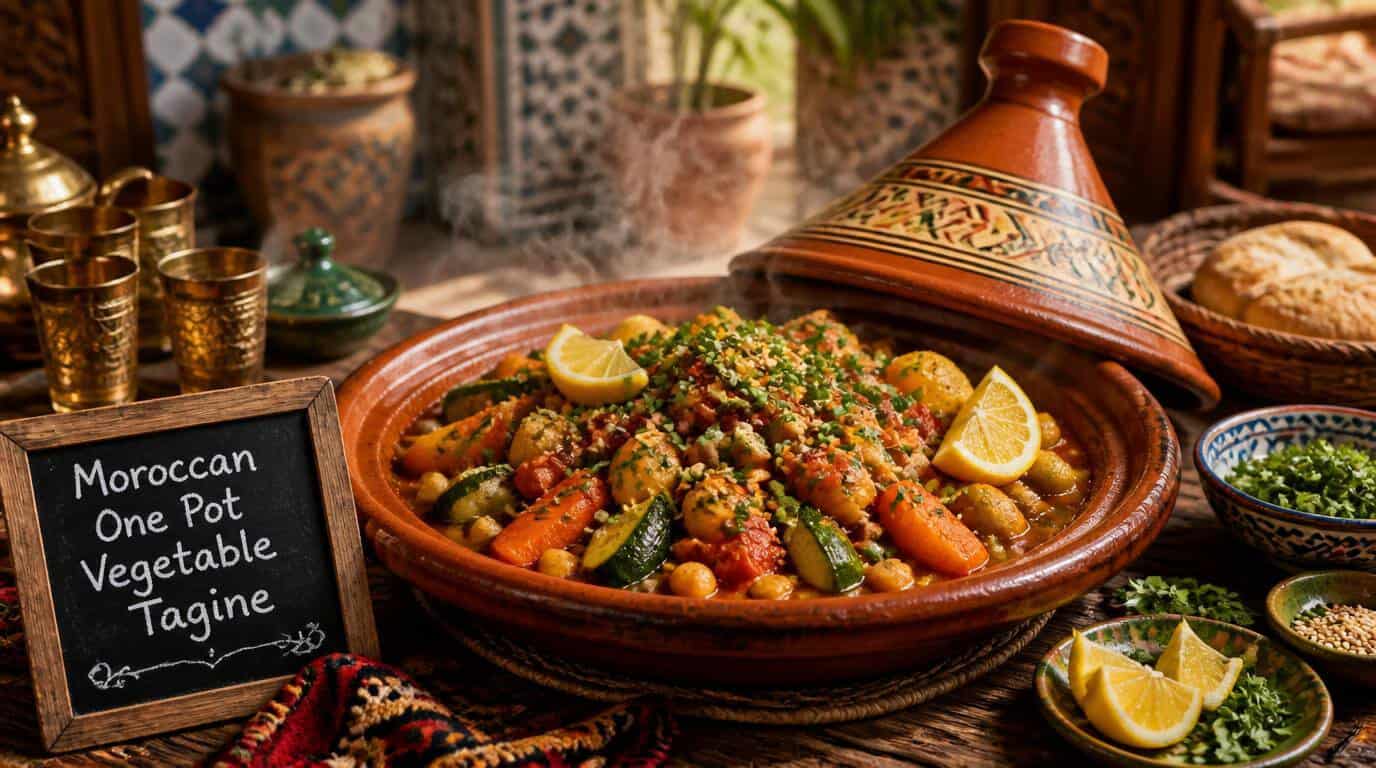
Vegetable Tagine Recipe
Ingredients
- 1/4 cup Olive Oil
- 2 Onions yellow peeled and chopped
- 10 cloves Garlic peeled and chopped
- 2 Carrots large peeled and chopped
- 2 Potatoes russe large peeled and cubed
- 1 Sweet Potato large peeled and cubed
- 1/2 tsp Salt
- 1 tbsp Harissa Spice Blend
- 1 tsp Coriander ground
- 1 tsp Cinnamon ground
- 1/2 tsp Turmeric ground
- 2 cups Tomatoes canned whole peeled
- 1/2 cup Aricot heaping chopped dried
- 1 quart Vegetable broth low-sodium
- 2 cups Chickpeas cooked
- 1 Lemon juice of
- 1/4 cup Parsley Leaves fresh
Instructions
- In a large, heavy pot or Dutch oven, heat olive oil over medium heat until it starts to shimmer. Add the onions and raise the heat to medium-high. Sauté for about 5 minutes, stirring occasionally.
- Add the garlic and all the chopped vegetables, then season with salt and spices. Toss everything together to combine, and cook for 5 to 7 minutes on medium-high heat, stirring regularly with a wooden spoon.
- Add the tomatoes, apricot, and broth to the pot, seasoning with a small dash of salt. Keep the heat at medium-high and cook for 10 minutes. Then, reduce the heat, cover the pot, and let it simmer for another 20 to 25 minutes, or until the vegetables are tender.
- Stir in the chickpeas and cook for an additional 5 minutes on low heat. Then, add the lemon juice and fresh parsley. Taste and adjust the seasoning, adding more salt or harissa spice blend as desired.
- Transfer the mixture to serving bowls and drizzle each serving with a generous amount of Private Reserve extra virgin olive oil. Serve hot with your favorite bread, couscous, or rice. Enjoy!
FAQ For the Moroccan Vegetable Tagine Recipe
Question: What is the Moroccan Vegetable Tagine recipe?
A: The Moroccan Vegetable Tagine recipe is a slow-cooked dish made with a variety of vegetables, aromatic spices, and sometimes dried fruits or nuts. Inspired by North African flavors, this dish is known for its rich, spiced, and slightly sweet taste, making it a flavorful vegetarian option.
Question: What ingredients are needed for the Moroccan Vegetable Tagine recipe?
A: The Moroccan Vegetable Tagine recipe typically includes a mix of vegetables such as carrots, zucchini, bell peppers, and potatoes, along with chickpeas, tomatoes, garlic, olive oil, and spices like cumin, coriander, cinnamon, and paprika. Some variations may also include preserved lemons, raisins, or almonds for extra depth.
Question: How do you cook the Moroccan Vegetable Tagine recipe?
A: To prepare the Moroccan Vegetable Tagine recipe, start by sautéing onions and garlic in olive oil. Add the vegetables, chickpeas, and spices, then pour in broth or water. Let the mixture simmer slowly until the vegetables are tender and the flavors are well combined. Serve with couscous or rice.
Question: Can I make the Moroccan Vegetable Tagine recipe in advance?
A: Yes, the Moroccan Vegetable Tagine recipe can be made in advance, as the flavors develop even more over time. Store it in the refrigerator for up to two days and reheat gently on the stove before serving.
Question: What can I serve with the Moroccan Vegetable Tagine recipe?
A: The Moroccan Vegetable Tagine recipe pairs well with fluffy couscous, basmati rice, or warm flatbread. A side of fresh salad or yogurt-based dip can also complement the dish for a complete meal.

Recipes are gathered in person and written for real-world cooking conditions.
- 10 Hungarian Dessert Recipes Passed Down Through Generations - July 25, 2026
- 11 Easy English Recipes Anyone Can Make - July 25, 2026
- Hungarian Kifli Recipe - July 25, 2026
1 comment
I wanted something rich and satisfying but meat-free, and this recipe delivered! The vegetables cooked down into a beautifully spiced, flavour-packed dish with just the right amount of warmth from the spices. I served it with flatbread, and everyone commented on how each vegetable kept its texture while blending into the sauce. Even the meat-lovers at the table went back for seconds!
Comments are closed.