
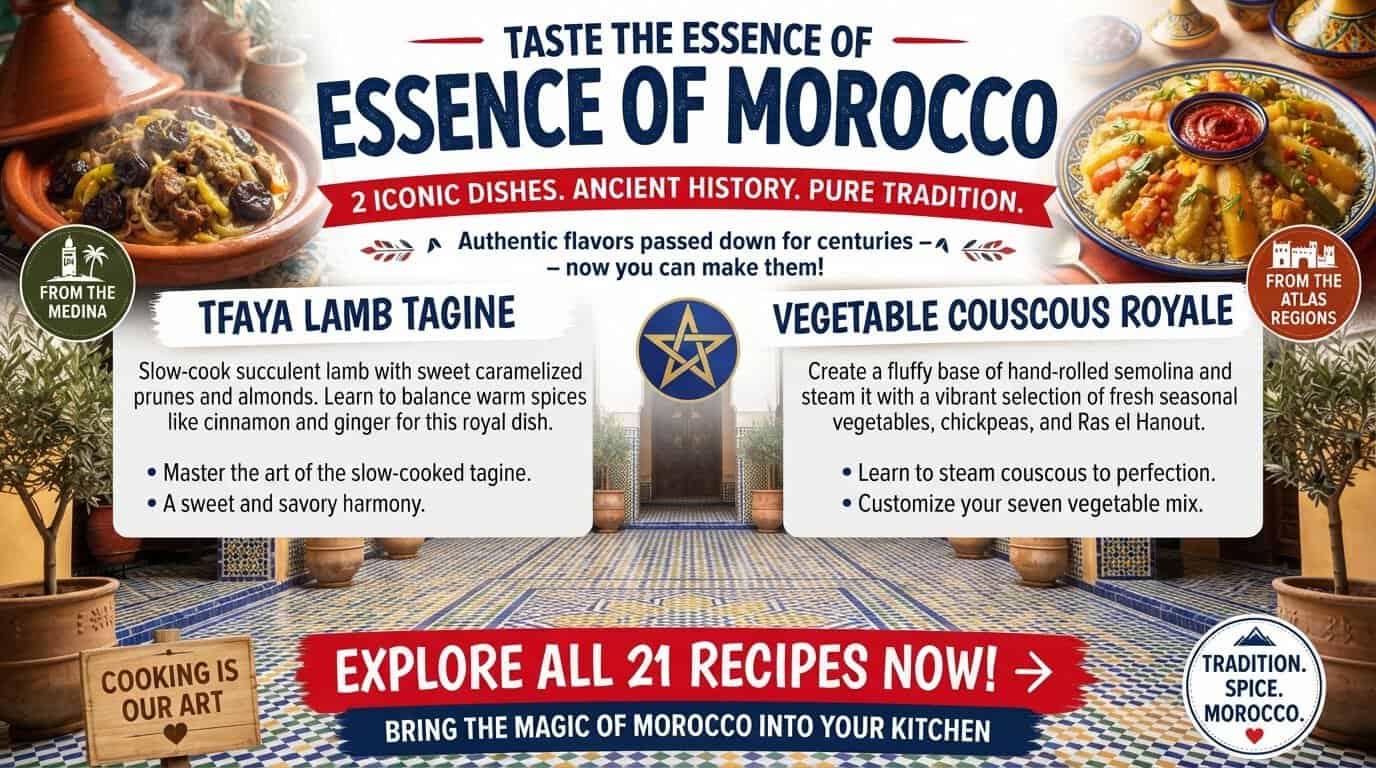
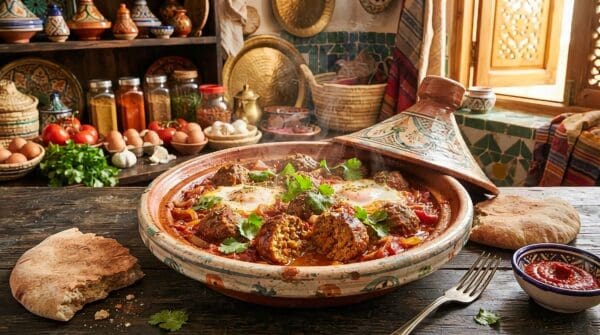
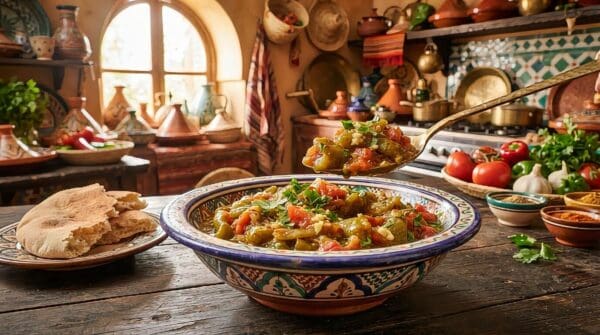
Moroccan recipes reflect the geography and history of a country positioned between the Atlantic Ocean, Mediterranean Sea, Atlas Mountains, and Sahara. As a result, Moroccan recipes can feature seafood from coastal cities, grains and vegetables from fertile valleys, livestock from inland areas, and dates or preserved foods from drier regions. Spices are important, but Moroccan cooking usually depends on careful balance rather than heat alone.
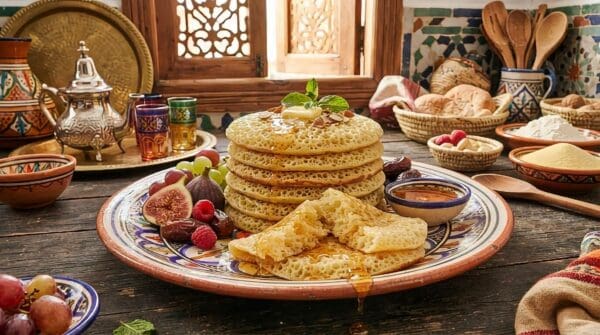
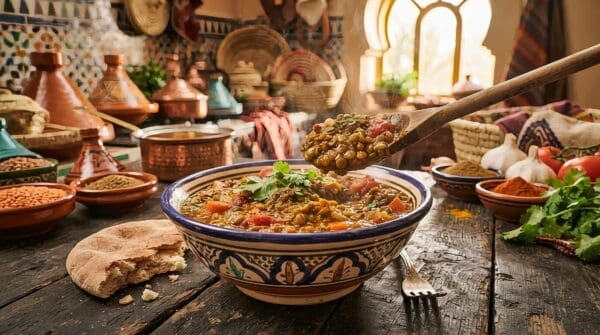
This collection of Moroccan recipes introduces home cooks to the breads, soups, stews, salads, grain dishes, pastries, drinks, and slow-cooked meals associated with Morocco. Some Moroccan recipes are prepared for ordinary family meals, while others are connected to religious holidays, weddings, Friday gatherings, or welcoming guests. Traditional Moroccan recipes may use couscous, chickpeas, lamb, chicken, vegetables, almonds, honey, olives, preserved lemons, or aromatic spice combinations. Together, these Moroccan recipes show how practical home cooking, trade, agriculture, and family customs helped create one of North Africa’s most recognizable food traditions.
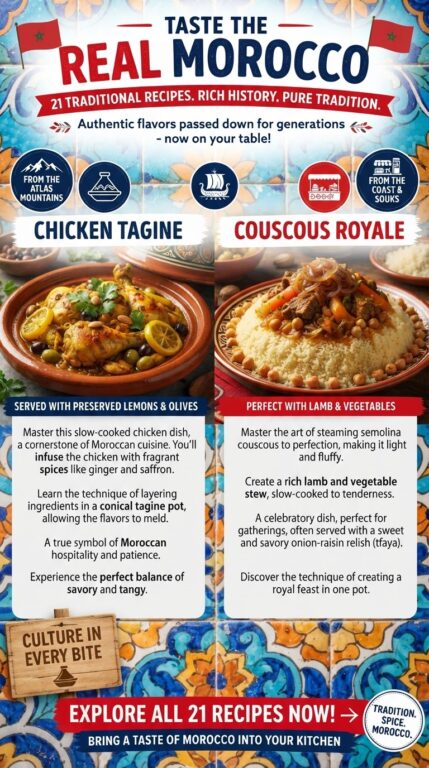
History Behind Traditional Moroccan Recipes
Moroccan recipes did not come from one culture or one historical period. Their oldest foundation comes from the Indigenous Amazigh people of North Africa, who developed practical ways to cook grains, vegetables, meat, and preserved foods in the region’s varied landscape. Later Arab, Andalusian, Mediterranean, sub-Saharan African, Jewish, Spanish, and French connections added ingredients and methods without erasing that earlier foundation.
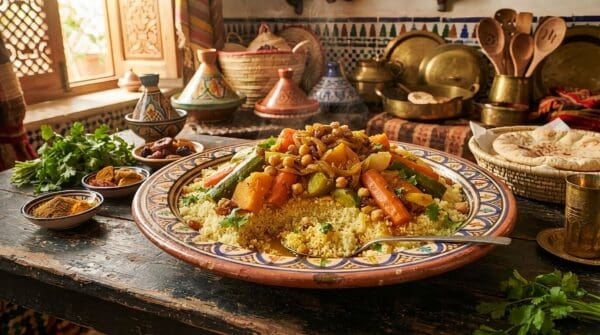
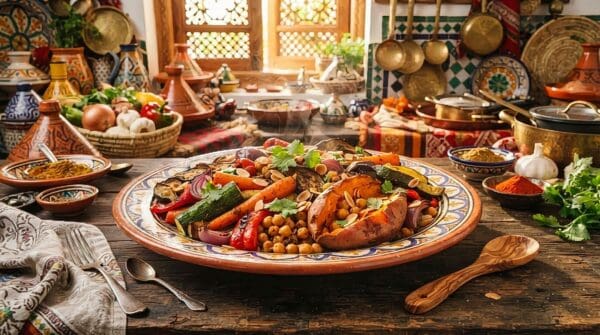
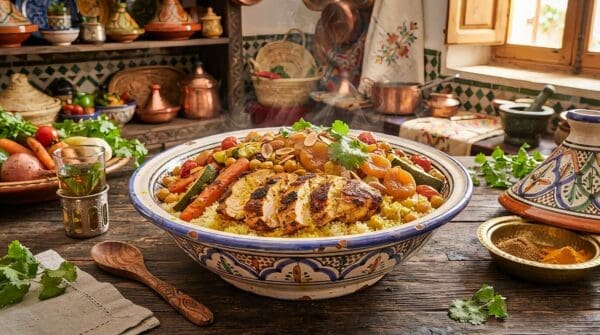
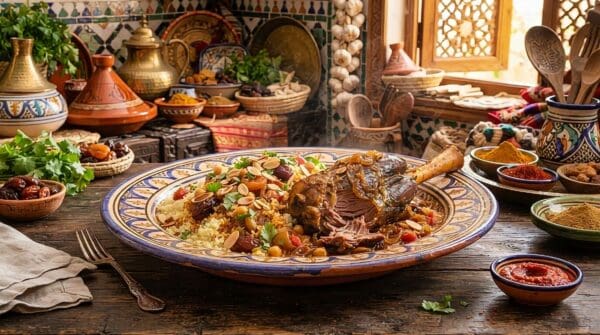
One of the clearest examples is couscous. Traditional Moroccan recipes often treat couscous as much more than a quick side dish. The grains are traditionally rolled and steamed, then served on a broad communal platter with vegetables, broth, and sometimes meat. In many Moroccan homes, couscous is closely associated with Friday gatherings after midday prayers, when relatives share the meal from one dish.
Moroccan recipes also changed as people and ingredients moved through the country. Muslim and Jewish communities arriving from al-Andalus brought cooking knowledge from the Iberian Peninsula. Caravan trade across the Sahara carried dates, spices, sugar, and other valuable goods. Coastal trade linked Morocco with Mediterranean ports, while royal cities such as Fez, Marrakesh, Meknes, and Rabat developed their own refined food customs.
Spices are one of the most recognizable features of Moroccan recipes, yet Moroccan cooking does not rely on one fixed seasoning mixture. Ras el hanout, whose name is commonly interpreted as “top of the shop,” can contain a different combination from one spice merchant or household to another. Cumin, ginger, cinnamon, turmeric, paprika, saffron, coriander, and black pepper are also used according to the dish rather than added all at once.
Many Moroccan recipes remain tied to hospitality. Tea, bread, pastries, and shared platters help turn a meal into a welcome for relatives or guests. Modern kitchens may use pressure cookers, ovens, and electric appliances, but Moroccan recipes still preserve the older principles of sharing food, using seasonal ingredients, conserving what is available, and allowing preparation time to build the final result.
21 Great Traditional Moroccan Recipes
1
2
3
4
5
6
7
8
9
10
11
12
13
14
15
16
17
18
19

Recipes are gathered in person and written for real-world cooking conditions.
- 10 Hungarian Dessert Recipes Passed Down Through Generations - July 25, 2026
- 11 Easy English Recipes Anyone Can Make - July 25, 2026
- Hungarian Kifli Recipe - July 25, 2026
2 comments
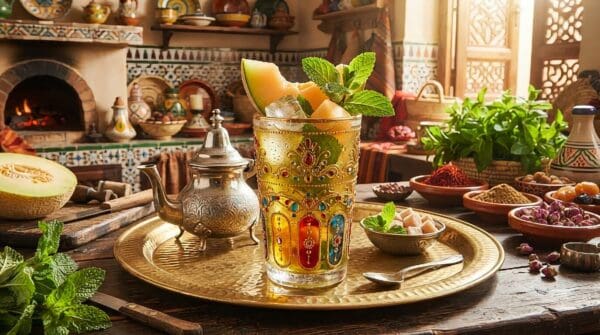
I cant believe they left out the recipe for Moroccan mint tea! Thats a staple in Moroccan cuisine. Its like missing out on fries in a burger joint. Unforgivable oversight, in my opinion.
I cant believe they didnt include the recipe for Moroccan mint tea! Its a staple in Moroccan cuisine and a must-try for anyone exploring traditional recipes. Total oversight in my opinion. What do you guys think?
Comments are closed.