
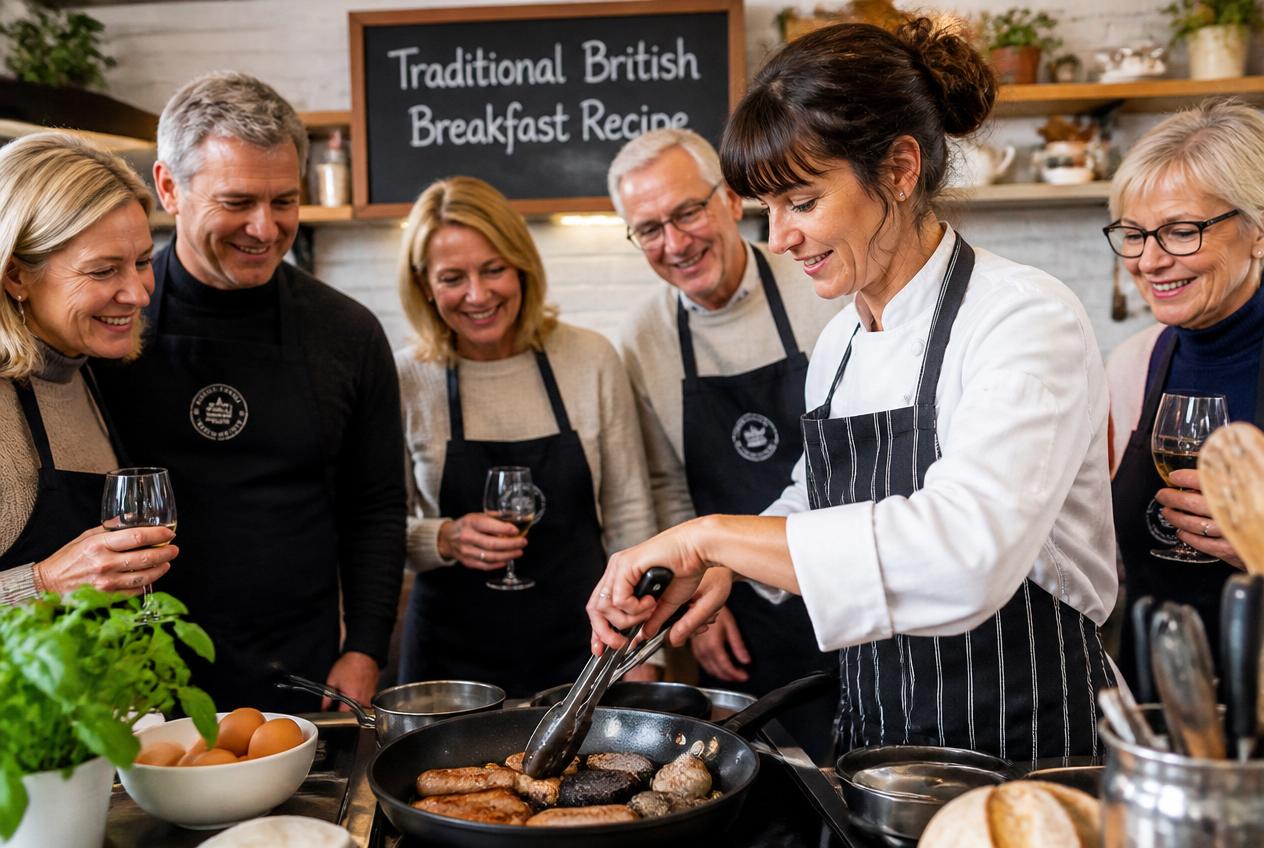
There’s something so comforting about a Traditional British Breakfast when sitting down to a proper morning meal, and honestly, nothing quite matches the charm of a traditional British breakfast. A traditional British breakfast includes sausages, back bacon, eggs, baked beans, tomatoes, mushrooms, and toast—a hearty plate that keeps you full for hours. Sometimes folks call it a full English or fry up. You’ll spot this meal everywhere in the UK, with cafes even serving it well past noon.
I want to walk you through everything I know about making this classic at home. The mix of savory meats, veggies, and beans hits that sweet spot of protein and carbs, making breakfast feel like an event. Whether you’re after an authentic British morning meal or just want to shake up your weekend routine, I’ll break down each step of the Traditional British Breakfast recipe for you.
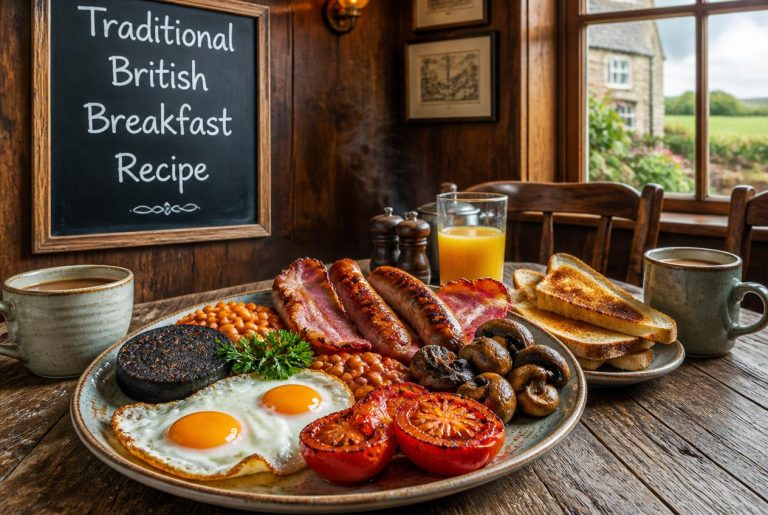
Traditional British Breakfast Recipe
Key Takeaways
- A traditional British breakfast combines cooked items like sausages, bacon, eggs, beans, tomatoes, and mushrooms on one plate
- You can tweak your breakfast with regional twists and personal touches while keeping the essentials
- Good technique and fresh ingredients really make the Traditional British Breakfast recipe shine
English Recipe Description and Historical Information
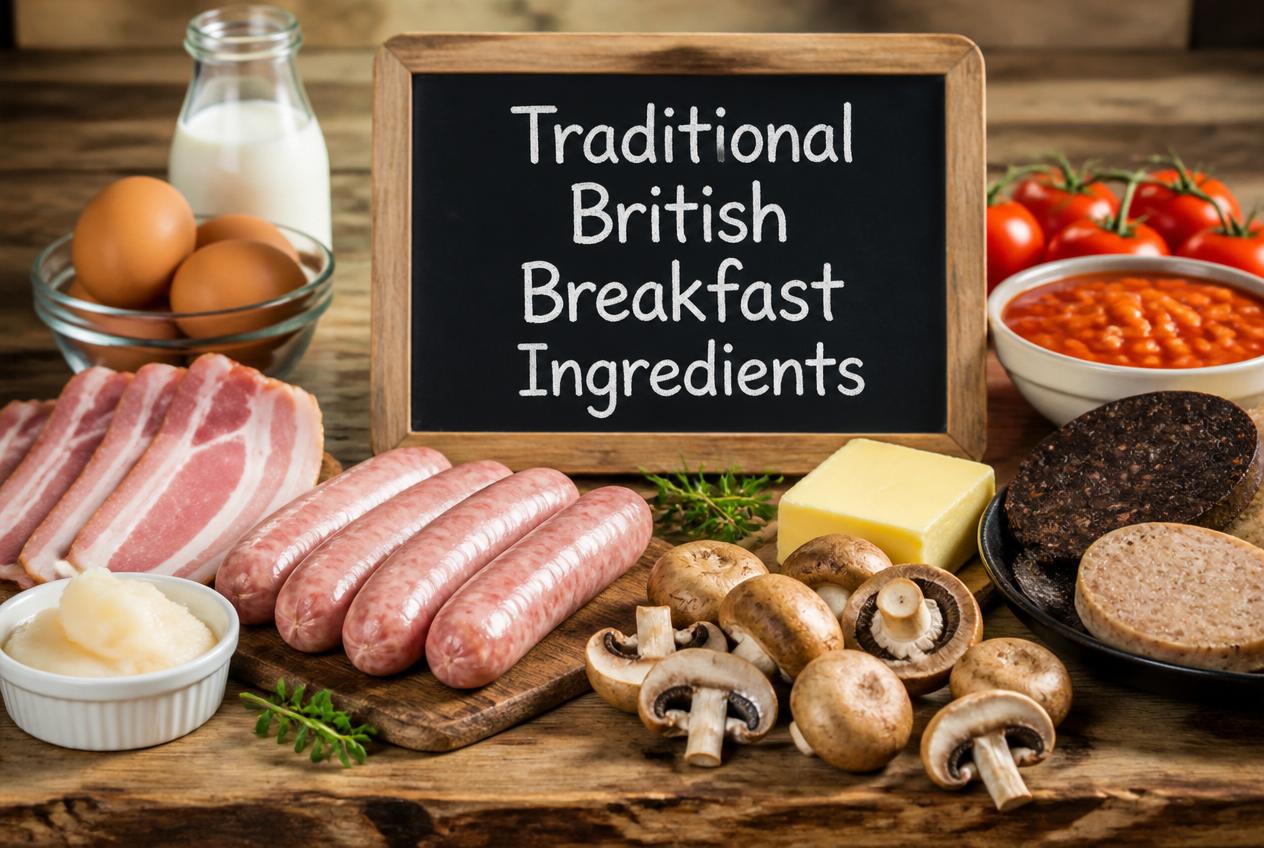
Let me just say, a traditional Full English Breakfast is one of the most satisfying things you can cook. This dish brings together so many flavors on a single plate. If you’re after a proper Traditional British Breakfast recipe, these are the must-haves:
- Back bacon
- Pork sausages
- Fried or scrambled eggs
- Baked beans
- Grilled tomatoes
- Sautéed mushrooms
- Toast or fried bread
- Black pudding (optional)
The history of this iconic British dish stretches back to the 17th century. Back then, English gentry used the meal to show off their hospitality. Over time, what started as a fancy breakfast for the wealthy spread to everyone. By the 1860s, Isabella Beeton helped standardize the Traditional British Breakfast recipe in her famous household management book.
Depending on where you are in Britain or Ireland, you might hear it called a full English, full Scottish, full Welsh, full Irish, or even an Ulster fry. I love that the Traditional British Breakfast recipe adapts to local tastes like that.
The full breakfast is still a cornerstone of British cuisine today. You’ll find the Traditional British Breakfast recipe in cafes all over the country—and, weirdly enough, even at Mediterranean resorts in Spain.
This is more than just food. It’s a cultural symbol that British folks protect and celebrate with real pride.
Recipe Tips
I always gather all my ingredients before turning on the stove. A traditional full English breakfast—the heart of any Traditional British Breakfast recipe—calls for sausages, back bacon, eggs, baked beans, tomatoes, mushrooms, toast, and sometimes black pudding. There’s a lot to juggle!
Timing is everything when you’re cooking a Traditional British Breakfast recipe. I start with the sausages since they take the longest, about 15-20 minutes. While those sizzle away, I get the bacon and mushrooms going in the pan.
Here’s my usual cooking order:
- Sausages first (15-20 minutes)
- Bacon and mushrooms next (8-10 minutes)
- Tomatoes (5-6 minutes)
- Eggs last (2-4 minutes, depending how you like them)
- Toast right before serving
I keep a warm oven at 200°F to hold the finished items while I finish up the rest. It’s not perfect, but it keeps things from getting cold!
Use separate pans if you can. I cook eggs in one pan and let the meats and veggies share a bigger skillet. That way, I don’t end up with overcooked eggs or limp mushrooms.
Baked beans go in a small pot on low heat. I just warm them gently—they get mushy if you let them boil.
If I could give just one tip for a Traditional British Breakfast recipe, it’s this: use quality ingredients. Good sausages and real back bacon make all the difference. Oh, and I always brush my tomatoes with a little oil before cooking them cut-side down. It’s a small thing, but it helps.
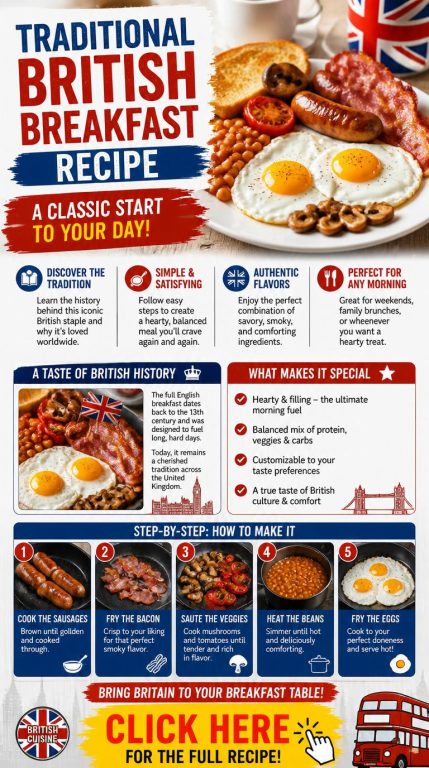
Variations
What I love most about the Traditional British Breakfast recipe is how it changes across the UK. Every region puts its own spin on the classic.
In Scotland, the full breakfast gets exciting extras like black pudding, haggis, and tattie scones. These additions make the Scottish Traditional British Breakfast recipe stand out.
Wales brings laverbread and cockles to the plate. Laverbread isn’t even bread—it’s a type of seaweed, and it gives the Traditional British Breakfast recipe a unique twist.
The Irish breakfast goes its own way too. White pudding sits next to black pudding, and soda bread usually replaces regular toast. It’s a different texture, but I’m all for it.
Here’s what I usually see in each variation:
England: Back bacon, sausages, eggs, baked beans, tomatoes, mushrooms, toast, black pudding
Scotland: All the English items, plus haggis, tattie scones, sometimes fruit pudding
Wales: Standard items, plus laverbread and cockles
Ireland: Standard items with both white and black pudding, plus soda bread
I’m always amazed by how regional variations add local flair. Usually, the meat part of a Traditional British Breakfast recipe means pork sausages and either streaky or back bacon. Veggies and beans like baked beans and tomatoes get cooked over high heat to bring out all that deep flavor.
Storage
I actually love making a full English breakfast ahead of time because the Traditional British Breakfast recipe stores surprisingly well. Leftovers keep in the fridge for up to 3 days if you use airtight containers.
Refrigerator Storage:
- Let everything cool completely before storing
- Store each item separately if you can
- Keep eggs, sausages, bacon, and tomatoes in sealed containers
- Put baked beans in their own container so nothing gets soggy
Honestly, some things reheat better than others. Sausages and bacon usually keep their texture. Eggs might get a bit rubbery, but they’re still tasty enough for me.
Freezer Storage:
You can freeze most parts of the Traditional British Breakfast recipe for up to 2 months. Wrap sausages and bacon individually, then put them in freezer bags. Cooked mushrooms and tomatoes freeze fine, too.
Just a heads-up: I wouldn’t freeze cooked eggs. They turn watery and a little tough, not great.
Reheating Tips:
Reheat your traditional British breakfast in the microwave for a couple of minutes, or go for the oven at 350°F for about 10 minutes. I lean toward the oven for the Traditional British Breakfast recipe because it keeps things crispier.
For the beans, add a splash of water before reheating. It helps them stay creamy and fresh, not dried out.
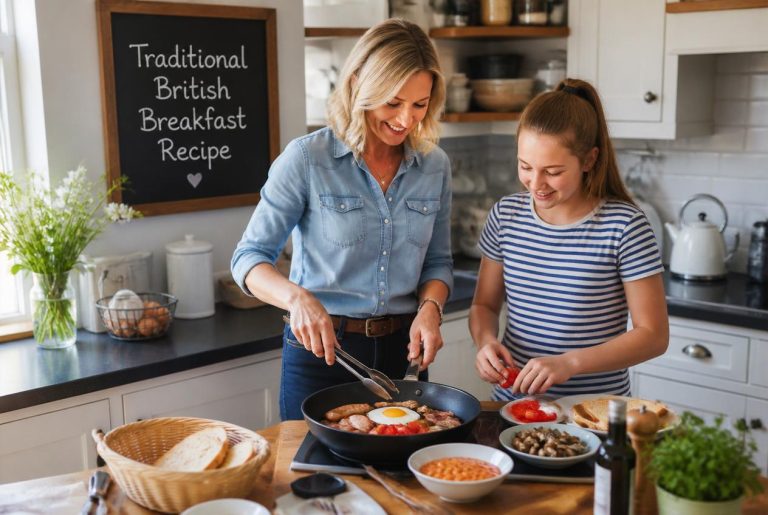
Traditional British Breakfast Recipe Cooking Tips
Traditional British Breakfast Recipe Cooking Tips
• Full English Breakfast is known for its hearty combination of eggs, sausages, bacon, beans, tomatoes, mushrooms, and toast.
• Quality pork sausages provide the foundation of an authentic British breakfast.
• Back bacon is traditionally used instead of streaky American-style bacon.
• Eggs can be fried, scrambled, or poached according to preference.
• Baked beans are a classic component and are usually heated gently rather than boiled.
• Mushrooms should be sautéed until tender and lightly browned.
• Tomatoes are often grilled or pan-fried to enhance their sweetness.
• Black pudding is a traditional addition in many regions of Britain.
• Toasted bread or fried bread adds texture and helps soak up the flavors.
• Cook each component separately for the best flavor and texture.
• Keep cooked items warm while finishing the remaining ingredients.
• Season lightly because many breakfast meats already contain salt.
• Serve everything hot and freshly prepared.
• The flavor should balance savory meats, rich eggs, sweet tomatoes, earthy mushrooms, and hearty beans.
• A Full English Breakfast is traditionally enjoyed on weekends, holidays, and special family gatherings.
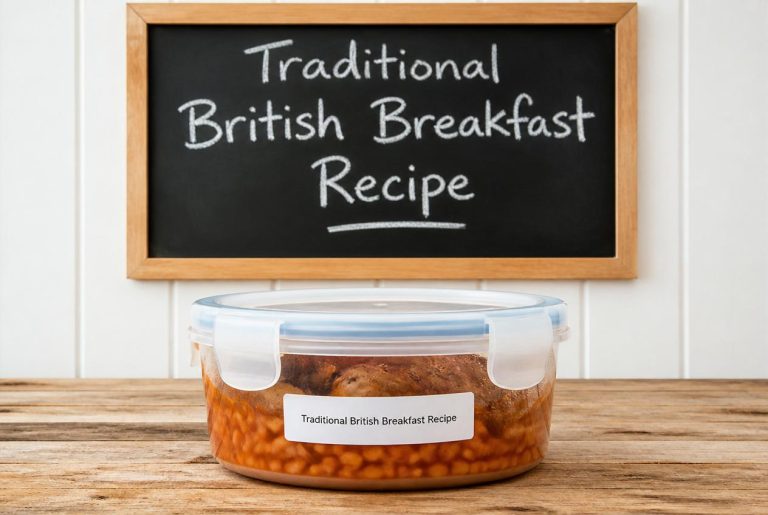
Traditional British Breakfast Recipe Storage Tips
Traditional British Breakfast Storage Tips
• Store cooked breakfast components separately whenever possible.
• Allow foods to cool before transferring them into storage containers.
• Keep refrigerated in airtight containers to preserve freshness.
• Reheat sausages, bacon, mushrooms, and beans thoroughly before serving.
• Eggs are generally best enjoyed freshly cooked rather than stored.
• Toast and fried bread are best prepared fresh because they lose texture during storage.
• Refrigeration may slightly alter the texture of tomatoes and mushrooms, which is normal.
• Freeze sausages and bacon separately if longer storage is desired.
• Defrost frozen breakfast meats gradually in the refrigerator before reheating.
• Use clean utensils when handling leftovers to help maintain freshness.
• Mixed breakfast dishes are generally best enjoyed within a shorter refrigerated storage period for ideal quality and safety.
• Keep away from strongly scented foods because cooked breakfast items can absorb odors.
• Reheat only the portion needed to help maintain quality.
• Discard leftovers if any component develops sour odors, slime, mold, or unusual discoloration.
Traditional British Breakfast Recipe
Ingredients
- 6 slices back bacon cooked to your desired level of doneness
- 2 fresh pork sausage links
- 14.1 ounce can of English Heinz Baked Beans
- 2 large eggs
- 2 large slices of tomatoes
- ⅔ cup sliced mushrooms
- blood pudding optional
Instructions
- Heat a large cast iron skillet over medium heat and add the back bacon. Cook the bacon until it reaches your preferred level of doneness, turning occasionally to ensure even browning. Some people prefer it lightly golden and tender, while others enjoy a crispier texture. As the bacon cooks, it will release flavorful fat into the skillet that will help season the remaining ingredients. Once cooked, transfer the bacon to a plate lined with paper towels to drain excess grease and keep warm while you prepare the rest of the breakfast.
- Using the same skillet and the rendered bacon fat, increase the heat to medium-high and add the pork sausages. If using blood pudding, add it to the skillet at the same time. Cook the sausages, turning frequently, until they are evenly browned on all sides and cooked completely through. The blood pudding should develop a crisp exterior while remaining tender inside. Depending on the thickness of the sausages, this may take several minutes.
- Once fully cooked, transfer the sausages and blood pudding to the plate with the bacon. Keep everything warm while the vegetables cook.
- Add the sliced mushrooms to the hot skillet and cook over medium-high heat. Stir occasionally as they release their moisture and begin to brown. Continue cooking until the mushrooms become tender and develop a rich, savory flavor.
- While the mushrooms are cooking, add the tomato slices to the skillet. Allow the tomatoes to soften slightly and develop a bit of color on their surfaces without completely breaking down. The combination of the earthy mushrooms and lightly caramelized tomatoes provides a fresh balance to the richer breakfast items. Once both are cooked, transfer them to the plate with the bacon, sausages, and blood pudding.
- Pour the baked beans into the skillet and reduce the heat to medium-low. Allow them to simmer gently for about 5 minutes, stirring occasionally. As they cook, the sauce will thicken slightly and deepen in color, concentrating the flavor. This step helps transform the beans from simply warmed through to rich and hearty, making them an essential component of a traditional full breakfast.
- Once the beans have thickened slightly, crack the eggs directly on top of the beans. Cover the skillet if desired and cook for approximately 3–5 minutes, or until the egg whites are fully set and the yolks reach your preferred level of doneness. Cooking the eggs directly over the beans allows them to absorb some of the savory flavor while keeping the skillet preparation simple and traditional.
- Return the cooked bacon, sausages, blood pudding, mushrooms, and tomatoes to the skillet around the beans and eggs. Allow everything to warm together for a minute or two before serving. Present the skillet directly at the table for a rustic presentation or divide the ingredients among serving plates.
- Serve immediately with thick slices of buttered toast for a classic full English breakfast. The combination of savory meats, rich eggs, hearty beans, mushrooms, and tomatoes creates a filling and satisfying meal that has become one of Britain's most iconic breakfast traditions.
Frequently Asked Questions
The Traditional British Breakfast recipe sparks a lot of questions—what goes on the plate, how it got so popular, and how to nail it at home. Let’s dig into some of the classics, plus a few creative twists you might want to try.
What items are usually included in a classic full English breakfast?
Honestly, a classic full English breakfast (or Traditional British Breakfast recipe) brings together all the good stuff: bacon, eggs, sausages, baked beans, tomatoes, and mushrooms. Toast or fried bread finishes it off just right.
Black pudding—basically a rich, savory blood sausage—often shows up too. Some versions toss in hash browns, which isn’t traditional but has gotten really popular lately.
How did the full English breakfast become such an iconic tradition?
The full English started out as a grand meal for wealthy landowners in the 1800s. They wanted to flaunt their prosperity with elaborate spreads featuring lots of hot dishes. Eventually, working-class families made their own, simpler version. The Traditional British Breakfast recipe gave them energy for long days of work.
By the Victorian era, the full English breakfast tradition was rooted in British culture. Hotels and restaurants picked it up, serving it to travelers and workers alike.
What’s the difference between a full English breakfast and a half English breakfast?
A half English breakfast is just a lighter take on the Traditional British Breakfast recipe. It usually means eggs, bacon, one sausage, and toast—and maybe beans or tomatoes, but not both. The full English goes all out: multiple sausages, extra bacon, beans, tomatoes, mushrooms, black pudding, and toast or fried bread, all at once.
How can I cook the perfect traditional English breakfast at home without messing up the timing?
I always start with the things that take longest—sausages, about 15-20 minutes. I cook sausages and bacon in one pan, and mushrooms and tomatoes in another. Beans just need to simmer gently in a small pot. Eggs are last, since they cook fast and taste best fresh off the heat. I keep a low oven warm to hold everything while I finish the rest. That’s my best advice for pulling off the Traditional British Breakfast recipe at home.
What are the best traditional British breakfast menu ideas for hosting guests?
I love setting up a breakfast bar where guests can build their own plates. It’s a relaxed way to serve a Traditional British Breakfast recipe, and honestly, it saves me from guessing what everyone wants. People just pile up what they like best—no awkward leftovers, no fuss.
Mix things up with both classic and lighter choices. Not everyone wants the full Traditional British Breakfast recipe every time, right? Some folks might crave the whole works—sausages, bacon, beans, eggs—while others just want a bit of toast and maybe a poached egg. Give everyone a shot at their ideal plate.
Most establishments stop serving breakfast around 11:30 AM or midday, so I always try to time things so no one feels rushed. If you ask me, weekend brunch is the sweet spot for a Traditional British Breakfast recipe. People linger, sip tea, and actually enjoy the meal.
Don’t forget to add vegetarian alternatives like veggie sausages or grilled halloumi. These swaps make a Traditional British Breakfast recipe way more inclusive. It’s surprisingly easy to make sure everyone at the table finds something to love, even if they’re skipping meat. A good Traditional British Breakfast recipe should have a little something for everyone, and honestly, halloumi might steal the show.
Which British breakfast foods are considered must-haves, and what tasty variations can I try?
Eggs, bacon, and sausages form the holy trinity of any proper English breakfast. Honestly, if I’m making a Traditional British Breakfast recipe, I can’t imagine leaving out those three. They just set the tone for the whole thing.
Baked beans add this sweet, almost comforting note that ties the whole Traditional British Breakfast recipe together. That tomato sauce really gets along with the salty, savory meats—it’s a combo I’d recommend to anyone who hasn’t tried it yet.
Regional twists keep things interesting. Scottish breakfasts sometimes throw haggis and potato scones into the mix, which, if you ask me, brings a bold edge to the Traditional British Breakfast recipe. Over in Wales, you might find laverbread and cockles—definitely not everyone’s cup of tea, but it makes the Traditional British Breakfast recipe feel special and rooted in place.
I like to play around with how I cook my eggs for a Traditional British Breakfast recipe. Some mornings, I go for fried eggs with crispy edges, sometimes I’ll scramble them, and occasionally I’ll poach them if I’m feeling fancy. Each style changes the vibe of the whole plate, you know?
Hash browns sneak in a crispy, American-inspired crunch that somehow feels right at home in a Traditional British Breakfast recipe. But if you want to stick to tradition, bubble and squeak is a fun choice—just fry up leftover mashed potatoes and cabbage until they’re golden. It’s a little rustic, but that’s part of the charm of a real Traditional British Breakfast recipe.

Recipes are gathered in person and written for real-world cooking conditions.
- 10 Hungarian Dessert Recipes Passed Down Through Generations - July 25, 2026
- 11 Easy English Recipes Anyone Can Make - July 25, 2026
- Hungarian Kifli Recipe - July 25, 2026