
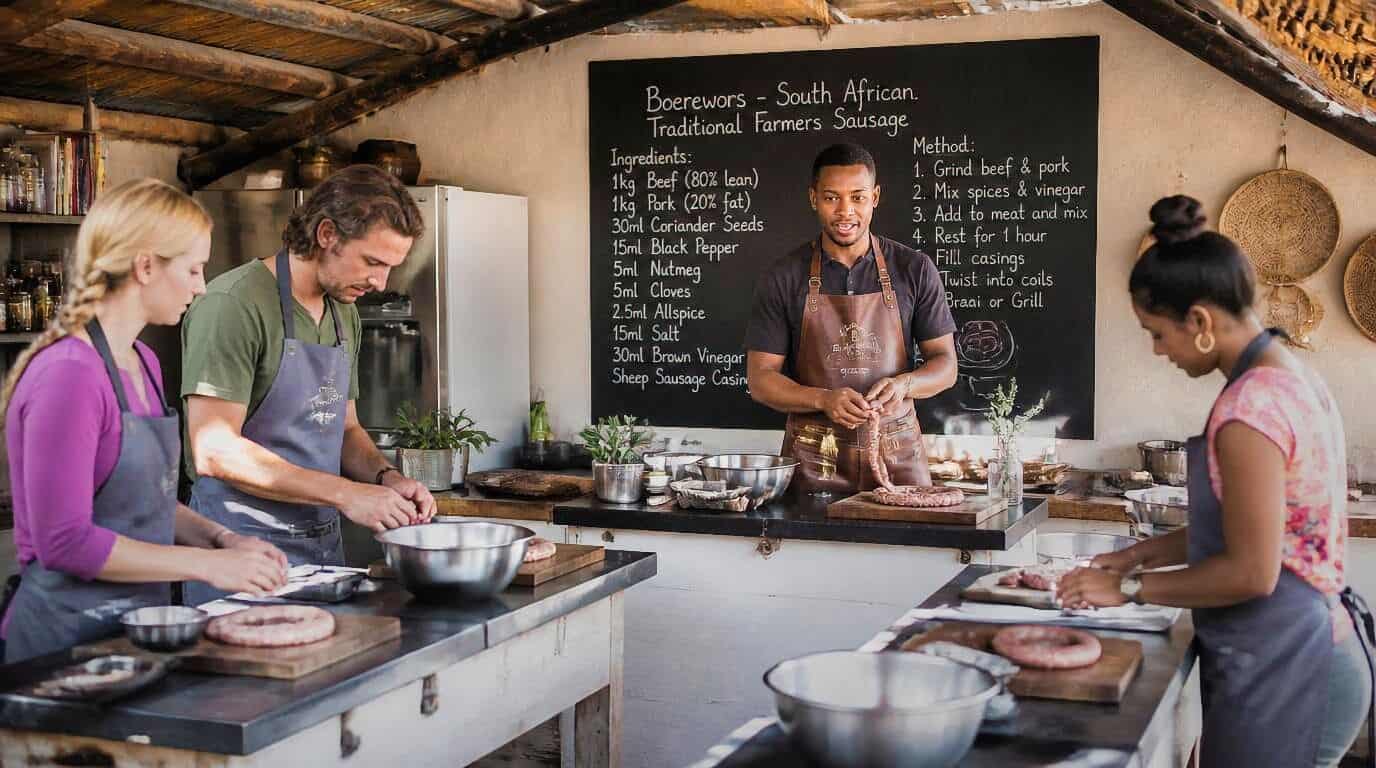
South African Boerewors Sausage Recipe: Boerewors is a beloved dish that represents the heart of South African cuisine. It is a traditional sausage known for its rich flavors and unique coiled shape. This dish is often enjoyed at outdoor gatherings and is a staple for many families across South Africa.
Today, we will share an authentic recipe that captures the essence of this famous sausage.
Making boerewors at home is not only satisfying, but it also allows us to connect with South African traditions. By using a mix of meats, spices, and the right techniques, we can recreate this delicious dish in our own kitchens.
Whether you are a seasoned cook or a beginner, this recipe will guide you through the steps to make your own boerewors.
Join us as we explore the ingredients and methods needed to craft this fantastic sausage. With each bite, we will bring the spirit of South Africa right to our table.
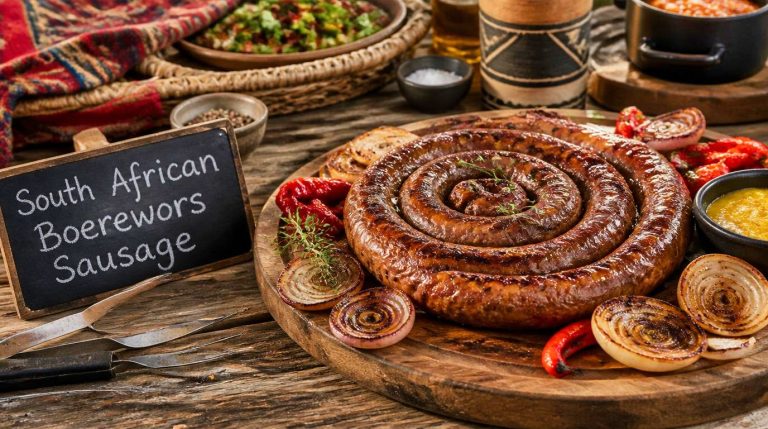
South African Boerewors Sausage
Why You’ll Love This Recipe
We appreciate how flavorful boerewors sausage is. The blend of spices such as coriander, cloves, and nutmeg adds a unique taste that makes each bite satisfying.
Making boerewors rolls is easy. We can pair the sausages with fresh, crusty bread for a delightful experience. These rolls are great for gatherings, picnics, or just a tasty lunch at home.
The preparation is straightforward. We can enjoy a wonderful meal in just about 1 hour and 15 minutes. This makes it perfect for both busy weekdays and relaxed weekends.
Using quality meats, like beef and pork, ensures that every bite is tender and juicy. The right mix maintains a rich flavor while keeping it healthy with 90% meat and only 30% fat.
Boerewors can also be very versatile. We can serve it with various sides, sauces, or toppings to match our preferences. From tangy sauces to grilled vegetables, the options are endless.
Finally, this recipe connects us with South African culture. By making boerewors, we embrace a traditional dish loved by many around the world. It’s not just a meal; it’s an experience we can share with friends and family.
What Makes This Recipe Special
The boerewors recipe stands out because it is deeply rooted in South African culture. This traditional sausage is not just food; it represents a rich history and culinary heritage.
Unique Ingredients
We use a blend of meats, typically a mix of beef and pork. The ratios and cuts can vary, allowing for personal touches. Some regions may even incorporate game meats like kudu or springbok for a unique flavor.
Flavorful Spices
The spicing of boerewors is what truly sets it apart. We often include:
- Coriander seeds: Toasted for depth
- Cloves and nutmeg: Adding warmth
- Brown sugar: For a hint of sweetness
Freshly grinding these spices enhances the aroma and taste.
Traditional Preparation
Our recipe emphasizes the art of making boerewors. We grind the meat and mix in the spices by hand, ensuring a rich, flavorful taste. This process allows for adjustments based on personal preference.
Cooking Method
Boerewors is traditionally cooked on a grill or open flame, infusing the sausage with a smoky flavor. This cooking method not only enhances the taste but brings people together, making it perfect for gatherings.
These elements combine to create a delicious experience that embodies the spirit of African food. Each bite tells a story and celebrates our culinary tradition.

Cooking Equipment Needed
Making boerewors requires some specific equipment to ensure that the sausage turns out well. Here’s what we need:
- Meat Grinder: This is essential for mincing the meat finely or coarsely, depending on our preference. A good grinder will help mix in all the spices evenly.
- Sausage Stuffer: This tool is used to fill the casings with the meat mixture. It helps us pack the sausage tightly without air bubbles.
- Sausage Casings: We can use hog casings for traditional boerewors. These should be soaked in water before use to make them more pliable.
- Grilling Basket: If we plan to grill our boerewors, a grilling basket can help keep the sausages intact. It prevents them from rolling around or falling through the grill.
- Butcher Knives: Sharp knives are needed for cutting the meat into manageable pieces before grinding.
Having the right tools makes the process smoother and helps us create delicious boerewors. With this equipment ready, we can start making our sausages and enjoy the authentic South African flavor at home.
Ingredients For the South African Boerewors Sausage Recipe
Pork
Pork Fat
Kosher Salt
Black Pepper
Coriander Seed
Ground Clove
Ground Allspice
Brown Sugar
Malt Vinegar
Brandy
Hog casings
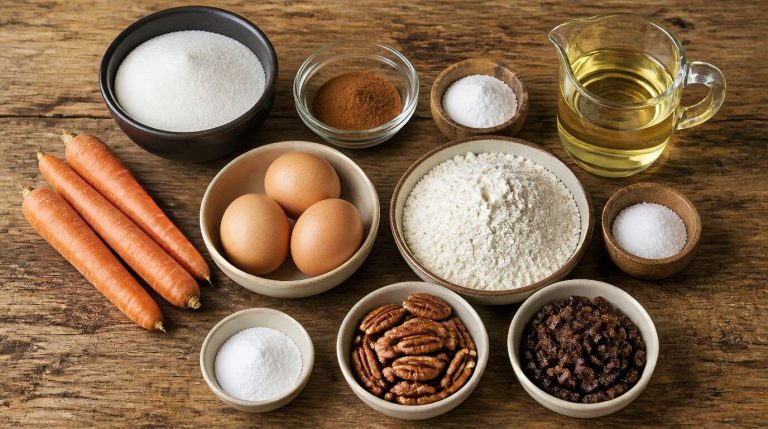
South African Boerewors Sausage Ingredients
Cooking Instructions For the South African Boerewors Sausage Recipe
Preparing the Casings
Soak about 10 feet of hog casings in warm water.
Preparing the Meat
Cut the meat and fat into chunks that will fit into your meat grinder. In a separate bowl, mix together the salt, pepper, coriander, clove, and allspice. Add this mixture to the meat and fat, ensuring every piece is coated. If you prefer, refrigerate the mixture overnight, but allow it to marinate for at least an hour, which helps develop myosin and improves the texture of the sausage.
Grinding the Mixture
When you’re ready to grind, place the meat in the freezer until it reaches a temperature between 30°F and 40°F. Also, put the grinder parts (auger, dies, blades, etc.) in the freezer and place a bowl in the fridge. Grind half of the mixture through the coarse die and the other half through the fine die to create a more varied texture. If the meat mixture is still at 35°F or colder, proceed to the binding stage. If it has warmed up, chill everything again. This is a good time to clean the grinder.
Binding the Meat
Once the meat is cold again, transfer it to a large bowl or bin and add the sugar, vinegar, and brandy. Mix everything thoroughly with your (very clean) hands for about 2 to 3 minutes. The mixture should feel cold enough that your hands ache. Continue mixing until the meat binds together. Alternatively, you can use a stand mixer on the lowest setting, but mixing by hand will give a better bind.
Stuffing the Sausage
At this point, you have boerewors. Most people stuff it into long coils of around 1 to 2 pounds each. Stuffing the sausage is easier with two people—one to fill the links and the other to coil—but it can be done solo as well. Stuff the casings firmly but not too tightly, as overstuffed links will be difficult to tie off later. Leave plenty of room at both ends of the coil, about three inches, to tie them off.
Removing Air Pockets
Tie off one end of the coil and gently compress the sausage from the other end to check for air pockets. To remove any air, heat a large needle or sausage pricker over a stovetop burner until it glows (this sterilizes it), then pierce the casing where the air pockets are. Tie off the other end of the coil and repeat the process with the rest of the sausage.
Drying and Storing the Sausage
Place the coil on a rack to dry for an hour, or leave it in the fridge overnight if preferred. Once it has dried a bit, the boerewors can be refrigerated for up to a week or frozen for up to a year.

South African Boerewors Sausage Cooking TIps
Cooking Tips For the South African Boerewors Sausage Recipe
- Use a mixture of beef and pork for traditional flavor and texture.
- Freshly ground meat creates a juicier and more flavorful sausage.
- Coriander, black pepper, cloves, nutmeg, and vinegar are common boerewors seasonings.
- Mix the meat gently to avoid creating a dense texture.
- Natural sausage casings help maintain authentic texture and shape.
- Avoid overfilling the casings to prevent bursting during cooking.
- Coil the sausage loosely for traditional presentation and even grilling.
- Grill over medium heat so the sausage cooks evenly without burning the exterior.
- Turn the sausage carefully to help keep the casing intact.
- Avoid piercing the casing during cooking because juices can escape.
- A braai grill adds authentic smoky South African flavor.
- Cook until the sausage is fully done but still juicy inside.
- Let the sausage rest briefly after grilling so the juices redistribute.
- Serve with pap, chutney, bread rolls, or grilled vegetables.
- Mustard or tomato relish pairs well with boerewors.
-
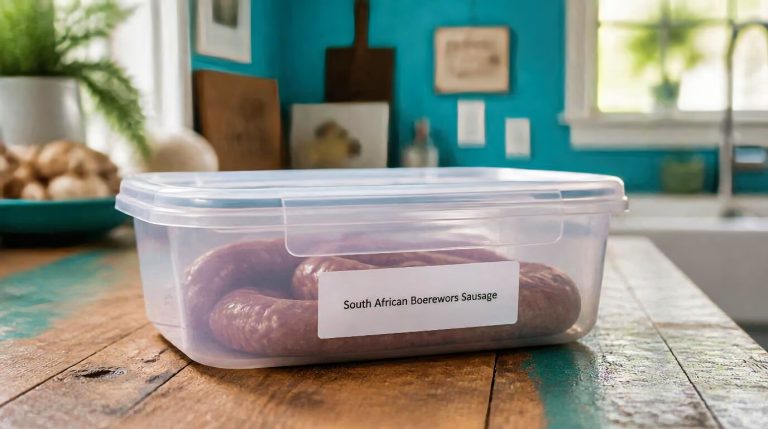
South African Boerewors Sausage Storage Tips
Storage Tips For the South African Boerewors Sausage Recipe
- Keep raw sausage refrigerated until ready to cook.
- Store raw or cooked boerewors in airtight containers or tightly wrapped packaging.
- Separate raw sausage from other foods to avoid cross-contamination.
- Freeze extra sausage in freezer-safe wrapping for longer storage.
- Portion the sausage before freezing for easier thawing and cooking later.
- Defrost frozen sausage gradually in the refrigerator before cooking or reheating.
- Cooked sausage can be reheated gently over low heat or on the grill.
- Add a small splash of water or broth during reheating if the sausage seems dry.
- Grilled casings may soften slightly after refrigeration, which is normal.
- Store breads, sauces, or side dishes separately from the sausage.
- Avoid repeatedly reheating the same batch, which may dry out the meat.
- Use clean utensils when handling leftovers to help maintain freshness.
- Keep the sausage tightly wrapped to reduce moisture loss and odor transfer.
- Discard sausage if it develops sour odors, sliminess, or unusual discoloration.

South African Boerewors Sausage Recipe
Ingredients
- 4 lb Pork or wild boar or venison
- 1 lb Pork Fat
- 1 oz Kosher Salt
- 1 tsp Black Pepper cracked
- 4 tsp Coriander Seeds coarsely ground
- 1 tsp Clove ground
- 2 tsp Ground Allspice
- 2 tsp Brown Sugar
- 1/4 cup Malt Vinegar
- 1/4 cup Brandy
- Hog casings
Instructions
- Soak about 10 feet of hog casings in warm water.
- Cut the meat and fat into chunks that will fit into your meat grinder. In a separate bowl, mix together the salt, pepper, coriander, clove, and allspice. Add this mixture to the meat and fat, ensuring every piece is coated. If you prefer, refrigerate the mixture overnight, but allow it to marinate for at least an hour, which helps develop myosin and improves the texture of the sausage.
- When you're ready to grind, place the meat in the freezer until it reaches a temperature between 30°F and 40°F. Also, put the grinder parts (auger, dies, blades, etc.) in the freezer and place a bowl in the fridge. Grind half of the mixture through the coarse die and the other half through the fine die to create a more varied texture. If the meat mixture is still at 35°F or colder, proceed to the binding stage. If it has warmed up, chill everything again. This is a good time to clean the grinder.
- Once the meat is cold again, transfer it to a large bowl or bin and add the sugar, vinegar, and brandy. Mix everything thoroughly with your (very clean) hands for about 2 to 3 minutes. The mixture should feel cold enough that your hands ache. Continue mixing until the meat binds together. Alternatively, you can use a stand mixer on the lowest setting, but mixing by hand will give a better bind.
- At this point, you have boerewors. Most people stuff it into long coils of around 1 to 2 pounds each. Stuffing the sausage is easier with two people—one to fill the links and the other to coil—but it can be done solo as well. Stuff the casings firmly but not too tightly, as overstuffed links will be difficult to tie off later. Leave plenty of room at both ends of the coil, about three inches, to tie them off.
- Tie off one end of the coil and gently compress the sausage from the other end to check for air pockets. To remove any air, heat a large needle or sausage pricker over a stovetop burner until it glows (this sterilizes it), then pierce the casing where the air pockets are. Tie off the other end of the coil and repeat the process with the rest of the sausage.
- Place the coil on a rack to dry for an hour, or leave it in the fridge overnight if preferred. Once it has dried a bit, the boerewors can be refrigerated for up to a week or frozen for up to a year.
FAQ For the South African Boerewors Sausage Recipe
Question: What is a South African Boerewors Sausage recipe?
A: A South African Boerewors Sausage recipe is a traditional sausage made with a mixture of beef, pork, and spices such as coriander, black pepper, cloves, and nutmeg. It is often coiled into a spiral shape and grilled over an open flame, making it a popular dish at South African braais.
Question: What are the key ingredients in a South African Boerewors Sausage recipe?
A: A South African Boerewors Sausage recipe typically includes beef, pork, coriander, black pepper, cloves, nutmeg, and vinegar. Some variations may include garlic, paprika, or mustard seeds for added flavor.
Question: How is a South African Boerewors Sausage recipe cooked?
A: A South African Boerewors Sausage recipe is typically grilled or braaied over hot coals until browned and cooked through. It is often served with traditional sides such as pap, chutney, or a salad.
Question: Can a South African Boerewors Sausage recipe be made without a braai?
A: Yes, a South African Boerewors Sausage recipe can be made using a grill, stovetop, or even an oven if you don’t have access to a braai. While the smoky flavor from the braai is traditional, other cooking methods will still produce a delicious result.
Question: How can you store leftover South African Boerewors Sausage?
A: Leftover South African Boerewors Sausage can be stored in the fridge for up to 3 days or frozen for longer storage. To reheat, simply grill or heat the sausages until warmed through before serving.

Recipes are gathered in person and written for real-world cooking conditions.
- 10 Hungarian Dessert Recipes Passed Down Through Generations - July 25, 2026
- 11 Easy English Recipes Anyone Can Make - July 25, 2026
- Hungarian Kifli Recipe - July 25, 2026
2 comments
I made South African Boerewors Sausage for the first time, and it was a great success! The sausages were flavorful, juicy, and perfectly seasoned with the right blend of spices. My guests were impressed with how tender the meat was, and they enjoyed the unique taste. It’s a recipe I’ll definitely be making again for barbecues or gatherings!
Im not convinced by the hype around this Boerewors sausage recipe. Sure, the ingredients sound unique and the spices are flavorful, but is it really all that special? I need more convincing!
Comments are closed.