
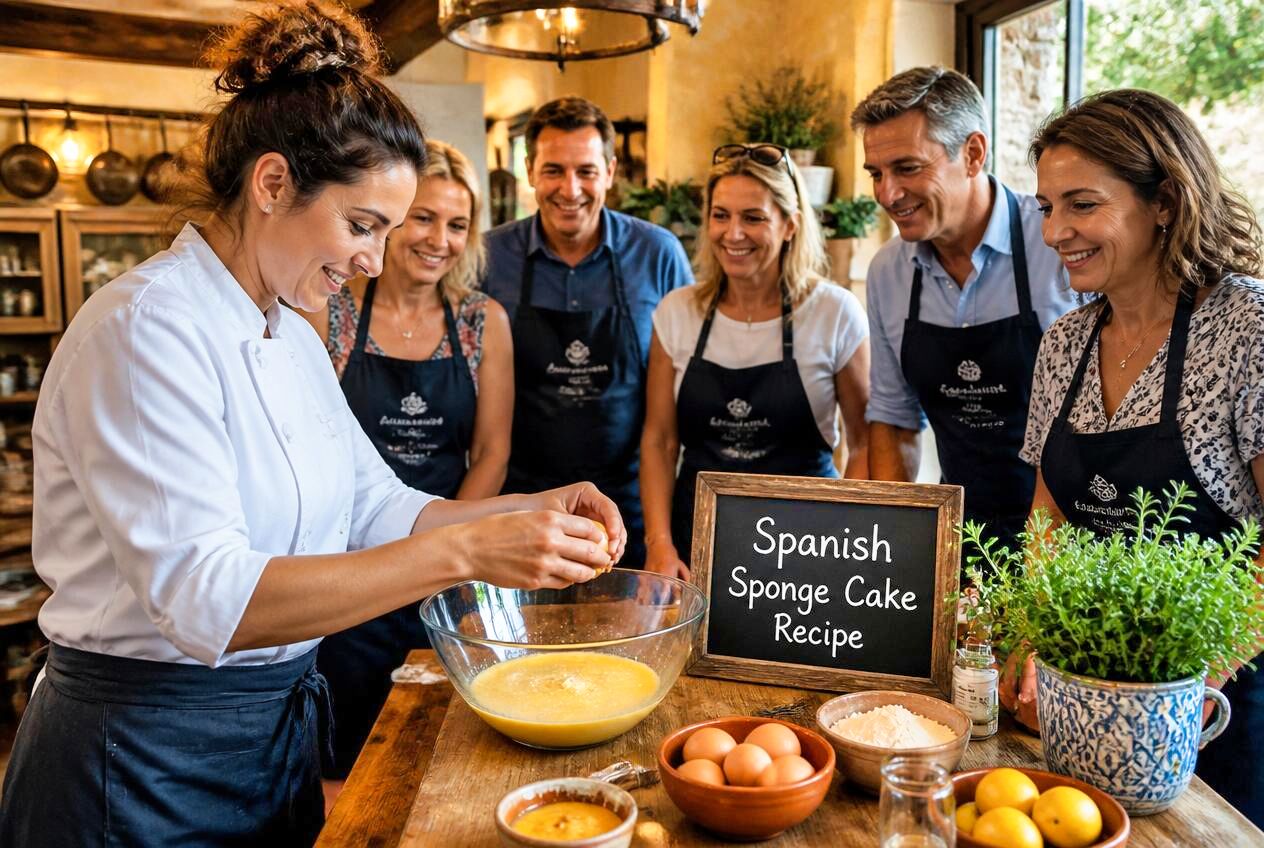
You’ll find that making an authentic Spanish sponge cake (bizcocho or coca de llanda) fits easily into a busy morning or a relaxed afternoon. This simple Spanish sponge cake recipe yields a light, citrus-scented cake that rises reliably and stays moist for days, so you can enjoy slices for breakfast or tea with minimal effort.
Let me guide you through the straightforward ingredients and techniques so you can bake with confidence, adapt flavors like lemon or orange, and choose between olive oil or butter depending on your preferred texture. Expect practical tips for timing, pan prep, and make-ahead storage that save time and improve results. You’ll discover how to customize your Spanish sponge cake recipe with quick variations and comparisons to related Spanish cakes.
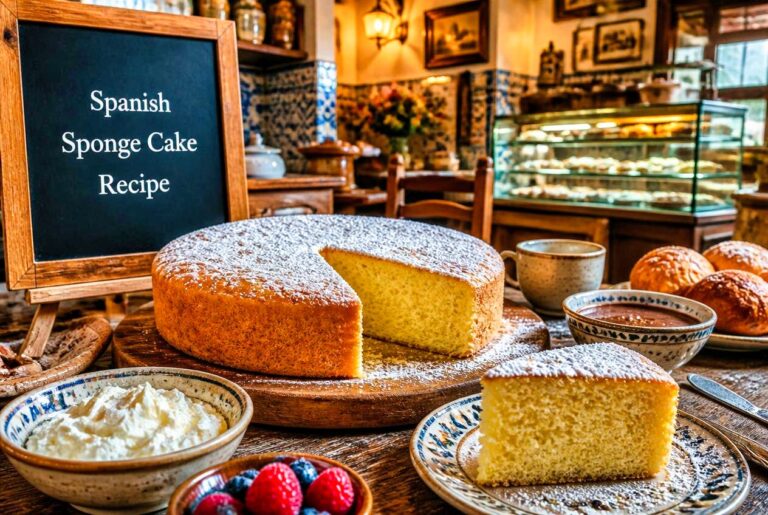
Spanish Sponge Cake Recipe
Key Takeaways
- The Spanish sponge cake recipe balances simple ingredients for a reliably light sponge.
- Practical tips help you prevent common baking issues and store the cake.
- Small variations let you change flavor and texture while keeping the same method.
Description and Historical Information
The Spanish sponge cake recipe, commonly called bizcocho, produces a light, airy cake from eggs, flour, sugar, and often a touch of citrus. Whipped eggs create the signature texture instead of heavy fats, which is a hallmark of traditional Spanish recipes and authentic Spanish food.
Early European sponge traditions, especially pan di Spagna from Italy, influenced the Spanish sponge cake recipe during the Renaissance and Spanish Imperial period. Regional adaptations in Spain reflect local ingredients and culinary traditions, so you’ll find variations across Spanish cuisine recipes and regional foods of Spain.
Some historical Spanish sponge cake recipes use ground almonds, olive oil, or lemon zest for a Mediterranean Spanish cuisine character. You’ll see the Spanish sponge cake recipe served for breakfast, family gatherings, and religious festivals, showing how the cake fits into traditional Spanish food and authentic Spanish recipes.
The cake’s simplicity makes it a canvas for regional touches: in Galicia, it may take almond or butter notes, while Andalusian versions highlight citrus and olive oil. The Spanish sponge cake recipe connects to broader regional Spanish cuisine recipes and culinary traditions that prize local produce and modest, flavorful preparations.
Chef’s Tips
I preheat the oven and set the rack in the center to ensure even baking; consistent temperature matters for Spanish homemade recipes. I use an oven thermometer when I need precision for delicate sponge structure. I separate eggs at room temperature and whisk the whites to firm peaks for lift. Folding technique matters—gently fold to keep the batter airy while avoiding streaks of flour.
I prefer using fresh citrus zest—lemon or orange—for a light, authentic aroma common in easy traditional Spanish recipes. I add zest to the yolk mixture so the oil and sugar capture the oils and flavor evenly. I grease and line the pan with parchment for clean edges and simple release. For a taller sponge, I choose a deeper 9–10 inch pan and avoid overfilling.
I taste-test minor adjustments on smaller batches when adapting to local ingredients or altitude. I document changes so my next attempt improves; this habit helps with consistent results across Spanish cooking recipes. I recommend serving room-temperature slices for best texture. If you plan fillings or glazes, bake a day ahead to let the crumb set and simplify assembly. I keep common substitutions on hand—extra egg for structure, a neutral oil instead of butter for a lighter crumb—and note them in my recipe copy to help beginners with authentic Spanish recipes for beginners.
Make-Ahead Instructions
I often bake the Spanish sponge cake recipe a day ahead to let the flavors meld and the texture settle. Wrap the cooled cake tightly in plastic wrap, then place it in an airtight container to prevent drying out. For longer storage, freeze individual slices or the whole cake. Wrap pieces in plastic, then foil, and label with the date; they keep well for up to one month in the freezer.
When I plan to serve the Spanish sponge cake recipe the next day, I store it at room temperature in a cool, dry place. If the kitchen is warm or humid, I refrigerate the wrapped cake to maintain structure; bring it to room temperature before serving for best texture. I refresh slightly stale cake by brushing each layer with a light syrup (equal parts sugar and water, warmed) before assembling or serving. This adds moisture without changing the classic flavor.
Quick reference:
- Short-term: Room temperature, airtight, 24–48 hours.
- Refrigerate: Up to 4 days, wrapped well.
- Freeze: Up to 1 month, double-wrapped.
I check for condensation when unwrapping refrigerated or frozen cake; allow it to sit wrapped at room temperature for 20–30 minutes to avoid sogginess before serving.
Variations
I often adapt the basic Spanish sponge cake recipe by swapping citrus for other aromatics. Lemon and orange zest remain classics, but I sometimes use grated lime or a teaspoon of vanilla for a softer, warmer note. For texture shifts I change the fat or the flour. I replace part of the olive oil with melted butter for a richer crumb, or use cake flour instead of all-purpose to make the sponge even lighter. Gluten-free blends work too; I reduce mixing to avoid a dense result.
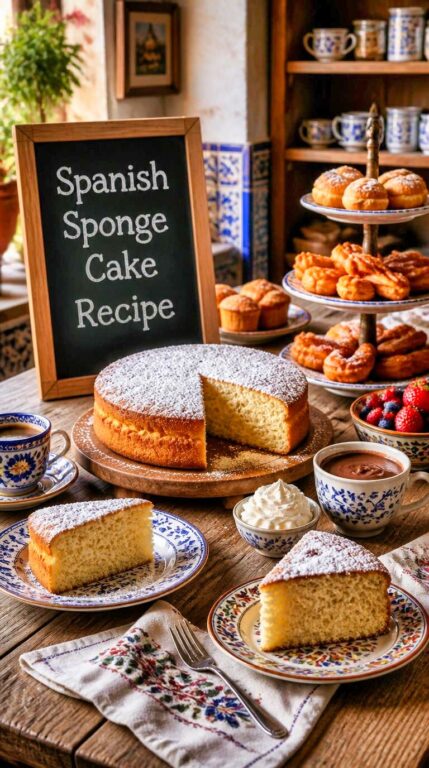
I use fillings and toppings to change the cake’s role. A thin layer of apricot jam and a dusting of powdered sugar turns it into a breakfast treat, while whipped cream and fresh berries make it an elegant dessert. For a more Spanish touch I brush the slices with sweet vermouth or sherry before serving.
I also experiment with add-ins and spices. Toasted almond slivers or ground almond (almendra) add nutty depth. A pinch of cinnamon or a little aniseed elevates the flavor without masking the sponge’s delicate profile.
- Olive oil variant: light, fruity crumb.
- Butter variant: richer, tender crumb.
- Citrus options: lemon, orange, lime.
- Toppings: jam, whipped cream, berries, powdered sugar.
Test one change at a time in your Spanish sponge cake recipe to judge its effect on texture and flavor.
Related Recipes
I often pair my Spanish sponge cake recipe with savory plates from my Spanish kitchen rotation. For tapas nights, I recommend tried-and-true small dishes like patatas bravas and Spanish croquettes to balance the cake’s sweetness. For a classic meal, I turn to crowd-pleasers such as a Spanish tortilla recipe and gambas al ajillo (garlic shrimp). Both work well as part of a tapas spread or a simple family dinner.
When I want heartier fare, I choose dishes like fabada asturiana or albondigas (Spanish meatballs). These popular Spanish comfort foods make great companions for rice dishes and other traditional Spanish meals to make at home. I keep a shortlist of reliable recipes for entertaining: pisto for a vegetable-forward option, patatas bravas for spice, and churros for a fried-sweet finish. I also rely on seafood recipes and Spanish rice dishes for variety.
For step-by-step inspiration, I consult a range of classic and regional recipes, including traditional Spanish Sponge Cake (Bizcocho) variations and other best Spanish recipes to adapt for family dinners and tapas nights. For more Spanish sponge cake recipe ideas, you can also visit Spanish Sabores for additional tips and regional variations.
Recipe Comparison
I compare several Spanish sponge cake recipes by focusing on texture, fat type, and citrus use. These three variables most affect how the cake turns out. Some Spanish sponge cake recipes use olive oil for a moist crumb and subtle fruitiness, while others prefer butter for richer flavor and a finer crumb. Olive oil gives a slightly denser but tender cake; butter produces a lighter, more traditionally “cakey” mouthfeel.
Lift methods also make a difference. Recipes that rely on whipped eggs or separated egg whites yield a lighter, airier sponge. Those that use chemical leaveners (baking powder) simplify preparation but produce a more uniform, less delicate crumb.
Citrus choices and quantities also matter in a Spanish sponge cake recipe. Lemon or orange zest appears frequently and adds bright aroma; some versions include juice for extra tang, which can tighten crumb if overused. Here’s a quick reference:
- Texture: whipped eggs = airy; baking powder = consistent.
- Fat: olive oil = moist, tender; butter = richer, lighter crumb.
- Citrus: zest for aroma; juice sparingly to avoid dense crumb.
Timing and pan size affect the Spanish sponge cake recipe, too. Smaller pans raise depth and require slightly longer baking; shallow pans bake faster and develop more crust. Select the method that matches your priorities: convenience, richness, or delicate sponge.
Spanish Sponge Cake Recipe Cooking Tips
Spanish Sponge Cake Recipe Cooking Tips
• Spanish Sponge Cake, often known as Bizcocho, is a light and airy cake celebrated for its delicate crumb, versatility, and simple flavor.
• Eggs are the primary ingredient responsible for creating the cake’s characteristic volume and texture.
• Use room-temperature eggs for maximum aeration and easier incorporation.
• Beat the eggs and sugar thoroughly to create a light, fluffy mixture that helps the cake rise.
• Sift the flour before adding it to reduce lumps and maintain a delicate texture.
• Fold dry ingredients gently into the batter to preserve as much air as possible.
• Avoid overmixing, which can deflate the batter and produce a denser cake.
• Lemon zest, orange zest, vanilla, or cinnamon are often added to enhance flavor.
• A small amount of olive oil or butter may be incorporated for additional moisture.
• Prepare the baking pan properly to ensure easy release after baking.
• Bake in a preheated oven for consistent results and even rising.
• Avoid opening the oven door frequently during baking, which can cause the cake to collapse.
• Bake until the top is lightly golden and a tester inserted into the center comes out clean.
• Allow the cake to cool briefly before removing it from the pan.
• Cool completely on a wire rack to maintain texture.
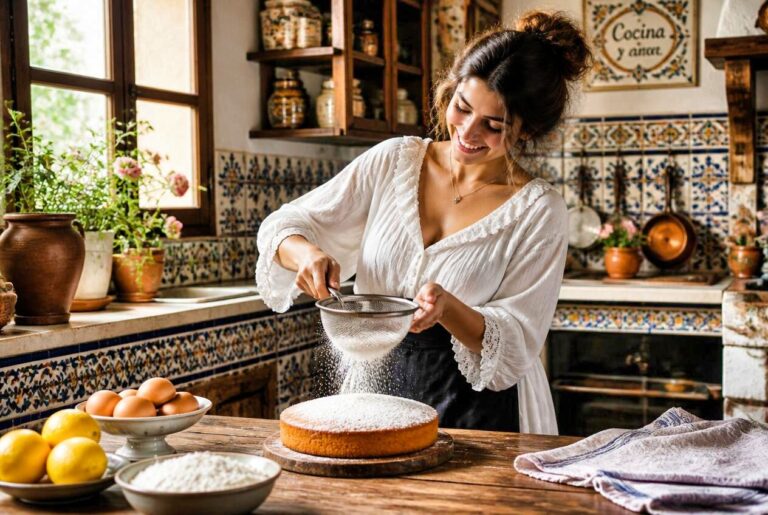
• Powdered sugar is often used as a simple finishing touch.
• The flavor should balance light sweetness, delicate egg richness, and subtle citrus or vanilla notes.
• Properly prepared sponge cake should be airy, tender, and evenly textured throughout.
Spanish Sponge Cake Recipe Storage Tips
Spanish Sponge Cake Recipe Storage Tips
• Allow the cake to cool completely before transferring it into storage containers.
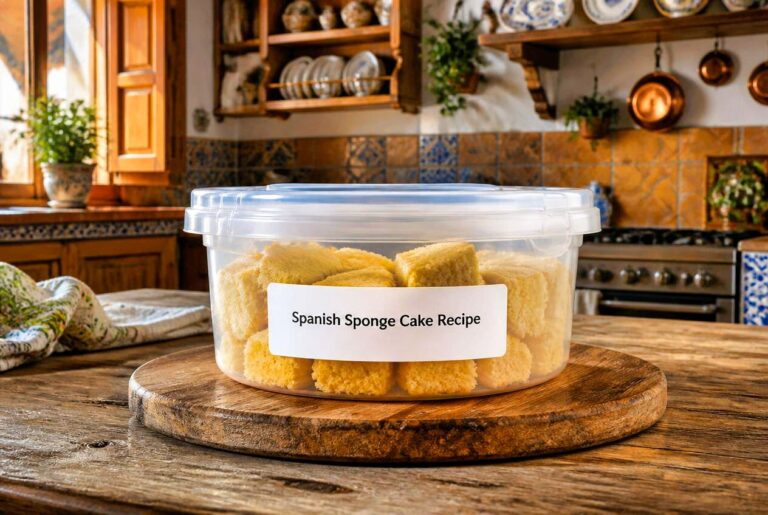
• Store at room temperature in airtight containers to help maintain softness and freshness.
• Keep the cake tightly wrapped to prevent moisture loss.
• Avoid excessive exposure to air, which can dry out the crumb.
• Refrigeration is generally unnecessary unless the cake contains perishable fillings or toppings.
• If refrigerated, bring the cake closer to room temperature before serving for the best texture.
• Store whipped cream, custard, fruit toppings, or frostings separately when possible.
• Individual slices can be wrapped separately for convenient serving.
• Freeze whole cakes or slices in airtight freezer-safe containers if desired.
• Wrap tightly to help prevent freezer burn and preserve quality.
• Defrost frozen cake gradually at room temperature or in the refrigerator.
• Refresh thawed cake with a light dusting of powdered sugar if desired.
• Use clean utensils when slicing and serving to help maintain freshness.
• Keep away from strongly scented foods because sponge cakes readily absorb surrounding odors.
• Label storage containers with the preparation date for easier inventory management.
• Check for signs of spoilage such as mold, unusual odors, discoloration, or texture deterioration before consumption.
• Avoid repeated freezing and thawing cycles, which can negatively affect quality.
• For best quality, enjoy the cake while it remains soft, light, and freshly flavored.
Spanish Sponge Cake Recipe
Ingredients
- 4 eggs
- 1 ½ cups sugar
- ½ cup canola or vegetable oil
- 3 cups flour
- 1 teaspoon baking powder
- 1 cup milk
- 2 teaspoons vanilla essence
Instructions
- Begin by preheating your oven to 200°C (390°F).
- Separate the egg whites from the yolks, placing each into separate mixing bowls.
- Set the egg whites aside for later, as they will be whipped separately to give the sponge cake its light and airy texture.
- Place the egg yolks in a large mixing bowl and add the sugar.
- Using either a hand whisk or an electric mixer, beat the mixture until it becomes pale, thick, and creamy. The mixture should lighten noticeably in color and develop a smooth, almost fluffy consistency.
- Once the yolks and sugar are well beaten, add the oil, milk, and vanilla extract.
- Continue mixing until all the ingredients are fully incorporated and the batter is smooth.
- The mixture should now be silky and uniform with no visible streaks of oil remaining.
- Add a small pinch of salt to the reserved egg whites.
- Using clean beaters and a clean bowl, whip the egg whites until stiff peaks form.
- The whites should become glossy and hold their shape firmly.
- A traditional way to test them is to carefully turn the bowl upside down. If the whites remain in place without sliding, they are ready.
- Properly whipped egg whites are essential for creating a light, tender sponge cake.
- Sift the flour together with the baking powder into a separate bowl.
- Sifting removes any lumps and helps create a finer, more delicate cake texture.
- Gradually add the flour mixture to the yolk batter, mixing a little at a time.
- Continue stirring until all the flour has been incorporated and the batter is smooth.
- Take care not to overmix, but make sure there are no pockets of dry flour remaining.
- Add the whipped egg whites to the batter in several additions.
- Using a spatula or large spoon, gently fold the whites into the batter.
- Work slowly and carefully, lifting the batter from the bottom of the bowl and folding it over the whites.
- The goal is to preserve as much air as possible while creating a uniform mixture.
- The finished batter should be light, airy, and evenly blended.
- Grease your baking pan generously with butter.
- Dust the inside lightly with flour, tapping out any excess.
- This simple preparation helps ensure the cake releases easily after baking.
- Pour the batter into the prepared pan and spread it evenly with a spatula.
- Gently tap the pan on the counter once or twice to release any large air bubbles.
- Place the pan in the preheated oven and bake for approximately 30 to 45 minutes.
- The exact baking time will depend on the size and depth of the pan being used.
- Avoid opening the oven door during the first part of baking, as sudden temperature changes may cause the cake to collapse.
- Begin checking for doneness near the end of the baking time by inserting a toothpick or skewer into the center of the cake.
- If it comes out clean or with only a few dry crumbs attached, the cake is ready.
- The surface should be lightly golden and spring back when gently touched.
- Remove the cake from the oven and place the pan on a wire rack.
- Allow it to cool completely before attempting to remove it from the pan.
- Cooling helps the structure set properly and makes unmolding much easier.
- Once the cake has reached room temperature, carefully loosen the edges if necessary and remove it from the pan.
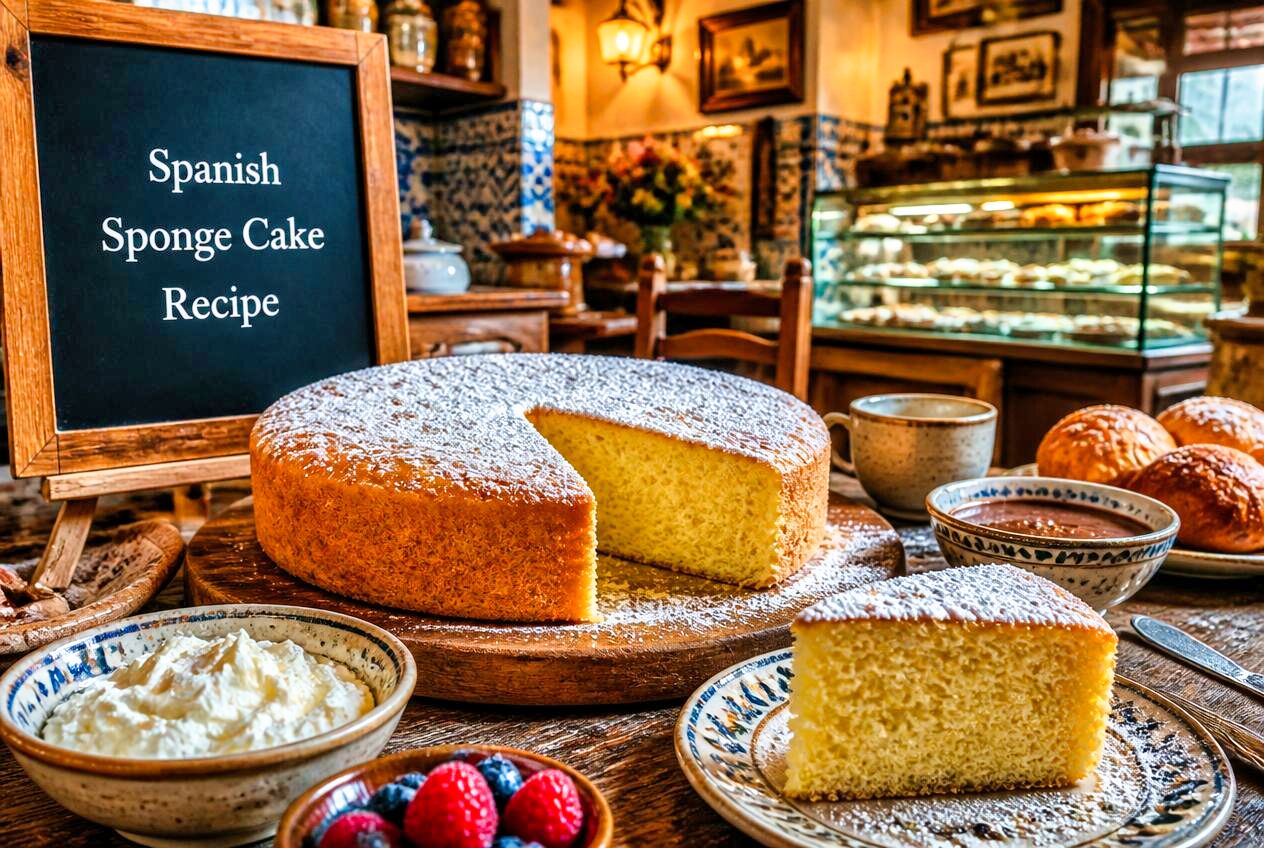
- Slice the sponge cake and serve as is, or dust lightly with powdered sugar for a simple finish.
- It can also be served with fresh fruit, whipped cream, jam, or used as the base for layered cakes and other desserts.
- Its light texture makes it versatile enough for both everyday enjoyment and special occasions.
- This classic Spanish-style sponge cake is wonderfully light, airy, and delicately flavored with vanilla. The separately whipped egg whites give it a soft, tender crumb, while the simple ingredients create a cake that is both comforting and versatile.
- Whether enjoyed with a cup of coffee, transformed into an elegant layered dessert, or served simply with a dusting of sugar, this traditional sponge cake is a timeless recipe that showcases the beauty of simple baking.
Spanish Sponge Cake Recipe Frequently Asked Questions
I focus on practical, measurable techniques for texture, proportions, baking times, and traditional pairings so you can make a reliable 12-inch Spanish-style sponge cake for special occasions. The answers give exact methods, ingredient ranges, and troubleshooting steps you can apply in the kitchen. Use the Spanish sponge cake recipe for celebrations, family gatherings, or everyday treats for the best results.
What is the best method to achieve a light, airy sponge texture for a large cake?
Separate eggs and whip the whites to soft peaks, then beat yolks with sugar until pale and ribboning. Fold the whipped whites into the yolk mixture gently in thirds, using a wide spatula and lifting motions to retain air. Sift flour (and any cornmeal or starch) and fold it in at the end with minimal strokes. Avoid overmixing, use room-temperature eggs, and bake immediately to preserve the trapped air. Always follow these steps for the best Spanish sponge cake recipe results.
With these tips, you’ll master the Spanish sponge cake recipe and enjoy its versatility, simplicity, and delicious results. Try the Spanish sponge cake recipe for your next gathering or as a delightful everyday treat. The Spanish sponge cake recipe adapts well to variations, so you can personalize it to your taste. Remember, the Spanish sponge cake recipe is a staple in Spanish kitchens and perfect for sharing with friends and family. For the ultimate Spanish sponge cake recipe experience, experiment with regional flavors and enjoy the process. The Spanish sponge cake recipe offers endless possibilities for both beginners and seasoned bakers. Make the Spanish sponge cake recipe your go-to for light, airy, and flavorful cakes every time.
How many eggs are typically needed for a 12-inch sponge cake?
For a 12-inch single-layer Spanish sponge cake recipe, I use 6–8 whole eggs, depending on the desired height and richness. If I want a taller, lighter Spanish sponge cake recipe, I use 8 eggs and whip the whites separately. For a modest height, 6 eggs in the Spanish sponge cake recipe work well.
If the Spanish sponge cake recipe uses yolks and whites separately, I plan on about 8 eggs total—usually 5–6 yolks and 7–8 whipped whites—to balance structure and lift. I adjust the number of eggs slightly if I add extra dry ingredients like cornmeal in my Spanish sponge cake recipe, since more eggs help maintain structure.
What baking time and oven temperature work best for a 12-inch sponge cake?
I preheat the oven to 325–350°F (160–175°C) to ensure even baking for a Spanish sponge cake recipe in a wide, shallow 12-inch pan. At 325°F, the Spanish sponge cake recipe usually bakes for 30–40 minutes, while at 350°F, it takes about 25–35 minutes, depending on batter depth and pan material. I check doneness for the Spanish sponge cake recipe by gently pressing the center for a light spring-back and using a toothpick that comes out with a few moist crumbs.
To ensure even baking of the Spanish sponge cake recipe, I rotate the pan once midway if my oven has hot spots. I avoid opening the oven during the first 20 minutes to maintain a steady temperature, which is crucial for a successful Spanish sponge cake recipe.
How can you prevent a large sponge cake from collapsing or sinking in the center?
I confirm the center of the Spanish sponge cake recipe is set but still slightly moist to avoid underbaking, which can cause collapse as the cake cools. I use the correct sugar-to-egg ratio in my Spanish sponge cake recipe and fold the batter gently to preserve the foam structure. I keep the oven temperature steady for the Spanish sponge cake recipe, since sudden drops or too-low temperatures can cause the center to sink.
When the Spanish sponge cake recipe calls for leavening, I measure precisely because too much can cause the cake to rise and then collapse. Proper technique and careful measurement ensure the Spanish sponge cake recipe bakes evenly without sinking in the center.
What traditional Spanish flavors and fillings pair well with sponge cake for celebrations?
I enhance the Spanish sponge cake recipe with citrus elements like grated lemon or orange zest for brightness, which reflects classic Spanish flavor profiles. I also use olive oil accents and a light drizzle of citrus syrup (ajonjolí or naranja) to keep the Spanish sponge cake recipe moist and flavorful. These additions make the Spanish sponge cake recipe perfect for festive occasions.
For fillings, I recommend pastry cream flavored with vanilla or citrus, lightly whipped cream with fresh berries, or a dulce de leche layer for a richer Spanish sponge cake recipe. These options match traditional Spanish recipes and work well for layered celebration cakes. For more ideas and inspiration on Spanish desserts, you can explore recipes from reputable culinary sites specializing in Spanish cuisine.
How do you adapt a classic sponge cake to include milk while maintaining structure?
When I want to create a Spanish sponge cake recipe with milk, I replace a portion of liquid or add up to 10–15% of the batter weight with whole milk or evaporated milk. I increase the egg yolk content slightly to preserve emulsion and strength. I reduce other liquids and keep the whipping technique identical to maintain air incorporation for the Spanish sponge cake recipe.
I fold milk in gently after initial batter aeration instead of pouring it in early, which prevents deflating the foam. If the batter becomes heavier after adding milk, I add one extra whipped egg white to regain lift. This adjustment helps achieve the perfect texture in any Spanish sponge cake recipe.
For more inspiration and variations on the Spanish sponge cake recipe, traditional write-ups such as the Magdalena Sponge-Cakes Recipe provide valuable insights. Many bakers use these methods to adapt a Spanish sponge cake recipe for different occasions. By experimenting with ingredients, you can create a unique Spanish sponge cake recipe that suits your preferences. The Spanish sponge cake recipe allows for flexibility, making it a favorite among home bakers. Try a Spanish sponge cake recipe with different types of milk for subtle flavor changes. A well-made Spanish sponge cake recipe can become a staple in your dessert repertoire.

Recipes are gathered in person and written for real-world cooking conditions.
- 10 Hungarian Dessert Recipes Passed Down Through Generations - July 25, 2026
- 11 Easy English Recipes Anyone Can Make - July 25, 2026
- Hungarian Kifli Recipe - July 25, 2026