
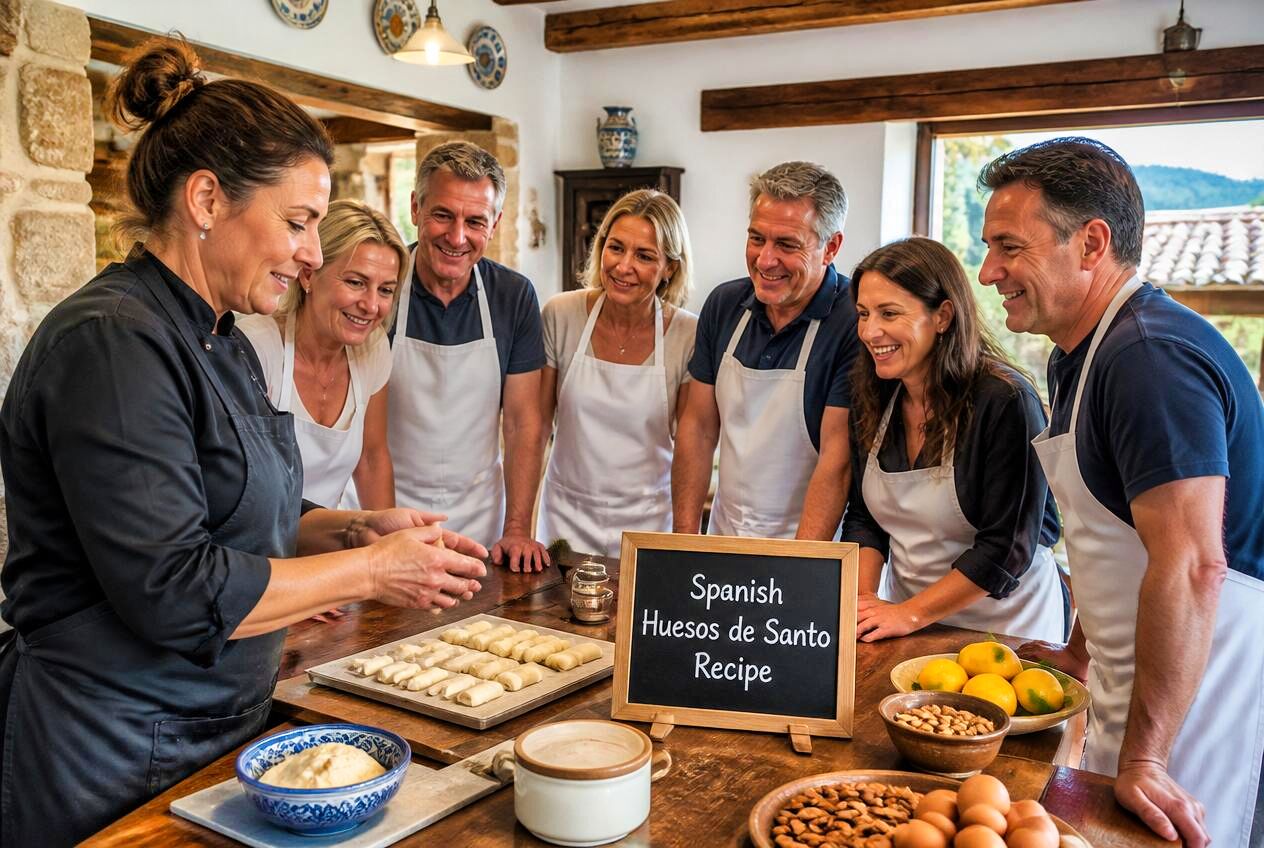
You’ll love how simple traditional Spanish Huesos de Santo recipe are to make at home and how authentic they taste with only a few ingredients. This Spanish huesos de santo recipe teaches you to shape almond marzipan into delicate “bones” and fill them with a silky egg-yolk cream so you can serve a classic All Saints’ Day confection that truly feels Spanish. The Spanish huesos de santo recipe brings out the best in marzipan and showcases the rich culinary heritage of Spain. You can easily master the Spanish huesos de santo recipe with a few simple steps and practice.
I guide you step-by-step through the essentials—marzipan texture, gentle syruping for the yema filling, and neat piping—so you get consistent, bakery-quality results without fuss. You’ll also learn quick tips for preparing components ahead and small variations to suit your pantry or presentation style. The Spanish huesos de santo recipe adapts well to different kitchens, making it accessible for beginners and seasoned bakers alike.
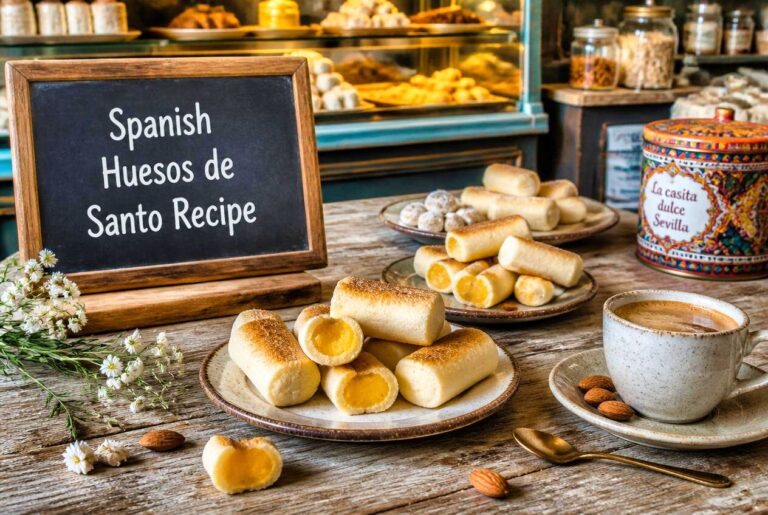
Spanish Huesos de Santo Recipe
Key Takeaways
- I provide a clear, authentic method to make traditional Spanish Huesos de Santo at home.
- I explain practical preparation and timing tips to achieve smooth marzipan and silky yolk filling.
- I suggest simple variations and plating ideas to adapt this classic Spanish huesos de santo recipe.
Background and Historical Insights
I trace huesos de santo to Spain’s long marzipan tradition, which arrived with Arab influence on the peninsula centuries before the 17th century. Historical records show the specific huesos de santo form appearing by the 1600s, linking the confection to early modern Spanish kitchens. The Spanish huesos de santo recipe reflects centuries of history and culinary adaptation.
These sweets became closely tied to All Saints’ Day (November 1), when families honor the dead and bakeries supply seasonal treats. As a result, huesos de santo sit within broader Spanish recipes for special occasions and seasonal rituals. The Spanish huesos de santo recipe has become a staple for this important holiday.
I see strong regional variation across Spain in both preparation and presentation. In Madrid and central regions the classic marzipan tube filled with egg-yolk cream remains common, while other areas adapt fillings or shapes to local tastes. That regional diversity reflects the larger pattern of regional Spanish cuisine recipes evolving from local ingredients and customs.
I consider huesos de santo part of Spanish culinary traditions that emphasize simple ingredients—almonds, sugar, and eggs—transformed by technique into a symbolic dessert. Bakers and home cooks keep the Spanish huesos de santo recipe alive, passing it along during festival seasons and in family cookbooks. This Spanish huesos de santo recipe continues to connect generations through shared culinary experience.
For a modern recipe and preparation notes, see a traditional version on Spain’s official tourism recipe page (Huesos de Santo).
Expert Preparation Guidance
I focus on technique and timing to make these Spanish homemade recipes reliably good. Work patiently: marzipan needs proper syrup-to-almond balance to hold shape without cracking. The Spanish huesos de santo recipe rewards careful attention to detail.
I start the marzipan by cooking a strong sugar syrup, then folding in finely ground almonds while still warm. Chill the paste briefly; slightly firm marzipan is easier to shape into finger-like tubes. The Spanish huesos de santo recipe depends on this marzipan texture for authentic results.
For the egg-yolk filling I whisk the yolks and temper them with hot syrup before thickening gently over a bain-marie. Stir constantly and remove at a custard stage; a few seconds too long yields a grainy texture. The Spanish huesos de santo recipe calls for this careful cooking to ensure a smooth filling.
Use a piping bag for both marzipan shaping and filling insertion to keep pieces uniform. I recommend piping the yellow filling into chilled marzipan tubes through a small nozzle for clean, controlled results. The Spanish huesos de santo recipe highlights the importance of neat presentation and precision.
Timing matters for traditional celebrations, so plan two to three hours including resting time. Prepare the marzipan ahead and finish the yema filling shortly before serving for optimal texture. Following the Spanish huesos de santo recipe step-by-step ensures success for festive occasions.
Practical tips I use:
- Store marzipan wrapped in plastic to prevent drying.
- Keep filled pieces refrigerated up to 48 hours.
- If marzipan is sticky, dust hands lightly with powdered sugar, not flour.
For visual consistency, brush a light egg-wash on the ends before baking only if you prefer a subtle gloss; traditional recipes often leave them matte. For more step-by-step instructions and variations, consult a trusted Spanish huesos de santo recipe (Spain’s official recipe).
Advance Preparation Strategies
I prep ingredients the day before to streamline assembly. I measure sugar, almonds, and egg yolks into labeled bowls so I can work quickly when shaping the marzipan. The Spanish huesos de santo recipe benefits from organized preparation.
I soak and blanch almonds in advance to save time and ensure smooth marzipan. Once cooled, I pulse them finely and store in an airtight container in the fridge for up to 24 hours. The Spanish huesos de santo recipe uses these fresh almonds for the best taste.
I cook the syrup and make the marzipan early, then wrap it tightly in plastic to prevent drying. Chilled marzipan firms up and is easier to roll and pipe into bone shapes. For the yema (egg-yolk filling), I temper and cook it to the correct thickness, then cool it in a shallow bowl to stop further cooking. I transfer it to a piping bag and refrigerate; this keeps the filling ready and reduces mess. The Spanish huesos de santo recipe remains manageable with these steps.
I use a simple checklist to avoid missed steps: ingredients measured, almonds prepped, syrups cooked, marzipan chilled, filling piped. I keep a tray with parchment paper and blanched almonds for final decoration, so assembly flows without interruption. The Spanish huesos de santo recipe comes together smoothly with good organization.
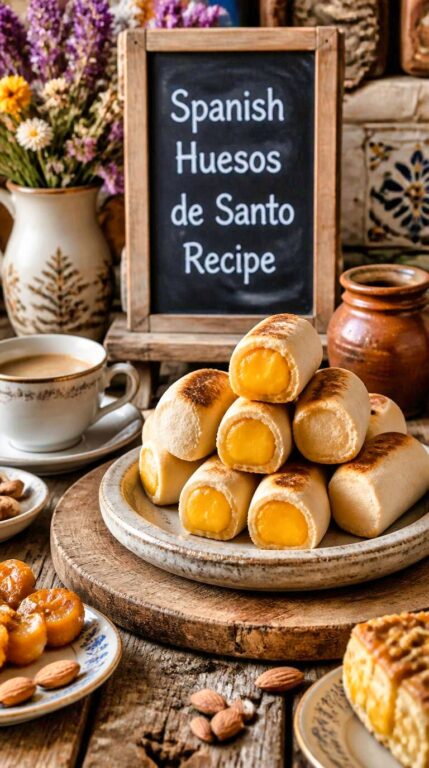
Alternative Approaches
I sometimes replace traditional marzipan with a quicker almond paste to save time. It keeps the almond flavor but needs less kneading, and I still chill the rolls before shaping to prevent splitting. The Spanish huesos de santo recipe allows for some flexibility with ingredients.
For the filling I often vary the yema (egg-yolk candy) with these options:
- Classic yema: slow-cooked egg yolks and sugar for dense, custardy texture.
- Pastry cream: smoother and less sweet; I use a thicker pastry cream when I want a lighter mouthfeel.
- Chocolate ganache: an unexpected but pleasant contrast for modern palates.
I adapt the exterior finish depending on the occasion. A dusting of powdered sugar is traditional and simple, while a light brush of apricot jam adds shine and helps any decorative sprinkles adhere. The Spanish huesos de santo recipe can reflect your personal style.
I adjust proportions when scaling the recipe. For large batches I multiply almond and sugar evenly, but I reduce moisture slightly to maintain dough firmness. Small tweaks keep the shape consistent whether I make a dozen or a hundred. The Spanish huesos de santo recipe scales well for gatherings.
I sometimes bake a variation that uses almond flour and condensed milk for a no-egg marzipan alternative. It shortens prep and works well for egg-free guests, though the flavor is sweeter and denser than classic marzipan. The Spanish huesos de santo recipe is adaptable for dietary needs.
Similar Dishes to Consider
I often pair huesos de santo with other Spanish sweets that share seasonal and cultural ties. Buñuelos offer a light, fried contrast to the dense marzipan rolls; their airy texture and sugar coating make them a classic autumn treat I enjoy on All Saints’ Day. The Spanish huesos de santo recipe fits perfectly into a festive dessert spread.
Churros provide another popular Spanish option I recommend when craving fried dough. My go-to is a traditional churros recipe with crisp exteriors and soft interiors, served with thick hot chocolate for dipping. The Spanish huesos de santo recipe complements these treats during celebrations.
Panellets bring regional variety from Catalonia and complement the marzipan flavors with almond-based coatings and pine nut toppings. I like how panellets’ bite-sized form makes them easy to serve alongside huesos de santo at gatherings. The Spanish huesos de santo recipe pairs well with other almond-based sweets.
For broader context, I include well-known Spanish desserts like turrón and flan when planning a sweets spread. Turrón’s nougat textures and flan’s silky custard create a range of textures and sweetness levels that balance the marzipan’s richness. The Spanish huesos de santo recipe rounds out a traditional Spanish dessert table.
If you want to explore recipes, I refer readers to a practical overview of traditional All Saints’ confections that covers huesos de santo, buñuelos, and panellets. That overview helps me decide which complementary sweets to prepare for a seasonal menu. The Spanish huesos de santo recipe remains central to these celebrations.
Comparative Recipe Analysis
I compared several traditional and modern huesos de santo recipes to identify key variations and consistent techniques. I focused on marzipan composition, yema filling method, shaping, and drying times. The Spanish huesos de santo recipe allows for both authenticity and convenience.
Marzipan often differs by almond grind and sugar ratio. Some recipes call for superfine almonds and a higher almond-to-sugar proportion for a dense, authentic texture, while others use pre-made marzipan for convenience. I prefer freshly ground almonds for cleaner flavor. The Spanish huesos de santo recipe tastes best with high-quality almonds.
Yema (egg-yolk candy) preparation shows the largest technique gap. Traditional methods cook yolks slowly with sugar and a splash of orange blossom water until thick; quicker stovetop cooked curds appear in contemporary versions. I find slow, low-heat cooking yields a silkier, less grainy filling. The Spanish huesos de santo recipe achieves the best texture with patience.
Shaping and finish vary but follow the same principle: roll, tube, seal one end, and dry. Some sources recommend drying overnight for a matte surface; others suggest a few hours at low heat. I allow sufficient drying to prevent leaking when filling. The Spanish huesos de santo recipe emphasizes these finishing steps for perfect results.
Key trade-offs in a quick list:
- Authentic flavor vs. convenience: fresh marzipan and slow yema take time.
- Texture control: superfine almonds + gentle cooking = smooth result.
- Time vs. yield: larger batches need precise timing to avoid overcooking.
For a practical walkthrough, I reference a clear traditional Spanish huesos de santo recipe that details marzipan and yema ratios and shaping techniques from a regional guide: Huesos de Santo Recipe Easy Spanish Saint’s Bones.
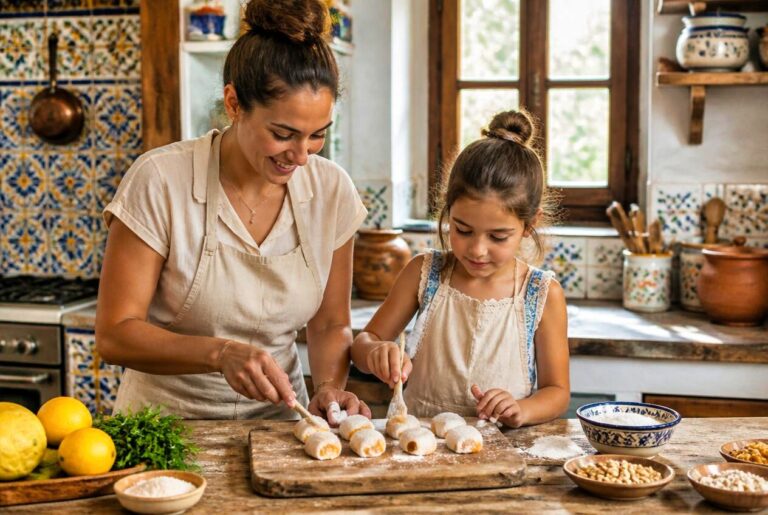
Spanish Huesos de Santo Recipe Cooking TIps
Spanish Huesos de Santo Recipe Cooking Tips
• Spanish Huesos de Santo are traditional marzipan pastries commonly enjoyed during All Saints’ Day celebrations and are known for their delicate sweetness and elegant bone-shaped appearance.
• Almonds are the primary ingredient and provide the characteristic flavor and texture of the marzipan.
• Finely ground almonds help create a smooth and pliable dough.
• Use fresh, high-quality almonds for the best flavor and aroma.
• Powdered sugar is commonly used because it blends smoothly into the marzipan mixture.
• Mix the almond and sugar components thoroughly to achieve a uniform texture.
• The marzipan should be soft enough to shape yet firm enough to hold its form.
• Chill the marzipan briefly if it becomes too soft to handle comfortably.
• Traditional Huesos de Santo are rolled into cylinders and marked to resemble bones.
• Sweet egg yolk filling is the most classic filling and provides rich contrast to the almond exterior.
• Allow the filling to cool completely before assembly.
• Avoid overfilling the pastries, which can make shaping difficult.
• Work carefully to create smooth seams and neat presentation.
• A light glaze may be applied for a traditional glossy finish.
• Allow the finished pastries to rest so the flavors can meld together.
• The flavor should balance sweet marzipan, rich egg yolk filling, and delicate almond notes.
• Properly prepared Huesos de Santo should have a tender exterior and smooth, creamy filling.
• Serve as a festive dessert or sweet accompaniment to coffee and tea.
Spanish Huesos de Santo Recipe Storage Tips
Spanish Huesos de Santo Recipe Storage Tips
• Allow the pastries to set completely before transferring them into storage containers.
• Store in airtight containers to preserve freshness and prevent drying.
• Keep the pastries in a cool, dry location away from direct sunlight.
• Filled pastries may require refrigeration depending on the ingredients used in the filling.
• Refrigerate egg-based fillings to maintain quality and safety.
• Bring refrigerated pastries closer to room temperature before serving for the best flavor and texture.
• Place parchment paper between layers to help protect delicate shapes and decorations.
• Avoid excessive humidity, which can affect the marzipan texture.
• Store away from strongly scented foods because almond-based sweets readily absorb odors.
• Handle carefully to maintain their decorative appearance.
• Freeze only if long-term storage is necessary.
• Use airtight freezer-safe containers when freezing.
• Wrap tightly to help prevent freezer burn and moisture damage.
• Defrost frozen pastries gradually in the refrigerator before serving.
• Use clean utensils when handling stored pastries to help maintain freshness.
• Label storage containers with the preparation date for easier inventory management.
• Check for signs of spoilage such as mold, rancid almond odors, unusual discoloration, or filling deterioration before consumption.
• For best quality, enjoy the pastries while the marzipan remains tender and the filling remains smooth and flavorful.
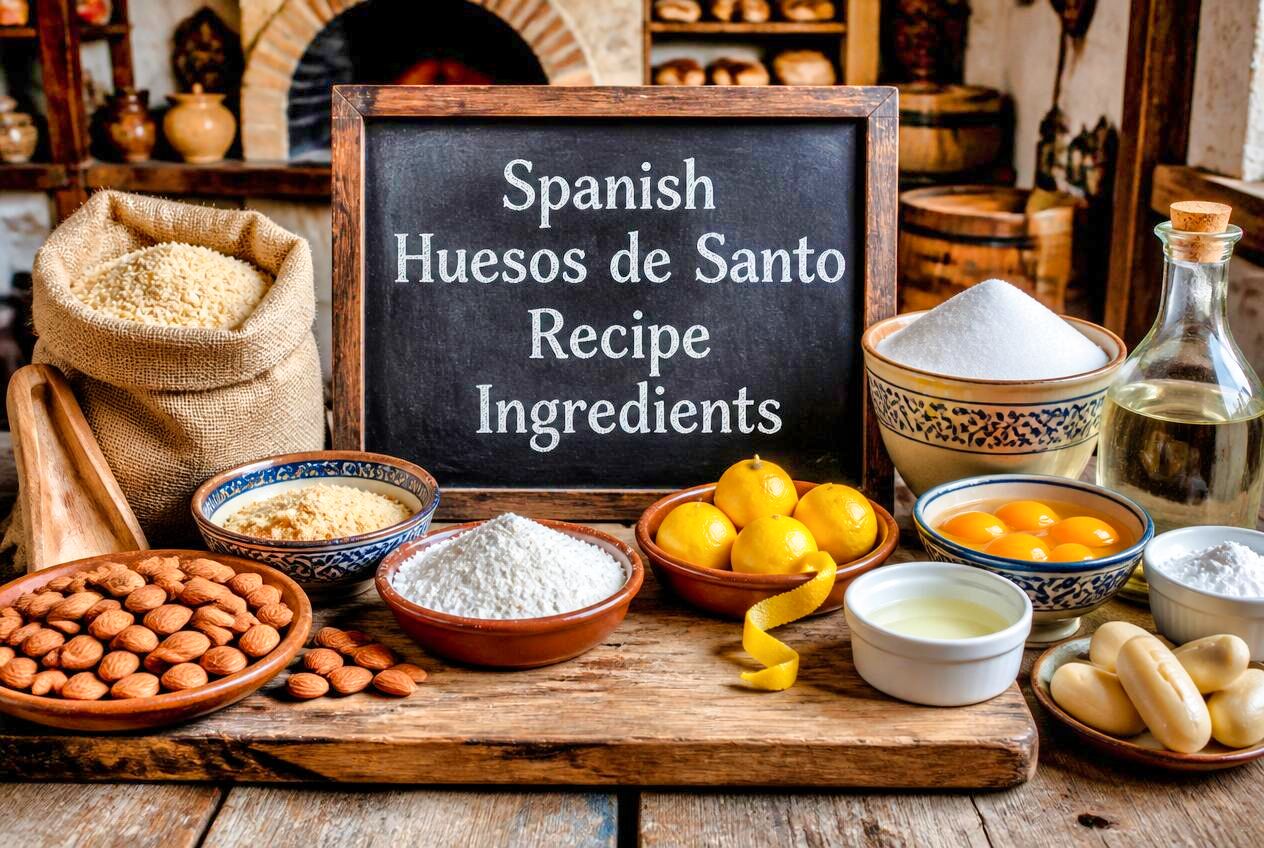
Spanish Huesos de Santo Recipe
Ingredients
- 1 3/4 cups almonds ground
- 1 1/2 cups sugar
- 1/2 cup water
- 4 egg yolks
- 2/3 cups sugar powdered (for the icing)
Instructions
- Begin by making the marzipan dough, which forms the traditional outer shell of the Huesos de Santo (Saint's Bones).
- Place the sugar and water in a small saucepan and set it over medium-high heat.
- Bring the mixture to a boil and allow it to cook for about 1 minute, creating a simple syrup.
- Place the ground almonds in a mixing bowl.
- Gradually add the hot syrup, beginning with about one-third of it, stirring continuously.
- Continue adding the remaining syrup little by little until a smooth dough forms.
- The finished mixture should be soft and pliable but firm enough to handle without sticking excessively to the bowl.
- Shape the dough into a ball, wrap it, and refrigerate for approximately 1 hour, or place it in the freezer for about 30 minutes to firm up more quickly.
- Once chilled, place the marzipan dough on a lightly sugared or parchment-lined work surface.
- Using a rolling pin, roll the dough into a thin rectangle.
- With the back of a knife, a skewer, or another thin tool, create the characteristic parallel grooves across the surface. These ridges give Huesos de Santo their distinctive bone-like appearance.
- Cut the dough into rectangles approximately 2 inches (5 cm) wide and 2⅓ inches (6 cm) long.
- To create the traditional hollow shape, place the handle of a wooden spoon or a similar cylindrical object along one edge of a rectangle.
- Carefully roll the marzipan around the handle, forming a tube.
- Press the seam gently to seal and slide the cylinder off the handle.
- Arrange the marzipan cylinders on a tray and allow them to dry for several hours.
- This drying time helps them hold their shape and makes them easier to fill later.
- While the marzipan dries, prepare the traditional sweet egg yolk filling.
- Place the egg yolks in a heatproof glass bowl and set aside.
- In a saucepan, combine the sugar and water and place over medium heat.
- Cook the syrup until it reaches approximately 221°F (105°C).
- Once the syrup reaches temperature, slowly pour it over the egg yolks while whisking constantly.
- This gradual addition tempers the yolks and prevents them from curdling.
- Place the bowl over a saucepan of gently simmering water to create a bain-marie (double boiler).
- Cook the mixture over the simmering water, stirring continuously with a whisk.
- Continue cooking for approximately 25 to 30 minutes, or until the mixture becomes thick, smooth, and creamy.
- The finished filling should be rich enough to hold its shape when piped.
- Remove the bowl from the heat and allow the yolk cream to cool completely.
- Once both the marzipan cylinders and yolk filling have cooled, transfer the yolk cream to a pastry bag fitted with a small tip.
- Carefully pipe the filling into each marzipan tube until completely filled.
- Work gently to avoid cracking the delicate marzipan shells.
- Arrange the filled Huesos de Santo on a serving tray.
- To make the glaze, place the powdered sugar in a small bowl.
- Add a few tablespoons of water and stir until a smooth, pourable glaze forms.
- The consistency should be thick enough to coat the pastries while still flowing easily.
- Drizzle or brush the glaze over the tops of the filled marzipan tubes.
- Serve and Enjoy
- Once the glaze has dried, the Huesos de Santo are ready to enjoy.
- Traditionally served during Día de Todos los Santos (All Saints' Day) in Spain, these elegant pastries combine a delicate almond marzipan shell with a rich, silky egg yolk filling.
- Their distinctive appearance resembles small bones, giving them their memorable name while showcasing one of Spain's most beloved marzipan traditions.
Spanish Huesos de Santo Recipe Frequently Asked Questions
I answer practical, hands-on questions about ingredients, shaping, fillings, timing, beginner-friendly shortcuts, and related Spanish sweets so you can make authentic huesos de santo with confidence. The Spanish huesos de santo recipe is approachable for all skill levels.
What ingredients are traditionally used to make marzipan dough for this Spanish dessert?
I use blanched almonds (finely ground) and powdered sugar in a roughly 2:1 almond-to-sugar ratio for a firm but pliable marzipan.
I add a few drops of orange blossom water or a small amount of lemon zest for aroma, and a little egg white or a neutral syrup to bind the paste. The Spanish huesos de santo recipe relies on these simple, quality ingredients to achieve its signature taste.
How do you shape and fill marzipan tubes without cracking or tearing them?
I roll the marzipan into a long rope about 1–1.5 cm thick, keeping my hands lightly dusted with powdered sugar to prevent sticking. I press the rope gently between my palms to form an even cylinder. I use a small piping tip or my fingertip to hollow a shallow channel along its length before filling, which is essential for a successful Spanish huesos de santo recipe.
I work while the marzipan is slightly soft — not sticky — and avoid overstretching. If the surface shows small cracks, I smooth them with the pad of a damp finger or a tiny wash of egg white and re-roll gently. This approach helps maintain the integrity of the marzipan tubes in any Spanish huesos de santo recipe.
What is the most common filling for these marzipan pastries, and how is it prepared?
The traditional filling for a Spanish huesos de santo recipe is yema, a candy-like egg yolk cream made by slowly cooking egg yolks with sugar and a syrup until thick and glossy. I heat a sugar-and-water syrup to soft-ball stage, remove from heat, then temper it into beaten yolks and continue cooking over very low heat while stirring until it reaches a spreadable, pipeable consistency. This filling is essential for an authentic Spanish huesos de santo recipe.
Some recipes finish the yema with a bit of butter or a dash of vanilla for extra silkiness. I cool the yema before piping to prevent it from melting the marzipan, ensuring the Spanish huesos de santo recipe turns out perfectly.
How far in advance can these pastries be made, and how should they be stored for best texture?
I make a Spanish huesos de santo recipe a day ahead and keep the pastries in an airtight container at room temperature to preserve the marzipan’s tender bite. For longer storage, I refrigerate up to 3–4 days, but bring to room temperature before serving to soften the marzipan and restore flavor. Proper storage is crucial for maintaining the quality of your Spanish huesos de santo recipe.
I avoid freezing filled huesos de santo because the yema texture and marzipan can degrade when thawed. If I must freeze, I freeze unfilled marzipan ropes tightly wrapped and fill after thawing to protect the results of my Spanish huesos de santo recipe.
Can the recipe be adapted to be easier for beginners while keeping an authentic result?
I simplify the Spanish huesos de santo recipe by using store-bought almond paste or marzipan and focusing effort on making a proper yema filling. I also work with a disposable piping bag fitted with a small round tip to control filling without hollowing the marzipan by hand. With these adaptations, beginners can create a delicious Spanish huesos de santo recipe without sacrificing authenticity.
I recommend practicing one or two pieces to refine shaping and piping before making a full batch. Following a reliable traditional yema method keeps the flavor authentic even with shortcuts, so your Spanish huesos de santo recipe will taste just like the classic version. For more tips on traditional Spanish pastries, visit Spanish Sabores.
Mastering a Spanish huesos de santo recipe takes patience, but the results are worth it. By following these techniques, you can enjoy this classic treat at home. The Spanish huesos de santo recipe brings a taste of tradition to your kitchen and is perfect for special occasions.
Remember to use high-quality ingredients for your Spanish huesos de santo recipe. Each step, from shaping the marzipan to preparing the yema, contributes to the final flavor and texture. With practice, your Spanish huesos de santo recipe will become a family favorite.
Experiment with different fillings or decorative touches to personalize your Spanish huesos de santo recipe. Sharing this treat with friends and family is a wonderful way to celebrate Spanish culinary heritage. Enjoy making and tasting your homemade Spanish huesos de santo recipe!
What are some other easy Spanish desserts that use similar ingredients or techniques?
I often turn to turrón del cielo or simple almond-based marzipan sweets, which use the same ground-almond and sugar base as the Spanish huesos de santo recipe. You can also try yemas de Santa Teresa (baked or cooked egg-yolk sweets) and pestiños, which use techniques involving sugar syrups and frying or candying. Exploring these options helps you appreciate the versatility of the Spanish huesos de santo recipe in traditional desserts.
For beginner-friendly authentic Spanish recipes, I suggest starting with marzipan figures and yemas to master almond paste handling and egg-yolk candy textures. Practicing these desserts will give you confidence to try the Spanish huesos de santo recipe at home. Many home bakers find that these treats share techniques with the Spanish huesos de santo recipe, making them great practice options.
If you want to expand your skills, you can experiment with variations on the Spanish huesos de santo recipe by adding different fillings or flavorings. Classic Spanish desserts often use similar bases, so learning the Spanish huesos de santo recipe can open the door to making other festive sweets. For more ideas and inspiration, visit Spanish Sabores for a variety of traditional recipes, including the Spanish huesos de santo recipe and other almond-based treats.

Recipes are gathered in person and written for real-world cooking conditions.
- 10 Hungarian Dessert Recipes Passed Down Through Generations - July 25, 2026
- 11 Easy English Recipes Anyone Can Make - July 25, 2026
- Hungarian Kifli Recipe - July 25, 2026