
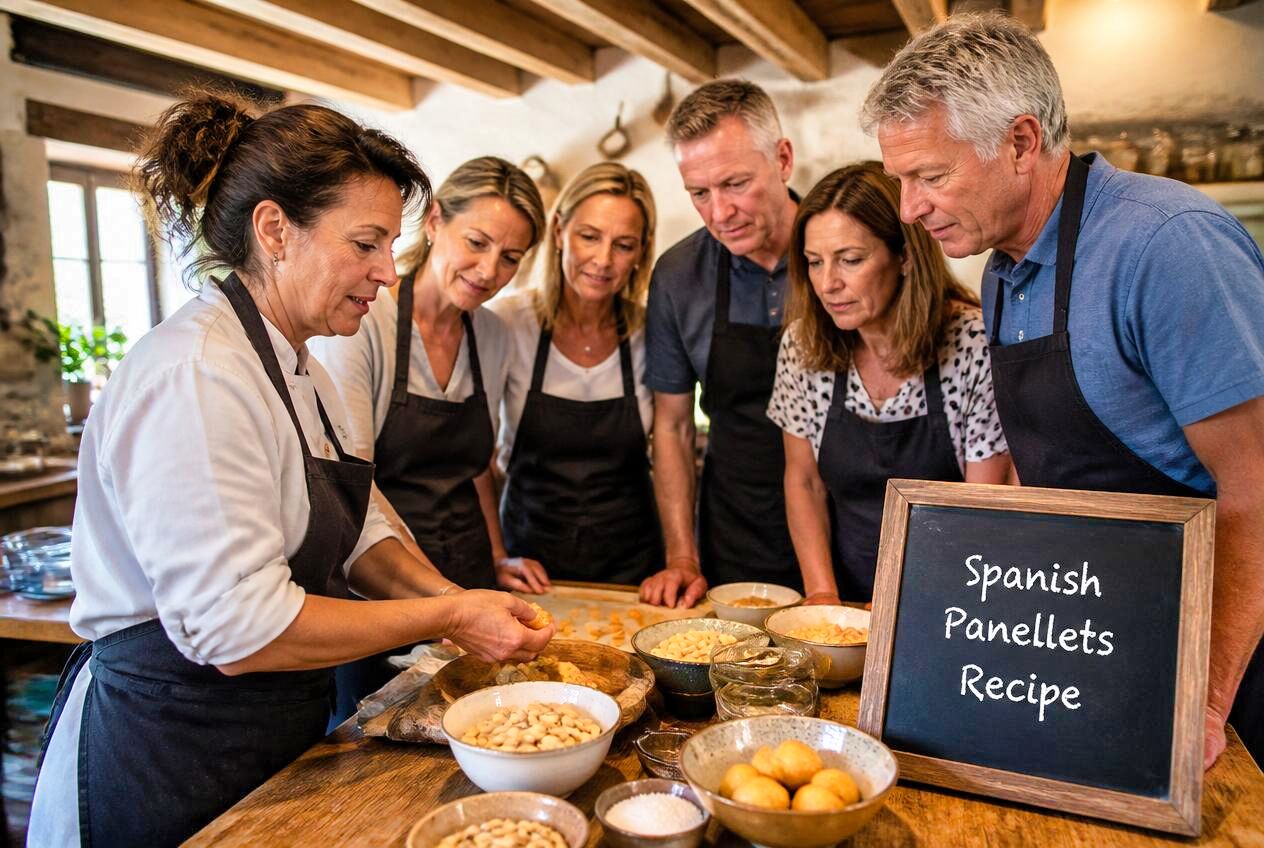
You’ll learn how to make authentic a Catalan Spanish panellets recipe that combine almond marzipan, sweet potato (or potato), and classic toppings like pine nuts, cocoa, or coconut. I provide a simple, reliable Spanish panellets recipe and practical tips so you can bake crisp, golden panellets that taste like the traditional sweets served for All Saints’ Day.
I explain ingredient choices, short techniques to prevent soggy or cracked cookies, and quick variations to match your pantry and celebration plans. Expect clear make-ahead advice so you can decide whether to follow the most traditional Spanish panellets recipe or use faster substitutions.
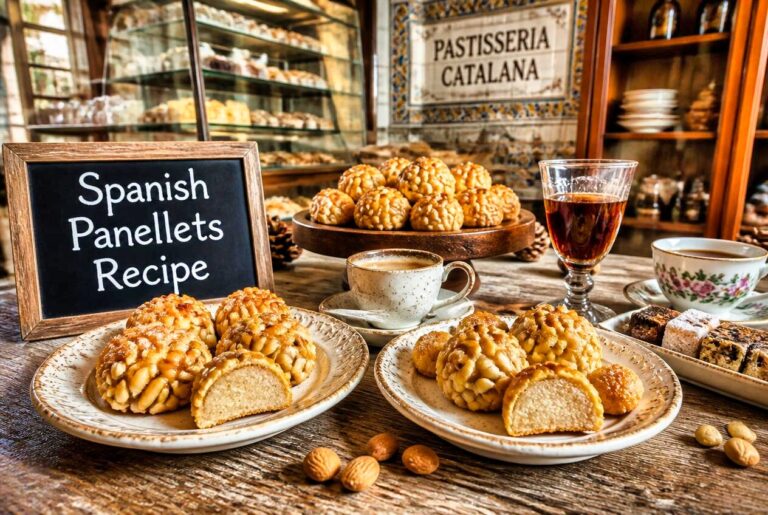
Spanish Panellets Recipe
Key Takeaways
- The Spanish panellets recipe recreates a traditional Catalan almond sweet with easy steps and common ingredients.
- Practical tips and variations help ensure correct texture and authentic flavor for your Spanish panellets recipe.
- Make-ahead and serving notes simplify planning for holidays or gatherings using the Spanish panellets recipe.
Description and Historical Information
Panellets are small almond-based sweets traditionally eaten in Catalonia, Valencia, Ibiza, Andorra and nearby regions on All Saints’ Day (Castanyada). They pair historically with chestnuts and sweet potatoes and are often served with Moscatel or cava during autumn gatherings alongside the Spanish panellets recipe.
Panellets trace their roots to recipes refined in the 17th century when Catalan cooks experimented with almond, sugar, and local flavorings. The basic Spanish panellets recipe mixes equal parts ground almonds and sugar with a binder like egg or sweet potato; pine nuts and candied fruit often top the pieces.
Panellets are part of Spain’s regional culinary traditions that highlight Mediterranean ingredients—almonds, citrus zest, and pine nuts—that recur across Spanish recipes for special occasions. The Spanish panellets recipe illustrates how local foods of Spain adapt simple pantry staples into festive treats.
Variations exist across regional Spanish cuisine: some households roll panellets in cocoa, coconut, or chopped nuts; others add flavors like coffee, chocolate, or lemon. These adaptations keep the Spanish panellets recipe tradition alive while reflecting each region’s taste and ingredient availability.
Making panellets is communal, often involving family teams shaping and decorating the sweets. Their persistence in Spanish culinary traditions shows how Mediterranean Spanish cuisine preserves seasonal and regional identity through food, especially with the Spanish panellets recipe.
Chef’s Tips
Weigh ingredients for consistent results every time you make the Spanish panellets recipe. Small differences in almond-to-sugar ratio change texture; aim for a smooth, slightly tacky dough.
When shaping, work with chilled dough to prevent stickiness. Roll walnut-sized balls and press pine nuts gently so they adhere without breaking the shape. The Spanish panellets recipe works best with careful handling.
Start with plain almond and pine nut varieties for a beginner-friendly Spanish panellets recipe. They teach the basic technique and mirror many easy traditional Spanish recipes without complex flavors.
Toast pine nuts lightly before use for deeper aroma. Toast briefly and cool completely; warm nuts can melt the dough and cause oiliness in your Spanish panellets recipe.
Brush panellets with egg white rather than whole egg wash. Egg white seals and adds shine while reducing excess browning during baking in the Spanish panellets recipe.
Add flavor variations like cocoa, coconut, or lemon zest to your Spanish panellets recipe. Introduce one new variation at a time to master proportions and maintain authenticity.
Use a baking sheet with parchment and space the panellets well. Leave room for slight spreading and rotate the tray mid-bake for even color in your Spanish panellets recipe.
Store cooled panellets in an airtight container at room temperature for up to a week. Layer them with parchment to prevent sticking and preserve the traditional texture of the Spanish panellets recipe. For more Mediterranean dessert ideas, visit The Spruce Eats.
Make-Ahead Instructions
Prepare the Spanish panellets recipe dough up to 48 hours in advance to deepen the flavors and make baking day faster. After mixing the ground almonds, sugar, and egg, cover the dough tightly with plastic wrap and refrigerate it; chilled dough firms and is easier to shape.
If making pine-nut or decorated varieties, shape the balls just before baking to keep toppings fresh. For plain or rolled panellets, form them, place them on a tray lined with parchment, and freeze them on the tray until solid, about 1–2 hours.
Transfer frozen panellets to an airtight container or zip-top bag, separating layers with parchment to prevent sticking. Label the container with the date; frozen panellets made from the Spanish panellets recipe keep well for up to 1 month.
When ready to bake, thaw frozen panellets in the refrigerator for several hours or overnight, then bring them to room temperature for 20–30 minutes before brushing with egg wash. This ensures even browning without overcooking the center in your Spanish panellets recipe.
Prepare the egg wash and toppings in advance: whisked egg in a small sealed jar lasts 24 hours in the fridge, and chopped nuts or candied fruit hold well at room temperature in a sealed container for several days to streamline your Spanish panellets recipe.
Variations
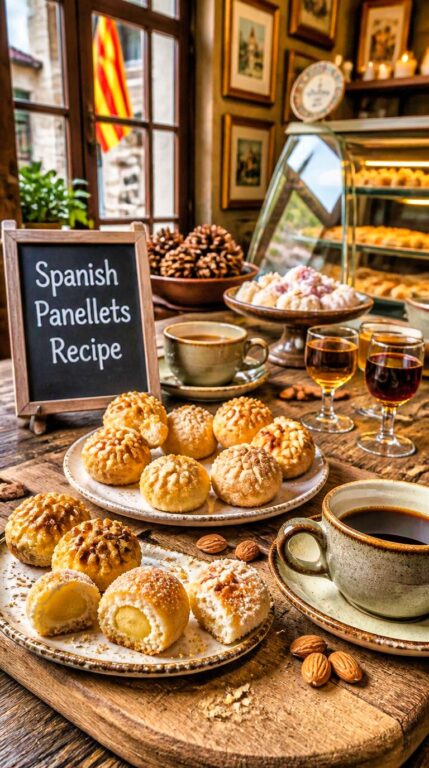
Start with the classic pine‑nut panellets because they showcase the simple almond base and egg wash of the Spanish panellets recipe. Rolling the marzipan balls in pine nuts before baking gives a crunchy, nutty top and a traditional appearance.
For quick changes, swap in flavors like coconut, coffee, or cocoa. Coconut panellets get shredded coconut mixed into the dough; coffee or cocoa versions use instant espresso or unsweetened cocoa powder folded into the almond mixture for a deeper taste in your Spanish panellets recipe.
Add citrus zest—lemon or orange—for brightness. A teaspoon of finely grated zest in the dough lifts the sweetness without changing texture. This is a popular variation within the Spanish panellets recipe tradition.
For color or extra sweetness, top some with candied cherries or a dusting of cinnamon. Cherries press into the center before baking; cinnamon can be mixed with a little extra powdered sugar and brushed on after baking.
Below are a few quick Spanish panellets recipe variations and their small adjustments:
- Pine nuts: press and roll in whole pine nuts; brush with egg wash.
- Coconut: replace 15–20% of almond flour with shredded coconut.
- Coffee: add 1 tsp instant espresso per 250 g almond base.
- Cocoa: fold in 1–2 tbsp unsweetened cocoa powder.
- Citrus: add 1 tsp grated lemon or orange zest.
Test small batches to adjust sweetness and texture for each Spanish panellets recipe variation. For traditional context and more recipe ideas, see a classic panellets overview.
Related Recipes
Serve panellets alongside small plates and sweets that reflect Spain’s varied flavors. For savory pairings, try classic Spanish tapas recipes like patatas bravas, marinated olives, and garlic shrimp; these contrast the sweet, almond-rich Spanish panellets recipe and keep the course balanced.
For additional traditional Spanish tapas ideas, include simple bites such as chorizo al vino, manchego with quince paste, and pan con tomate. These dishes require minimal prep and dress the table with authentic tastes that complement the festive feel of the Spanish panellets recipe.
To extend the dessert selection, turn to fried treats and pastries. A traditional churros recipe fits naturally here; the crunchy, sugar-dusted churros pair well with a cup of hot chocolate or a glass of muscatel alongside the Spanish panellets recipe.
Assemble a small menu card for gatherings:
- Savory tapas: patatas bravas, garlic shrimp, chorizo al vino
- Cheese and bread: manchego, pan con tomate, marinated olives
- Sweets: Spanish panellets recipe, traditional churros, roasted chestnuts
Mixing textures—creamy cheeses, crispy churros, and tender panellets—creates a memorable spread. Each item highlights different regional techniques and keeps guests engaged through varied flavors, all enhanced by the Spanish panellets recipe.
Recipe Comparison
Compare classic and modern Spanish panellets recipe versions to highlight practical differences. Focus on texture, flavor, ingredient simplicity, and time.
Classic recipes use a 1:1 ratio of ground almonds to sugar and often use pine nuts for the traditional topping. The Spanish panellets recipe yields dense, marzipan-like dough with a nut-forward flavor. For a reference technique and ingredient list, see this traditional Panellets recipe.
Contemporary versions reduce sugar, add egg white for binding, or substitute part of the almonds with potato or sweet potato to lighten texture. These changes yield a softer interior and sometimes a slightly less sweet finish. Many home cooks adapt the Spanish panellets recipe for ease and speed.
Prep and baking time differences for the Spanish panellets recipe:
- Ingredients: Classic = almonds + sugar + lemon zest; Modern = almonds + less sugar + egg white or potato.
- Topping: Classic = pine nuts or candied cherry; Modern = cocoa, coconut, or nuts.
- Texture: Classic = firm/marzipan; Modern = lighter/smoother.
- Time: Classic ~1.5–2 hours (including resting); Modern can be 1–1.5 hours.
Choose the Spanish panellets recipe version that matches your texture preference and available ingredients. For authentic flavor, follow the traditional method; for a quicker or lighter cookie, try a modern adaptation.
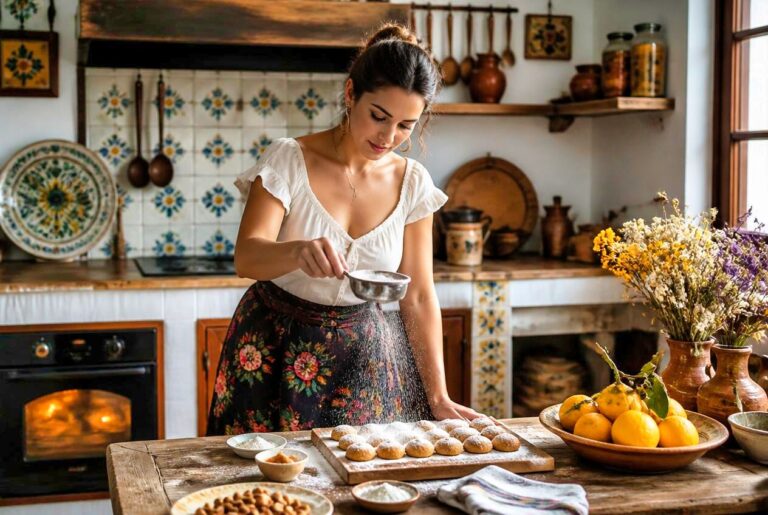
Spanish Panellets Recipe Cooking Tips
Spanish Panellets Recipe Cooking Tips
• Spanish Panellets are traditional almond-based sweets closely associated with All Saints’ Day and celebrated for their rich flavor, soft interior, and decorative coatings.
• Ground almonds are the primary ingredient and provide the characteristic texture and flavor.
• Use finely ground almonds for a smoother and more uniform dough.
• High-quality almonds contribute significantly to the finished flavor.
• Sugar is blended with the almonds to create the traditional sweet marzipan-like base.
• Egg helps bind the mixture and contributes to the cookies’ tender texture.
• Lemon zest is often added to provide brightness and aromatic depth.
• Mix the ingredients thoroughly until a cohesive dough forms.
• Allow the dough to rest if necessary to improve handling and flavor development.
• Shape the dough into uniform pieces to ensure even baking.
• Pine nuts are the most traditional coating and provide a distinctive appearance and flavor.
• Other popular coatings include coconut, almonds, cocoa, coffee, or candied fruit.
• Brush the tops lightly with egg wash to encourage an attractive golden finish.
• Bake only until lightly golden, as overbaking can dry out the interior.
• Allow the panellets to cool before handling because they are delicate when warm.
• Properly prepared panellets should have a slightly crisp exterior and a soft, moist interior.
• The flavor should balance rich almonds, gentle sweetness, citrus notes, and the chosen topping.
• Serve as part of holiday celebrations or alongside coffee and tea.
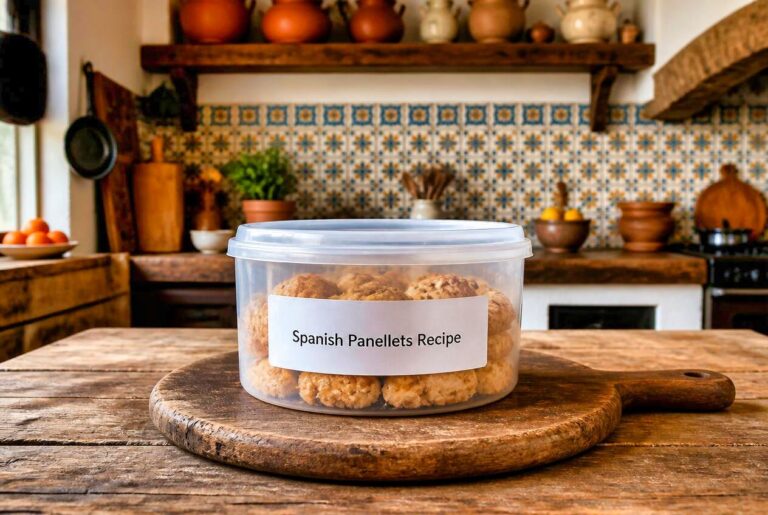
Spanish Panellets Recipe Storage Tips
Spanish Panellets Recipe Storage Tips
• Allow the panellets to cool completely before transferring them into storage containers.
• Store in airtight containers to help maintain freshness and prevent drying.
• Place parchment or wax paper between layers if stacking multiple cookies.
• Keep the cookies in a cool, dry location away from direct sunlight.
• Almond-based sweets often remain flavorful for several days when properly stored.
• Avoid excessive humidity, which can affect texture and coatings.
• Refrigeration is generally unnecessary unless environmental temperatures are unusually warm.
• Bring refrigerated panellets closer to room temperature before serving for the best flavor and texture.
• Store away from strongly scented foods because almond confections readily absorb odors.
• Individual panellets can be wrapped separately for gifting or convenient serving.
• Freeze panellets in airtight freezer-safe containers if desired.
• Wrap tightly to help prevent freezer burn and preserve quality.
• Defrost frozen panellets gradually at room temperature before serving.
• Handle carefully after thawing to preserve decorative coatings.
• Use clean hands or utensils when handling stored sweets to help maintain freshness.
• Label storage containers with the preparation date for easier inventory management.
• Check for signs of spoilage such as rancid almond odors, mold, unusual discoloration, or texture deterioration before consumption.
• For best quality, enjoy the panellets while they remain moist, tender, and richly flavored.
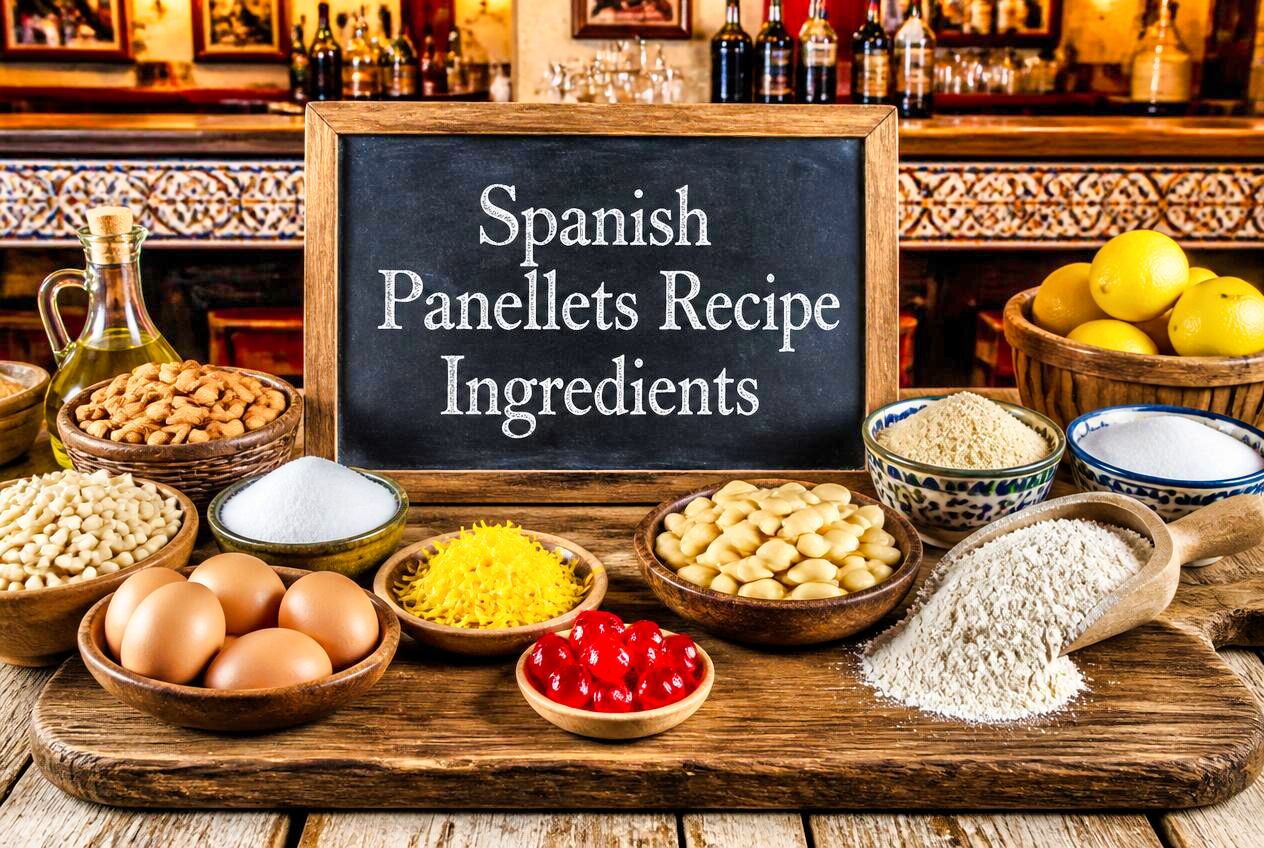
Spanish Panellets Recipe
Ingredients
- 1 pound almonds raw
- 1 small potato
- 2 1/2 cups sugar
- 1/2 to 1 cup water
- 1 tablespoon lemon zest from 1 lemon grated
- 4 drops lemon juice
Instructions
- Begin by blanching the almonds if they still have their skins.
- Place the almonds briefly in boiling water, then drain and slip off the skins.
- Allow the almonds to dry thoroughly before processing them.
- Transfer the almonds to a food processor and grind them until they reach a very fine, flour-like consistency. The almonds should resemble a fine dust, but be careful not to overprocess them into almond butter.
- Set the ground almonds aside.
- Peel the potato and cut it into quarters.
- Place the pieces in a saucepan and cover them with water.
- Bring to a boil and cook until the potato is completely tender when pierced with a fork.
- Drain thoroughly and mash the potato until smooth.
- Allow it to cool slightly before using.
- Place the sugar in a medium saucepan.
- Add the water and stir until the sugar begins to dissolve.
- If needed, add a little extra water to ensure all of the sugar is fully moistened.
- Place the saucepan over medium heat and bring the mixture to a boil, stirring occasionally.
- Add a few drops of lemon juice.
- Once the syrup reaches a boil, reduce the heat and allow it to simmer gently until it thickens into a rich syrup consistency.
- The syrup should coat the spoon lightly but remain pourable.
- Remove the syrup from the heat.
- Using a large wooden spoon, gradually stir in the ground almonds, mashed potato, and grated lemon peel.
- Mix thoroughly until a smooth, thick paste forms.
- The mixture should be uniform and fragrant, with the citrus enhancing the almond flavor.
- Allow the dough to cool completely to room temperature.
- Once cooled, cover the bowl tightly and refrigerate overnight.
- This resting period allows the flavors to develop and helps the dough firm up for shaping.
- The following day, preheat the oven to 380°F (193°C).
- Lightly grease one or more baking sheets and set them aside.
- Using a teaspoon, scoop small portions of the chilled dough.
- Roll each portion between your palms to form smooth, evenly sized balls.
- At this stage, you can prepare several traditional variations.
- For chocolate-coated cookies, roll the dough balls in powdered cocoa.
- For the classic pine nut version, press pine nuts gently over the entire surface of each ball until coated.
- If using pine nuts, lightly brush the exterior with a little egg white before applying them. This helps the nuts adhere during baking.
- Arrange the finished cookies on the prepared baking sheets, leaving a small amount of space between them.
- If you would like to make assorted cookies, divide part of the dough before shaping.
- Knead in flavorings such as instant coffee granules, finely chopped candied fruit, or ground cinnamon.
- Mix until evenly incorporated, then roll into balls as usual.
- These variations are a traditional way to create an assortment of marzipan-based Spanish holiday sweets.
- Place the baking sheets into the preheated oven.
- Bake for approximately 4 minutes, or just long enough for the pine nuts to begin turning golden brown.
- These cookies are not intended to bake deeply; they should remain soft and moist inside.
- Watch them carefully, as they can overbake very quickly.
- Remove the baking sheets from the oven.
- Using a spatula, carefully transfer the cookies to a cooling rack immediately.
- Do not allow them to cool completely on the baking sheet, as they can stick and become difficult to remove.
- Allow them to cool completely before serving.
- Arrange the cookies on a serving platter, grouping different flavors together if you've made an assortment.
- They are traditionally served during the Christmas season alongside coffee, tea, dessert wine, or sparkling wine.
- Their small size makes them perfect for holiday dessert trays and festive gatherings.
- These traditional Spanish Mazapán de Toledo-style cookies showcase the simple yet elegant combination of almonds, sugar, and citrus that has made marzipan a beloved part of Spanish pastry traditions for centuries. The addition of potato creates a wonderfully smooth texture, while toppings such as pine nuts, cocoa, cinnamon, and coffee offer delicious variations.
- Delicate, fragrant, and rich with almond flavor, these festive treats are a classic part of Spanish holiday celebrations and a beautiful example of traditional confectionery at its finest.
Spanish Panellets Recipe Frequently Asked Questions
Find practical details about ingredients, pronunciation, origins, and technique for making the authentic Spanish panellets recipe. Expect clear steps for pine-nut adhesion, common pitfalls, and which components matter for traditional flavor and texture.
What are panellets, and how do they differ from other Spanish or Catalan sweets?
Panellets are small round sweets made primarily from ground almonds and sugar, often bound with egg yolk and sometimes sweet potato or potato. They differ from other Spanish desserts by texture and occasion: panellets are dense, marzipan-like and traditionally served for La Castañada or All Saints Day, whereas other regional sweets may be flaky, fried, or pastry-based. The Spanish panellets recipe offers a unique festive treat.
How do you pronounce “panellets” correctly in English?
Pronounce panellets as pah-NEHL-ets, stressing the second syllable and keeping the final “s” soft. Think of the first vowel like the “a” in “father” and use a short “e” for the middle syllable when discussing the Spanish panellets recipe.
What is the traditional origin and history of panellets in Catalonia?
Panellets trace to Catalan autumn rituals around chestnut-roasting and the festival of All Saints (La Castañada). Historically, cooks made the Spanish panellets recipe with simple almond-and-sugar confections; later recipes incorporated sweet potato or boiled potato to soften the dough and reduce cost, a variation that sparked debate among purists.
Which ingredients are essential for making traditional panellets at home?
Ground blanched almonds, granulated sugar, and egg yolks are essential for the traditional Spanish panellets recipe dough. Optional but common additions include cooked and mashed sweet potato or potato for a softer texture, lemon zest for brightness, and different coatings such as pine nuts, coconut, or cocoa.
How do you make panellets with pine nuts so they adhere well and toast evenly?
Form firm, slightly sticky balls of dough and lightly brush them with beaten egg white before rolling in pine nuts. Press the pine nuts gently so they sit flush, chill the shaped panellets for 20–30 minutes, then bake at a moderate temperature until the nuts turn golden to ensure even toasting without overcooking the interior. This method works perfectly for your Spanish panellets recipe.
What are the most common mistakes when making panellets, and how can they be avoided?
Using a dough that’s too dry causes crumbling; I add a small amount of mashed sweet potato or an extra egg yolk to improve cohesion in my Spanish panellets recipe. Overbaking or using too-high oven heat browns the pine nuts too quickly; I bake at a moderate temperature and monitor color closely when preparing my Spanish panellets recipe. Skipping the egg wash or not chilling shaped panellets makes nut coatings fall off, so I always apply egg and chill before baking my Spanish panellets recipe.

Recipes are gathered in person and written for real-world cooking conditions.
- 10 Hungarian Dessert Recipes Passed Down Through Generations - July 25, 2026
- 11 Easy English Recipes Anyone Can Make - July 25, 2026
- Hungarian Kifli Recipe - July 25, 2026