
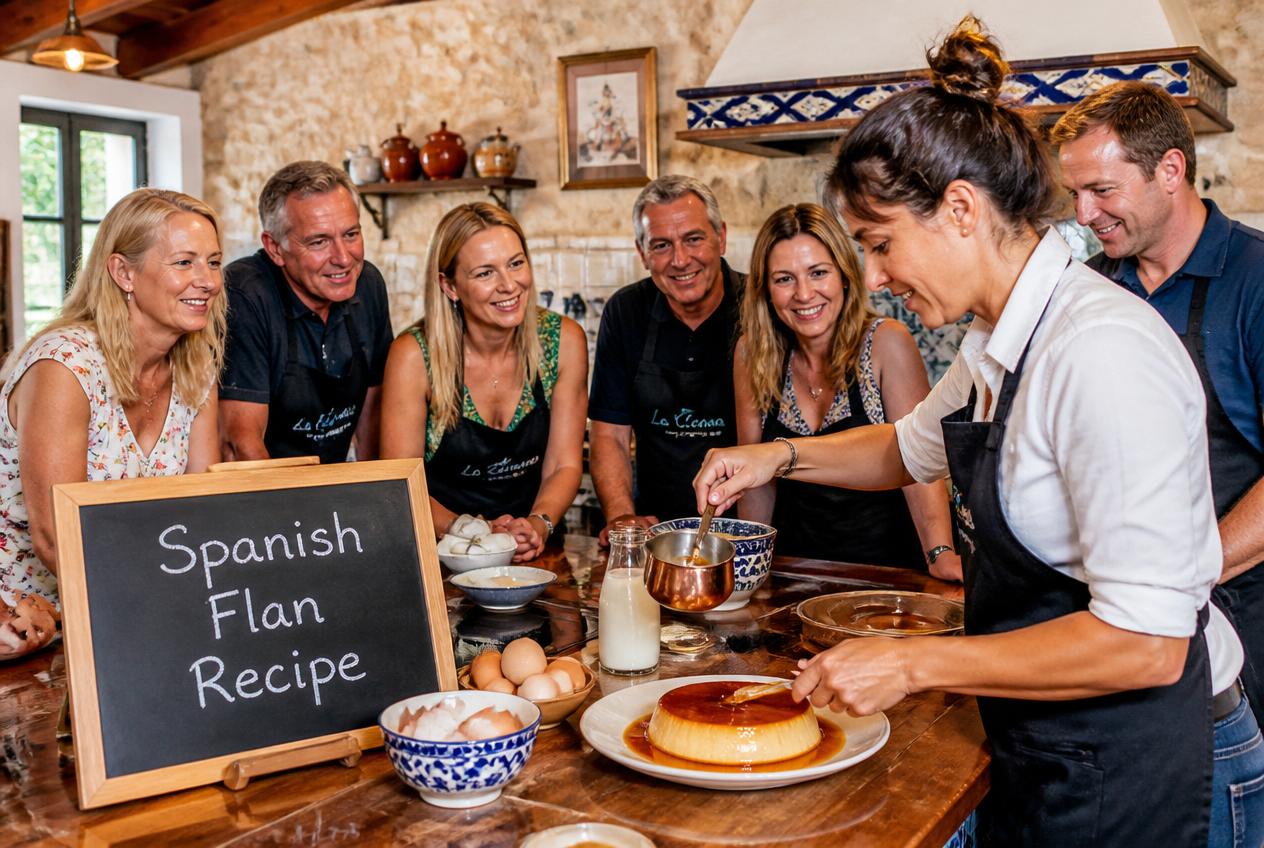
You can make a smooth, caramel-topped Spanish flan recipe at home with just a few pantry ingredients and straightforward steps. I’ll show you a reliable method that delivers a silky texture and glossy caramel every time, whether you’re serving a weeknight family dessert or an impressive dinner-party finale. The Spanish flan recipe remains a beloved classic in Spanish cuisine for its simplicity and elegance.
You’ll learn practical tips for achieving the classic custard wobble and avoiding common pitfalls, plus simple make-ahead and variation ideas to adapt the Spanish flan recipe to your taste. Follow my clear instructions and you’ll confidently serve an authentic Spanish dessert that honors traditional Spanish recipes and the best of Spanish cuisine. This Spanish flan recipe is perfect for both beginners and experienced cooks.
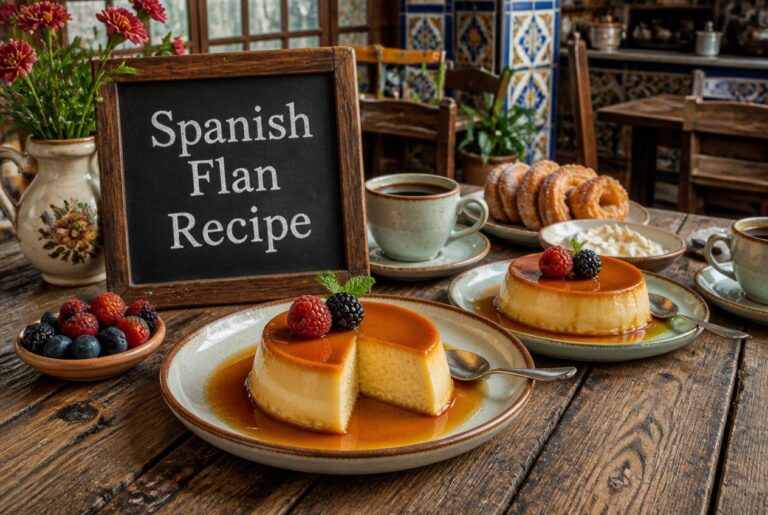
Spanish Flan Recipe
Key Takeaways
- Classic technique and ingredient choices produce an authentic, silky flan.
- Practical tips and make-ahead options simplify preparation for any schedule.
- Small variations let you personalize a traditional Spanish dessert.
History and Description
Spanish flan recipe traces its roots back to ancient Rome, where early custards combined eggs and milk for savory and sweet dishes. The recipe traveled to the Iberian Peninsula and evolved within Spanish culinary traditions, shifting toward a sweeter, caramel-topped custard that became a staple.
In Spain, the Spanish flan recipe became part of traditional Spanish food and household cooking. Bakers and home cooks adapted it using local ingredients like whole milk, eggs, and sugar, producing the smooth texture expected from a classic Spanish flan recipe.
Spanish flan recipe is a baked custard set over a layer of caramelized sugar. It balances a silky mouthfeel with a glossy, bittersweet caramel; simple technique highlights quality ingredients. Regional and historical influences in traditional Spanish recipes from Spain include variations that use condensed or evaporated milk introduced later, reflecting changing tastes while keeping the fundamental custard-and-caramel structure intact.
Expect these characteristics from a Spanish flan recipe:
- Texture: velvety and creamy
- Flavor: sweet custard with a slightly bitter caramel
- Presentation: inverted onto a plate so caramel crowns the custard
Spanish flan recipe sits comfortably within Spain’s broader culinary identity, appearing in family meals, celebrations, and restaurant dessert menus. For context on authentic preparation and ingredient choices, see this authentic Spanish flan recipe (https://www.askchefdennis.com/spanish-flan-recipe/).
Expert Preparation Tips
Spanish flan recipe uses simple ingredients for authenticity. Eggs, milk (or condensed/evaporated milk), sugar, and vanilla deliver the classic texture and flavor that make Spanish flan recipe a favorite.
Caramel is essential. Slowly melt sugar over medium-low heat and watch for a light amber color; this prevents bitterness and gives the Spanish flan recipe a glossy finish. Pour caramel into the mold while warm to coat the base evenly.
Control texture with gentle cooking. Strain the custard before pouring it into the caramel-lined mold to remove air bubbles or bits of egg. Bake the Spanish flan recipe in a water bath (bain-marie) in a preheated oven for even, silky firmness without curdling.
Cool and chill to set the Spanish flan recipe properly. Cool the baked flan at room temperature briefly, then refrigerate at least 4 hours, preferably overnight, for a clean unmold and smooth slices. Patience with this Spanish flan recipe improves both presentation and taste.
Flavor variations can enhance the Spanish flan recipe. Add a touch of orange zest or a splash of brandy for complexity, but keep additions minimal to preserve the classic profile. These small choices help keep the Spanish flan recipe accessible to home cooks.
Guidelines for Making Ahead
Prepare the Spanish flan recipe a day or two before an event to reduce day-of stress. Make the caramel and custard, bake in a water bath, then cool to room temperature before refrigerating. This approach ensures the Spanish flan recipe is ready to serve when needed.
Store the Spanish flan recipe by covering it tightly with plastic wrap or placing it in an airtight container. Proper refrigeration preserves texture and flavor; do not leave it at room temperature for more than two hours. Chilling for 8–12 hours gives the creamiest set, while 24–48 hours deepens the flavor without harming quality.
Unmold the Spanish flan recipe by running a thin knife around the edge to loosen the custard. Warm the serving plate briefly or invert the ramekin onto a warm plate to help the caramel flow smoothly. Prepare accompaniments such as whipped cream, candied citrus, or a light dusting of cinnamon ahead; store them separately to keep the Spanish flan recipe pristine until served.
If you need guidance on a reliable Spanish flan recipe or timing for larger batches, use a classic recipe with condensed and evaporated milk baked evenly in a bain-marie. For more on a basic Spanish flan recipe, see this Authentic Spanish Flan Recipe.
Creative Variations
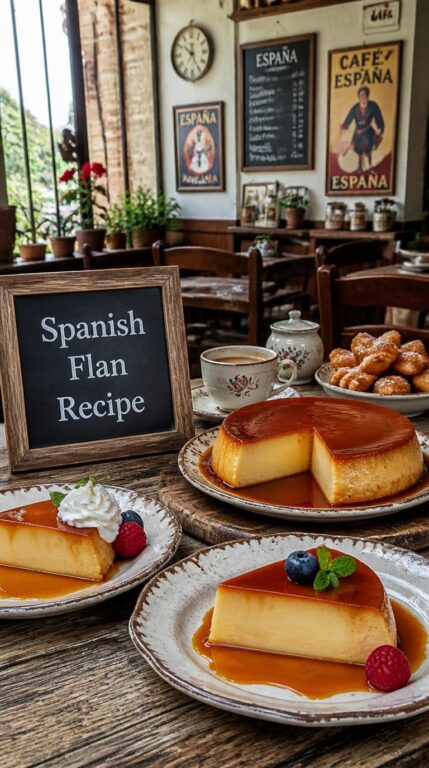
Experiment with the Spanish flan recipe while keeping the classic custard base intact. Small ingredient swaps or additions deliver noticeable differences without complicating the method. Try adding citrus zest—orange or lime—to the custard for a bright, clean finish. For a richer Spanish flan recipe, fold in a tablespoon of cocoa powder or melted dark chocolate for a chocolate flan that remains silky and smooth.
Savory-sweet pairings elevate the Spanish flan recipe. Top the flan with toasted nuts and a pinch of sea salt to contrast the caramel. Another twist is folding pumpkin purée and warm spices into the custard for a seasonal Spanish flan recipe variation. For texture contrasts, layer the Spanish flan recipe with a thin sponge cake for a chocoflan-style effect or swirl in crushed cookies for a slight crunch.
Experiment with milks in your Spanish flan recipe by substituting part of the evaporated milk with coconut milk for a tropical note. When using alternative milks in your Spanish flan recipe, monitor set time closely; sometimes it needs a few extra minutes in the water bath.
- Use 1–2 teaspoons citrus zest per 4-cup custard
- Add 1 tablespoon cocoa or 50 g melted chocolate for chocolate flan
- Substitute up to 25% of dairy with coconut milk for a lighter flavor
Test one change at a time in your Spanish flan recipe to preserve texture and achieve consistent results.
Similar Dessert Inspirations
Pair the Spanish flan with other Spanish and Latin treats that match its creamy sweetness. One classic companion is the traditional churros recipe—crisp outside, tender inside, and perfect for dipping in coffee or hot chocolate. Another nearby cousin is arroz con leche, a cinnamon-scented rice pudding that shares flan’s comforting texture but leans more on grainy creaminess than custard silk.
Crème caramel and crème brûlée echo the flan recipe’s custard base but diverge in technique: one focuses on a smooth caramel topping, the other on a crisp torched sugar crust. Experimenting with baking times and torching gives each dessert a distinct personality. For a lighter option, try leche flan variations that use condensed and evaporated milk for richer, denser results, adapting easily to flavor additions like citrus peel or coffee.
Try a vegan Spanish flan recipe made from plant milks and thickeners for dietary needs. While the result won’t be identical, it preserves the caramel-custard concept while accommodating preferences.
Comparative Recipe Analysis
Compare several Spanish flan recipe variations to identify differences in texture, sweetness, and technique. Focus on ingredient ratios, cooking method, and caramel preparation to highlight practical trade-offs. Recipes using condensed and evaporated milk produce a denser, sweeter custard, while whole milk with cream and more eggs yields a lighter, silkier Spanish flan recipe.
Technique plays a key role in the Spanish flan recipe: baking in a water bath gives even cooking and a smooth surface, while steaming or pressure-cooking shortens time but can alter texture. Use a gentle, low oven temperature for predictable results with your Spanish flan recipe. Caramel approaches vary: caramelizing sugar directly in the pan gives deep amber notes, while making a separate caramel allows control over thickness and prevents scorching.
- Texture: condensed/evaporated milk = rich and dense; whole milk + cream = silky and delicate.
- Sweetness: sweetened condensed increases sugar; adjust added sugar downward to balance.
- Ease: stovetop caramel needs attention; pre-made caramel reduces risk for beginners.
Test different Spanish flan recipe versions for unmolding reliability. A thin, even caramel layer and full cooling before inversion improve release. For more technique details, consult an established method like this classic Spanish flan recipe from Ask Chef Dennis (Spanish Flan Recipe).
Spanish Flan Recipe Cooking Tips
Spanish Flan Recipe Cooking Tips
• Spanish Flan is a classic custard dessert known for its silky texture, rich caramel topping, and delicate sweetness.
• Eggs are the primary ingredient and provide the flan’s smooth, creamy structure.
• Whole milk, evaporated milk, condensed milk, or cream may be used depending on the desired richness.
• Use fresh eggs and dairy products for the best flavor and texture.
• Caramelize the sugar carefully until it develops a deep amber color without burning.
• Pour the caramel into the mold quickly before it hardens.
• Mix the custard gently to avoid incorporating excessive air.
• Strain the custard mixture if desired to achieve an exceptionally smooth texture.
• Avoid vigorous whisking, which can create bubbles in the finished flan.
• A water bath helps cook the custard gently and evenly.
• Use hot water in the water bath to maintain consistent baking temperatures.
• Bake until the custard is set around the edges but still slightly jiggly in the center.
• Overbaking can result in a grainy or rubbery texture.
• Allow the flan to cool gradually before refrigerating.
• Chill thoroughly before unmolding for the best texture and presentation.
• Run a thin knife around the edges before inverting onto a serving plate.
• The flavor should balance creamy custard, caramel richness, and gentle sweetness.
• Properly prepared flan should be smooth, silky, and topped with flowing caramel sauce.
Spanish Flan Recipe Storage Tips
Spanish Flan Recipe Storage Tips
• Allow the flan to cool completely before refrigerating.
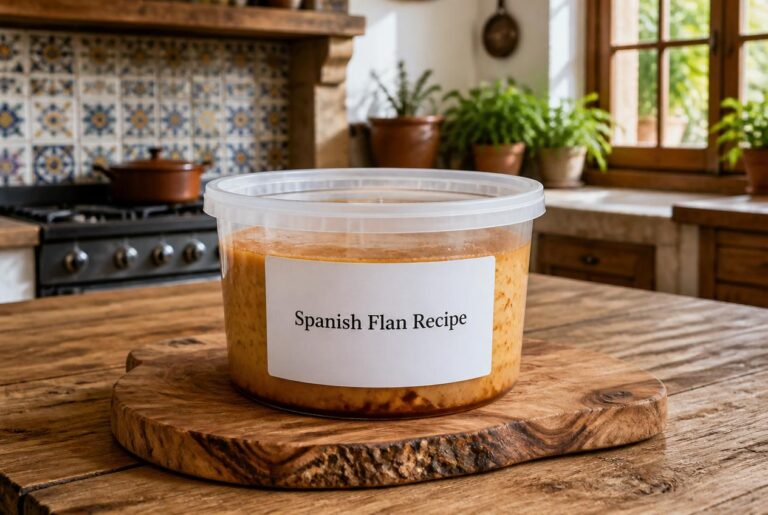
• Store refrigerated in airtight containers or tightly covered molds.
• Keep the flan chilled at all times because it contains eggs and dairy.
• Refrigeration often improves texture and allows flavors to fully develop.
• Store the flan with its caramel sauce whenever possible to help maintain moisture.
• Avoid freezing if possible, as freezing may alter the custard’s smooth texture.
• If freezing is necessary, use airtight freezer-safe containers.
• Defrost frozen flan gradually in the refrigerator before serving.
• Handle carefully after thawing because custard can become more delicate.
• Keep the flan covered to prevent it from absorbing refrigerator odors.
• Serve chilled for the most traditional presentation.
• Avoid prolonged exposure to room temperature before serving.
• Use clean utensils when slicing and serving to help maintain freshness.
• Store garnishes separately until serving when practical.
• Label storage containers with the preparation date for easier inventory management.
• Check for signs of spoilage such as sour odors, curdling, mold, unusual discoloration, or texture changes before consuming leftovers.
• Discard the flan if spoilage is suspected.
• For best quality, enjoy the flan while it remains smooth, creamy, and properly chilled.
Spanish Flan Recipe
Ingredients
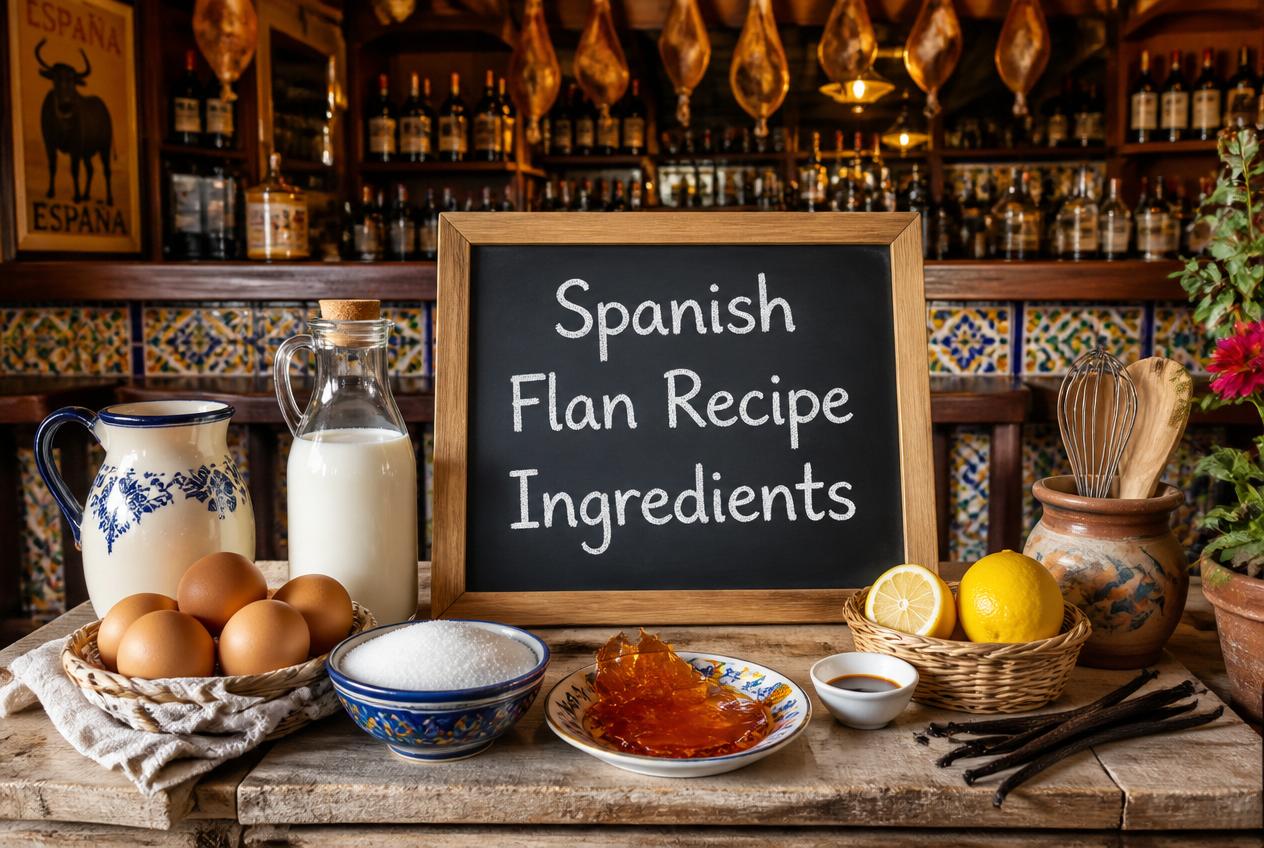
- 1 cup sugar white
- 3 large eggs
- 14 oz milk can sweetened condensed
- 12 oz milk can evaporated
- 1 tablespoon vanilla extract
Instructions
- Begin by preheating your oven to 350°F (175°C).
- Select a deep 9-inch round glass baking dish for the flan and a larger roasting pan that will be used later as a water bath. The water bath helps the custard cook gently and evenly, creating the smooth, silky texture that makes flan so special.
- Place the sugar in a medium saucepan over medium-low heat.
- Allow the sugar to melt slowly, stirring only if necessary. As it heats, it will gradually liquefy and turn a rich golden amber color.
- Watch carefully during this stage, as caramel can quickly go from perfectly golden to burnt.
- Once the sugar has completely melted and reached a deep golden color, immediately pour the hot caramel into the prepared baking dish.
- Carefully tilt and rotate the dish so the caramel evenly coats the entire bottom surface.
- Set the dish aside and allow the caramel to begin hardening while you prepare the custard.
- In a large mixing bowl, beat the eggs until well blended.
- Add the sweetened condensed milk, evaporated milk, and vanilla extract.
- Continue whisking or beating until the mixture is completely smooth and fully combined.
- The custard should have a silky, uniform consistency with no visible streaks of egg remaining.
- Carefully pour the custard mixture over the hardened caramel layer in the baking dish.
- Place the filled baking dish inside a deep roasting pan.
- Carefully pour hot water into the roasting pan until it reaches approximately 1 inch up the sides of the flan dish.
- This water bath, known as a bain-marie, protects the custard from direct heat and helps prevent cracking or curdling during baking.
- Transfer the roasting pan carefully to the preheated oven.
- Bake for approximately 55 to 60 minutes, checking for doneness after about 55 minutes.
- The flan is ready when the edges appear set while the center still has a slight jiggle when gently shaken.
- Keep in mind that the custard will continue to firm up as it cools, so avoid overbaking.
- A properly baked flan should be silky and creamy rather than firm or rubbery.
- Carefully remove the roasting pan from the oven.
- Lift the baking dish out of the water bath and place it on a wire rack.
- Allow the flan to cool completely to room temperature.
- Once cooled, cover the dish tightly with plastic wrap. Pressing the wrap over the top helps prevent a skin from forming on the surface.
- Transfer the flan to the refrigerator and chill for at least 3 hours. For the best texture and flavor, overnight chilling is ideal.
- The flan can be refrigerated for up to 3 days before serving.
- When ready to serve, run a thin knife carefully around the edge of the flan to loosen it from the dish.
- Place a rimmed serving platter upside down over the baking dish.
- Holding both securely, quickly and confidently invert the flan onto the serving plate.
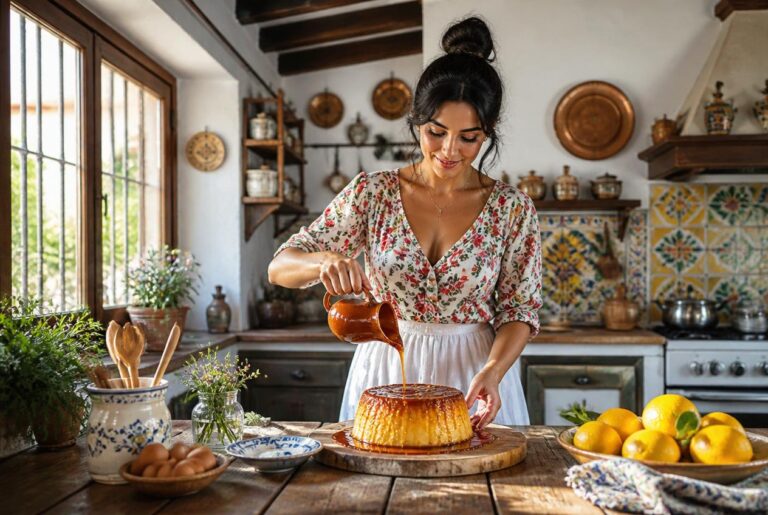
- Lift away the baking dish and allow the rich caramel sauce to flow naturally over the custard.
- The caramel that hardened in the bottom of the dish during baking will have transformed into a beautiful golden sauce.
- Slice the flan into wedges and serve chilled.
- Each serving should be smooth, creamy, and coated with the luscious caramel sauce.
- For an elegant presentation, garnish with fresh berries, a mint leaf, or simply enjoy it as is.
Spanish Flan Recipe Frequently Asked Questions
Find clear, actionable answers about texture, ingredients, cooking methods, and troubleshooting so you can make a smooth, evenly set Spanish flan recipe with reliable caramel. Each item helps you learn exact ingredient swaps, temperature and timing tips, and simple repairs for common problems with the Spanish flan recipe.
What is the difference between traditional Spanish flan and other custard desserts?
Traditional flan recipe uses whole eggs (often with a mixture of whole eggs and egg yolks), sugar, milk, and a thin layer of caramelized sugar. It sets as a baked custard that is released and served inverted, giving a glossy caramel top. Other custards like crème brûlée rely on heavy cream and are often baked at higher heat or baked briefly then torched to create a hard caramel crust. Spanish flan recipe typically uses milk or a mix of evaporated and condensed milk for a denser, silkier result compared with lighter stirred custards.
How do you make flan with sweetened condensed milk for a rich, creamy texture?
Use one 14-ounce can of sweetened condensed milk, one 12-ounce can of evaporated milk, three whole eggs plus one yolk, and 1/2 cup granulated sugar for the caramel in your flan recipe. Whisk the eggs, then temper by gradually adding the milks while stirring to avoid scrambling. Strain the custard through a fine-mesh sieve into a caramel-lined mold to remove bubbles and chalazae. Bake in a water bath at 325°F (160°C) until the center jiggles slightly; cool fully, chill at least 4 hours, then invert to serve your Spanish flan recipe.
How can you make flan without condensed milk while keeping it smooth and set?
Replace condensed milk with whole milk and increase richness with 1 cup heavy cream plus 2 cups whole milk for a similar mouthfeel in your Spanish flan recipe. Use four whole eggs or three eggs plus two yolks to ensure the custard sets firmly without becoming rubbery. Cook using low, even heat and strain the mixture before baking to remove any coagulated bits. Finish in a water bath and chill thoroughly to let the proteins relax and the custard firm up for the perfect flan recipe.
What is the easiest method for making flan at home with consistent results?
To make a classic Spanish flan recipe at home, whisk eggs and sugar lightly, then add room-temperature milk (or milk plus cream) and any extracts. Strain the mixture and pour it over a pre-made caramel in a baking dish. Next, place the baking dish inside a larger pan, fill the outer pan with hot water to halfway up the flan dish, and bake at 325°F (160°C) until the center barely jiggles. For the best flan recipe, always use consistent oven rack placement and a thermometer to ensure steady baking temperatures. This will help you perfect your flan recipe every time you bake it.
What are the most common mistakes when making flan, and how can they be avoided?
Many people overwhisk eggs, which introduces air and causes holes and a spongey texture in the flan recipe; whisk just to combine for a velvety finish. Baking at too high a temperature or skipping the water bath leads to curdling and cracks, so always maintain low heat and use a bain-marie for your Spanish flan recipe. Straining the mixture is essential in any Spanish flan recipe, as it removes strings or bubbles for a flawless custard.
How do you prepare and use a water bath to prevent flan from cracking or curdling?
To prepare a water bath for your flan recipe, place the filled flan dish inside a larger roasting pan that fits in your oven. Heat water until it is hot but not boiling. Pour the water into the outer pan until it reaches halfway up the sides of the flan dish, ensuring gentle and even cooking for your flan recipe.
Cover the flan recipe with foil to reduce steam loss and bake at a low temperature. After baking, remove the pan from the oven and lift the flan dish out of the water bath using tongs or oven mitts. Place the flan recipe on a rack to cool before refrigerating to finish setting.

Recipes are gathered in person and written for real-world cooking conditions.
- 10 Hungarian Dessert Recipes Passed Down Through Generations - July 25, 2026
- 11 Easy English Recipes Anyone Can Make - July 25, 2026
- Hungarian Kifli Recipe - July 25, 2026