

Moroccan Fish with Chermoula Vegetables Tagine Recipe: Moroccan cuisine offers a delightful blend of flavors that captivates the senses. One of our favorite dishes is the Moroccan Fish Tagine with Chermoula. This recipe combines fresh fish with vibrant vegetables and a zesty marinade, creating a dish that is not only delicious but also visually stunning.
As we travel around the world, we enjoy collecting unique recipes, like this one, from local restaurants and cooking classes. We are excited to share this special recipe with our readers so you can experience the taste of Morocco right in your kitchen.
Join us as we explore the step-by-step process to make this amazing dish, complete with the fresh ingredients that bring it to life. You’ll discover how to create a memorable meal that showcases the art of Moroccan cooking.

Moroccan Fish with Chermoula Vegetables Tagine
Why You’ll Love This Moroccan Fish with Chermoula Vegetables Tagine Recipe
We appreciate the rich flavors of Moroccan cuisine, and this fish tagine stands out for many reasons.
Health benefits are at the forefront. The recipe features lean protein from the fish, making it a great source of omega-3 fatty acids. These nutrients support heart health and reduce inflammation.
Chermoula adds a wonderful twist. This blend of herbs and spices brings a zesty flavor that’s both fragrant and vibrant. Its key ingredients—garlic, cilantro, and lemon juice—jazz up the dish and provide antioxidants.
Our tagine recipe is also gluten-free. It accommodates a variety of dietary needs while maintaining traditional North African flavors.
We love the cultural significance of this dish. Growing up in a rich culinary tradition, preparing fish tagine connects us to the vibrant history of North Africa. It’s more than a meal; it’s an experience.
For those seeking options, a vegan version can easily substitute fish with hearty vegetables or tofu while keeping the same delicious chermoula sauce.
Nutritional information shows a balanced meal with vegetables like potatoes, carrots, and tomatoes. They not only enhance the taste but also add vitamins and minerals.
This Moroccan fish tagine with chermoula recipe is a perfect balance of taste, nutrition, and culture. It’s a dish we love to share with family and friends.
What Makes This Recipe Special
The Moroccan fish with chermoula and vegetables tagine recipe stands out for its vibrant flavors and fresh ingredients.
Chermoula marinade is key. It combines fresh cilantro, parsley, garlic, cumin, paprika, and lemon juice. This mixture not only flavors the fish but also tenderizes it.
Using fresh herbs like cilantro and parsley adds brightness. The aromatic spices—including ground cumin and smoked paprika—bring depth.
Cayenne pepper or chili pepper can add heat for those who enjoy spice. This gives us variations to adapt the recipe to our tastes.
The dish often includes vegetables such as potatoes, carrots, and tomatoes. These add nutrients and enhance the meal’s texture.
Cooking in a tagine allows flavors to meld while keeping ingredients moist. It’s a traditional method in Moroccan cooking that yields tender fish.
Adding a bit of preserved lemon can elevate the flavor further, bringing a unique tang that’s refreshing.
The use of fresh ingredients makes each bite delicious and vibrant. This dish is not just food; it’s an experience that reflects Moroccan culture and culinary art.
Cooking Equipment Needed
To make Moroccan Fish Tagine with Chermoula, having the right cooking equipment is essential. Here’s what we recommend:
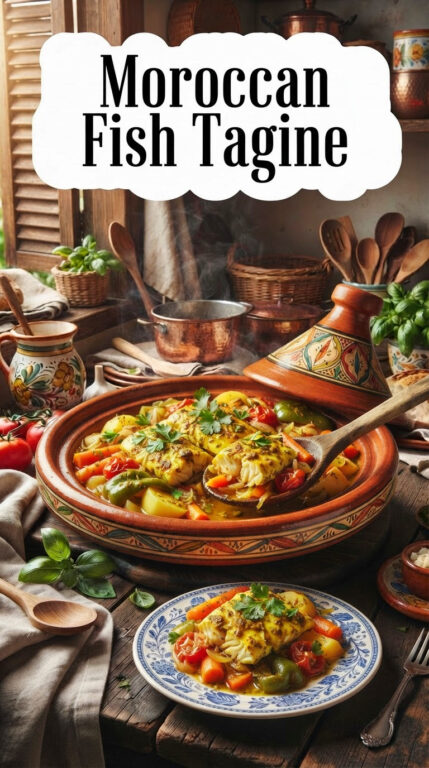
- Tagine Pot: This is the star of the show. A traditional tagine pot is usually made from clay or ceramic and has a conical lid. It lets steam circulate, keeping the fish and vegetables moist.
- Heavy-Bottomed Pot: If you don’t have a tagine, a heavy-bottomed pot can work well. It helps to distribute heat evenly during cooking.
- Mixing Bowl: Use a large bowl for preparing the chermoula marinade. This is where we mix the herbs and spices with the fish.
- Knife and Cutting Board: Sharp knives are necessary for chopping vegetables. A sturdy cutting board is also important for safe and efficient prep work.
- Measuring Cups and Spoons: Precise measurements help in creating the perfect balance of flavors in our marinade and the dish overall.
- Wooden Spoon: This tool is ideal for stirring the vegetables without damaging the pot.
- Lid or Foil: If you’re not using a tagine pot, having a lid or some foil to cover the pot while cooking is important. This traps moisture and ensures even cooking.
With these essential tools, we can achieve a delicious Moroccan Fish Tagine that showcases vibrant flavors and textures.
Ingredients For the Moroccan Fish with Chermoula Vegetables Tagine Recipe
Tagine
White Fish
Carrots
Tomatoes
Onion
Potatoes
Bell Peppers
Olive Oil
Lemon Slices
Green Olives
Lemon
Chili Peppers,
Vegetables
Salt
Pepper
Ginger
1Turmeric
Chermoula
Cumin
Paprika
Salt
Ginger
Cayenne Pepper
Cilantro
Garlic
Saffron Threads
Olive Oil
Lemon Juice
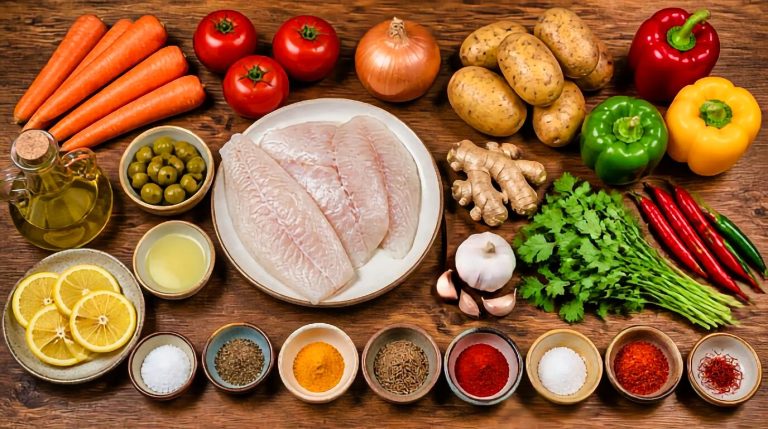
Moroccan Fish with Chermoula Vegetables Tagine Ingredients
Cooking Instructions For the Moroccan Fish with Chermoula Vegetables Tagine Recipe
Preparing the Oven and Ingredients
Preheat the oven to 350 degrees. Prepare all ingredients by mincing the garlic, onion, preserved lemon, cilantro, and parsley.
Marinating the Fish Ahead of Time
In a bowl, combine all the chermoula ingredients, stirring until well mixed. If the mixture is too thick and paste-like, adjust the consistency by adding a little more oil, lemon juice, or a small amount of water. Set aside half of the chermoula, covering and refrigerating it for later use. Use the remaining half to coat the fish thoroughly, ensuring each piece is well marinated. Cover and refrigerate for at least 2 hours or leave it overnight for enhanced flavor.
Sautéing Onions and Garlic
In the base of the tajine, heat half of the olive oil over medium heat. Add the minced garlic and onion, sautéing until the onions become translucent, which takes about 5 minutes.
Arranging and Baking the Dish
Evenly distribute the seasoned chicken across the base of the tajine. Arrange the sliced preserved lemon and olives on top. Drizzle with water, cover, and bake for 1 hour or until the chicken reaches an internal temperature of 165 degrees, checking every 30 minutes.
Place all chermoula ingredients in a bowl and stir to combine. If the marinade is thick and paste-like, thin its consistency with a little more oil or lemon juice or a tablespoon or two of water.
Reserve half of the chermoula marinade; cover and refrigerate until needed. Use the other half to marinate the fish, coating each piece thoroughly with the chermoula. Cover and leave to marinate in the fridge for at least 2 hours or overnight.
Assemble the Tagine
Add the olive oil to the base of a large tagine or a deep skillet. Add the sliced onion, covering as much of the tagine as possible. This serves as a bed for the remaining ingredients.
Arrange the sliced carrots over the onion, then arrange the potato slices over the carrots. Sprinkle with the salt, pepper, ginger and turmeric.
Arrange the sliced tomatoes atop the seasoned potatoes, then distribute the reserved chermoula over the tomatoes.
Add the fish and its marinade, then garnish the fish with the sliced peppers, chili peppers and lemon slices. Add the olives all around.
Cook the Fish Tagine
Add 1/4 to 1/2 cup water to the tagine, cover and place over medium-low to medium heat. (Use a diffuser beneath the tagine if cooking over a heat source other than gas.)
Allow the tagine to slowly reach a simmer, then continue simmering over medium-low heat for about 1 hour, or until the fish and veggies are cooked and the liquids are reduced to a thick sauce.
If you’d like to add preserved lemon, do so now. Allow a few minutes for the lemon to heat through, then remove the tagine from the heat and serve.
Optional Broiling Step
For a crispier finish, remove the tajine from the oven and set it to broil. Using tongs, transfer the fish to a baking sheet, leaving the sauce, olives, and preserved lemons in the tajine. Place the fish under the broiler for about 5 minutes, or until the skin turns golden brown and crispy. Serve hot.
Marinate the Fish
Notes
When using conger eel, additional water may not be necessary, as the eel naturally releases liquid during cooking. If there is excess sauce at the end of cooking and there isn’t enough time to let it reduce in the tagine, carefully ladle or pour the liquid into a small saucepan and reduce it separately before adding it back to the dish.
Preserved lemons contribute significant saltiness, so they are typically added at the end as a garnish. If preferred, they can be added at the beginning to infuse flavor into the sauce—just omit the salt when seasoning the vegetables.
In northern Morocco, a different clay vessel called a tagra is often used for fish tagines. Most tagras do not have lids, but covering the dish loosely with aluminum foil can work just as well.

Moroccan Fish with Chermoula Vegetables Tagine Cooking TIps
Cooking Tips For the Moroccan Fish with Chermoula Vegetables Tagine Recipe
- Use firm fish such as cod, halibut, snapper, or sea bass so it holds together during cooking.
- Fresh fish provides the best texture and flavor for the tagine.
- Chermoula made with cilantro, parsley, garlic, cumin, paprika, lemon, and olive oil gives authentic Moroccan flavor.
- Marinate the fish briefly in the chermoula for deeper seasoning.
- Potatoes, carrots, tomatoes, onions, and peppers work well as the vegetable base.
- Slice vegetables evenly so they cook at the same rate.
- Use a tagine pot or heavy covered pan to retain moisture and flavor.
- Add the fish after the vegetables begin softening to avoid overcooking.
- Simmer gently rather than boiling rapidly to keep the fish tender.
- Preserved lemons and olives can add extra depth and brightness.
- Avoid stirring aggressively once the fish is added so it does not break apart.
- Olive oil helps enrich the sauce and vegetables.
- Taste before adding extra salt if using olives or preserved lemons.
- Let the tagine rest briefly before serving so the flavors settle together.
- Serve with bread, couscous, or rice to enjoy the flavorful sauce.
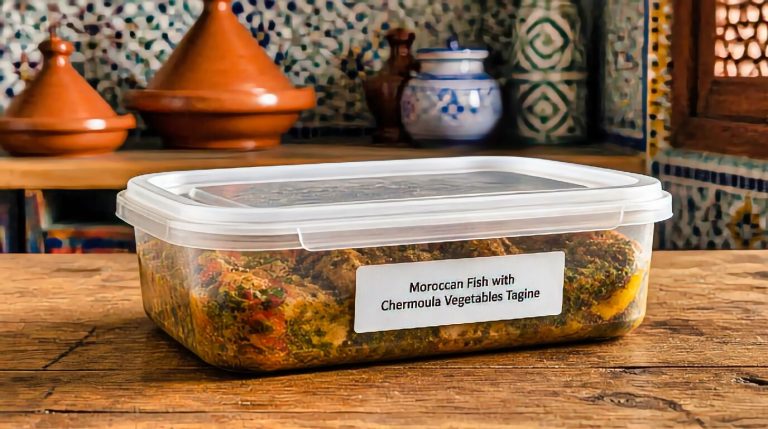
Moroccan Fish with Chermoula Vegetables Tagine Recipe Storage Tips
Storage Tips For the Moroccan Fish with Chermoula Vegetables Tagine Recipe
- Allow the tagine to cool before placing it into storage containers.
- Store the fish together with the vegetables and sauce to help maintain moisture.
- Seafood tagines are generally best enjoyed within a shorter storage period.
- Reheat gently over low heat to avoid drying out or breaking apart the fish.
- Add a little warm broth or water if the sauce thickens too much after refrigeration.
- Stir carefully during reheating to keep the fish pieces intact.
- Keep couscous, rice, or bread stored separately from the tagine.
- Freeze only if necessary, since fish texture can soften after thawing.
- Use airtight freezer-safe containers to help preserve flavor quality.
- Defrost frozen portions slowly in the refrigerator before reheating.
- Chermoula flavors may become stronger after resting overnight.
- Fresh herbs or lemon garnish should be added after reheating for brighter flavor.
- Avoid repeated reheating, which may reduce seafood texture quality.
- Discard leftovers if the fish develops strong odors, sliminess, or unusual discoloration.
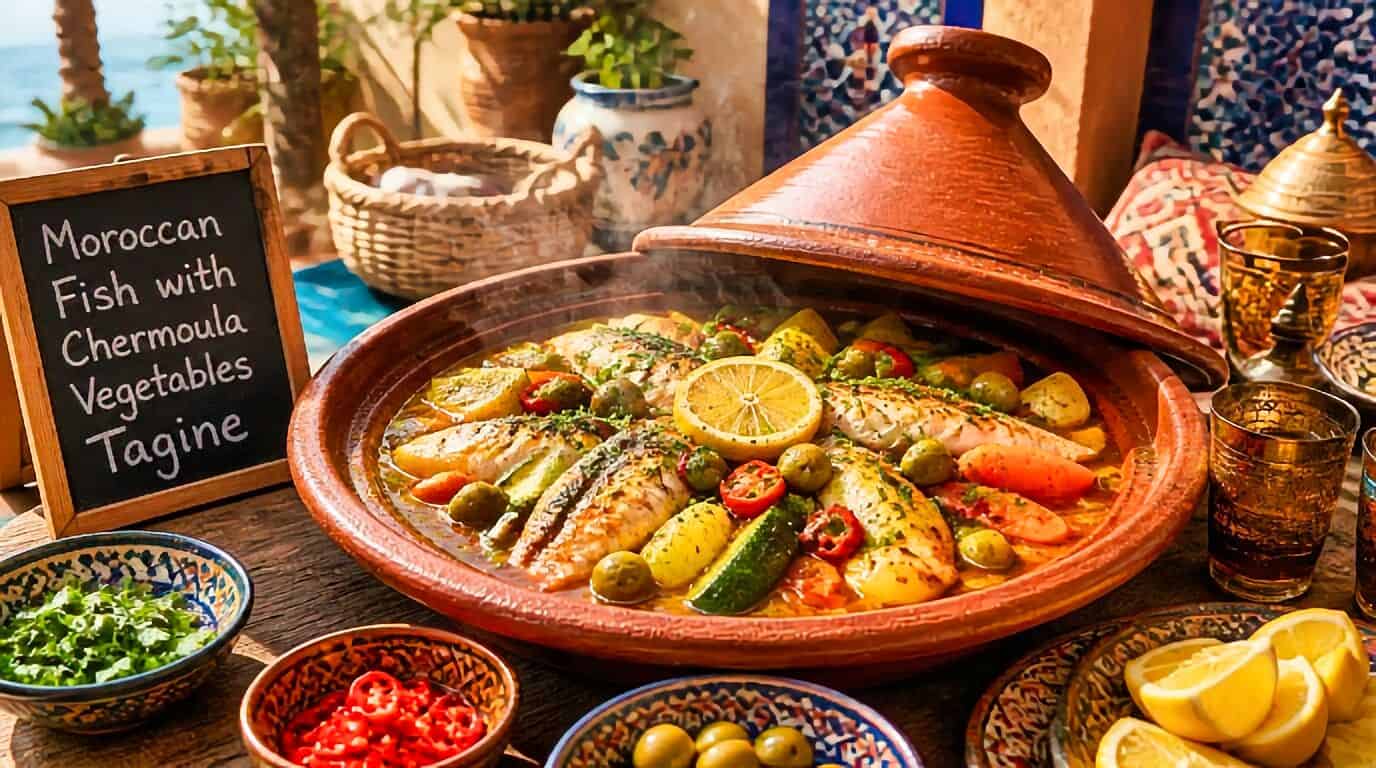
Moroccan Fish with Chermoula Vegetables Tagine Recipe
Ingredients
- 2 lb White Fish cut into pieces
- 2 Carrots - cut into 1/4" (0.5 cm) sticks
- 2 Tomatoes sliced
- 1 Onion large thinly sliced
- 2 Potatoes large cut into 1/4" (0.5 cm) slices
- 2 Bell Peppers thinly sliced, seeds removed
- 1/3 cup Olive Oil
- 8 Lemon Slices fresh for garnish
- 1/2 cup Green Olives optional
- 1 Lemon quartered, preserved
- 2 Chili Peppers fresh
- 1/2 tsp Salt
- 1/2 tsp Pepper
- 1 tsp Ginger
- 1/2 tsp Turmeric
- 1 tbsp Cumin
- 2 tsp Paprika
- 1 tsp Salt
- 1 tsp Ginger
- 1/4 tsp Cayenne Pepper
- 2 cups Cilantro fresh finely chopped
- 4 cloves Garlic very finely chopped or pressed
- 1/4 tsp Saffron Threads crumbled
- 3 tbsp Olive Oil
- 2 tbsp Lemon Juice fresh
Instructions
- Preheat the oven to 350 degrees. Prepare all ingredients by mincing the garlic, onion, preserved lemon, cilantro, and parsley.
- In a bowl, combine all the chermoula ingredients, stirring until well mixed. If the mixture is too thick and paste-like, adjust the consistency by adding a little more oil, lemon juice, or a small amount of water. Set aside half of the chermoula, covering and refrigerating it for later use. Use the remaining half to coat the fish thoroughly, ensuring each piece is well marinated. Cover and refrigerate for at least 2 hours or leave it overnight for enhanced flavor.
- In the base of the tajine, heat half of the olive oil over medium heat. Add the minced garlic and onion, sautéing until the onions become translucent, which takes about 5 minutes.
- Evenly distribute the seasoned chicken across the base of the tajine. Arrange the sliced preserved lemon and olives on top. Drizzle with water, cover, and bake for 1 hour or until the chicken reaches an internal temperature of 165 degrees, checking every 30 minutes.
- Place all chermoula ingredients in a bowl and stir to combine. If the marinade is thick and paste-like, thin its consistency with a little more oil or lemon juice or a tablespoon or two of water.
- Reserve half of the chermoula marinade; cover and refrigerate until needed. Use the other half to marinate the fish, coating each piece thoroughly with the chermoula. Cover and leave to marinate in the fridge for at least 2 hours or overnight.
- Add the olive oil to the base of a large tagine or a deep skillet. Add the sliced onion, covering as much of the tagine as possible. This serves as a bed for the remaining ingredients.
- Arrange the sliced carrots over the onion, then arrange the potato slices over the carrots. Sprinkle with the salt, pepper, ginger and turmeric.
- Arrange the sliced tomatoes atop the seasoned potatoes, then distribute the reserved chermoula over the tomatoes.
- Add the fish and its marinade, then garnish the fish with the sliced peppers, chili peppers and lemon slices. Add the olives all around.
- Add 1/4 to 1/2 cup water to the tagine, cover and place over medium-low to medium heat. (Use a diffuser beneath the tagine if cooking over a heat source other than gas.)
- Allow the tagine to slowly reach a simmer, then continue simmering over medium-low heat for about 1 hour, or until the fish and veggies are cooked and the liquids are reduced to a thick sauce.
- If you'd like to add preserved lemon, do so now. Allow a few minutes for the lemon to heat through, then remove the tagine from the heat and serve.
- For a crispier finish, remove the tajine from the oven and set it to broil. Using tongs, transfer the fish to a baking sheet, leaving the sauce, olives, and preserved lemons in the tajine. Place the fish under the broiler for about 5 minutes, or until the skin turns golden brown and crispy. Serve hot.
Notes
FAQ For the Moroccan Fish with Chermoula Vegetables Tagine Recipe
Question: What is a Moroccan Fish with Chermoula Vegetables Tagine recipe?
A: A Moroccan Fish with Chermoula Vegetables Tagine recipe is a flavorful dish featuring fish marinated in chermoula, a North African spice paste, combined with vegetables like carrots, zucchini, and tomatoes. The Fish with Chermoula Vegetables Tagine recipe is slow-cooked in a tagine pot to enhance the flavors.
Question: What ingredients are essential for a Moroccan Fish with Chermoula Vegetables Tagine recipe?
A: The key ingredients for a Moroccan Fish with Chermoula Vegetables Tagine recipe include firm white fish, chermoula (a mixture of garlic, cilantro, cumin, paprika, lemon, and olive oil), vegetables like carrots, zucchini, and bell peppers, and spices like turmeric and coriander.
Question: How long does it take to prepare a Moroccan Fish with Chermoula Vegetables Tagine recipe?
A: A Moroccan Fish with Chermoula Vegetables Tagine recipe takes about 45 minutes to 1 hour to prepare, depending on the type of fish used and how long it is marinated in the chermoula. Slow cooking the Fish with Chermoula Vegetables Tagine recipe helps to infuse the flavors.
Question: Can I use any type of fish in a Moroccan Fish with Chermoula Vegetables Tagine recipe?
A: Yes, you can use any firm white fish such as cod, halibut, or snapper in a Moroccan Fish with Chermoula Vegetables Tagine recipe. These fish hold up well during cooking and absorb the flavors of the chermoula marinade.
Question: How is a Moroccan Fish with Chermoula Vegetables Tagine recipe typically served?
A: A Moroccan Fish with Chermoula Vegetables Tagine recipe is often served with couscous, rice, or warm flatbread. The rich sauce from the tagine pairs perfectly with these sides, helping to soak up the vibrant flavors of the dish.

Recipes are gathered in person and written for real-world cooking conditions.
- 10 Hungarian Dessert Recipes Passed Down Through Generations - July 25, 2026
- 11 Easy English Recipes Anyone Can Make - July 25, 2026
- Hungarian Kifli Recipe - July 25, 2026
3 comments
The fish came out incredibly flaky and absorbed the vibrant chermoula marinade beautifully. The vegetables softened into a deliciously spiced sauce that was perfect for spooning over rice. My guests kept commenting on how fresh and bold the flavours were—this one is definitely going into my seafood recipe collection!
Im not convinced that using a traditional tagine pot is necessary for this recipe. Cant we just use a regular pot or skillet? Seems like a lot of extra hassle for one dish.
I dont understand why they included a whole section on cooking equipment needed for a tagine recipe. Who doesnt have a tagine pot lying around in their kitchen already? Seems a bit unnecessary, dont you think?
Comments are closed.