
Here’s a hearty, no-nonsense stew that brings together tender beef, nutritious kale, and those familiar Zimbabwean flavors—ideal for a cozy weeknight meal or a big family dinner. This Zimbabwe Beef and Kale Stew recipe makes a rich, layered dish, balancing slow-braised beef, tomatoes, and leafy greens in a sauce you’ll want to scoop up with sadza or maybe just serve over rice if that’s what you’ve got.
Grab some practical tips for picking the right beef cut, nailing the braise for fall-apart meat, and keeping that kale bright and not mushy. I’ll walk you through the cultural background, smart swaps, and little pro tricks that save time but keep the Zimbabwe Beef and Kale Stew recipe tasting legit.
Origin and Cultural Significance
This stew comes straight from Zimbabwean home kitchens, where cooks use simple, nutrient-rich ingredients and practical, time-tested methods. Folks usually pick tougher beef cuts and cook them low and slow until they’re melt-in-your-mouth good—a smart way to stretch what you’ve got and make it taste amazing.
Sadza, that classic maize porridge on the side, really grounds the whole meal. When you dig into beef and kale stew with sadza, you’re part of a daily ritual—a kind of communal eating that’s all about sharing and family. The Zimbabwe Beef and Kale Stew recipe isn’t just food; it’s a pattern, a memory, a bit of home.
Kale (muriwo) plays a big part in Zimbabwean kitchens. It’s not just for nutrition—though it’s packed with vitamins—but also for color and texture. Many families grow their own or pick it up fresh and local, tossing it into stews like this one for that pop of green.
You’ll spot this stew at regular family meals and bigger gatherings, always comforting, never fussy. Every household has its own spin on the Zimbabwe Beef and Kale Stew recipe, tweaking it for what’s in season, what’s at the market, or just what tastes like home.
Food ties into identity and the feeling of belonging, especially for Zimbabweans living abroad. The Zimbabwe Beef and Kale Stew recipe travels with them, adapting to new kitchens and new ingredients, but that combo of tender beef, tomatoes, onions, and greens still shouts “Zimbabwe” every time.
If you want a hands-on guide for the classic slow-cook approach and ingredient choices, check out this authentic Zimbabwean beef stew recipe guide. And honestly, if you’re looking for a dish that feels like home, the Zimbabwe Beef and Kale Stew recipe is about as good as it gets.
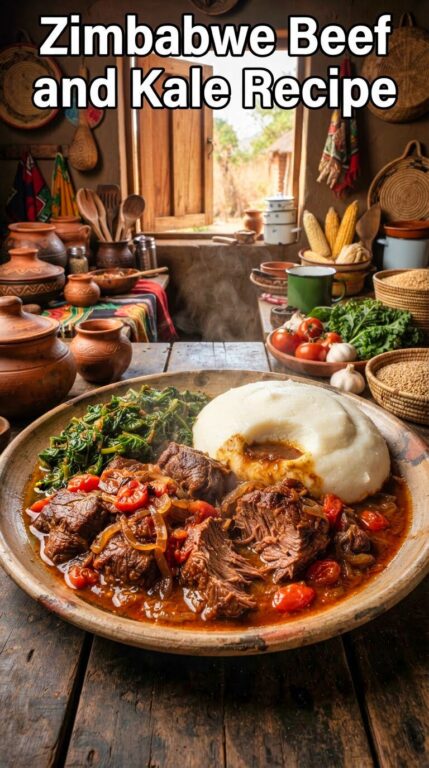
Preparation Methods and Ingredient Insights
Start with a tough, well-marbled beef cut—think chuck or brisket. These cuts break down during slow cooking and give you tender, flavorful meat. If you want a leaner Zimbabwe Beef and Kale Stew recipe, trim some fat, but don’t go overboard; you need a bit for richness.
Sear the beef in batches over high heat. You’re after that deep brown crust, which adds so much flavor. Scrape up the browned bits with a splash of water or broth before tossing in your tomatoes and aromatics. That’s where the magic starts in this Zimbabwe Beef and Kale Stew recipe.
Use fresh tomatoes if you can, or grab a good canned brand—either way, you want some acidity to balance the greens. Onions and garlic lay the foundation. Sometimes I’ll add a pinch of chili flakes for a gentle kick, as you’ll find in adaptations like this Zimbabwe beef and kale recipe.
Chop the kale and stir it in near the end so it stays vibrant and a little crisp. If you’re more into soft greens, add them earlier and let them simmer longer; both ways work for a Zimbabwe Beef and Kale Stew recipe, so go with your gut.
Keep the pot at a gentle simmer. Let everything cook low and slow for anywhere from 1.5 to 3 hours, until the beef is fork-tender. Taste and season as you go—salt, black pepper, and maybe a splash of vinegar or lemon to brighten things up. It’s all about finding the balance you like in your Zimbabwe Beef and Kale Stew recipe.
- Protein: chuck or brisket, 1–1.5 kg
- Greens: curly or Lacinato kale, 200–300 g
- Aromatics: onion, garlic, tomato, optional chili flakes
- Liquid: beef stock or water, enough to cover most ingredients
If you’re still wondering whether to try this Zimbabwe Beef and Kale Stew recipe, honestly, it’s worth it. There’s something about the way the flavors come together—simple, hearty, and full of tradition. Give the Zimbabwe Beef and Kale Stew recipe a go next time you want a one-pot meal that feels like it’s got a story behind it. And don’t be afraid to make it your own; the Zimbabwe Beef and Kale Stew recipe is all about comfort and adaptability. So, what are you waiting for? Get that pot going and let the Zimbabwe Beef and Kale Stew recipe work its magic.
Professional Cooking Tips
Trim your beef well and pick a cut that can handle a long, slow simmer—chuck or brisket always comes through for a tender, flavorful result. Sear the meat in batches over high heat. It’s worth the effort, since that deep browned crust makes a difference. Just don’t crowd the pan or you’ll end up steaming instead of searing—nobody wants gray beef in their Zimbabwe Beef and Kale Stew recipe.
Mix up your tomatoes: fresh ones add brightness, and canned tomatoes bring a reliable body to the stew. After you’ve finished searing, toss in the tomatoes and splash in some stock or water to scrape up all those browned bits. That’s where a lot of the flavor hides, honestly.
Season as you go, tasting along the way. Start with salt and black pepper, then sprinkle in some mild or smoked paprika. A pinch of ground coriander adds a little extra something. If the stew feels flat at the end, a squeeze of lemon juice or a dash of vinegar can wake things up. Trust your taste buds—they know when your Zimbabwe Beef and Kale Stew recipe needs a tweak.
Keep the heat low and steady. Let the stew gently simmer for at least 1.5 to 2 hours, or even up to 3–4 hours if you’re working with a tougher cut. If you’re using a pressure cooker—hey, no judgment—just cut down the time and follow your machine’s instructions so you don’t end up with limp kale in your Zimbabwe Beef and Kale Stew recipe.
Wait until near the end to add the kale. If you like your greens soft, stir them in about 10–15 minutes before you’re done. Want them with a bit of bite? Add them in the last 5 minutes. Either way, you’ll get a pop of color and texture in your Zimbabwe Beef and Kale Stew recipe.
Keep a bowl of extra cooking liquid handy so you can loosen the stew a bit when serving. When reheating, go low and slow—otherwise, the texture goes south. Honestly, the flavors in a Zimbabwe Beef and Kale Stew recipe seem to get even better after a day in the fridge. Is it magic? Maybe.
- Grab a heavy-bottomed pot or Dutch oven for even heat—nobody wants scorched stew.
- Taste again and tweak your seasoning after the stew’s had time to rest.
- Save a few kale leaves for garnish. It just looks better, and that’s half the battle with a Zimbabwe Beef and Kale Stew recipe.
If you want to keep things authentic or just need some inspiration, check out a real Zimbabwean guide like this Sadza Nenyama beef and kale stew recipe. There’s always something new to pick up for your next Zimbabwe Beef and Kale Stew recipe adventure.
Honestly, every Zimbabwe Beef and Kale Stew recipe I’ve tried seems to have its own twist. Some folks swear by a dash of extra vinegar, others go heavy on the coriander. If you’re experimenting, don’t be afraid to riff on the basics—sometimes a little improvisation is what makes your Zimbabwe Beef and Kale Stew recipe memorable.
One last thing: if you’re serving guests, maybe throw together a quick side—sadza or rice works well. It soaks up the sauce from your Zimbabwe Beef and Kale Stew recipe and makes the meal feel complete. And hey, leftovers never hurt. If you end up with extra Zimbabwe Beef and Kale Stew recipe, it’s even better the next day. Isn’t that always the way?
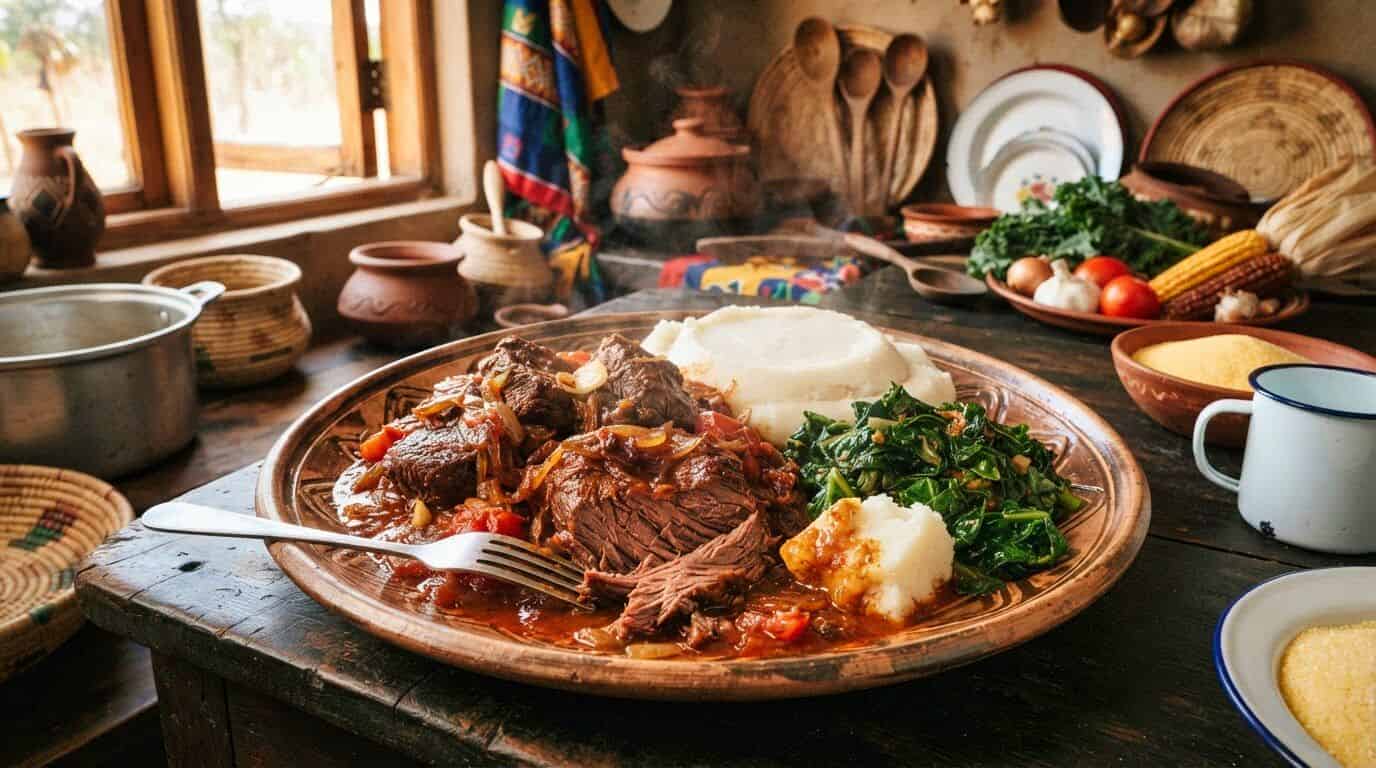
Zimbabwe Beef and Kale Recipe
Ingredients
- 2 tbsp olive oil
- 2 lb beef stew meat cubed
- 2 onion chopped
- 2 clove garlic crushed
- 2 tomato diced
- 2 teaspoon red pepper flakes
- 2 teaspoon curry powder
- 10 leaves kale cut into ribbons
- 2 cup beef stock
- 1 teaspoon salt
- 1 tablespoon black pepper
- 1 teaspoon cumin
- 1 teaspoon coriander
- 1/2 teaspoon turmeric
- 1/4 teaspoon paprika
- 2 beef bouillon cubes
Equipment
- Large pot for stewing
- Cutting board and knife for chopping vegetables
- Wooden spoon for stirring
- Ladle for serving
- Measuring spoons for precise spice measurements
- Measuring cup for liquids
- Pot lid for covering during simmering
- Serving bowls or plates for presentation
Instructions
- a. Place the large pot on the stovetop.
- b. Pour 2 tablespoons of olive oil into the pot.)
- a. Place the cubed stewing beef in the hot pot.
- b. Stir and turn the beef pieces to ensure even browning.)
- a. Add the chopped onions to the pot.
- b. Add the crushed garlic to the pot.
- c. Stir the onions and garlic frequently while they cook.)
- a. Add the diced tomatoes to the pot.
- b. Sprinkle the red pepper flakes and curry powder over the mixture.
- c. Stir everything together to combine and let it cook for a few minutes.)
- a. Add the kale ribbons to the pot.
- b. Stir the kale gently to distribute it evenly in the mixture.
- c. Cook until the kale wilts down and becomes tender.)
- a. Gradually pour the beef stock into the pot while stirring.
- b. Increase the heat to bring the mixture to a gentle simmer.)
- a. Measure the specified amounts of salt, black pepper, cumin, coriander, turmeric, and paprika.
- b. Sprinkle the spices evenly over the mixture in the pot.)
- a. Place the bouillon cubes into the pot.
- b. Stir the mixture until the cubes dissolve completely.)
- a. Turn the heat down to the lowest setting.
- b. Place the lid securely on the pot to cover it completely.
- c. Allow the stew to cook and simmer for the specified time.)
- a. Taste the stew to check the seasoning.
- b. If necessary, add more salt or pepper to suit your taste preferences.)
- a. Ladle the stew into serving bowls.
- b. Serve with steamed rice or crusty bread for a complete meal.)
Notes

Recipes are gathered in person and written for real-world cooking conditions.
- 10 Hungarian Dessert Recipes Passed Down Through Generations - July 25, 2026
- 11 Easy English Recipes Anyone Can Make - July 25, 2026
- Hungarian Kifli Recipe - July 25, 2026