
If you’ve never tried it, the Finnish Kalakukko recipe is all about hearty flavor and old-school practicality—think of it as a savory package, with the fish and fat sealed inside a dense rye crust. It’s satisfying, sturdy, and, honestly, a bit of an adventure to bake at home. Check out this portable meal and see how it compares to other traditional breads you can bake at home. That thick rye shell? It keeps everything fresh and makes the whole thing feel like a culinary time capsule. If you’re after something filling and unique, the Finnish Kalakukko recipe is worth a go.
You’ll get straightforward tips on which ingredients actually work, how to shape and seal the dough (it’s trickier than it looks), and why slow baking is the secret to melding all those flavors. I’ll mention some practical stuff—timing, picking the right fish, and not letting rye dough drive you mad—so you don’t end up with a soggy mess or a crust that shatters. The Finnish Kalakukko recipe isn’t fussy, but it does reward patience and a bit of attention to detail.
Ready for the nitty-gritty? The Finnish Kalakukko recipe is all about avoiding rookie mistakes. Want to dodge a cracked crust or a filling that leaks everywhere? A couple of small tweaks make a big difference. I’ve learned to let the bread rest after baking—if you slice it too soon, it just falls apart and the juices run out. It’s the kind of thing you only figure out after a few attempts, honestly.
Description, Recipe and Historical Information
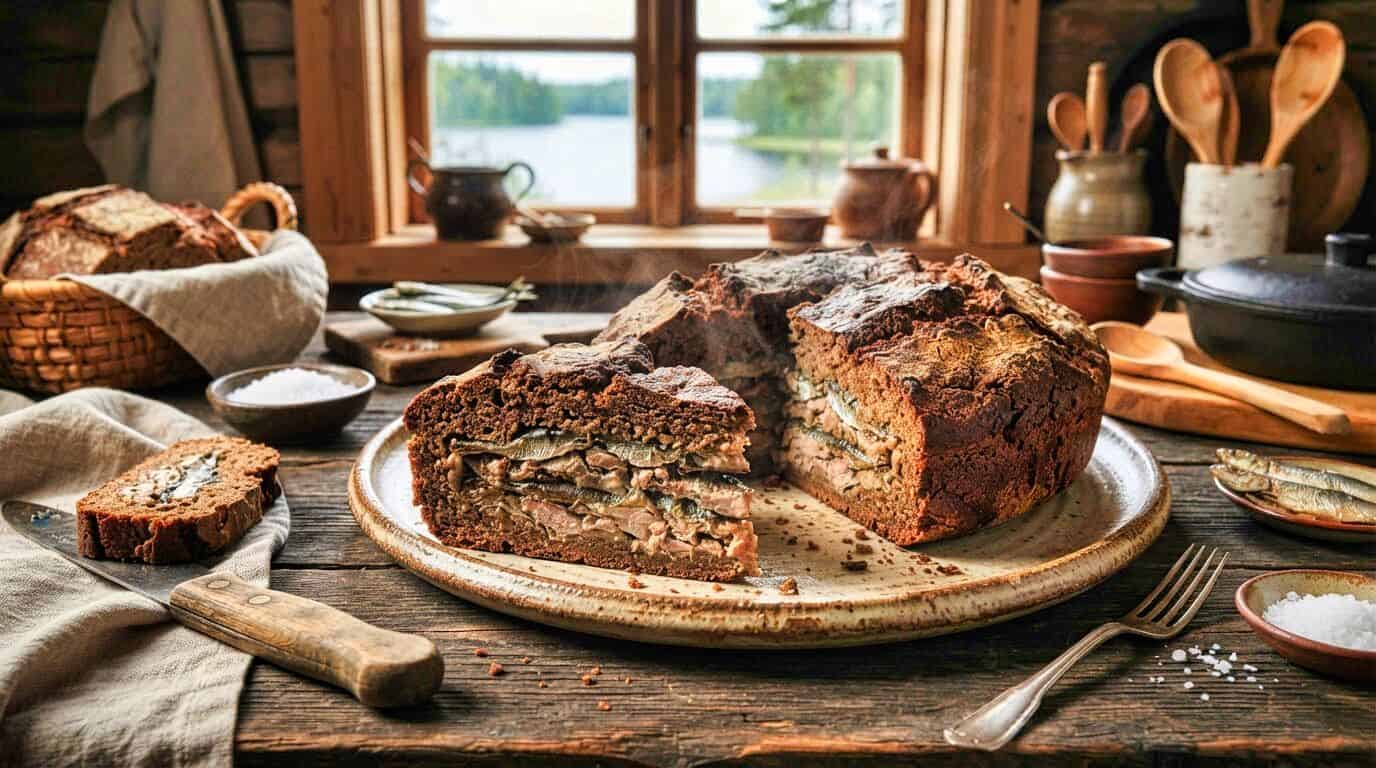
Kalakukko, at its core, is a Finnish rye loaf stuffed with fish—usually vendace or perch—and pork fat. The crust comes out dense and crusty, but inside, it’s all moist, savory goodness. The slow bake is what does the magic. The Finnish Kalakukko recipe doesn’t really cut corners, and you can taste that.
So, how do you pull this off? Mix rye flour, a bit of wheat flour, salt, and water into a tough, workable dough. Clean your fish, chop up some cured pork or bacon, and then layer everything inside the dough. Seal it up tight. Bake it for hours until the crust is almost mahogany and the filling goes tender. That’s the Finnish Kalakukko recipe in a nutshell.
Kalakukko hails from Savonia, where folks needed food that could survive long journeys. The Finnish Kalakukko recipe made sense for fishermen and workers—leave it unopened and it keeps for ages, and you can eat it hot or cold. It’s not just food; it’s a piece of Finnish history, honestly.
Bake your kalakukko at a low or moderate temp. That slow heat lets the pork fat soak into the fish while the rye crust sets up. If you’re impatient and cut it right away, you’ll regret it—the bread crumbles and you lose all that moisture. Let it rest, even if you’re tempted. That’s the Finnish Kalakukko recipe’s biggest secret, if you ask me.
If you want to see what a real, old-school Finnish Kalakukko recipe looks like (or just want to geek out on its history), check out this authentic version over at Finnish Kalakukko history and recipe. There are lots of ways to tweak it, but the basics stay the same. If you’re up for something different, give the Finnish Kalakukko recipe a try. It’s not your average loaf, and that’s kind of the point. If you’re a fan of hearty, old-world food, the Finnish Kalakukko recipe might just surprise you. It’s a bit of work, sure, but isn’t that half the fun?

Cooking Tips
Give yourself plenty of time—this isn’t a quick bake. The Finnish Kalakukko recipe really shines when you let it go low and slow, so set aside at least 2–3 hours, maybe more if you want a deep, even crust. I’d let the finished loaf hang out for 20–30 minutes after baking. That pause lets the juices settle in and the crust get a bit more bite. Rushing it? I mean, you could, but you’ll miss out on that perfect texture.
Grab your cold, firm fish and cold pork fat—no shortcuts here. If either warms up, the filling can turn to mush, and nobody wants that. Chop that pork fat into tiny cubes so it melts down just right and bastes the fish as it bakes. That’s the secret to the Finnish Kalakukko recipe: balance and patience.
When you mix the rye dough, just bring it together—don’t overdo it. If you knead too much, you’ll get a brick instead of a crust. Rye flour can be tricky, especially if it’s really coarse. Sometimes I toss in a handful of wheat flour, maybe 10–20%, just to make it easier to handle. Is it traditional? Maybe not, but it works, and the Finnish Kalakukko recipe is all about getting it right for you.
Seal that loaf like you mean it—pinch and fold those edges tight so steam stays locked in. Brush the outside with water or a light egg wash if you want a shinier look. For the first half of baking, I sometimes wrap the loaf in parchment or foil. It keeps the crust from browning too fast, and honestly, it helps if you’re still getting the hang of the Finnish Kalakukko recipe.
Moisture management’s a big deal. Try layering a thin slice of onion under the fish; it’ll soak up extra liquid and add a subtle flavor. Press the fish and pork fat together so there aren’t any weird gaps. If the filling looks too wet before you bake, just pat it dry with paper towels. It’s a small step, but it makes a difference—especially in the Finnish Kalakukko recipe.
Go easy on the seasoning. Rye and pork are already bold, so don’t go wild with salt and pepper. I usually cook up a tiny bit of the fish with the same seasoning before committing to the whole loaf. It’s a little fussy, but it’s worth it. The Finnish Kalakukko recipe rewards a careful hand.
If you haven’t cut into your kalakukko, keep it somewhere cool. Once you slice it, stash the rest in the fridge and try to finish it within 3–4 days. Reheating? I’d go low and slow again—wrap it in foil and use a gentle oven (about 150°C / 300°F). That way, the filling stays moist and you don’t end up with a dried-out disappointment. The Finnish Kalakukko recipe is forgiving, but it does have its limits.
Honestly, every time I make the Finnish Kalakukko recipe, I tweak something—maybe a different fish, maybe a new trick with the dough. It’s one of those things you just get a feel for. If yours isn’t perfect the first time, don’t stress. The next Finnish Kalakukko recipe you try will be better, and that’s half the fun.
So, whether you’re a first-timer or a kalakukko regular, just trust yourself and the Finnish Kalakukko recipe. It’s a bit of a project, but it’s worth every minute.
Finnish Kalakukko Recipe
Ingredients
- 1 1/2 lbs rye flour
- 2 1/2 cups rwater
- 1/2 tsp of salt
- 1/2 lbs of pork belly or bacon diced
- 1 lb whitefish fillets such as pike or perch, diced
- 1 onion finely chopped
- Salt and pepper to taste
Equipment
- large mixing bowl
- Baking dish
Instructions
- Preheat your oven to 375°F (190°C).
- In a large bowl, mix the rye flour, water, and salt together to form a dough. Knead the dough for 5-10 minutes until it becomes elastic.
- In a separate bowl, mix together the diced pork belly or bacon, diced whitefish, chopped onion, salt, and pepper.
- Divide the dough into 2 equal portions. Roll out each portion into a large circle (about 14 inches or 35 cm in diameter).
- Place one circle of dough into a greased baking dish. Add the pork, fish, and onion mixture onto the dough.
- Cover the mixture with the other circle of dough, crimping the edges of the dough together to seal the filling inside.
- Cut a small hole in the top of the dough to allow steam to escape during baking.
- Bake for 2-3 hours or until the bread is cooked through and golden brown.
Notes
Tips and Tricks
Use a food processor to chop the meat and fish for a finer texture. Make sure to crimp the edges of the dough together tightly to prevent the filling from leaking out during baking. If the dough is too sticky, you can sprinkle some flour on the surface and on your hands to make it easier to handle.
Recipes are gathered in person and written for real-world cooking conditions.
- 10 Hungarian Dessert Recipes Passed Down Through Generations - July 25, 2026
- 11 Easy English Recipes Anyone Can Make - July 25, 2026
- Hungarian Kifli Recipe - July 25, 2026