
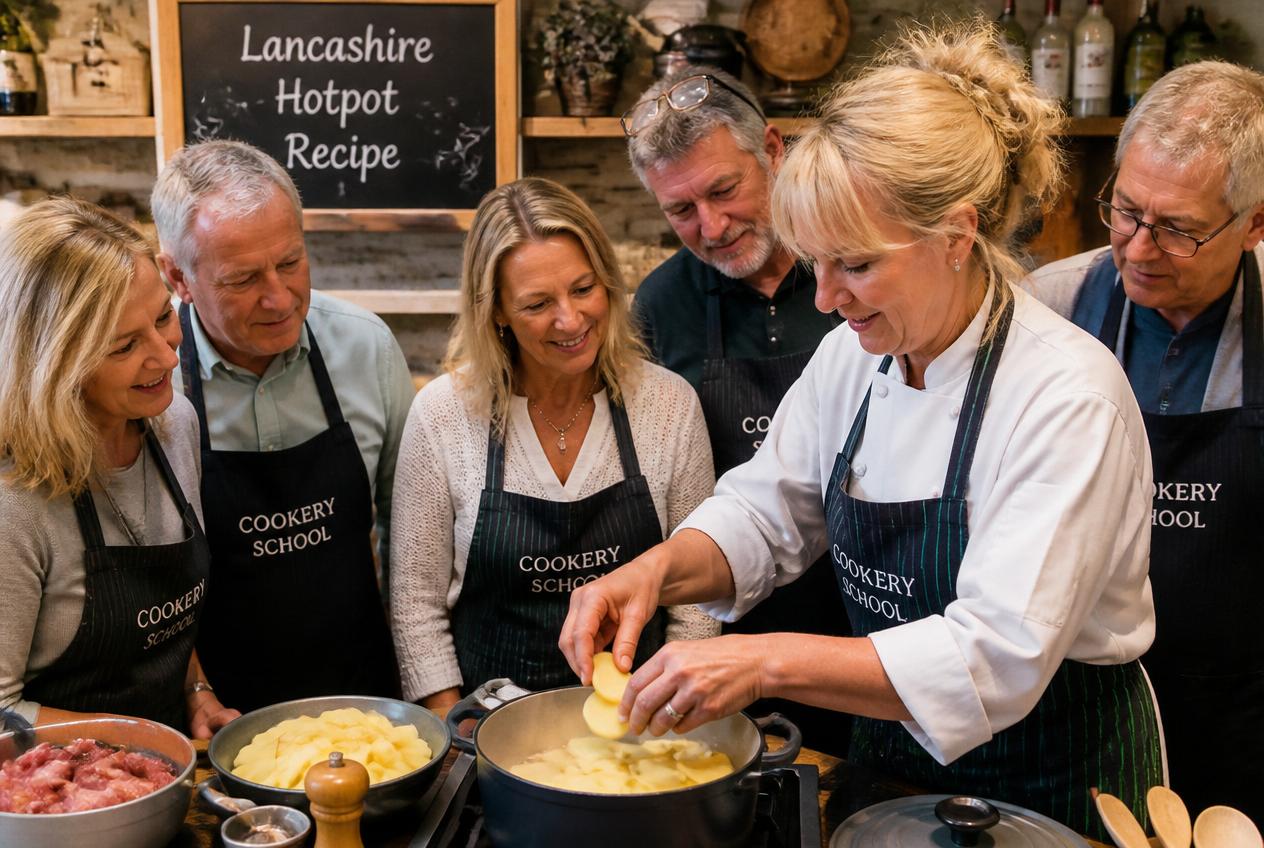
I still remember the first time I tried the Traditional Lancashire Hotpot recipe at a tiny pub somewhere up north. That crispy golden potato topping broke open to reveal meltingly tender lamb underneath, and honestly, I was hooked on the spot. Traditional Lancashire Hotpot recipe is basically an oven-baked casserole—lamb, onions, and sliced potatoes, all layered up and baked until the top goes crisp while everything below turns rich and soft.
This traditional comfort food has warmed British families for ages. What’s great is how little effort you need—just layer everything up, shove it in the oven, and let the house fill with that mouthwatering smell. It takes a few hours, but most of it’s hands-off.
I usually save this Lancashire Hotpot recipe for cold weekends when I want something hearty but don’t want to fuss all day. The slow-cooked lamb gets melt-in-your-mouth tender, and those potatoes on top are totally worth waiting for. Here’s how you can bring this British classic into your own kitchen.
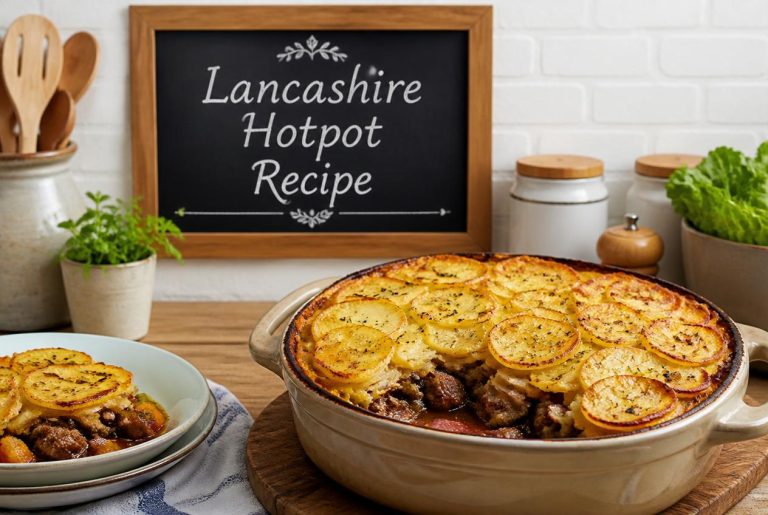
Key Takeaways
- Lancashire Hotpot recipe is a layered casserole—lamb, onions, and sliced potatoes—baked until the potatoes are crisp on top and everything else is tender
- Prep is quick, but it needs 2 to 3 hours of mostly hands-off oven time
- You can play around with the veggies and keep leftovers in the fridge for up to 3 days
English Recipe Description And Historical Information
I’m excited to share that Lancashire Hotpot is a traditional English casserole from the North West. It’s all about simple layers: lamb or mutton chops, sliced onions, and thinly sliced potatoes baked in a deep pot.
This Lancashire Hotpot recipe creates meat so tender it falls apart, nestled in a rich gravy, with potatoes that go soft underneath and crisp on top. I find it kind of charming that the old-school baking dish is tall and round, helping everything cook just right together.
Traditional Ingredients:
- Lamb or mutton (mutton was the original pick)
- Sliced onions
- Potatoes, thinly sliced
- Stock or water
- Sometimes lamb kidneys or oysters in really old versions
Lancashire sits between the Irish Sea and the Pennines. Fun fact: in the 17th century, “hotpot” actually meant a spiced ale drink—not food! Wild, right?
These days, most folks use lamb shoulder instead of mutton. The meat braises slowly with the veggies, and those potato slices on top go golden and crisp. It’s funny how this humble Lancashire Hotpot recipe became a pub favorite all over Britain.
Recipe Tips
I stick with lamb shoulder or neck for my Lancashire Hotpot recipe, since these cuts turn beautifully tender after hours in the oven. The fat in them is just what you want for a rich gravy.
Slicing the potatoes takes a bit of care. I aim for 3-4mm thick—thicker and they won’t cook through, thinner and they’ll burn. It’s a bit of a Goldilocks thing.
I always overlap the potato slices, kind of like roof tiles. This gives you that gorgeous golden crust. If you brush melted butter over the top, you’ll get some serious crispiness.
Browning the lamb is a must. I sear the meat in batches to get a deep color on every piece, which adds a lot of flavor.
Good stock is key. I go for lamb or beef, but chicken stock works if that’s all you’ve got. Just barely cover the meat and veg—don’t drown it.
Oven temperature matters for this Lancashire Hotpot recipe. I start hot for 30 minutes, then turn the heat down for the rest. For the last 20 minutes, I take the lid off so those potatoes really crisp up.
Let your Lancashire Hotpot recipe rest about 10 minutes before serving. It’ll make scooping it out way easier.
Variations
What I love about the Lancashire Hotpot recipe is how flexible it is, even though it’s so traditional. If you want a stronger, old-school flavor, swap lamb for mutton. It’s not for everyone, but it’s definitely authentic.
The classic potato topping is iconic, but sometimes I’ll tuck in sliced carrots or turnips for a bit more color and sweetness. Some folks brush the potato top with even more butter for extra crunch and golden color.
Meat Options:
- Mutton if you want that traditional punch
- Beef for a twist
- A mix of lamb shoulder and neck for different textures
Seasoning is fun to play with! I like a dash of Worcestershire sauce for depth. Thyme, rosemary, or bay leaves can really lift the gravy.
Sometimes I’ll add mushrooms or celery with the onions, or even a handful of pearl barley to make the whole Lancashire Hotpot recipe even heartier.
Topping Variations:
- Mix sweet potatoes with regular ones
- Try thin parsnip slices with the potatoes
- Brush more butter on top for extra crunch
As for stock, I lean toward rich lamb stock, but beef stock is great too. Sometimes I’ll add a splash of red wine—it gives the gravy a deeper flavor.

Storage
One of the best things about a Lancashire Hotpot recipe is how well it keeps—up to 3 days in the fridge, and I swear the flavors get even better with time.
Here are my go-to storage tips:
Refrigerator Storage
- Let the Lancashire Hotpot recipe cool completely before you store it
- Stick it in an airtight container, or just cover the baking dish really tightly with foil
- It’ll keep for up to 3 days in the fridge
Freezer Storage
- I portion out leftovers for easy meals later
- Use freezer-safe containers and leave a little space at the top
- Freeze for up to 3 months for best results
- Label with the date (trust me, you’ll forget otherwise)
I always let the Lancashire Hotpot recipe cool to room temp before refrigerating. Putting hot food straight in the fridge can mess with the temperature and other foods.
When I want leftovers, I thaw frozen portions in the fridge overnight. That way, everything heats up evenly and stays safe to eat.
Storage Container Tips
| Container Type | Best For | Notes |
|---|---|---|
| Glass dish with lid | Refrigerator | Goes straight into the oven |
| Plastic containers | Freezer portions | Pick microwave-safe ones |
| Aluminum foil | Covering original dish | Use heavy-duty if freezing |
Good storage makes meal planning so much easier, especially when the week gets busy. Having a Lancashire Hotpot recipe ready to go is a lifesaver.
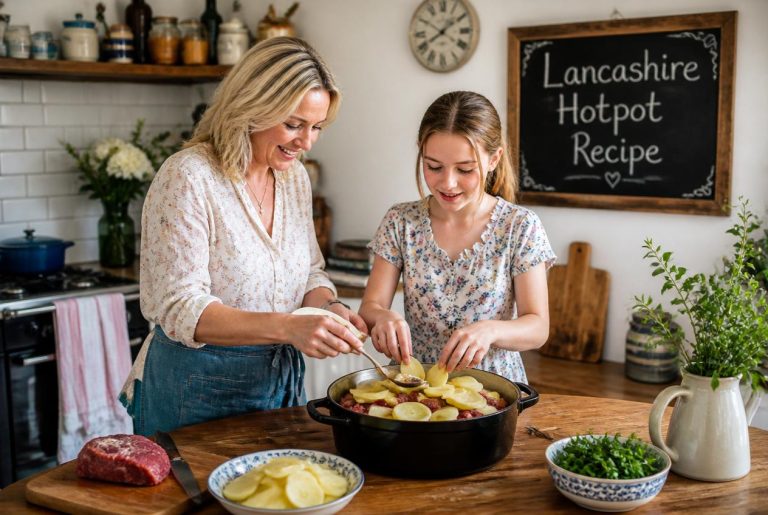
Lancashire Hotpot Recipe Cooking TIps
Traditional Lancashire Hotpot Recipe Cooking Tips
• Lancashire Hotpot is known for its tender lamb, rich onion gravy, and beautifully browned potato topping.
• Lamb shoulder or neck is traditionally used because it becomes exceptionally tender during slow cooking.
• Browning the lamb before assembling the hotpot adds deeper flavor and richer color.
• Onions are a key ingredient and provide sweetness that balances the richness of the lamb.
• Lamb stock creates the most authentic and flavorful cooking liquid.
• A small amount of Worcestershire sauce can add extra depth and savoriness.
• Thinly sliced potatoes form the classic topping and should be arranged evenly.
• Overlapping the potato slices helps create an attractive golden crust.
• Brush the potatoes lightly with butter or dripping for extra color and flavor.
• Slow baking allows the lamb to become tender and the flavors to fully develop.
• Keep enough liquid in the casserole to prevent the meat from drying out.
• Remove the lid near the end of cooking so the potatoes can brown properly.
• Fresh thyme or bay leaves add traditional aromatic notes.
• The flavor should balance tender lamb, sweet onions, rich gravy, and crisp golden potatoes.
• Lancashire Hotpot is one of England’s most famous regional comfort foods.
Bangers and Mash Recipe Cooking Class
Traditional Lancashire Hotpot Storage Tips
• Allow the hotpot to cool before transferring it into storage containers.
• Store the meat, potatoes, and gravy together to maintain moisture and flavor.
• Keep refrigerated in airtight containers to preserve freshness.
• Refrigeration may thicken the gravy slightly, which is normal.
• Reheat in the oven whenever possible to help maintain the potato topping’s texture.
• Add a small splash of stock during reheating if the casserole appears dry.
• Lamb and onion flavors often deepen after overnight refrigeration.
• Freeze portions in airtight freezer-safe containers if desired.
• Defrost frozen hotpot gradually in the refrigerator before reheating.
• Cover during initial reheating, then uncover briefly to refresh the potato topping.
• Use clean utensils when handling leftovers to help maintain freshness.
• Lamb casseroles are generally best enjoyed within a shorter refrigerated storage period for ideal quality and safety.
• Keep away from delicate desserts because savory aromas may transfer.
• Slight softening of the potato topping during storage is normal.
• Discard leftovers if the lamb, potatoes, or gravy develop sour odors, slime, mold, or unusual discoloration.
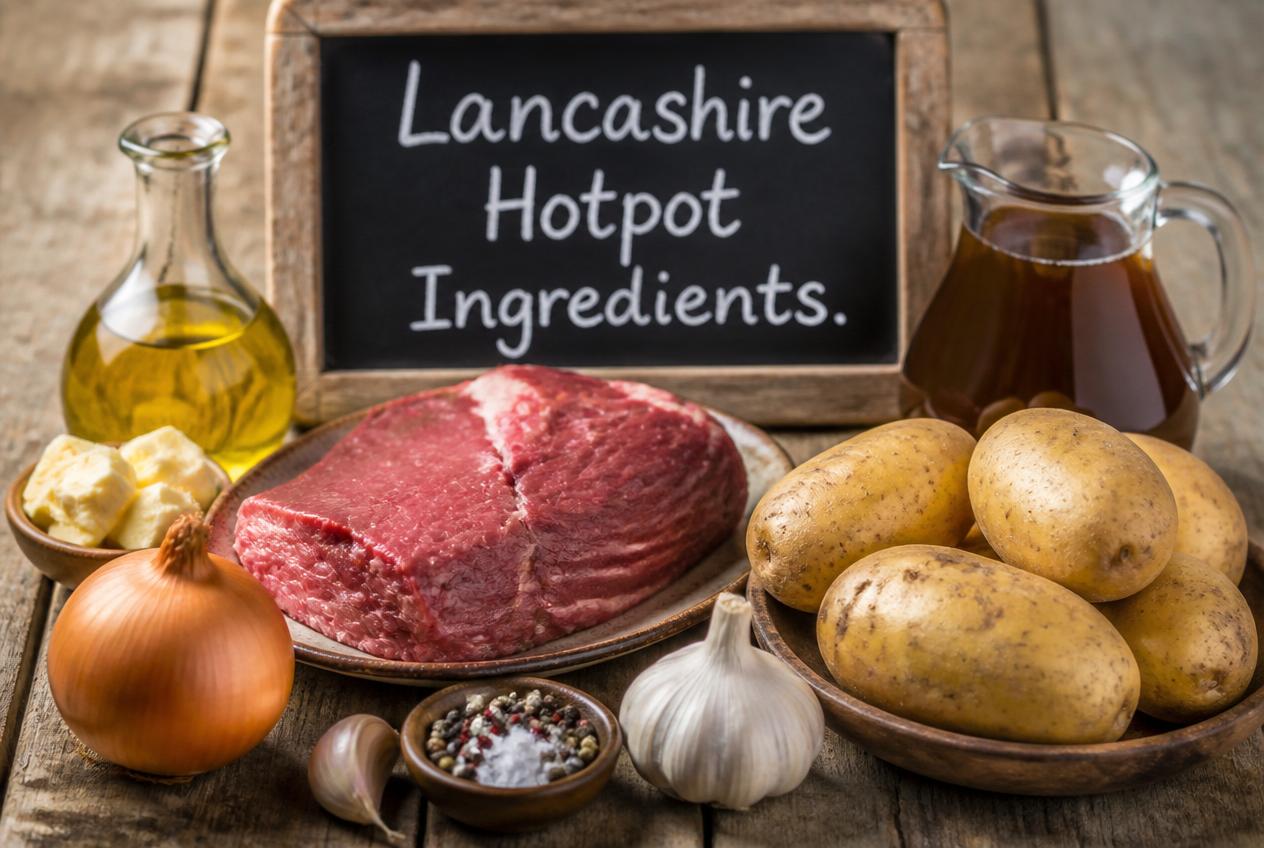
Traditional Lancashire Hotpot Recipe
Ingredients
- 3 lamb neck boneless
- 3 to 5 lamb kidneys cleaned (optional)
- Salt and pepper
- Flour for dusting
- 1/4 cup lard bacon fat, butter or oil, divided
- 3 cups sliced onions
- 2 teaspoons dried thyme or savory
- 2 cups beef or venison stock
- 1 to 2 tablespoons Worcestershire sauce
- 1 1/2 pounds potatoes peeled and sliced thin (see below)
- 3 tablespoons melted butter
Instructions
- Begin by slicing the neck meat into slabs approximately ½ inch thick, then cut those slabs into large, hearty chunks suitable for a long-cooked stew. Cut the kidneys into pieces roughly the size of the last segment of your thumb so they cook evenly and blend well with the rest of the ingredients. Place all of the meat into a large bowl, season generously with salt, and toss to coat evenly. Sprinkle flour over the meat and kidneys, turning everything until lightly coated. The flour will help create a richer, thicker sauce as the stew cooks and will also encourage better browning during the searing process.
- Heat half of the lard, bacon fat, or other cooking fat in a large Dutch oven over medium-high heat. Once the fat is hot and shimmering, add the kidneys and cook until they are deeply browned on all sides, stirring occasionally. Proper browning develops flavor and helps mellow the stronger taste of the kidneys. Transfer them to a plate and set aside.
- Working in batches, brown the neck meat in the same pot. Avoid overcrowding the pan, as crowded meat will steam instead of sear. Allow each batch to develop a rich brown crust before turning. Add more cooking fat as needed to keep the bottom of the pot coated and prevent scorching. Take your time with this stage; the deep caramelization created here forms the foundation of the stew's flavor. The entire browning process may take 15–20 minutes. As each batch finishes, transfer it to the plate with the kidneys.
- Add all of the onions to the Dutch oven and stir well, using a wooden spoon to scrape up every flavorful browned bit stuck to the bottom of the pot. These caramelized pieces will enrich the finished gravy. Season the onions lightly with salt and cook until they soften, turn golden brown, and become sweet and fragrant. While the onions cook, preheat the oven to 325°F (165°C). Once the onions are fully browned and tender, remove the pot from the heat.
- Remove most of the onions from the pot, leaving behind a thin layer to cover the bottom. Begin building the stew by arranging a layer of the browned neck meat and kidneys over the onions. Add a layer of sliced potatoes, using the smaller or irregular end pieces first. Sprinkle lightly with dried thyme and add a small splash of Worcestershire sauce for depth and savoriness. Scatter some of the reserved onions over the top.
- Repeat the layering process, alternating meat, potatoes, thyme, Worcestershire sauce, and onions until all of the ingredients have been used. Pour in enough stock to reach approximately three-quarters of the way up the sides of the stew. The liquid should not completely cover the ingredients, allowing the upper layers to roast gently while the lower layers braise. Finish with a generous grinding of black pepper and arrange the remaining potato slices over the top to create a rustic lid for the casserole.
- Brush the top layer of potatoes generously with melted butter. This helps them become beautifully golden and crisp while baking. Place the Dutch oven uncovered in the preheated oven.
- If using venison or mutton, bake for approximately 3 hours. If using lamb neck, the cooking time will generally be shorter, about 90 minutes to 2 hours. During baking, the stock will slowly reduce, the potatoes will absorb flavor, and the meat will become exceptionally tender. Check periodically during the final hour of cooking. If the potatoes are browning too quickly, loosely cover the pot with a lid or aluminum foil to prevent burning while the meat continues to soften.
- The stew is ready when the meat can be easily pulled apart with a fork and the potatoes on top are tender with a lightly browned crust.
- Allow the stew to rest for a few minutes before serving. Spoon generous portions into warm bowls, making sure each serving includes some of the tender meat, kidneys, onions, potatoes, and rich cooking juices. Serve alongside a crisp green salad and a selection of pickles to provide contrast to the richness of the stew. A malty beer is the traditional accompaniment, pairing beautifully with the deep, savory flavors developed during the long, slow bake. The finished dish should be hearty, comforting, and packed with layers of rich flavor from the browned meat, sweet onions, and buttery potatoes.
Frequently Asked Questions
People always have questions about making the perfect Lancashire Hotpot recipe—what meat to use, how to get those potatoes just right, and the best way to cook it at home.
What’s the best cut of meat to use for an amazing Lancashire hotpot?
I always grab lamb neck or shoulder for my Lancashire Hotpot recipe. These cuts have loads of flavor and turn out super tender after slow cooking.
The fat keeps everything moist. Middle neck chops are a classic, and usually easy on the wallet too.
Which ingredients are absolutely essential for an authentic Lancashire hotpot?
I never skip lamb, onions, stock, and potatoes in my Lancashire Hotpot recipe. That’s really all you need for the real deal.
Some folks add carrots, but the most traditional Lancashire Hotpot recipe keeps it simple. I always use plenty of onions—they make the gravy sweet and rich.
Salt and pepper are all you really need, but a bit of fresh thyme is nice if you’re in the mood.
How do you get those beautifully crisp, golden potato slices on top?
I slice my potatoes about a quarter-inch thick. I arrange them in overlapping circles over the meat and onions to get that classic look.
Brushing the top with melted butter before baking is key. I leave the lid off for the last 30–45 minutes so the potatoes crisp up perfectly.
How long should a Lancashire hotpot cook in the oven for the best results?
My Lancashire Hotpot recipe usually takes 2 to 2.5 hours in the oven at 325°F to 350°F. I keep it covered most of the time.
The long, slow bake makes the lamb fall-apart tender. I check that the meat shreds easily with a fork before I take the lid off.
The last bit uncovered crisps up the potatoes while everything underneath stays juicy. If you’re not sure, just peek in—sometimes the best Lancashire Hotpot recipe is the one you tweak as you go.
Can you make a Lancashire hotpot in a slow cooker and still keep it deliciously traditional?
I’ve played around with this Lancashire Hotpot recipe in my slow cooker, and honestly, the results surprised me! I usually brown the meat and vegetables first—just feels right—then I toss everything into the slow cooker. You can check out the full method here. I let it go for about 6 to 8 hours on low, or if I’m in a rush, 3 to 4 hours on high. This Lancashire Hotpot recipe really adapts well to the slow cooker, even if you’re a bit skeptical at first.
The only headache? Getting those potatoes crispy. I hold off and add the potato topping during the last hour. It’s a little bit of a gamble, but it works better than dumping them in at the start. If you’re trying a Lancashire Hotpot recipe for the first time, don’t skip this step—it makes a difference.
When I’m feeling picky about the top, I’ll slide the whole thing under my broiler for a few minutes. Sure, it’s not exactly like the classic oven-baked Lancashire Hotpot recipe, but the convenience wins me over most days. If you’re after that golden finish, it’s worth the extra few minutes. Honestly, I’d say give this Lancashire Hotpot recipe a shot in your slow cooker. You might not even miss the oven version, and isn’t that kind of the point? I keep coming back to this Lancashire Hotpot recipe because it just fits into busy weeks so well.
What’s the best way to layer the meat, onions, stock, and potatoes for maximum flavour?
So, when I make a Lancashire Hotpot recipe, I always start with a thick layer of sliced onions at the bottom of the dish. Next comes the lamb, cut into hearty pieces and seasoned with salt and pepper—I never skip that part.
Honestly, I just keep alternating onions and meat until I’ve used them all. For a proper Lancashire Hotpot recipe, I pour in the stock gently down the side, trying not to mess up my careful layers because, let’s face it, presentation matters a bit.
Potatoes are the finishing touch. I arrange the slices on top in overlapping circles—sometimes I get a little obsessive about making them neat. That way, the whole Lancashire Hotpot recipe comes together as it bakes, and you get those amazing flavors mingling. If you ask me, that’s what makes a Lancashire Hotpot recipe so comforting and classic. And, well, if you haven’t tried this Lancashire Hotpot recipe yet, what are you waiting for?

Recipes are gathered in person and written for real-world cooking conditions.
- 10 Hungarian Dessert Recipes Passed Down Through Generations - July 25, 2026
- 11 Easy English Recipes Anyone Can Make - July 25, 2026
- Hungarian Kifli Recipe - July 25, 2026