
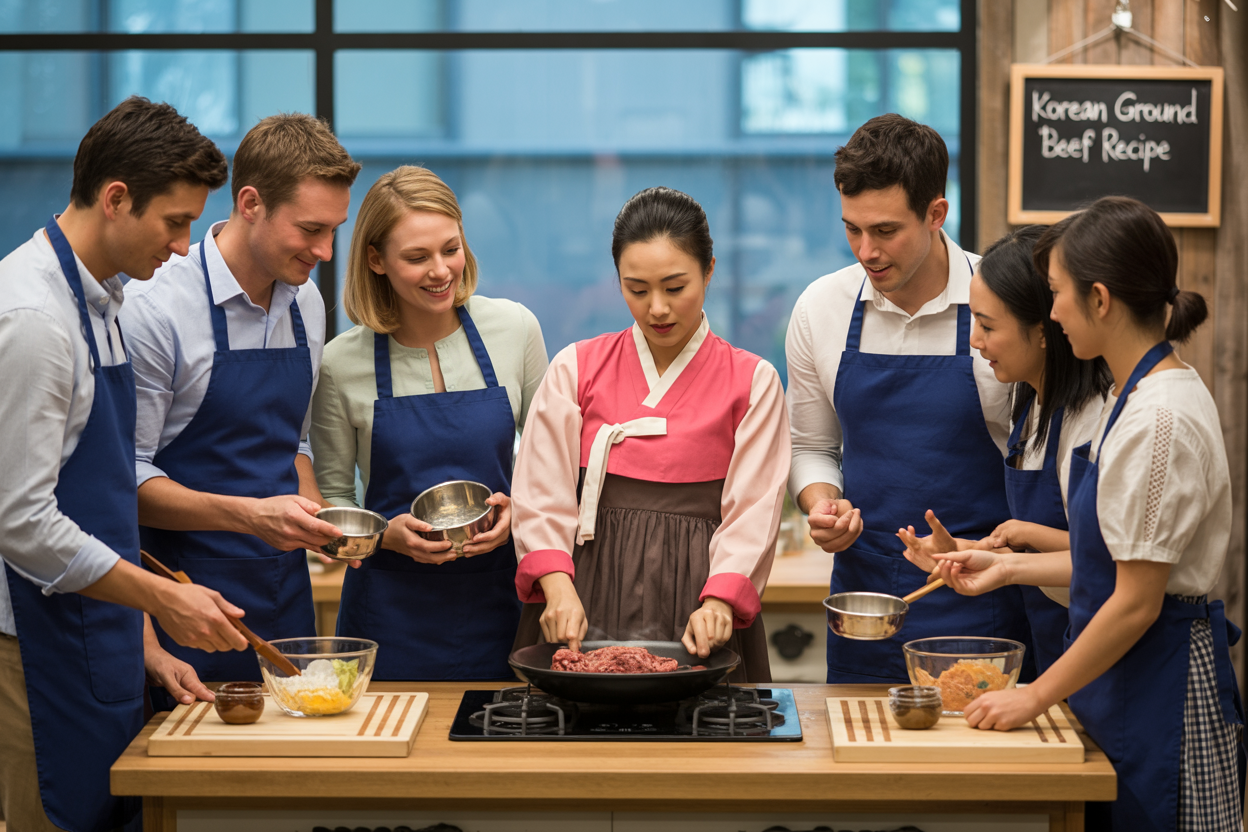
Korean Ground Beef bulgogi sounds a bit fancy, right? But honestly, it’s one of the easiest weeknight dinners I’ve ever thrown together. This Korean ground beef recipe only takes about 15-20 minutes, start to finish, and somehow turns plain ground beef into a sweet, savory meal that tastes like it came from a Korean BBQ spot. I was pretty doubtful at first—could Korean Ground Beef really stand in for those thinly sliced cuts? Turns out, it totally can. I’m a convert.
The best thing about Korean Ground Beef bulgogi? You don’t need to marinate anything for hours or go on a wild goose chase for ingredients. I just brown the meat, pour in a quick sauce with soy sauce, brown sugar, and sesame oil, and dinner’s usually ready before my rice cooker beeps. It’s my secret weapon for nights when I want something that tastes special but don’t want to spend the whole night cooking.
If you’ve ever felt intimidated by Korean recipes or thought bulgogi was too much work for a Tuesday, let me tell you—this ground beef version changes the game. You get all those bold Korean flavors, minus the hassle. I’d bet your family will want Korean Ground Beef on repeat.
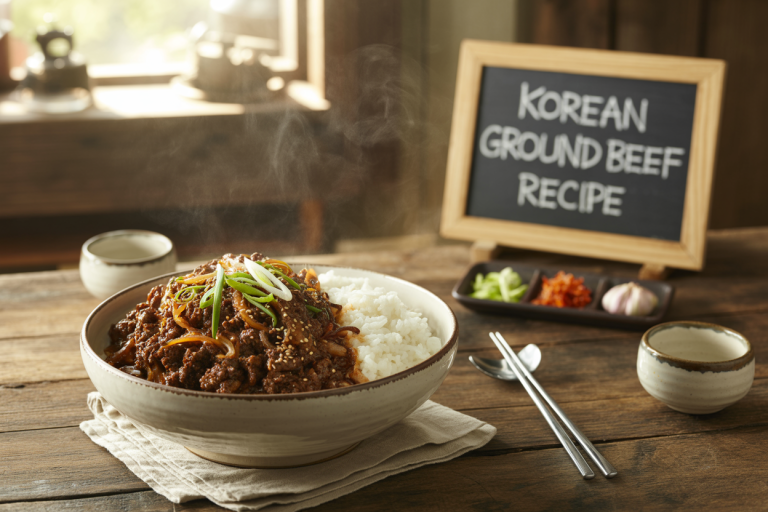
Korean Ground Beef Recipe
Key Takeaways
- Korean Ground Beef bulgogi is a quick 15-20 minute Korean dinner—no marinating, just pantry staples
- You get that sweet and savory flavor from soy sauce, brown sugar, and sesame oil, so it tastes like real Korean BBQ at home
- Leftovers keep well in the fridge and work great in rice bowls, lettuce wraps, or meal prep for the week
A Whimsical Stroll Through History And Description
So, bulgogi literally means “fire meat” in Korean, which sounds way more dramatic than my usual dinner fails. Traditional bulgogi uses thinly sliced, marinated beef cooked over flames, but Korean Ground Beef is like the speedy, chill cousin that shows up and saves the day.
This quick Korean beef bowl got popular because not everyone wants to slice meat paper-thin or buy fancy cuts. Korean Ground Beef makes bulgogi possible for anyone with a skillet and a spare fifteen minutes.
Korean flavors in bulgogi come from that sweet and savory combo that makes my taste buds so happy:
- Soy sauce brings the saltiness
- Sugar or brown sugar adds sweetness
- Garlic and ginger bring the punch
- Sesame oil gives it that nutty touch
- Sometimes gochugaru for a spicy kick
The traditional Korean dish goes back centuries, all the way to the Goguryeo era. They definitely weren’t using my non-stick skillet back then. Korean Ground Beef is a modern remix that keeps the spirit of bulgogi alive and makes it doable on a weeknight.
I love that you don’t need to marinate anything. Just brown the Korean Ground Beef, add the sauce, and you’ve got a meal that tastes like you tried way harder than you actually did.
Tips So Tasty Even Your Frying Pan Will Applaud
One thing I’ve learned: toasting your sesame seeds before sprinkling them on top makes a world of difference. Just toss them in a dry pan for a minute until they smell amazing and turn golden. Your quick bulgogi will level up, I promise.
Don’t rush the garlic and ginger. I let them sizzle in sesame oil for about 30 seconds before tossing in the Korean Ground Beef. That’s when the magic happens, and the flavor gets so much deeper.
For the sauce, I just mix everything in a bowl first. My usual blend is soy sauce, brown sugar, mirin, and a splash of rice vinegar. If you’ve got your bulgogi marinade ready, you can just pour it in once the beef is browned.
Here’s what I always keep on hand for easy Korean Ground Beef bulgogi:
- Soy sauce – salty backbone
- Brown sugar – keeps it balanced
- Sesame oil – that nutty flavor is everything
- Mirin – adds a subtle sweetness
- Rice vinegar – cuts through the richness
I always break up the Korean Ground Beef as it cooks, but I try not to stir it constantly. Letting it sit for a bit gives you those crispy brown bits, which add texture to your weeknight dinner and make it feel way less rushed.
Finish with sliced scallions and toasted sesame seeds right before serving. The green onions give a fresh crunch that goes perfectly with the sweet and savory Korean Ground Beef.
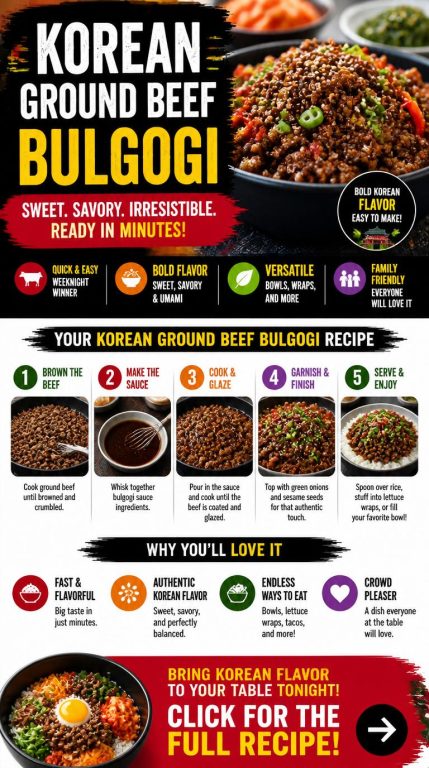
Unexpected Twists: Variations That’ll Make Your Bulgogi Blush
Korean Ground Beef bulgogi is basically a blank canvas. I’ve tried all sorts of wild variations, and some of them work surprisingly well.
Fruit Forward Fusion
The original recipe uses Asian pear to tenderize the meat and add a gentle sweetness. Honestly, this ingredient is a game-changer for Korean Ground Beef. If you don’t have pear, try grated apple or even a splash of pineapple juice if you’re feeling adventurous.
Liquid Gold Alternatives
Most recipes stick with soy sauce, but I like to experiment. A splash of Chinese cooking wine gives Korean Ground Beef a deeper, slightly fruity flavor. Mirin is also great for extra sweetness.
Protein Swap Party
These are my favorite vegetarian takes on Korean Ground Beef bulgogi that actually taste pretty darn good:
- Mushroom Magic: Finely chopped mushrooms for a meaty texture
- Tofu Triumph: Crumbled extra-firm tofu soaks up all that sauce
- Lentil Luxury: Cooked brown lentils for a protein punch
Spice Level Adventures
I like to play with the heat by adding gochugaru (Korean red pepper flakes) or a little sriracha. Start slow, unless you enjoy sweating through dinner.
Veggie Overload
Toss in broccoli, carrots, or bell peppers while cooking. Adding vegetables to your Korean Ground Beef bulgogi makes it healthier and more colorful, so you can at least pretend it’s a balanced meal.
Leftovers: Storage Secrets Your Fridge Wishes You Knew
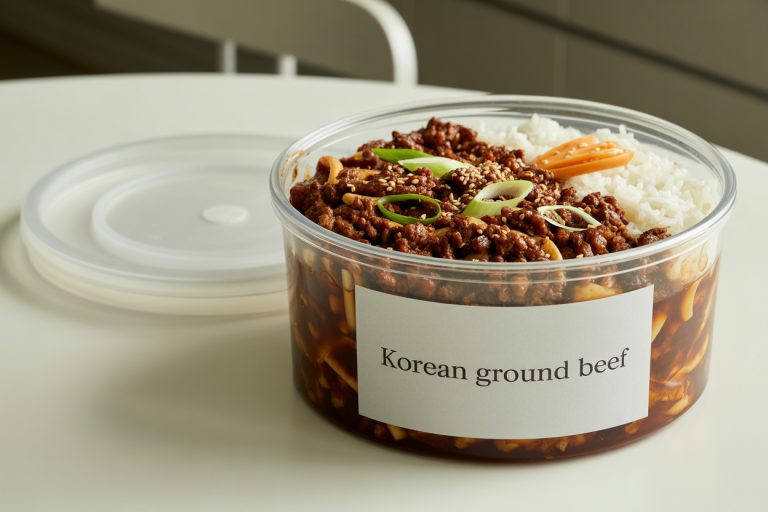
I’ve found that Korean Ground Beef keeps really well in the fridge for up to 4 days if you use an airtight container. The best part? The flavors get even better overnight. It’s like magic.
Here’s my storage routine:
- Let the Korean Ground Beef cool to room temp before sealing it up
- Use airtight containers for freshness
- Label with the date so I don’t end up playing “what is this?” later
- Keep rice separate if you can, to avoid mushy leftovers
I love that this recipe is perfect for meal prep since the flavors just get deeper while it sits. It’s like the Korean Ground Beef and sauce become best friends overnight.
Reheating is super easy:
- Microwave in 30-second bursts
- Stir between each zap
- Add a splash of water if it looks dry
- Stop when it’s hot all the way through
I always double the Korean Ground Beef recipe and stash leftovers in the fridge for quick meals later. My future self always appreciates it.
Korean Ground Beef bulgogi reheats without turning into a sad, dried-out mess. I throw it into rice bowls, wrap it in lettuce, or just eat it straight from the container at midnight. No judgment here—sometimes you just need a bite of Korean Ground Beef.
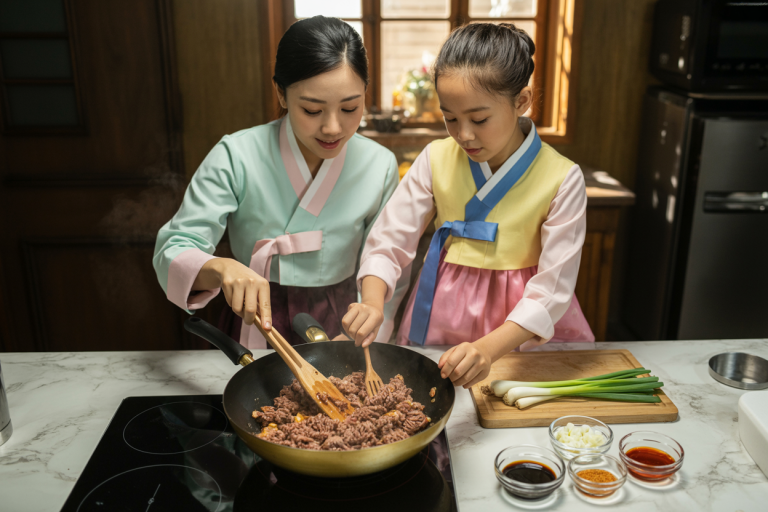
Korean Ground Beef Recipe – Prep
Cooking Tips For the Korean Ground Beef (Ground Beef Bulgogi)
• Break the ground beef into small pieces while cooking for more even texture.
• Cook over medium-high heat to help develop better browning and flavor.
• Stir frequently so the beef cooks evenly throughout.
• Drain excess fat if needed before adding the sauce ingredients.
• Add the sauce gradually so it coats the meat evenly.
• Simmer briefly after adding the sauce so the flavors blend together.
• Taste before serving and adjust seasoning carefully if needed.
• Serve the beef hot for the best texture and flavor balance.
Korean Ground Beef Recipe – Storage
Storage Tips For the Korean Ground Beef (Ground Beef Bulgogi)
• Allow the beef to cool slightly before placing it into storage containers.
• Store leftovers in airtight containers to help retain moisture and flavor.
• Refrigerate leftovers within 2 hours of cooking for proper food safety.
• Reheat gently over medium-low heat while stirring occasionally.
• Add a small splash of water or broth during reheating if the mixture becomes dry.
• Keep rice and garnishes separate until serving time.
• Freeze portions in freezer-safe containers for up to 3 months if needed.
• Wrap portions tightly before freezing to help reduce freezer burn and moisture loss.
• Thaw frozen ground beef overnight in the refrigerator before reheating.
• Discard the beef if it develops a sour smell, slimy texture, discoloration, mold, or unusual taste.
Korean Ground Beef (Ground Beef Bulgogi)
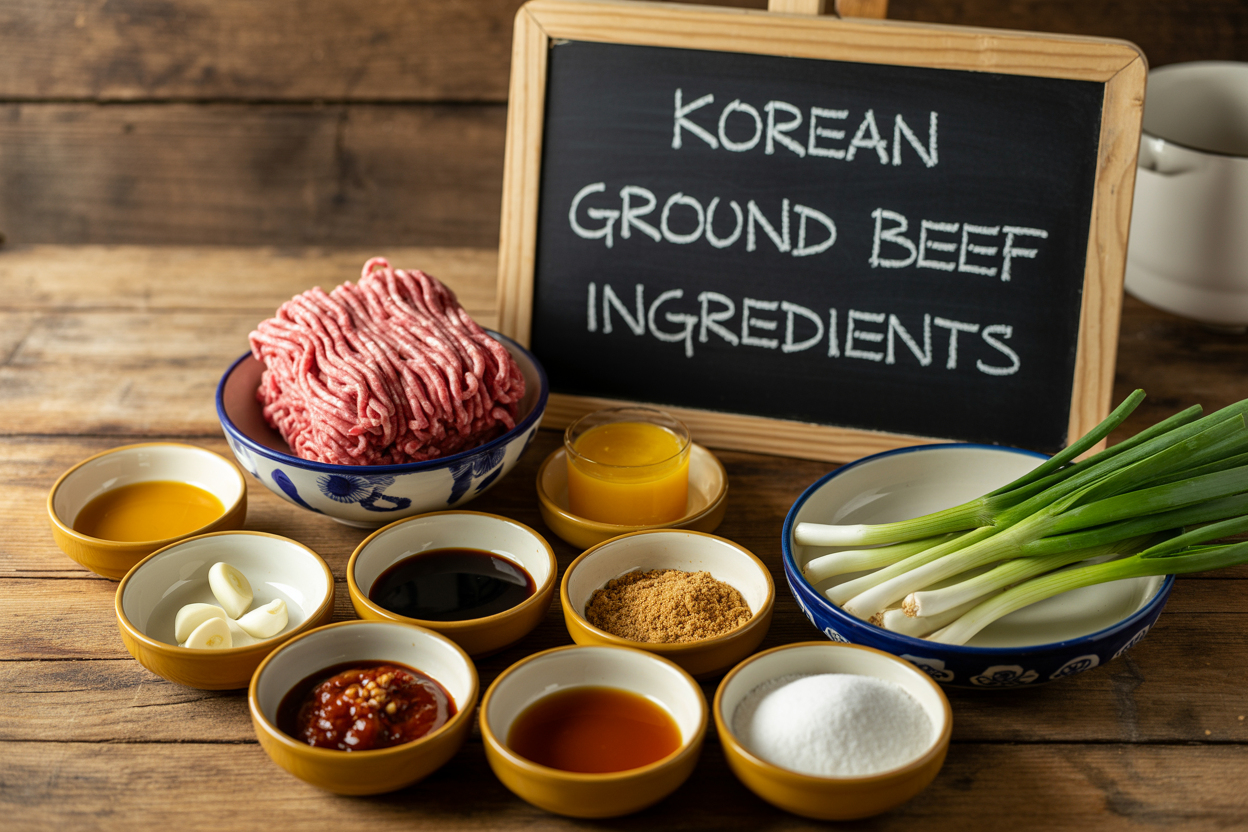
Ingredients
- 1 Tablespoon Vegetable Oil OR Canola
- 2 Pounds Ground Beef or ground chuck
- 4 Cloves Garlic minced
- ½ Cup Soy Sauce
- ½ Cup Orange Juice
- ½ Cup Brown Sugar
- ¼ Cup Sweet Chili Sauce
- 2 teaspoons Toasted Sesame Oil
- 1 Tablespoon Cornstarch
- 2 Green Onions sliced, for garnish
Instructions
- Heat the oil in a cast iron pan over medium-high heat. Once hot, add the ground beef and garlic. Use a meat chopper or similar utensil to break the meat into small crumbles as it cooks. Continue cooking for about 3–5 minutes, stirring occasionally, until the beef is completely browned and no pink remains. Carefully drain any excess grease before proceeding.
- While the beef is cooking, combine the soy sauce, orange juice, brown sugar, sweet chili sauce, toasted sesame oil, and cornstarch in a medium mixing bowl. Whisk until the ingredients are fully incorporated and the mixture is smooth.
- Pour the prepared sauce over the cooked beef and stir well to coat the meat evenly. Bring the mixture to a gentle simmer and continue cooking until the sauce thickens slightly and clings to the beef. Stir occasionally as the flavors blend together and the sauce develops a glossy finish.
- Serve the Korean ground beef hot over rice with steamed vegetables if desired. Garnish with sliced green onions just before serving.
Frequently Asked Questions
Nailing the marinade flavors and avoiding burnt sauce takes a little practice. Choosing the right fat percentage and cooking style makes the difference between juicy Korean Ground Beef and dry crumbles.
How do I make Korean-style ground beef taste like it spent hours marinating (without actually waiting)?
I mix soy sauce, brown sugar, sesame oil, garlic, and ginger right into the raw Korean Ground Beef before cooking. This way, the flavor gets into every bite, not just the outside.
Breaking up the Korean Ground Beef into tiny pieces as it cooks helps too. More surface area means more flavor.
If I want extra depth, I’ll add a splash of fish sauce or an extra spoonful of sesame oil. The richness of Korean Ground Beef gets a boost with these tricks when you skip the long marinade.
Can I make this sweet-salty beef magic without gochujang, or will the flavor police show up?
I’ve made Korean Ground Beef bulgogi plenty of times without gochujang and lived to tell the tale. The main flavors come from soy sauce, sugar, garlic, and sesame oil anyway.
If I want some heat but don’t have gochujang, I’ll toss in red pepper flakes or a squirt of sriracha. Not traditional, but honestly, my taste buds don’t care about the rules when the Korean Ground Beef is this good.
That said, gochujang adds a funky, fermented depth that’s tough to copy. I keep a tub in the fridge since it lasts forever and makes Korean Ground Beef (and pretty much everything else) better.
What’s the best way to cook it in a slow cooker so it doesn’t turn into a sad beef puddle?
I brown the Korean Ground Beef in a skillet first, then transfer it to the slow cooker. If you skip this, you get gray, mushy meat swimming in grease—not good.
Once browned, I drain most of the fat and add the sauce. I cook on low for 2-3 hours tops. Korean Ground Beef doesn’t need an all-day slow cook.
Adding the sauce near the end helps too. If you put everything in at once, the sugar can caramelize weirdly and the liquid can mess with the meat’s texture. Korean Ground Beef deserves better than that.
Which cut or fat percentage of ground beef keeps it juicy instead of turning it into tasty gravel?
Honestly, I always reach for 80/20 or 85/15 ground beef. Those fat ratios just work best for Korean Ground Beef. The lean-to-fat ratio really changes the texture, and these blends give plenty of flavor without making a greasy mess.
When I try using super lean ground beef, like 90/10 or higher, the Korean Ground Beef always ends up dry and kind of crumbly, no matter how gentle I am with the heat. Even the sweet sauce can’t fix meat that’s lost all its moisture.
If I accidentally grab beef that’s way too lean, I’ll just add a spoonful of sesame oil to the pan. It’s not quite the same as real fat, but it helps my Korean Ground Beef feel a little more tender and rich.
How do I keep the sauce from going from glossy and delicious to burnt sugar chaos in the pan?
I try to stick with medium heat when making Korean Ground Beef, even if I’m in a hurry. High heat just makes the sugar in the sauce burn before the meat cooks through, and nobody wants that.
I wait until the Korean Ground Beef is mostly browned before I pour in the sauce. If I dump it in too soon, all the liquid cooks off and I’m left scraping off sticky, burnt bits. Not fun.
I keep a little water or broth nearby, just in case. If the pan starts looking too dark, I’ll splash a bit in and stir. Usually, that brings my Korean Ground Beef back from the edge. I’ve saved more than one beef bowl this way.
Honestly, Korean Ground Beef is pretty forgiving if you keep an eye on the heat and don’t rush it. I’ve made it for quick weeknight dinners and even meal-prepped it for lunches. The key is picking the right ground beef and not letting the sauce scorch. If you love that sweet-savory flavor, Korean Ground Beef is worth mastering. And hey, if you mess up, it’s still tasty over rice. Korean Ground Beef just has that kind of charm.
What should I serve it with besides rice—because my rice cooker and I need some space?
Lettuce wraps might be my favorite way to enjoy Korean Ground Beef when I’m just over the whole rice thing. I just grab some butter lettuce or romaine, toss in the beef, and throw on a scoop of kimchi for that crunchy kick.
Sometimes I switch things up and make Korean Ground Beef bulgogi bowls with quinoa, cauliflower rice, or even zucchini noodles. Gotta admit, the sauce just clings to anything that’ll soak up flavor, so it’s hard to go wrong.
Want something heartier? I’ll turn Korean Ground Beef into a kind of bibimbap—fried eggs, sautéed veggies, more kimchi, and whatever grain I have on hand. Honestly, my Korean rice bowl doesn’t need actual rice to count as dinner in my book.
I have days where I just eat Korean Ground Beef straight from the pan, chopsticks in hand, standing at the stove. Who needs plates? No judgment here.

Recipes are gathered in person and written for real-world cooking conditions.
- 10 Hungarian Dessert Recipes Passed Down Through Generations - July 25, 2026
- 11 Easy English Recipes Anyone Can Make - July 25, 2026
- Hungarian Kifli Recipe - July 25, 2026