
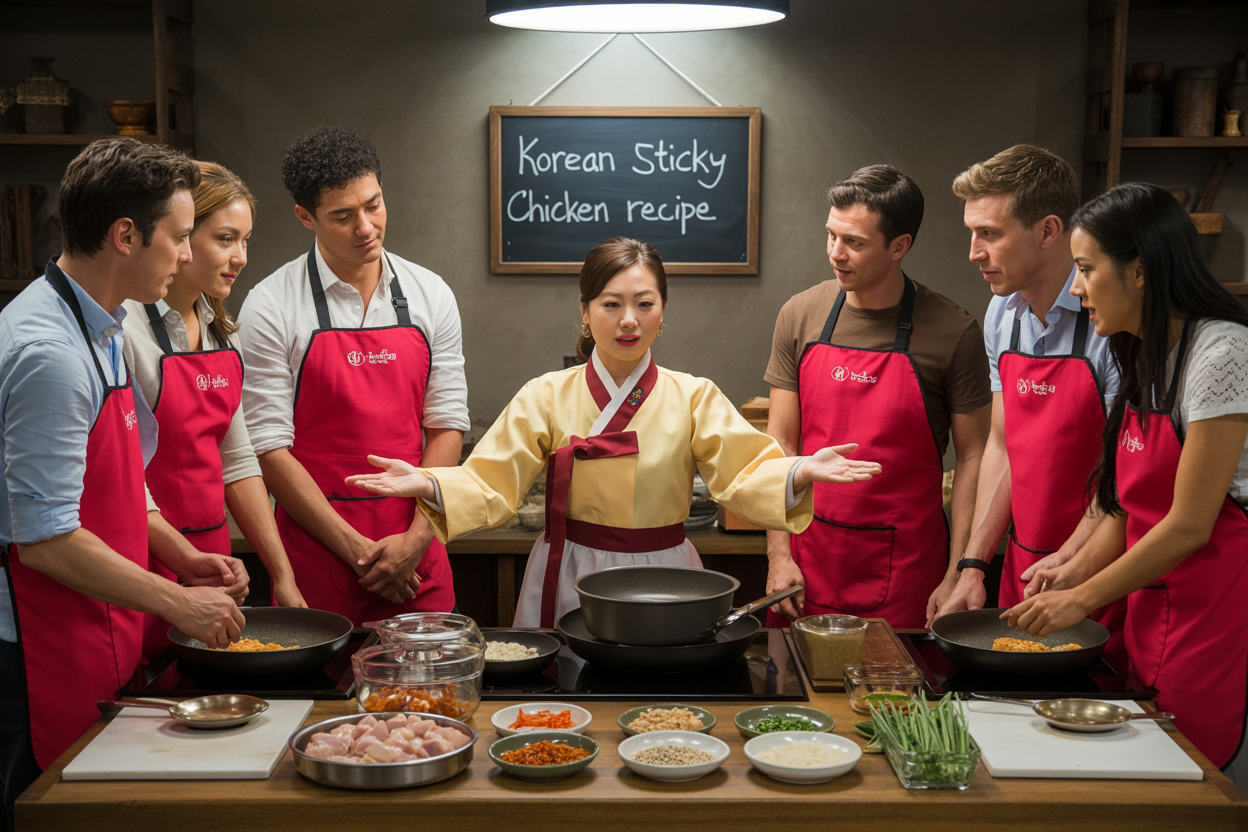
I still remember the first time I stumbled onto Korean Sticky Chicken at a street stall—those glossy, sticky pieces looked almost too perfect to eat. But after one bite of that crispy, sweet, and spicy glazed chicken, I realized I’d been missing out. Dakgangjeong, or Korean Sticky Chicken, is a fried chicken dish with bite-sized pieces that get double-fried until insanely crispy, then tossed in a sticky, sweet, and sometimes spicy glaze made from soy sauce, garlic, and rice syrup or honey.
The real magic is in the double-frying. That’s how you get the crunchy shell that stays crisp, even after it’s drenched in sauce. Unlike regular fried chicken, which gets soggy fast, Korean Sticky Chicken keeps its addictive crunch thanks to that candy-like glaze. I’ve made this recipe so many times, and my friends always ask for it at every get-together.
If you want fried chicken that’s truly crispy, you’re in the right spot. I’ll walk you through getting that perfect double-fried texture, plus some creative Korean twists to make Korean Sticky Chicken your new favorite dish.
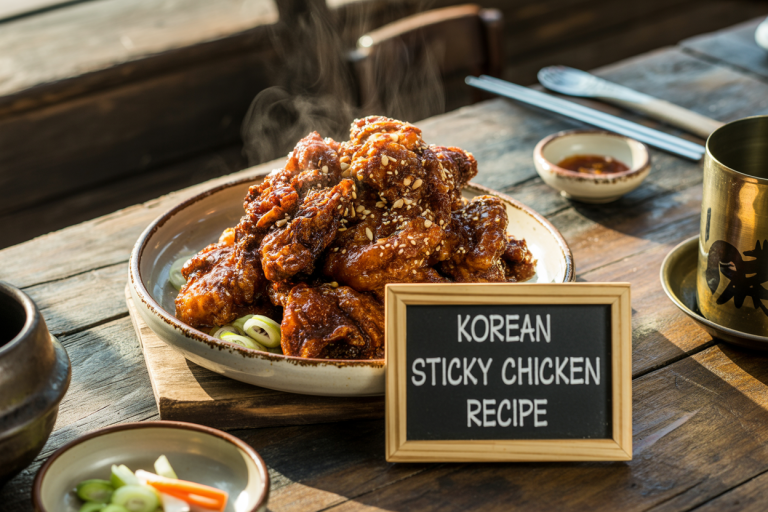
Korean Sticky Chicken Recipe
Key Takeaways
- Korean Sticky Chicken gets its crunch from double-frying and a sticky glaze with soy sauce, garlic, and sweeteners
- Rice syrup or honey in the glaze creates a candy-like shell, so it stays crispy
- You can store leftovers and reheat them while keeping most of that crunch
Korean Cuisine: Origins and Fun Facts
Isn’t it wild how Korean food turned cabbage into a global superstar? But honestly, Korean cooking is so much more than just fermented veggies.
Korean food culture goes back thousands of years. It grew from royal court feasts, Buddhist temple meals, and home cooking passed down over generations.
Here’s what I love about Korean chicken—especially Korean Sticky Chicken:
- It’s actually a pretty recent invention compared to other classic Korean dishes
- Korean fried chicken exploded in popularity after the Korean War
- The double-frying gives it that unreal crunch I can never quite get with other recipes
My favorite thing has to be chimaek. That’s “chi” for chicken and “maek” for beer. Koreans built an entire social ritual around eating fried chicken with beer. They even gave it a name. That’s some serious commitment.
| Element | What Makes It Special |
|---|---|
| Fermentation | Builds deep flavors in kimchi and other banchan |
| Balance | Sweet, spicy, salty, and umami all at once |
| Sharing | Meals are meant for everyone at the table |
What really surprised me is how Korean street food shaped modern restaurants. Those food stalls weren’t just selling snacks—they were inventing dishes like Korean Sticky Chicken that would take over the world.
Pro-Level Tips For Saucy Success
Let’s talk about the double-frying. If you want that signature shatter-crisp shell on your Korean Sticky Chicken, you can’t skip it. The first fry cooks the chicken, and the second fry brings the crunch that stands up to the glaze.
For the coating, I always pick potato starch first. It creates a lighter, crispier shell than corn starch, though corn starch works if that’s all you have. Mix it with a little flour for the crunchiest Korean Sticky Chicken.
The sticky glaze is where all the flavor lives. My favorite mix is gochujang for heat, soy sauce for salt, and your sweetener of choice. Rice syrup or oligodang gives you that classic Korean Sticky Chicken shine, but dark corn syrup or honey work fine. I toss in brown sugar for depth, rice vinegar for some tang, and a splash of mirin or cheongju if I’m feeling fancy.
Don’t hold back on the aromatics. Fresh ginger and garlic are a must for real-deal Korean Sticky Chicken sauce. I add sesame oil at the end for that nutty finish, and gochugaru if I want more heat.
Timing matters. Toss your crispy Korean Sticky Chicken in the sauce right before serving. If you do it too early, you’ll lose that crunch. Finish with toasted sesame seeds for a little extra snap and a nice look.
Oh, and keep your oil steady at 350°F for both frying rounds. Too hot and the coating burns; too cool and you end up with greasy, limp Korean Sticky Chicken. Not what you want.
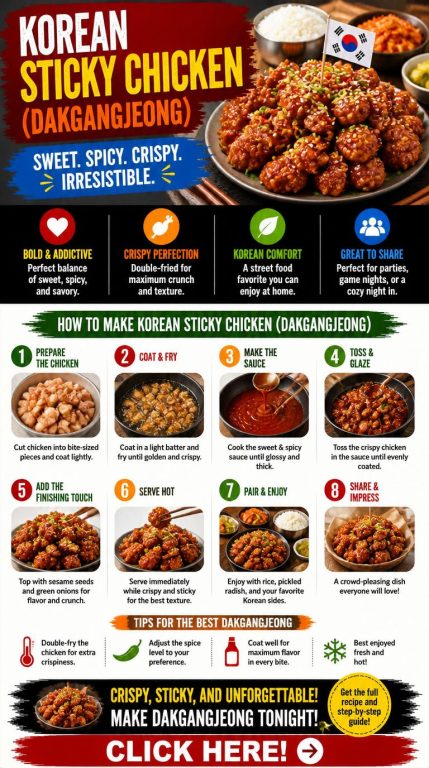
Wild And Wacky Korean Twists
I’ve realized that dakgangjeong (Korean Sticky Chicken) is basically a blank canvas for flavor experiments. And let’s be real—some of the wildest twists come straight from Korean food stalls.
Want to try something new? Here are a few creative versions I’ve seen:
The Sweet Stuff
- Honey butter Korean Sticky Chicken (because regular sticky just isn’t enough)
- Maple syrup glaze (yep, someone tried it and it’s kind of amazing)
- Chocolate-drizzled pieces (sounds weird, but don’t knock it till you try it)
The Spicy Adventures
- Extra gochugaru for serious heat
- Ghost pepper glaze for the truly brave
- Wasabi-infused coating that’ll wake you right up
I watched a Korean street food vendor once use crushed corn flakes in the coating. At first I thought, “Is this even allowed?” But the crunch was out of this world. Korean Sticky Chicken just keeps surprising me.
Some people toss their Korean Sticky Chicken with chopped peanuts or cashews after the glaze. Others go wild and use cheese powder. I even saw someone sprinkle cinnamon sugar on top—sounds questionable, but apparently it’s delicious.
The best part about Korean Sticky Chicken is that it’s tough to mess up. The crunchy coating can take just about anything you throw at it. It’s like the little black dress of fried chicken—works for every occasion.
Chicken Leftovers: Chill, Store, Repeat
I always make extra Korean Sticky Chicken because next-day leftovers are a treat. The trick is keeping that crispy shell from turning soggy.
First, let the chicken cool all the way before you store it. I know it’s tempting to toss it in the fridge right away, but steam will ruin your crunch.
Storage Tips:
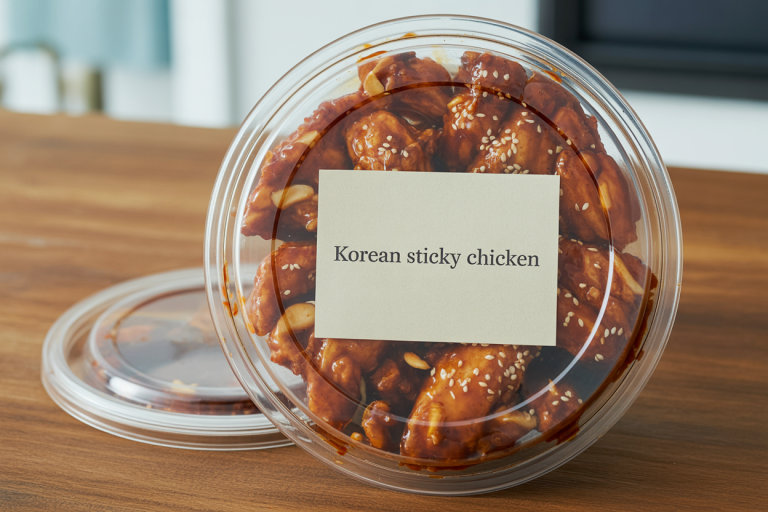
- Put Korean Sticky Chicken in an airtight container lined with paper towels
- Lay another paper towel on top
- Keep it in the fridge for up to 3 days
- Store separately from rice or other sides
The paper towels soak up extra moisture, so your Korean Sticky Chicken stays crisp. It’s a simple move, but it works wonders.
When it’s time to reheat, skip the microwave. That thing just turns Korean Sticky Chicken into rubber. I use my oven or air fryer at 375°F for about 5-7 minutes.
| Reheating Method | Temperature | Time | Crispiness Level |
|---|---|---|---|
| Oven | 375°F | 5-7 minutes | Excellent |
| Air Fryer | 375°F | 4-5 minutes | Best |
| Microwave | High | 1-2 minutes | Poor |
The air fryer brings back that golden crunch almost perfectly. My oven works well too, just takes a bit longer. Either way, I end up with sticky, sweet glazed Korean Sticky Chicken that’s almost as good as fresh.
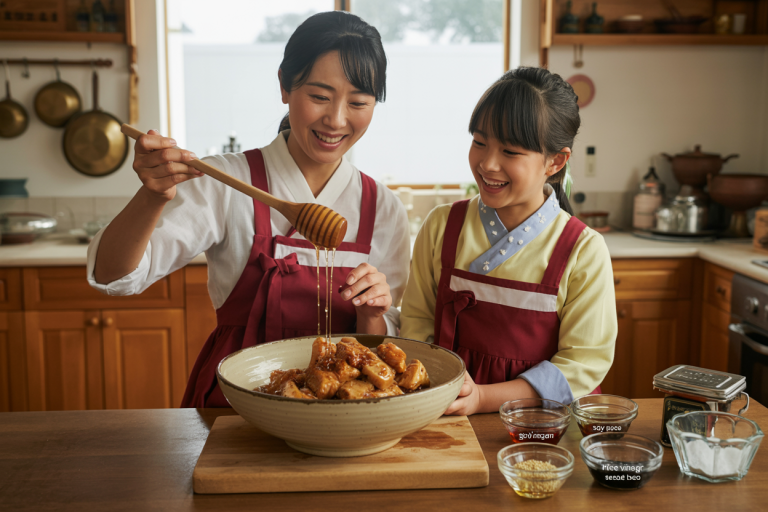
Korean Sticky Chicken Recipe – Prep
Cooking Tips For the Korean Sticky Chicken (Dakgangjeong)
• Cut the chicken into evenly sized pieces so it cooks consistently throughout.
• Pat the chicken dry before coating to help improve crispness.
• Fry in batches if needed to avoid overcrowding the oil.
• Maintain medium heat so the chicken cooks through without burning the coating.
• Drain excess oil before adding the sauce.
• Toss the chicken in the sauce just before serving to help preserve texture.
• Add nuts or garnishes near the end for better crunch.
• Serve the chicken immediately while the coating is still crisp.
Korean Sticky Chicken Recipe – Storage
Storage Tips For the Korean Sticky Chicken (Dakgangjeong)
• Allow the chicken to cool slightly before transferring it into storage containers.
• Store leftovers in airtight containers to help retain moisture and flavor.
• Refrigerate leftovers within 2 hours of cooking for proper food safety.
• Reheat in the oven or air fryer to help restore some crispness.
• Avoid microwaving for extended periods because the coating can soften.
• Keep extra sauce separate if possible during storage.
• Freeze cooked chicken in freezer-safe containers for up to 2 months if needed.
• Wrap portions tightly before freezing to help reduce freezer burn and moisture loss.
• Thaw frozen chicken overnight in the refrigerator before reheating.
• Discard the chicken or sauce if they develop a sour smell, slimy texture, discoloration, mold, or unusual taste.
Korean Sticky Chicken (Dakgangjeong)
Ingredients
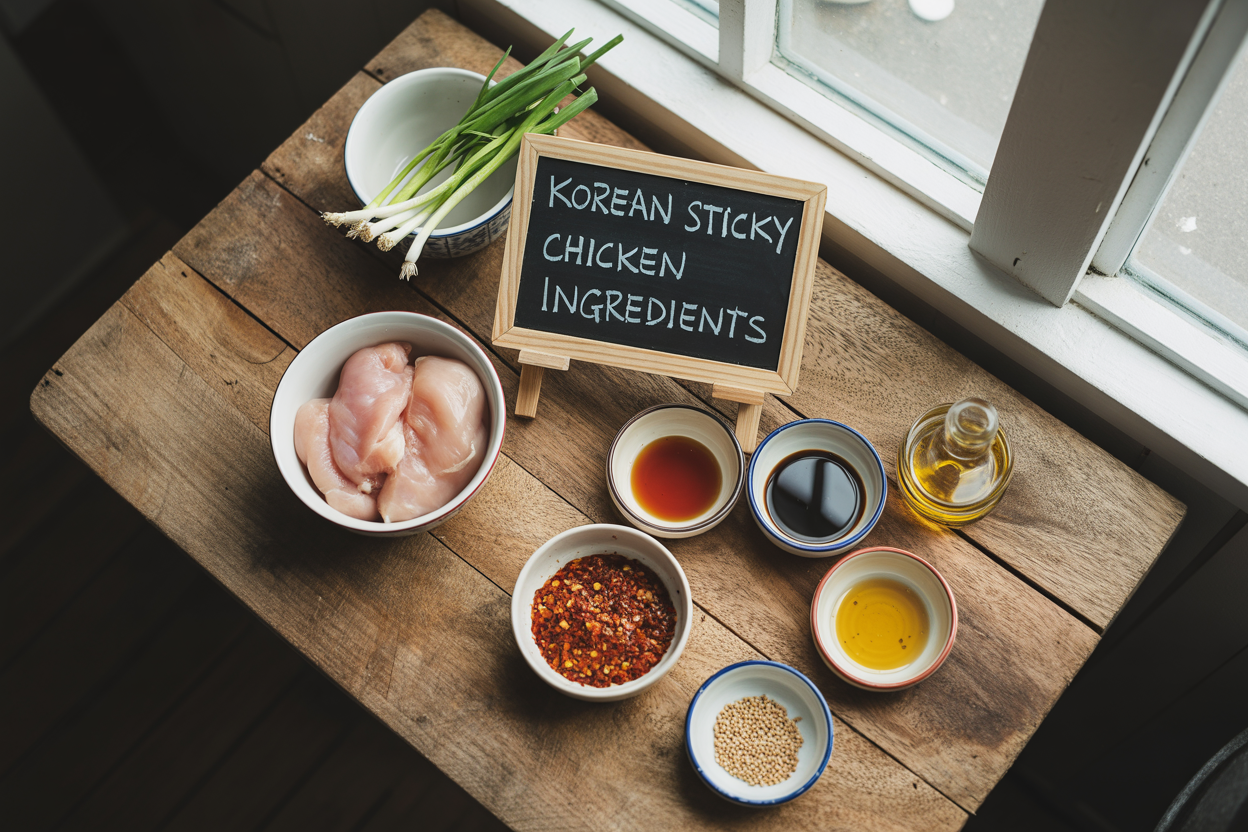
- 1 pound chicken breasts or thighs, skinless and boneless sliced into large chunks
- 2 tablespoons gochugaru Korean red chili flakes
- 1 tablespoon grapeseed oil vegetable oil, or other neutral oil
- 2 tablespoons soy sauce
- 1 tablespoon rice vinegar
- 2 tablespoons honey
- 1 tablespoon sesame seeds
- 2 stalks scallions chopped
Instructions
- Place a sheet of parchment paper on a flat work surface such as a cutting board. Arrange the chicken pieces on the parchment paper and evenly sprinkle the gochugaru over the top. Try to distribute the seasoning evenly so each piece is coated.
- Cover the seasoned chicken with a second sheet of parchment paper. Using a meat tenderizer or rolling pin, gently pound the chicken until the gochugaru adheres to the surface. This step helps the seasoning stick while also promoting even cooking.
- Heat the oil in a large skillet over medium-high heat and swirl it around to coat the bottom of the pan. Once the oil is hot, add the chicken pieces in a single layer. Cook for 2 to 3 minutes per side, turning as needed, until the chicken is fully cooked through and lightly browned. Transfer the cooked chicken to a plate and set aside.
- Using the same skillet, reduce the heat to low. Add the soy sauce, rice vinegar, and honey to the pan. Stir everything together and cook for about 1 minute, allowing the sauce to heat through and begin thickening slightly.
- Return the cooked chicken to the skillet and toss it in the sauce. Continue cooking for about 1 minute, stirring frequently, until all of the chicken pieces are evenly coated with the sticky glaze. Once the chicken is fully covered in the sauce, turn off the heat.
- Sprinkle the sesame seeds over the chicken and give everything one final toss. Transfer the chicken to a serving platter and top with the chopped scallions. Serve immediately with warm Japanese rice or jasmine rice on the side.
Frequently Asked Questions
Making Korean Sticky Chicken at home always leads to questions about the glaze, chicken cuts, and how to keep that crunch even after saucing.
What’s the difference between dakgangjeong and yangnyeom—are they siblings or sworn enemies?
Think of Korean Sticky Chicken (dakgangjeong) and yangnyeom chicken as cousins at a family reunion. Both are Korean fried chicken with sauce, but Korean Sticky Chicken leans sweet and sticky, with a thick glaze that almost turns into a shell.
Yangnyeom chicken is spicier and tangier, with a thinner sauce. The coating on Korean Sticky Chicken is usually crunchier and thicker because it needs to hold up under all that glaze.
I’d say they’re friendly siblings, not rivals. Just different vibes for different days—and honestly, I crave Korean Sticky Chicken more often than I’d like to admit.
How do I make that glossy, sticky sweet-spicy sauce that clings like it pays rent?
The secret behind that glossy, sweet-spicy gochujang glaze for Korean Sticky Chicken? It’s all about corn syrup or honey mixed with gochujang, soy sauce, and garlic. I usually toss everything in a pan and cook it down until it thickens up enough to coat the back of a spoon. It’s honestly pretty satisfying to watch it turn all shiny and sticky.
The sugar is what makes Korean Sticky Chicken so, well, sticky. If you can get your hands on rice syrup, that works just as well—maybe even better, depending on your mood.
Don’t skip the reduction step. If you do, you’ll just end up with a runny sauce that slides right off your Korean Sticky Chicken, and honestly, nobody wants that.
Which cut of chicken works best for ultra-crispy bites: thighs, breast, or whatever’s on sale?
Boneless chicken thighs are my top pick for Korean Sticky Chicken. They stay juicy even after double-frying, thanks to their fat content. Thighs just handle the heat better and never dry out into cardboard.
I’ve tried chicken breast for Korean Sticky Chicken too, and it’s fine if that’s what you have. Just cut it into smaller pieces so it cooks fast and doesn’t get tough.
Honestly, any boneless chicken pieces will work for Korean Sticky Chicken. I just go with whatever’s on sale, as long as I adjust the cooking time. Uniform pieces make it easier to get everything crispy at the same time.
What’s the secret to keeping the coating crunchy even after it gets sauced up?
Double-frying is the move you can’t skip for Korean Sticky Chicken. First, fry the chicken at a lower temp to cook it through. Let it rest, then crank up the heat and fry it again for that ridiculous crunch.
Toss your Korean Sticky Chicken in the sauce right before serving. If you let it sit around, the coating just gets soggy and loses all that hard-earned crispiness.
Some dakgangjeong recipes call for potato starch or a potato starch-cornstarch mix. It really does make Korean Sticky Chicken extra crispy, so the glaze doesn’t ruin the crunch.
Can I bake or air-fry it and still get that ‘did I just deep-fry this?’ crunch?
Air-frying gets Korean Sticky Chicken pretty close to the real deal, especially if you spray the chicken with oil before cooking. I usually set the air fryer to 400°F and flip halfway. It’s not exactly like deep-frying, but it’s honestly better than expected.
Baking is okay, but you lose a lot of the crunch. Korean Sticky Chicken turns out more crispy-ish than shatter-crisp. If you’re after that full-on crispy bite, it’s a bit of a letdown.
If you really want that street food vibe for Korean Sticky Chicken, deep-frying is the way to go. Baking and air-frying just don’t hit the same. But hey, sometimes convenience wins, right?
What are the must-have toppings and garnishes—sesame seeds, peanuts, scallions, or the whole confetti cannon?
Honestly, sesame seeds are non-negotiable for Korean Sticky Chicken. They add this nutty flavor and just make everything look a bit more legit, don’t you think?
Chopped peanuts or cashews? Total game changers. They bring crunch and a little richness that just works with Korean Sticky Chicken. And scallions—oh, they’re essential. That sharp, fresh bite cuts right through the sweetness and keeps things interesting.
Sometimes I’ll serve my Korean Sticky Chicken with pickled radish (mu) on the side. Sure, it’s not exactly a topping, but it’s the sidekick you didn’t know you needed. It slices through all that richness and, weirdly enough, makes you reach for another piece even when you swear you’re full.

Recipes are gathered in person and written for real-world cooking conditions.
- 10 Hungarian Dessert Recipes Passed Down Through Generations - July 25, 2026
- 11 Easy English Recipes Anyone Can Make - July 25, 2026
- Hungarian Kifli Recipe - July 25, 2026