
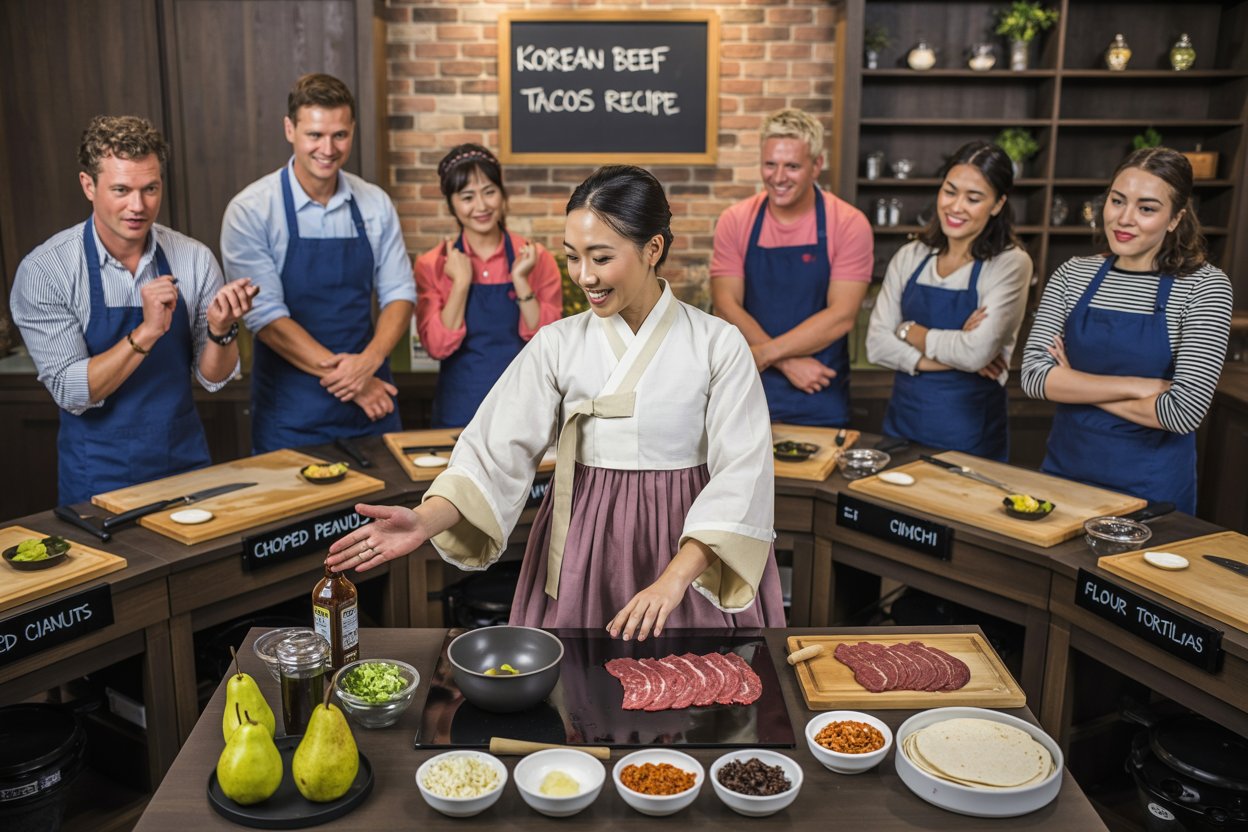
Korean beef tacos bring two of my favorite food worlds together in one perfect, messy, handheld meal. These tacos pack tender bulgogi beef that soaks up a sweet and savory marinade, then gets heaped into soft tortillas with fresh toppings and a creamy sauce. The flavor mash-up is wild—regular taco Tuesday suddenly feels a little boring after you try Korean beef tacos.
I’ve made Korean beef tacos so many times, and honestly, I never get tired of them. The bulgogi beef cooks up fast, with those crispy, caramelized edges that everyone tries to snag. Throw on some kimchi, a drizzle of spicy mayo, and maybe a handful of crunchy cabbage, and you’ve got a meal that tastes like it came from a trendy food truck—even though you whipped it up at home in less time than it takes to get delivery.
The best part about bulgogi tacos? You can make them as mild or fiery as you want. Prep the beef ahead of time and dinner comes together in minutes. Seriously, once you try these sweet and spicy Korean beef tacos, you’ll never look at regular ground beef tacos the same way again.
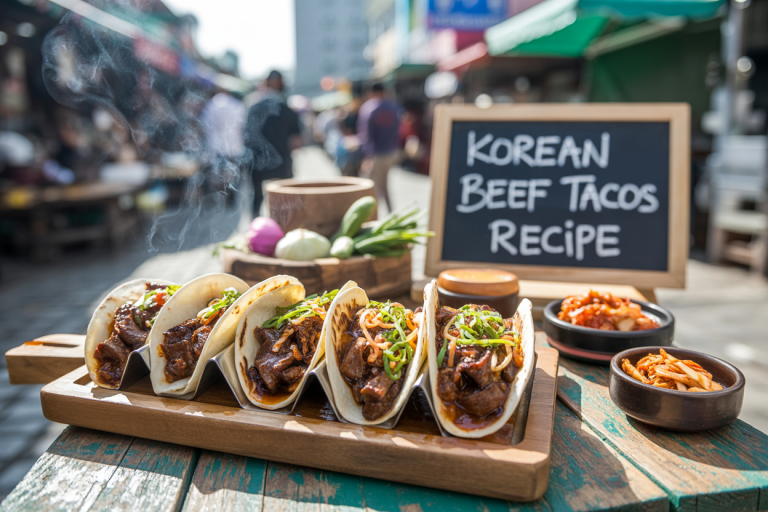
Korean Beef Tacos Recipe
Key Takeaways
- Korean beef tacos mix marinated bulgogi with Mexican-style tortillas for a quick, flavor-packed fusion meal
- The beef soaks up sweet and savory marinade, then caramelizes in the pan for max flavor
- You can swap out toppings and prep the meat ahead, making weeknight dinners super easy
Bulgogi Tacos: History, Legends, and Tasty Trivia
I’m a sucker for a good origin story, and Korean beef tacos with bulgogi have a pretty great one. The whole Korean taco craze blew up in Los Angeles back in 2008, when Korean-Mexican fusion started showing up on food trucks everywhere. Someone finally took the leap and said, “Why not put Korean BBQ in a tortilla?” Honestly, why not?
What’s bulgogi? It’s a classic Korean dish made with thinly sliced beef that’s marinated in a sweet and savory sauce. The name actually means “fire meat” in Korean, which sounds intense, but most of us just cook it in a pan at home.
Bulgogi tacos kind of broke all the rules. I can only imagine a few Korean grandmas gasping at the sight of bulgogi wrapped in a flour tortilla. On the other side, Mexican abuelas probably raised an eyebrow at kimchi next to cilantro.
But this fusion works, and here’s why:
- Sweet meets spicy—bulgogi’s caramelized flavor just clicks with spicy toppings
- Soft meets crunchy—tender beef and crispy slaw are a killer combo
- Traditional meets new—old-school Korean BBQ gets a handheld Mexican twist
The Korean BBQ beef bulgogi taco took off, and now you see all sorts of versions. Some spots use ribeye, others go with ground beef. I’ve even spotted gochujang mayo and queso fresco on top. There’s just so much room to play with Korean beef tacos.
Pro Tips for Brilliant Bulgogi Tacos
I always mix up my bulgogi marinade at least 4 hours ahead—overnight is even better if you’ve got the patience. Soy sauce, brown sugar, sesame oil, and a bunch of garlic need time to really soak into the beef.
Don’t skip toasted sesame oil. Regular sesame oil is fine, but toasted sesame oil gives you that deep, nutty flavor that makes people think you know what you’re doing in the kitchen. (Spoiler: I’m mostly winging it.)
Key marinade ingredients:
- Soy sauce for salt
- Brown sugar for that sticky caramelization
- Lots of garlic (I go with at least four cloves)
- Black pepper for a little heat
- Toasted sesame oil for that rich, nutty vibe
I always toast my tortillas in a cast iron skillet before serving. Thirty seconds per side over medium-high heat makes them warm and a bit crispy. Cold tortillas just don’t do Korean beef tacos justice.
Fresh lime juice is a must for me. I squeeze it over the finished Korean beef tacos right before eating. That bright citrus cuts through the sweet marinade and wakes up all the flavors.
My biggest rookie mistake? Overcrowding the pan when cooking the beef. Too much meat means you steam it instead of getting those caramelized edges. Cook in batches if you need to—your Korean beef tacos will thank you.
I also slice the beef super thin before marinating. Thin slices soak up more flavor and cook lightning fast, which gives you tender, flavorful bulgogi that puts store-bought versions to shame.
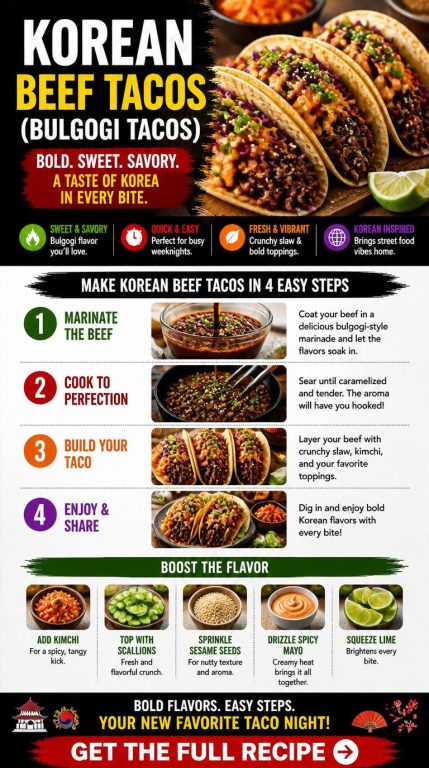
Delicious Korean-Style Twists on Tacos
Korean beef tacos are all about mixing bold Korean flavors with classic Mexican tortillas. Flour tortillas or corn tortillas? Honestly, it’s up to you. I usually go for flour tortillas—they’re softer and hold up better to all the toppings I pile on.
The toppings are where things get fun. I always add kimchi for that spicy, tangy punch that makes Korean beef tacos stand out. If kimchi feels like too much, I’ll swap in purple cabbage for crunch without the heat. A handful of fresh cilantro and some sliced green onion brighten everything up.
I like making a quick asian slaw using pre-shredded coleslaw mix. It saves time and brings a nice crunch. Sometimes I’ll make a cucumber kimchi salad for extra freshness—Korean beef tacos love a little acid and crunch.
Here’s my usual line-up for toppings:
- Kimchi or purple cabbage
- Sliced avocado
- Green onion and cilantro
- Sesame seeds for extra crunch
- Lime wedges for squeezing
The sauce is make-or-break for Korean beef tacos. I whip up a spicy mayo with mayonnaise and a squirt of sriracha. If I’m pretending to be healthy, I’ll swap in Greek yogurt or sour cream instead of mayo.
The cool thing about Korean tacos is how easy it is to mix and match toppings. I’ve tried all sorts of combos, and honestly, it’s hard to mess up Korean beef tacos. Just load up your tortilla and don’t be shy with the lime.
Keeping Your Bulgogi Tacos Fresher Than a K-Pop Hit
I’ve learned that storing leftover tacos right makes all the difference. Nobody wants soggy, sad bulgogi hiding in their fridge.
Here’s how I keep Korean beef tacos fresh:
Store the beef bulgogi in an airtight container in the fridge for up to three days. I always keep everything separate—beef, tortillas, toppings—because no one likes a wet taco disaster.
Put the tortillas in their own bag or container. Fresh toppings like cilantro, cabbage, and avocado get their own space, too.
Here’s my storage cheat sheet for Korean beef tacos:
| Component | Storage Method | How Long |
|---|---|---|
| Bulgogi beef | Airtight container | 3 days |
| Tortillas | Sealed bag | 5 days |
| Fresh toppings | Separate containers | 2-3 days |
| Sauces | Small jars | 5-7 days |
I always keep the marinated beef and slaw separate in airtight containers. That way, everything stays fresh and nothing turns into a mushy mess.
When I’m ready to eat leftovers, I reheat the beef in a pan over medium heat for about three minutes. It brings back that caramelized magic. I warm the tortillas separately, because cold tortillas just don’t cut it for Korean beef tacos.
I love that this method lets me mix things up all week. Sometimes I skip the tortillas and pile the bulgogi over rice. Korean beef tacos are flexible like that, and I waste way less food.
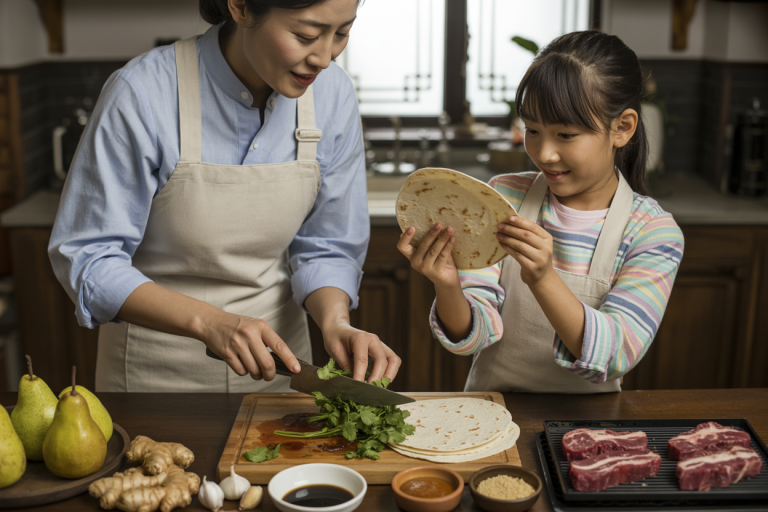
Korean Beef Tacos Recipe – Prep
Cooking Tips For the Korean Beef Tacos (Bulgogi Tacos)
• Marinate the beef long enough so the flavors distribute evenly throughout the meat.
• Cook the beef over medium-high heat for better browning and texture.
• Warm the tortillas slightly before assembling for easier handling.
• Slice vegetables thinly for more balanced texture in each taco.
• Avoid overfilling the tacos because ingredients can spill during serving.
• Assemble close to serving time for the best texture balance.
• Taste fillings before serving and adjust seasoning carefully if needed.
• Serve immediately while the beef is hot and the toppings are fresh.
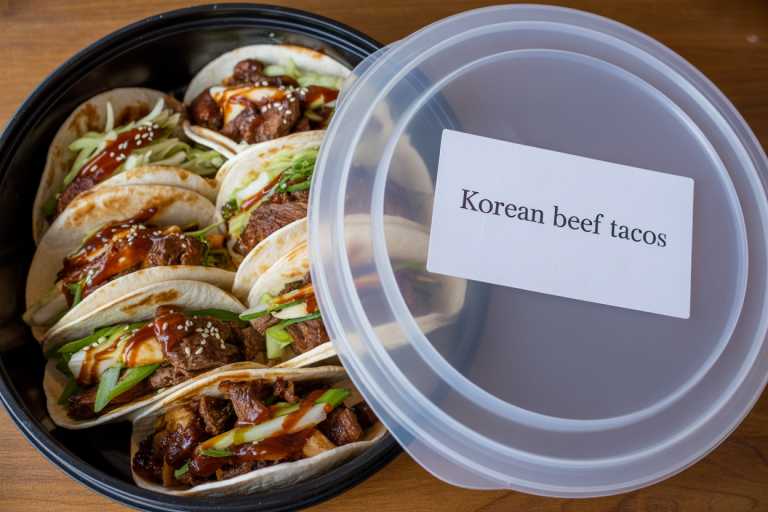
Korean Beef Tacos Recipe – Storage
Storage Tips For the Korean Beef Tacos (Bulgogi Tacos)
• Store beef, tortillas, and toppings separately to help maintain texture.
• Refrigerate leftovers within 2 hours of preparation for proper food safety.
• Allow cooked beef to cool slightly before placing it into storage containers.
• Reheat the beef gently over medium-low heat until warmed through.
• Warm tortillas separately before assembling leftovers.
• Keep fresh vegetables and sauces separate until serving time.
• Freeze cooked beef only if needed because fresh toppings do not freeze well.
• Wrap portions tightly before freezing to help reduce freezer burn and moisture loss.
• Thaw frozen beef overnight in the refrigerator before reheating.
• Discard the beef, tortillas, or toppings if they develop a sour smell, slimy texture, discoloration, mold, or unusual taste.
Korean Beef Tacos (Bulgogi Tacos)
Ingredients
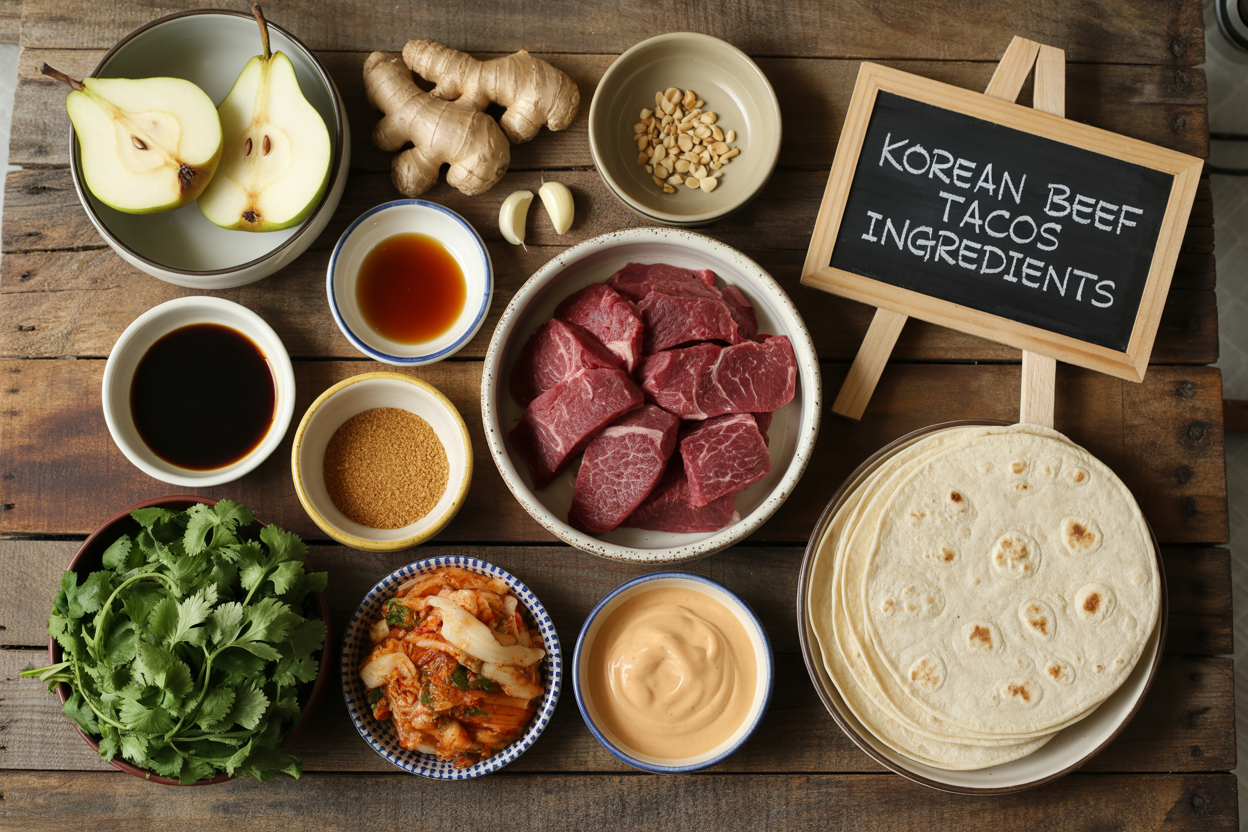
- 1 can pears drained (fresh pears work, too)
- 1 ginger two-inch knob of fresh
- 4 cloves garlic
- 1/2 cup soy sauce
- 1/2 cup brown sugar
- 1 tbsp sesame oil
- 2 lbs. top sirloin
- cilantro chopped
- peanuts chopped
- kimchi or slaw of some sort
- sriracha mayo or yum yum sauce
- flour tortillas
Instructions
- Place the pears, ginger, garlic, soy sauce, sesame oil, and brown sugar into a food processor or blender. Pulse until the mixture is mostly smooth and well combined. Reserve half of the sauce for later use as directed in the recipe notes.
- Trim any excess fat from the beef and cut it into several large chunks. Cutting the meat into smaller pieces helps it cook more quickly and makes shredding easier later. Place the beef into the Instant Pot and pour half of the prepared sauce over the top, ensuring the meat is coated. Secure the lid and cook on high pressure using the manual setting for 45 minutes. Once the cooking cycle is complete, carefully release the steam according to the manufacturer's instructions. Open the lid and use two forks to shred the beef directly in the cooking liquid.
- Warm the flour tortillas if desired. Fill each tortilla with the shredded Korean beef, then top with cilantro, peanuts, kimchi or slaw, and sriracha mayo or yum yum sauce. Serve immediately while the beef is hot.
Frequently Asked Questions
Flank, sirloin, or ribeye steak sliced thin against the grain are my go-to cuts for tender bulgogi in Korean beef tacos. Gochujang paste adds a moderate heat most people can handle, and toppings like kimchi and fresh veggies bring out the real Korean beef tacos flavor without overpowering everything.
What cut of beef makes bulgogi-style taco meat tender instead of chewy like a workout?
I always grab flank steak for Korean beef tacos because it turns super tender when you slice it thin against the grain. The thinner, the better—almost see-through is perfect for Korean beef tacos.
Sirloin is a solid choice if you want something leaner. Ribeye is the splurge, and that extra fat makes the marinade caramelize beautifully in the pan. Just remember to slice against the grain, or you’ll be chewing your Korean beef tacos for way too long.
Can I use ground beef for bulgogi tacos and still earn the right to call them fancy?
Ground beef totally works for Korean beef tacos, but it’s not quite the same as traditional thin-sliced beef. You’ll miss that signature texture, but the flavors still hit the spot.
I just brown the ground beef in a skillet, then add the bulgogi sauce and let it cook down until it’s sticky and caramelized. Not exactly authentic, but Korean beef tacos made this way still taste amazing—and you save a bunch of time on slicing and freezing meat.
How spicy is gochujang in these tacos—pleasantly zesty or “where’s my milk” level?
Gochujang paste brings a mellow, manageable heat that most folks would call “pleasantly zesty.” It doesn’t try to knock you out—it just adds a bit of depth and a gentle kick to these Korean Beef Tacos.
Thanks to the fermentation, gochujang gives you a savory, slightly sweet heat rather than a face-melting burn. If you think black pepper is hot, you’ll notice a little warmth, but you probably won’t be running for milk. Korean Beef Tacos with gochujang end up flavorful, not painful.
If you want more heat, just add some sriracha to your taco sauce. I usually just drizzle it on top, so everyone gets to decide how spicy their Korean Beef Tacos should be.
What are the must-have toppings for Korean-style tacos that don’t taste like a sad salad?
Kimchi is the one topping you absolutely can’t skip on Korean Beef Tacos. Its tangy, fermented crunch totally transforms the taco and balances out the marinated beef.
I always throw in something creamy—like sriracha mayo or lime crema. It cools things off and keeps Korean Beef Tacos from feeling dry or heavy.
Fresh toppings like green onions, cilantro, and sesame seeds add a burst of flavor without turning Korean Beef Tacos into a bland salad. Pickled daikon or a quick cucumber slaw? Those bring extra crunch and some acidity, which keeps every bite interesting.
How many calories are in a serving of these tacos, and can I pretend the kimchi cancels them out?
One Korean Beef Taco with all the good stuff usually lands somewhere between 250 to 350 calories, depending on how much meat and toppings you pile on. If you eat two or three, that’s a pretty solid meal.
The beef packs in most of the calories, especially if you go for a fattier cut like ribeye. Creamy sauces and toppings add a bit more, but honestly, they’re what make Korean Beef Tacos so good.
Kimchi is super low in calories and full of probiotics, so I like to pretend it cancels out the rest. Maybe that’s wishful thinking, but hey, it makes me feel better about eating more Korean Beef Tacos.
Where can I find bulgogi-style tacos nearby when cooking feels like a personal attack?
Korean-Mexican fusion restaurants and food trucks serve bulgogi beef tacos in most major cities these days. Honestly, I just type “Korean Beef Tacos near me” into my phone, or wander around looking for spots that mix up Asian-inspired street food. It’s surprising how many places jump on the Korean Beef Tacos trend.
Some classic Korean BBQ joints have started tossing Korean Beef Tacos onto their menus, which is pretty great. Even some local taco shops in diverse neighborhoods try their hand at Korean Beef Tacos or other fusion mashups. You never really know until you check, right?
If nobody nearby makes Korean Beef Tacos, I’ll call up an Asian restaurant and see if they’ll sell me some bulgogi beef to-go. All I need after that is a pack of tortillas, and suddenly I’m making Korean Beef Tacos at home with almost zero effort. It’s not quite the same as the food truck experience, but hey, Korean Beef Tacos on the couch? I’ll take it.

Recipes are gathered in person and written for real-world cooking conditions.
- 10 Hungarian Dessert Recipes Passed Down Through Generations - July 25, 2026
- 11 Easy English Recipes Anyone Can Make - July 25, 2026
- Hungarian Kifli Recipe - July 25, 2026