
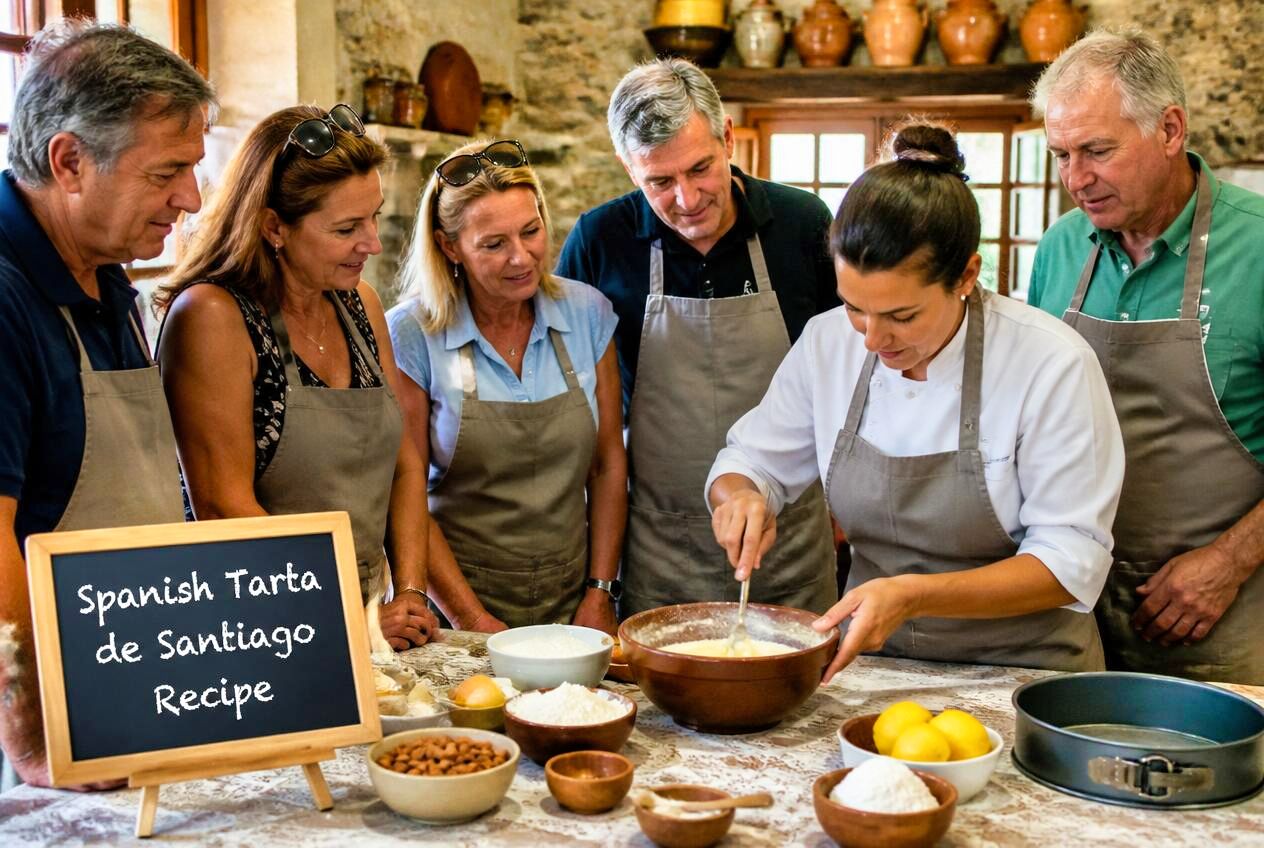
You step into a kitchen that smells of toasted almonds and bright lemon zest, ready to make a classic Spanish Tarta de Santiago recipe with confident, precise steps. This guide offers a simple, authentic Spanish Tarta de Santiago recipe that stays true to Galician tradition and finishes with the iconic powdered-sugar cross.
This Spanish Tarta de Santiago recipe uses just a few pantry ingredients—ground almonds, eggs, sugar, and citrus—so you can bake a rich, naturally gluten-free dessert without fuss. Find practical chef tips, easy variations, and quick make-ahead notes so you can serve a flawless Spanish Tarta de Santiago recipe for a weeknight treat or special occasion.
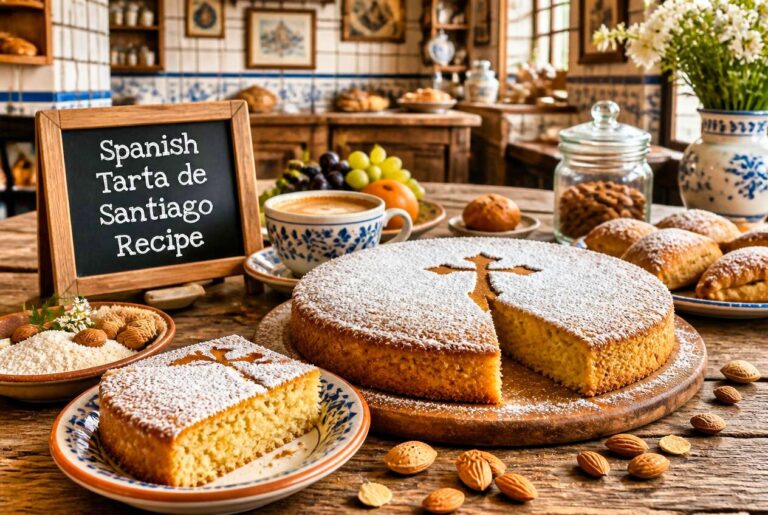
Spanish Tarta de Santiago Recipe
Key Takeaways
- Learn the traditional Spanish Tarta de Santiago recipe and its simple ingredient list.
- Follow focused tips and quick make-ahead guidance for reliable results.
- Explore easy variations and serving ideas to suit different occasions.
Description and Historical Information
The Spanish Tarta de Santiago recipe is a simple almond cake from Galicia that exemplifies traditional Spanish food. Its basic ingredients—ground almonds, eggs, and sugar—keep the texture dense and naturally gluten-free, while lemon zest or a touch of wine adds subtle flavor.
The cake’s roots reach back to the Middle Ages and the Camino de Santiago pilgrimage, where it became closely linked to Saint James. Wealthy households popularized almond and sugar combinations between the 16th and 18th centuries, and regional Spanish cuisine preserved this Spanish Tarta de Santiago recipe as a staple.
Cooks across Spain stencil the cross of Saint James atop the cake, making the decoration a recognizable emblem of regional foods of Spain and Mediterranean Spanish cuisine. This Spanish Tarta de Santiago recipe stands as an authentic part of Spanish culinary traditions, reflecting local ingredients and historical trade in sugar and almonds. For more background on its origins and cultural ties, see the Tarta de Santiago history page.
Chef’s Tips
Keep the ingredient list short to honor this easy traditional Spanish Tarta de Santiago recipe. Use finely ground almonds and weigh them for consistent texture and to prevent a gritty crumb. Separate eggs only when you want a lighter crumb; whole eggs whipped yield the classic dense, moist Spanish Tarta de Santiago recipe.
Choose blanched almonds to avoid bitter skins. Grind whole almonds at home by pulsing briefly and chilling the nuts to prevent oil release. Dust powdered sugar through a Cross of St James stencil for the traditional presentation, or simply sprinkle for an elegant finish when time is short.
Bake in a low, steady oven and test with a toothpick near the center. The Spanish Tarta de Santiago recipe should be set but slightly springy; residual heat finishes cooking without drying it out. Add a teaspoon of lemon zest or a splash of amaretto for a subtle lift that keeps the cake recognizably Spanish.
Store leftovers wrapped at room temperature for up to three days. For longer storage, freeze slices in an airtight container and thaw gently before serving. The Spanish Tarta de Santiago recipe remains moist and flavorful even after freezing.
Make-Ahead Instructions
Bake the Spanish Tarta de Santiago recipe up to two days ahead for best flavor and texture. Once cooled, remove it from the pan and wrap tightly in plastic wrap to prevent drying. For longer storage, freeze the whole cake or individual slices wrapped in parchment and foil, then place in an airtight container. They keep well for up to one month.
To thaw, transfer the cake to the refrigerator overnight. Bring it to room temperature for about an hour before serving so the almond aroma and texture open up. Dust the Cross of Saint James with powdered sugar right before serving for the freshest look.
Prepare components in advance: mix batter and refrigerate up to 24 hours, bringing to room temperature before baking. Measure and store powdered sugar and any citrus zest in small containers for easy assembly. For reference on traditional preparation and baking temperatures, see this traditional Tarta de Santiago recipe.
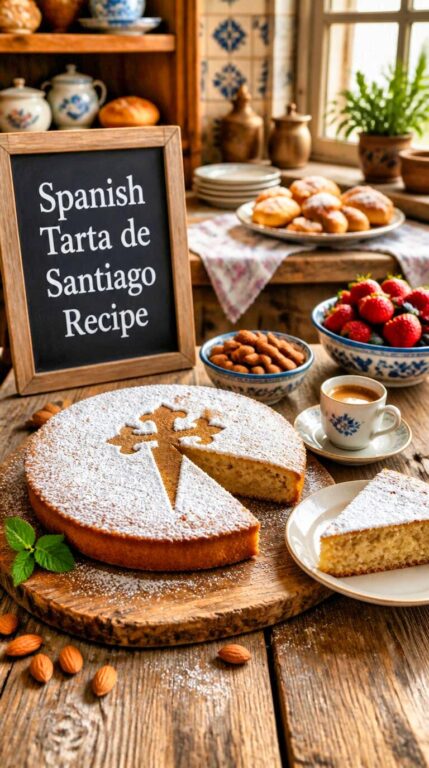
Variations
Adapt the classic Spanish Tarta de Santiago recipe to suit different occasions and dietary needs. The traditional almond, egg, sugar base stays, but small swaps quickly change the cake’s character. Add a teaspoon of orange zest instead of lemon for a brighter aroma, or fold in finely chopped candied orange peel for texture and visual interest.
Blend chocolate into the batter for richer desserts. Stir 1/2 cup melted dark chocolate into the almond mixture for a dense, elegant Spanish Tarta de Santiago recipe suited to dinner parties. Pair with espresso or dessert wine for added flair.
For nut-free or mixed-nut preferences, swap half the almond flour for hazelnut or walnut meal, or use a gluten-free oat flour blend with extra egg white for structure. When making the Spanish Tarta de Santiago recipe for festivals, keep the decoration traditional with powdered sugar stenciled in the Cross of Saint James. For other occasions, garnish with berries, toasted almonds, or a light citrus glaze.
Tweak sweetness and texture for dietary needs by reducing sugar by 20% and increasing lemon zest to maintain flavor. Bake slightly longer at a lower temperature for a firmer, sliceable cake perfect for buffets and holiday tables. The Spanish Tarta de Santiago recipe remains versatile and crowd-pleasing.
Related Recipes
Pair the Spanish Tarta de Santiago recipe with classic Spanish dishes that showcase simple, bold flavors. Start with a chilled, authentic gazpacho recipe to refresh the palate before richer bites. For a main, serve Spanish rice dishes like a traditional Spanish paella recipe or lighter Spanish seafood recipes that highlight shrimp and clams.
Make a Spanish tortilla recipe for a comforting, protein-rich option that works for dinner or brunch. Tapas round out the menu—serve patatas bravas recipe bites and Spanish croquettes recipe alongside gambas al ajillo (Spanish garlic shrimp) for sizzling, shareable plates. These pair well with traditional churros recipe for a sweet finish.
For hearty, home-style cooking, reach for Spanish bean stew recipe ideas such as Fabada Asturiana recipe or a simple pisto recipe. Albondigas recipe (Spanish meatballs) and other Spanish family dinner recipes make excellent crowd-pleasing mains. Build a tapas night with classic Spanish meals to make at home like tapas recipes and popular Spanish comfort foods. Combining small plates and a Spanish paella or seafood dish gives guests both variety and depth of flavor.
Recipe Comparison
Compare several classic Spanish Tarta de Santiago recipe variations to highlight key differences in texture and flavor. Almond-to-egg ratios drive texture: more ground almonds and fewer eggs yield a denser, crumbly cake, while higher egg counts produce a lighter, more custard-like crumb. Bakers balance this based on desired mouthfeel.
Flavoring choices matter. Some versions use lemon zest only, while others add a splash of brandy or cinnamon. Lemon brightens the profile; brandy deepens it. Cinnamon adds warmth but can mask the almond. Baking techniques and times also vary. Shallow pans and shorter bakes create a moister center; deeper pans need longer, gentler baking to avoid a dry edge. Oven temperature matters—slightly lower temps prevent overbrowning while keeping the interior tender.
- Texture: dense versus airy.
- Flavor: citrus-forward versus spiced or boozy.
- Finish: powdered sugar cross stencil is traditional; whole almond garnish is bolder.
For a reliable modern Spanish Tarta de Santiago recipe, visit Spanish Sabores: https://spanishsabores.com/tarta-de-santiago-recipe-spanish-almond-cake/.
Spanish Tarta de Santiago Recipe Cooking Tips
Spanish Tarta de Santiago Recipe Cooking Tips
• Spanish Tarta de Santiago is a traditional almond cake from Galicia known for its moist texture, rich almond flavor, and iconic powdered sugar cross decoration.
• Ground almonds are the primary ingredient and provide the cake’s distinctive flavor and texture.
• Use finely ground almonds for a smooth, even crumb.
• Fresh, high-quality almonds contribute significantly to the overall flavor.
• Eggs provide structure while helping maintain the cake’s moist consistency.
• Sugar should be incorporated thoroughly to create a balanced sweetness.
• Lemon zest is traditionally added to provide brightness and complement the almonds.
• Cinnamon is often included to add subtle warmth and depth.
• Mix the batter gently to maintain a tender texture.
• Unlike many cakes, Tarta de Santiago contains little or no flour, allowing the almond flavor to remain dominant.
• Prepare the baking pan carefully to ensure easy release after baking.
• Bake until the cake is lightly golden and set in the center.
• Avoid overbaking, which can dry out the almond-rich interior.
• Allow the cake to cool completely before decorating.
• The traditional Cross of Saint James stencil is applied before dusting with powdered sugar.
• Remove the stencil carefully to reveal the iconic design.
• The flavor should balance rich almonds, citrus notes, gentle sweetness, and subtle spice.
• Properly prepared Tarta de Santiago should be moist, fragrant, and delicately textured.
Spanish Tarta de Queso Recipe Storage Tips
Spanish Tarta de Santiago Recipe Storage Tips
• Allow the cake to cool completely before transferring it into storage containers.
• Store at room temperature in airtight containers to help maintain freshness and moisture.
• Keep the cake tightly covered to prevent drying out.
• Almond cakes often develop deeper flavor after resting for several hours.
• Refrigeration is generally unnecessary unless environmental temperatures are unusually warm.
• If refrigerated, bring the cake closer to room temperature before serving for optimal flavor and texture.
• Store powdered sugar decorations carefully to preserve appearance.
• Refresh the powdered sugar topping if needed before serving.
• Keep away from strongly scented foods because almond cakes readily absorb odors.
• Individual slices can be wrapped separately for convenient serving.
• Freeze whole cakes or slices in airtight freezer-safe containers if desired.
• Wrap tightly to help prevent freezer burn and preserve quality.
• Defrost frozen cake gradually at room temperature or in the refrigerator.
• Handle carefully after thawing to preserve decorative details.
• Use clean utensils when slicing and serving to help maintain freshness.
• Label storage containers with the preparation date for easier inventory management.
• Check for signs of spoilage such as rancid almond odors, mold, unusual discoloration, or texture deterioration before consumption.
• For best quality, enjoy the cake while it remains moist, flavorful, and richly aromatic.
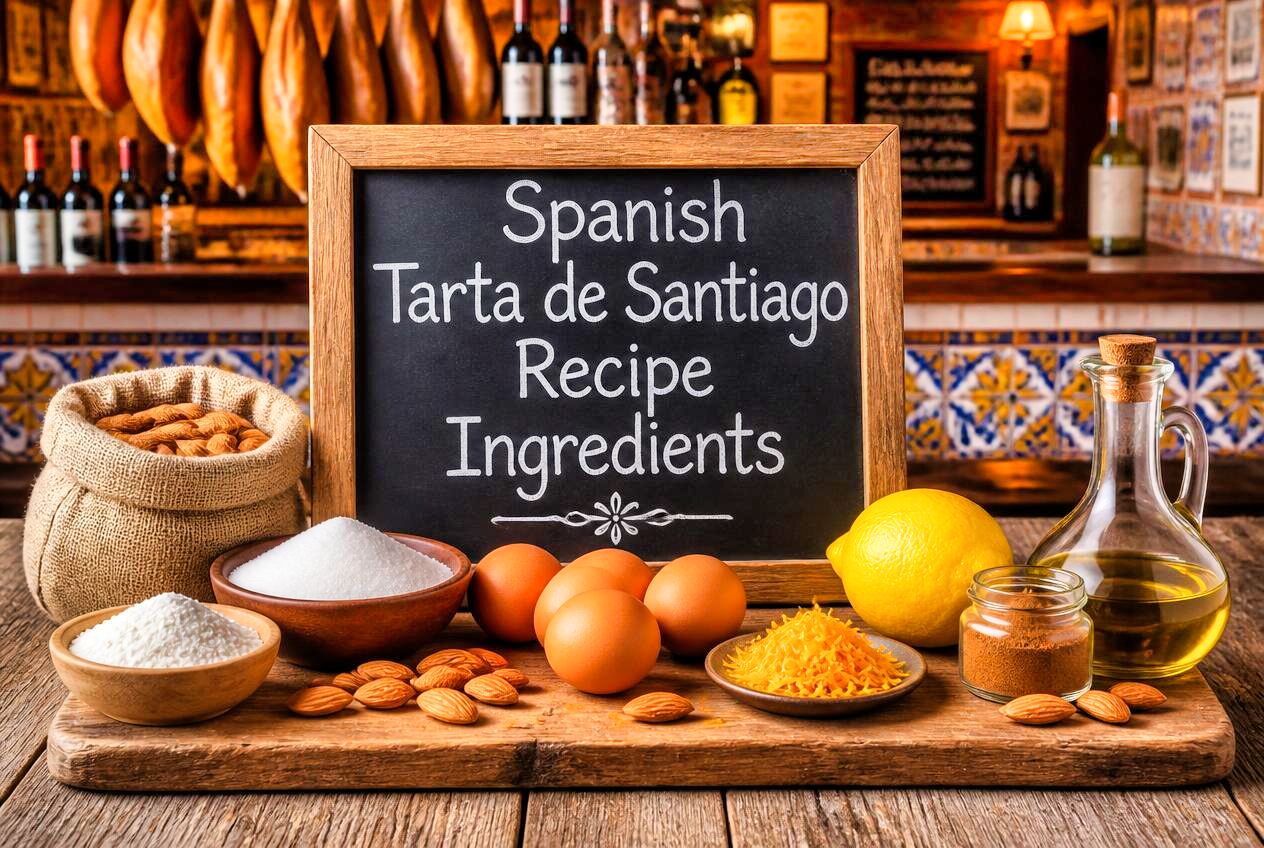
Spanish Tarta de Santiago Recipe
Ingredients
- 4 eggs
- 1 cup sugar caster sugar is better, if possible
- 2 cups almond flour or ground almonds
- 1 teaspoon lemon zest
- ½ teaspoon cinnamon
- 2 tablespoon sugar confectioners approx
Instructions
- Begin by preheating your oven to 350°F (180°C).
- Prepare an 8-inch (20 cm) round springform pan by lining the bottom with parchment paper. Lightly butter the sides of the pan to prevent sticking and to help the cake release cleanly after baking.
- Set the prepared pan aside while you make the batter.
- Crack the eggs into a large mixing bowl and add the sugar.
- Whisk the eggs and sugar together until the mixture is well combined, lighter in color, and slightly aerated. You are not looking for a thick sponge-cake mixture, but incorporating some air will help create a lighter texture.
- Add the almond flour, lemon zest, and cinnamon.
- Mix gently until everything is evenly incorporated. Be careful not to overmix, as excessive stirring can deflate the air you have just incorporated into the eggs.
- The batter should be smooth and relatively thick, with the almond flour fully blended throughout.
- Pour the batter into the prepared springform pan.
- Use a spatula to spread it evenly and smooth the surface.
- Gently tap the pan on the countertop once or twice to release any large air bubbles.
- Place the pan in the preheated oven and bake for approximately 30 minutes.
- The cake is ready when the surface is lightly golden and a skewer inserted into the center comes out clean.
- Because almond-based cakes can vary slightly depending on the moisture content of the almonds and the size of the eggs used, begin checking for doneness near the end of the baking time.
- Remove the cake from the oven and place it on a wire rack.
- Allow it to cool in the pan for about 10 to 15 minutes.
- Once slightly cooled, carefully remove the outer ring of the springform pan.
- Leave the cake on the rack and allow it to cool completely before decorating.
- Cooling completely is important, as warm cake can cause the powdered sugar decoration to melt.
- While the cake cools, prepare the traditional Cross of Saint James stencil if it is not already ready.
- Place the stencil carefully in the center of the cooled cake.
- Using a fine sieve, dust the entire surface generously with confectioners' sugar.
- Once evenly coated, carefully lift the stencil straight up to reveal the iconic cross design.
- Take your time with this step to avoid disturbing the powdered sugar pattern.
- Transfer the finished cake to a serving platter and slice into wedges.
- Serve at room temperature, either on its own or alongside coffee, tea, or a small glass of dessert wine.
- If not serving immediately, store the cake covered at room temperature to maintain its moist texture.
- Tarta de Santiago is one of Spain's most famous traditional desserts, originating in the region of Galicia and closely associated with the pilgrimage route to Cathedral of Santiago de Compostela. Made primarily with almonds, eggs, and sugar, it is naturally flour-light and wonderfully moist, with delicate notes of lemon and cinnamon.
- Its signature powdered sugar cross makes it instantly recognizable, while its simple ingredients allow the rich almond flavor to shine. Elegant yet uncomplicated, Tarta de Santiago is a beautiful example of Spain's historic baking traditions.
Spanish Tarta de Santiago Recipe Frequently Asked Questions
Find answers to common technical and practical points about the Spanish Tarta de Santiago recipe, focusing on origin, ingredient choices, texture control, dietary substitutions, decoration technique, and storage. Each response provides specific steps or recommendations for your kitchen.
What is the origin of the traditional almond cake from Santiago de Compostela?
The Spanish Tarta de Santiago recipe originated in Galicia, especially the pilgrimage city of Santiago de Compostela where pilgrims received almond-based cakes as portable, nutritious food. The Cross of Saint James became associated with the cake as a devotional and regional symbol during the pilgrimage tradition.
Which type of almonds should be used for the best texture and flavor?
Use blanched whole almonds ground finely for the most traditional, smooth crumb and clean color. For a more pronounced almond texture and deeper flavor, substitute 10–20% toasted almonds, ground fine and cooled. This enhances the Spanish Tarta de Santiago recipe’s flavor profile.
How do you achieve a moist crumb without making the cake dense?
Beat the eggs and sugar until pale and slightly increased in volume to incorporate air without using chemical leaveners. Fold the almond meal gently to preserve aeration and bake just until the center is set—typically 30–35 minutes in a moderate oven—then let the cake cool in the pan to finish setting. This results in a perfect Spanish Tarta de Santiago recipe every time.
Can the cake be made gluten-free, and what substitutions work best?
The classic Spanish Tarta de Santiago recipe uses only almonds, eggs, sugar, and citrus zest, so it is naturally gluten-free when using pure almond meal. If you need a binder or lighter texture, add 1–2 tablespoons of cornstarch or 10–15 g of rice flour per 200 g almond meal to maintain structure without gluten.
For more Spanish Tarta de Santiago recipe inspiration, explore regional variations and pairings to bring a true taste of Galicia into your kitchen. The Spanish Tarta de Santiago recipe stands as a beloved classic, perfect for any occasion and adaptable for modern tastes.
What is the traditional way to decorate the cake with the cross stencil and icing sugar?
To decorate the cake using the Spanish Tarta de Santiago recipe, I place a paper or metal stencil of the Cross of Saint James centrally on the cooled cake. I sift a fine layer of powdered sugar evenly over the surface to create the classic look found in every authentic Spanish Tarta de Santiago recipe. After removing the stencil straight up, I use a small brush to neaten the pattern and ensure the cross stands out clearly, which is essential for the Spanish Tarta de Santiago recipe. This finishing touch highlights the cake’s cultural significance and is a hallmark of the Spanish Tarta de Santiago recipe. For more details on the history and decoration of this cake, you can visit [Spain’s official tourism website](https://www.spain.info/en/recipes/tarta-santiago/). Mastering this step is key to achieving the iconic appearance of the Spanish Tarta de Santiago recipe. When you follow the Spanish Tarta de Santiago recipe, always use a stencil for accuracy. The Spanish Tarta de Santiago recipe emphasizes presentation as much as flavor. Every traditional Spanish Tarta de Santiago recipe includes this decorative process. If you want your Spanish Tarta de Santiago recipe to look authentic, don’t skip the stencil step. The Spanish Tarta de Santiago recipe’s distinctive cross is instantly recognizable. Using icing sugar in the Spanish Tarta de Santiago recipe adds the perfect final touch. This essential detail completes the Spanish Tarta de Santiago recipe and makes it special for any occasion.
How should the cake be stored, and how long does it keep at room temperature?
To keep your Spanish Tarta de Santiago recipe fresh, wrap it in parchment and place it in an airtight tin at room temperature. The Spanish Tarta de Santiago recipe maintains its best texture for up to 3 days this way. For longer storage, refrigerate the Spanish Tarta de Santiago recipe wrapped, and bring it to room temperature before serving; refrigerated slices of the Spanish Tarta de Santiago recipe stay fresh for 5–7 days. If you want more tips on how to store your Spanish Tarta de Santiago recipe, visit Serious Eats for additional advice.

Recipes are gathered in person and written for real-world cooking conditions.
- 10 Hungarian Dessert Recipes Passed Down Through Generations - July 25, 2026
- 11 Easy English Recipes Anyone Can Make - July 25, 2026
- Hungarian Kifli Recipe - July 25, 2026