
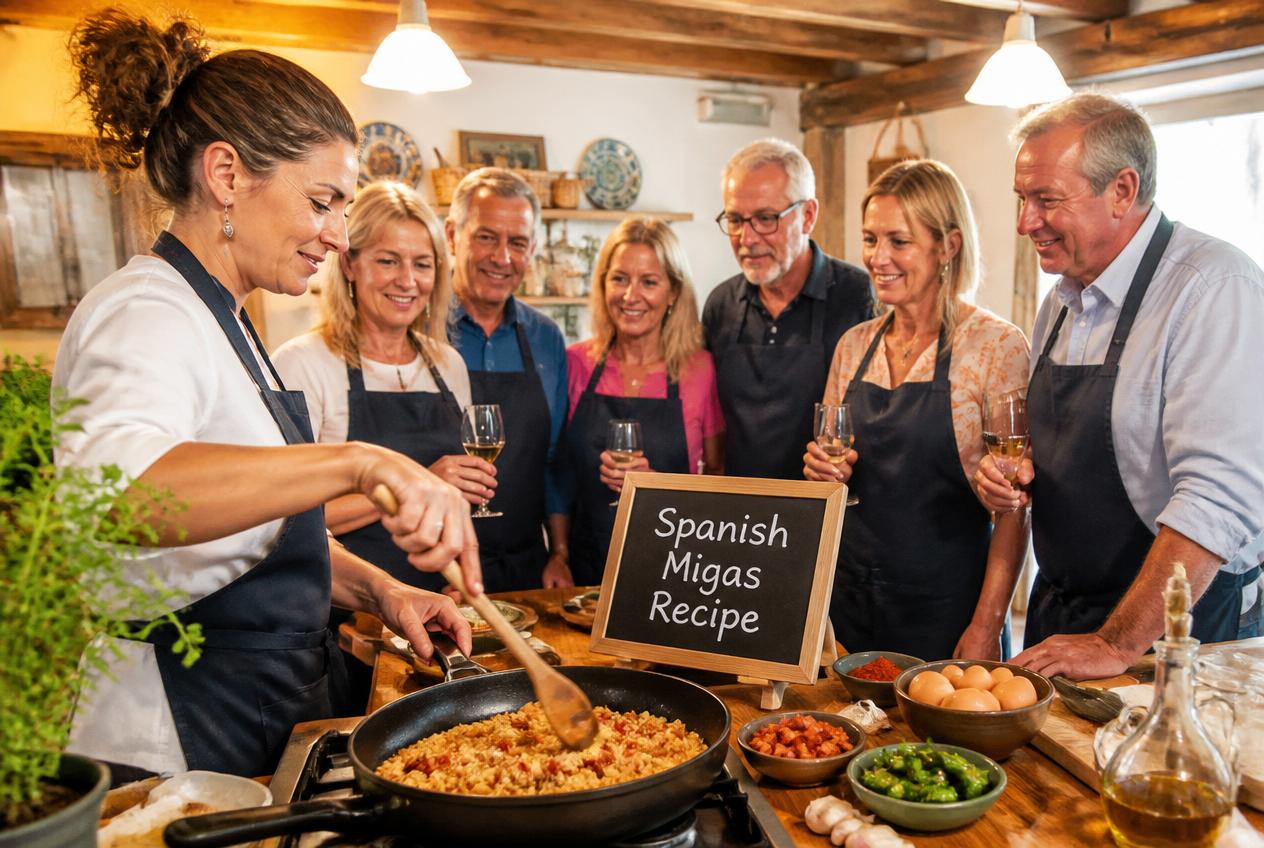
You’ll find the Spanish migas recipe is a deceptively simple dish that delivers big, authentic Spanish flavor using stale bread, garlic, paprika, and pork or olive oil. I’ll show you a traditional Spanish migas recipe that you can make at home with clear steps, practical tips, and a few smart variations to suit family dinners or special occasions.
Follow my guidance and you’ll learn how to crisp the bread without drying it out, balance smoky chorizo or bacon with bright finishing touches like grapes or fried eggs, and adapt the technique to what you have on hand. I draw on regional traditions so you can recreate an authentic, comforting plate that stands among the best Spanish recipes for casual or celebratory meals. This Spanish migas recipe will help you master a beloved Spanish classic.
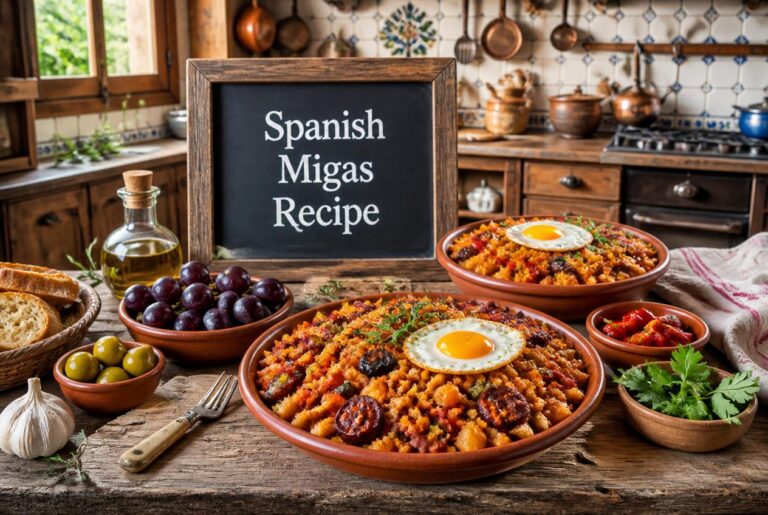
Key Takeaways
- I explain the essential ingredients and traditional method so you can make authentic migas easily.
- I give practical preparation tips and advance steps to save time and improve texture.
- I offer simple variations and pairing suggestions to fit family dinners or special occasions.
Background and Historical Context
I trace migas back to Spain’s rural and pastoral roots, where cooks turned stale bread into nourishing meals. The name itself, meaning “crumbs,” reflects the dish’s simple origin within traditional Spanish food. This Spanish migas recipe connects you to that history.
Migas belong to a larger family of traditional Spanish recipes that emphasize thrift and seasonality. Shepherds and field workers relied on durable ingredients like bread, garlic, olive oil, and cured pork to fuel long days in the countryside. The Spanish migas recipe showcases these rustic traditions.
In Mediterranean Spanish cuisine, migas exemplifies the region’s reliance on olive oil, garlic, and smoky paprika. Each province adapts the dish using local charcuterie, peppers, or grapes, making the Spanish migas recipe incredibly versatile.
Extremadura and Castilla-La Mancha keep migas austere and hearty, while Andalusian versions may include fish or sweet additions. This variation highlights Spanish culinary traditions that prioritize local produce and historical circumstance over rigid recipes. The Spanish migas recipe reflects this regional diversity.
Migas’ cultural role goes beyond nourishment. It functions as a communal, convivial plate—served at festivals, family breakfasts, and rural gatherings—showing how a humble recipe becomes a lasting element of regional identity. The Spanish migas recipe stands as a symbol of community and tradition.
Expert Preparation Tips
I recommend starting with day-old, crusty bread and tearing it by hand for better texture; this is a hallmark of many Spanish cooking recipes. Smaller, uneven pieces crisp differently, giving a mix of crunchy and tender bites. For the perfect Spanish migas recipe, always use hand-torn bread.
I use plenty of good olive oil and rendered pork fat when available. That fat carries flavor in traditional Spanish migas and helps coat the bread for even toasting. The Spanish migas recipe benefits from quality fats.
I sauté garlic, smoked paprika, and sofrito-style onions first, then add chorizo or bacon to infuse the oil. These steps make this one of the best homemade Spanish dishes I teach beginners. A Spanish migas recipe shines when you layer flavors thoughtfully.
I prefer a wide, heavy skillet and moderate heat; overcrowding ruins crisping. Stir frequently but gently so pieces brown without turning to paste. This technique is essential for a great Spanish migas recipe.
I prepare add-ins separately—roasted peppers, grapes, or fried eggs—and fold them in at the end. This keeps textures distinct and makes the dish versatile among classic Spanish meals to make at home. The Spanish migas recipe adapts well to different garnishes.
For make-ahead and timing, I toast the migas lightly, then finish on a hot pan just before serving. That technique works well for Spanish homemade recipes and keeps the crumbs fresh and crisp. The Spanish migas recipe suits both advance prep and last-minute cooking.
Keep flavors balanced. Taste as you go and adjust salt, acidity, or heat. That small diligence turns an easy traditional Spanish recipe into a confidently authentic plate. The Spanish migas recipe rewards careful tasting and adjustment.
Advance Preparation Guidelines
I start by choosing the right bread: day-old rustic or country loaf works best because it soaks and crumbles without becoming gummy. I cut or tear the bread into bite-sized pieces, then pulse gently in a food processor if I need a more uniform crumb. The Spanish migas recipe depends on selecting the right bread.
I hydrate the bread briefly with water, or for a more tender interior I use a splash of milk; I avoid over-soaking to keep the final texture crisp. After hydrating, I squeeze out excess moisture with my hands or a clean towel so the crumbs fry rather than steam. This step ensures the Spanish migas recipe produces the classic crisp-tender bite.
I prepare aromatics and add‑ins in advance. I finely slice garlic, chop chorizo or bacon, and measure smoked paprika and salt into a small bowl. I keep grapes, fried peppers, or a fried egg ready to finish the dish if I plan to serve them. The Spanish migas recipe comes together quickly with good prep.
I use a heavy skillet for even browning and preheat it while I heat my olive oil to a shimmer. If cooking for a crowd, I scale ingredients proportionally and keep batches warm in a low oven (about 90–100°C / 200°F) on a baking sheet. The Spanish migas recipe scales easily for gatherings.
Tip: I recommend a mise en place checklist—bread, fat, aromatics, seasoning, and garnishes—so the frying step stays quick and controlled. For recipe variations and regional notes, see an authentic Traditional Spanish Migas Recipe.
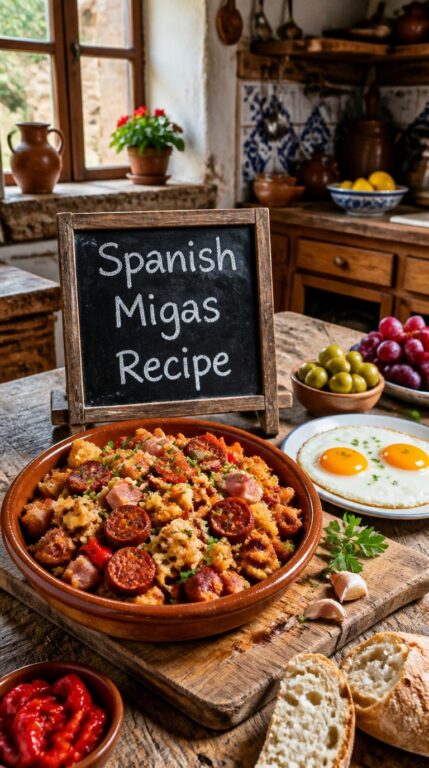
Creative Variations
I often adapt migas to reflect regional Spanish cuisine recipes, keeping the core technique while changing proteins and vegetables. In Andalucía I favor olive oil, garlic, and simple smoked paprika; in Castilla-La Mancha I add richer cured meats and more robust garlic flavors. The Spanish migas recipe welcomes regional twists.
Try a Catalan-style twist by folding in roasted red peppers and a handful of toasted pine nuts for texture. For a Basque influence, I sauté diced cod (bacalao) with green peppers before mixing with the toasted bread crumbs and a splash of olive oil. Each Spanish migas recipe can be personalized with local ingredients.
For a heartier Castilla shepherd version, I add diced chorizo, pancetta, and a soft-cooked egg on top. Vegetarian options work well too: I sauté seasonal mushrooms, smoky pimentón, and sweet onions, then toss with the crumbs for an earthy, satisfying dish. The Spanish migas recipe can be adapted for vegetarians with ease.
I recommend small, controlled tweaks rather than wholesale changes. Keep the bread-to-fat ratio balanced and preserve the contrast between crisp exterior and tender interior. The Spanish migas recipe depends on this balance.
Simple ingredient swaps to try:
- Swap chorizo for jamón or pancetta for a milder cure.
- Add roasted grapes or fried apples for a touch of sweetness.
- Stir in kale or sautéed greens for a vegetable-forward plate.
I link regional inspiration when I want detailed traditional techniques; for example, Andalucían methods guide my basic approach and ingredient choices. Every Spanish migas recipe can reflect local tastes.
Recommended Related Dishes
I pair migas with several classic Spanish dishes that echo its rustic roots and bold flavors. Small plates work well; I often serve a selection of popular Spanish dishes alongside migas to create a balanced tapas spread. A Spanish migas recipe forms a great centerpiece for a tapas meal.
I recommend a simple Spanish tortilla recipe for contrast. Its soft, egg-and-potato texture complements the crisp, garlicky crumbs and creates a comforting bite. The Spanish migas recipe pairs beautifully with tortilla.
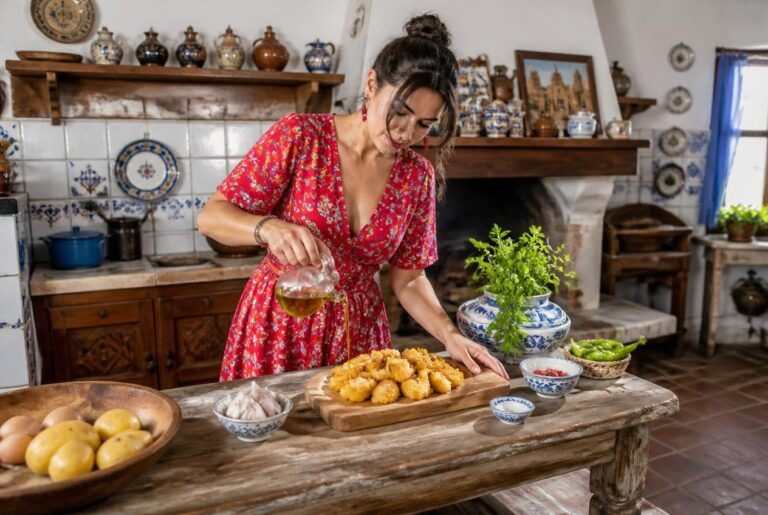
I also include patatas bravas and Spanish croquettes for crunchy, savory options. Both dishes travel well across a shared table and broaden the flavor profile without overshadowing the migas. The Spanish migas recipe fits perfectly in a classic Spanish spread.
For seafood lovers, I add gambas al ajillo (Spanish garlic shrimp) and other Spanish seafood recipes to introduce bright, garlicky heat. Paella makes a heartier center to the meal when I want something more substantial; a good Spanish paella recipe pairs saffron and shellfish with the rustic bread dish. The Spanish migas recipe complements both seafood and meat dishes.
Cold soups and stews balance the menu. An authentic gazpacho recipe refreshes the palate, while fabada asturiana or albóndigas offer warming, traditional stews for cooler nights. The Spanish migas recipe works well in all seasons.
I like to include simple vegetable dishes like pisto and a selection of traditional Spanish tapas ideas to round out the table. For dessert, I often finish with traditional churros to keep the meal unmistakably Spanish. The Spanish migas recipe helps create a complete Spanish experience.
- Try combining: migas + tortilla + gambas al ajillo for a classic mix.
- For a full feast: paella, patatas bravas, croquettes, pisto, and churros.
Comparative Analysis of Similar Recipes
I compare migas to several Spanish rice and stew dishes to show how texture, ingredients, and context shift across traditions. Migas centers on toasted stale bread; rice dishes favor short-grain rice cooked with broth, while bean stews rely on slow-simmered legumes and ham for depth. The Spanish migas recipe stands out for its use of bread as the main ingredient.
Migas uses pan-toasting and quick sautéing; a Spanish rice dish such as paella requires building layers of flavor through sofrito and broth absorption. A Spanish bean stew recipe depends on long simmering to soften beans and meld flavors. The Spanish migas recipe is faster to prepare than most stews or rice dishes.
Migas leans on garlic, olive oil, and cured pork fat for immediacy. Rice dishes often spotlight saffron, smoked paprika, and seafood or poultry. Bean stews emphasize legumes, tomatoes, and aromatic vegetables for heartiness. The Spanish migas recipe is unique in its flavor profile and texture.
- Dish: Migas — Base: Stale bread — Cooking: Quick sauté — Typical proteins: Chorizo, bacon
- Dish: Spanish rice — Base: Short-grain rice — Cooking: Simmer/absorb — Typical proteins: Seafood, chicken
- Dish: Bean stew — Base: Beans (e.g., fabada) — Cooking: Long simmer — Typical proteins: Chorizo, ham
I serve migas as a rustic breakfast or tapa, while rice dishes frequently become communal main courses. Bean stews usually function as warming, standalone meals in colder months. The Spanish migas recipe works for breakfast, lunch, or dinner.
Spanish Migas Recipe Cooking Tips
Spanish Migas Recipe Cooking Tips
• Spanish Migas is a rustic dish known for its flavorful breadcrumbs, savory ingredients, and satisfying combination of textures.
• Day-old bread is traditionally used because it absorbs flavors well while maintaining structure.
• Cut or crumble the bread into small, evenly sized pieces for consistent cooking.
• Lightly moisten the bread beforehand if using very dry bread to help achieve the proper texture.
• Olive oil is essential and contributes richness and authentic flavor.
• Garlic is a signature ingredient that provides aromatic depth.
• Chorizo, pancetta, bacon, or other cured meats are commonly added for savory richness.
• Cook the meats first to render flavorful fat that can be used to season the breadcrumbs.
• Peppers are often included to add sweetness and color.
• Stir the breadcrumbs frequently during cooking to ensure even browning.
• Cook over moderate heat to develop a crisp exterior without burning.
• The goal is to create breadcrumbs that are lightly crisp yet still tender inside.
• Grapes, oranges, or other fruits are traditional accompaniments in some regional variations and provide contrast.
• Paprika may be added for additional flavor and color.
• Avoid adding excessive oil, which can make the dish greasy.
• Taste and adjust seasoning near the end of cooking.
• The flavor should balance toasted bread, garlic, cured meats, olive oil, and subtle smokiness.
• Serve hot as a main dish, side dish, or tapas-style offering.
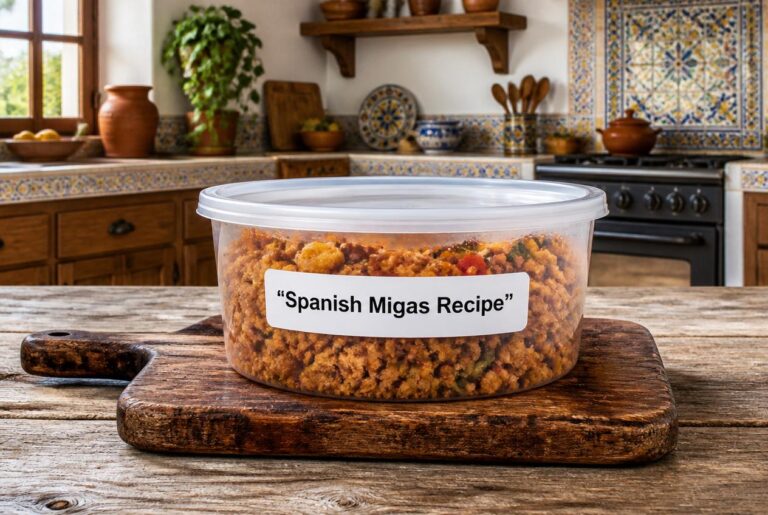
Spanish Migas Recipe Storage Tips
Spanish Migas Recipe Storage Tips
• Allow the migas to cool before transferring them into storage containers.
• Store refrigerated in airtight containers to preserve freshness and flavor.
• Refrigeration may soften some of the crisp breadcrumb texture over time.
• Reheat in a skillet to help restore texture and develop fresh crispness.
• Stir frequently during reheating to ensure even warming.
• Avoid excessive microwave reheating, which can make the breadcrumbs soft.
• Store fresh fruit accompaniments separately until serving.
• Refrigeration often allows the flavors of the garlic, meats, and seasonings to blend more fully.
• Individual portions can be stored for convenient reheating.
• Freeze portions in airtight freezer-safe containers if desired.
• Wrap tightly to help prevent freezer burn and preserve quality.
• Texture may change slightly after freezing and thawing.
• Defrost frozen portions gradually in the refrigerator before reheating.
• Use clean utensils when handling leftovers to help maintain freshness.
• Keep away from strongly scented foods because bread readily absorbs surrounding odors.
• Label storage containers with the preparation date for easier inventory management.
• Check for signs of spoilage such as sour odors, mold, unusual discoloration, or texture changes before consuming leftovers.
• For best quality, enjoy refrigerated and frozen portions while the breadcrumbs retain as much texture and flavor as possible.
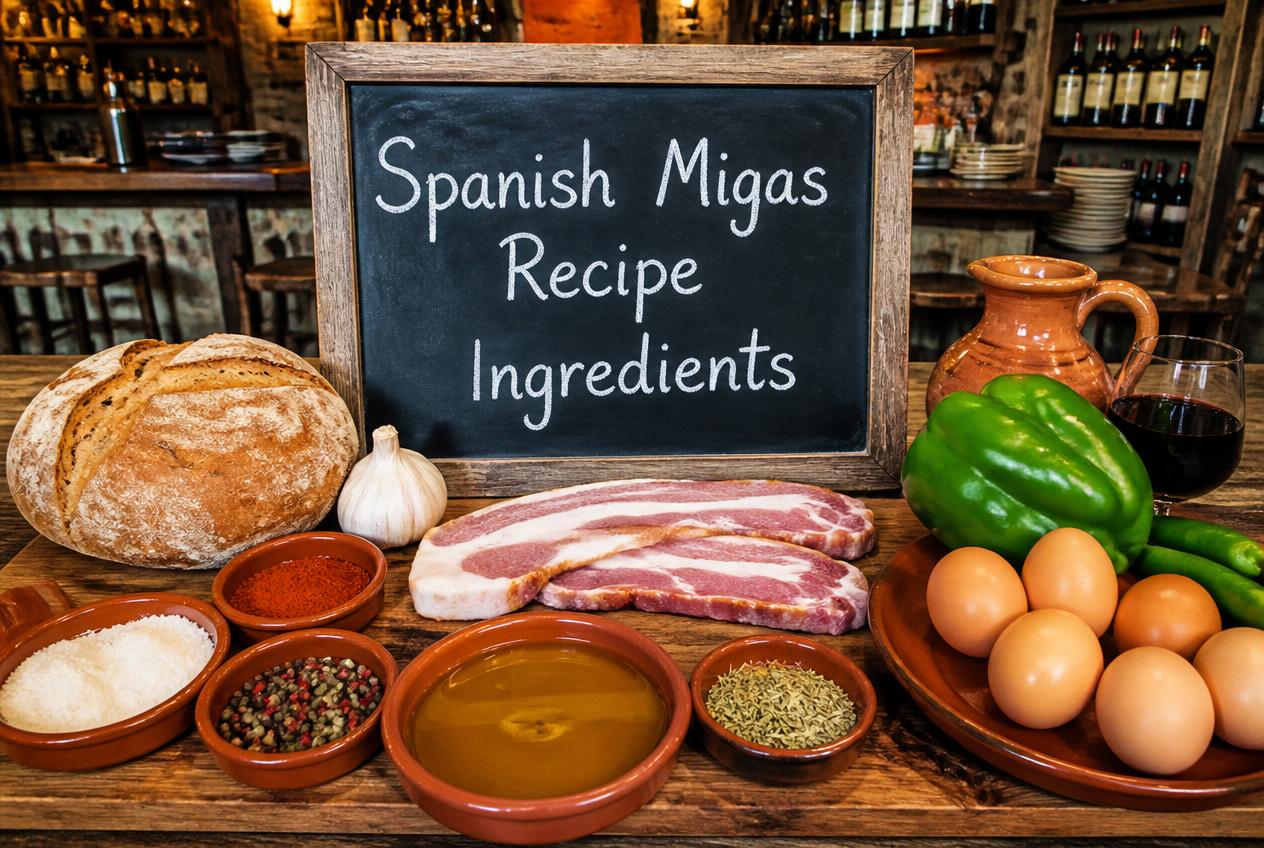
Spanish Migas Recipe
Ingredients
- 5 cups bread stale cut into cubes
- 3 sausage Spanish Chorizos sausage
- 5 strips strips of bacon
- 6 cloves garlic
- Salt to taste
- Black pepper to taste
- Extra Virgin olive oil
Instructions
- For the best traditional Spanish Migas, begin the preparation the night before.
- Take the stale bread and crumble it into small, irregular pieces. The crumbs should be coarse rather than finely ground, as this gives migas their characteristic texture.
- Lightly sprinkle the bread with a small amount of water. The goal is to make the crumbs slightly damp, not soaked or wet.
- Toss the bread gently to distribute the moisture evenly.
- Cover the bowl with a clean kitchen towel or plastic wrap and leave it overnight. This resting period allows the bread to soften slightly while still retaining enough structure to toast properly the next day.
- The following day, heat a large skillet or frying pan over medium heat.
- Add enough olive oil to lightly coat the bottom of the pan.
- Cut the bacon into strips about 1 inch wide, or to your preferred size, and add it to the hot oil.
- Cook the bacon until it becomes golden brown and begins to render its fat.
- Add the sliced chorizo to the pan and continue cooking for approximately 7 to 10 minutes, stirring occasionally, until the chorizo is fully heated through, lightly crisp around the edges, and beautifully browned.
- The bacon and chorizo will release flavorful oils that help season the migas.
- Once cooked, remove both the bacon and chorizo from the skillet and set them aside.
- Leave the rendered fat and cooking oil in the pan, as this will provide much of the flavor for the bread crumbs.
- Add the whole peeled garlic cloves to the same skillet.
- Cook them over medium heat for about 3 minutes, turning occasionally, until they become lightly golden and fragrant.
- The garlic should soften and flavor the oil without burning.
- Because the cloves remain whole, they provide a subtle garlic flavor throughout the dish without overpowering it.
- Add the prepared bread crumbs to the skillet with the garlic-infused oil.
- Using a wooden spoon or spatula, stir continuously to coat the crumbs evenly with the oil and rendered sausage fat.
- Continue cooking and stirring frequently for about 5 to 7 minutes.
- As the crumbs cook, they will gradually dry out and become golden and lightly toasted.
- Keep breaking up any larger clumps as you stir so the migas remain loose and fluffy rather than compact.
- It is important to allow the bread to toast fully before returning the meat to the pan. Adding the bacon and chorizo too early can make the crumbs heavy and cause them to clump together.
- Once the crumbs are evenly toasted and golden, return the cooked bacon and chorizo to the skillet.
- Stir everything together thoroughly so the flavors distribute evenly throughout the dish.
- Continue cooking for another 3 to 5 minutes, allowing the meats to reheat and the flavors to meld together.
- The finished migas should be lightly crisp, richly flavored, and dotted with pieces of savory bacon and chorizo.
- Transfer the migas to a serving platter and serve immediately while hot.
- Traditional Spanish migas are often enjoyed as a hearty breakfast, lunch, or rustic supper. They can be served on their own or accompanied by fried eggs, grapes, melon, roasted peppers, or other regional garnishes.
- The contrast between the crisp toasted bread, smoky chorizo, savory bacon, and fragrant garlic creates a dish that is simple yet deeply satisfying.
- Spanish Migas is a wonderful example of traditional peasant cooking that transforms humble stale bread into a flavorful and comforting meal. The overnight preparation gives the bread the perfect texture, while the rendered bacon and chorizo infuse every bite with rich, smoky flavor.
- Crispy, rustic, and incredibly satisfying, migas remains one of Spain's most beloved comfort foods and a perfect reminder that some of the best dishes come from the simplest ingredients.
Spanish Migas Recipe Frequently Asked Questions
I address practical details on bread choice, texture, proteins, traditional pairings, regional styles, and how Spanish migas compare with the Mexican variant. Each answer gives specific steps or ingredient notes you can use at the stove. This Spanish migas recipe FAQ helps you troubleshoot and personalize your dish.
What type of bread works best for making migas, and how stale should it be?
I use day-old crusty country bread or a rustic baguette with an open crumb and sturdy crust. The bread should be dry and slightly hard but not rock-solid — roughly 24–48 hours at room temperature or a few hours in a low oven to remove excess moisture. For a Spanish migas recipe, the right bread texture matters.
Tighter-crumb breads like sandwich loaves tend to collapse; avoid highly enriched sweet breads. Tear the bread into irregular bite-size pieces rather than finely grinding for better texture. This step is key for the Spanish migas recipe.
How do you achieve the proper texture so migas are crisp yet tender, not soggy?
I heat plenty of olive oil or pork fat in a heavy skillet until it shimmers, then add the bread and let it toast undisturbed for short periods to form a crisp exterior. Stir gently and frequently once toasting begins to keep interiors tender while exterior bits brown. The Spanish migas recipe depends on careful heat management.
Use moderate heat: too low yields soggy crumbs, too high burns them. If the bread soaks too much fat, drain some oil and finish with a brief burst of higher heat. The Spanish migas recipe gives you control over texture and flavor.
For more regional insights and a step-by-step Spanish migas recipe, visit Visit Southern Spain for authentic tips and inspiration.
Can migas be made with chorizo, and when should it be added during cooking?
I often include diced chorizo for a smoky, savory layer in my Spanish migas recipe. First, I cook the chorizo until it renders fat and browns, then I remove some of the fat if it’s excessive. I return the chorizo with the bread so the crumbs absorb the flavor without becoming greasy. This method ensures the Spanish migas recipe has balanced flavors and a satisfying texture.
I add cured pork or bacon earlier in the Spanish migas recipe to build deeper flavor. If I use fresh sausages, I make sure to fully cook them before combining with the bread. This approach keeps the Spanish migas recipe authentic and delicious.
What are the most traditional accompaniments for migas, such as fried eggs or grapes?
I serve my Spanish migas recipe hot with fried eggs on top, letting the runny yolk soften the crumbs and balance the saltiness. Roasted or fresh grapes, stewed peppers, or slices of fried green chilies offer a sweet or acidic contrast that cuts the richness of the Spanish migas recipe. I find these accompaniments enhance the overall flavor experience.
Other classic accompaniments for a Spanish migas recipe include fried sardines, sautéed garlic, and olive oil–roasted tomatoes, depending on the region. These sides add variety and complement the core flavors of the Spanish migas recipe. Serving these traditional options brings authenticity to your meal.
How do Spanish migas differ from Mexican migas in ingredients and preparation?
I rely on stale bread, olive oil, garlic, and often pork in a Spanish migas recipe, creating a dish with toasted crumbs and rustic pieces. Mexican migas use torn or crushed corn tortillas, scrambling them with eggs and mixing with chiles, tomatoes, and cheese. The Spanish migas recipe focuses on bread, while Mexican migas use tortillas as the base.
Flavor profiles also differ. Spanish migas recipes emphasize olive oil, paprika, and cured pork, giving the dish a savory and smoky taste. In contrast, Mexican migas highlight tortillas, chiles, and fresh salsa for a brighter, spicier flavor. If you want to explore more about traditional Spanish dishes, you can visit Spanish Sabores for additional inspiration.
Are there notable regional variations of migas in Spain, such as Málaga-style, and what makes them distinct?
Castilla-La Mancha’s Spanish migas recipe, known as migas del pastor, uses lard or pork drippings and often includes garlic, paprika, and bits of cured meat, creating a hearty, savory dish. In Málaga and other Andalusian areas, cooks prepare a Spanish migas recipe that sometimes includes grapes or fried fish and favors olive oil with lighter seasoning, producing a slightly sweeter or coastal profile. The Spanish migas recipe in these regions showcases the diversity and adaptability of this classic dish.
Other regional Spanish migas recipe differences include bread type, the choice of fat such as olive oil versus pork fat, and whether eggs, peppers, or seafood accompany the crumbs. Each Spanish migas recipe reflects local ingredients and traditions, making the dish unique across Spain. You can explore more about the Spanish migas recipe and its variations at Spanish Sabores.

Recipes are gathered in person and written for real-world cooking conditions.
- 10 Hungarian Dessert Recipes Passed Down Through Generations - July 25, 2026
- 11 Easy English Recipes Anyone Can Make - July 25, 2026
- Hungarian Kifli Recipe - July 25, 2026