
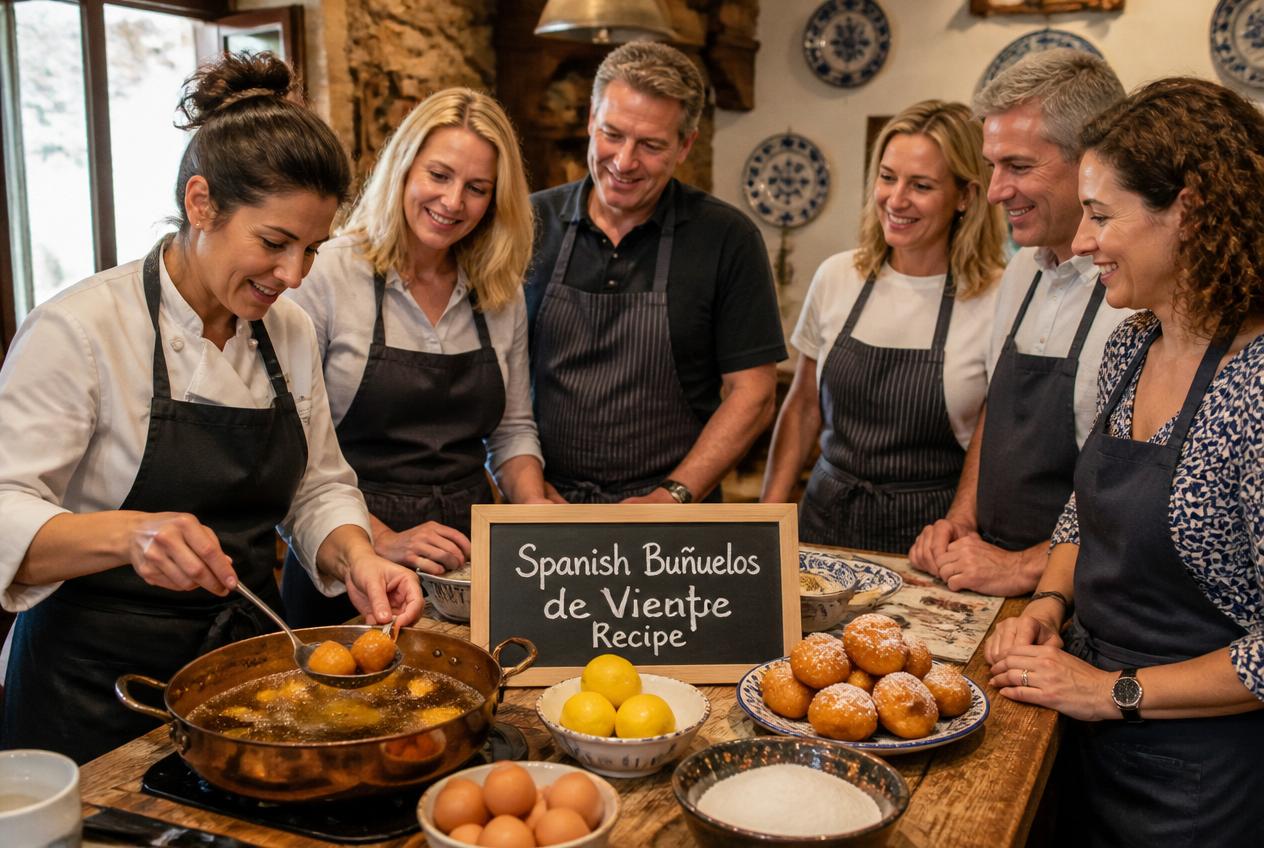
You’ll master the light, airy Spanish Buñuelos de Viento recipe with a simple choux-style dough, a quick fry, and a dusting or filling that suits your taste. I show exact steps and practical tips so you can make authentic Spanish buñuelos at home that puff hollow and stay crisp. The Spanish Buñuelos de Viento recipe remains a favorite for anyone seeking a traditional Spanish dessert that’s both festive and easy to prepare.
Follow my clear guidance to recreate this Spanish Buñuelos de Viento recipe—perfect for festivals or a special dessert. You can adapt fillings, spices, and frying techniques to match family preferences and regional variations. I include time-saving make-ahead options and chef-tested tricks so the results stay reliable whether you cook on a weeknight or for guests using this Spanish Buñuelos de Viento recipe.
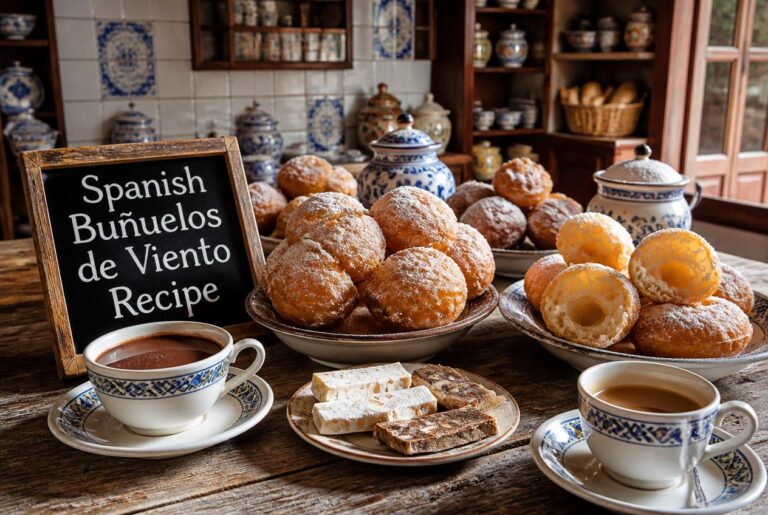
Spanish Buñuelos de Viento Recipe
Key Takeaways
- Learn a straightforward, authentic method for making the Spanish Buñuelos de Viento recipe at home.
- Use practical tips to achieve hollow, crisp fritters and customize fillings and flavors with your Spanish Buñuelos de Viento recipe.
- Prepare parts ahead and choose variations to suit different occasions and skill levels using the Spanish Buñuelos de Viento recipe.
Description and Historical Information
Buñuelos de viento are light, hollow fritters made from a choux-like dough that puffs when fried, yielding an airy interior and a crisp exterior. I often dust them with powdered sugar, cinnamon, or fill them with custard for variation. The Spanish Buñuelos de Viento recipe stands out for its versatility and simplicity.
The dough and cooking method connect to classic Spanish and Mediterranean techniques, showing how many authentic Spanish foods rely on basic pantry ingredients—flour, eggs, milk, butter—transformed by high-heat frying. Buñuelos belong to traditional Spanish recipes that bridge everyday comfort food and festive dishes, and the Spanish Buñuelos de Viento recipe is a great example.
Buñuelos have strong ties to regional culinary traditions across Spain. Andalusia and Extremadura celebrate buñuelos around All Saints’ Day and Carnival; other regions adapt fillings and flavorings, which illustrates the diversity of regional foods of Spain. The Spanish Buñuelos de Viento recipe reflects this regional diversity.
Historical roots trace back through centuries of Iberian cookery, with influences from Sephardic Jewish and broader Mediterranean foodways evident in fried dough snacks. Traditional Spanish food often blends religious, seasonal, and regional customs into recipes passed down in families, and the Spanish Buñuelos de Viento recipe is no exception.
Chef’s Tips
Use a choux-style batter for authentic Spanish Buñuelos de Viento recipe; it creates the light, almost hollow shell that defines this Spanish Buñuelos de Viento recipe. Whisk the dough until it pulls away from the pan for the correct texture. The Spanish Buñuelos de Viento recipe requires steady oil temperature between 350–375°F (175–190°C); monitor with a thermometer and adjust heat quickly.
Work in small batches to avoid crowding. Drop tablespoons of dough spaced apart so each fritter expands evenly and crisps on all sides. For easy traditional Spanish recipes, dust finished buñuelos with powdered sugar or a cinnamon-sugar mix. Fill larger buñuelos with pastry cream or dulce de leche using a piping bag for a classic touch.
If you’re new to authentic Spanish recipes for beginners, practice one small test batch first to check oil temperature, portion size, and frying time before making larger quantities. Place finished buñuelos on a cooling rack over a sheet pan to drain excess oil, then toss them in sugar while still warm so the coating adheres. If the dough seems too loose, refrigerate it 10–15 minutes to firm up; avoid adding more flour than the Spanish Buñuelos de Viento recipe states.
Make-Ahead Instructions
Prepare the choux-like dough for your Spanish Buñuelos de Viento recipe up to one day ahead and keep it chilled in an airtight container. Chilling firms the dough slightly, which makes portioning quicker when frying, and it won’t affect rise if you bring it to near room temperature before frying. For shaping, pipe or spoon dough onto a tray lined with parchment, then freeze the individual portions until solid. Once frozen, transfer them to a resealable bag; fry from frozen for consistent puffing and reduced hands-on time on the day of serving.
Store filled buñuelos separately from fillings for up to 24 hours to prevent sogginess. If you plan to fill them ahead, use a thick pastry cream or stabilized whipped cream and fill just before serving, or fill and keep refrigerated for up to 6 hours. Reheat unfilling buñuelos in a 350°F (175°C) oven for 5–8 minutes to crisp the exterior. For frozen portions, fry directly from the freezer, increasing fry time slightly until golden and puffed. Dust with sugar or add fillings after reheating to preserve texture in your Spanish Buñuelos de Viento recipe.
Tips at a glance:
- Dough: refrigerate up to 24 hours for your Spanish Buñuelos de Viento recipe.
- Par-cooked portions: freeze on tray, store in bag for the Spanish Buñuelos de Viento recipe.
- Filled: fill within 6 hours for best texture in the Spanish Buñuelos de Viento recipe.
- Reheat: oven for crisping; fry from frozen for best puff in your Spanish Buñuelos de Viento recipe.
For a reliable template on traditional technique and ingredient proportions, consult a trusted recipe such as Buñuelos de Viento from Spain’s tourism recipe collection (https://www.spain.info/en/recipe/bunuelos-viento/).
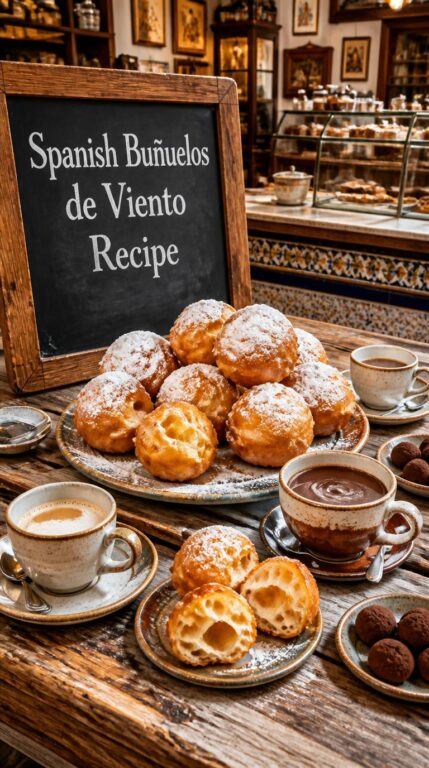
Variations
I often change the Spanish Buñuelos de Viento recipe to match seasonal flavors. A simple shift is to infuse the milk with citrus peel—lemon or orange adds bright, clean notes without altering the choux-like texture. For a richer dessert, fill the hollow centers with pastry cream, dulce de leche, or whipped mascarpone using a piping bag and a thin nozzle.
Substitute a portion of the all-purpose flour with rice flour for a slightly crisper crust. The difference is subtle but noticeable: lighter crunch with the same airy interior. To vary coatings, alternate between cinnamon sugar, powdered sugar, and a dusting of cocoa mixed with a little sugar. For a modern twist, brush warm buñuelos with a thin honey-lime glaze and sprinkle toasted sesame seeds. For a savory Spanish Buñuelos de Viento recipe, reduce the sugar in the dough and add finely grated Manchego or Parmesan before frying. These pair well with a creamy garlic aioli or a smoked paprika yogurt dip.
I keep notes on which tweaks work best with the Spanish Buñuelos de Viento recipe. That helps me reproduce favorite variations consistently and adapt the Spanish Buñuelos de Viento recipe for different occasions.
Related Recipes
I often pair the Spanish Buñuelos de Viento recipe with a roster of classic Spanish dishes that balance sweetness with savory flavors. For a tapas-style spread, I include patatas bravas, marinated olives, and garlic shrimp (gambas al ajillo) to showcase popular Spanish dishes and traditional Spanish tapas ideas. When I plan a family dinner, I reach for hearty Spanish rice dishes like paella or a simple saffron rice with roasted vegetables. These Spanish rice recipes work well as the main course when I want a crowd-pleasing, homemade meal.
Seafood plays a key role in Spain’s cuisine, so I add grilled sardines or a seafood paella to highlight Spanish seafood recipes. I find these complement the light, airy texture of buñuelos and broaden the menu’s flavor profile. For everyday cooking, I rely on the best homemade Spanish dishes such as tortilla española and a robust chickpea stew. These classic Spanish meals to make at home offer comfort and make the meal feel authentically Spanish. If I aim for a varied spread, I combine tapas recipes with a large rice dish and a dessert like the Spanish Buñuelos de Viento recipe. This mix satisfies different tastes and makes for a memorable, balanced meal.
Recipe Comparison
I compare recipes by texture, technique, and ingredient simplicity to help you choose the Spanish Buñuelos de Viento recipe version that fits your kitchen and occasion. Texture varies most: some recipes yield thin, rosette-like buñuelos while others produce puffier, choux-style fritters. Rosette batter (thin and smooth) gives a light, crisp shell, whereas a choux approach creates airy, tender centers. Technique influences speed and equipment needs. Using a rosette mold requires a metal form and careful dipping, as shown in a Mexican rosette method I consulted (Mexican Rosette Fritters). The choux-style recipes need an extra step of cooking the dough on the stovetop before frying.
Ingredient lists show trade-offs between simplicity and richness. Basic Spanish versions use flour, eggs, milk, and a little sugar, suited for large batches; more elaborate fills or custards add complexity and serve as dessert centerpieces. I note whether cinnamon-sugar or powdered sugar finishes are suggested in the Spanish Buñuelos de Viento recipe. Quick comparison (key points):
- Texture: rosette = crisp thin; choux = puffy, tender in the Spanish Buñuelos de Viento recipe.
- Equipment: rosette mold vs. no special tool for the Spanish Buñuelos de Viento recipe.
- Time: rosette = faster batter; choux = additional stovetop step in the Spanish Buñuelos de Viento recipe.
- Serving: dusted vs. filled options for your Spanish Buñuelos de Viento recipe.
Select the method that matches your available tools and the texture you prefer for your Spanish Buñuelos de Viento recipe.
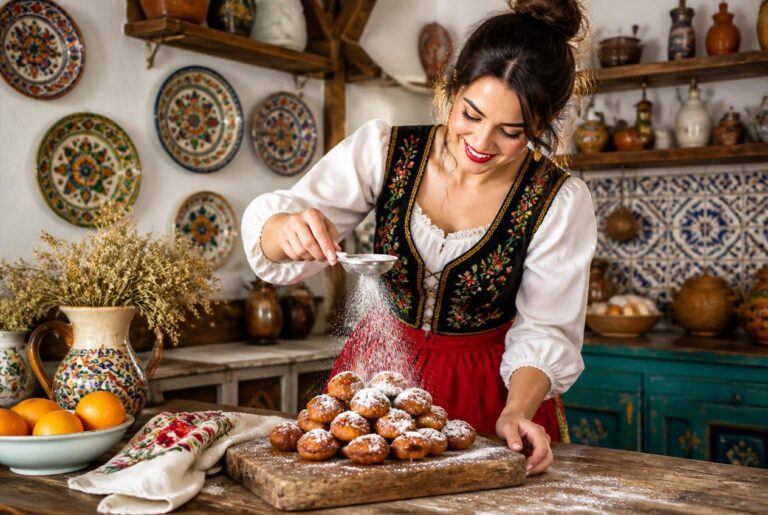
Spanish Buñuelos de Viento Recipe Cooking TIps
Spanish Buñuelos de Viento Recipe Cooking Tips
• Spanish Buñuelos de Viento are light, airy fritters celebrated for their delicate texture, golden exterior, and sweet flavor.
• The name translates to “fritters of wind,” reflecting their characteristic lightness.
• A pâte à choux-style dough is commonly used to create the hollow, airy interior.
• Water, butter, flour, and eggs form the traditional foundation of the dough.
• Cook the flour mixture thoroughly before incorporating the eggs.
• Add the eggs gradually, mixing well after each addition to achieve a smooth consistency.
• The dough should be soft enough to expand during frying while still holding its shape.
• Allow the dough to cool slightly before adding eggs to prevent curdling.
• Hot oil is essential for proper expansion and crispness.
• Maintain a steady frying temperature to encourage even cooking and prevent excessive oil absorption.
• Fry in small batches to avoid overcrowding the cooking vessel.
• The fritters should puff naturally as they cook.
• Turn them occasionally to achieve an even golden-brown color.
• Drain briefly on paper towels to remove excess oil.
• Powdered sugar is a traditional finishing touch.
• Some versions are filled with pastry cream, whipped cream, chocolate, or sweet custard after cooling.
• Cinnamon, citrus zest, or vanilla may be used to enhance flavor.
• The flavor should balance a delicate pastry texture, gentle sweetness, and rich filling when used.
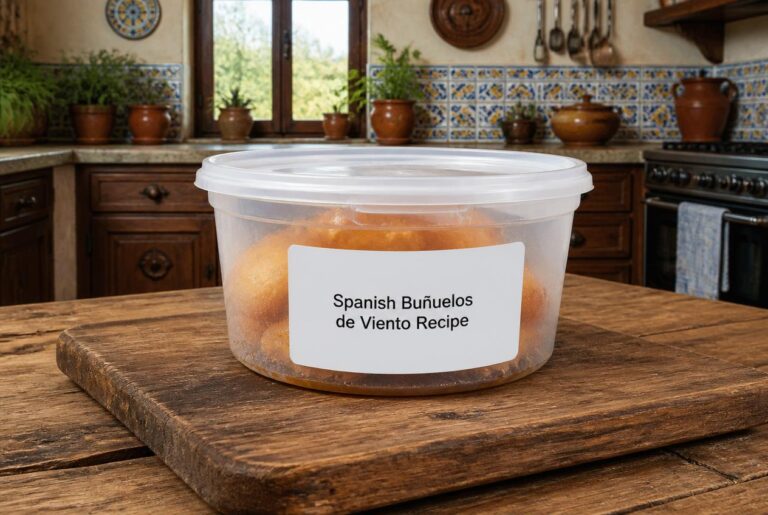
Spanish Buñuelos de Viento Recipe Storage Tips
Spanish Buñuelos de Viento Recipe Storage Tips
• Buñuelos de Viento are best enjoyed shortly after preparation while still light and crisp.
• Allow the fritters to cool completely before transferring them into storage containers.
• Store in airtight containers to help maintain freshness.
• Place parchment or wax paper between layers to help prevent sticking and damage.
• Filled buñuelos may require refrigeration depending on the filling used.
• Refrigerate cream-filled or custard-filled versions promptly.
• Reheat unfilled buñuelos in the oven or air fryer to help restore crispness.
• Avoid excessive microwave reheating, which can soften the pastry.
• Store powdered sugar toppings separately if possible and refresh before serving.
• Freeze unfilled fritters in airtight freezer-safe containers if desired.
• Wrap tightly to help prevent freezer burn and preserve quality.
• Defrost frozen fritters gradually at room temperature before reheating.
• Filled versions generally freeze less successfully due to potential texture changes in the filling.
• Use clean utensils when handling leftovers to help maintain freshness.
• Keep away from strongly scented foods because pastries readily absorb surrounding odors.
• Label storage containers with the preparation date for easier inventory management.
• Check for signs of spoilage such as rancid odors, mold, unusual discoloration, or filling deterioration before consuming leftovers.
• For best quality, enjoy the fritters while they remain light, airy, and freshly flavored.
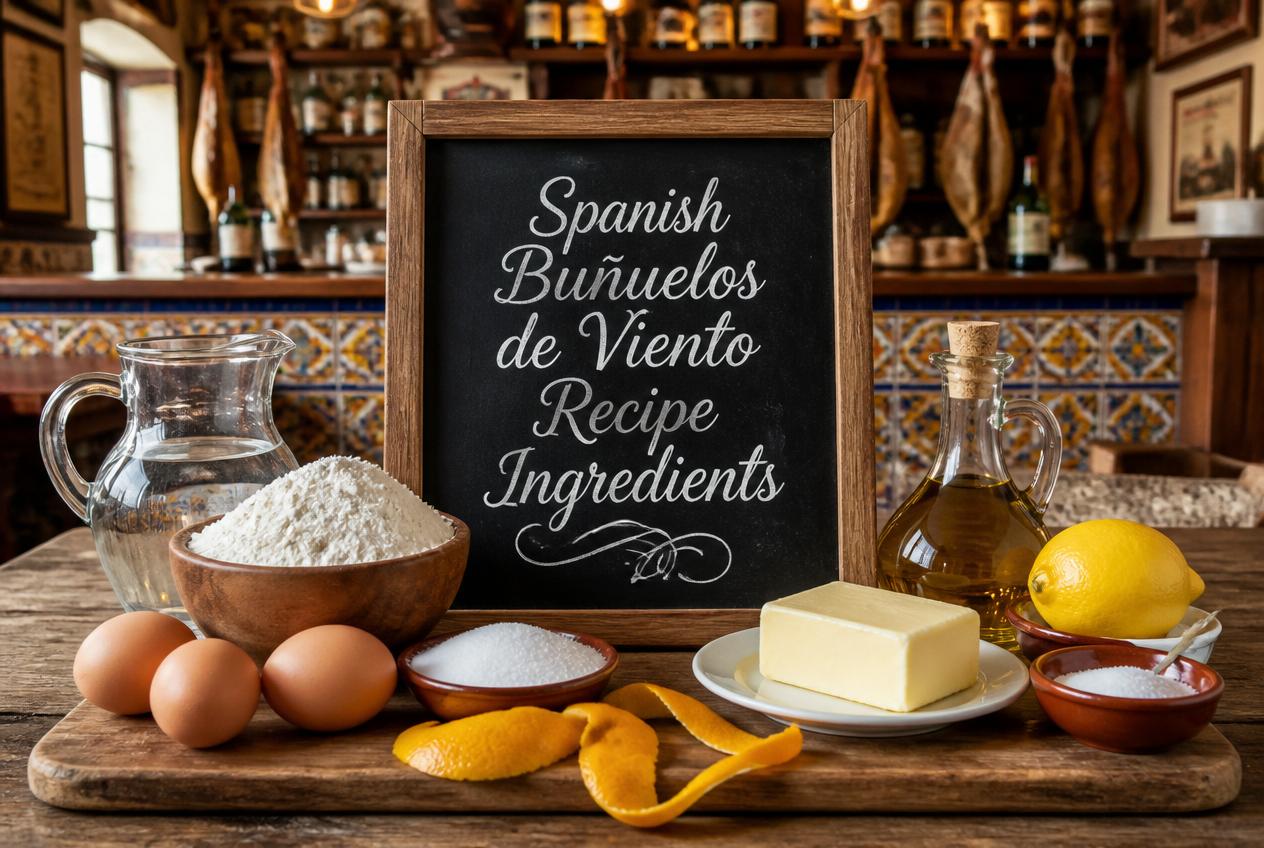
Spanish Buñuelos de Viento Recipe
Ingredients
- 1 cup all-purpose flour
- 3 large eggs
- 1/2 cup whole milk
- 1/4 cup butter unsalted
- 1/4 cup sugar granulated
- 1/2 teaspoon sea salt fine
- 1/2 teaspoon vanilla extract pure
- 1 teaspoon lemon zest finely grated
- 1/2 teaspoon cinnamon ground
- 1 tablespoon orange liqueur such as Cointreau
- 1 teaspoon baking powder
- Vegetable oil for deep frying (about 3 cups)
- 1/2 cup sugar superfine for dusting
- 1/2 teaspoon anise seed optional, for authentic flavor ground
Instructions
- Begin by placing the whole milk, unsalted butter, lemon zest, and ground anise seed (if using) into a small saucepan.
- Set the pan over medium heat and warm the mixture gently until the butter has completely melted and the milk is just beginning to approach a simmer. Do not allow it to boil.
- Remove the saucepan from the heat and let the mixture cool for about 2 minutes. This brief cooling period prevents the warm liquid from affecting the texture of the dough when combined with the other ingredients.
- The lemon zest and anise infuse the milk with a subtle fragrance that gives the finished buñuelos their traditional flavor.
- While the milk mixture cools slightly, place the flour, granulated sugar, sea salt, ground cinnamon, and baking powder into a large mixing bowl.
- Whisk everything together thoroughly until evenly combined.
- Distributing the baking powder and spices evenly ensures that the buñuelos puff properly and develop consistent flavor throughout.
- Pour the warm milk and butter mixture into the bowl of dry ingredients.
- Stir gently until the ingredients are just combined and no large pockets of flour remain.
- Add the eggs one at a time, mixing thoroughly after each addition. This gradual incorporation helps create a smooth, cohesive dough.
- Once the eggs are fully incorporated, stir in the vanilla extract and orange liqueur.
- Continue mixing until the dough becomes smooth, soft, and slightly sticky. The dough should be thick enough to hold its shape when scooped but still tender and pliable.
- Cover the bowl with a clean kitchen towel or plastic wrap.
- Allow the dough to rest at room temperature for approximately 30 minutes.
- This resting period allows the flour to fully hydrate and gives the baking powder time to begin activating, helping create lighter, puffier buñuelos during frying.
- While the dough rests, pour vegetable oil into a deep, heavy-bottomed pot to a depth of about 2 inches.
- Place the pot over medium heat and heat the oil until it reaches 350°F (175°C).
- Maintaining a consistent frying temperature is important. If the oil is too cool, the buñuelos will absorb excess oil and become greasy. If it is too hot, they will brown too quickly before the centers are fully cooked.
- A thermometer is highly recommended for best results.
- Once the dough has rested, use two teaspoons to scoop and shape small portions of dough.
- Each piece should be approximately the size of a walnut.
- The dough does not need to be perfectly round. As it fries, it will naturally puff and develop its characteristic rustic appearance.
- Carefully lower a few dough balls at a time into the hot oil.
- Avoid overcrowding the pot, as too many pieces at once can lower the oil temperature and affect the texture of the finished pastries.
- Fry the buñuelos for 3 to 4 minutes, turning them occasionally so they brown evenly on all sides.
- As they cook, they will puff up and develop a beautiful golden-brown exterior.
- The finished buñuelos should be crisp on the outside and light and airy on the inside.
- Using a slotted spoon, transfer the fried buñuelos to a plate lined with paper towels.
- Allow them to drain briefly to remove any excess oil.
- Continue frying the remaining dough in batches until all of the buñuelos are cooked.
- While the buñuelos are still warm, roll them in superfine sugar until they are completely coated.
- The residual heat helps the sugar adhere evenly to the surface, creating a delicate sweet crust.
- For an extra touch of flavor, you may mix a little ground cinnamon into the sugar before coating.
- Serve the buñuelos immediately while they are still warm and at their best.
- Their crisp exterior and soft, fluffy interior make them irresistible fresh from the fryer.
- They pair beautifully with coffee, hot chocolate, tea, or a glass of sweet dessert wine.
Spanish Buñuelos de Viento Recipe Frequently Asked Questions
I address the practical points home cooks ask most about the Spanish Buñuelos de Viento recipe: ingredients, texture tips, frying temperature, make-ahead options, common toppings, and how regional buñuelos differ. Each answer gives exact measurements, temperatures, or techniques where useful.
What ingredients are typically used to make buñuelos de viento?
I use milk, water, unsalted butter, a pinch of salt, granulated sugar, all-purpose flour, and whole eggs to make the classic choux-like batter for the Spanish Buñuelos de Viento recipe. I often infuse the milk with a cinnamon stick and a star anise for flavor, and finish with lemon or orange zest when available.
How do you make buñuelos de viento light and airy instead of dense?
Bring the liquid and butter to a vigorous simmer, then add the flour all at once and stir until a smooth paste forms and pulls away from the pan; this gelatinizes the starch and prevents a heavy texture. Cool the paste slightly before beating in eggs one at a time until the batter is glossy and ribbon-like—correct consistency is key to steam-driven puffing in the Spanish Buñuelos de Viento recipe.
What is the best oil temperature for frying buñuelos de viento?
Heat neutral oil to 350–365°F (175–185°C) and monitor it with a thermometer for steady results. If the oil is below this range the buñuelos absorb oil and become greasy; if it’s hotter they brown too quickly without fully puffing. The Spanish Buñuelos de Viento recipe always benefits from careful temperature control.
Can buñuelos de viento dough be prepared ahead of time and fried later?
I make the choux-like dough for the Spanish Buñuelos de Viento recipe up to 24 hours ahead and refrigerate it in an airtight container. Before frying, I bring the dough back to room temperature and re-whip it briefly. For the best puffing in the Spanish Buñuelos de Viento recipe, I pipe and fry the dough within a few hours after shaping.
What are the most common coatings or toppings for buñuelos de viento?
I dust buñuelos with a mix of granulated sugar and ground cinnamon immediately after frying for a classic Spanish Buñuelos de Viento recipe finish. I also fill some with pastry cream, dulce de leche, or whipped cream using a small piping tip. Sometimes, I drizzle warm honey or chocolate over the Spanish Buñuelos de Viento recipe for variation.
The Spanish Buñuelos de Viento recipe offers a delicious treat for any occasion. You can experiment with different fillings and toppings to customize your Spanish Buñuelos de Viento recipe. If you want more inspiration, check out this traditional Spanish Buñuelos de Viento recipe for additional tips.
How do buñuelos de viento differ from Mexican buñuelos and Ecuadorian buñuelos?
Spanish Buñuelos de Viento recipe uses a choux-like batter that puffs up and creates a hollow center, often enhanced with citrus and anise flavors. In contrast, the Mexican buñuelos are thin, crisp discs made from rolled dough and served with syrup or sugar, while the Ecuadorian versions tend to be denser, sometimes including cornmeal or cheese, and are popular as street snacks. When you explore a Spanish Buñuelos de Viento recipe, you’ll discover unique textures and flavors that set them apart from their Latin American counterparts.

Recipes are gathered in person and written for real-world cooking conditions.
- 10 Hungarian Dessert Recipes Passed Down Through Generations - July 25, 2026
- 11 Easy English Recipes Anyone Can Make - July 25, 2026
- Hungarian Kifli Recipe - July 25, 2026