
Anyone can pull off an authentic Italian Spaghetti Carbonara recipe at home with just a few good ingredients and a bit of know-how. This classic dish brings together hot pasta, crispy guanciale, Pecorino Romano, eggs, and a generous shake of black pepper for a silky sauce—no cream needed, ever. I’ll walk you through the Italian Spaghetti Carbonara recipe, share its Roman roots, and toss in some practical tips so your pasta actually turns out the way you want.
You’ll get straight-up, step-by-step advice on picking ingredients and nailing the timing. If you’ve ever ended up with scrambled eggs or a watery mess, don’t worry—the Italian Spaghetti Carbonara recipe has some fixes for that. I’ll explain why guanciale and Pecorino matter (they do!), what to do if you’ve only got pancetta or bacon, and how to finish your pasta with the right bite and flavor.
Description, Recipe, and Historical Information
Spaghetti Carbonara, a Roman staple, comes together with just spaghetti, guanciale (cured pork jowl), eggs or just yolks, Pecorino Romano, and black pepper. The magic of an Italian Spaghetti Carbonara recipe is in emulsifying the egg yolks and grated Pecorino with starchy pasta water—seriously, there’s never cream in the real deal.
Boil spaghetti until it’s al dente, then save some pasta water. Dice guanciale (or, if you must, pancetta; bacon works in a pinch but isn’t quite right) and fry it up until the fat renders and the edges get golden. Toss the hot spaghetti with guanciale, then take the pan off the heat before you add the egg-cheese mix—scrambled eggs have no place in an Italian Spaghetti Carbonara recipe.
Go for all yolks if you want a richer, silkier sauce, or use whole eggs for something lighter; usually, it’s about one yolk for every 30–40 grams of pasta per person. Grate Pecorino Romano finely for the Italian Spaghetti Carbonara recipe; you could mix in a bit of Parmigiano-Reggiano if you’re feeling it, but honestly, Pecorino is the star.
Carbonara didn’t show up until after World War II—so, it’s not ancient, but it’s definitely Roman at heart. Dishes like pasta alla gricia and cacio e pepe are kind of its cousins, with Pecorino and black pepper but no eggs or pork. The Italian Spaghetti Carbonara recipe really proves how a few simple ingredients—good pasta and salty cured meat—can give you a sauce that’s creamy and rich, no cream in sight.
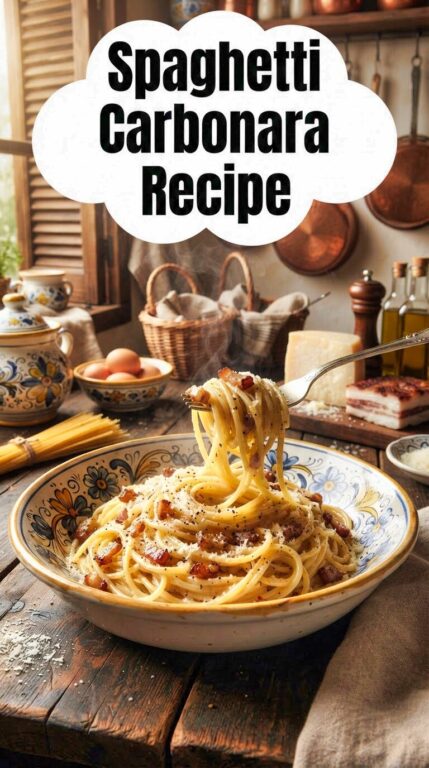
Cooking Tips
When you make an Italian Spaghetti Carbonara recipe, always reserve at least one cup of that starchy pasta water before draining. You’ll want to splash in small amounts as you go, just enough to loosen up the sauce and help it cling to the noodles. Add water slowly—too much will thin out the egg-and-cheese emulsion, and nobody wants a watery Italian Spaghetti Carbonara recipe.
Cook your pasta al dente; it should finish cooking right in the pan with the sauce. Whether you’re using spaghetti, bucatini, rigatoni, linguine, or fettuccine, always taste a minute or two before the box says it’s done. With an Italian Spaghetti Carbonara recipe, that little bit of bite in the pasta makes a big difference.
Rendered fat from crispy guanciale gives the Italian Spaghetti Carbonara recipe its signature flavor. Once the pork gets crispy, drop the heat so you don’t burn anything. If you can’t find guanciale, thick-cut bacon is a solid substitute. Just drain most of the fat, but save a few spoonfuls for the sauce—it’s essential for a good Italian Spaghetti Carbonara recipe.
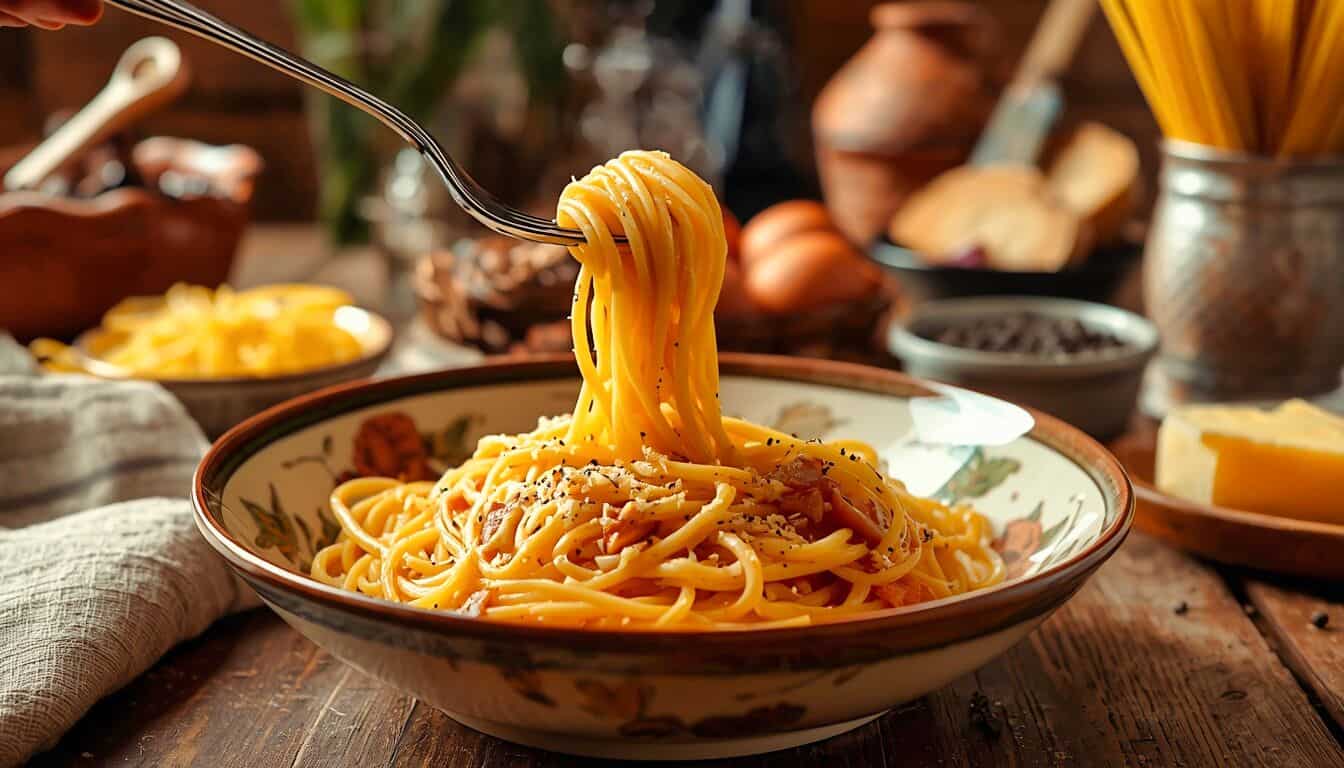
Spaghetti Carbonara Recipe
Ingredients
- 4 ounces guanciale cut into 1/4-inch cubes
- 1 tablespoon olive oil
- 1 teaspoon black pepper ground or to taste
- 2 eggs
- 3 tablespoons Parmigiano-Reggiano cheese grated
- 3 tablespoons Pecorino Romano cheese grated
- 1 teaspoon ground black pepper ground or to taste
- 6 ounces spaghetti
- 1 cup pasta water
- 3 tablespoons Parmigiano-Reggiano cheese grated
- 3 tablespoons Pecorino Romano cheese grated
Instructions
- Place the guanciale, olive oil, and 1 teaspoon of ground black pepper in a Dutch oven.
- Cook over medium-low heat for approximately 5 minutes.
- Continue until the guanciale is golden and nearly crisp.
- Reduce the heat to low.
- Prepare the Egg and Cheese Mixture
- Place the eggs in a medium bowl.
- Add 3 tablespoons of Parmigiano-Reggiano cheese, 3 tablespoons of Pecorino Romano cheese, and 1 teaspoon of ground black pepper.
- Whisk thoroughly until the mixture is smooth and evenly combined.
- Set aside.
- Bring a large pot of lightly salted water to a boil.
- Add the spaghetti and cook for 10 to 12 minutes, stirring occasionally.
- Continue until the pasta is tender but still firm to the bite.
- Reserve 1 cup of the pasta cooking water before draining.
- Pour the reserved pasta water into the Dutch oven with the cooked guanciale and pepper.
- Add the drained spaghetti.
- Stir thoroughly until the pasta is coated and the ingredients are evenly combined.
- Slowly pour the prepared egg and cheese mixture over the hot pasta.
- Stir constantly as the mixture is added.
- Continue cooking for 1 to 2 minutes while stirring continuously.
- Cook only until the egg and cheese mixture thickens into a rich sauce that coats the spaghetti.
- Remove the Dutch oven from the heat.
- Stir the remaining 3 tablespoons of Parmigiano-Reggiano and 3 tablespoons of Pecorino Romano into the pasta.
- Mix until the cheeses are evenly incorporated.
- Divide the pasta among serving plates.
- Serve immediately while hot.
- This classic Spaghetti Carbonara combines tender pasta with savory guanciale, freshly ground black pepper, eggs, Parmigiano-Reggiano, and Pecorino Romano. The hot pasta transforms the egg and cheese mixture into a rich, silky sauce for a simple yet deeply flavorful Italian favorite.
Beat fresh eggs with finely grated Pecorino or Parmesan, then season with kosher salt and plenty of freshly ground black pepper. For an Italian Spaghetti Carbonara recipe, never add cream—the glossy texture comes straight from eggs and that magic pasta water. Trust me, the Italian Spaghetti Carbonara recipe is all about that creamy, eggy sauce.
Work off the heat when you mix the pasta and egg mixture, or you’ll end up with scrambled eggs instead of a silky Italian Spaghetti Carbonara recipe. Toss vigorously. If the sauce looks dry, drizzle in a bit of extra-virgin olive oil. It can add a little silkiness without covering up the Italian Spaghetti Carbonara recipe’s flavor.
Stick to tradition and skip the garlic for a classic Italian Spaghetti Carbonara recipe. But honestly, if you crave garlic, sweat a crushed clove briefly in olive oil, then fish it out before adding the pasta. For a punchier finish, crack some extra black pepper over the top. That last hit of pepper really brings the Italian Spaghetti Carbonara recipe together.

Recipes are gathered in person and written for real-world cooking conditions.
- 10 Hungarian Dessert Recipes Passed Down Through Generations - July 25, 2026
- 11 Easy English Recipes Anyone Can Make - July 25, 2026
- Hungarian Kifli Recipe - July 25, 2026