
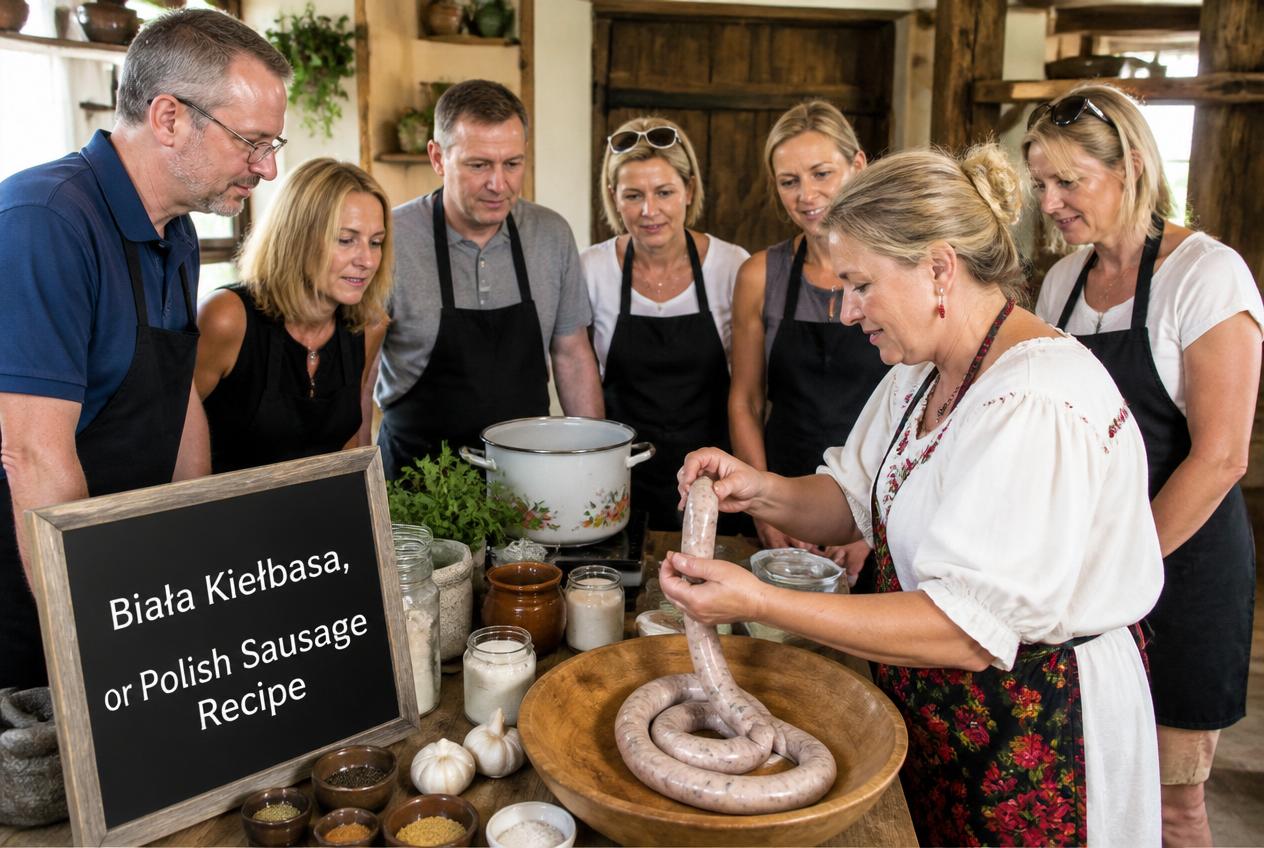
Biała kiełbasa, or Polish sausage recipe, holds a cherished place in Polish culinary tradition, especially during Easter celebrations. This fresh pork sausage gets its name from its pale, unsmoked appearance and features a delicate flavor profile built on garlic, marjoram, and black pepper. Unlike its smoked cousins, biała kiełbasa maintains a mild taste that makes it versatile for soups, pan-frying, or baking. If you want to master a Polish sausage recipe at home, this guide will help you create the perfect biała kiełbasa from scratch.
Making biała kiełbasa at home lets you control the quality of ingredients and achieve the authentic taste that defines traditional Polish cuisine. Once you understand the basic technique and gather the right tools, you’ll find the Polish sausage recipe process straightforward and rewarding. This sausage works beautifully in żurek soup, served alongside horseradish, or simply prepared with onions and apples.
This Polish sausage recipe guides you through creating genuine Polish white sausage with the proper seasoning balance and texture. You’ll learn techniques for achieving that characteristic fresh flavor and tender bite that makes biała kiełbasa special. Using this Polish sausage recipe will ensure you get authentic results every time.
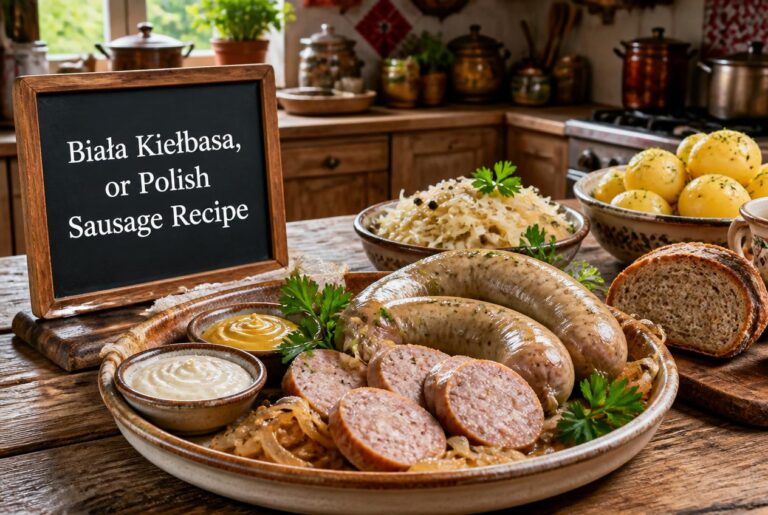
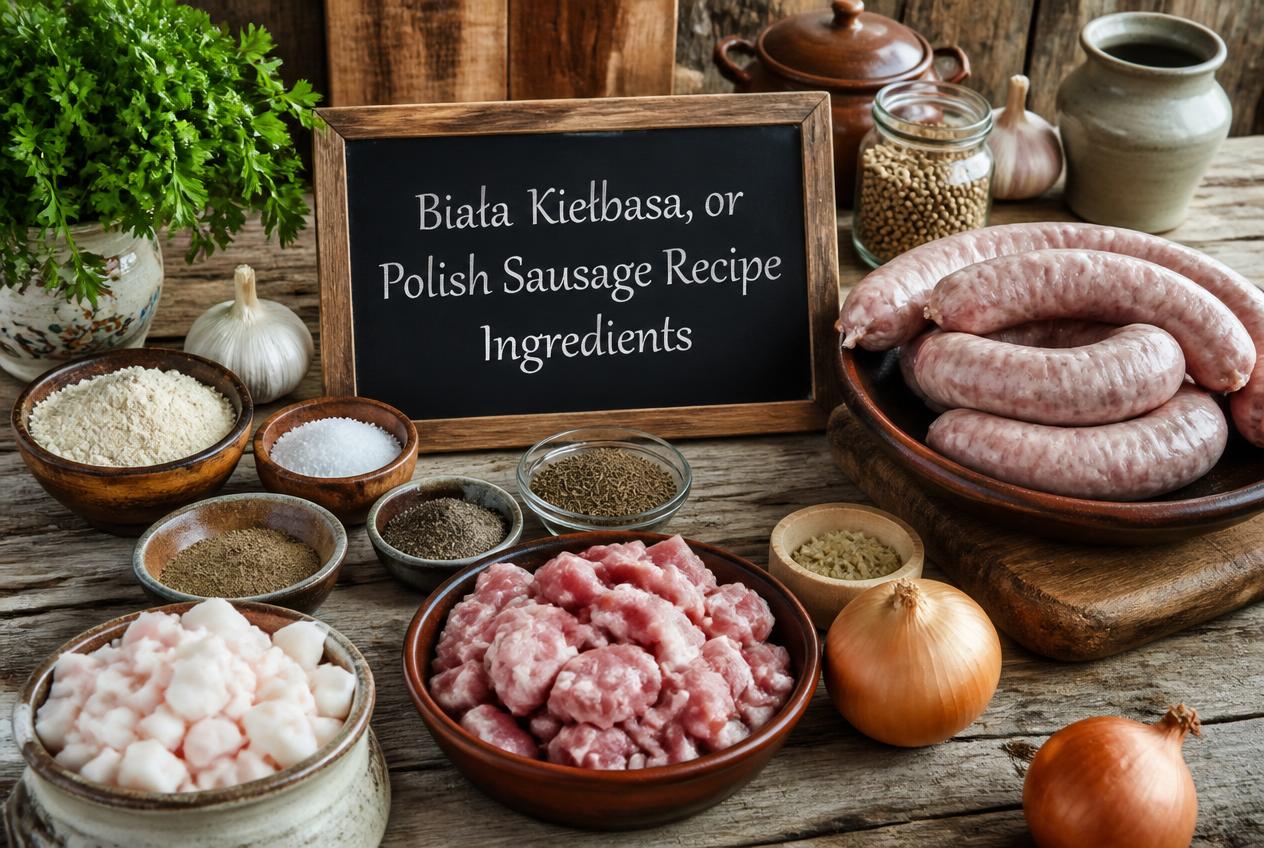
Biała Kiełbasa, or Polish Sausage Recipe
Key Takeaways
- Biała kiełbasa is a fresh, unsmoked Polish pork sausage flavored with garlic and marjoram, traditionally served at Easter
- Making white sausage at home requires basic sausage-making tools but follows a straightforward process once mastered
- The sausage can be prepared multiple ways including boiling, pan-frying, or baking with accompaniments like onions and apples
Description and Historical Information
Biała kiełbasa, which translates to “white sausage” in English, is one of the most cherished traditional foods from Poland. This fresh pork sausage differs significantly from its smoked counterparts because it remains unsmoked and must be cooked before consumption. If you’re searching for a Polish sausage recipe with deep roots, biała kiełbasa is an ideal choice.
The sausage gets its characteristic flavor from a simple yet distinctive blend of ingredients. Ground pork forms the base, while garlic, marjoram, and black pepper provide the seasoning that defines this authentic Polish food. Some traditional Polish meals use additional pork fat or bacon to enhance richness and texture.
Key Characteristics:
- Color: Pale white or cream (due to lack of smoking)
- Texture: Tender and delicate
- Shelf Life: Short; requires refrigeration
- Primary Use: Must be cooked before eating
Biała kiełbasa holds deep cultural significance in Polish family recipes, especially during Easter and Christmas celebrations. The sausage’s perishability is part of its identity as a seasonal specialty, making it distinct from preserved, shelf-stable kiełbasa varieties found year-round. If you want to impress your guests with a Polish sausage recipe that carries tradition, biała kiełbasa is essential.
In classic Polish dishes, this white sausage features prominently in traditional soups like żurek and white barszcz. These old-fashioned Polish recipes showcase how the sausage’s fresh, garlicky flavor complements acidic and savory broths. You can prepare this Polish sausage recipe through various cooking methods, including boiling, pan-frying, or baking with vegetables like onions and peppers.
Chef’s Tips
The key to an authentic Polish sausage recipe for biała kiełbasa lies in keeping everything cold during preparation. Chill the meat, fat, and even your grinding equipment to maintain the right texture. This step is crucial for the perfect Polish sausage recipe.
When seasoning, start conservatively with garlic and marjoram. Adjust after testing a small patty by pan-frying it first, which prevents overseasoning an entire batch. This approach will improve your Polish sausage recipe results.
Temperature control matters:
- Keep ingredients between 32-40°F during mixing
- Work quickly to prevent fat from warming
- Chill stuffed sausages before cooking
Use natural hog casings soaked in warm water for at least 30 minutes before stuffing. They become pliable and less likely to tear during the process. This step helps your Polish sausage recipe achieve the right texture.
For rustic Polish cooking authenticity, avoid overstuffing the casings. Leaving slight slack prevents bursting during cooking and gives the sausage its traditional appearance.
Cooking method selection:
- Simmering: Gentle poaching at 170-180°F for tender results
- Pan-frying: After simmering for golden color
- Baking: With vegetables for deeper flavor
Prick the sausages only if they start to bulge during cooking. Cooking them whole yields juicier results. Fresh biała kiełbasa has a short shelf life, so use it within 2-3 days or freeze portions immediately after making them. When properly wrapped, frozen sausages maintain quality for up to three months. This Polish sausage recipe is perfect for make-ahead meals.
Make-Ahead Instructions
Biała kiełbasa is an excellent candidate for advance preparation, making it ideal for holiday gatherings or busy weeknights. Prepare the sausage mixture and stuff it into casings up to 24 hours before cooking for a convenient Polish sausage recipe.
After stuffing the casings, wrap the sausages tightly in plastic wrap or place them in an airtight container. Refrigerate immediately and keep at 40°F or below until ready to cook. This Polish sausage recipe ensures freshness and safety.
For longer storage, freeze the uncooked sausages for up to 3 months. Wrap each link individually in plastic wrap, then place them in a freezer-safe bag with as much air removed as possible. Thaw the sausages in the refrigerator overnight before use.
Storage Timeline:
- Refrigerated (uncooked): 24 hours
- Frozen (uncooked): 3 months
- Cooked and refrigerated: 3-4 days
Once you’ve cooked the biała kiełbasa, let it cool completely before storing. Place the cooked sausages in an airtight container and refrigerate for up to 3-4 days. To reheat, warm them gently in a skillet over medium heat or in a 350°F oven until heated through.
Never refreeze thawed raw sausage, as this affects both texture and food safety. If you’ve cooked the previously frozen sausage, you can freeze the cooked product for later use in soups like żurek. This Polish sausage recipe adapts well for meal prep.

Variations
Biała kiełbasa adapts beautifully to different occasions and regional preferences throughout Poland. While the classic Polish sausage recipe uses pork shoulder with garlic and marjoram, many families have developed their own twists on this traditional sausage.
For Polish Easter recipes, the standard fresh version goes into żurek soup or white barszcz. This unsmoked variety maintains its delicate, garlicky flavor that complements the sour base of these holiday soups perfectly. The Polish sausage recipe remains a staple for these celebrations.
During Polish Christmas recipes preparations, some cooks add extra marjoram or more garlic for a robust flavor profile. Others incorporate finely minced onions or adjust the fat ratio by mixing pork shoulder with bacon for added richness.
Regional differences also influence how biała kiełbasa is made:
- Fat content: Adjust the pork-to-fat ratio from 70/30 to 80/20 depending on desired texture
- Seasonings: Some recipes call for allspice or nutmeg alongside the traditional marjoram
- Casing size: Use natural hog casings for standard links or sheep casings for thinner breakfast-style sausages
Some Polish families jar their cooked sausage in brine for longer storage, though traditional biała kiełbasa is fresh and requires cooking within a few days. The versatility of this Polish sausage recipe extends to cooking methods. Grill it for summer gatherings, pan-fry slices for breakfast, or bake it with sauerkraut for a simple weeknight meal.
Related Recipes
After mastering this Polish sausage recipe for biała kiełbasa, explore other Polish sausage recipes that showcase different flavors and cooking techniques. These variations will expand your homemade kielbasa repertoire. For more inspiration, visit Polish Housewife for traditional Polish sausage ideas.
Classic Polish Sausage Variations:
- Smoked Kielbasa – The traditional smoked version uses similar ingredients but requires a smoking process that adds depth and longer shelf life
- Farmhouse Sausage – A rustic preparation featuring coarser ground pork and bolder seasoning
- Garlic Kielbasa – Enhanced with extra garlic for those who prefer stronger flavors
Fresh kielbasa recipes pair wonderfully with traditional Polish sides. The sausage works beautifully in kiełbasa z pierogami, where the mild flavor of biała complements the dumplings perfectly. This Polish sausage recipe is a crowd-pleaser at any gathering.
Once you have fresh kielbasa prepared, use it in quick weeknight meals. Roast it at 425°F for 45 minutes with onions and herbs, or simmer the sausage in water for 30 minutes before adding it to pasta or soup. The Polish sausage recipe’s versatility shines in every dish.
Use Polish sausage in breakfast dishes with eggs, slice it for sandwiches, or add it to hearty salads. Each Polish sausage recipe offers unique possibilities while maintaining authentic Polish character.
Popular Cooking Methods:
- Baking with garlic, onion, and herbs
- Grilling for outdoor gatherings
- Simmering in soups and stews
- Pan-frying with vegetables
Recipe Comparison
When comparing Biała Kiełbasa recipes across Eastern European recipes, the core ingredients remain consistent, but preparation methods vary. The traditional Polish sausage recipe uses ground pork, garlic, marjoram, and black pepper as the foundation.
Key Recipe Variations:
| Element | Traditional Method | Modern Adaptation |
|---|---|---|
| Meat ratio | 100% pork | Pork and veal blend |
| Seasoning | Garlic and marjoram only | Additional herbs added |
| Preparation | Fresh, unsmoked | Sometimes lightly smoked |
| Casing | Natural hog casings | Synthetic alternatives |
Some recipes call for the addition of cream or milk to achieve a more delicate texture, while others stick strictly to meat and spices for a firmer sausage. The Polish sausage recipe adapts to both approaches.
Garlic content varies between recipes; some use minimal garlic for a subtle flavor, while others incorporate generous amounts for a pronounced taste. Marjoram remains the defining herb in any Polish sausage recipe.
Regional differences within Poland affect the recipe. Northern regions tend to prefer a coarser grind, while southern areas favor a finer texture. The seasoning proportions also shift based on local preferences, making each Polish sausage recipe unique.
Some recipes include onions or leeks, though purists argue these additions deviate from traditional Biała Kiełbasa. The debate continues among home cooks and professional butchers about what constitutes an authentic Polish sausage recipe.
The cooking method doesn’t typically vary in the recipe itself, but the final preparation differs based on intended use in soups, grilling, or pan-frying. For anyone interested in Polish cuisine, mastering a Polish sausage recipe like biała kiełbasa is an essential skill.
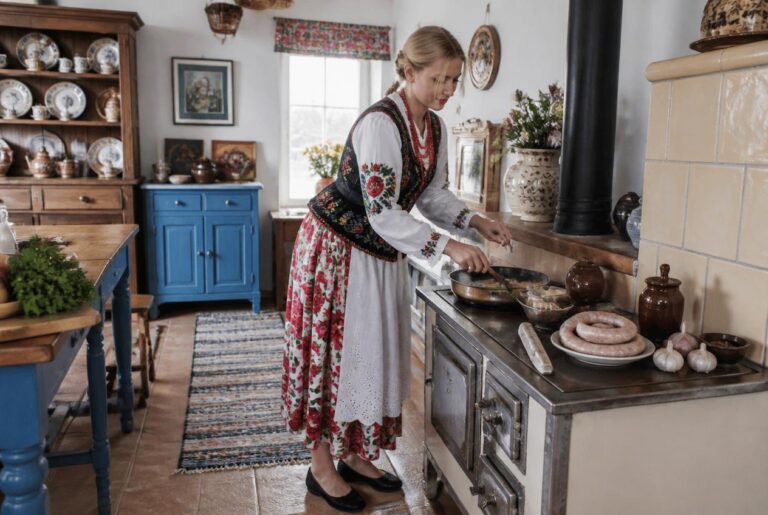
Biała Kiełbasa, or Polish Sausage Recipe Cooking Tips
Polish Sausage Recipe Cooking Tips
• Polish Sausage, commonly known as Kielbasa, is a traditional meat product celebrated for its savory flavor, garlic notes, and versatility in a wide variety of dishes.
• Pork is the most common meat used, although beef, turkey, or mixed meats may also be incorporated.
• Use fresh, well-chilled meat to help maintain proper texture during preparation.
• A balanced ratio of lean meat to fat contributes to a juicy and flavorful sausage.
• Garlic is a signature seasoning and provides much of the traditional flavor profile.
• Black pepper, marjoram, and other spices are commonly used to enhance the seasoning blend.
• Mix the meat and seasonings thoroughly to ensure even flavor distribution.
• Natural casings are often preferred for their traditional texture and appearance.
• Avoid overstuffing casings, which can increase the likelihood of bursting during cooking.
• Twist or tie links evenly for consistent sizing and cooking.
• Fresh sausages should be cooked thoroughly before serving.
• Grilling, roasting, smoking, simmering, or pan-frying are all popular preparation methods.
• Cook over moderate heat to allow even cooking without excessive drying.
• Avoid piercing the casing repeatedly during cooking, as this can release flavorful juices.
• Smoked varieties often develop deeper flavor and a firmer texture.
• Allow cooked sausage to rest briefly before slicing to retain moisture.
• The flavor should balance savory meat, garlic, herbs, spices, and natural smokiness when applicable.
• Serve with sauerkraut, potatoes, mustard, rye bread, or other traditional accompaniments.
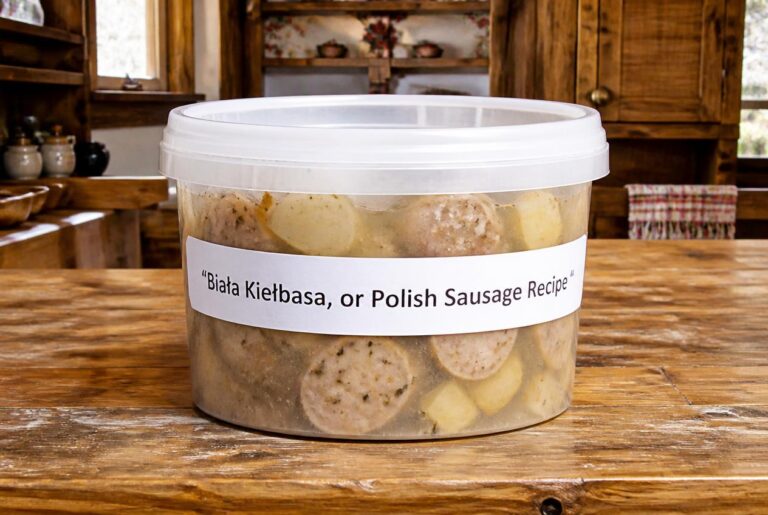
Biała Kiełbasa, or Polish Sausage Recipe Storage Tips
Polish Sausage Recipe Storage Tips
• Allow cooked sausage to cool before transferring it into storage containers.
• Store refrigerated in airtight containers to preserve freshness and flavor.
• Fresh uncooked sausage should remain refrigerated until ready for cooking.
• Keep sausage well wrapped to prevent moisture loss and odor transfer.
• Refrigeration often allows the seasoning flavors to develop more fully.
• Reheat cooked sausage gently in a skillet, oven, or microwave until thoroughly heated.
• Avoid prolonged reheating, which can dry out the meat.
• Store accompanying sauces, mustard, or side dishes separately when possible.
• Freeze cooked or uncooked sausage in airtight freezer-safe containers if desired.
• Wrap tightly to help prevent freezer burn and preserve quality.
• Freeze individual portions for easier thawing and meal preparation.
• Defrost frozen sausage gradually in the refrigerator before cooking or reheating.
• Use clean utensils when handling sausage to help maintain freshness.
• Keep away from strongly scented foods because meats can absorb surrounding odors.
• Label storage containers with the preparation date for easier inventory management.
• Avoid repeated freezing and thawing cycles, which can negatively affect texture and flavor.
• Check for signs of spoilage such as sour odors, slime, mold, unusual discoloration, or texture changes before consuming leftovers.
• For best quality, enjoy refrigerated and frozen portions while the sausage remains juicy, flavorful, and properly stored.
Polish Sausage Recipe
Ingredients
- 6 lb Pork shoulder
- 8 lb Pork butt
- 2.5 lb Pork Belly
- 3 tbsp Marjoram
- 1 tsp Mustard powder
- 5 Garlic
- 4 tbsp Salt
- 2 tbsp Black pepper coarse ground
- Natural hog casing
- 2 cup water Cold
Instructions
- Before you begin, gather all of your ingredients and equipment. You will need a meat grinder, sausage stuffer, large mixing bowls or containers, a sharp knife, cutting board, paper towels, and trays for resting the finished sausages.
- Whenever possible, keep everything cold. Chilled meat grinds more cleanly, develops a better texture, and is safer to handle. If you're making a large batch, work with only a portion of the meat at a time and keep the remainder refrigerated or lightly chilled in the freezer.
- Remove the pork from its packaging and trim away any excess fat if necessary. Cut the meat into cubes or strips small enough to fit easily into the feed tube of your meat grinder.
- If using both pork butt and pork belly, keep them in separate containers for now. The combination of leaner pork butt and richer pork belly creates the ideal balance of flavor and texture for traditional Polish sausage.
- Assemble your meat grinder using a medium grinding plate.
- Arrange your workstation so that feeding the grinder is easy and efficient. If possible, place the bowl of cubed meat inside a larger bowl filled with ice to keep everything cold while working.
- Begin grinding the meat, alternating between pieces of pork butt and pork belly as you feed them into the grinder. Alternating the meats during grinding helps distribute the fat evenly throughout the mixture and reduces the amount of mixing needed later.
- Continue until all of the meat has been ground.
- The finished grind should have a uniform texture with visible flecks of fat evenly distributed throughout the meat.
- Transfer the ground meat to a large mixing bowl.
- Add all of the seasonings, spices, and herbs called for in your recipe. You may also choose to add the seasonings gradually during grinding, but many sausage makers prefer to season after grinding to ensure even distribution.
- Add ice-cold water at a rate of approximately 3 tablespoons per pound of meat.
- Using your hands, begin mixing thoroughly. Knead, fold, and work the meat mixture vigorously until it becomes sticky and cohesive.
- This is one of the most important steps in sausage making. As you mix, proteins develop and form a natural bind that gives the finished sausage its characteristic firm yet juicy texture.
- The mixture should become tacky enough that a small amount will stick to your hand when lifted.
- Before stuffing the sausages, cook a small spoonful of the meat mixture in a skillet.
- Taste carefully and adjust the seasoning if necessary. This is your opportunity to fine-tune the balance of salt, pepper, garlic, herbs, and spices before committing to the entire batch.
- Once satisfied with the flavor, cover the bowl tightly with plastic wrap.
- Place the seasoned meat mixture in the refrigerator and allow it to rest overnight, or for approximately 24 hours.
- This resting period allows the seasonings to fully penetrate the meat and improves the overall flavor of the finished sausage.
- When you are ready to make the sausages, remove the meat mixture from the refrigerator and taste again if desired.
- If using natural hog casings, remove them from their packaging and place them in a bowl of cold water.
- Allow the casings to soak until softened. Drain and repeat the soaking process several times until the water remains clear.
- Finally, run cold water through the inside of each casing. This not only rinses them thoroughly but also helps identify any holes or weak spots before stuffing.
- Properly prepared casings should be soft, flexible, and free of excess salt.
- Assemble the sausage stuffer according to the manufacturer's instructions.
- Before sliding the casing onto the stuffing tube, lightly coat the tube with a small amount of oil. This helps the casing glide smoothly and reduces the risk of tearing.
- Thread one end of the casing onto the stuffing nozzle, leaving a few inches hanging free.
- Begin feeding the meat mixture into the stuffer and slowly fill the casing.
- Use your hands to regulate the flow of meat and maintain an even level of firmness throughout the sausage. The casing should be full but not overly tight, as excessive pressure can cause it to burst.
- Continue until all of the meat has been stuffed.
- Once the casing is filled, twist or tie it at regular intervals to create individual sausage links of your preferred size.
- Inspect each link carefully for air pockets. If you find any, use a sausage pricker or sterilized needle to puncture the casing and gently press the trapped air out.
- Smooth the meat back into place to eliminate any gaps.
- Taking the time to remove air pockets helps improve both appearance and storage quality.
- Arrange the finished sausages on trays in a single layer.
- Place them in the refrigerator overnight.
- This resting period allows the casings to dry slightly, the flavors to continue developing, and the sausages to firm up before cooking or freezing.
- Both the sausage and the sausage maker benefit from this well-earned rest.
- At this stage, the sausages may be frozen for later use or cooked immediately.
- For cooking, place the sausages in a large pot and cover them with broth. While plain water may be used, broth adds significantly more flavor.
- For a traditional Polish touch, add a few allspice berries, one or two bay leaves, and a teaspoon of whole peppercorns to the cooking liquid.
- Bring the liquid to a very gentle simmer. Avoid boiling, which can cause the casings to split.
- Cook the sausages over low heat for approximately 30 to 45 minutes, or until they reach an internal temperature of 160°F (71°C).
- Carefully remove the cooked sausages from the broth and transfer them to a serving platter.
- Serve them immediately with mustard, horseradish, sauerkraut, rye bread, or your favorite traditional accompaniments.
- This homemade Polish kiełbasa showcases everything that makes traditional sausage making special: freshly ground pork, carefully balanced seasoning, natural casings, and patient preparation. The result is a juicy, flavorful sausage with a firm texture and rich pork flavor that far surpasses most store-bought varieties.
- Whether enjoyed fresh, grilled, pan-fried, or served alongside classic Polish dishes, homemade kiełbasa is one of the great rewards of traditional home cooking.
Polish Sausage Recipe Frequently Asked Questions
Making biała kiełbasa at home requires selecting the right cuts and proportions of meat, using specific seasonings, mastering the mixing technique, and cooking the sausages properly to prevent casing failures. If you want to perfect your Polish sausage recipe, focus on these essential steps to ensure authentic flavor and texture. The right technique elevates any Polish sausage recipe to a traditional delicacy.
What cut of pork is best for making traditional white sausage at home?
Pork shoulder works best for a Polish sausage recipe because it provides an excellent balance of meat and natural fat, creating the proper texture. Many Polish sausage recipe variations also incorporate pork bacon to adjust the fat content. The shoulder’s connective tissue helps bind the sausage and keeps it tender after cooking, making it a reliable choice for any Polish sausage recipe.
Some recipes also incorporate pork bacon to adjust the fat content. The shoulder contains enough connective tissue to help bind the sausage while remaining tender after cooking. When you follow a Polish sausage recipe, using pork shoulder ensures the best results.
What is the ideal meat-to-fat ratio to achieve a juicy, properly textured sausage?
Aim for a meat-to-fat ratio of about 70:30 or 75:25 for a Polish sausage recipe. This proportion ensures the sausage stays moist during cooking without becoming greasy. If using lean pork shoulder, add bacon or pork fat to reach the target ratio, which is crucial for any Polish sausage recipe. Too little fat results in dry, crumbly sausage, while excessive fat can cause the casing to burst during cooking, so measure carefully when following your Polish sausage recipe.
Which spices and seasonings are essential for an authentic Polish-style flavor profile?
Garlic, marjoram, salt, and black pepper form the foundation of an authentic Polish sausage recipe. Use fresh garlic rather than powder for the most traditional flavor. Marjoram is the defining herb that sets a Polish sausage recipe apart from other fresh sausages. Some Polish sausage recipe versions include a small amount of sugar to balance the flavors, but keep the seasoning simple to let the pork shine through.
How can you tell when the sausage mixture is properly mixed and binded before stuffing?
Test the mixture by forming a small patty and cooking it in a pan. The meat should hold together without crumbling apart. When mixing, continue until the meat becomes sticky and clings to your hands, as this is vital for a successful Polish sausage recipe. Usually, mix for 3-5 minutes by hand or 2-3 minutes in a stand mixer to achieve the right consistency for your Polish sausage recipe.
What is the safest and most effective method to poach the sausages without splitting the casings?
Poach white sausage in water heated to 170-180°F, never allowing it to reach a full boil, as a rapid boil can split the casings. Place the sausages in cold or room temperature water and gradually heat to the target temperature. The internal temperature should reach 160°F for food safety, which is an important step in any Polish sausage recipe. Use a probe thermometer to monitor both the water and sausage temperatures accurately, ensuring your Polish sausage recipe comes out perfectly every time. For more tips and authentic methods, check out this comprehensive guide to Polish sausage recipe techniques at [PolishFoodies.com](https://polishfoodies.com/polish-white-sausage-biala-kielbasa/).
Where can you buy quality natural casings and white sausage if you do not want to make it from scratch?
I purchase natural hog casings from butcher supply stores, specialty meat markets, or online retailers that specialize in sausage-making supplies. These casings usually come packed in salt, and you need to rinse them before using. If you are looking for ingredients for your Polish sausage recipe, these sources offer reliable options.
For ready-made biała kiełbasa, I visit Polish delis, European specialty markets, or larger grocery stores with international sections. Some Polish markets sell the sausage preserved in jars, which makes it convenient for creating your Polish sausage recipe. Online Polish food retailers also ship fresh or frozen white sausage, so you can easily get what you need for your Polish sausage recipe even if you don’t have access to local stores. Many people choose these outlets to find authentic products for their Polish sausage recipe.
If you want to try a traditional Polish sausage recipe, sourcing natural casings and authentic white sausage is essential. Specialty meat markets and online retailers offer everything you need for your Polish sausage recipe. By selecting the right ingredients, you can ensure your Polish sausage recipe turns out flavorful and authentic. Polish sausage recipe enthusiasts often recommend these sources for the best results. When you follow a Polish sausage recipe, using high-quality casings and sausage makes a noticeable difference in taste and texture. For more inspiration and tips, visit websites dedicated to Polish cuisine, which often feature a variety of Polish sausage recipe ideas.

Recipes are gathered in person and written for real-world cooking conditions.
- 10 Hungarian Dessert Recipes Passed Down Through Generations - July 25, 2026
- 11 Easy English Recipes Anyone Can Make - July 25, 2026
- Hungarian Kifli Recipe - July 25, 2026