
South African Biltong Recipe: South African biltong is a unique and flavorful snack that has captured the hearts of many. Made from cured meat, this delicacy has its roots in the practices of Dutch settlers in the 17th century.
We can create our own delicious biltong with a few simple ingredients and some patience. This brings the rich flavors of South Africa right to our kitchen.
Just like beef jerky, biltong offers a convenient and satisfying way to enjoy dried meat. Its fascinating history and the methods of preparation, which include various spices such as coriander and black pepper, set it apart from other cured meats like bresaola.
The result is a savory treat that can be tailored to our taste preferences, making it perfect for snacking or sharing.
As we explore this recipe, we will guide you through the steps to make authentic biltong at home, ensuring our experience is both enjoyable and rewarding.
Get ready to embark on a culinary adventure that combines tradition with our personal touch!
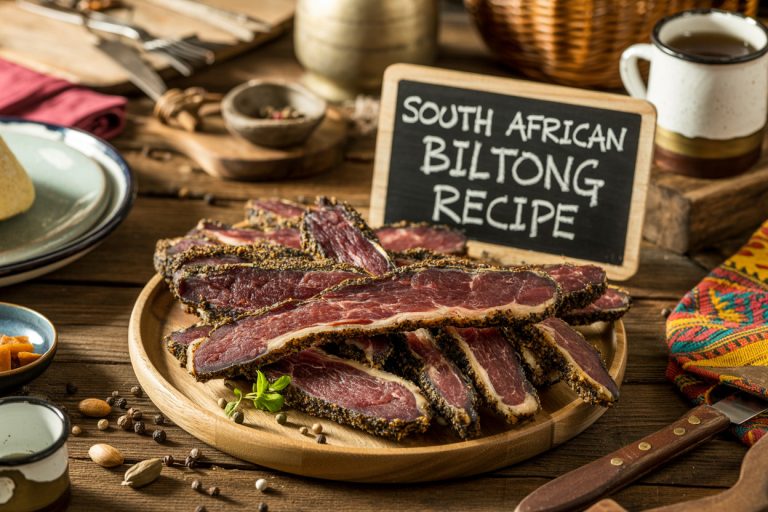
South African Biltong Recipe
Why You’ll Love This Recipe
Making homemade biltong is a rewarding experience. We can enjoy a delicious snack that is packed with flavor and nutrition.
1. Simple Ingredients
This biltong recipe uses easy-to-find ingredients like beef, vinegar, and spices. We can customize the flavors to our liking.
2. Healthy Snack Option
Biltong is a high-protein snack. It’s a great alternative to chips or sweets. We can feel good about what we are eating.
3. Perfect for Sharing
Once our biltong is ready, it makes a fantastic snack for gatherings. We can share it with friends and family during game nights or picnics.
4. Long Shelf Life
Unlike many snacks, biltong can last longer without refrigeration. We can store it and enjoy it whenever we want.
5. Fun Process
The process of preparing and drying the meat is enjoyable. It gives us a sense of accomplishment when we make our own snacks.
6. Unique Flavor
Homemade biltong offers a distinct taste that store-bought options may not match. We get to enjoy authentic South African flavors right at home.
With this biltong recipe, we can savor the joy of creating a tasty snack that we can be proud of every day.
What Makes This Recipe Special
South African biltong is a unique dried meat that reflects our rich culinary heritage. Its roots trace back to South Africa and Namibia, where the method of preserving meat has been refined over generations.
The special blend of spices makes our biltong stand out. We typically use coriander, black pepper, and sometimes brown sugar. These ingredients add a complex flavor that is both savory and slightly sweet.
Texture is another key aspect. Depending on how we slice the meat and the drying time, our biltong can be soft and chewy or dry and brittle. This versatility allows us to cater to different tastes.
The drying process is critical too. We dry biltong in specific temperature and humidity settings. Ideal conditions are around 25-30°C with a relative humidity of 50-60%. This ensures the meat dries properly without spoiling.
Making biltong is a gratifying DIY project. It connects us to South African culture and lets us enjoy a traditional snack that can be shared with friends and family.
Cooking Equipment Needed
To make South African biltong, we need some specific equipment to ensure the curing and drying process goes smoothly.
- Dehydrator: This device helps us control the drying temperature and airflow, making it easier to achieve the right texture.
- Biltong Maker: A specialized box designed to hang meat and keep it well-ventilated during the curing process.
- Curing Hooks: These hooks suspend the meat, preventing contact with surfaces and allowing for even drying.
- Sharp Knife: We use it to cut the meat into strips along the grain for uniform drying.
- Mixing Bowl: This is essential for marinating the meat with salt, vinegar, and spices.
- Measuring Spoons: Precise measurements of spices help us get the flavor just right.
- Ziplock Bags: These can be used for marinating the meat, helping to keep everything neat.
- Paper Towels: We need these to pat the meat dry before marinating, ensuring no excess moisture.
- Butcher’s Twine (optional): If we want to hang the meat in a certain way, this twine can be very useful.
Having the right equipment makes a big difference in the quality of our biltong. Each tool plays a role in the curing and drying processes.

Ingredients For the South African Biltong Recipe
Beef
Red Wine Vinegar
Worcestershire Sauce
Coriander Seeds
Black Pepper
Sea Salt
Brown Sugar
Bicarbonate of Soda
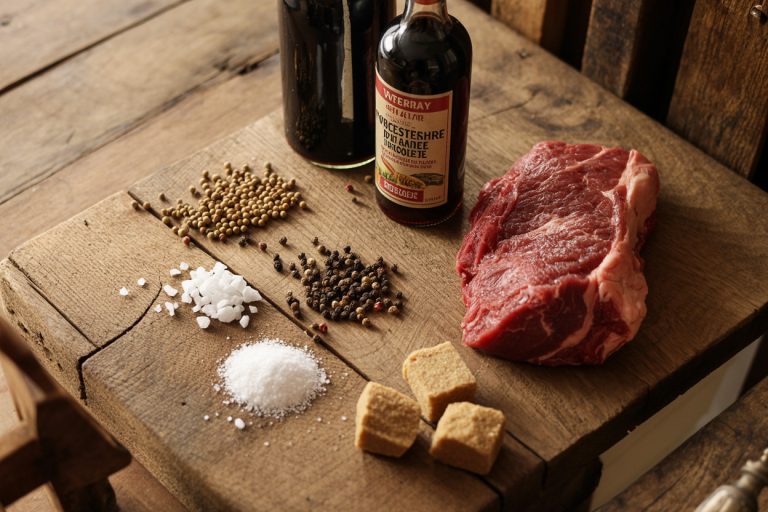
South African Biltong Recipe Ingredients
Cooking Instructions For the South African Biltong Recipe
Preparing the Beef
Slice the beef into strips approximately 4cm thick and arrange them snugly in a small bowl. Pour in the vinegar and Worcestershire sauce, ensuring the meat is well-coated. Let it sit for 30 minutes.
Preparing the Spice and Salt Mix
While the meat marinates, combine the coriander and pepper in one bowl. In a separate bowl, mix the salt, sugar, and bicarbonate of soda.
Coating and Curing
Take the beef out of the marinade, reserving the liquid for later. Roll the meat in the spice mixture until evenly coated, setting aside any excess spices. Submerge the spiced beef in the salt and sugar mixture and let it rest for 3 hours.
Rinsing and Final Seasoning
Remove the beef from the brine and dip it back into the reserved vinegar marinade for 5 minutes. Rinse off all the salt with the vinegar to prevent the biltong from becoming overly salty. Squeeze out as much liquid as possible, then coat the meat again in the remaining spices.
Hanging and Drying
Cut pieces of string and securely tie one end around each strip of beef. Suspend the strips from a drying rack or hook, ensuring they hang freely without touching any surfaces. Allow them to dry in a warm, well-ventilated space for 3 to 20 days, depending on how firm you prefer the biltong. It is ready once it reaches a tough, leathery consistency.
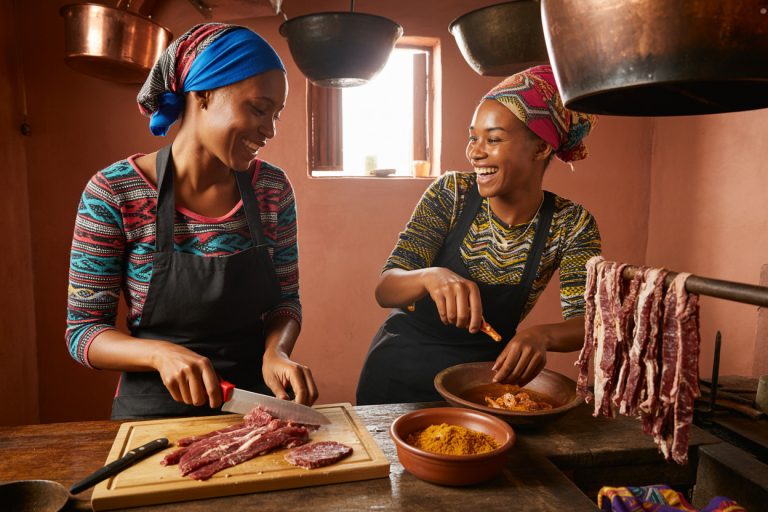
South African Biltong Recipe Cooking Tips
South African Biltong Recipe Cooking Tips
• Use lean cuts of beef or game meat for the best texture and drying results.
• Slice the meat evenly so it dries at a consistent rate.
• Vinegar helps tenderize the meat and adds traditional flavor.
• Coriander, black pepper, salt, and brown sugar create classic biltong seasoning.
• Toast whole coriander seeds lightly before crushing for deeper aroma.
• Allow the meat to marinate long enough for the flavors to absorb fully.
• Pat the meat dry before hanging to improve the drying process.
• Good airflow is essential for proper drying and texture development.
• Avoid overly humid conditions because moisture can affect preservation.
• Dry the meat slowly to help maintain tenderness and flavor.
• Thicker cuts create softer biltong while thinner cuts dry more firmly.
• Taste and texture improve as the seasoning continues developing during drying.
• Slice against the grain for easier chewing and better texture.
• Store fully dried biltong only after excess surface moisture has disappeared.
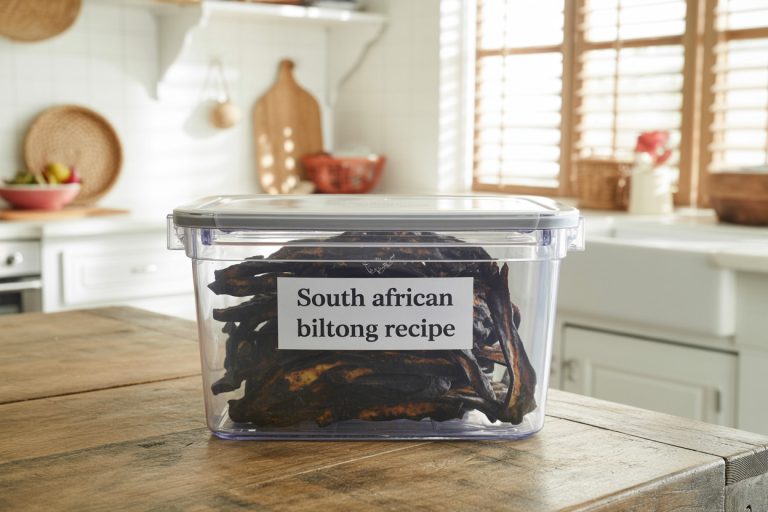
South African Biltong Recipe Storage Tips
South African Biltong Recipe Storage Tips
• Store biltong in airtight containers or paper bags to help preserve freshness.
• Keep the biltong in a cool, dry place away from direct sunlight.
• Avoid sealing warm biltong immediately because trapped moisture may cause spoilage.
• Refrigeration can help extend freshness, especially in humid climates.
• Paper bags may help reduce moisture buildup better than plastic containers.
• Vacuum sealing can help preserve texture and flavor for longer storage.
• Freeze extra portions in tightly sealed freezer-safe packaging if needed.
• Defrost frozen biltong gradually at room temperature before serving.
• Properly dried biltong may continue firming slightly during storage, which is normal.
• Avoid storing near strongly scented foods because the meat can absorb odors.
• Use clean, dry utensils or hands when handling biltong to reduce moisture exposure.
• Check regularly for excess moisture buildup inside storage containers.
• Keep partially sliced biltong tightly wrapped to reduce drying out.
• Discard biltong if it develops mold, sour odors, sliminess, or unusual discoloration.
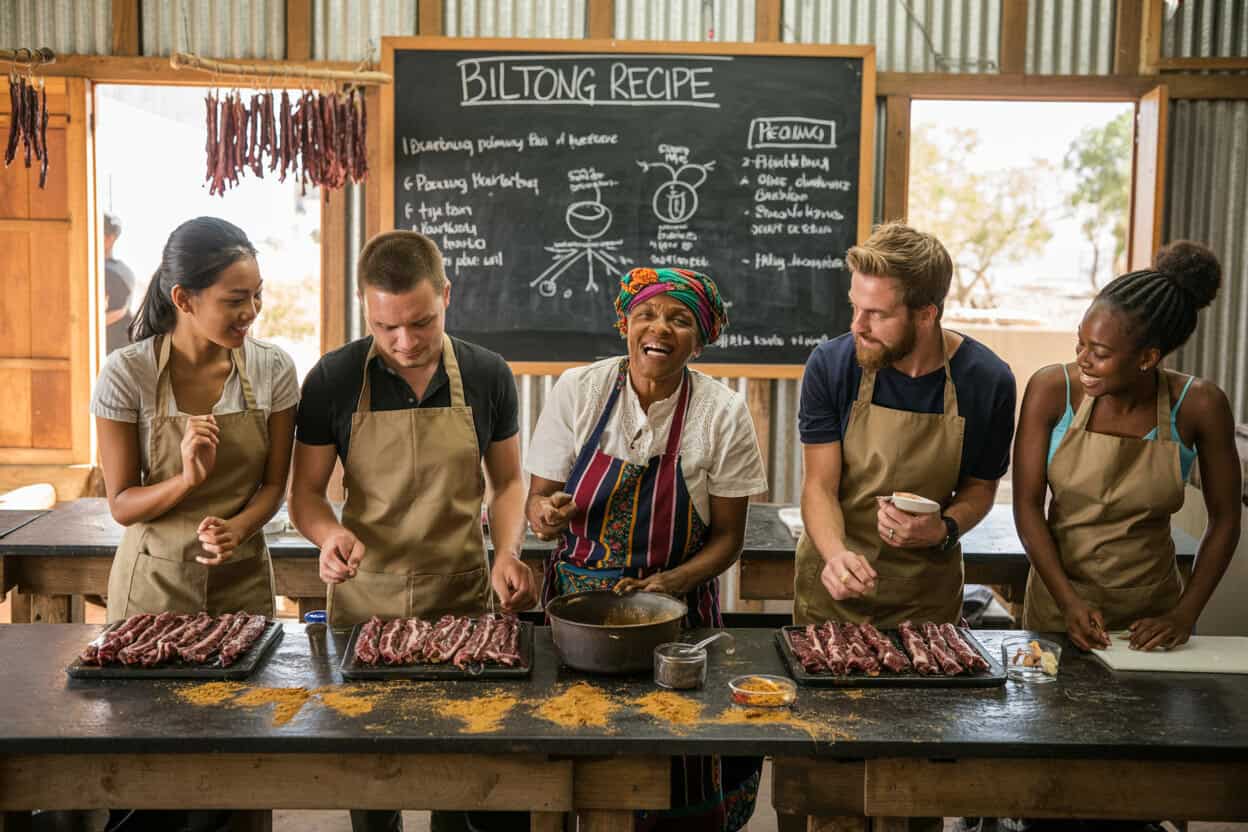
South African Biltong Recipe
Ingredients
- 4 1/2 lbs Beef
- 2/3 cup Red Wine Vinegar
- 2 oz Worcestershire Sauce
- 2 tbsp Coriander Seeds coarsely ground
- 1 tbsp Black Pepper coarsely ground
- 4 oz fine Sea Salt
- 6 oz Brown Sugar
- 1 tsp Bicarbonate of Soda
Instructions
- Slice the beef into strips approximately 4cm thick and arrange them snugly in a small bowl. Pour in the vinegar and Worcestershire sauce, ensuring the meat is well-coated. Let it sit for 30 minutes.
- While the meat marinates, combine the coriander and pepper in one bowl. In a separate bowl, mix the salt, sugar, and bicarbonate of soda.
- Take the beef out of the marinade, reserving the liquid for later. Roll the meat in the spice mixture until evenly coated, setting aside any excess spices. Submerge the spiced beef in the salt and sugar mixture and let it rest for 3 hours.
- Rinsing and Final Seasoning
- Remove the beef from the brine and dip it back into the reserved vinegar marinade for 5 minutes. Rinse off all the salt with the vinegar to prevent the biltong from becoming overly salty. Squeeze out as much liquid as possible, then coat the meat again in the remaining spices.
- Cut pieces of string and securely tie one end around each strip of beef. Suspend the strips from a drying rack or hook, ensuring they hang freely without touching any surfaces. Allow them to dry in a warm, well-ventilated space for 3 to 20 days, depending on how firm you prefer the biltong. It is ready once it reaches a tough, leathery consistency.
FAQ For the South African Biltong Recipe
Question: What is a South African Biltong Recipe?
A: A South African Biltong Recipe is a traditional method of curing and drying meat, usually beef or game, with a blend of salt, vinegar, and spices. The result is a flavorful, protein-rich snack similar to jerky but with a distinct taste and texture.
Question: What ingredients are needed for a South African Biltong Recipe?
A: A South African Biltong Recipe typically includes beef or game meat, coarse salt, black pepper, coriander seeds, brown sugar, vinegar, and optional spices like chili flakes or garlic powder. The meat is marinated and air-dried to achieve its unique texture.
Question: How do you make a South African Biltong Recipe at home?
A: A South African Biltong Recipe is made by slicing meat into strips, marinating it in vinegar and spices, then hanging it to air-dry for several days in a controlled environment. The drying process gives biltong its chewy, flavorful consistency.
Question: What is the best way to serve a South African Biltong Recipe?
A: A South African Biltong Recipe is best served as a high-protein snack, sliced thin and eaten on its own. It can also be added to salads, sandwiches, or even cooked into dishes like biltong stew for extra flavor.
Question: How long does a South African Biltong Recipe take to dry?
A: A South African Biltong Recipe usually takes between 4 to 7 days to dry, depending on humidity and temperature. A proper drying setup ensures the biltong develops its signature texture without spoiling.

Recipes are gathered in person and written for real-world cooking conditions.
- 10 Hungarian Dessert Recipes Passed Down Through Generations - July 25, 2026
- 11 Easy English Recipes Anyone Can Make - July 25, 2026
- Hungarian Kifli Recipe - July 25, 2026
4 comments
Making South African Biltong was a fun new experience. The dried beef came out perfectly seasoned with the right balance of spices. My guests were impressed with the texture and flavor. It’s a great snack that can be served as a starter or enjoyed on its own. I’m already looking forward to making it again!
I cant believe they didnt mention the secret ingredient in the South African Biltong recipe – pineapple juice! Trust me, it takes the flavor to a whole new level. Give it a try!
Im not convinced that using a dehydrator is necessary for this biltong recipe. Couldnt we just air dry it the traditional way for a more authentic taste? Lets debate!
I dont get why theyre so hyped about the cooking equipment needed. Cant I just use what I have in my kitchen? Seems like theyre making it more complicated than it needs to be.
Comments are closed.