
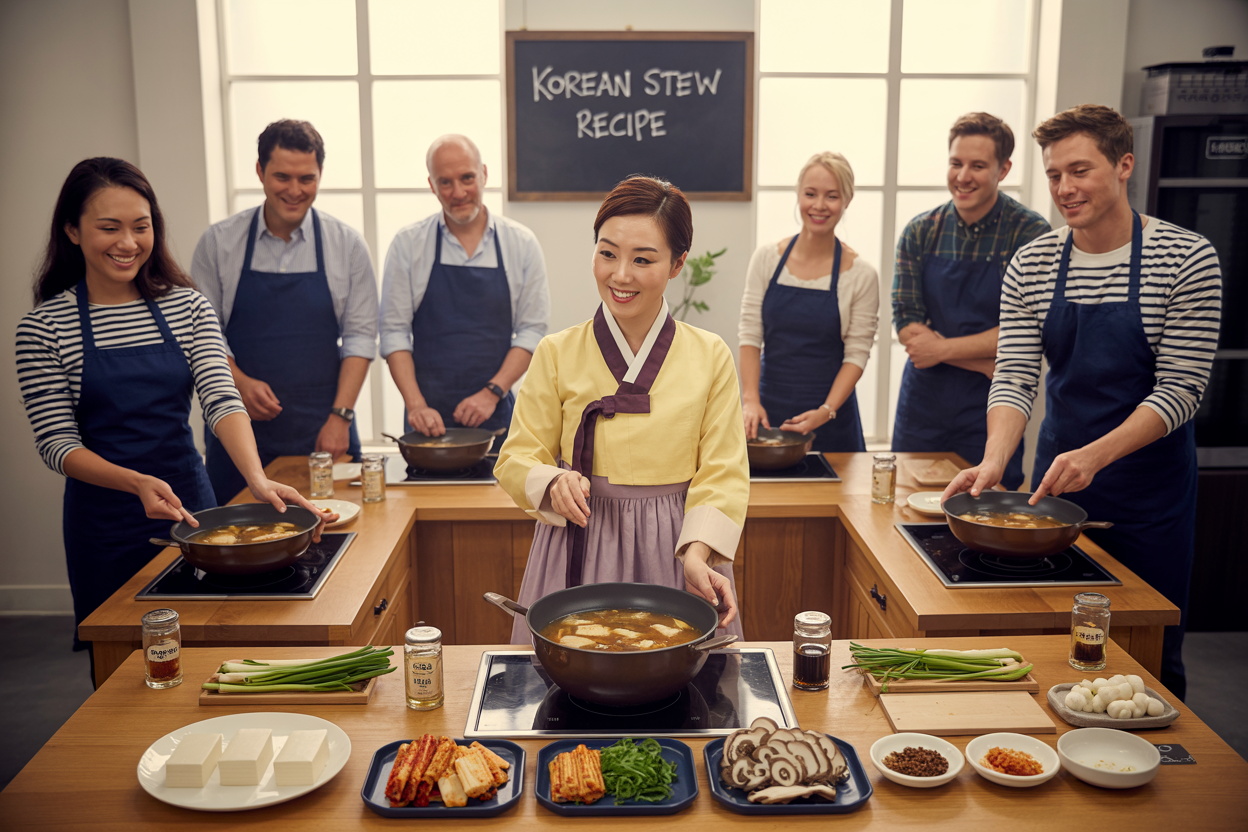
Korean Stew (Kimchi Jjigae): This has rescued me more times than I care to admit, especially when my fridge looks bleak and my stomach’s begging for something cozy. This bubbling pot of spicy, tangy magic turns plain old fermented cabbage into absolute gold. Honestly, it’s one of those Korean stew recipes that makes me wonder why anyone bothers with overpriced takeout. Kimchi stew is a classic Korean stew that mixes aged kimchi, pork or tofu, and a fiery broth for a meal that comes together in under 30 minutes.
I used to think kimchi was just that side dish lurking in the back of my fridge, getting funkier by the week. Then I realized old kimchi is the secret weapon for this stew, and suddenly that neglected jar had a destiny. The sour, well-aged kimchi actually makes the best kimchi jjigae, giving the stew a depth of flavor you just can’t get from fresh stuff.
This Korean kimchi stew is the ultimate comfort food—simple, bold, and ridiculously satisfying. Whether you call it kimchi jjigae, kimchijjigae, or kimchi chigae, this spicy Korean stew is a staple for a reason. I’ll walk you through making this tangy and savory Korean stew without any fancy moves or weird specialty ingredients.
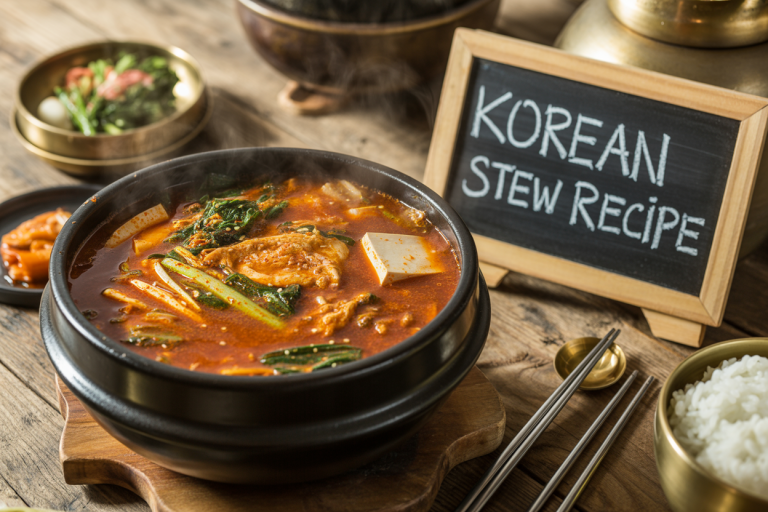
Korean Stew Recipe
Key Takeaways
- Kimchi jjigae is a fast Korean stew that turns old kimchi into a spicy, comforting meal
- Older, fermented kimchi works best, and you can use pork, tofu, or whatever protein you have
- This Korean stew is easy to customize and leftovers reheat beautifully
A Whimsical Look Back: Description and Historical Wonders
I’ve always seen kimchi jjigae as one of the most popular stews in Korean cuisine, and honestly, it makes sense. This bubbling bowl of spicy, tangy Korean stew brings together fermented kimchi, pork, tofu, scallions, and onions for what I can only call a hug in a bowl.
This Korean stew has been warming families for generations. Sure, there are plenty of other Korean soups and stews, but this one stands out for its bold, lively personality.
What makes kimchi jjigae special:
- Spicy and sour kick from well-aged kimchi
- Rich umami that just keeps building as it simmers
- Hearty add-ins like pork and tofu
- Simple prep for huge flavor payoff
The history of this Korean stew ties back to kimchi itself, which goes back over 2,000 years. Today’s kimchi jjigae probably took shape during the Joseon Dynasty when chili peppers landed in Korea.
I’m always surprised by how the best versions use kimchi that’s been aging for six months or more. That older kimchi brings a sharper, more complex tang that fresh kimchi just can’t deliver.
This Korean stew is now a staple in homes all over Korea. It’s what I crave on cold days when nothing but a proper stew will do the trick.
Secret Tips Grandmas Forgot to Write Down
My Korean grandma never bothered with recipe cards. She just knew the kimchi brine was precious and should never, ever get poured out.
I always save every last drop of that tangy kimchi juice for my Korean stew. It adds a punch that plain water just can’t match.
Aged kimchi is the real MVP for jjigae. That sour kimchi you’ve ignored in the fridge for weeks? That’s the gold. If your leftover kimchi makes your face pucker, it’s ready for the pot.
Here’s what I’ve picked up along the way:
- Squeeze out kimchi juice from your fermented kimchi before you chop it
- Fry the chopped napa cabbage kimchi in sesame oil for a few minutes before adding liquid
- Mix gochugaru and gochujang for a deeper flavor—don’t pick just one
- Use both fish sauce and soy sauce for extra umami
My grandma swore by pork belly. The fat makes the broth rich and satisfying. She’d brown it until the edges got a little crispy, then add the korean chili flakes and korean chili paste straight into the sizzling fat.
Anchovy stock always beats plain water. If you’re out of anchovy broth, just toss in a few dried anchovies while it simmers.
I add soft tofu at the very end. Cut it into big chunks and let it warm through for a couple of minutes so it doesn’t fall apart.
The trick no one tells you? Let the Korean stew rest for 10 minutes after cooking. The flavors come together so much better.

Wild and Wonderful Variations (Brace Yourself!)
I’ve found that kimchi jjigae is endlessly customizable—a fact that might horrify some purists, but I say go for it. This Korean stew is all about embracing what you’ve got.
No pork? I use veggie broth and pile in mushrooms for a savory bomb of flavor. My vegetarian friends love this version, and honestly, it’s hard to argue with them.
Some days, I go wild and make my kimchi jjigae more like sundubu by adding a ton of extra soft tofu. It turns the Korean stew into a silky, luxurious bowl that feels downright fancy.
My favorite wild spins:
- Seafood style: Toss in shrimp, clams, or squid for a briny twist
- Cheese on top: Trust me, a slice of American cheese melted on top is weirdly amazing
- Ramen edition: Drop in instant ramen noodles in the last few minutes for a heartier meal
- Spam swap: Cube up Spam instead of pork belly (no shame!)
The classic way is in a ddukbaegi, a Korean earthenware pot that keeps the Korean stew bubbling hot. I use mine because it makes me feel like a real Korean grandma, even though I’m not even close.
My advice? Start classic, then get wild with whatever’s in your fridge. The kimchi will forgive your creativity, I promise.
Stashing Stew: Storage Sagas
I’ve learned—sometimes the hard way—that kimchi jjigae holds up great in the fridge. My leftover Korean stew actually tastes even better after a day or two.
Refrigerator Storage
I always let my stew cool before packing it up. Putting hot stew in a plastic container? Disaster. I’ve melted more lids than I care to admit.
Spoon your cooled kimchi jjigae into an airtight container. It’ll keep for 3-4 days in the fridge, though I’ve pushed it to five on risky weeks.
Reheating Tips
- Add a splash of water or broth when you reheat
- Warm it gently on the stovetop for best results
- Microwave works if you’re rushed, but stir halfway through
The kimchi keeps fermenting in the fridge, so the Korean stew gets tangier each day. I actually love this, but it’s not for everyone.
Freezing Facts
I don’t freeze kimchi jjigae if it’s got tofu in it. The tofu turns spongy and weird after thawing—just don’t do it.
If you must freeze, skip the tofu and add fresh tofu when you reheat. The stew itself freezes alright for up to two months in a freezer-safe container.
Pro Move
I like to portion leftover Korean stew into single servings. Future me always thanks past me when I need a quick lunch. I label each one with the date, because honestly, I never remember what’s in my freezer.
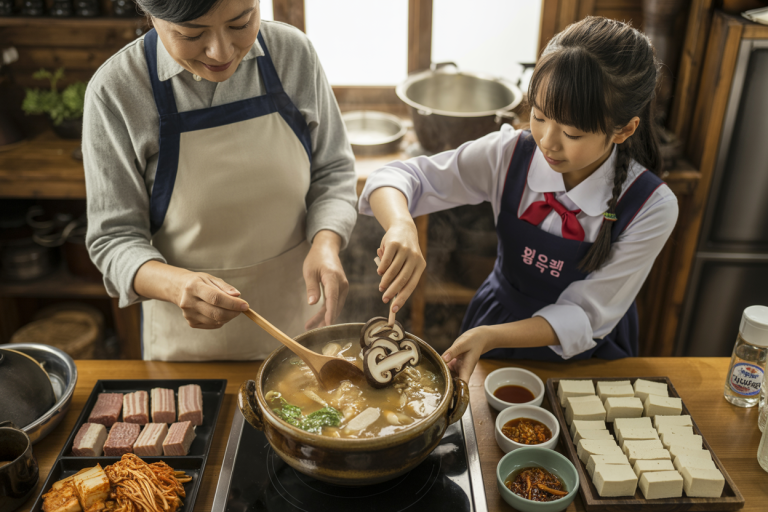
Korean Stew Recipe – Prep
Cooking Tips For the Korean Stew (Kimchi Jjigae)
• Use well-fermented kimchi for deeper flavor in the stew.
• Simmer the broth gently so the flavors blend together gradually.
• Add proteins and vegetables in stages so everything cooks evenly.
• Stir occasionally during cooking to help prevent sticking.
• Use medium-low heat so the broth develops flavor without scorching.
• Add extra broth gradually if the stew reduces too much during cooking.
• Taste before serving and adjust seasoning carefully if needed.
• Let the stew rest briefly before serving so the flavors settle together.
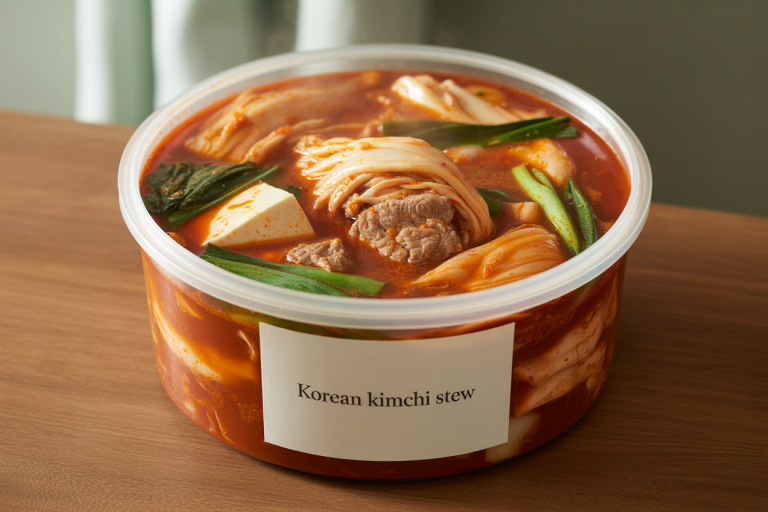
Korean Stew Recipe – Storage
Storage Tips For the Korean Stew (Kimchi Jjigae)
• Allow the stew to cool slightly before transferring it into storage containers.
• Store leftovers in airtight containers to help retain moisture and flavor.
• Refrigerate leftovers within 2 hours of cooking for proper food safety.
• Reheat slowly over medium-low heat while stirring occasionally.
• Add a splash of broth or water during reheating if the stew thickens too much.
• Keep fresh garnishes separate until serving time.
• Freeze portions in freezer-safe containers for up to 3 months if needed.
• Leave a little space at the top of containers because stews expand when frozen.
• Thaw frozen kimchi jjigae overnight in the refrigerator before reheating.
• Discard the stew if it develops a sour smell beyond the normal kimchi aroma, slimy texture, discoloration, mold, or unusual taste.
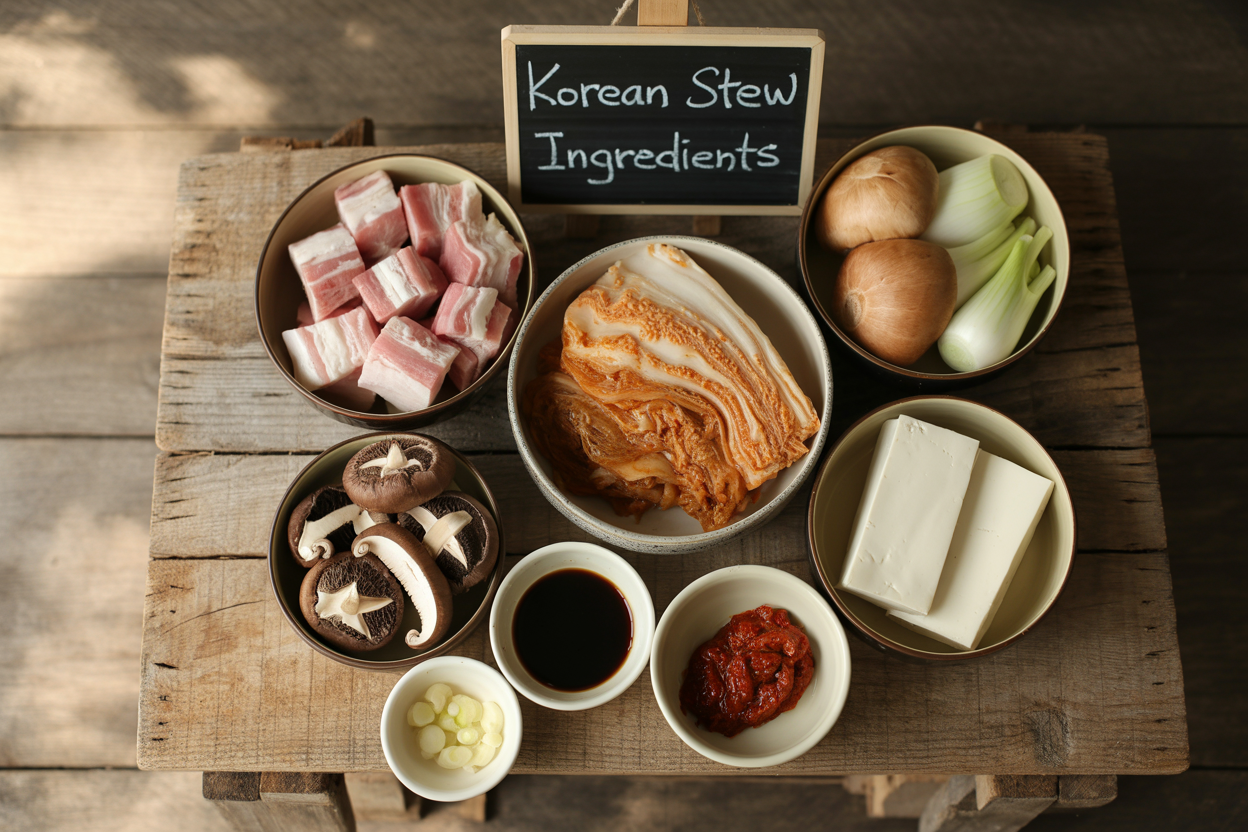
Korean Stew (Kimchi Jjigae)
Ingredients
- 1/2 lbs pork belly skinless cut into bite size pieces
- 1 Tbsp rice wine sweet (mirin)
- 3 shakes black pepper ground
- 3/4 cup Kimchi aged at least 2 to 3 weeks old, cut into bite size pieces if not already
- 1/4 small onion small brown, thinly sliced
- 1/2 stalk onion small green, thinly sliced
- 2 small shiitake mushrooms stems removed, thinly sliced
- 5 1/4 ozs firm tofu sliced into 1cm thickness rectangles, or other shapes you may prefer
- 1 cup water
- 1 Tbsp chili flakes Korean gochugaru
- 1 Tbsp soy sauce
- 1 tsp chili paste Korean gochujang
- 1/4 tsp garlic minced
- 3 shakes black pepper ground
Instructions
- Cut the pork and kimchi into bite-sized pieces if they are not already prepared. Slice the tofu into pieces about 1/2-inch thick and roughly chop the scallions. Have all of the remaining ingredients measured and ready before starting, as the cooking process moves quickly once the Instant Pot is heated.
- Press the Sauté button on the Instant Pot and allow it to heat until hot. Add the pork and kimchi, then cook while stirring occasionally until the kimchi begins to soften and the pork is no longer pink, about 5 minutes. This step helps develop the rich flavor base that gives the stew its signature taste.
- Add the kimchi juice, water, soup soy sauce, and garlic to the pot and stir to combine. Secure the lid and set the Instant Pot to Soup mode. Adjust the cooking time to 10 minutes and make sure the steam valve is set to the Sealing position. Allow the stew to cook under pressure until the cycle is complete.
- When the cooking cycle ends, carefully turn the steam valve to Vent to perform a quick release of the pressure. Once the pressure has fully released, open the lid and add the tofu and scallions. Stir gently to distribute the ingredients throughout the stew.
- Press the Sauté button once more and bring the stew back to a gentle boil. Continue cooking for about 5 minutes, or longer if desired, until the kimchi reaches your preferred level of tenderness and the flavors have blended together.
- Ladle the hot kimchi jjigae into serving bowls and serve immediately. The stew is best enjoyed fresh while the broth is hot and the tofu remains tender.
Frequently Asked Questions
Making kimchi jjigae at home brings up a lot of questions—what ingredients work, what’s okay to swap, and am I doing this right? The good news: this Korean stew is super forgiving once you get the basics down, like picking the right kimchi and protein.
What’s the easiest way to make a legit Korean stew without summoning my smoke alarm?
I turn my vent up and use medium heat instead of cranking it. Sautéing the kimchi and pork for just a couple of minutes before adding liquid builds flavor without setting off alarms.
If you’re nervous, skip the sauté and just simmer everything together. You’ll lose a bit of depth, but hey, your smoke detector will stay quiet—and you’ll still have a killer Korean stew.
Which ingredients are non-negotiable if I want it to taste like the real deal?
If you want your Korean Stew to taste legit, you can’t skip well-fermented kimchi. It’s the backbone of any authentic kimchi jjigae recipe. I always reach for gochugaru (Korean red pepper flakes) and gochujang (red pepper paste) too—they bring that spicy, savory punch that’s just classic.
Garlic and green onions are also must-haves. Some folks swear by fancy stock, but honestly, I’ve made a killer Korean Stew with just water and a splash of kimchi juice when that’s all I had on hand.
Can I make a vegetarian version that still slaps, or is that illegal in Seoul?
No worries—nobody’s calling the food police if you make veggie kimchi jjigae. I just swap out the pork for mushrooms and toss in extra tofu, then use vegetable broth instead of anchovy stock. It totally works.
Just watch out for the kimchi itself. Traditional kimchi usually sneaks in some fish sauce or shrimp, so check the label or whip up your own vegetarian batch. That’s the real trick for a truly vegetarian Korean Stew.
What kind of kimchi works best—fresh, super sour, or “forgotten in the back of the fridge”?
Honestly, that kimchi you forgot in the fridge is perfect for Korean Stew. Properly aged, sour kimchi gives the stew its deep, tangy magic. That’s what you want for the real deal.
Fresh kimchi just doesn’t have enough funk or acidity. I usually grab kimchi that’s at least two or three weeks old—if it tastes sharp and sour, you’re good to go.
Is this stew actually healthy, or am I just eating spicy comfort with benefits?
Korean Stew, especially kimchi jjigae, is surprisingly nutritious. You get probiotics from the fermented kimchi, protein from pork or tofu, and it’s not heavy on added fats. I usually serve it with rice and try not to go overboard on the portions.
The sodium can creep up, depending on your kimchi and how much gochujang you toss in. I just skip extra salt and pile in more veggies to balance things out. It’s comfort food with a few perks, really.
What can I use instead of pork (tofu, tuna, chicken) without angering the stew gods?
If you’re out of pork for your Korean Stew, tofu is hands-down the easiest swap. I usually grab firm or extra-firm tofu and just chop it into cubes. It soaks up all that spicy broth and, honestly, you probably won’t even miss the meat.
Canned tuna? Believe it or not, that’s actually a classic move in Korean Stew and gives the whole thing a unique, savory kick. Chicken works fine too, but it’s not as traditional. Some folks even toss in spam if they’re craving those Korean army stew vibes—no judgment here!

Recipes are gathered in person and written for real-world cooking conditions.
- 10 Hungarian Dessert Recipes Passed Down Through Generations - July 25, 2026
- 11 Easy English Recipes Anyone Can Make - July 25, 2026
- Hungarian Kifli Recipe - July 25, 2026