
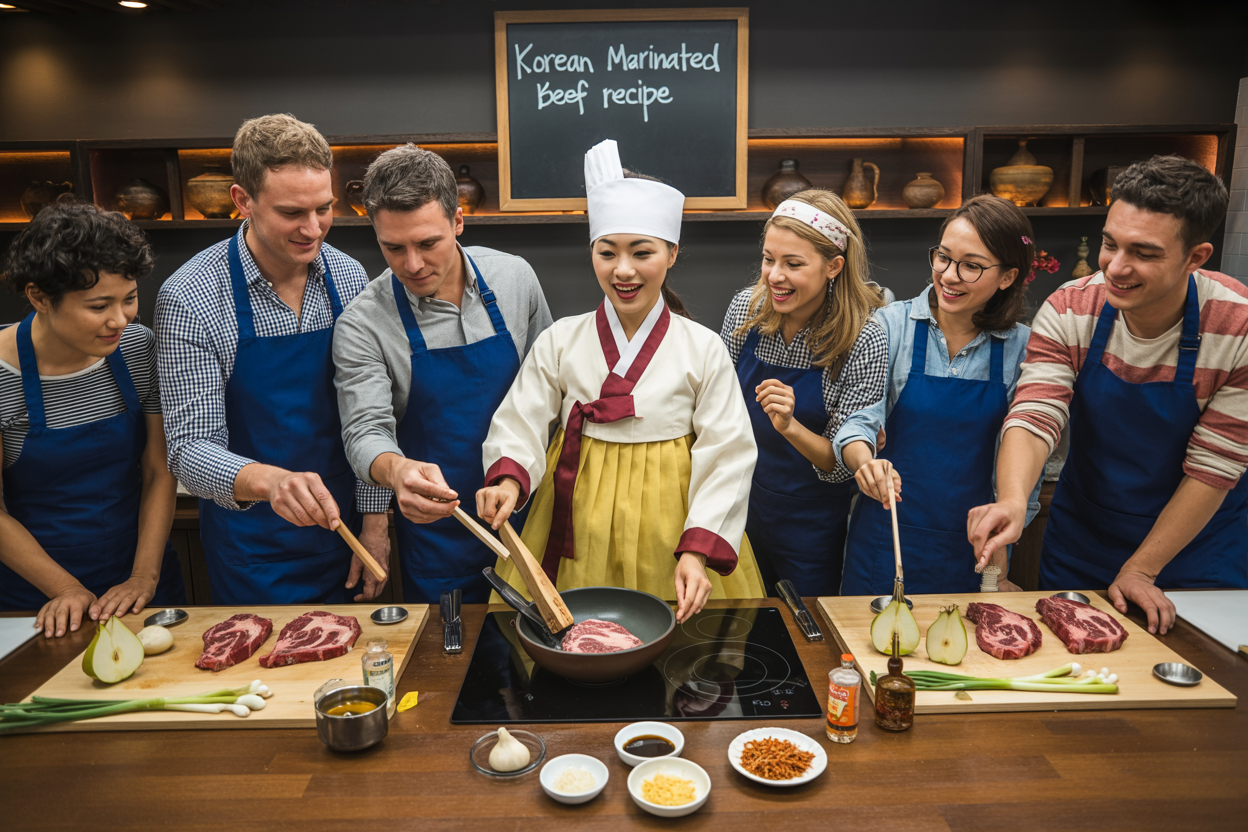
Korean marinated beef bulgogi is one of those meals that makes you wonder why you ever settled for bland weeknight dinners. This Korean Marinated beef dish uses thinly sliced meat soaked in a sweet and savory marinade—think soy sauce, garlic, ginger, and sesame oil—then cooks it fast until it’s tender and a bit caramelized. I first tried Korean marinated beef at a little spot in town, and honestly, I got hooked. I had to figure out how to make it at home.
The best part? Making authentic Korean marinated beef bulgogi is way simpler than it looks. No fancy gadgets or weird ingredients needed. The marinade does most of the heavy lifting, and the actual cooking takes just a few minutes.
Serve Korean marinated beef over rice, wrap it in lettuce, or just eat it straight from the skillet—no shame, I do it too. This dish is about to be your new go-to. Let me share what I’ve learned about making flavorful Korean marinated beef at home, plus a few tips I wish someone had told me sooner.
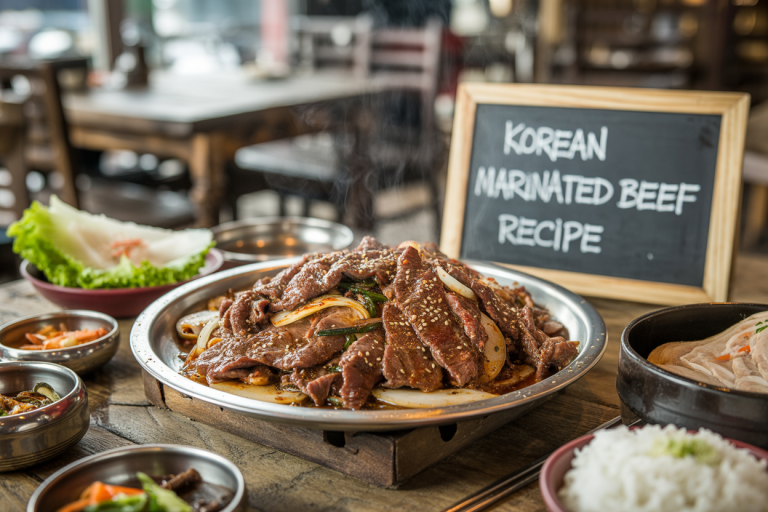
Korean Marinated Beef Recipe
Key Takeaways
- Bulgogi is a classic Korean dish with a wild backstory and global fans
- The marinade and thin-sliced beef are what make Korean marinated beef so good
- Leftover Korean marinated beef is perfect for all sorts of other meals
A Whirlwind History Of Bulgogi
Honestly, bulgogi’s history is more dramatic than you’d expect for grilled meat. The name literally means “fire meat”—kind of epic, right?
This popular Korean dish didn’t even start as bulgogi. It evolved from neobiani, and its journey includes Japanese invasions and Korea’s fight for independence. That’s a lot for a plate of Korean marinated beef.
The Early Days
For centuries, bulgogi’s roots ran deep in Korea. People grilled marinated beef slices over open flames, pretty much the same way we cook Korean marinated beef now. But here’s the thing: regular folks didn’t eat it every day.
Korean marinated beef was special-occasion food. Only the wealthy or those celebrating something big got to enjoy it.
Modern Times Changed Everything
After the Korean War, industrialization changed the game for Korean marinated beef. Machines sliced beef paper-thin, making Korean marinated beef faster and way more affordable. Suddenly, everyone could make it at home or order it at a restaurant.
I love that bulgogi comes in different styles now:
- Marinated bulgogi—beef prepped with all the good stuff
- Salt-grilled bulgogi—just meat, salt, and fire
My Korean recipes list wouldn’t be complete without Korean marinated beef. It went from rare treat to everyday staple, and I’m not mad about it.
Secret Tips For Bulgogi Success
I’ve figured out that the perfect Korean marinated beef marinade is all about balance—not some secret trick. Too much soy sauce? The beef turns out gray. Too much sugar? It burns in seconds, and not in a good way.
The real secret? Asian pear. I grate it right into my Korean beef marinade. It works magic, tenderizing the meat and adding a gentle sweetness.
For the meat, I always grab thinly sliced ribeye. The marbling takes Korean marinated beef from “fine” to “how did I pull this off?” I freeze the beef for half an hour so it slices super thin.
Here’s what I use for my Korean marinated beef sauce:
- Sesame oil for nutty flavor
- Soy sauce for saltiness
- Grated Asian pear for tenderness
- Brown sugar for that caramelized finish
- Garlic and ginger for a punch
I cookKorean marinated beef over high heat. That Maillard reaction gives it the caramelized crust everyone loves.
For a finishing touch, I sprinkle toasted sesame seeds on top. People think I spent hours on Korean marinated beef—but it’s honestly so quick. A 30-minute marinade works, but overnight is even better.

Surprising Bulgogi Variations
I used to think Korean marinated beef was the only way to go, but wow, was I wrong. That sweet-savory marinade works with all kinds of proteins. Check out this guide to bulgogi variations if you’re curious.
Chicken bulgogi was my first step outside the beef bubble. The marinade soaks in fast, and it cooks even quicker than Korean marinated beef. Three minutes, tops.
Then there’s pork bulgogi—think of it as Korean marinated beef’s fun cousin. Pork takes on a deeper flavor and pairs perfectly with lettuce wraps.
Spicy bulgogi is a game-changer. Add gochugaru (red pepper flakes) or gochujang (chili paste), and suddenly Korean marinated beef has a kick. I keep napkins handy for this one.
I never thought I’d like vegetable bulgogi, but mushrooms soak up the marinade like flavor sponges. Tofu works too, especially if you freeze and thaw it first for better texture.
Some variations that surprised me:
- Seafood bulgogi with shrimp or squid
- Cheese bulgogi—yep, it’s a thing in Korea
- Spam bulgogi (seriously, just try it once)
Each version keeps that signature sweet-savory taste of Korean marinated beef but lets other ingredients shine. My freezer now looks like a bulgogi experiment zone.
Leftovers: The Bulgogi Chronicles
Leftover Korean marinated beef might just be the best thing in my fridge. It morphs into new meals with almost zero effort.
I love turning Korean marinated beef into lettuce wraps. Grab some crisp lettuce, add the beef (hot or cold), and toss on some kimchi. It’s crunchy, tangy, and honestly, a little addictive.
Pair it with a fresh Korean cucumber salad. The cool cucumbers balance out the rich Korean marinated beef.
Other ways I use leftover Korean marinated beef:
- Fried rice—just chop and toss with rice
- Stir-fry—add veggies and noodles
- Bulgogi stew—comfort food in half an hour
- Breakfast scramble—mix with eggs
- Quesadillas—because why not?
Korean marinated beef actually tastes even better the next day. The flavors mellow and blend overnight.
Store Korean marinated beef in an airtight container, and it’ll last three to four days. You can freeze it for up to three months, but honestly, mine never lasts that long.
Pro tip: Don’t blast Korean marinated beef in the microwave. Reheat it low and slow to keep it tender, not tough.
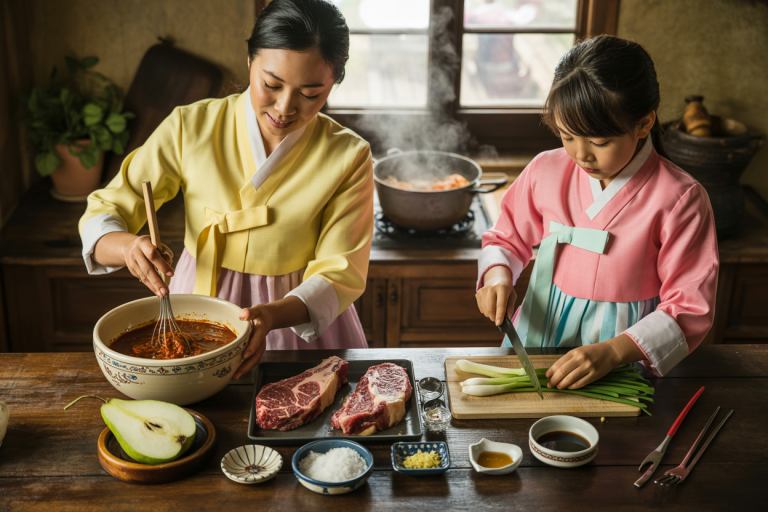
Korean Marinated Beef Recipe – Prep
Cooking Tips For the Korean Beef (Bulgogi)
• Slice the beef thinly and evenly so it cooks quickly and consistently.
• Marinate the beef long enough so the flavors distribute throughout the meat.
• Cook over medium-high heat for better browning without overcooking.
• Avoid overcrowding the pan because excess moisture reduces caramelization.
• Stir the beef frequently during cooking for even color and texture.
• Add vegetables in stages if included so they cook evenly.
• Taste before serving and adjust seasoning carefully if needed.
• Serve the bulgogi immediately while hot and tender.
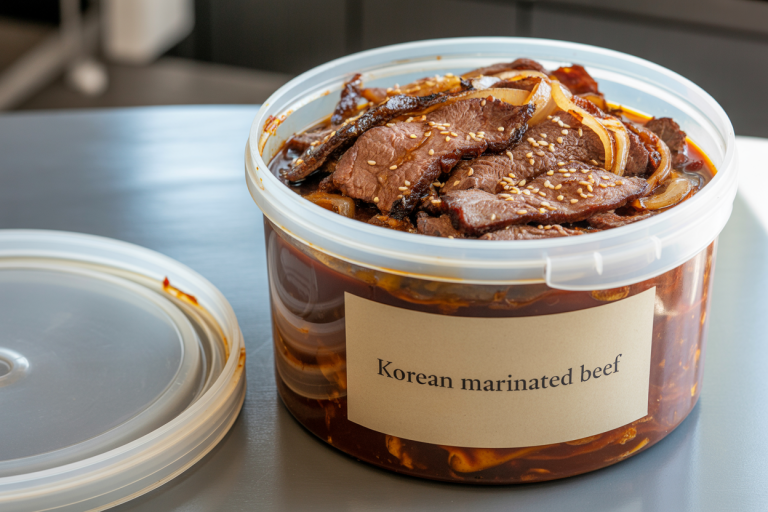
Korean Marinated Beef Recipe – Storage
Storage Tips For the Korean Beef (Bulgogi)
• Allow the beef to cool slightly before placing it into storage containers.
• Store leftovers in airtight containers to help retain moisture and flavor.
• Refrigerate leftovers within 2 hours of cooking for proper food safety.
• Reheat gently over medium-low heat to help prevent the meat from drying out.
• Add a small splash of broth during reheating if needed.
• Keep lettuce wraps, rice, or garnishes separate until serving time.
• Freeze cooked bulgogi in freezer-safe containers for up to 3 months if needed.
• Wrap portions tightly before freezing to help reduce freezer burn and moisture loss.
• Thaw frozen bulgogi overnight in the refrigerator before reheating.
• Discard the beef if it develops a sour smell, slimy texture, discoloration, mold, or unusual taste, as these are common signs of spoilage.
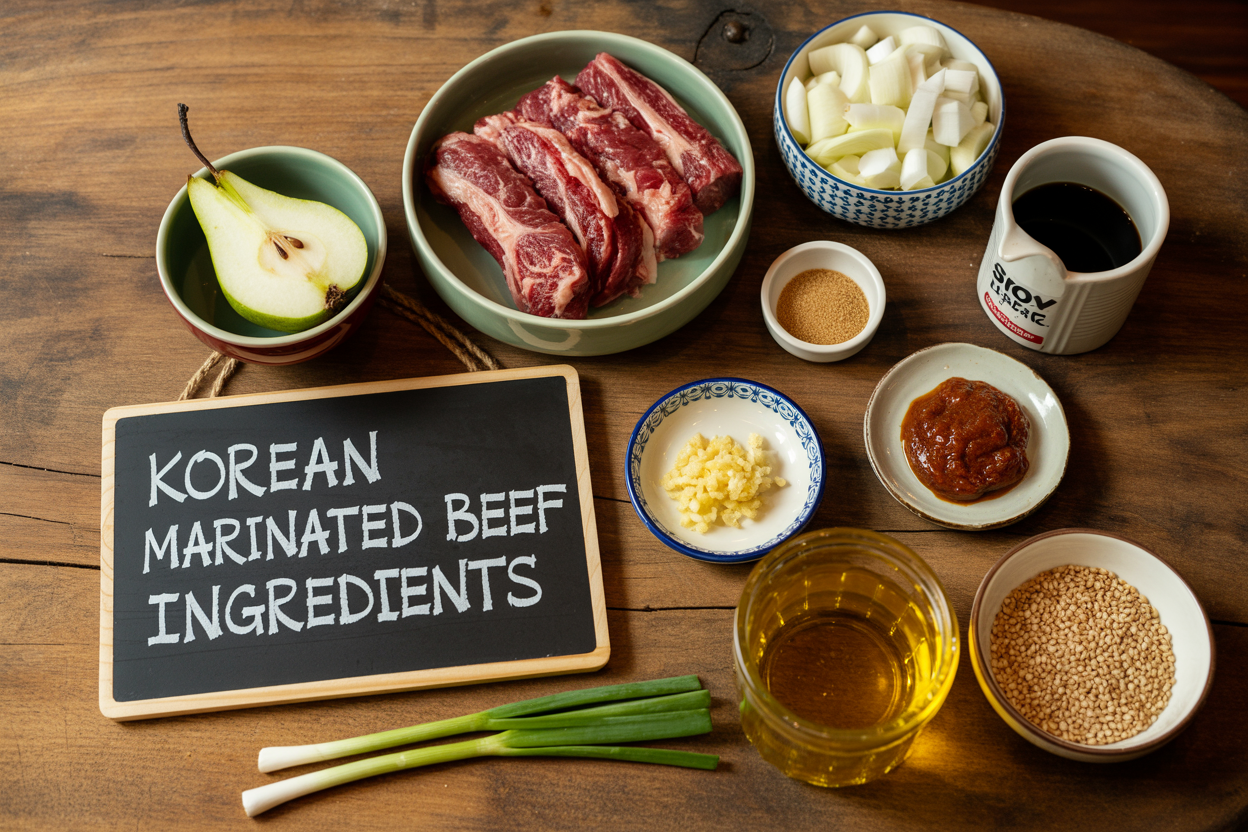
Korean Marinated Beef (Bulgogi)
Ingredients
- 1 ½ pounds rib eye steak boneless
- ½ small pear peeled and coarsely grated
- ¼ cup soy sauce reduced sodium
- 2 tablespoons brown sugar
- 2 tablespoons sesame oil toasted
- 3 cloves garlic minced
- 1 tablespoon ginger freshly grated
- 1 tablespoon gochujang Korean red pepper paste
- 2 tablespoons vegetable oil divided
- 2 green onions thinly sliced
- 1 teaspoon sesame seeds toasted
Instructions
- Wrap the steak tightly in plastic wrap and place it in the freezer for 30 minutes. This brief chilling period makes the meat easier to slice thinly. Remove the steak from the freezer, unwrap it, and use a sharp knife to cut it across the grain into 1/4-inch thick slices. Set the sliced beef aside while preparing the marinade.
- In a medium bowl, combine the pear, soy sauce, brown sugar, sesame oil, garlic, ginger, and gochujang. Stir until the ingredients are well blended. Place the sliced steak into a gallon-size Ziploc bag and pour the marinade over the meat. Seal the bag and turn it several times to coat the beef evenly. Refrigerate and allow the beef to marinate for at least 2 hours or up to overnight, turning the bag occasionally to distribute the flavors throughout the meat.
- Heat the vegetable oil in a cast iron grill pan over medium-high heat. Once the pan is hot, arrange a portion of the marinated steak in a single layer, being careful not to overcrowd the pan. Cook the beef for about 2-3 minutes per side, turning once, until it is charred in spots and fully cooked. Transfer the cooked beef to a serving platter and repeat the process with the remaining oil and steak, cooking in batches as needed.
- Serve the bulgogi immediately while hot. If desired, garnish with the green onions and sesame seeds before serving.
Frequently Asked Questions for the Korean Marinated Beef (Bulgogi)
Korean marinated beef comes with a lot of questions, especially if you’re new to the dish. Here’s what I’ve figured out about the best beef cuts, marinade timing, and getting that caramelized finish.
What cut of beef makes the best Korean BBQ beef?
I always pick ribeye for Korean marinated beef. The marbling keeps it juicy and tender, even when you cook it fast.
Sirloin is a good backup if you want to save a little cash. It’s leaner but still works for Korean marinated beef if you slice it thin against the grain.
Flank steak and tenderloin are also solid. The trick is slicing your beef as thin as possible so your Korean marinated beef cooks quickly and stays tender.
How long should I marinate Korean beef?
If I’m in a hurry, 30 minutes is enough. Thin slices soak up flavor fast, so you don’t need to plan days ahead for Korean marinated beef.
Two to four hours is my sweet spot for marinating Korean beef. The flavors really get into the meat.
Overnight is even better, but honestly, even a quick marinade makes great Korean beef. Most people can’t tell the difference.
Can I make Korean beef marinade at home?
Making bulgogi marinade from scratch is easier than finding your keys in a messy bag. You just need soy sauce, sugar, garlic, sesame oil, and a pear or apple for sweetness and tenderizing power.
Asian pear is classic, but I’ve used regular pear, apple, or even kiwi for Korean marinated beef. Use what you have.
I usually mix 1/3 cup soy sauce, 2 tablespoons sugar, 1 tablespoon sesame oil, 4 minced garlic cloves, and half a pureed pear. Sometimes I add black pepper and ginger if I’m feeling extra.
And there you have it—Korean marinated beef, ten times over. Try it out and see how fast it disappears from your table.
How do I cook this in a slow cooker without turning the beef into sweet-and-salty confetti?
When I make Korean marinated beef in a slow cooker, I don’t bother slicing the beef paper-thin. Instead, I go for slightly thicker pieces or small chunks—they hold up much better during the long cook, and I don’t end up with a pile of shredded meat. If you’re curious about the right cuts, Serious Eats has a great guide on choosing beef for Korean marinated beef.
I set the slow cooker to low for about 3 to 4 hours. Cranking it up to high just dries out the Korean beef and, honestly, who wants that? Dry, stringy beef isn’t what I’m after. Low and slow keeps the Korean beef tender and juicy, which is exactly what you want.
For the marinade, I pour it in but cut back on the liquid by a third. Too much liquid just leaves me with a watery mess, and I want that sticky, caramelized finish on my Korean beef. If you need tips on getting that perfect glaze, Just One Cookbook has some solid advice. Sometimes I hesitate, wondering if I should add more sauce, but less really is more when it comes to Korean beef in the slow cooker.
Which vegetables can I toss in so it feels healthy while I go back for seconds?
I usually toss in sliced onions and mushrooms because they soak up the marinade and taste ridiculously good. Plus, they bulk up the dish, so I can almost convince myself I’m eating something healthy with my Korean beef.
Carrots, spinach, and bell peppers are fantastic in bulgogi bowls. I like to sauté them separately in a splash of sesame oil, just enough to keep them crisp. Mushy veggies with Korean beef? Not for me. If you’re looking for more veggie inspiration, Maangchi’s recipe has some fun ideas.
At the end, I scatter green onions on top for a fresh crunch. They’re the finishing touch that makes my Korean beef look like I actually know what I’m doing in the kitchen. And honestly, they just taste great. If you want to get even fancier, Korean Bapsang has extra tips for serving and garnishing Korean beef.
What’s the easiest way to get that caramelized, restaurant-style sear without setting off the smoke alarm?
If you want that perfect Korean marinated beef sear, crank up the heat on your pan until it’s almost smoking. Trust me, tossing Korean beef into a cold pan? You’ll just end up with steamed meat, and honestly, who wants that?
I always cook Korean marinated beef in small batches. When you crowd the pan, the temperature drops and suddenly you’re steaming, not searing. You want that gorgeous brown crust, and the only way to get it is to give each piece of Korean beef enough space.
I reach for a cast iron skillet or any heavy-bottomed pan I’ve got. After tossing in the Korean marinated beef, I let it sit for about a minute without touching it. It’s tough to resist poking at it, but waiting really pays off—those caramelized edges make bulgogi totally irresistible.

Recipes are gathered in person and written for real-world cooking conditions.
- 10 Hungarian Dessert Recipes Passed Down Through Generations - July 25, 2026
- 11 Easy English Recipes Anyone Can Make - July 25, 2026
- Hungarian Kifli Recipe - July 25, 2026