
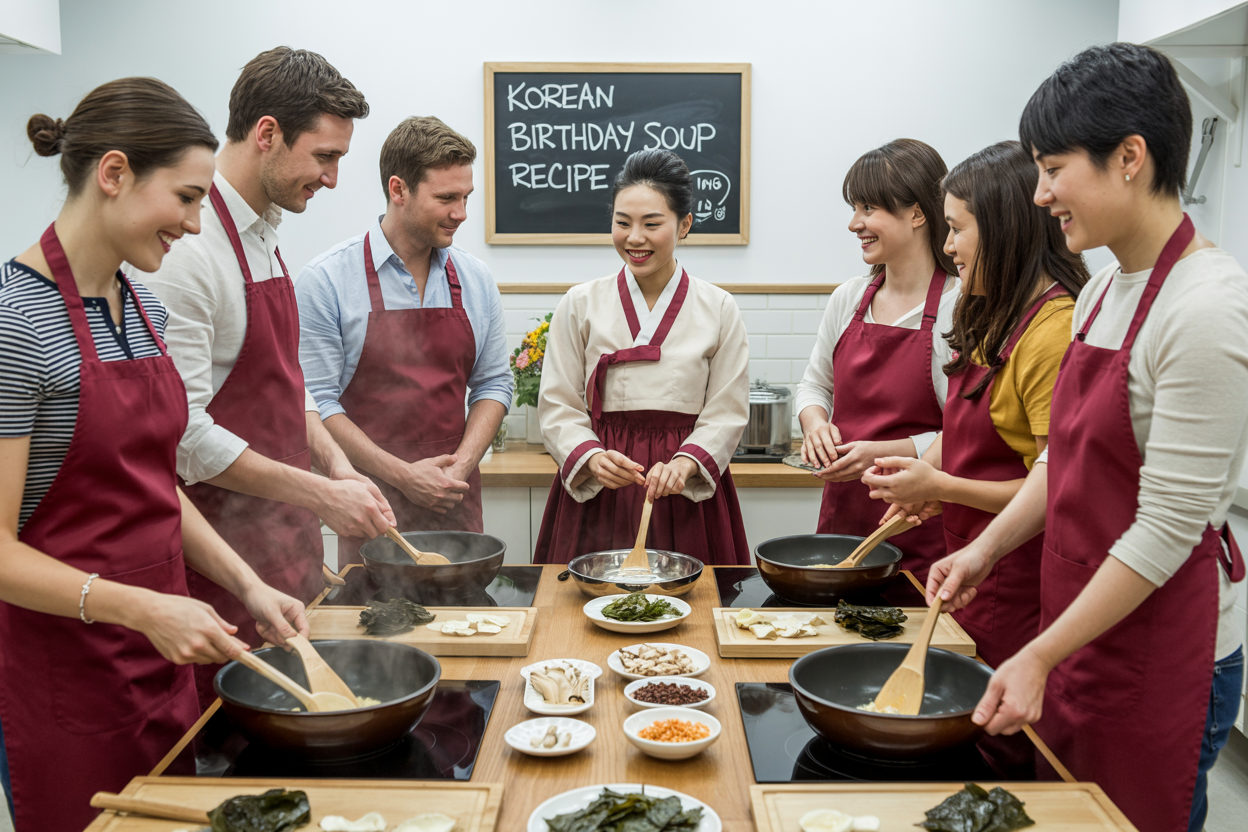
Korean Birthday Soup (Miyeokguk): In Korea, eating miyeokguk on your birthday is as normal as blowing out candles—maybe even more so. Miyeokguk, or Korean birthday soup, is a traditional Korean seaweed soup that people eat on birthdays to honor their mothers and celebrate life itself. Seaweed soup might not sound like a party, but honestly, it’s a lot more meaningful than a slice of cake.
This isn’t just some random soup that became a tradition overnight. Korean seaweed soup has deep roots in Korean culture and it’s loaded with nutrients like iodine, iron, and calcium. Mothers eat it after giving birth to recover, which is why eating Korean birthday soup on your birthday is a way of saying thanks to your mom for all she did.
Whether you’re Korean or just feeling adventurous, making Korean birthday soup at home is way easier than you’d think. I’ll walk you through the backstory, some tips, and a few kitchen hacks that’ll make you look like you’ve been doing this for years.
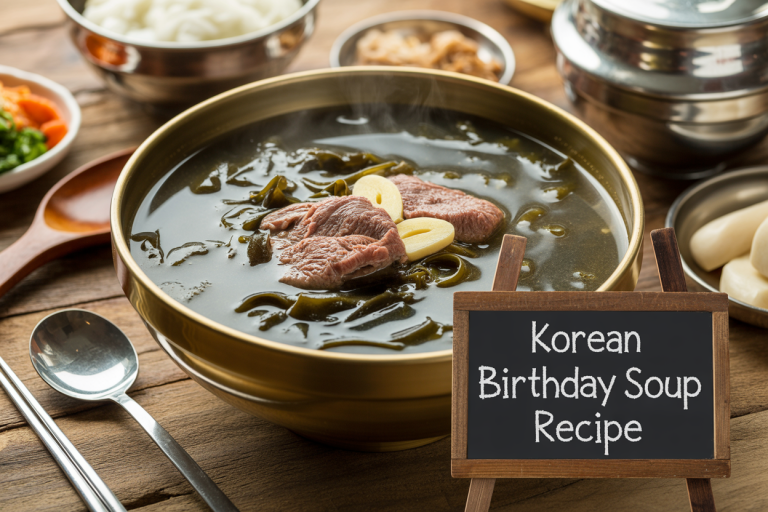
Korean Birthday Soup Recipe
Key Takeaways
- Korean birthday soup is a tradition that honors mothers and the sacrifices they made during childbirth.
- The soup uses seaweed and can have a beef or seafood broth—super nutritious and surprisingly comforting.
- You can tweak the recipe with different ingredients, and leftovers make for quick meals all week long.
The Saga of Seaweed: History and Origins
Here’s a fun fact: Koreans didn’t just decide one day that seaweed soup should be birthday food. The tradition of eating seaweed soup on birthdays goes back generations in Korean kitchens.
Ancient Koreans noticed that whales, after giving birth, would eat seaweed to get their strength back. If it worked for whales, why not give it a shot?
Miyeok, the seaweed in Korean birthday soup, became the go-to for new moms. It’s rich in iodine and calcium, both great for postpartum recovery and milk production. Pretty clever, right?
The logic is simple and kind of beautiful:
- New moms eat miyeokguk after childbirth
- The soup helps them heal and recharge
- Birthdays celebrate the day you were born
- Eating Korean birthday soup honors your mom’s recovery
This is the same seaweed you might know as wakame in Japanese food, but in Korea, miyeok means a lot more than just an ingredient.
The custom that connects mothers, birth, and gratitude has stuck around for centuries. Every bowl of Korean birthday soup tells a story—from nature’s example to me slurping seaweed on my birthday, thinking about my mom.
It’s wild how a simple bowl of seaweed turned into one of the most meaningful dishes in Korean food culture.
Cooking Like a K-Drama Star: Pro Tips for Miyeokguk
Making miyeokguk doesn’t need dramatic music or slow-motion tears, but it does need a few tricks if you want to nail this classic Korean birthday soup.
First, let’s talk dried miyeok. The stuff expands like crazy. I soak it for at least half an hour and watch it grow ten times bigger. Don’t use the whole bag unless you’re trying to feed your entire neighborhood.
The real secret is gukganjang, or Korean soup soy sauce. Regular soy sauce will make your soup too dark and way too salty. I always keep a bottle just for Korean birthday soup because it gives that clean, light flavor you want.
Here’s my usual routine:
- Sauté the soaked seaweed in toasted sesame oil first
- Add garlic early so it gets nice and fragrant
- Don’t be stingy with the sesame oil—it’s Korean birthday soup, not diet food
I always drain the seaweed well after soaking. Too much water makes the soup taste like the ocean’s bathwater, and nobody wants that. Sometimes I even pat it dry if I’m feeling fancy.
Cooking the seaweed in oil before adding water is the key to a deep, nutty flavor. That’s what separates “just okay” from “wow, did you get this at a restaurant?”

Remixes Galore: Fun Twists on Birthday Soup
Turns out, traditional miyeokguk isn’t set in stone. My grandma might not approve, but I love experimenting with Korean birthday soup. Why not?
The broth is where you can get creative. Swap beef broth for anchovy broth for a deeper ocean vibe. Sometimes, I’ll add a splash of fish sauce for that extra umami punch.
I’ve tried mixing different seaweeds, too. Wakame is the standard, but tossing in kombu or other kelp makes the texture a little more interesting. Keeps things from getting boring.
Some of my favorite twists:
- Spicy version: Add gochugaru or fresh chili peppers
- All the garlic: Triple the garlic if you’re feeling bold
- Mushroom party: Throw in shiitake or enoki mushrooms
- Protein swap: Try pork, chicken, or tofu instead of beef
- Veggie overload: Zucchini, radish, or spinach work great
I even made a miso fusion version once—my Korean friends had opinions, let’s just say that. The beauty of Korean birthday soup is its simplicity, so you can go classic or totally wild. Either way, you’re keeping the tradition and making it your own.
Leftovers: The Secret Life of Stored Soup
I’ve found that miyeokguk keeps surprisingly well for a soup that’s meant for special occasions. My fridge has seen more Korean birthday soup than I care to admit.
The seaweed doesn’t get gross or soggy like I used to worry about. It actually holds up pretty well, even after a couple days.
Here’s how I store it:
- Fridge: 3-4 days in a tight container
- Freezer: 2-3 months if you want to save it longer
- Reheat: Microwave or stovetop—whatever’s easier
I always make sure my container seals well. Trust me, you don’t want your whole fridge smelling like seaweed, even if you love Korean birthday soup as much as I do.
When I reheat, I sometimes splash in a bit of water if the seaweed soaked up too much broth. The soup thickens over time, and that’s fine, but it does change the texture.
One tip: don’t add more garlic or seasoning when you reheat. I tried that once and ended up with soup so strong it could wake the neighbors. The flavors get bolder as it sits, so what’s perfect on day one might be a little much by day three.
Freezing individual portions is a game changer for quick lunches. It’s honestly awesome having Korean birthday soup ready whenever, even if it’s not your birthday. The freezer trick is perfect if you make a big batch and don’t want to waste any.
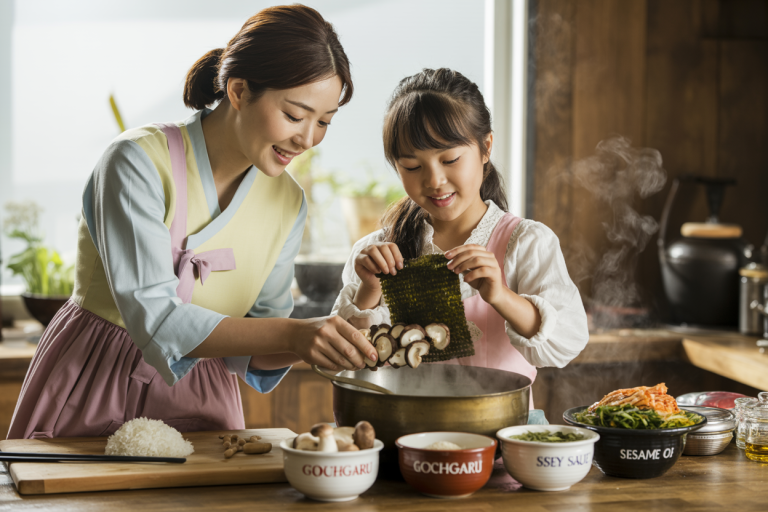
Korean Birthday Soup Recipe – Prep
Cooking Tips For the Korean Birthday Soup (Miyeokguk)
• Soak the seaweed fully before cooking so it softens evenly throughout the soup.
• Drain and rinse the seaweed if needed to remove excess salt or debris.
• Sauté the seaweed briefly at the beginning to help develop deeper flavor.
• Simmer the broth gently so the ingredients remain tender and balanced.
• Add protein ingredients early enough to allow their flavor to infuse the broth.
• Stir occasionally during cooking to help distribute ingredients evenly.
• Taste the soup before serving and adjust seasoning carefully if needed.
• Serve the soup hot for the best texture and flavor balance.
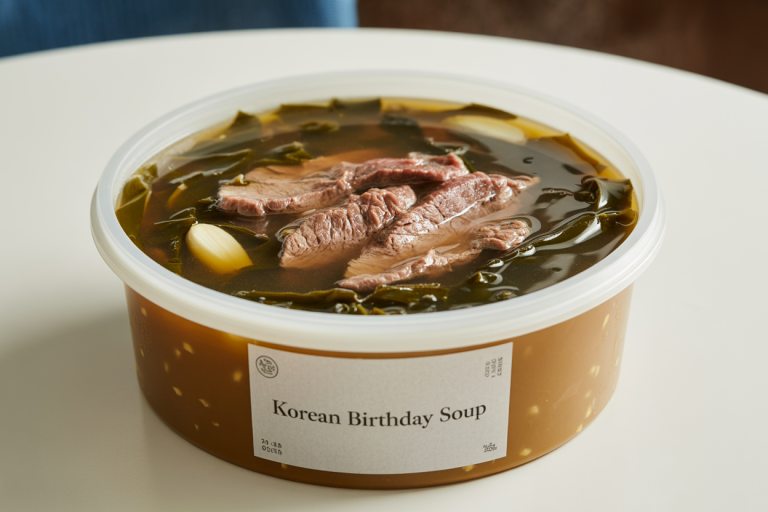
Korean Birthday Soup Recipe – Storage
Storage Tips For the Korean Birthday Soup (Miyeokguk)
• Allow the soup to cool slightly before transferring it into storage containers.
• Store leftovers in airtight containers to help retain moisture and flavor.
• Refrigerate leftovers within 2 hours of cooking for proper food safety.
• Reheat slowly over medium-low heat while stirring occasionally for even warming.
• Add a splash of broth or water during reheating if the soup thickens too much.
• Keep garnishes separate until serving time for fresher appearance.
• Freeze portions in freezer-safe containers for up to 3 months if needed.
• Leave a little space at the top of containers because soups expand when frozen.
• Thaw frozen soup overnight in the refrigerator before reheating.
• Discard the soup if it develops a sour smell, slimy texture, discoloration, mold, or unusual taste, as these are common signs of spoilage.
Korean Birthday Soup (Miyeokguk)
Ingredients
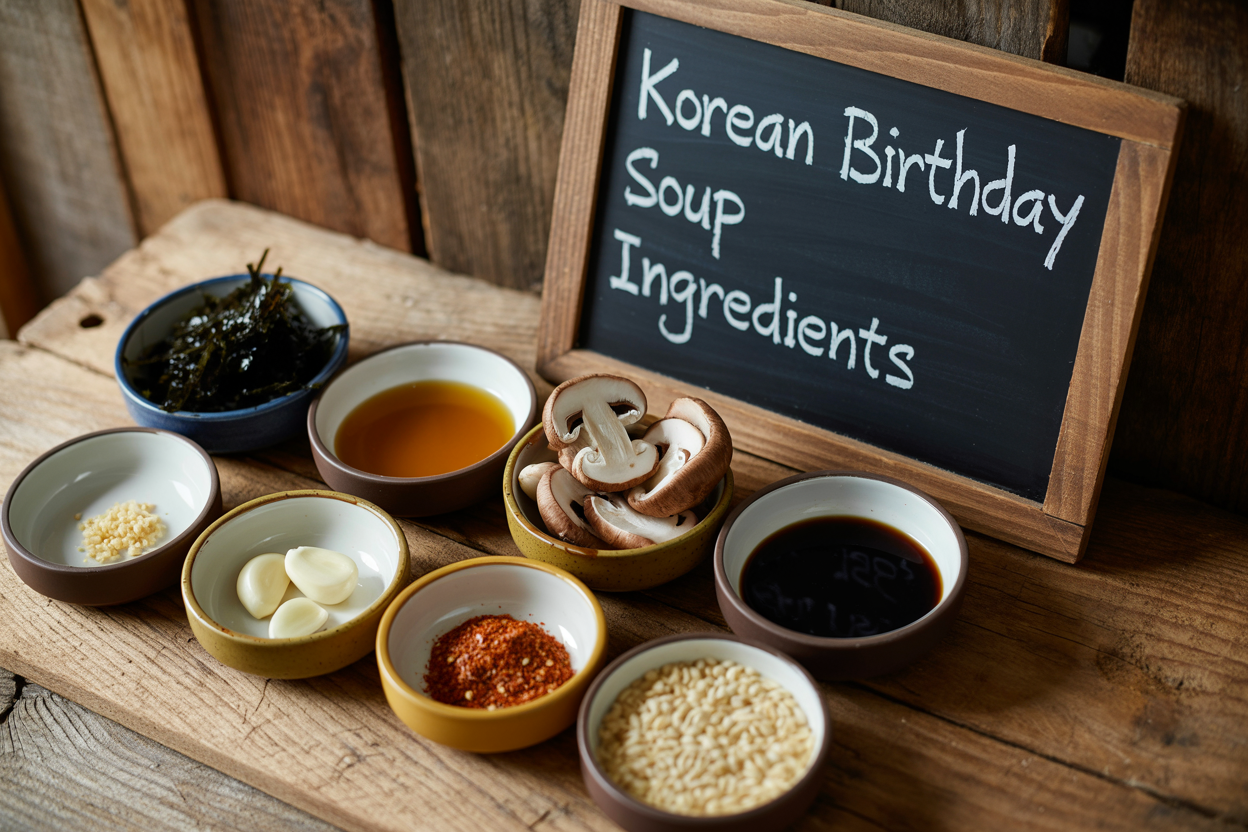
- 1/3 cup dried seaweed
- 4 tablespoon toasted sesame oil
- 2 garlic cloves finely chopped
- 5 ounce shiitake mushrooms sliced
- 1 teaspoon Korean red pepper flakes gochugaru; optional
- 3 cup boiling water
- 3 tablespoon soy sauce or tamari
- Cooked rice and/or kimchi
Instructions
- Place the 1/3 cup dried seaweed into a bowl and cover it with about 1 cup of water. Let it soak for approximately 5 minutes so the seaweed softens and expands. Once hydrated, drain if needed and set it aside for the soup.
- Warm the 4 tablespoons of toasted sesame oil in a medium saucepan over low heat. Add the 2 finely chopped garlic cloves and cook for 3 to 5 minutes, stirring frequently, until the garlic becomes soft and fragrant. Add the soaked seaweed, 5 ounces of sliced shiitake mushrooms, and the 1 teaspoon of Korean red pepper flakes (gochugaru), if using. Continue cooking while stirring constantly for about 3 minutes, allowing the mushrooms to soften and develop some color.
- Pour the 3 cups of boiling water and the 3 tablespoons of soy sauce or tamari into the saucepan. Stir well to combine all the ingredients, then keep the soup at a gentle simmer over low heat for 45 minutes. This allows the flavors to blend and the seaweed to become fully tender.
- Taste the soup and season with salt and pepper as needed. Divide the finished soup evenly between serving bowls. Serve hot with cooked rice and/or kimchi on the side.
Frequently Asked Questions
Koreans eat seaweed soup on birthdays to honor their mothers. The pronunciation isn’t as hard as it looks, and yes, you can totally make a vegetarian Korean birthday soup that doesn’t taste like pond water. If you want to dive deeper, check out this Serious Eats guide or this classic Maangchi recipe for more ideas.
Why do Koreans celebrate birthdays with a bowl of seaweed soup instead of cake?
I get it—cake is fun. But Koreans eat Korean birthday soup on their birthdays because moms traditionally ate it after childbirth to heal and make milk. Eating it on your birthday is basically saying, “thanks, Mom, for everything.”
It’s not about the soup itself, really—it’s about gratitude. And hey, you can always have cake after the soup. No one’s stopping you.
What ingredients do I need to make seaweed soup that tastes like it came from a Korean mom’s kitchen?
You need dried seaweed (miyeok), beef or anchovy broth, garlic, sesame oil, and Korean soup soy sauce. If you want it really traditional, grab some beef brisket too.
The dried seaweed expands like crazy, so don’t dump in the whole package unless you’re feeding a crowd. A little really does go a long way in Korean birthday soup.
I always sauté the seaweed in sesame oil and garlic first. That step gets rid of the ocean smell and adds a savory depth that makes the soup taste, well, like something you’d want to eat on your birthday.
How do you pronounce that seaweed soup name without summoning a new language app?
Miyeokguk sounds like “mee-yuk-gook” when you say it. The “miyeok” part rhymes with “me, yuck”—but don’t worry, Korean birthday soup tastes a lot better than that sounds.
Some people write it as miyeok guk or miyeok-guk. Either way, it’s that Korean birthday soup you eat to celebrate. Don’t sweat the pronunciation too much. Even if you say it a little wrong, people will know what you mean at a Korean restaurant.
Can I make seaweed soup without meat and still keep it delicious (and not sad)?
Absolutely, you can make Korean birthday soup without meat and it won’t end up bland or, well, sad. Just swap out the beef broth for a good vegetable broth or even anchovy broth if you like a bit more depth. Honestly, you don’t need the meat at all—just skip it.
Garlic and quality sesame oil really carry the flavor here. I can’t stress enough how much those two can transform Korean birthday soup into something you actually crave.
Sometimes I toss in mushrooms for extra body and that savory umami hit you might miss without beef. Shiitake mushrooms are perfect for this. They bring a meaty texture without any actual meat, which is kind of amazing if you think about it. If you want more ways to boost the flavor, check out this classic miyeok-guk recipe or this guide to Korean seaweed soup for ideas.
What are the supposed health benefits of seaweed soup—besides making you feel like a hydrated mermaid?
Korean birthday soup is loaded with iodine, which your thyroid totally needs to work right. Seaweed also brings calcium, iron, and a bunch of vitamins that sound pretty impressive—maybe even a little intimidating—if you rattle them off at dinner.
Traditionally, Korean moms eat miyeok-guk (yep, Korean birthday soup) after giving birth. It’s supposed to help with healing and milk production. Is that just grandma wisdom or is there science behind it? I have my doubts, but it’s a lovely tradition either way. If you’re curious, here’s a deep dive into the health benefits of seaweed and a look at why it’s so meaningful in Korean culture.
One thing I do know: Korean birthday soup is low in calories and high in fiber. You can eat a giant bowl and still feel light, not sluggish. That’s a win, right? If you want to learn more about the nutrition, this WebMD article on seaweed is worth a look. Korean birthday soup isn’t just for birthdays—it’s comfort food that happens to be good for you.
Where can I find a good bowl of seaweed soup nearby when cooking feels like a trap?
It’s honestly tough to beat a comforting bowl of Korean birthday soup when you’re just not in the mood to cook. Most Korean restaurants serve miyeokguk, but you might not spot it on the English menu. Just ask for “miyeok guk” (or even point at a picture if you’re feeling shy)—the staff will get what you mean. If you’re curious about the tradition behind it, check out Maangchi’s miyeokguk recipe for some background.
Some spots only whip up Korean birthday soup fresh if you ask, so it’s a good idea to call ahead. Nobody likes showing up hungry and leaving empty-handed, right? Home-style Korean restaurants almost always have it ready since it’s such a classic. You can read more about why miyeokguk matters in Korean culture at The Korea Times.
If you’re lucky enough to live near a Korean grocery store, swing by and check if there’s a food court or deli. They usually offer pre-made Korean birthday soup you can just take home and heat up—no shame in making life easy now and then. For a quick look at what you might find, visit H Mart’s deli section. Craving more homemade flavors? My Korean Kitchen shares tips for making it yourself, if you ever change your mind about cooking.
Miyeokguk, or Korean birthday soup, pops up everywhere—from birthdays to postpartum meals. If you want to dig deeper into its meaning, Wikipedia’s miyeokguk page is a decent place to start. Whether you grab it at a restaurant, deli, or make it at home, Korean birthday soup really hits the spot when you need something warm and nourishing. Don’t be surprised if you end up craving it even when it’s not your birthday.

Recipes are gathered in person and written for real-world cooking conditions.
- 10 Hungarian Dessert Recipes Passed Down Through Generations - July 25, 2026
- 11 Easy English Recipes Anyone Can Make - July 25, 2026
- Hungarian Kifli Recipe - July 25, 2026