
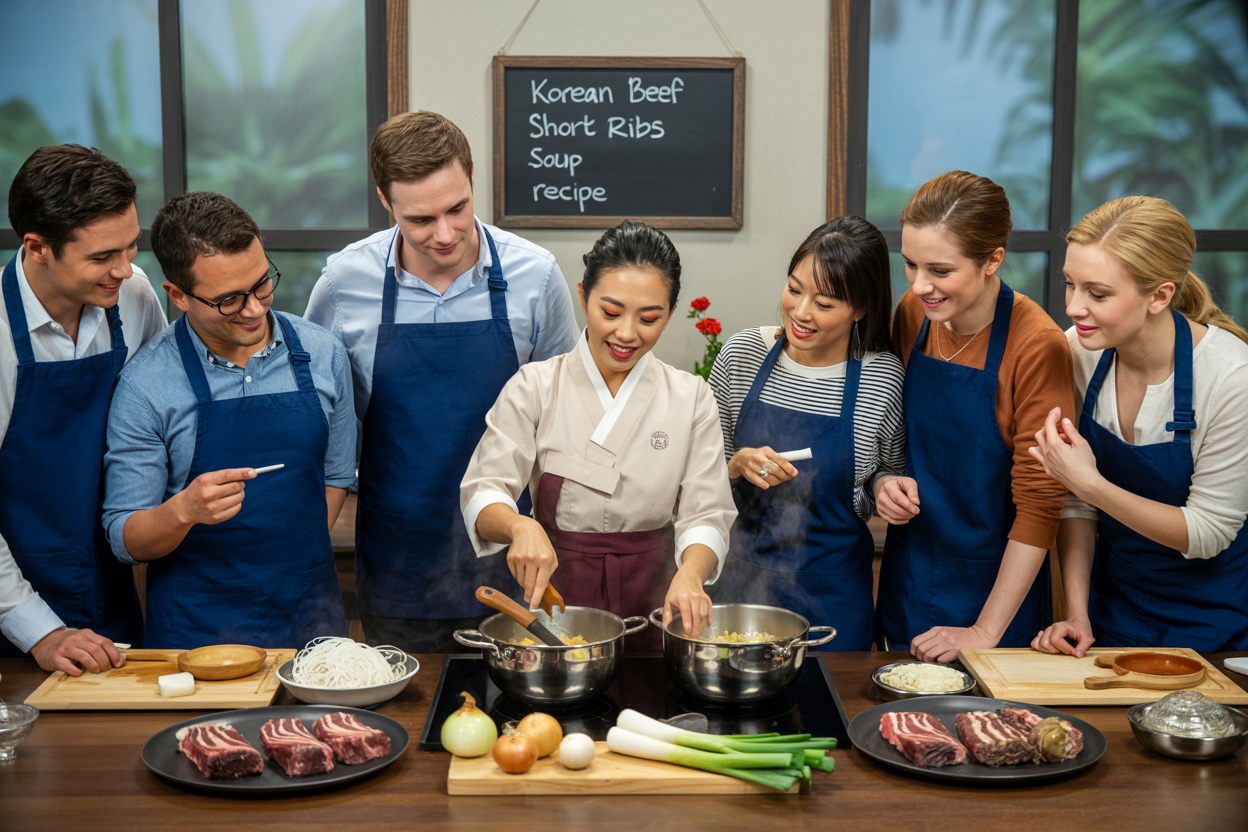
Alright, let me tell you something: Galbitang, or Korean Beef Short Ribs Soup, is this rich, soul-hugging dish where you simmer beef short ribs until they practically melt off the bone. The result? A clear, savory broth that feels like a warm blanket. This isn’t your average soup. Seriously, once you try Korean Beef Short Ribs Soup, you’ll wonder why you ever settled for bland canned stuff when you could be spooning up tender beef and Korean radish in a broth that actually has personality.
The first time I tasted 갈비탕, I finally understood why Koreans have kept this traditional comfort food alive for centuries. “Galbi” means ribs, “tang” means soup—simple, right? But the flavors? Anything but simple. It’s like you convinced a Korean grandma to move in and cook just for you, except you don’t have to clean up after her.
I’ve made a lot of soups, but Korean Beef Short Ribs Soup totally wins a spot in my regular rotation. Whether you’re feeling under the weather, trying to impress friends, or just bored of your usual meals, this soup’s got you. The beef is fall-apart tender, the veggies make it feel healthy-ish, and the broth is so tasty you might just drink it straight.
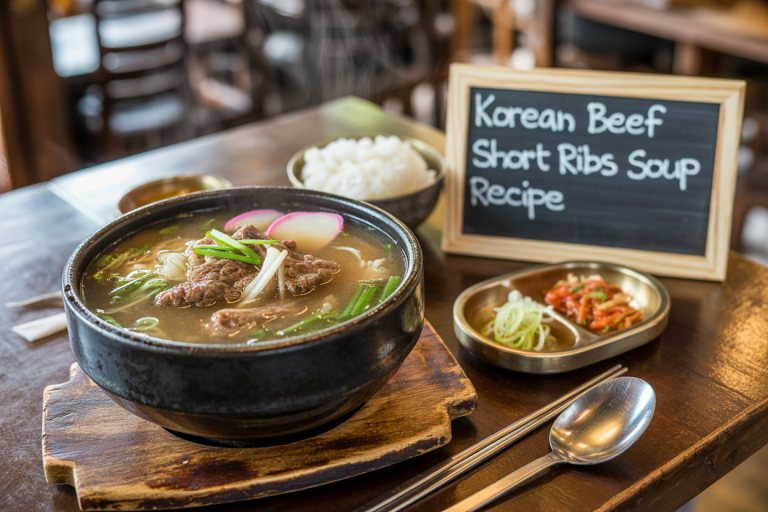
Korean Beef Short Ribs Soup Recipe
Key Takeaways
- Korean Beef Short Ribs Soup is a classic Korean dish that needs slow simmering for tender ribs and a broth with real depth.
- You can tweak the ingredients and spice levels, but it always stays cozy and satisfying.
- Store leftovers right and you’ll be eating Korean Beef Short Ribs Soup for days—no complaints here.
From Palaces to Your Crockpot: A Storied Journey
It kind of blows my mind that Korean Beef Short Ribs Soup has roots going back 800 years to the Goryeo Dynasty. Back then, this wasn’t just soup for a random Tuesday.
Beef was pricey in Korea—like, really pricey. So Korean Beef Short Ribs Soup was a big deal for special occasions or celebrations.
Imagine it: Korean royalty and nobles sipping the same soup we now make in slow cookers. Wild, right? History’s funny that way.
This dish became famous for stamina because it’s so nourishing and restorative. People would eat Korean Beef Short Ribs Soup when they needed to bounce back or just needed a little extra strength.
What Sets It Apart:
- Only the best beef short ribs
- Long, slow simmering that takes patience
- Deep, layered flavors you can’t rush
- Reserved for big events and family gatherings
Even the name tells you what it is—ribs and soup. Straight to the point.
Now, I can whip up Korean Beef Short Ribs Soup in my slow cooker without hovering over the stove all day. My crockpot does the hard work, and I just get to enjoy the results.
It’s kind of awesome how a dish that once belonged to royalty is now bubbling away in regular kitchens everywhere. The same juicy meat, the same savory, clear broth—just a lot less palace drama.
Galbi-Tang Pro Tips That Even Your Grandma Would Steal
Here’s something I wish I’d known sooner: soaking bone-in short ribs in cold water for at least an hour pulls out the blood and gunk. That’s how you get the super-clear broth everyone loves in Korean Beef Short Ribs Soup.
When I make Korean Beef Short Ribs Soup, I always blanch the short ribs first—boil them for about 10 minutes, then rinse them under cold water. It’s like a mini spa day for your meat.
My must-haves for a killer bowl:
- Use Korean radish (mu or moo) if you can—it’s sweeter than daikon
- Go easy on soup soy sauce (guk ganjang)—it’s saltier than regular soy sauce
- Toss in whole scallions for the last half hour
- Don’t rush the simmer. Seriously, low and slow is the name of the game
I chop the radish into big chunks because, honestly, no one cares about perfect knife work when the soup tastes this good.
The real secret to my Korean Beef Short Ribs Soup? I taste the broth every 30 minutes and adjust seasoning as I go. Don’t just wait until the end—trust your tastebuds.
When it’s finally time to eat, I always serve Korean Beef Short Ribs Soup with rice and kimchi on the side. The kimchi’s tangy kick is the perfect balance. Sometimes, I toss glass noodles right into the bowl—highly recommend if you want it extra hearty.
Oh, and here’s a pro move: make extra. Korean Beef Short Ribs Soup tastes even better the next day, after the flavors have had time to hang out together.
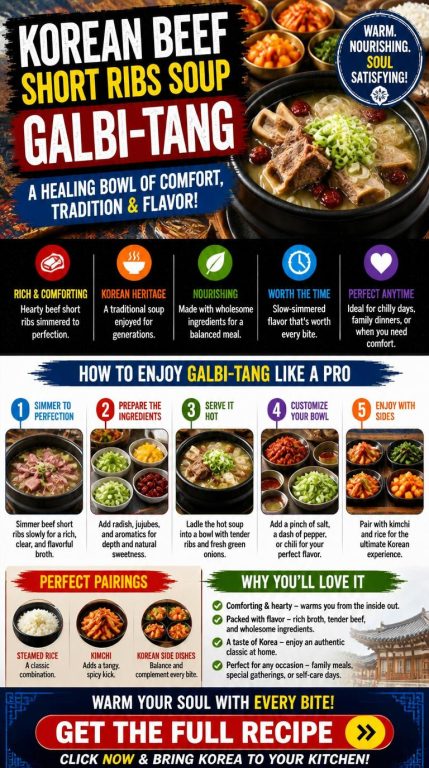
Beyond the Classic: Funky Twists on the Beefy Broth
Look, I love the classic Korean Beef Short Ribs Soup recipe, but sometimes I get the urge to mix things up. Why not, right?
Glass noodles are my go-to for experimenting. Yeah, dangmyeon is the classic, but I’ve tried sweet potato glass noodles and even udon noodles (which, okay, might be a little rebellious). Udon in Korean Beef Short Ribs Soup? Don’t knock it till you try it.
Here are a few oddball additions that actually worked for me:
- A splash of kimchi juice—adds tang without too much heat
- A spoonful of miso paste—brings out that umami and makes people wonder what your secret is
- Sesame oil drizzled on top—because why not?
- Gochugaru (Korean chili flakes)—for those days when you want a bit of a kick
I’ve also tossed in mushrooms mid-cook. Shiitake and enoki soak up the broth and just make Korean Beef Short Ribs Soup more fun. My weirdest twist? I dropped in a parmesan rind for the last hour. Sounds strange, but the flavor was unreal.
The best part about Korean Beef Short Ribs Soup? It doesn’t judge your weird ideas. The noodles and broth just roll with it.
Soup Storage: Surviving the Inevitable Leftovers
I always end up making too much Korean Beef Short Ribs Soup, but honestly, that’s a win. This soup gets even tastier after a day in the fridge.
Once the pot cools, I move the soup into airtight containers within a couple hours. Learned that one the hard way—don’t let it sit out too long.
Storing in the Fridge:
- It keeps for 3-4 days in sealed containers
- The fat will harden on top—just scoop it off before reheating
- If you added noodles, store them separately so they don’t get soggy
Freezer Tips:
- Korean Beef Short Ribs Soup freezes well for up to 3 months
- Leave a little space in the container for the liquid to expand
- Label it with the date—trust me, you’ll forget
I portion out single servings because, let’s be real, I’m not always cooking for a crowd. Makes weekday lunches way easier when you just want something comforting and homemade.
Sometimes, after storing, the meat falls off the bone even more and the broth gets richer. Not a bad thing at all.
Leftover Korean Beef Short Ribs Soup goes great with fresh kimchi or any other banchan hiding in your fridge. Hot soup and cold sides? It’s a vibe.
When I reheat it, I add a splash of water since the broth thickens up. I go slow on the stove or use the microwave in short bursts. Don’t let it boil hard or you’ll end up with tough meat.
For more soup storage hacks, check out this guide to storing soup and this Bon Appétit article on freezing soups.
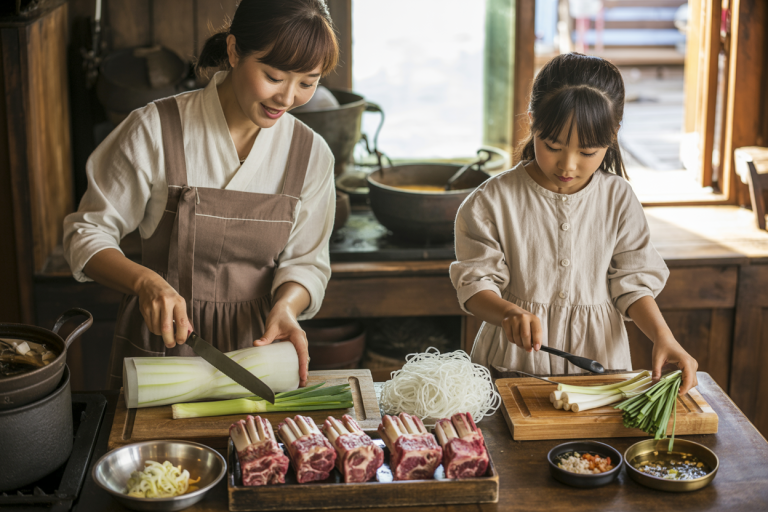
Korean Beef Short Ribs Soup Recipe – Prep
Cooking Tips For the Korean Beef Short Ribs Soup (Galbi-Tang)
• Rinse the short ribs before cooking if desired to help remove excess surface residue.
• Simmer the broth slowly so it develops a cleaner and richer flavor.
• Skim foam from the surface during cooking for a clearer broth.
• Add vegetables near the proper stage so they maintain their texture.
• Use medium-low heat so the broth cooks steadily without becoming cloudy.
• Stir occasionally during cooking to help distribute ingredients evenly.
• Taste before serving and adjust seasoning carefully if needed.
• Serve the soup hot for the best texture and flavor balance.
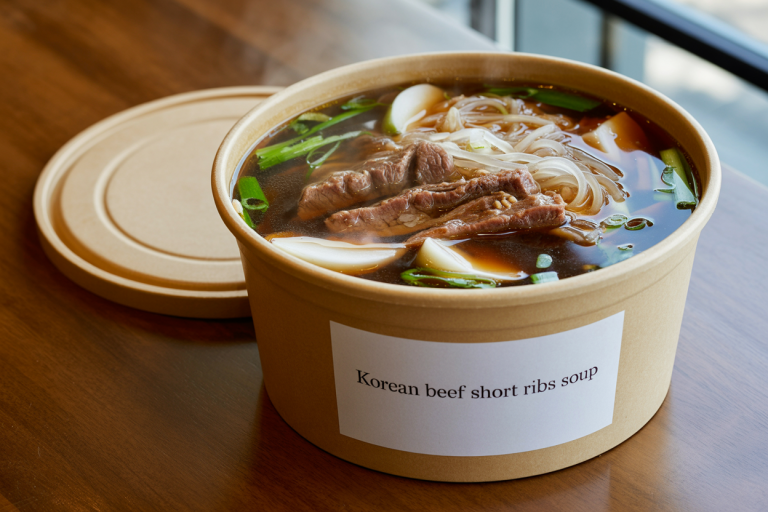
Korean Beef Short Ribs Soup Recipe – Storage
Storage Tips For the Korean Beef Short Ribs Soup (Galbi-Tang)
• Allow the soup to cool slightly before transferring it into storage containers.
• Store leftovers in airtight containers to help retain moisture and flavor.
• Refrigerate leftovers within 2 hours of cooking for proper food safety.
• Reheat slowly over medium-low heat while stirring occasionally.
• Add a splash of broth or water during reheating if the soup reduces too much.
• Keep fresh garnishes separate until serving time for better appearance.
• Freeze portions in freezer-safe containers for up to 3 months if needed.
• Leave a little space at the top of containers because soups expand when frozen.
• Thaw frozen galbi-tang overnight in the refrigerator before reheating.
• Discard the soup, meat, or vegetables if they develop a sour smell, slimy texture, discoloration, mold, or unusual taste, as these are common signs of spoilage.
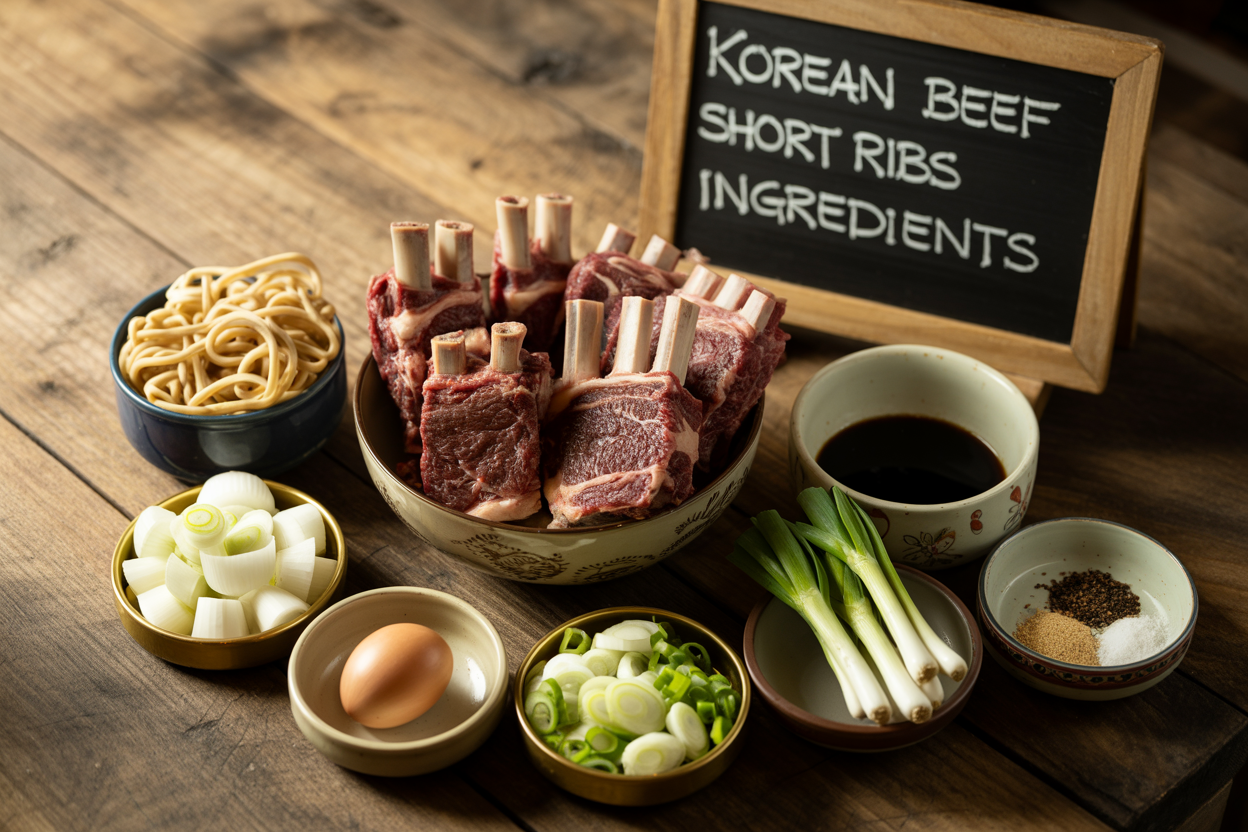
Korean Beef Short Ribs Soup (Galbitang)
Ingredients
- 2 lbs beef short ribs Korean-style - cut thick so that the bones are around 2 inches long
- 1 oz glass noodles Korean
- 1 small radish Korean or daikon radish
- ½ medium onion
- 6 green onions - white parts
- ¼ cup rice wine Korean cooking - plus more for soaking the meat
- 1 tablespoon garlic minced
- 2 green onions - green parts, thinly sliced on a diagonal
- 2 tablespoons soy sauce Korean soup - more or less, to taste
- 1 ½ teaspoon salt
- black pepper ground, to taste
- 1 egg optional
Instructions
- Place the beef short ribs into a large pot and add enough water to completely cover the meat. Add a splash of rice wine and allow the ribs to soak for 3 hours. During the soaking period, drain and replace the water every hour. This process helps remove excess blood and impurities, resulting in a cleaner broth.
- As the soaking time for the beef is nearly complete, place the glass noodles into a large bowl filled with warm water and allow them to soak until needed. Meanwhile, prepare the vegetables by cutting the onion and radish and separating the white parts of the green onions from the green tops. Remove the roots and set the prepared vegetables aside.
- Drain the soaking water from the beef and refill the pot with fresh water. Bring the pot to a boil and cook the ribs for 10 minutes. This step helps remove additional impurities and excess fat from the meat. Once finished, drain the beef and rinse it thoroughly with hot water. Clean the inside edges of the pot before continuing.
- Return the cleaned short ribs to the pot and add the water, rice wine, onion, radish slices, and white parts of the green onions. Bring everything to a boil over high heat. Once boiling, reduce the heat to medium and continue cooking for 30 minutes. Add more water, lower the heat to medium-low, and continue simmering for another 1 hour 30 minutes. During this time, the meat will become tender and the broth will develop its rich flavor.
- Remove the meat and vegetables from the pot. Set aside the beef and radish, but discard the onion and green onion whites. If desired, strain the broth through cheesecloth to create a clearer broth. Cut the beef into individual pieces by slicing between the bones, and cut the cooked radish into bite-sized pieces.
- Drain the soaked glass noodles and return the broth to the pot. Add the beef, radish, glass noodles, green onion greens, garlic, soup soy sauce, and salt. Bring the soup back to a boil and cook for 2–3 minutes, or until the noodles are tender and fully cooked.
- Ladle the hot soup into serving bowls and garnish with additional green onion and ground black pepper to taste. If desired, add the egg according to your preferred serving method. Serve immediately while hot.
Frequently Asked Questions
If you’re making Korean Beef Short Ribs Soup for the first time, you might wonder how to nail that authentic flavor or get the broth crystal-clear. Here’s what I know after a lot of trial and error (and a few kitchen fails).
How do I make beef short rib soup that tastes like it secretly trained in a Korean grandma’s kitchen?
Start by soaking the short ribs in cold water for at least an hour. This pulls out the blood and makes the soup taste cleaner. I change the water a couple times—yeah, it’s a bit of a hassle, but it’s worth it for great Korean Beef Short Ribs Soup.
After soaking, blanch the ribs in boiling water for about 10 minutes, then rinse them under cold water. It’s an extra step, but it really makes a difference in the final taste of Korean Beef Short Ribs Soup.
The classic Korean method is all about building layers of flavor with garlic, ginger, and Korean radish. I simmer the ribs for at least two hours on low. Don’t rush it—good Korean Beef Short Ribs Soup needs time.
Sometimes, I add a chunk of Asian pear while it cooks. The natural enzymes help tenderize the meat and give the broth a little sweetness. It’s a small touch, but it makes Korean Beef Short Ribs Soup even more special.
For more inspiration, check out this detailed guide on Korean Beef Short Ribs Soup and this Saveur recipe. And if you want to learn about the soup’s history, here’s a cool read.
Why does my short rib soup broth look cloudy—am I cooking soup or conducting a science experiment?
Cloudy broth happens when I let Korean Beef Short Ribs Soup boil too hard. All that rolling action breaks down proteins and fat, scattering tiny bits everywhere and clouding up the liquid. I try to keep it at a gentle simmer—just a few bubbles popping up now and then. It’s not rocket science, but it does take a bit of patience.
If I skip the blanching step, I almost always end up with murky Korean Beef Short Ribs Soup. Those first impurities? They’ve gotta go, or they’ll mess up the whole thing. I learned the hard way that shortcuts here just don’t pay off.
I spend the first 30 minutes skimming off foam and fat as it rises. Yeah, it’s a little tedious, but that crystal-clear, clean broth only happens if I stick with it. Sometimes I wonder if it’s worth it, but the end result always convinces me.
If I still see cloudy bits floating around in my Korean Beef Short Ribs Soup, I’ll strain the broth through cheesecloth. Sometimes, you just have to admit you need a little backup and filter out the evidence of earlier mistakes. For more tips on clear broths, check out this Serious Eats guide.
What’s the best way to get fall-off-the-bone short ribs without summoning the smoke alarm?
Low and slow is my only real rule for Korean Beef Short Ribs Soup. I let the ribs simmer gently for 2 to 3 hours on the stove, peeking in every so often to make sure the water hasn’t disappeared on me. It’s hard to rush this part, and honestly, why would you want to?
If I’m pressed for time, the Instant Pot is a lifesaver. Forty-five minutes on high pressure, and I get tender short ribs without standing over the stove all afternoon. I still soak and blanch the ribs first, though—can’t skip the basics.
I always use bone-in short ribs for Korean Beef Short Ribs Soup. The bones add minerals and collagen, which makes the meat ridiculously tender. Boneless ribs? They just don’t bring the same magic. Need proof? Here’s a deep dive into why bones matter in soup.
To check if it’s done, I try pulling the meat away from the bone with chopsticks. If it resists, it’s not ready. I’ve learned to trust this test over any timer. For more on getting tender beef, see this Kitchn guide.
Is this kind of short rib soup actually healthy, or is it just comfort food wearing a wellness disguise?
Korean Beef Short Ribs Soup (Galbi-tang) is one of those rare comfort foods that actually feels nourishing. Long simmering draws out collagen, minerals, and all sorts of nutrients from the bones into the broth. I mean, it’s not kale, but it’s not junk food either. For a nutrition breakdown, check out this detailed post.
Most of the fat gets skimmed off during cooking, so it doesn’t end up greasy. Still, short ribs are rich, so I wouldn’t call this a diet dish. The Korean radish brings in fiber and vitamins, and garlic and ginger add a little anti-inflammatory kick. I like adding glass noodles and extra veggies to make my Korean Beef Short Ribs Soup feel more balanced. If you want a lighter version, this EatingWell recipe is worth a look.
How can I turn a mild short rib soup into a spicy version without setting my taste buds on fire?
When I want my Korean Beef Short Ribs Soup spicy, I start with a little gochugaru (Korean red pepper flakes). I add a tablespoon, taste, then decide if I want more. The flakes bring heat, but they don’t drown out the beefy flavor, which I like.
For a deeper kick, I’ll mix in a spoonful of gochujang (Korean red pepper paste) near the end. It’s not just about heat—the paste adds sweetness and a funky, fermented note that makes the Korean Beef Short Ribs Soup more interesting. If you’re curious about Korean spice, this guide to gochugaru is super helpful.
I sometimes toss in fresh sliced chili peppers, but only to individual bowls. That way, everyone at the table can choose their own spice level. And if I need both spicy and mild versions, I just split the soup before adding any heat—easy fix. For more spicy soup inspiration, see Maangchi’s classic recipe.
Korean Beef Short Ribs Soup really is whatever you want it to be—mild, spicy, or somewhere in between. I keep coming back to it because it’s comforting, flexible, and always hits the spot.
Can I make short rib soup ahead of time, or will it stage a flavor rebellion in the fridge overnight?
Korean Beef Short Ribs Soup, or Galbi-tang, honestly gets even better after a night in the fridge. The flavors just seem to deepen and blend in a way that’s hard to beat. Once it cools down to room temp, I pop it into an airtight container—no fuss, just straight in.
When you chill the soup, the fat rises and hardens on top. I love this part because you can just scoop it right off the next day. It’s one of those little kitchen wins, and you end up with a cleaner, lighter Korean Beef Short Ribs Soup when you reheat it.

Recipes are gathered in person and written for real-world cooking conditions.
- 10 Hungarian Dessert Recipes Passed Down Through Generations - July 25, 2026
- 11 Easy English Recipes Anyone Can Make - July 25, 2026
- Hungarian Kifli Recipe - July 25, 2026