
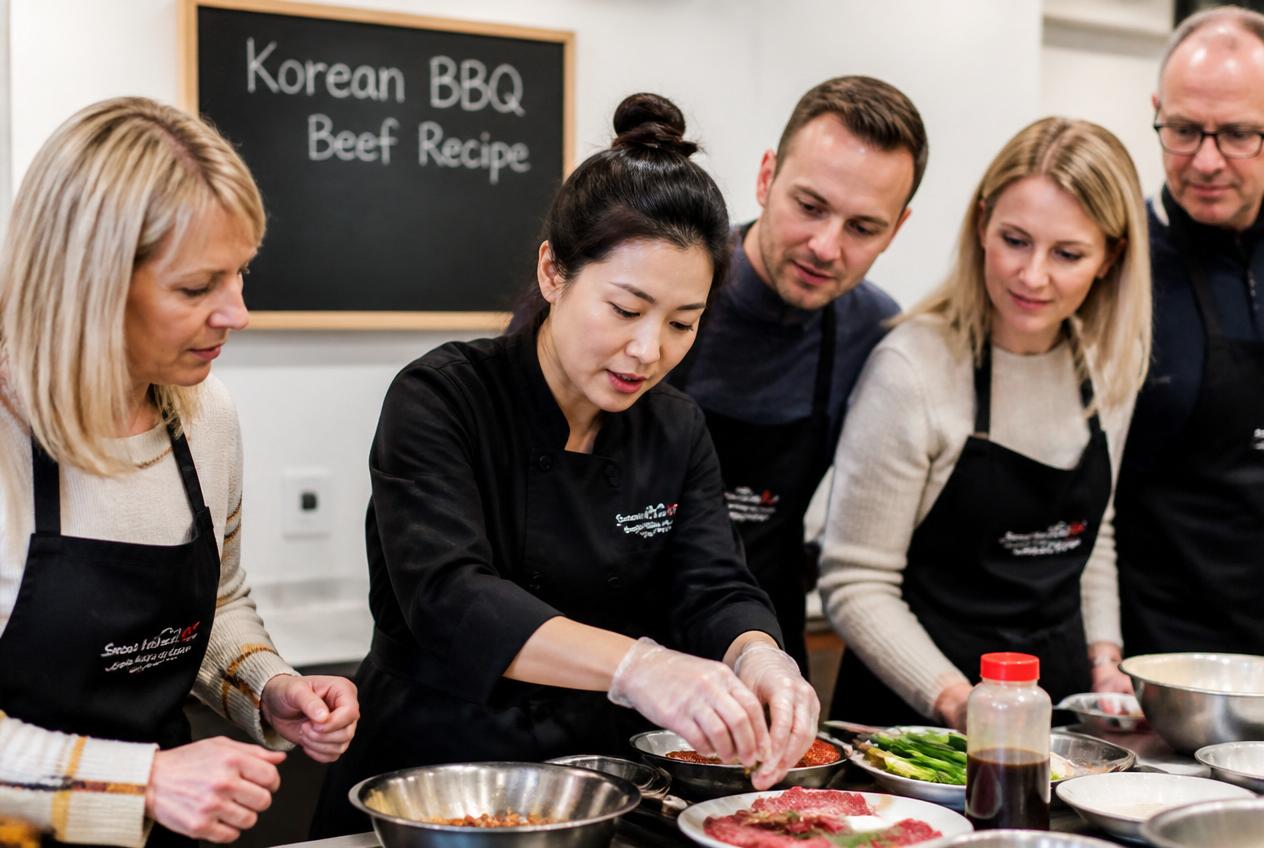
Korean BBQ Beef has a secret weapon that nobody really talks about, and honestly, it deserves way more hype. Sure, bulgogi and galbi get all the love for their sweet, sticky marinades, but jumulleok? It’s a whole different game. Jumulleok is a Korean grilled beef dish seasoned with just sesame oil, garlic, salt, and black pepper—nothing fancy, just pure beef flavor front and center.
The name Jumulleok actually means “to massage” in Korean, which is exactly what I do. I grab some thin-cut steak and rub in the marinade by hand before tossing it on the grill. No complicated steps or ingredient lists to stress over.
This is my go-to when I’m craving Korean BBQ beef without all the hassle. You can use chuck steak or boneless rib cuts, and prep takes maybe ten minutes. The massage makes the meat tender, and those simple seasonings give you a savory char that’s just irresistible.
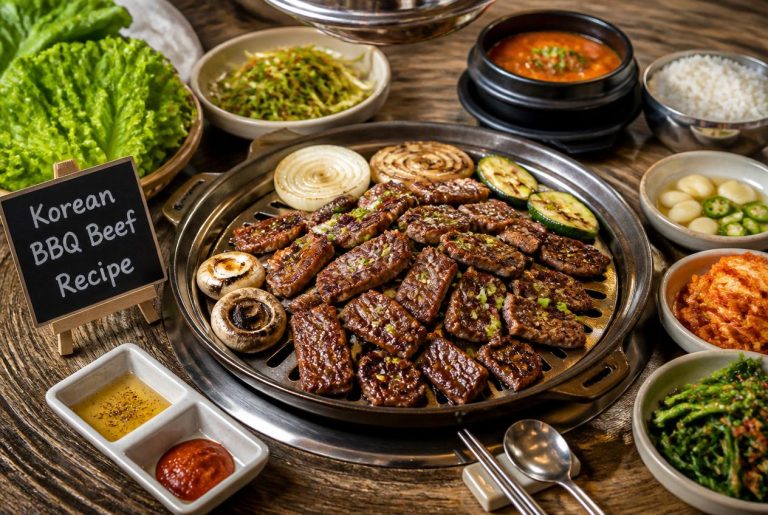
Korean BBQ Beef Recipe
Key Takeaways
- Jumulleok is a simple Korean grilled beef dish seasoned only with sesame oil, garlic, salt, and pepper
- The technique involves massaging the marinade into thin-cut steak by hand before grilling or frying
- You can customize the recipe with different cuts of beef or swap in pork or duck for variety
Sizzling Origins and Tantalizing Tales
Let me be real for a second. The first time I heard about jumulleok in Korean cuisine, I figured it was just some made-up word. Turns out, this old-school meat dish has a backstory that’s way better than my attempts at pronouncing it.
The name comes from the Korean words for “rub” and “seasoned.” Imagine ancient Korean cooks giving beef a spa day, kneading in flavor with their hands. That’s basically what jumulleok is about.
What makes it special:
- Short steak or boneless chuck rib gets the royal treatment
- Sesame oil and garlic massage (yes, really)
- Simple salt and black pepper seasoning
- No complicated marinades in sight
I love that Korean BBQ Beef like this has been a staple in Korean BBQ culture forever. These days, modern Korean BBQ restaurants use gas and electric grills, but honestly, the basic technique hasn’t changed.
The beauty of jumulleok is how straightforward it is. Unlike bulgogi with its long list of marinade ingredients, jumulleok keeps things simple. You’ll find it at Korean BBQ restaurants and street food spots all over South Korea.
What cracks me up is how creative Koreans get with this dish. They’ve got pork and duck jumulleok now too. Why stick with just beef when you can give everything the Korean BBQ Beef treatment?
Cooking Like a Korean BBQ Superhero
Okay, I don’t actually wear a cape in the kitchen, but mastering jumulleok at a Korean BBQ makes me feel like some kind of grilling superhero. The trick is to set up my grill station just right.
First, I get my banchan lineup ready. Kimchi, scallion salad, and whatever other Korean side dishes I can find—these aren’t just for show, they’re the real MVPs.
When the meat hits the grill, I watch that Korean BBQ beef sizzle and try not to flip it too soon. If I wait, I get those perfect caramelized edges that make all the difference.
My sidekick squad looks like this:
- Kimchi – a tangy must-have
- Ssamjang – the secret sauce
- Scallion salad – crisp and zippy
- Pickled radishes – bright and crunchy
- Steamed rice – can’t skip it
The ssam wrap is where things get fun. I grab a lettuce leaf, add some Korean BBQ beef, a smear of ssamjang, and whatever banchan I’m in the mood for. It’s kind of like building the ultimate bite.
My secret skill? Not burning the garlic. That takes focus. I use medium-high heat and keep an eye on things so I don’t set off the smoke alarm. When friends taste my Korean BBQ at home, they think I’ve got some magic trick. Really, it’s just practice and good thinly sliced beef.
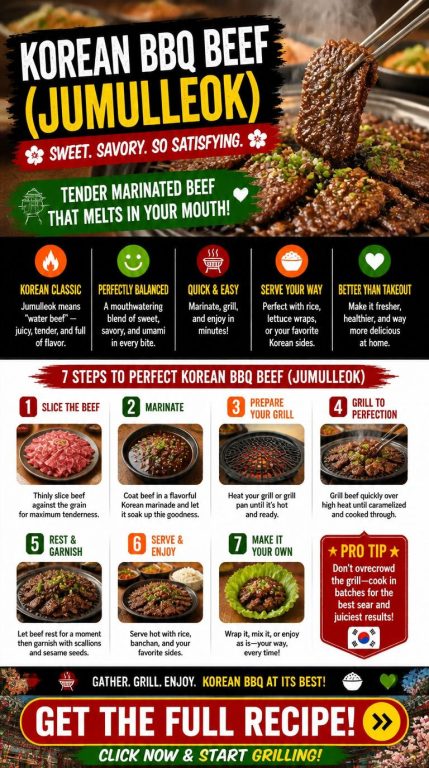
Recipe Makeover: Give It a Twist!
I love tradition, but sometimes I get bored and want to shake things up. That’s when I start experimenting with my Korean BBQ beef jumulleok and see what happens.
My favorite twist is gochujang. I whisk a spoonful into the marinade, and suddenly my Korean BBQ Beef has a spicy, tangy kick that wakes everything up. It’s got this deep, fermented heat that just works with beef.
Toasted sesame seeds are another favorite. I toast a bunch, crush half for the marinade, and scatter the rest over the finished Korean BBQ beef. The flavor and crunch are so worth it.
Here are a few other fun ideas I’ve tried:
- Pineapple juice in the marinade makes the beef super tender
- Sriracha mayo on top for a creamy hit of heat
- Pickled radish for a tangy, crunchy bite
- Crispy garlic chips—because fried garlic makes everything better
- Fresh mint leaves (sounds weird, but trust me)
Sometimes I’ll turn my jumulleok into tacos just because I can. Corn tortillas, spicy beef, pickled veggies, and a hit of lime make me wonder why I ever ate regular tacos in the first place.
Storing Leftovers So They Don’t Start a BBQ of Their Own
I always make too much Korean BBQ beef jumulleok because I can’t help myself. But I’ve learned that storing BBQ leftovers the right way is crucial if I don’t want to discover a science project in my fridge later.
Here’s how I handle leftovers:
The Cool-Down Rules
I never leave my Korean BBQ beef out more than two hours. Room temp is basically an open invite for bacteria I don’t want anywhere near my food.
Once it cools, I move the beef into airtight containers. I like glass best—plastic always ends up smelling like garlic and soy sauce forever.
Storage Timeline
| Location | How Long | Best For |
|---|---|---|
| Refrigerator | 3-4 days | Quick meals this week |
| Freezer | 2-3 months | Future me’s dinner plans |
I stash my refrigerated BBQ leftovers in the coldest part of the fridge, usually the back shelf. The door’s too warm and makes things spoil fast.
Freezing Like a Pro
When I freeze Korean BBQ beef jumulleok, I split it up first. No one wants to thaw a giant hunk of beef just for lunch.
I wrap each serving in plastic, toss them in a freezer bag, and squeeze out all the air. Freezer burn ruins good beef, and I won’t let that happen to my Korean BBQ beef.
Reheating frozen BBQ is easiest if I thaw it in the fridge overnight. Then I warm it gently in a pan with a splash of water so it doesn’t dry out.
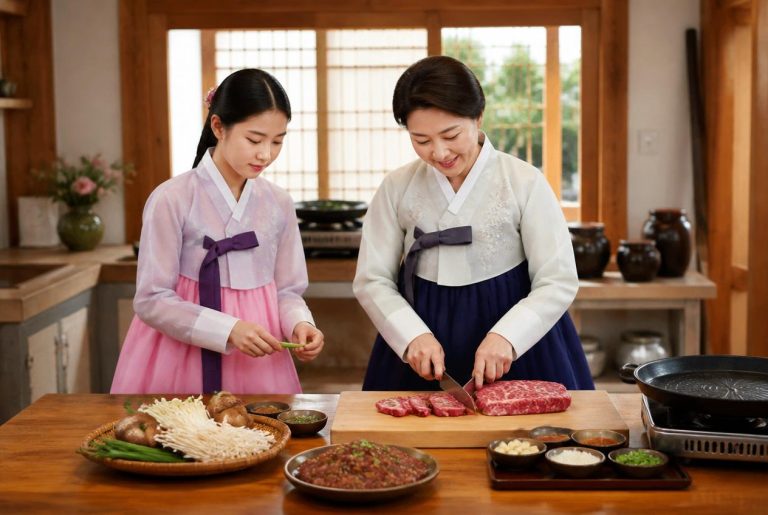
Korean BBQ Beef Recipe – Prep
Cooking Tips For the Korean BBQ Beef (Jumulleok)
• Cut or slice the beef into evenly sized pieces so it cooks consistently throughout.
• Marinate the beef long enough so the flavors distribute evenly into the meat.
• Cook over medium-high heat for better browning and caramelization.
• Avoid overcrowding the grill or pan because excess moisture reduces searing.
• Turn the beef frequently for even cooking and color.
• Allow excess marinade to drip off before cooking to reduce flare-ups and burning.
• Taste before serving and adjust seasoning carefully if needed.
• Serve the jumulleok immediately while hot and tender.
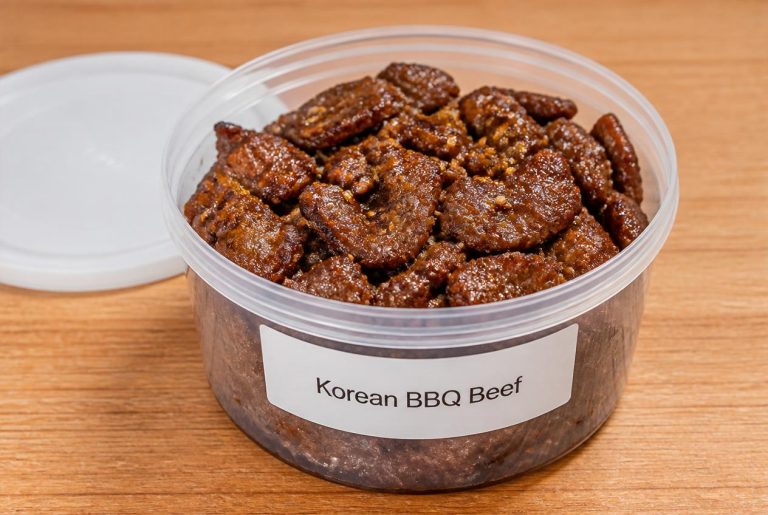
Korean BBQ Beef Recipe – Storage
Storage Tips For the Korean BBQ Beef (Jumulleok)
• Allow the beef to cool slightly before placing it into storage containers.
• Store leftovers in airtight containers to help retain moisture and flavor.
• Refrigerate leftovers within 2 hours of cooking for proper food safety.
• Reheat gently over medium-low heat to help prevent the meat from drying out.
• Add a small splash of broth during reheating if needed.
• Keep lettuce wraps, rice, and garnishes separate until serving time.
• Freeze cooked beef in freezer-safe containers for up to 3 months if needed.
• Wrap portions tightly before freezing to help reduce freezer burn and moisture loss.
• Thaw frozen jumulleok overnight in the refrigerator before reheating.
• Discard the beef if it develops a sour smell, slimy texture, discoloration, mold, or unusual taste.
Korean BBQ Beef (Jumulleok)
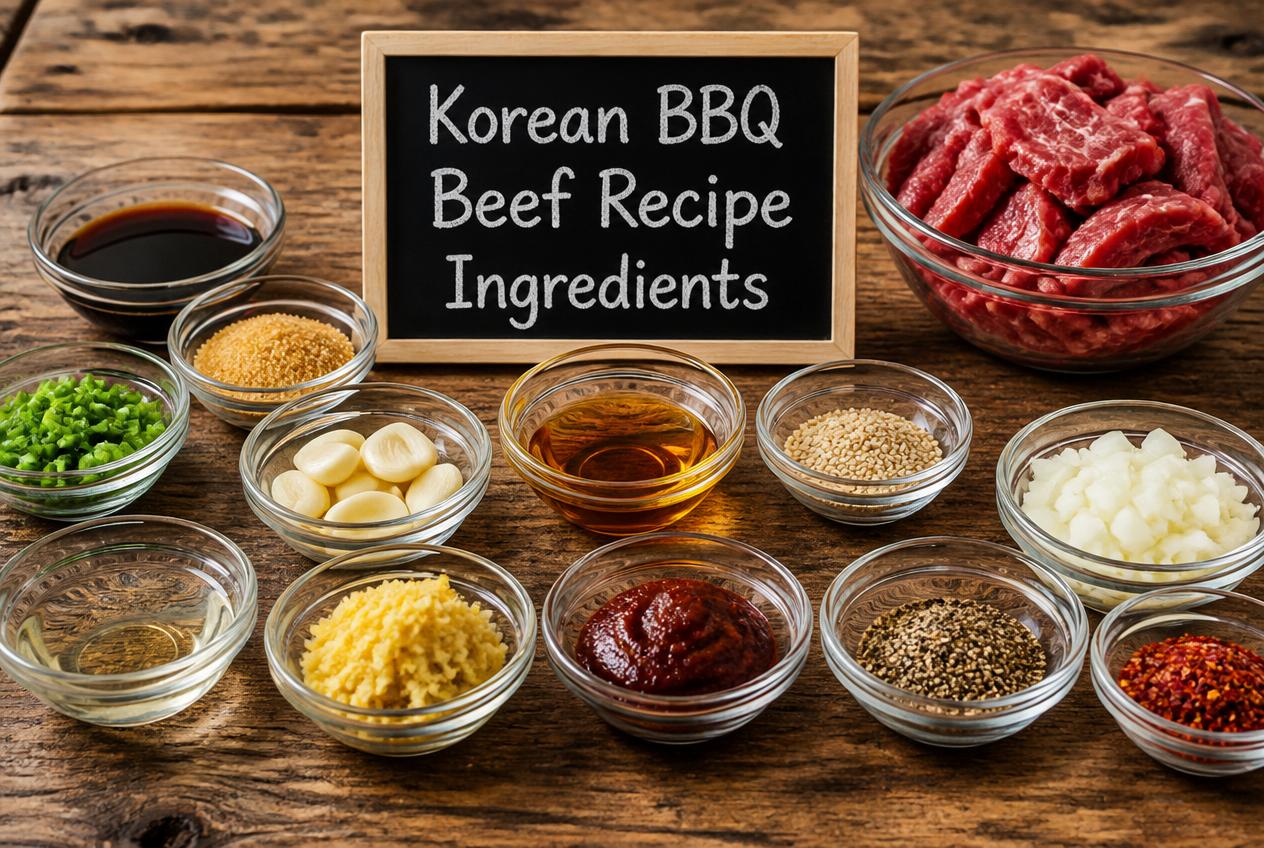
Ingredients
- 2 pounds rib eye thinly sliced, chuck eye steaks
- ½ cup soy sauce
- 5 tablespoons sugar
- 2 ½ tablespoons sesame seeds
- 2 tablespoons sesame oil
- 3 shallots thinly sliced
- 2 cloves garlic crushed
- 5 tablespoons mirin Japanese sweet wine
Instructions
- In a large bowl, combine the soy sauce, sugar, sesame seeds, sesame oil, shallots, garlic, and mirin. Stir until the ingredients are well mixed and the sugar is dissolved. Add the sliced beef and toss thoroughly so every piece is evenly coated with the marinade. Cover the bowl and refrigerate for 12 to 24 hours, allowing the flavors to fully penetrate the meat.
- Heat a large skillet over medium heat. Once the skillet is hot, add the marinated beef and spread it out evenly in the pan. Cook for 5 to 10 minutes, stirring occasionally, until the meat is fully cooked and no pink remains. As the beef cooks, the marinade will caramelize slightly and coat the meat with rich flavor.
- Transfer the cooked beef to a serving platter and serve immediately. Pair it with a fresh salad, fried rice, or your favorite side dishes for a complete meal.
Frequently Asked Questions for the Korean BBQ Beef (Jumulleok)
People always ask what the best beef cuts are, how jumulleok stacks up against other Korean BBQ beef classics, and if store-bought versions are worth it. Jumulleok is simpler than bulgogi, but it’s just as satisfying if you do it right.
What cut of beef should I use if I want that tender, juicy Korean BBQ vibe without chewing like a cow?
I go for boneless rib steak or chuck steak when I make Korean BBQ beef at home. Short steak is great too since it’s thin and cooks fast but stays juicy.
The trick is to get the beef sliced thin, about a quarter inch thick. If you can’t find it pre-sliced, try your local carniceria—they’ll usually slice it for you.
Sirloin works if you’re in a pinch, but it can get chewy if you overcook it. I avoid super lean cuts because a little fat is the difference between dry sadness and juicy Korean BBQ beef happiness.
How is this dish different from galbi—are they cousins, siblings, or just beef with different PR teams?
Galbi uses beef short ribs and goes heavy on a sweet, complex marinade with soy sauce, sugar, and fruit. Jumulleok is like galbi’s laid-back cousin—no drama, just beef and a few seasonings.
The jumulleok prep is all about massaging in sesame oil and garlic, then hitting it with salt and pepper. No mile-long ingredient lists or fancy techniques.
Think of galbi as the dressed-up, company’s-coming version. Korean BBQ beef jumulleok is what I make on a weeknight when I just want beef that tastes like beef—no science experiment required.
Do I really need to massage the meat, or is that just an excuse to play with dinner?
Yeah, I actually massage the meat, and honestly, it’s not just some odd ritual. Massaging helps the sesame oil and garlic really get into the beef fibers, so every bite of Korean BBQ Beef comes out full of flavor.
The technique literally inspired the name—it comes from Korean words that mean “rub” and “seasoned.” I usually spend about two minutes working the oil and garlic into the Korean BBQ Beef with my hands.
It feels kind of therapeutic, to be honest. Plus, it makes the Korean BBQ Beef more tender because you break down some of those tough muscle fibers before it hits the grill.
How long should I marinate it so it tastes amazing and not like it just met soy sauce five minutes ago?
I let my Korean BBQ Beef sit for at least 30 minutes after the massage, but if I’ve got the time, an hour is even better. Unlike bulgogi, which needs hours to soak up all those flavors, jumulleok doesn’t need a long wait.
Sesame oil and garlic work pretty quickly. I’ve rushed it with just 15 minutes of marinating, and honestly, the Korean BBQ Beef still tastes good.
After two hours, I really don’t notice any extra flavor. The beauty of Korean BBQ Beef is how simple and direct the seasoning is—no need for complicated overnight marinades.
Can I use pork belly for this style, or will the BBQ gods revoke my grill privileges?
You can use the same massage technique on pork belly, but at that point, you’re basically making a stripped-down version of samgyeopsal. The BBQ gods might roll their eyes, but your grill privileges are probably safe.
Pork belly is already so fatty that it doesn’t really need the sesame oil treatment. Honestly, I’d save the jumulleok process for Korean BBQ Beef and just hit samgyeopsal with salt and pepper right at the grill.
If you’re determined to use pork, try a leaner cut like pork loin or shoulder. Otherwise, you’ll end up with greasy meat—seriously, Korean BBQ Beef is the way to go if you want that perfect balance of flavor and texture. I always come back to Korean BBQ Beef for its tenderness and rich, savory taste. If you ask me, nothing beats the aroma of Korean BBQ Beef sizzling on the grill, especially when you’ve taken the time to massage in all those flavors.
Is the Costco version worth it, or am I just paying extra for convenience and a side of mystery marinade?
Honestly, I haven’t seen a specific Costco jumulleok, but they do carry some pre-marinated Korean BBQ Beef options. If you’re in a rush, sure, they’ll do the trick, but let’s be real—you’re mostly just paying more because someone else tossed the Korean BBQ Beef in a bag with marinade for you.
Making Korean BBQ Beef at home? It takes maybe five minutes, tops. You just rub the meat with oil, garlic, salt, and pepper. It’s not rocket science, and honestly, it’s kind of satisfying to do it yourself. Why overcomplicate it?
The store-bought Korean BBQ Beef usually ends up tasting a bit too sweet, almost like bulgogi. If I’m dropping money for convenience, I’d rather grab some good quality beef and handle the simple prep myself. Korean BBQ Beef is just better when you know exactly what’s going into it. I mean, why settle for less flavor and more sugar?

Recipes are gathered in person and written for real-world cooking conditions.
- 10 Hungarian Dessert Recipes Passed Down Through Generations - July 25, 2026
- 11 Easy English Recipes Anyone Can Make - July 25, 2026
- Hungarian Kifli Recipe - July 25, 2026