
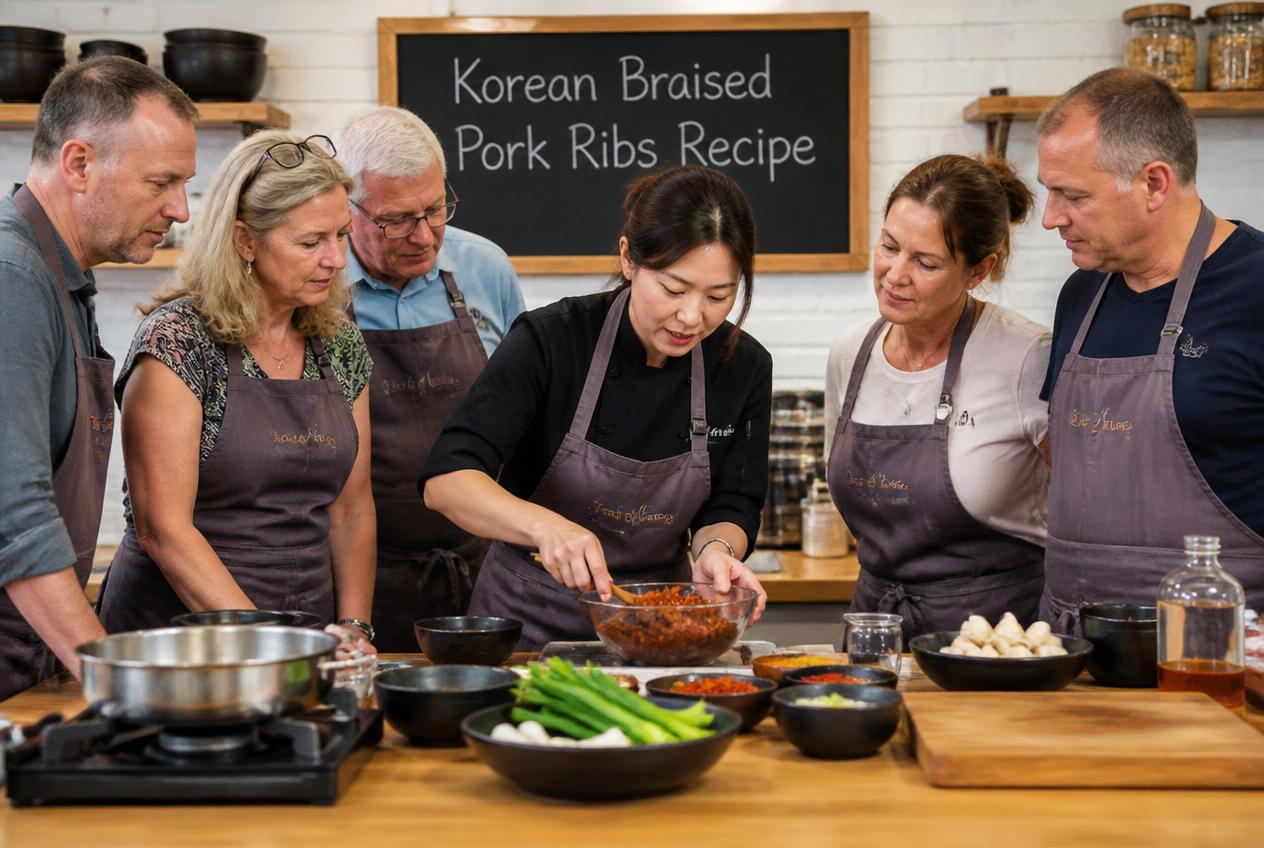
I’ll be honest—the first time I tasted Korean Braised Pork Ribs or dwaeji galbijjim, I almost lost it right there at the dinner table. Korean Braised Pork Ribs just do something to your soul. These ribs get slow-braised in a savory-sweet sauce until the meat basically slides right off the bone. It’s rich, it’s comforting, and it’s one of those dishes that’ll make even your pickiest friends swoon. The name’s a bit of a tongue-twister Dwaeji Galbijjim, but wow, are the ribs worth it.
So, what sets Korean Braised Pork Ribs apart from the usual barbecue ribs? Instead of slapping them on a grill with some sticky sauce, this classic Korean dish gets its magic from slow-cooking in a mix of soy sauce, aromatics, and veggies. It’s a process, not a sprint—rushing Korean Braised Pork Ribs is like trying to binge-watch a masterpiece show in fast-forward. You’ll miss all those deep flavors.
Whether you’re cooking for a crowd or just treating yourself on a random weeknight, Korean Braised Pork Ribs bring comfort in the most delicious way. And if you’re not up for hovering over the stove all day, you can totally make it in a slow cooker. I’ll walk you through everything—from picking out the right ribs to making sure your leftovers are just as tasty the next day (if you manage to save any, that is).
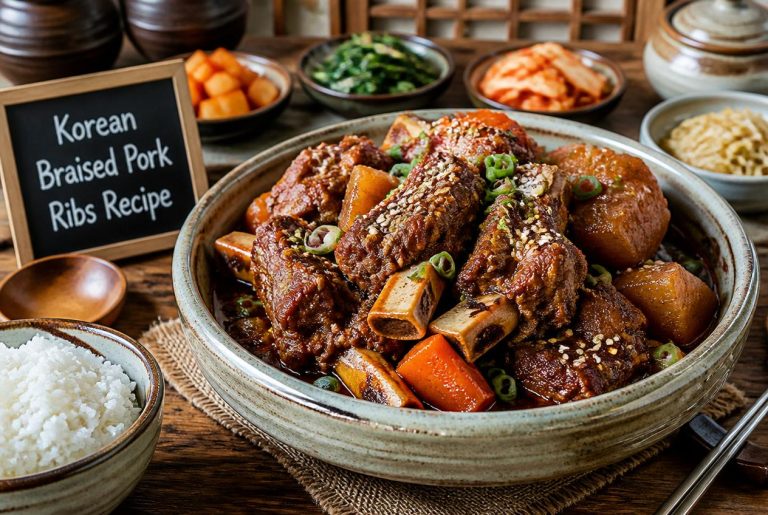
Korean Braised Pork Ribs Recipe
Key Takeaways
- Korean Braised Pork Ribs cook low and slow in a savory-sweet sauce until they’re fall-off-the-bone tender
- You can make dwaeji galbijjim on the stovetop, in a slow cooker, or even a pressure cooker if you’re short on time
- Store leftover Korean Braised Pork Ribs properly and you’ll have amazing meals for days
Braised Wonders: Origins And Oddities
I’ve always found it cool that galbijjim has deep roots in Korean cooking. Traditionally, it’s made with beef short ribs, but honestly, the pork version—Korean Braised Pork Ribs—has become a star in its own right.
The name is straightforward. “Galbi” means ribs, “jjim” is the braising method, and “dwaeji” just means pork. So, Korean Braised Pork Ribs. Simple, right?
Here’s the twist: while most people think of galbi as something you grill at a Korean BBQ joint, galbijjim goes a totally different direction. No smoky grill marks here—just tender, simmered goodness that takes its time.
Key Differences:
- Kalbi (grilled): Quick cook, charred edges, eat right away
- Galbijjim (braised): Slow cook, super tender, all in one pot
Korean Braised Pork Ribs usually show up for special occasions. It’s a dish that takes patience, which probably explains why families save it for celebrations and big gatherings.
The funny thing? Even though Korean Braised Pork Ribs look fancy, it’s actually a one-pot wonder that’s way easier than people expect. You just have to resist the urge to rush things.
Tips For Pork-Fection
Let’s talk about picking ribs. I’ve learned that pork spare ribs are perfect for Korean Braised Pork Ribs because they’ve got lots of fat and connective tissue. If you want something leaner, baby back ribs work too, but they’ll cook a little faster.
Patience is everything for tender Korean Braised Pork Ribs. I always parboil the ribs first to get rid of extra fat and any weird flavors. Your sauce will thank you later for not being greasy.
For sweetness, I like to mix brown sugar and mirin. Brown sugar adds that deep caramel vibe, and mirin gives the sauce a little tang that balances everything out.
Here’s my checklist every time I make Korean Braised Pork Ribs:
- Cut ribs into single pieces so the sauce hits every bite
- Skim off any foam during parboiling—nobody likes bitter broth
- Let the ribs rest for about 10 minutes after cooking so they soak up all the juices
- Add veggies halfway through, not at the start, or they’ll just fall apart
I always taste the sauce before dumping in all the sugar. Some Korean Braised Pork Ribs recipes get pretty sweet, but I like to tweak it to my mood. Less is more at first—you can always add, but you can’t take it out.
Biggest lesson? Don’t rush the braise. Low and slow is the only way Korean Braised Pork Ribs hit that dreamy texture.

Korean-Style Twists You Never Saw Coming
I’ve realized you don’t have to play by the rules with Korean Braised Pork Ribs. Sometimes the best flavors pop up when you go off-script.
If I want extra depth, I toss in a splash of oyster sauce with the soy. It’s this umami punch that always gets people asking what’s in the sauce.
Here’s how I like to shake up my Korean Braised Pork Ribs:
- Stir in a spoonful of ssamjang for a funky, salty kick
- Swap in cheongyang chili peppers if you’re craving real heat
- Double up on gochujang and turn regular ribs into spicy pork ribs
One time I added ssamjang to the sauce and now I can’t go back. The fermented flavor just does something special that plain gochujang can’t pull off alone.
Cheongyang peppers are no joke—way hotter than jalapeños. I start with one, sliced thin, and see how it goes. You can always up the heat, but good luck dialing it back once things get fiery.
My favorite flavor combo? Gochujang and oyster sauce in equal parts. The sweet balances the spice, and the oyster sauce gives Korean Braised Pork Ribs a glossy finish that looks amazing in photos.
Pro tip: If you’re using a slow cooker, add the ssamjang near the end. That way, the funky flavor doesn’t disappear during the long cook.
Taming Leftovers: Storage Shenanigans
Let me tell you, Korean Braised Pork Ribs taste even better the next day. The flavors just get friendlier overnight in the fridge. It’s like they finally decided to get along.
Here’s what I do: let the ribs cool to room temp, then move them into an airtight container. Simple, right?
Refrigerator Storage:
- Keep in airtight containers for 3-4 days
- Store the sauce with the ribs so they stay juicy
- If you want your veggies less mushy, keep them separate
Freezer Storage:
- Freeze for up to 2-3 months
- Use freezer-safe containers or tough bags
- Squeeze out as much air as you can
- Label with the date—mystery meat is nobody’s friend
I always portion out my Korean Braised Pork Ribs before freezing. That way, I can just grab what I need for a quick meal and not end up eating the whole batch in one go.
For reheating, I like the stovetop with a splash of water or broth. It brings back that tender, saucy vibe. The microwave is fine too—just throw a damp paper towel over the top to keep things moist.
Don’t forget: frozen Korean Braised Pork Ribs need to thaw in the fridge overnight. I know, waiting is tough when you’re craving that sweet-spicy magic, but it’s worth it for ribs that taste just right.
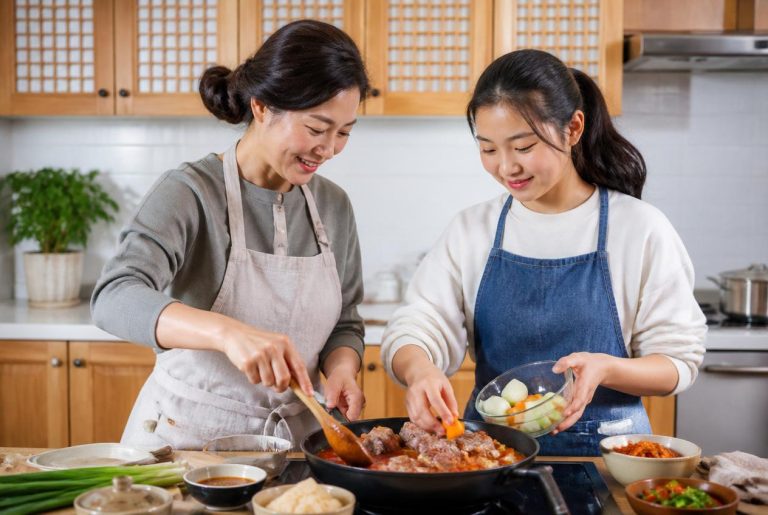
Korean Braised Pork Ribs Recipe – Prep
Cooking Tips For the Korean Braised Pork Ribs (Dwaeji Galbijjim)
• Cut the pork ribs into evenly sized portions so they cook consistently throughout the dish.
• Brown the ribs lightly before braising to help develop deeper flavor.
• Simmer the ribs slowly so the meat becomes tender without drying out.
• Skim excess fat from the surface during cooking if needed for a cleaner sauce.
• Add vegetables during the appropriate stage so they become tender without falling apart.
• Stir occasionally and gently to help keep the ingredients intact.
• Use medium-low heat so the braising liquid reduces gradually without scorching.
• Let the dwaeji galbijjim rest briefly before serving so the flavors settle together more fully.
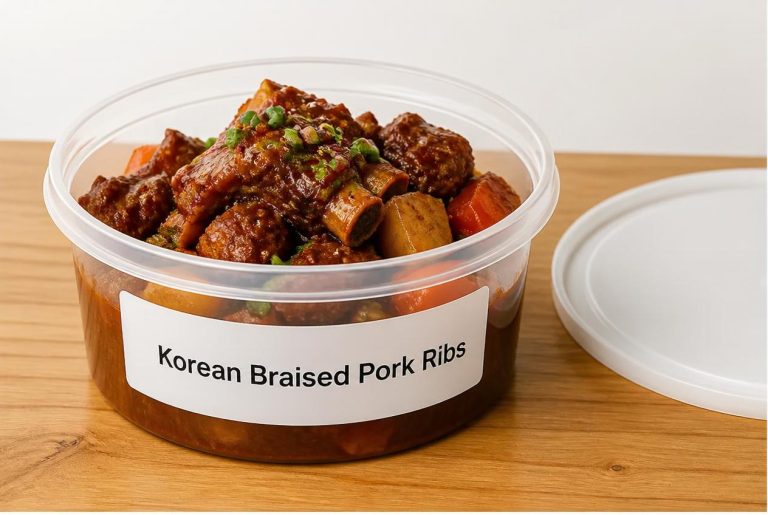
Korean Braised Pork Ribs Recipe – Storage
Storage Tips For the Korean Braised Pork Ribs (Dwaeji Galbijjim)
• Allow the ribs and sauce to cool slightly before placing them into storage containers.
• Store leftovers in airtight containers to help retain moisture and flavor.
• Refrigerate leftovers within 2 hours of cooking for proper food safety.
• Reheat slowly over medium-low heat while stirring occasionally for even warming.
• Add a splash of broth or water during reheating if the sauce thickens too much.
• Keep garnishes separate until serving time for fresher appearance and texture.
• Freeze portions in freezer-safe containers for up to 3 months if needed.
• Leave a little space at the top of containers because sauces expand when frozen.
• Thaw frozen dwaeji galbijjim overnight in the refrigerator before reheating.
• Discard the pork, vegetables, or sauce if they develop a sour smell, slimy texture, discoloration, mold, or unusual taste, as these are common signs of spoilage.
Korean Braised Pork Ribs (Dwaeji Galbijjim)
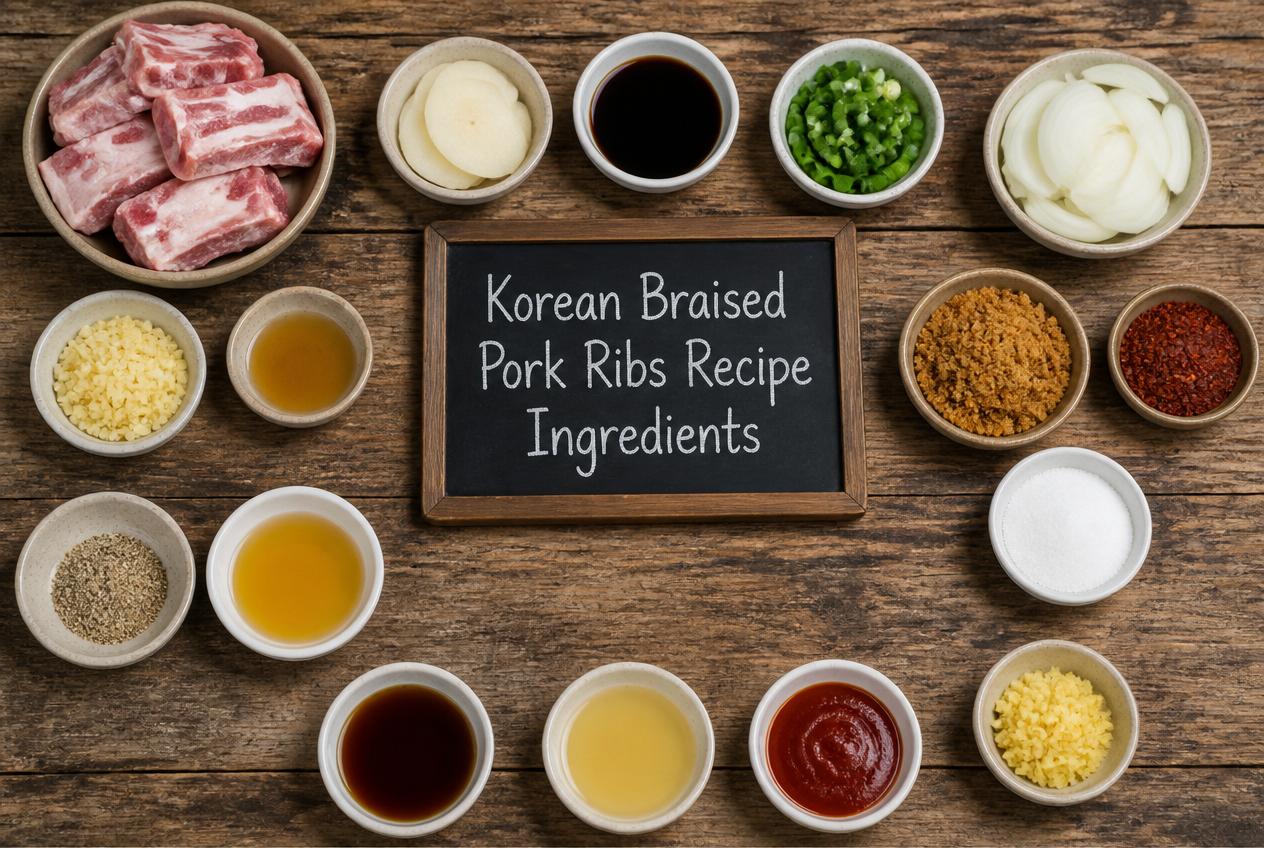
Ingredients
- 2 pounds pork spare ribs or riblets cut into 1½ to 2 inches pieces
- 2 medium russet potato peeled and cut into 2 inch chunks
- 1 large carrot peeled and cut into 1 inch chunks
- 1 large yellow onion peeled and cut into large pieces
- Green onions thinly sliced, optional for garnish
- ½ cup soy sauce regular
- ¼ cup brown sugar dark brown sugar packed
- 2 tablespoons rice wine Shaoxing
- ½ large apple cored, peeled, and cut into smaller chunks (preferably Fuji apples)
- 2 cloves garlic
- 1 knob ginger 1 inch, peeled and cut into smaller pieces
- Few cracks of black pepper
Instructions
- Add all of the marinade ingredients to a food processor and blend until the mixture is mostly smooth and evenly combined. The finished marinade should have a thick consistency that will coat the ribs well.
- Place the pork ribs in a large mixing bowl and pour the prepared marinade over them. Mix thoroughly until all of the ribs are evenly coated. Cover the bowl and let the ribs marinate for at least 1 hour, though overnight marinating will produce even deeper flavor. For the best results, rinse the ribs a few times before marinating to remove any excess blood or small bone fragments left from cutting.
- Transfer the marinated ribs along with all of the marinade into the rice cooker pot. Arrange the potatoes, carrots, and onion over the top of the ribs, distributing them evenly throughout the pot. This allows the vegetables to absorb the flavorful cooking juices as the ribs cook.
- Secure the lid on the rice cooker and set it to the multicook setting for 35 minutes. During cooking, the ribs will become tender while the vegetables soften and absorb the savory-sweet flavors of the marinade.
- Once the cooking cycle is complete, carefully open the rice cooker and transfer the braised pork ribs and vegetables to a serving dish. Garnish with sliced green onions if desired. Serve the galbijjim hot with steamed white rice for a complete meal.
Notes
Frequently Asked Questions for the Korean Braised Pork Ribs (Dwaeji Galbijjim)
Getting Korean Braised Pork Ribs to that “fall off the bone” level, dialing in the perfect heat, and making sure the sauce actually sticks—these things take a little know-how. Here’s what I’ve figured out about making these ribs sing, no matter how you cook them or what you serve on the side.
How do I get pork ribs so tender they basically confess their secrets?
It’s all about low and slow. I let my Korean Braised Pork Ribs braise for at least 1.5 to 2 hours on the stove, just barely simmering in the sauce.
Keep the heat gentle so the sauce barely bubbles. If you rush it, the meat just gets tough and chewy, and nobody wants that. Make sure there’s enough liquid to keep the ribs partly covered. As they cook, the collagen melts down and turns the meat super tender.
What’s the best gochujang level for spicy ribs: “pleasant tingle” or “call the fire department”?
I usually start with 2 or 3 tablespoons of gochujang for a nice kick. If you want to go wild, you can bump it up to 4 or 5 tablespoons and really bring the heat.
The nice thing about Korean Braised Pork Ribs is that all the sweet stuff in the sauce balances out the spice. You can always stir in more gochujang later if you’re feeling brave.
Do I really need Korean pear, or can I bribe the marinade with apple (or soda) instead?
Korean pear is classic because it helps tenderize the meat and adds sweetness, but I’ve swapped in regular pear or apple plenty of times and the ribs never complained. The fruit enzymes do the trick either way.
No fruit? A splash of Sprite or 7UP works in a pinch. The soda sweetens things up and helps break down the meat, too.
Just don’t skip the tenderizer altogether or your Korean Braised Pork Ribs might end up holding a grudge.
Can I make this in an Instant Pot or slow cooker without turning the ribs into sad meat confetti?
I’ve made Korean Braised Pork Ribs in my Instant Pot plenty of times, and they’re usually ready in about 35 to 40 minutes on high pressure. The ribs turn out tender, but they don’t fall apart into a mushy mess. Honestly, it’s kind of magical how well the Instant Pot handles Korean Braised Pork Ribs.
If I’m using a slow cooker, I set it to low for 6 to 7 hours, or high for 3 to 4 hours. The low setting works better for me because it’s easier to avoid overcooking. Korean Braised Pork Ribs need that gentle braise to stay juicy, right?
The real key with both the Instant Pot and slow cooker is not drowning the ribs. Since these gadgets trap steam, I only add about half the liquid I’d use for stovetop Korean Braised Pork Ribs. Too much liquid just waters down the flavor, and no one wants that.
What side dishes go best with braised ribs to balance the spice and stop me from eating the whole pot?
Kimchi is always my first pick. That tangy, fermented bite just slices through the richness of Korean Braised Pork Ribs. Sometimes I’ll add japchae too, because those sweet potato noodles love to soak up the sauce from Korean Braised Pork Ribs (and honestly, who could blame them?).
There’s also the classic galbi rice bowl—I just pile everything together for a little chaos on the plate. Gyeran jjim, that fluffy steamed egg dish, is a nice mellow side that helps cool things down when the Korean Braised Pork Ribs bring the heat.
Sometimes, though, I just go for simple steamed rice. It’s plain, sure, but it lets the flavors of Korean Braised Pork Ribs really shine. If you’re looking for something that won’t compete with those bold flavors, rice is a safe bet. And honestly, Korean Braised Pork Ribs taste amazing with almost anything on the side.
How do I thicken the sauce so it clings like it pays rent, not like watery soup?
Honestly, when I make Korean Braised Pork Ribs, I just take the lid off for the last 20 or 30 minutes and let the sauce bubble away. It thickens up as it cooks down, and the flavors get way more intense. That’s how I like it—no runny sauce here.
But sometimes, I get impatient. Or maybe the sauce just refuses to thicken. In that case, I’ll grab a tablespoon of cornstarch, mix it with two tablespoons of cold water, and stir it right in. The sauce thickens up fast—seriously, just a few minutes of simmering and you’re good.
Here’s another move: if the ribs for my Korean Braised Pork Ribs are already tender, I’ll take them out and crank the heat up high. I let the sauce boil until it’s as thick as I want, then toss the ribs back in. That way, they get totally coated in that sticky, glossy sauce. It’s honestly the best part of making Korean Braised Pork Ribs. If you want those Korean Braised Pork Ribs to really shine, don’t skip this step. And hey, if you’re into experimenting, try letting the sauce reduce even more for super clingy Korean Braised Pork Ribs.

Recipes are gathered in person and written for real-world cooking conditions.
- 10 Hungarian Dessert Recipes Passed Down Through Generations - July 25, 2026
- 11 Easy English Recipes Anyone Can Make - July 25, 2026
- Hungarian Kifli Recipe - July 25, 2026