
Bavarian Pot Roast, or Schmorbraten as folks in Germany call it, is one of those dishes that fills your home with the kind of aroma that makes you instantly hungry. This slow-braised beef dish brings together tender meat, bold flavors from beer, mustard, and spices, and delivers a meal that really melts in your mouth. I’ve cooked this Bavarian Pot Roast recipe more times than I can count, and it always gets rave reviews from family and friends.
The best part about the Bavarian Pot Roast recipe? It’s surprisingly simple. You just brown the roast with salt and pepper in a Dutch oven or slow cooker, then let it do its thing. The slow braising turns a tough cut of beef into something you can pull apart with a fork.
What I love about the Bavarian Pot Roast recipe is how practical it is. Basic ingredients, big flavor, and it feeds a crowd without you having to fuss. Whether you go for potatoes, noodles, or some crusty bread, Bavarian Pot Roast pairs beautifully with anything that’ll soak up that rich gravy.
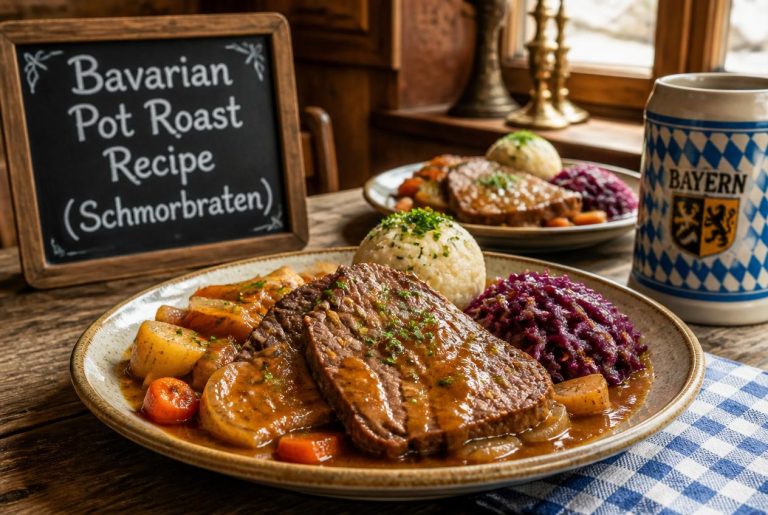
Bavarian Pot Roast Recipe (Schmorbraten)
Key Takeaways
- Bavarian Pot Roast is a slow-cooked German beef dish that gets tender from hours of braising in beer and spices
- This Bavarian Pot Roast recipe is easy to make in a Dutch oven or slow cooker with barely any hands-on time
- It’s classic comfort food and goes great with potatoes, noodles, or bread to soak up the flavorful gravy
English Recipe Description And Historical Information
Bavarian Pot Roast, or Schmorbraten, really shows off the heart of German cooking. I think this Bavarian Pot Roast recipe sums up traditional German food because it takes simple ingredients and turns them into something rich and satisfying. The dish comes from Bavaria, a region known for hearty meals. German pot roast was a staple for soldiers and families. Regional German cuisine often focuses on making tough cuts of meat tender through slow cooking.
The basic Bavarian Pot Roast recipe uses a beef roast that you brown and then slowly cook with liquid. Bavarian Pot Roast combines beef with onions, mustard, vinegar, and spices for its signature flavor. Beer is a common addition in many Bavarian Pot Roast recipes, giving it that malty sweetness.
Key Characteristics:
- Cooking Time: 2 to 4 hours for fork-tender meat
- Main Protein: Boneless beef chuck roast or beef shoulder
- Cooking Method: Slow braising in liquid
- Flavor Profile: Savory, a little tangy, rich
German culinary traditions really value patience. This Bavarian Pot Roast recipe needs 2 or more hours for the meat to get truly tender. The long, slow cooking breaks down the fibers and makes a sauce that’s perfect with potatoes, dumplings, or noodles.
Some old-school Bavarian Pot Roast recipes start with a marinade, while others just brown the meat and add broth, wine, or beer. Either way, you end up with something deeply flavorful.
Recipe Tips
I always brown the roast in a Dutch oven before adding liquid. That step gives the Bavarian Pot Roast recipe a flavor you just can’t fake.
Key Timing Considerations:
- Plan for 2.5 to 3 hours of cooking for tender meat
- Check doneness by seeing if the meat pulls apart with a fork
- Let the roast rest for 10 minutes before slicing
I use a meat thermometer to make sure the Bavarian Pot Roast recipe hits at least 145°F inside. That keeps things safe and juicy. For recipes like this, I prep the veggies and spices the night before. Makes things easier, especially if you’re doing the Bavarian Pot Roast recipe for a group. You can even assemble the slow cooker version ahead of time for maximum convenience.
Liquid Choices:
Beer gives the Bavarian Pot Roast recipe its classic flavor, but beef broth works if you prefer. Don’t skip the vinegar—it helps break down the meat and gives that tangy zip that makes the Bavarian Pot Roast recipe stand out.
Seriously, don’t rush it. Low and slow heat is what makes the Bavarian Pot Roast recipe work. I keep things at a gentle simmer, not a hard boil, and it pays off.
When I’m done, I use the pan drippings for gravy. Just take out the bay leaf, skim off any fat, and thicken with a little cornstarch slurry if you want.
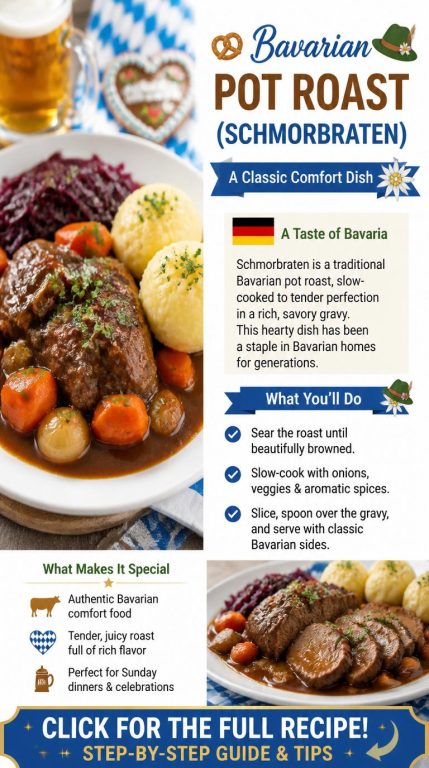
Variations
I’ve found a bunch of ways to tweak the Bavarian Pot Roast recipe for different tastes. That’s part of what makes the Bavarian Pot Roast recipe so fun—there’s room to play.
Meat Choices
Beef chuck is the classic for a Bavarian Pot Roast recipe, but I’ll use pork roast with dark beer sauce sometimes for a different vibe. Venison works too, especially if you’re after a more rustic, gamey flavor. Trust me, the Bavarian Pot Roast recipe can handle it.
Liquid Variations
The liquid changes everything in a Bavarian Pot Roast recipe. Here’s what I’ve tried:
- Dark beer – Makes it malty and perfect for Oktoberfest
- Red wine – Adds depth
- Beef broth with vinegar – For a tangy kick
- Apple cider – Subtle sweetness, surprisingly good
Spice Adjustments
I adjust spices in the Bavarian Pot Roast recipe depending on what’s in my pantry. Bay leaves, juniper berries, and caraway seeds give it that German vibe. Sometimes I’ll toss in ginger or cloves, especially around the holidays.
Cooking Methods
My slow cooker version of the Bavarian Pot Roast recipe barely needs any attention. Brown the meat, dump it all in, and let it go for 8 hours on low. The Dutch oven version gives you more control if you like to fuss a bit.
Regional Styles
Different German regions put their spin on the Bavarian Pot Roast recipe. Böfflamott uses anchovies and capers—definitely a twist. Some folks add red cabbage right to the pot, which makes it a one-dish meal. I kind of love that.
Alternate Recipes Substitutions
Honestly, the Bavarian Pot Roast recipe is super forgiving. Schmorbraten recipes let you swap ingredients based on what you have. Chuck roast works as a stand-in for rump roast, and I’ve done it plenty of times.
For the liquid, I replace red wine with beef broth or dark beer. Braising in beer gives the Bavarian Pot Roast recipe a different, but still awesome, flavor. Brown ale is my favorite for that malty note.
Protein Options:
- Bottom round roast
- Sirloin tip roast
- Brisket (just needs more time)
I swap veggies in the Bavarian Pot Roast recipe based on what’s in the fridge. Parsnips instead of carrots? Sure. Shallots for onions? Works. Celery root can add a cool earthy note if you’re feeling adventurous.
Liquid Substitutions:
- Red wine → beef broth + a splash of vinegar
- Dark beer → chicken stock
- Water + bouillon cubes (when I’m desperate)
For thickening, I’ll use either flour or cornstarch—just mix with cold water first. Bay leaves can stand in for juniper berries if you don’t have them. I’ll sometimes add tomato paste for depth, though that’s not traditional for a Bavarian Pot Roast recipe. The main thing is to keep that savory-tangy balance that makes the Bavarian Pot Roast recipe so good.
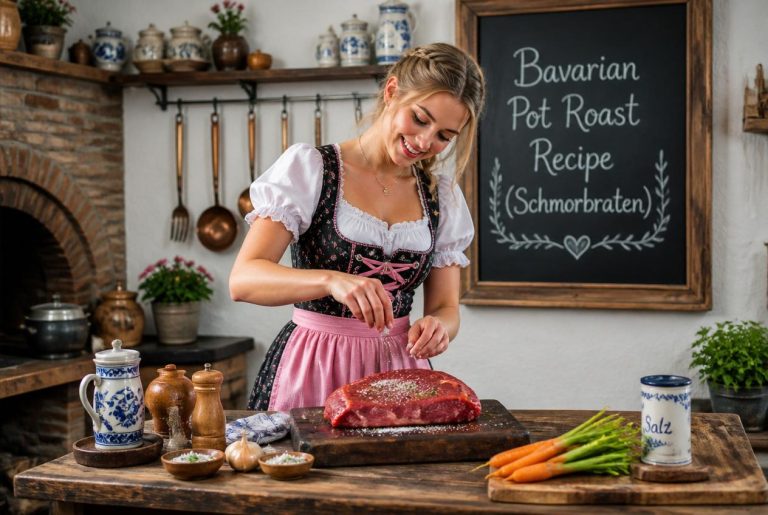
Bavarian Pot Roast Recipe (Schmorbraten) Cooking TIps
Bavarian Pot Roast Recipe (Schmorbraten) Cooking Tips
• Schmorbraten is known for its fork-tender beef, rich gravy, and deep slow-cooked flavor.
• Beef chuck, shoulder, rump roast, or bottom round are excellent cuts because they become tender during long braising.
• Browning the meat thoroughly before braising develops a richer flavor and darker gravy.
• Onions, carrots, and celery create a traditional aromatic base.
• Tomato paste adds depth, color, and subtle sweetness to the sauce.
• Beef stock forms the foundation of the braising liquid.
• Red wine is often used to add complexity and richness.
• Bay leaves, juniper berries, cloves, and black pepper are common Bavarian seasonings.
• Garlic enhances the savory character of the roast without overpowering it.
• Slow, gentle braising is essential for tender meat and a flavorful sauce.
• Keep the roast partially submerged in the cooking liquid throughout cooking.
• Turn the roast occasionally to promote even flavor development.
• Allow the meat to rest briefly before slicing.
• The braising liquid can be strained and reduced to create a rich gravy.
• Serve with potato dumplings, spaetzle, red cabbage, or roasted vegetables.
• The flavor should balance tender beef, aromatic spices, rich gravy, and subtle wine notes.
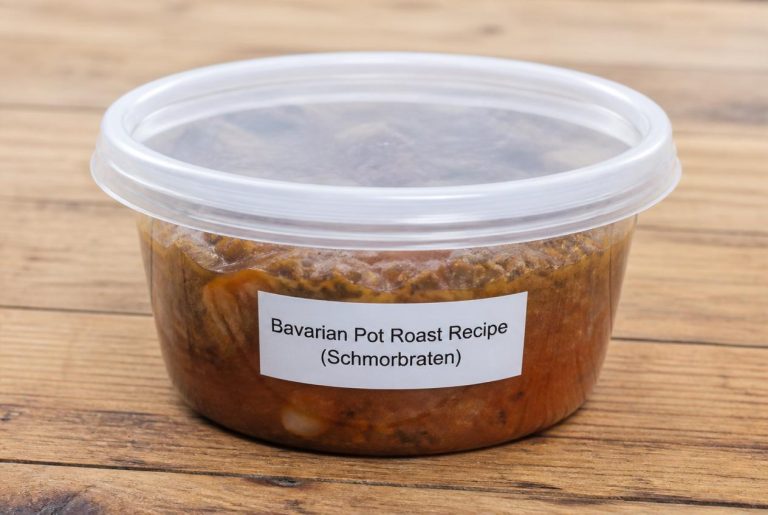
Bavarian Pot Roast Recipe (Schmorbraten) Storage TIps
Bavarian Pot Roast Recipe (Schmorbraten) Storage Tips
• Allow the roast and gravy to cool before transferring them into storage containers.
• Store the sliced meat and gravy together to help maintain moisture and flavor.
• Keep refrigerated in airtight containers to preserve freshness.
• Refrigeration often improves the flavor as the seasonings continue to blend.
• Reheat gently over low heat until thoroughly warmed through.
• Add a small splash of stock if the gravy becomes too thick during reheating.
• Beef and spice flavors often deepen after overnight refrigeration.
• Freeze portions in airtight freezer-safe containers if desired.
• Store the meat covered with gravy when freezing for best quality.
• Defrost frozen portions gradually in the refrigerator before reheating.
• Slice only what is needed if storing a larger roast to help retain moisture.
• Use clean utensils when handling leftovers to help maintain freshness.
• Braised beef dishes are generally best enjoyed within a shorter refrigerated storage period for ideal quality and safety.
• Keep away from delicate desserts because savory aromas may transfer.
• Discard leftovers if the meat or gravy develops sour odors, slime, mold, or unusual discoloration.
Bavarian Pot Roast Recipe (Schmorbraten)
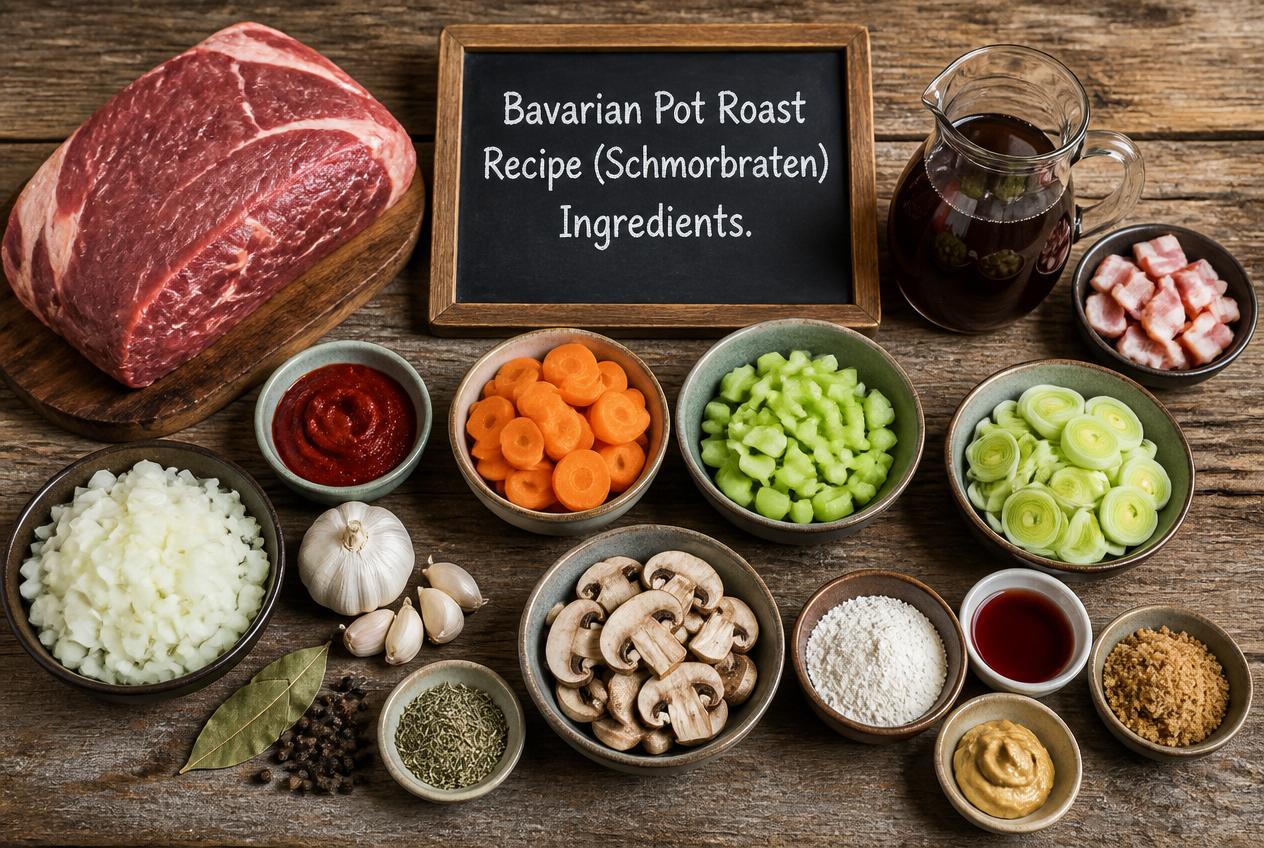
Ingredients
- 3½ pounds beef roast
- 1 teaspoon salt or seasoning salt
- ¼ teaspoon pepper
- 1 onion cut into chunks
- 3 - 4 carrots peeled, cut into chunks
- 4 - 6 potatoes cut into chunks (optional)
- 1 celery stalk cut into chunks
- 1 cup beef broth
- 3 tablespoons cornstarch
Instructions
- Pat the roast dry with paper towels if needed, then generously rub all sides with salt and freshly ground black pepper. Taking a moment to season the meat thoroughly helps build flavor throughout the cooking process. The long, slow cooking time will allow the seasonings to penetrate the roast while enhancing the natural richness of the beef.
- Arrange all of the prepared vegetables in an even layer across the bottom of the slow cooker. This creates a natural rack for the roast while allowing the vegetables to absorb the flavorful juices released during cooking.
- Pour the broth evenly over the vegetables. The broth provides moisture for the slow-cooking process and helps create the flavorful liquid that will later become the gravy.
- Place the seasoned roast directly on top of the vegetables. Positioning the meat above the vegetables allows it to braise gently while the vegetables cook beneath it in the flavorful cooking liquid.
- Cover the slow cooker with the lid and cook on LOW for 8 to 9 hours, or until the meat is fork-tender and the vegetables are fully cooked. The roast is ready when it can be easily pulled apart with a fork and the vegetables are soft without becoming mushy.
- During the long cooking period, the connective tissues in the meat will break down, creating a tender roast while the vegetables absorb the savory flavors of the broth and beef juices.
- Once cooking is complete, carefully transfer the roast to a serving platter. Remove the vegetables with a slotted spoon and arrange them around the meat. Cover loosely with foil to keep everything warm while you prepare the gravy.
- Pour the cooking liquid from the slow cooker into a saucepan and place it over medium heat. Bring the liquid to a gentle simmer.
- In a small bowl, combine the cornstarch with ¼ cup cold water, whisking until completely smooth and free of lumps. This creates a slurry that will thicken the gravy without clumping.
- While whisking the simmering liquid, slowly add just enough of the cornstarch mixture to achieve your desired consistency. Continue cooking for a few minutes until the gravy thickens and becomes smooth and glossy. If a thicker gravy is desired, add a little more slurry as needed.
- Taste the gravy and adjust the seasoning with additional salt and black pepper if necessary. The final gravy should be rich, savory, and full of the flavors developed during the slow cooking process.
- Slice or shred the roast and serve alongside the tender vegetables. Spoon the hot gravy generously over the meat and vegetables just before serving.
Bavarian Pot Roast Recipe (Schmorbraten) Frequently Asked Questions
The Bavarian Pot Roast recipe uses specific cuts, cooking styles, and sides that make it different from other German beef dishes. The spices and braising liquid really set the Bavarian Pot Roast recipe apart.
What is Schmorbraten, and how is it different from Sauerbraten?
Schmorbraten is a braised pot roast that cooks in beer, broth, or wine with veggies and spices. The Bavarian Pot Roast recipe relies on braising to get the meat tender. Sauerbraten, on the other hand, marinates for days in vinegar or wine, which gives it that signature sour flavor. The Bavarian Pot Roast recipe skips the long marinade, so it’s a bit quicker.
What cut of beef works best for a traditional Bavarian-style pot roast?
Boneless beef chuck is my go-to for the Bavarian Pot Roast recipe because it gets super tender when slow cooked. It’s got enough fat to stay juicy. I always trim off the extra fat before cooking the Bavarian Pot Roast recipe so it doesn’t get greasy.
How long should a Bavarian pot roast cook in the oven to become tender?
The Bavarian Pot Roast recipe needs to simmer for 2-1/2 to 3 hours for the meat to get truly tender. I always keep the pot covered to trap in moisture. If you’ve got a bigger roast, you might need to tack on another 30 minutes to an hour.
Can a Bavarian pot roast be made in a slow cooker without losing flavor?
So, here’s the thing—if you’ve got a Pot Roast recipe and want to use a slow cooker, you really should brown the meat in a skillet first. I know, it’s an extra step, but it makes a difference. That browning gives the Bavarian Pot Roast recipe a depth you just can’t fake, and it honestly locks in so much flavor before you toss everything in the slow cooker.
For the Bavarian Pot Roast recipe, I usually set the slow cooker on low for about 6 to 8 hours. If you’re running short on time, high for 4 to 5 hours works too, but I think low and slow gives you the best texture. The cooking liquid? Gotta have beer, vinegar, onions, and a solid blend of spices—otherwise, it just doesn’t hit that traditional Pot Roast recipe vibe. I never skip the beer, and honestly, the vinegar keeps things bright. Every Bavarian Pot Roast recipe I’ve tried seems to agree on that.
What ingredients are typically used to build the gravy for a German-style pot roast?
When I’m making gravy for a Bavarian Pot Roast recipe, I start with a mix of water, beer, tomato sauce, onion, sugar, vinegar, salt, cinnamon, bay leaf, pepper, and ginger. I pour this over the browned meat, and then just let it all simmer together. It’s kind of amazing how the flavors come together in a Bavarian Pot Roast recipe when you let them hang out for a few hours.
Once the meat’s cooked, I pull it out, fish out the bay leaf (nobody wants to bite into that), and thicken up the pan juices if they’re looking too thin. The gravy in a Pot Roast recipe ends up with this savory-sour thing from the vinegar, plus a bit of sweetness from the sugar. It’s not complicated, but there’s something special about the way a Bavarian Pot Roast recipe brings those flavors together. If you haven’t tried a Bavarian Pot Roast recipe with this gravy, honestly, you’re missing out. There’s just nothing quite like the comfort of a homemade Bavarian Pot Roast recipe, especially when you take a little care with the details. And hey, if you’re ever stuck for dinner ideas, the Pot Roast recipe is a classic for a reason. Give it a shot and see if it doesn’t become a regular in your kitchen.
What are the best side dishes to serve with a Bavarian pot roast?
When I make a Bavarian Pot Roast recipe, I usually reach for wide egg noodles, boiled potatoes, or some crusty bread—something to catch all that gravy. Honestly, these starchy sides just work. They soak up the sauce and make the Bavarian Pot Roast recipe shine even more.
If you want to keep it classic, German sides like red cabbage, sauerkraut, or potato dumplings fit right in with any Pot Roast recipe. Sometimes I’ll roast a few root veggies or toss together a simple green salad, just to add a fresh note to the Bavarian Pot Roast recipe. There’s something about the way these sides complement the Pot Roast recipe that keeps me coming back. You could even try a tangy cucumber salad if you’re feeling adventurous with your Bavarian Pot Roast recipe.

Recipes are gathered in person and written for real-world cooking conditions.
- 10 Hungarian Dessert Recipes Passed Down Through Generations - July 25, 2026
- 11 Easy English Recipes Anyone Can Make - July 25, 2026
- Hungarian Kifli Recipe - July 25, 2026