
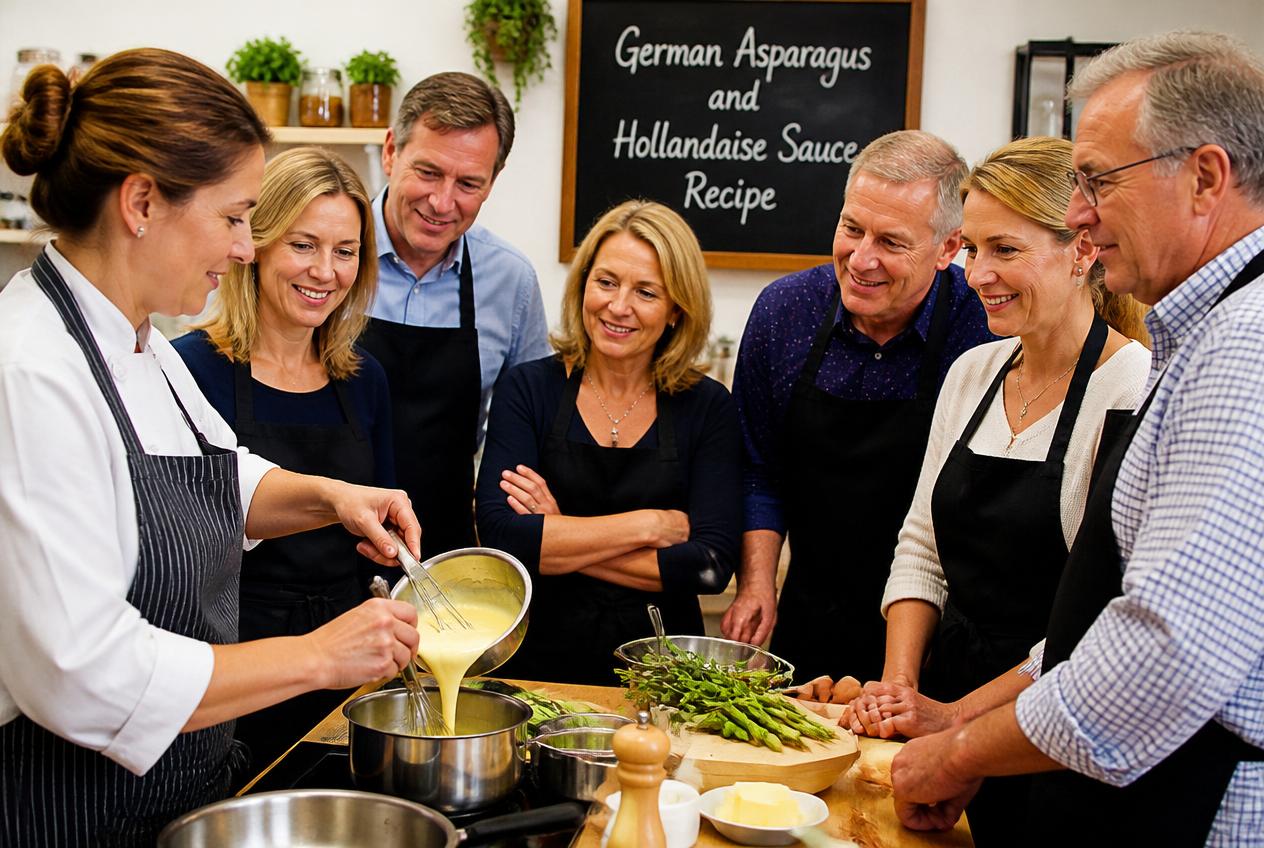
German Asparagus and Hollandaise Sauce recipes really defines German spring cooking for me. The dish brings together tender white asparagus spears and a rich, creamy sauce that wild garlic lifts with just a hint of sharpness. This traditional German recipe shines during Spargelzeit, the asparagus season from April through June, when white asparagus is at its freshest and most delicate. It’s got that simple elegance that works for both a Wednesday night and a proper celebration. If you’re after an Asparagus and Hollandaise recipe, you’re in the right place.
I love this Asparagus and Hollandaise recipe because it lets the sweet, mild flavor of white asparagus take the spotlight. Wild garlic in the hollandaise brings a gentle, herby kick that doesn’t shout over the asparagus. Most versions of this classic German dish come together in about 35 minutes, so you don’t need to block out your afternoon just to get some proper German comfort food on the table.
This Asparagus and Hollandaise recipe is German comfort food at its best. Generations have peeled white asparagus and whisked hollandaise by hand, and it’s still one of the most beloved German foods every spring. It’s not just nostalgia—it’s genuinely delicious.
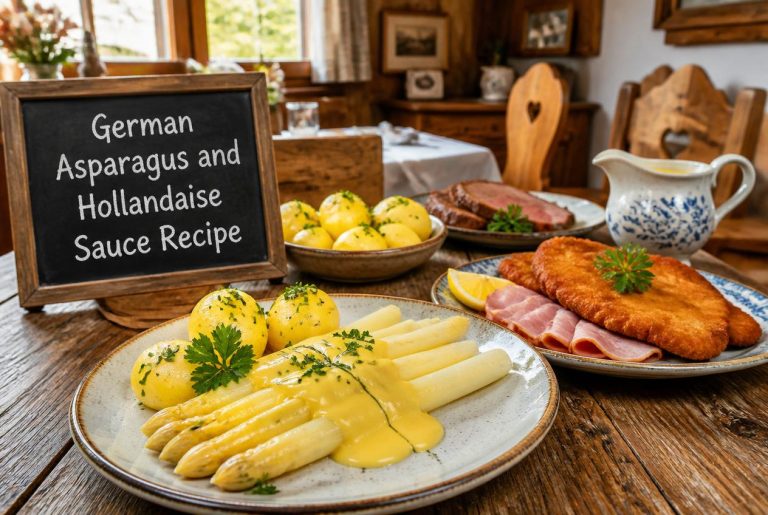
German Asparagus and Hollandaise Sauce Recipe
Key Takeaways
- White asparagus with wild garlic hollandaise is a German spring favorite, especially during Spargelzeit (April to June).
- This Asparagus and Hollandaise recipe pairs tender white asparagus with a creamy, wild garlic-kissed sauce.
- It’s ready in about 35 minutes—special enough for guests, easy enough for a weeknight.
English Recipe Description and Historical Information
Honestly, when I think about German food, I picture an Asparagus and Hollandaise recipe like this one. German white asparagus with hollandaise has stood the test of time for good reason. The combination of perfectly cooked white asparagus and hollandaise sauce seems simple, but it’s pure comfort.
White asparagus grows underground, shielded from sunlight, which makes it milder and a bit sweeter than green asparagus. That’s why Germans celebrate it so much—Spargelzeit is practically a holiday. The Asparagus and Hollandaise recipe is a centerpiece of this season.
The classic Asparagus and Hollandaise recipe usually includes:
- Peeled white asparagus spears
- Hollandaise sauce (butter, egg yolks, lemon juice)
- Boiled potatoes
- Sliced ham (optional, but honestly, why not?)
Depending on where you are in Germany, some folks just serve asparagus and sauce, while others throw in shrimp and wild garlic for a fancier twist. Every family seems to have their own take on the Asparagus and Hollandaise recipe, and that’s part of the charm.
People pass their hollandaise secrets down through generations. The buttery, tangy sauce just works with asparagus—it smooths out any bitterness and makes everything taste richer. I can see why this Asparagus and Hollandaise recipe has stuck around for over 100 years.
It takes about 35 minutes from start to finish, and the real trick lies in peeling the asparagus well and not overcooking it. Mushy asparagus is just sad, so don’t rush.
Recipe Tips
For the best Asparagus and Hollandaise recipe, start with the freshest white asparagus you can find. Look for stalks that feel firm and have tightly closed tips—freshness makes all the difference here.
When I make Bärlauch-Hollandaise, I add the butter slowly. If you rush, the sauce can split or turn greasy. Take your time and you’ll get that dreamy, smooth texture you want from a top-notch Asparagus and Hollandaise recipe. I know it’s tempting to hurry, but patience pays off.
Timing Matters
I cook my asparagus until it’s just tender but still has some snap, usually about 5 minutes. Overcooked asparagus just doesn’t do justice to the Asparagus and Hollandaise recipe.
Sauce Variations
While wild garlic hollandaise is classic, sometimes I swap in a mustard-based hollandaise for a little extra zing. The Asparagus and Hollandaise recipe is flexible, and you can put your own spin on it.
Ingredient Quality
- Always use unsalted butter—you’ll want to control the salt yourself.
- Pick unblemished asparagus without any soft spots.
- Squeeze in fresh lemon juice at the end for a pop of brightness.
Having everything prepped before you start makes this Asparagus and Hollandaise recipe way less stressful. Peel your asparagus, measure your ingredients, and you’ll breeze through.
If you want to add protein, sautéed shrimp tastes amazing with this Asparagus and Hollandaise recipe. I usually throw some boiled potatoes on the side, too—it rounds out the meal.
Variations
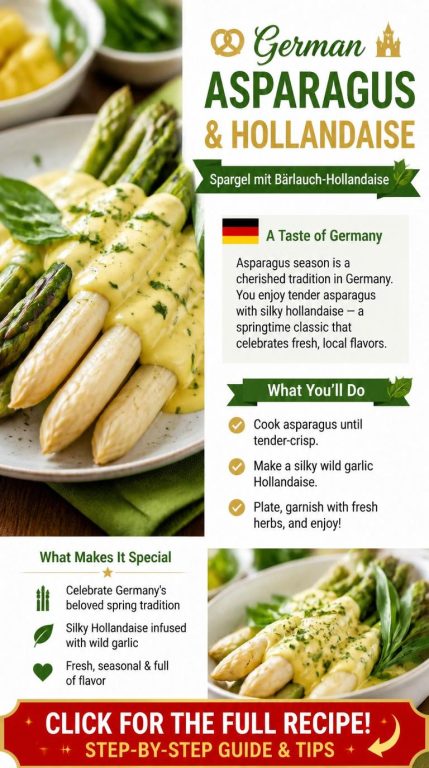
One of the reasons I keep coming back to this Asparagus and Hollandaise recipe is how easy it is to riff on. You can keep it traditional or try something new every time.
Protein Additions
If you want to make your Asparagus and Hollandaise recipe more filling, add some shrimp, roasted bacon, or sliced ham. I’ve even seen folks top it with a poached egg—why not?
Sauce Variations
Wild garlic is a spring favorite, but sometimes I’ll use:
- Orange hollandaise for a citrusy kick
- Classic hollandaise if I’m feeling purist
- Herb hollandaise with parsley or chives instead of wild garlic
With any Asparagus and Hollandaise recipe, add the butter slowly so your sauce stays creamy. Rushing ruins the texture.
Asparagus Colors
White asparagus is classic for a German Asparagus and Hollandaise recipe, but green asparagus works too. Green cooks a bit faster and has a stronger flavor, so it stands up to bolder sauces. I mix it up depending on what I find at the market.
Side Dish Options
I serve my Asparagus and Hollandaise recipe with whatever sides I’m craving:
- Boiled new potatoes with butter
- Slices of baguette for mopping up sauce
- Roasted potatoes with herbs
- Buttered pasta (simple, but so good)
Each option lets the asparagus shine, but gives you some variety and heartiness. The Asparagus and Hollandaise recipe can be as light or as filling as you want.
Alternate Recipes Substitutions
If I can’t get wild garlic, I don’t panic. I’ll use finely minced regular garlic, chives, or even green onions in my Asparagus and Hollandaise recipe. They all bring a nice, mild bite that works with the sauce.
When I’m pressed for time, I’ll cheat a little on the hollandaise. Mixing mayo, sour cream, and mustard gives you a fast, creamy sauce that still feels right for an Asparagus and Hollandaise recipe. Store-bought hollandaise or a one-minute blender version works in a pinch, too.
White asparagus can be tricky to find, so I’ll swap in green asparagus and just reduce the cooking time. The Asparagus and Hollandaise recipe works either way, honestly.
Here are my go-to swaps:
- Wild garlic: regular garlic, chives, or green onions
- Butter: clarified butter or ghee
- Egg yolks: pasteurized egg yolks if you’re worried about raw eggs
- Lemon juice: white wine vinegar for acidity
- White asparagus: green asparagus, just cook it less
If you want a vegan Asparagus and Hollandaise recipe, try plant-based butters and thickeners. Or branch out—béarnaise, choron, or foyot sauces all work with asparagus if you want to get creative but keep that creamy vibe.
Skip the shrimp for a vegetarian Asparagus and Hollandaise recipe. I’ll sometimes add extra potatoes or a bit of ham for a more classic German touch. The Asparagus and Hollandaise recipe is flexible like that.

German Asparagus and Hollandaise Sauce Recipe Cooking TIps
German Asparagus and Hollandaise Sauce Recipe (Spargel mit Bärlauch) Cooking Tips
• Spargel mit Bärlauch is known for its tender asparagus, creamy hollandaise sauce, and delicate springtime flavors.
• White asparagus is traditionally used in Germany and is considered a seasonal delicacy.
• Peel white asparagus thoroughly to remove the tough outer layer.
• Trim the woody ends before cooking for the most tender texture.
• Cook the asparagus gently to preserve its delicate flavor and appearance.
• Avoid overcooking because asparagus should remain tender but not mushy.
• Wild garlic (Bärlauch) adds a mild garlic flavor and fresh herbal notes.
• Finely chop the wild garlic before incorporating it into the sauce.
• Hollandaise sauce should be prepared over gentle heat to prevent curdling.
• Egg yolks and melted butter form the traditional base of the sauce.
• Whisk continuously while making hollandaise to achieve a smooth, silky texture.
• Lemon juice adds brightness and balances the richness of the butter.
• Add the wild garlic near the end of preparation to preserve its fresh flavor.
• Serve the asparagus immediately while hot and topped with warm hollandaise.
• New potatoes, ham, schnitzel, or smoked salmon pair beautifully with the dish.
• The flavor should balance sweet asparagus, rich butter sauce, fresh wild garlic, and subtle citrus notes.
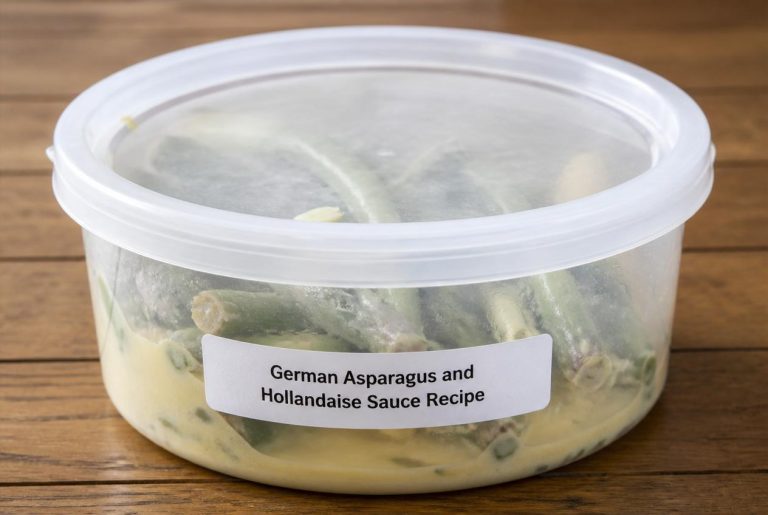
German Asparagus and Hollandaise Sauce Recipe Storage Tips
German Asparagus and Hollandaise Sauce Recipe (Spargel mit Bärlauch) Storage Tips
• Asparagus is best enjoyed freshly cooked whenever possible.
• Allow the asparagus to cool before transferring it into storage containers.
• Store cooked asparagus refrigerated in airtight containers.
• Keep the hollandaise sauce separate from the asparagus whenever possible.
• Hollandaise sauce is best served fresh because reheating can be challenging.
• Reheat asparagus gently to avoid overcooking and loss of texture.
• If reheating hollandaise, use very low heat and whisk continuously.
• Avoid boiling the sauce because it may separate or curdle.
• Wild garlic flavors may become slightly stronger after refrigeration.
• Freezing is generally not recommended for hollandaise sauce because the texture may break.
• Cooked asparagus may be frozen, though its texture can soften after thawing.
• Defrost frozen asparagus gradually in the refrigerator before reheating.
• Use clean utensils when handling leftovers to help maintain freshness.
• Egg- and butter-based sauces are generally best enjoyed within a short refrigerated storage period for ideal quality and safety.
• Discard leftovers if the asparagus or sauce develops sour odors, separation, mold, or unusual texture changes.
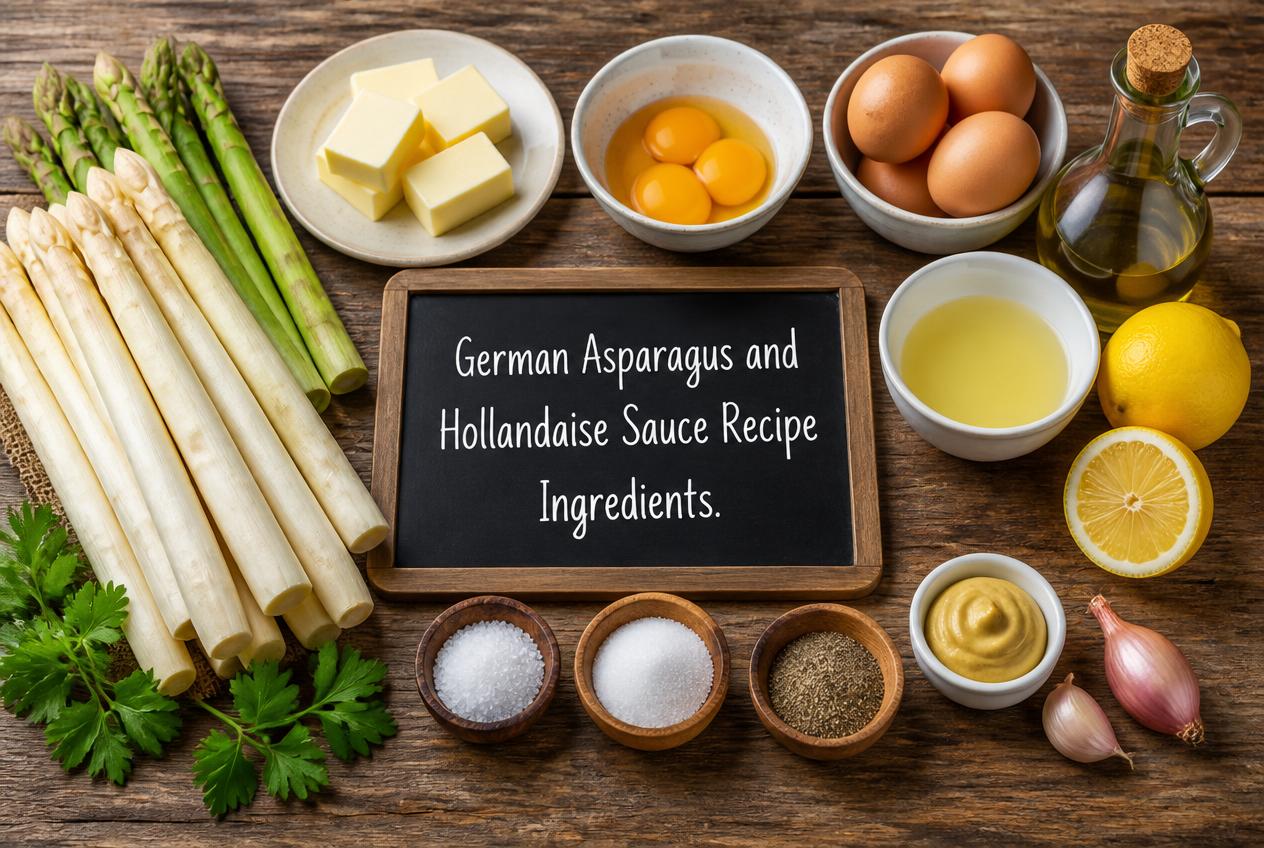
German Asparagus and Hollandaise Sauce Recipe (Spargel mit Bärlauch)
Ingredients
- 2 pounds white asparagus
- 2 teaspoons kosher salt
- 2 teaspoons granulated sugar
- 1 tablespoon fresh lemon juice
- 1 tablespoon butter
- 3 large egg yolks
- Pinch of salt
- 1 tablespoon fresh lemon juice
- 1 tablespoon white wine vinegar optional
- ½ cup butter melted and hot
- Pinch of cayenne or nutmeg
Instructions
- Begin by preparing 2 pounds of white asparagus. Unlike green asparagus, white asparagus has a thicker, tougher outer skin that should be removed before cooking. Using a vegetable peeler, start about ½ inch below the tip of each spear and peel downward toward the base. Rotate the stalk as you peel to remove the fibrous outer layer evenly.
- Once peeled, trim away the woody ends. Cut off about ½ to 1 inch from the bottom of each spear, checking the cut surface as you go. Continue trimming until you reach moist, tender flesh with no tough or dry sections remaining.
- Don't discard the peels and trimmed ends. They can be added to the cooking water for extra flavor or saved for making white asparagus soup or homemade vegetable stock later.
- Fill a large pot with enough water to completely submerge the asparagus spears and bring it to a boil over high heat. Once boiling, add the kosher salt, granulated sugar, fresh lemon juice, and butter. Stir briefly until the salt and sugar dissolve completely.
- Carefully place the asparagus into the boiling water and reduce the heat slightly to maintain a gentle boil. Cook until the asparagus is tender but still retains a slight bite in the center. This typically takes 10–12 minutes, although particularly thick spears may require up to 20 minutes.
- Check for doneness by inserting the tip of a knife into the thickest part of a spear. It should slide in easily but still meet slight resistance.
- Once cooked, gently remove the asparagus using a slotted spoon, spider strainer, or tongs. Arrange the spears neatly on individual serving plates or transfer them to a warmed serving platter while you finish the sauce.
- While the asparagus cooks, begin preparing the hollandaise sauce. Place the egg yolks, a pinch of salt, lemon juice, and white wine vinegar (if using) into a blender or food processor.
- Blend for several seconds until the mixture becomes smooth, pale, and slightly frothy. This initial blending helps create a stable base that will emulsify properly once the butter is added.
- Cut the ½ cup unsalted butter into cubes and place it in a microwave-safe bowl or a glass measuring cup with a pouring spout. Cover loosely and microwave for about 30 seconds. Stir, then continue heating in 10-second intervals until the butter is completely melted and very hot.
- The butter should be hot enough to help gently cook the egg yolks while forming a smooth, silky emulsion.
- With the blender running on low speed, begin drizzling the hot melted butter into the egg yolk mixture very slowly. Add it in a thin, steady stream rather than all at once. The gradual addition is essential for creating a stable emulsion and preventing the sauce from separating.
- Continue blending as you add the butter. The sauce will gradually thicken and become glossy, creamy, and smooth. The entire process should take at least a minute of slow pouring.
- Once all of the butter has been incorporated, the hollandaise should be thick enough to coat the back of a spoon.
- Add a small pinch of cayenne pepper, if desired, and blend briefly to incorporate. The cayenne adds a subtle warmth that complements both the asparagus and the richness of the sauce.
- Taste the hollandaise and adjust the seasoning if needed. A little extra lemon juice can brighten the flavor, while a pinch of salt can enhance the overall balance.
- Serve the White Asparagus with Hollandaise
- Spoon the warm hollandaise generously over the cooked asparagus. For a traditional presentation, allow some of the asparagus tips to remain visible while coating the stalks with the sauce.
- Finish with a light sprinkle of cayenne pepper or freshly grated nutmeg. If desired, garnish with chopped fresh parsley or chives for color and freshness.
- Serve immediately while both the asparagus and hollandaise are warm. The tender white asparagus paired with the rich, buttery sauce creates one of the classic spring dishes of Northern Europe, celebrated for its delicate flavor and elegant simplicity.
German Asparagus and Hollandaise Sauce Recipe (Spargel mit Bärlauch) Frequently Asked Questions
Getting the Asparagus and Hollandaise recipe right means nailing the asparagus texture and keeping the hollandaise smooth. Wild garlic gives the sauce that unmistakable spring flavor, but doesn’t drown out the asparagus. It’s a balancing act, but totally doable.
How do you properly peel and cook German white asparagus so it stays tender but not mushy?
I grab a vegetable peeler and go from just under the tip all the way down. White asparagus skin is tough, so don’t skimp here—if you leave any on, it’ll taste woody. I cut off the bottom inch or two, since that part’s always a bit gnarly.
Then I bring a big pot of salted water to a boil, toss in a pinch of sugar and a pat of butter (the sugar takes the edge off any bitterness). I drop in the asparagus and cook it for 12 to 18 minutes, depending on thickness. Thinner spears cook faster. I poke the bottom with a knife—if it slides in easily but the spear still feels sturdy, it’s ready.
I never let the water boil like crazy. A gentle simmer keeps the asparagus from falling apart, and that’s key for a good Asparagus and Hollandaise recipe.
What is the most reliable method to make hollandaise sauce without it splitting?
Honestly, the blender is my secret weapon for an Asparagus and Hollandaise recipe. I put egg yolks, lemon juice, and a pinch of salt in, give it a quick spin, then slowly drizzle in hot melted butter while blending. The heat cooks the eggs and the blender makes a perfect emulsion—no whisking until your arm falls off.
Go slow with the butter. If you rush, the sauce can split. I blend for about 30 seconds until it thickens and turns pale yellow. If it does break, I whisk a fresh egg yolk in a bowl and slowly add the broken sauce to bring it back together. It’s not the end of the world if it happens.
How do you incorporate wild garlic (Bärlauch) into hollandaise for a balanced flavor?
I chop fresh wild garlic finely and stir it into the hollandaise right before serving. About two tablespoons per cup of sauce is plenty for this Asparagus and Hollandaise recipe—you want the flavor, not a garlic bomb.
I never cook the wild garlic in the sauce. Heat kills its fresh, bright taste. Stirring it in at the end keeps everything green and punchy. If I can’t get wild garlic, I use chives and a touch of minced garlic. The Asparagus and Hollandaise recipe is all about balance and letting those seasonal flavors shine.
What are the best side dishes to serve with white asparagus and hollandaise in a traditional German-style meal?
When I put together an Asparagus and Hollandaise recipe, I always reach for boiled new potatoes. There’s just something about their simplicity that lets the hollandaise shine, and they do a great job soaking up every last drop of that sauce. Honestly, I can’t imagine a proper German meal with Asparagus and Hollandaise recipe without those potatoes on the side. They’re mild, starchy, and just balance everything out.
Now, sliced ham? Absolutely essential. I usually go for cooked ham, sometimes just a bit warm, sometimes straight from the fridge if I’m in a hurry. The salty, savory bite of ham brings out the sweetness in the asparagus, and, well, the Asparagus and Hollandaise recipe just feels incomplete without it. It’s a classic combo for a reason.
Some folks like to throw in a simple green salad—nothing fancy, just lettuce, maybe a few slices of cucumber, and a quick vinaigrette. I get it; the acidity cuts through the richness of the Asparagus and Hollandaise recipe. Personally, I keep the salad light and let the main dish do the talking. Too many flavors would just get in the way of the Asparagus and Hollandaise recipe experience.
Every now and then, if I want to make things a bit heartier, I add schnitzel or even poached fish. Both are mild enough to let the asparagus stay center stage, especially in a good Asparagus and Hollandaise recipe. I wouldn’t go for anything too bold, though—it’s all about keeping the spotlight on that classic pairing.
Can you use green asparagus instead of white asparagus, and how does the cooking method change?
So, can you swap in green asparagus for a traditional Asparagus and Hollandaise recipe? Sure, but it does change things. Green asparagus has a stronger, more grassy flavor, and honestly, it’s got a bit more bite than white. White asparagus is mild and a little sweet, which is probably why it’s so prized in a classic Asparagus and Hollandaise recipe. I like both, but they’re definitely not identical.
Green asparagus is easier to prep. I usually just peel the bottom third—if that—and the spears cook way faster. We’re talking maybe 3 to 5 minutes in boiling water for an Asparagus and Hollandaise recipe with green asparagus. You have to keep an eye on them, though; they go from perfect to mushy in a flash. If you overdo it, they turn that sad olive color and lose all their snap, which can really ruin the vibe of any Asparagus and Hollandaise recipe.
Hollandaise sauce still works like magic with green asparagus. I mean, it’s hard to go wrong with butter and eggs, right? But if you’re after that authentic German Asparagus and Hollandaise recipe, white asparagus is the way to go. It’s a bit of a seasonal treat, and honestly, it just feels special. Maybe it’s nostalgia, or maybe it’s just the tradition, but when asparagus season hits, I always reach for the white variety for my Asparagus and Hollandaise recipe.
To sum it up, you can play around with green or white, but if you want the real deal Asparagus and Hollandaise recipe, stick with white. It’s worth seeking out, even if just once a year. And hey, isn’t that part of what makes the Asparagus and Hollandaise recipe feel like such an event?
What is the German term for hollandaise sauce, and how is it commonly used in German cuisine?
Germans usually call hollandaise sauce “Sauce Hollandaise”—sometimes just “Hollandaise.” The pronunciation sticks pretty close to the French, which makes sense since the sauce came from French cooking traditions. If you ask a German chef for an Asparagus and Hollandaise recipe, they’ll probably smile knowingly—it’s a classic.
I notice hollandaise popping up everywhere during asparagus season in Germany, which runs from April through June. White asparagus with hollandaise is one of the most popular preparations during this time, and honestly, it’s hard to escape the hype. The Asparagus and Hollandaise recipe seems to take over menus, and restaurants roll out special asparagus feasts all spring. People get pretty excited about it—maybe a little too excited? Still, you can’t blame them; the Asparagus and Hollandaise recipe really brings out the best in those tender stalks.
Besides asparagus, folks in Germany pour hollandaise over other veggies like broccoli or cauliflower. Sometimes you’ll find an Asparagus and Hollandaise recipe next to fish dishes, or even (if you’re lucky) as a twist on eggs Benedict—though that’s not super traditional. I get the sense that the Asparagus and Hollandaise recipe signals a special meal, not your everyday sauce. When you sit down to an Asparagus and Hollandaise recipe, it feels like a little celebration of spring. If you’ve never tried an Asparagus and Hollandaise recipe, well, isn’t it about time?

Recipes are gathered in person and written for real-world cooking conditions.
- 10 Hungarian Dessert Recipes Passed Down Through Generations - July 25, 2026
- 11 Easy English Recipes Anyone Can Make - July 25, 2026
- Hungarian Kifli Recipe - July 25, 2026