
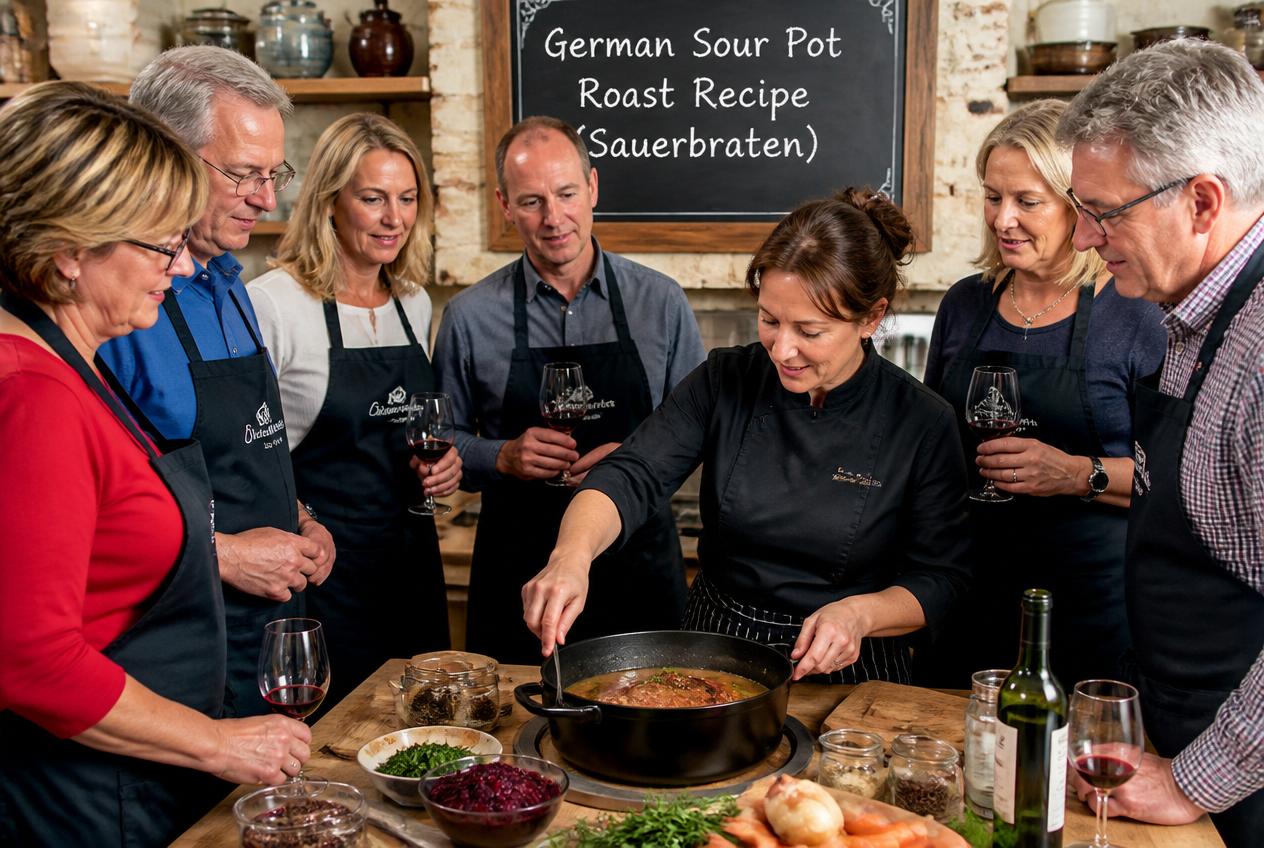
Traditional German Sour Pot Roast (Sauerbraten) is a beef pot roast that you marinate in vinegar and spices for several days, then slow-cook until it’s tender. This classic German dish stands out for its sweet-and-sour flavor, thanks to marinating the meat in vinegar and wine, then braising it and finishing with a rich gravy. The name literally means “sour roast,” which sums up the tangy, unmistakable taste that makes this dish so different from your standard pot roast. If you’re hunting for a German Sour Pot Roast recipe, this is the one you want.
I’ve made this German Sour Pot Roast recipe more times than I can count, and patience really pays off here. The beef needs at least three days in the marinade—yeah, it feels like forever, but the flavors soak in so deeply. When you finally cook it, you get fork-tender beef with that bold, tangy kick you just don’t get from other roasts. Honestly, if you love a good German Sour Pot Roast recipe, this one’s a keeper.
This hearty German meal usually comes with potato dumplings and red cabbage, making it perfect for family gatherings or special dinners. The process takes time, but the steps are simple, and the flavors are worth every bit of waiting. If you’re after a German Sour Pot Roast recipe that delivers, you’re in the right place.
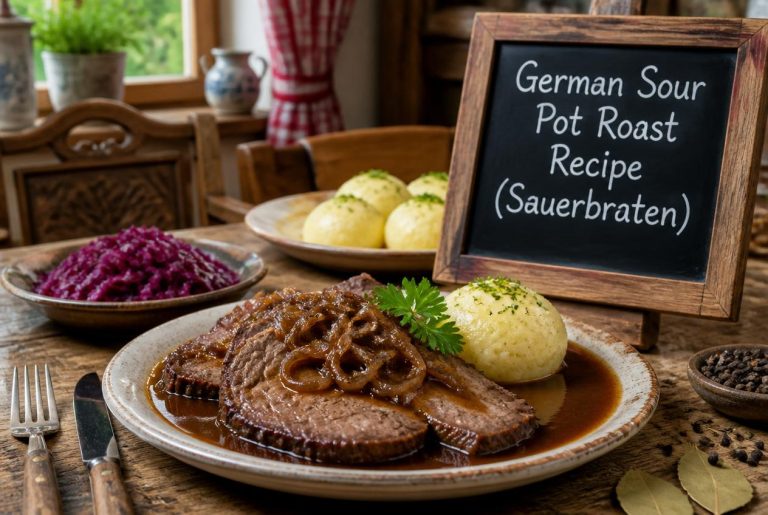
German Sour Pot Roast Recipe (Sauerbraten)
Key Takeaways
- Sauerbraten needs beef marinated in vinegar and spices for three to five days before cooking
- The dish features a sweet-and-sour gravy, often thickened with gingersnap cookies
- This German Sour Pot Roast recipe tastes even better the next day and pairs well with potato dumplings and red cabbage
English Recipe Description and Historical Information
Sauerbraten is a traditional German pot roast and probably the most iconic German Sour Pot Roast recipe you’ll find. The name says it all: “sour roast.” That tangy flavor comes from marinating the meat in vinegar and wine, and it’s honestly what makes this recipe so special.
To me, this dish really captures German food at its best. You have to be patient—the meat sits in the marinade for days before you even start cooking. Most German Sour Pot Roast recipes call for beef, but I’ve seen pork, lamb, or even horse in old-school versions. Still, beef is the classic pick for a German Sour Pot Roast recipe.
The marinade usually has red wine vinegar, red wine, and spices like cloves, bay leaves, and juniper berries. These ingredients tenderize the meat and give it that deep, layered flavor you expect from a German Sour Pot Roast recipe.
Key Historical Points:
- Started in medieval German royal kitchens
- People used vinegar to preserve meat before refrigeration
- Every German region has its own twist on the classic German Sour Pot Roast recipe
- Now considered one of Germany’s national dishes
After marinating, I slow-cook the meat until it’s so tender you can pull it apart with a fork. The real magic is when the marinade turns into a gravy. In German cooking, people often add gingerbread cookies and raisins to the sauce for that sweet-and-sour balance. It’s a signature move in any German Sour Pot Roast recipe.
I serve this German pot roast with sides like spätzle, potato dumplings, or red cabbage. And honestly, if you have leftovers, the German Sour Pot Roast recipe tastes even better the next day, once the flavors settle in.
Recipe Tips
For the best German Sour Pot Roast recipe, let your beef marinate at least three days. The longer it sits in the vinegar and wine, the more tender and flavorful it gets. I know it’s hard to wait, but it’s worth it.
Key Timing Considerations:
- Marinate: 2-3 days minimum
- Up to 5 days max
- Braise: 2.5-3 hours
I always grab a heavy Dutch oven or a big pot with a tight lid for this German Sour Pot Roast recipe. It keeps the moisture in and cooks everything evenly. Don’t skip this part—it really makes a difference.
When I make an authentic German Sour Pot Roast recipe, I flip the meat once or twice during marination. That way, the flavors soak into every side. And don’t forget the gingersnaps in the gravy! They add sweetness and thicken the sauce. I always crush them up so they melt right in.
Ingredient Substitutions I’ve Tried:
- Red wine vinegar works if you’re out of white wine vinegar
- Chuck roast is a solid swap for bottom round
- Dark beer instead of red wine gives a different vibe
Before serving, I strain the gravy to get rid of the whole spices and veggie bits. It gives you that smooth, restaurant-style sauce. If you’re planning ahead, make this German Sour Pot Roast recipe a day early. The flavors get even better overnight. It’s one of those recipes that’s actually tastier reheated—how often can you say that?

Variations
Every region in Germany seems to have its own take on the German Sour Pot Roast recipe. I’ve tried a few, and they’re all a little different but delicious in their own way.
Regional Styles:
- Rhineland Sauerbraten – This one goes heavy on raisins and gingerbread cookies for a sweeter, more complex gravy
- Bavarian Sauerbraten – More root veggies and juniper berries, so it’s earthier
- Franconian Style – Lighter on the vinegar, which gives a milder tang
You can swap out the marinade liquid, too. The classic German Sour Pot Roast recipe uses red wine, but I’ve seen people use dark German beer like dunkel or bock. It gives the dish a malty, rich flavor. If you’re new to this, stick with beef shoulder or rump roast for your first German Sour Pot Roast recipe—it’s hard to mess up.
For sides, potato dumplings and red cabbage are the go-to. But I’ve served it with spätzle or even mashed potatoes. You’ll spot this dish at German holiday meals and Oktoberfest. The marinade time can be anywhere from one to five days, though I think three days is the sweet spot for a German Sour Pot Roast recipe—enough tang without going overboard.
Alternate Recipes Substitutions
The German Sour Pot Roast recipe is surprisingly flexible. I’ve swapped out ingredients plenty of times and it still comes out great. The marinade is where you can get creative, depending on what’s in your kitchen.
Liquid Substitutions
Red wine is the classic, but if you’re out, you can use dark German beer like dunkel or bock instead. It adds a malty twist that works well with the vinegar. I’ve also used apple cider vinegar if I’m low on red wine vinegar. That’s the beauty of a German Sour Pot Roast recipe: it’s forgiving.
Meat Options
Beef rump roast is the standard for a German Sour Pot Roast recipe, but I’ve pulled it off with:
- Beef chuck roast
- Bottom round roast
- Venison
- Pork shoulder
Sweetener Alternatives
Gingersnap cookies are the classic thickener and sweetener for the gravy in a German Sour Pot Roast recipe. If I’m out of gingersnaps, I use these:
| Substitute | Amount |
|---|---|
| Brown sugar + ground ginger | 2 tbsp + 1 tsp |
| Honey + ginger | 3 tbsp + 1 tsp |
| Molasses + spices | 2 tbsp + pinch cloves |
Braising Liquid
I’ve swapped beef broth for chicken stock or even water. The marinade brings most of the flavor anyway. If I used beer in the marinade, I’ll add a splash to the braising liquid, too. The trick with any German Sour Pot Roast recipe is to keep that sweet-and-sour balance. I always taste and adjust the sugar and vinegar before serving—sometimes you just have to trust your palate.
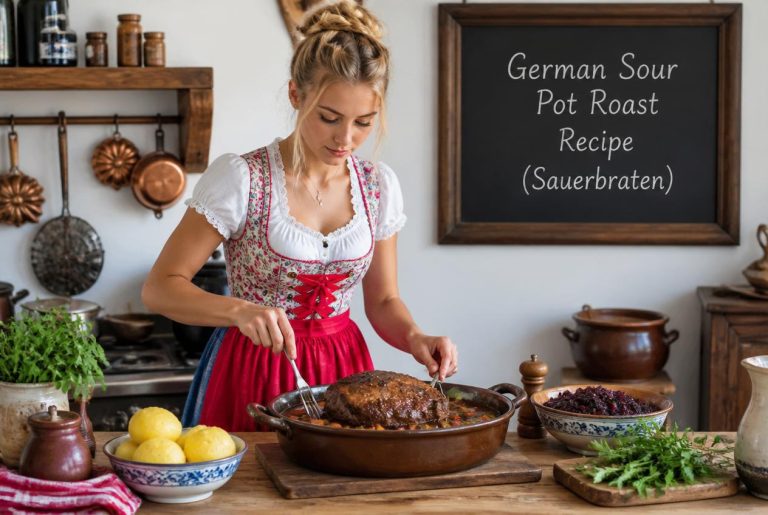
German Sour Pot Roast Recipe (Sauerbraten) Cooking TIps
German Sour Pot Roast Recipe (Sauerbraten) Cooking Tips
• Sauerbraten is known for its tender beef, distinctive sweet-and-sour flavor, and rich aromatic gravy.
• Beef rump roast, chuck roast, top round, or bottom round are commonly used because they benefit from long marinating and braising.
• The signature flavor comes from marinating the meat for several days before cooking.
• Traditional marinades include vinegar, water, onions, and aromatic spices.
• Bay leaves, cloves, juniper berries, peppercorns, and mustard seeds are classic seasonings.
• Turning the roast regularly during marination helps ensure even flavor penetration.
• Browning the meat before braising develops additional richness and color.
• The marinade is often strained and used as part of the braising liquid.
• Slow braising is essential for achieving a tender, flavorful roast.
• Ginger snaps, lebkuchen, or similar spiced cookies are sometimes used to thicken the gravy and add traditional sweetness.
• Raisins may be added in some regional versions for extra sweetness and complexity.
• The gravy should be rich, smooth, and balanced between sweet and tangy flavors.
• Allow the roast to rest before slicing for cleaner portions.
• Serve with potato dumplings, spaetzle, red cabbage, or boiled potatoes.
• The flavor should balance tender beef, aromatic spices, gentle sweetness, and pleasant acidity.
• Sauerbraten is considered one of Germany’s most famous and beloved traditional dishes.
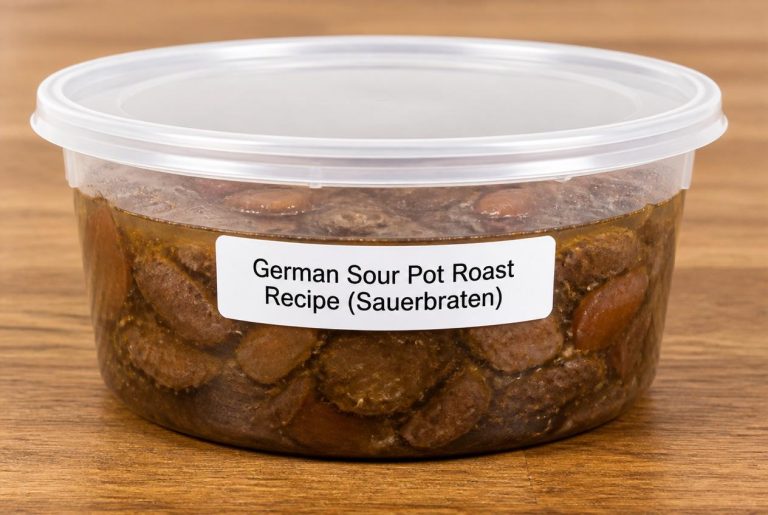
German Sour Pot Roast Recipe (Sauerbraten) Storage Tips
German Sour Pot Roast Recipe (Sauerbraten) Storage Tips
• Allow the roast and gravy to cool before transferring them into storage containers.
• Store the sliced meat and gravy together to help maintain moisture and flavor.
• Keep refrigerated in airtight containers to preserve freshness.
• Refrigeration often improves the flavor as the spices and gravy continue to develop.
• Reheat gently over low heat until thoroughly warmed through.
• Add a small splash of stock if the gravy becomes too thick during reheating.
• Sweet-and-sour flavors often deepen after overnight refrigeration.
• Freeze portions in airtight freezer-safe containers if desired.
• Store the meat covered with gravy when freezing for best quality.
• Defrost frozen Sauerbraten gradually in the refrigerator before reheating.
• Stir the gravy occasionally during reheating to maintain a smooth consistency.
• Use clean utensils when handling leftovers to help maintain freshness.
• Braised beef dishes are generally best enjoyed within a shorter refrigerated storage period for ideal quality and safety.
• Keep away from delicate desserts because savory aromas may transfer.
• Discard leftovers if the meat or gravy develops sour spoilage odors, slime, mold, or unusual discoloration.
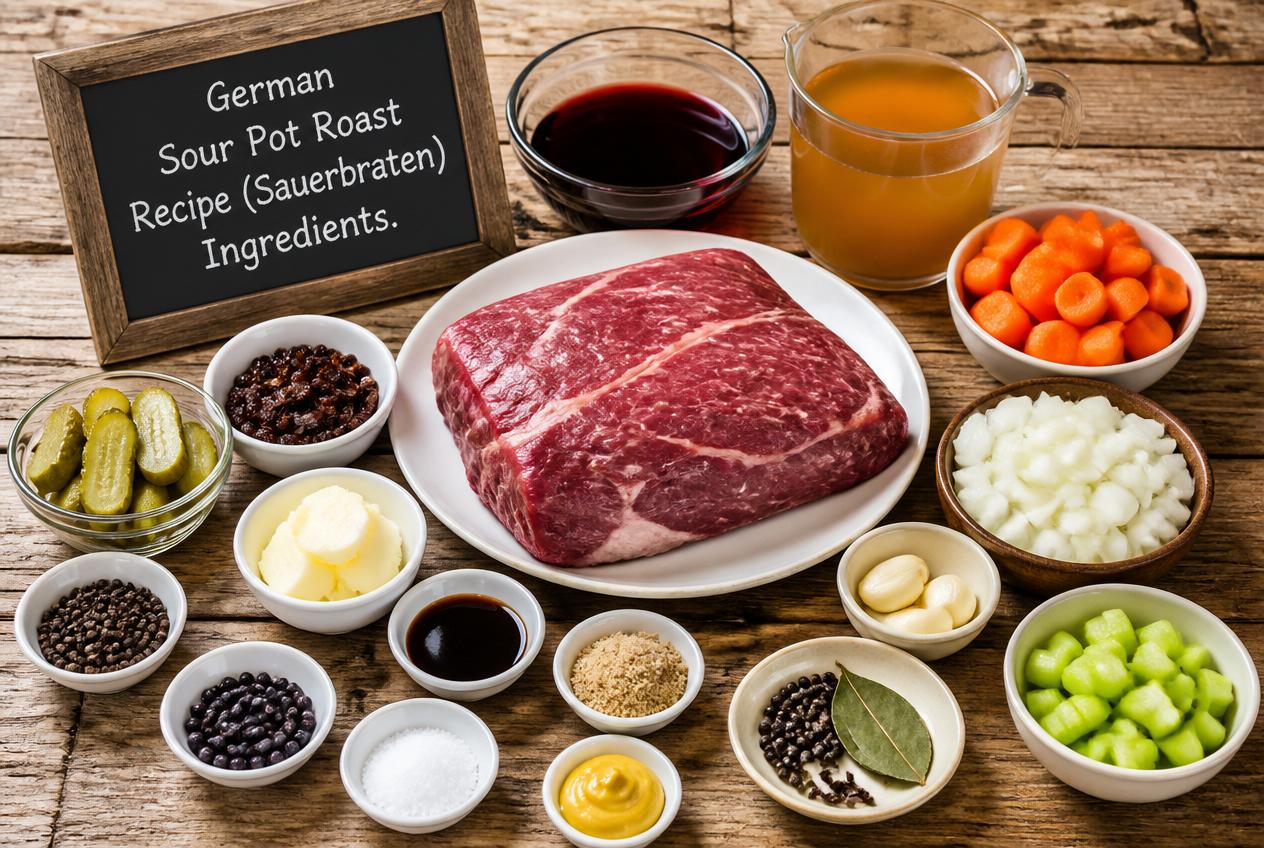
German Sour Pot Roast Recipe (Sauerbraten)
Ingredients
- 4 whole allspice berries
- 6 whole juniper berries
- 4 whole cloves
- 8 whole black peppercorns
- 2 lb lean beef roast such as bottom round or rump roast see notes
- 2 cloves garlic minced
- 2 medium carrots medium diced
- 1 large onion medium diced
- 2 celery stalks medium diced
- 1 large leek white and light green parts halved lengthwise, rinsed and thinly sliced
- 2 bay leaves
- 1 teaspoon dried thyme or 1 tablespoon chopped fresh thyme
- 2 cups red wine such as Pinot Noir
- 2 cups red wine vinegar
- ¼ cup brown sugar plus more to taste
- 1 tbsp unsalted butter
- 1 tbsp avocado oil
- 1 tbsp tomato paste
- 1 heel of stale bread
- 4 cups beef broth plus more if needed
- ¼ cup dark seedless raisins
- 1 teaspoon cornstarch
- salt and ground black pepper
Instructions
- Using a mortar and pestle or a spice grinder, finely grind the allspice berries, juniper berries, cloves, and black peppercorns until fragrant and well combined. Grinding the spices fresh releases their essential oils and creates the distinctive flavor profile that makes this traditional braised beef dish so memorable.
- Rinse the beef roast under cold water and pat it completely dry with paper towels. Place the roast into a gallon-sized zip-top bag. Add the freshly ground spices, garlic, carrots, onion, celery, leek, bay leaves, dried thyme, red wine, red wine vinegar, and brown sugar.
- Press out as much air as possible before sealing the bag. Place the bag into a bowl large enough to support it and catch any potential leaks. Refrigerate and allow the meat to marinate for 3 to 5 days, turning the bag occasionally if possible. The extended marinating time tenderizes the beef and allows the flavors of the wine, vinegar, vegetables, and spices to penetrate deeply into the meat.
- Preheat the oven to 320°F (160°C).
- Remove the beef from the marinade and pat it dry thoroughly with paper towels. Drying the meat is important because excess moisture can prevent proper browning.
- Place a fine-mesh sieve over a large bowl and strain the marinade. Reserve both the liquid and the marinated vegetables separately, as both will be used later in the cooking process.
- In a large oven-safe Dutch oven or heavy pot with a lid, heat the butter and avocado oil over medium-high heat until the butter becomes foamy.
- Carefully add the beef roast and sear it on all sides, cooking approximately 1–2 minutes per side. The goal is to create a rich brown crust that enhances the flavor of the finished dish. Once evenly browned, transfer the roast to a large plate and set aside.
- Add the reserved marinated vegetables to the same pot. Cook over medium heat, stirring occasionally, until the vegetables soften and begin releasing their aroma, about 5 minutes.
- Stir in the tomato paste and continue cooking for another minute. Cooking the tomato paste briefly deepens its flavor and helps remove any raw taste while adding richness to the braising liquid.
- Return the browned roast to the pot, nestling it among the vegetables. Add the heel of stale bread, which will gradually break down and help thicken the sauce as the roast cooks.
- Pour in equal amounts of the reserved marinade and beef broth, adding enough liquid to come approximately two-thirds of the way up the sides of the roast. The meat should be partially submerged but not completely covered.
- Cover the pot with its lid and transfer it to the preheated oven. Braise the beef for about 2 hours, or until the meat is tender but still holds its shape when sliced. If the roast is particularly lean, it may require an additional 30–60 minutes of cooking time.
- About halfway through cooking, carefully turn the roast over and add additional broth and marinade if necessary to maintain the liquid level. Slow braising allows the tough fibers in the meat to break down while absorbing the complex flavors of the marinade.
- Once the beef is tender, remove the pot from the oven and transfer it to the stovetop. Using tongs, carefully move the roast to a carving board. Loosely cover it with aluminum foil and allow it to rest for 15 minutes.
- Resting helps the juices redistribute throughout the meat, ensuring each slice remains moist and flavorful.
- Using a sharp carving knife, slice the roast against the grain into slices approximately ½ inch thick. Cutting against the grain shortens the muscle fibers and results in more tender slices.
- Place a fine-mesh sieve over a large bowl and strain the braising liquid, pressing gently on the vegetables to extract as much flavor as possible. Discard the solids and return the strained liquid to the pot.
- Add the raisins and simmer gently over low heat for about 15 minutes. As they soften, the raisins add subtle sweetness and complexity to the sauce, balancing the tanginess of the vinegar and wine.
- In a small bowl, whisk together the cornstarch and 1 tablespoon water until completely smooth and free of lumps. Stir the slurry into the simmering sauce and continue cooking, whisking occasionally, for 1–2 minutes, or until the sauce thickens to a silky consistency.
- Taste the sauce and adjust the seasoning with salt, black pepper, and additional brown sugar if needed. The finished sauce should have a balanced flavor with notes of sweetness, acidity, and warm spice.
- Return the sliced beef to the pot and gently spoon the sauce over the meat, allowing it to warm through. Alternatively, arrange the sliced roast on a warmed serving platter and generously ladle the sauce over the top.
- Serve immediately with traditional accompaniments such as potato dumplings, mashed potatoes, buttered noodles, or braised red cabbage. The combination of tender marinated beef and the rich, sweet-and-sour raisin sauce creates the classic flavor profile that has made Sauerbraten one of Germany's most beloved comfort foods.
German Sour Pot Roast Recipe (Sauerbraten) Frequently Asked Questions
This German Sour Pot Roast recipe stands apart from regular pot roast because of its multi-day vinegar and wine marinade. That’s what creates the tangy flavor and tender texture. The beef needs at least three days in the marinade to really shine.
What is the difference between sauerbraten and a standard pot roast?
The big difference is the marinade. Sauerbraten uses a mix of vinegar, wine, and spices that the beef soaks in for days before cooking. Regular pot roast skips the acidic marinade and just goes straight to seasoning and braising. If you’re looking for a German Sour Pot Roast recipe with real character, this is it.
The flavor is another story. This dish has a sweet-and-sour taste that’s nothing like American or French pot roasts. The gravy balances out the tang with a touch of sweetness. That’s a must in any German Sour Pot Roast recipe.
How long should the roast marinate for the best flavor and tenderness?
I always say: marinate your beef for at least three days. That’s enough time for the acids to break down the tough muscle and really infuse the meat with flavor. Some German Sour Pot Roast recipe fans go up to five days for even more depth.
While it’s marinating, I turn the meat once or twice a day. This way, every side gets a fair shot at soaking up that marinade. It’s a little detail, but it makes a difference in a German Sour Pot Roast recipe.
What cut of beef works best for a traditional German-style marinated pot roast?
Chuck roast is my go-to for any German Sour Pot Roast recipe. It’s got the right mix of fat and collagen to break down during the long braise. If you can’t find chuck, bottom round, rump roast, or brisket all work, too.
The secret is picking a tougher cut with some marbling. The fat keeps the roast moist while it cooks low and slow. That’s how you get the classic, melt-in-your-mouth texture in a German Sour Pot Roast recipe.
Can this recipe be made in a slow cooker without losing its classic texture and taste?
Yeah, you can absolutely make this German Sour Pot Roast recipe in a slow cooker and still keep that classic vibe. The low, steady heat does a good job of mimicking the old-school braising. Some folks might argue it’s not quite the same, but honestly, I’ve tried it both ways and the difference is pretty subtle.
I always brown the marinated meat in a skillet first before tossing it in the slow cooker. That step gives the German Sour Pot Roast recipe a richer, deeper flavor—totally worth the extra pan to wash. Don’t skip it if you want that real depth.
I usually let it go for six to eight hours on low. The meat gets crazy tender and soaks up all those sweet-sour notes, just like the classic German Sour Pot Roast recipe should. If you’re worried about losing texture, don’t be—it turns out great.
How do you cook it in the oven, and what temperature and timing are ideal?
For the oven version of this German Sour Pot Roast recipe, I crank my oven up to 325°F. That’s the sweet spot for slow-cooking without drying everything out. Not too hot, not too cool—just right for coaxing out all that flavor.
I brown the marinated roast on the stovetop (don’t skip this step, seriously), then tuck it into a Dutch oven with the marinade. I slap the lid on tight and slide the whole thing into the oven. The German Sour Pot Roast recipe really benefits from that sealed-in moisture.
It usually takes about three to four hours. I just check it now and then, and when I can pull the meat apart with a fork, I know the German Sour Pot Roast recipe is ready. It’s one of those dishes where patience totally pays off.
What is the best way to thicken the sweet-sour gravy, and how can you adjust the balance of flavors?
Traditional sauerbraten gravy thickens up with crumbled gingerbread cookies. Those cookies give the German Sour Pot Roast recipe a bit of body, and honestly, the hint of spice and sweetness works wonders.
If I’m out of gingerbread cookies (which happens more than I’d like to admit), I just grab some flour or cornstarch. I mix equal parts flour and cold water, whisk that into the simmering gravy, and it thickens up nicely for the German Sour Pot Roast recipe.
Tweaking the flavor balance in a German Sour Pot Roast recipe is all about tasting as you go. Too sour? Toss in a little sugar or a handful of raisins. Too sweet? A splash of vinegar usually does the trick for the German Sour Pot Roast recipe. It’s one of those things where you just have to trust your palate and adjust until it feels right. The German Sour Pot Roast recipe really rewards a bit of improvisation. Sometimes I wonder if anyone ever makes it the same way twice.

Recipes are gathered in person and written for real-world cooking conditions.
- 10 Hungarian Dessert Recipes Passed Down Through Generations - July 25, 2026
- 11 Easy English Recipes Anyone Can Make - July 25, 2026
- Hungarian Kifli Recipe - July 25, 2026