
Let’s dive into a Turkish Roasted Eggplant recipe that takes humble eggplant and transforms it into something silky, smoky, and honestly, kind of addictive. Roast, scoop, mash, and dress — suddenly you’ve got a Turkish Roasted Eggplant recipe fit for a dip, a stew-ready filling, or even a casserole that begs for crusty bread or a scoop of rice pilaf.
It’s not just a recipe; it’s a bit of kitchen folklore. With a splash of olive oil, high heat, and some patience, you can tame eggplant’s bitterness and coax out those comfort-food flavors your grandparents probably swore by. You’ll pick up a few tricks along the way—like how to turn this Turkish Roasted Eggplant recipe into a creamy dip, a layered casserole, or just a simple side that somehow makes plain rice feel like a celebration.
You don’t need fancy gadgets or weird ingredients. This Turkish Roasted Eggplant recipe sticks to the basics, sharing real-world tips for getting that perfect texture and bold, smoky flavor. If you accidentally overcook the eggplant, no worries—there are ways to rescue it and even amp up the smokiness. The steps are doable, there’s a dash of history, and maybe a joke or two to keep things from getting too serious (or your kitchen from catching fire).
History, Lore, and Why Your Grandparents Were Right About Eggplant
Your grandparents probably treated patlıcan like an old friend, and honestly, they had a point. Eggplant showed up in Turkish kitchens centuries ago and has been a mainstay ever since—mezze platters, stews, Sunday roasts, you name it. It’s stubbornly charming, if you ask me.
Take imam bayıldı, for example. The story behind it is as saucy as the tomatoes in the dish—a fainting imam, a scandalized onion, and more olive oil than you’d think possible. Whether the legend is true or just a good story, one thing’s clear: a Turkish Roasted Eggplant recipe like this can steal the show at dinner.
Across Turkey, you’ll spot stuffed eggplants everywhere—sometimes with meat, sometimes with rice or herbs. Every village seems to have its own twist. Karniyarik-style dishes really show off what eggplant can do: tender skin, spongy flesh, endless fillings. It’s the kind of Turkish Roasted Eggplant recipe you’ll want to try more than once.
The smoky, mashed cousins—think baba ganoush or Turkish roasted eggplant dips—have traveled well beyond Turkey because they’re straightforward and deeply satisfying. Serve a Turkish Roasted Eggplant recipe as part of a mezze spread and suddenly, everyone at the table acts like they’ve been making this for years.
There’s also something to be said for the thrift and texture your elders understood. Eggplant soaks up flavor and stretches a meal into leftovers for tomorrow. That’s the sort of practical wisdom you find in a great Turkish Roasted Eggplant recipe—elegant, a little rustic, and always worth repeating.
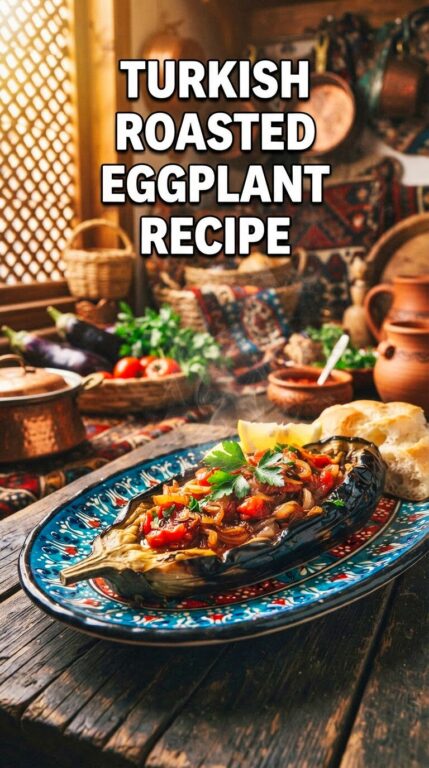
How to Tame Your Eggplant: Essential Cooking Tips
Treat your globe eggplant like a reluctant roommate—coax it, don’t force it. If it’s bitter, sprinkle on some salt, then rinse and pat it dry. This way, your Turkish Roasted Eggplant recipe won’t turn gummy or weirdly chewy.
Splash in a good bit of olive oil to get that golden browning. Eggplant soaks up oil like a sponge, so I usually brush or toss the pieces instead of pouring oil all over. Want that smoky flavor for your Turkish Roasted Eggplant recipe? Just grill or roast it over high heat. Let the skin get charred and the insides collapse into a silky mess.
Garlic’s a star with tomatoes and onions—add minced garlic near the end so it stays punchy. Caramelized onions and a spoonful of tomato paste really deepen the flavor. If you’re after a bit of heat, toss in some red pepper flakes or smoked paprika. It’s honestly the backbone of a good Turkish Roasted Eggplant recipe.
If you want a creamy eggplant puree for your Turkish Roasted Eggplant recipe, scoop out the cooked flesh, drop it in a bowl, and mash it up with lemon juice, cumin, black pepper, and a drizzle of olive oil. Sometimes I’ll fold that puree into garlic yogurt, or just spoon yogurt sauce over fried eggplant slices. It’s hard to go wrong here, honestly.
Leftovers? I just reheat them gently in a skillet with olive oil. That way, they crisp up instead of going soggy. Or, chop cold roasted eggplant into salads with fresh parsley and diced tomatoes. It’s a quick mezze, and it absolutely works as a Turkish Roasted Eggplant recipe hack.
Quick tips in one glance:
- Roast or grill hot for smoky char—essential for a Turkish Roasted Eggplant recipe.
- Add garlic late; tomato paste early. It’s a Turkish Roasted Eggplant recipe classic.
- Lemon juice, cumin, and black pepper keep things bright in any Turkish Roasted Eggplant recipe.
- Finish with parsley or garlic yogurt for contrast, especially in a Turkish Roasted Eggplant recipe.
Honestly, if you’re after a Turkish Roasted Eggplant recipe that tastes like something from a bustling Istanbul kitchen, don’t skip the olive oil or the smoky char. There’s something about the way those flavors come together that just feels right. And hey, experiment a little—Turkish Roasted Eggplant recipe ideas are pretty forgiving. If you mess it up, it’ll probably still taste good. Just keep that olive oil handy.
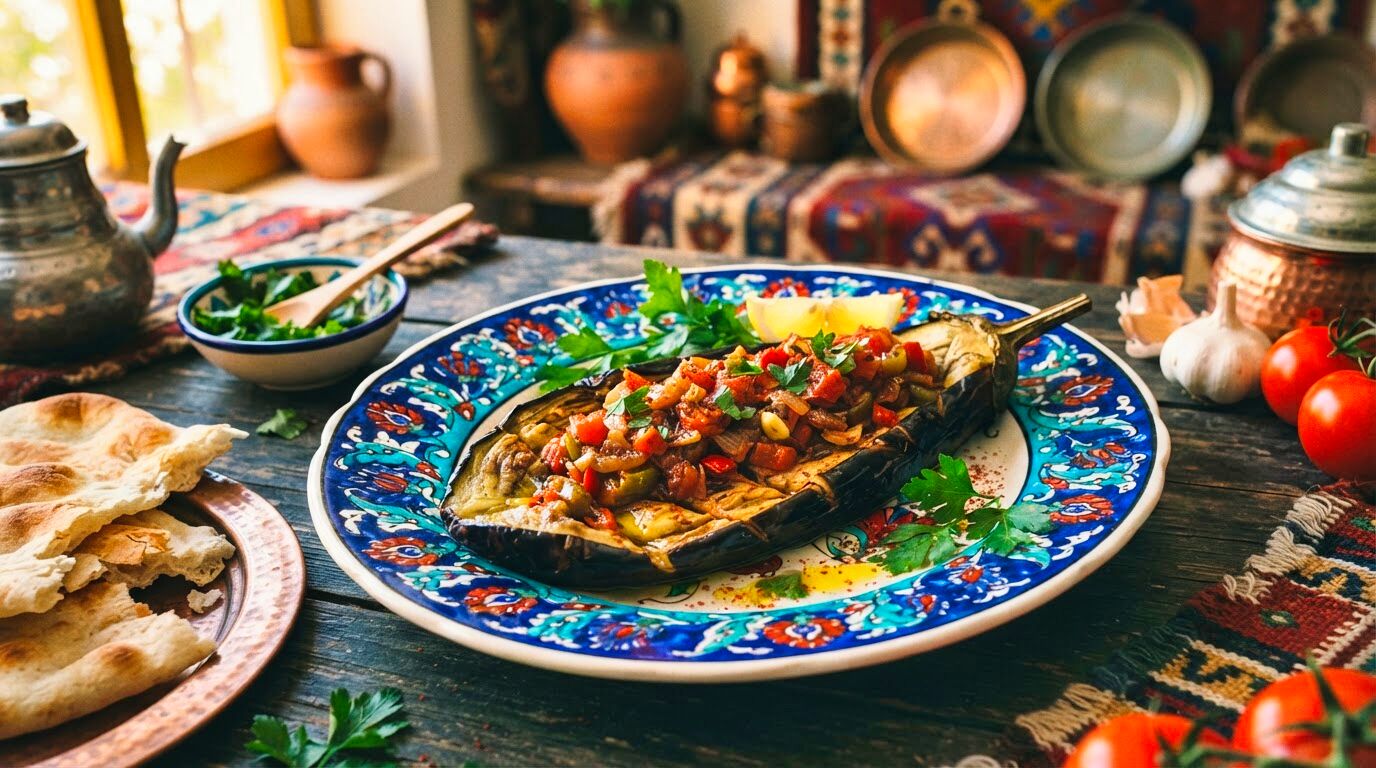
Turkish Roasted Eggplant Recipe
Ingredients
- 4 eggplants medium globe
- 1 clove garlic
- ½ lemon juiced
- 2 tablespoon olive oil extra-virgin
- pinch salt
Instructions
- Wash the eggplants thoroughly and dry them well.
- Use a fork to pierce each eggplant in several places.
- Set the pierced eggplants directly over a gas burner on low to medium heat.
- Roast for at least 20 minutes, turning them every 5 to 7 minutes so all sides are exposed to the flame.
- Cooling racks may be placed over the burners to make the eggplants easier to handle.
- Continue roasting even after the eggplants appear done to ensure the flesh becomes extremely tender.
- The total cooking time will vary according to the type and size of the eggplants. Italian, Chinese, and Japanese eggplants generally cook more quickly, while globe eggplants usually need additional time.
- If desired, immediately transfer the hot roasted eggplants to an airtight container or zip-top bag.
- This optional step helps trap steam around the eggplants.
- Skip this step if you prefer to retain some of the smoky flavor provided by small pieces of charred skin.
- Move the roasted eggplants to a cutting board.
- Remove the charred skin from the extremely soft flesh and discard it.
- If the roasted eggplants release a large amount of juice, decide whether to keep it for the dip or drain it away.
- Taste the liquid before using it.
- Discard the juice if it has a bitter flavor.
- While the eggplants are roasting, squeeze the lemon juice into a bowl.
- Press the garlic directly into the lemon juice.
- Allow the garlic to sit in the lemon juice while the eggplants finish cooking.
- This helps prevent the garlic flavor from becoming too strong and overpowering the eggplant.
- Add the roasted eggplant flesh to the lemon and garlic mixture.
- Pour in the olive oil and add a pinch of salt.
- Mash and stir everything together until thoroughly combined.
- Use the roasted eggplant immediately to prepare the dip, or place it in an airtight container.
- The roasted eggplant or finished dip may be refrigerated for up to 4 days.
- Transfer the Turkish Roasted Eggplant Dip to a serving dish.
- Serve as desired.
- This Turkish Roasted Eggplant Dip combines deeply smoky, flame-charred eggplant with fresh lemon, garlic, olive oil, and a touch of salt. Roasting the eggplants until exceptionally tender creates a soft, rustic texture, while marinating the garlic in lemon juice keeps its flavor balanced and allows the smoky eggplant to remain the star of the dish.

Recipes are gathered in person and written for real-world cooking conditions.
- 10 Hungarian Dessert Recipes Passed Down Through Generations - July 25, 2026
- 11 Easy English Recipes Anyone Can Make - July 25, 2026
- Hungarian Kifli Recipe - July 25, 2026