
You can make authentic Turkish Flour Helva recipe (un helvasi) at home with just flour, butter or oil, sugar, and liquid—no exotic pantry items required. This post dives into the backstory and quirky facts that make the Turkish Flour Helva recipe a ceremonial favorite. I’ll share some honest tips so you can get that toasted, brown-butter flavor without setting off your smoke alarm. If you want to nail the Turkish Flour Helva recipe, you’ll need a feel for technique and timing, but honestly, it’s not rocket science. I’ll toss in a few easy variations, too, so your flour halva ends up tasting like the real deal.
A Tale of Sweetness: Recipe Backstory and Fun Facts
You’ll spot flour helva quietly everywhere in Turkey — in kitchens, at coffee breaks, and during all sorts of gatherings. It’s both dessert and comfort food, showing up at birthdays, funerals, and anywhere people crave a little warmth. That’s the Turkish Flour Helva recipe for you: versatile and oddly dignified.
Apparently, helva started when someone browned flour in butter by accident and just went with it. That little mishap stuck around, and now the Turkish Flour Helva recipe is a staple. You can swap in milk, sugar, or nuts and still call it helva. No shame in tweaking it.
You’ll see two main approaches: the simple, buttery un helvası made from toasted flour, and a semolina helva that’s got a bit more bite. Every family’s got their own Turkish Flour Helva recipe, and you’ll probably get a slightly different version in every home. It’s almost a national pastime to guard those proportions.
- It’s best served warm. Trust me—your tea will thank you.
- Helva marks all sorts of life moments, so bringing some to a gathering says you get it.
- People sometimes add vanilla, cocoa, or rose water for a little twist. It’s polite, not showy.
If you’re the experimenting type, try swapping some butter for oil or tossing in toasted pine nuts. The Turkish Flour Helva recipe is flexible like that. Small changes can totally shift the texture and flavor, and you’ll figure out which version your friends like—or at least tolerate with a smile. The Turkish Flour Helva recipe encourages a little playfulness, honestly.
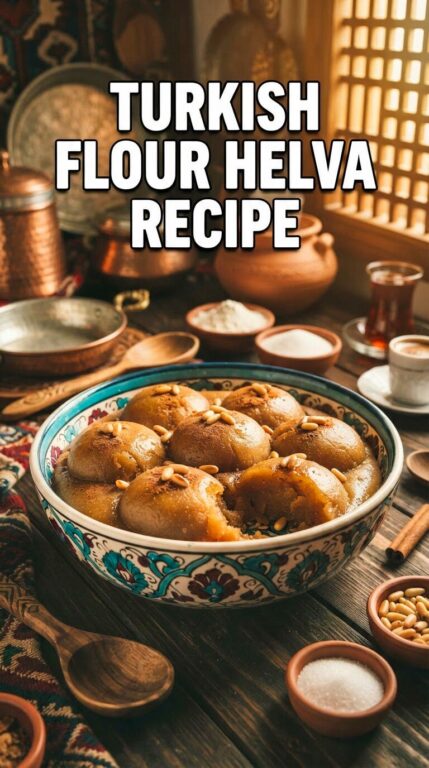
How to Master the Art of Turkish Flour Helva Without Setting Off Your Smoke Alarm
Toast the flour slowly, with patience—don’t rush it like you’re saving burnt toast. Medium-low heat’s your best bet. That way, your Turkish Flour Helva recipe gets that perfect nutty color in about 20–25 minutes, not a kitchen full of smoke.
Stick with a heavy-bottomed pan and keep stirring. These two will save you from hot spots and unwanted burnt bits. I always reach for a wooden spoon; metal heats up too fast and, honestly, just feels a bit judgy.
Measure your butter, oil, sugar, and water (or milk) before you start. It’s way less stressful than scrambling for ingredients mid-toast. When the flour’s golden brown, pour in the syrup slowly while stirring. If you dump it in all at once, you’ll get a wild hiss and splatter—nobody wants that.
If you’re nervous, crack open a window and maybe set a fan nearby (just not pointing right at the pan). Skip the high flame and never let your pan go dry—most Turkish Flour Helva recipe fails come from rushing the toasting or ignoring the pan.
Want to play with texture? Try a 2:1 ratio of butter and oil to flour for a richer Turkish Flour Helva recipe, or cut back a bit on the fat for a firmer result. Taste as you go—add syrup slowly and adjust the sweetness to your liking. Honestly, there’s no shame in tweaking things; even the best Turkish Flour Helva recipe can use a personal touch.
Keep a lid nearby in case you need to smother a little smoke—not to trap steam, just as a backup. If you’re craving that classic Turkish Flour Helva recipe flavor, toss in some toasted pine nuts or a pinch of cardamom right at the end. It’s a small thing, but it really makes the Turkish Flour Helva recipe pop.
And if you’re ever in doubt, check out an established Turkish Flour Helva recipe for reference. Adapt their moves to fit your own kitchen style. Sometimes, the best Turkish Flour Helva recipe is the one you tweak along the way. If you’re a perfectionist, don’t sweat it—Turkish Flour Helva recipe is surprisingly forgiving. There’s a reason people keep coming back to this Turkish Flour Helva recipe; it’s comforting, nostalgic, and honestly, just plain good. Give the Turkish Flour Helva recipe a shot, and you’ll see what I mean.
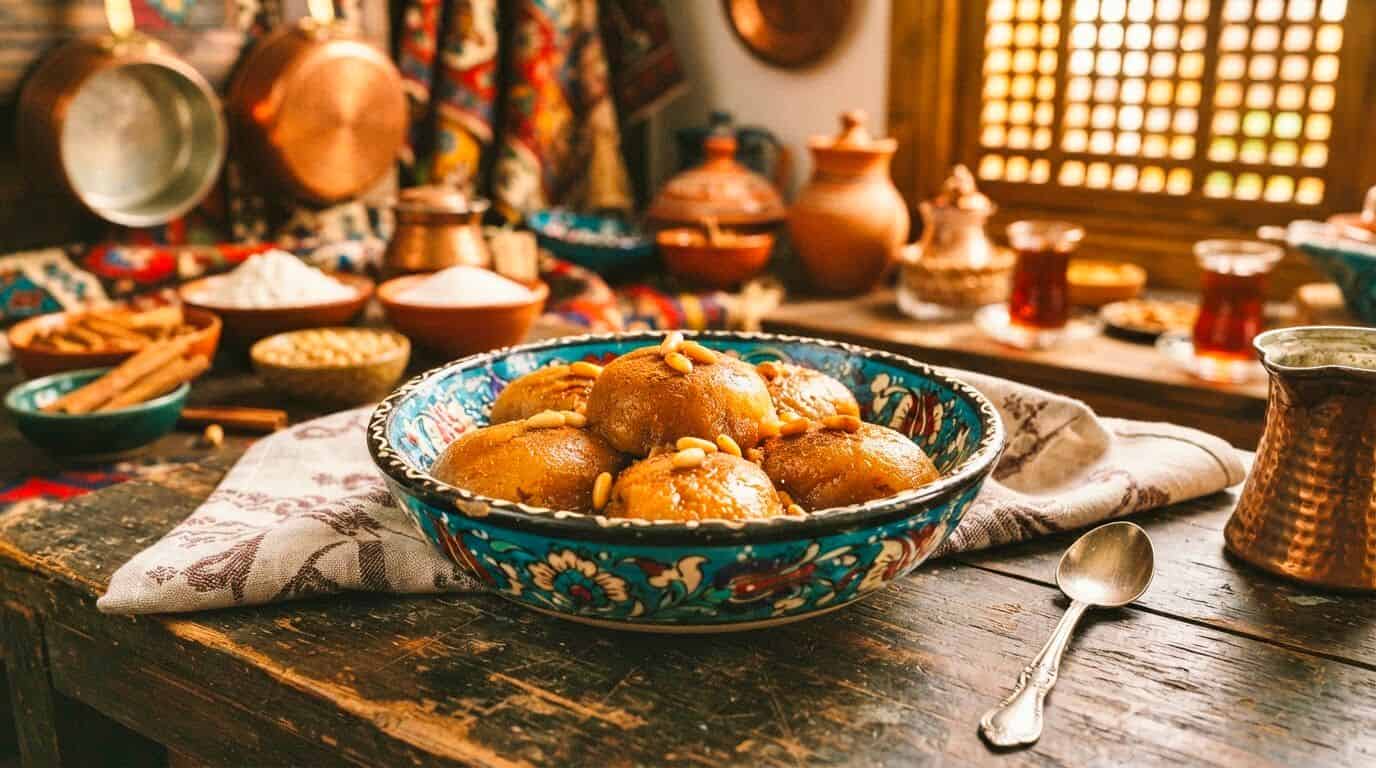
Turkish Flour Helva Recipe
Ingredients
- 1 cup sugar
- 1/2 cup water
- 1 cup milk
- 6 ounces butter 170 grams , or margarine
- 1 1/2 cups flour
- 1/4 teaspoon pure vanilla extract optional
- 1/4 cup pine nuts toasted for garnish
Instructions
- Place the sugar, milk, and water in a saucepan.
- Bring the mixture to a boil, stirring occasionally until the sugar has completely dissolved.
- Turn off the heat once the sugar is dissolved.
- If desired, stir vanilla, rose water, or lemon zest into the hot milk mixture for additional flavor.
- Melt the butter in a large, shallow pan.
- When the melted butter begins to bubble, add all of the flour at once.
- Using a wooden spoon, work the butter thoroughly through the flour until evenly combined.
- Toast the Flour Mixture
- Reduce the heat to low.
- Continuously lift and turn the flour and butter mixture with a wooden spoon.
- Cook over very low heat for at least 15 minutes, keeping the mixture moving throughout the entire cooking time.
- The flour should gradually develop a golden-brown color and a toasted aroma.
- Turn the mixture evenly as it cooks and watch it carefully to prevent it from browning too quickly.
- When the flour has reached the proper color and aroma, turn off the heat.
- Pour in all of the prepared milk and sugar mixture at once and allow it to bubble up.
- Stir the liquid through the toasted flour while the mixture is bubbling.
- Continue stirring as the helva gradually cools.
- The mixture will begin to come together and form a ball.
- The finished helva should have a soft but firm consistency and a glossy appearance.
- Shape the helva while it is still hot.
- For individual servings, use a large spoon to form the mixture into oval-shaped portions.
- Alternatively, press the hot helva evenly into a shallow serving dish.
- Allow the helva to cool before cutting it into squares.
- Place the pine nuts in a small nonstick pan over high heat.
- Toast them by turning them frequently so they cook evenly.
- Press one toasted pine nut into the top of each individual spoon-shaped helva.
- For helva prepared in a serving dish, arrange the toasted pine nuts evenly over the surface in a decorative pattern.
- This traditional Turkish Flour Helva is made by slowly toasting flour in butter before combining it with a sweet milk mixture. Soft yet firm with a smooth, glossy texture and warm toasted flavor, the helva can be shaped into individual portions or served in squares and finished with golden pine nuts.

Recipes are gathered in person and written for real-world cooking conditions.
- 10 Hungarian Dessert Recipes Passed Down Through Generations - July 25, 2026
- 11 Easy English Recipes Anyone Can Make - July 25, 2026
- Hungarian Kifli Recipe - July 25, 2026