

Sicilian cuisine brings together the freshest seafood with simple Mediterranean ingredients, and swordfish pasta represents this tradition perfectly. I have explored the authentic preparation methods for this classic Swordfish and Spaghetti recipe that transforms meaty swordfish and al dente spaghetti into a meal that captures the essence of Sicily’s coastal cooking. The Swordfish and Spaghetti recipe highlights how Sicilian cooks maximize flavor with minimal ingredients, relying on the quality of the fish and the brightness of fresh produce.
This Swordfish and Spaghetti recipe combines seared swordfish with tomatoes, capers, and aromatic herbs to create a flavorful sauce that clings beautifully to pasta, typically ready in under an hour. The Swordfish and Spaghetti recipe showcases how to build flavor with just a handful of ingredients. By focusing on the freshness of the fish and the vibrancy of Mediterranean produce, you can create a truly authentic Swordfish and Spaghetti recipe at home.
I’ll walk you through the traditional techniques, regional variations, and expert tips that make this Mediterranean-inspired swordfish pasta a standout dish. Whether you want to recreate an authentic Sicilian Swordfish and Spaghetti recipe or simply expand your seafood pasta repertoire, this guide covers everything from proper fish preparation to creative ingredient substitutions.
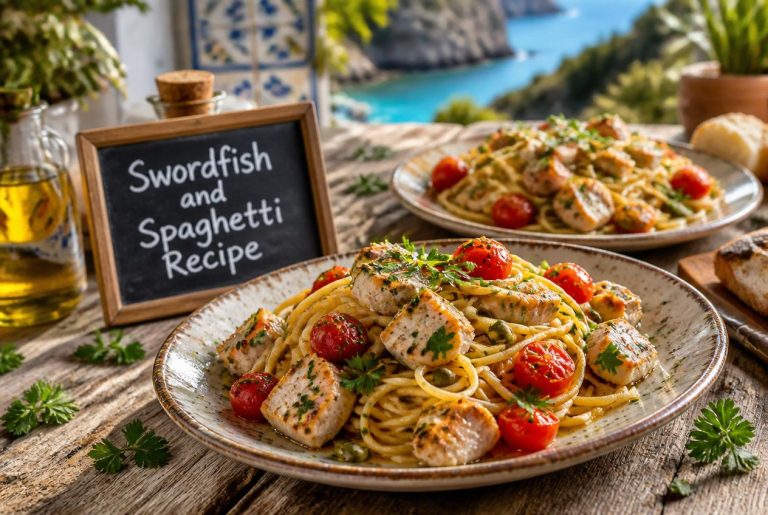
Swordfish and Spaghetti Recipe
Key Takeaways
- Swordfish and Spaghetti recipe is a classic Sicilian dish that combines seared fish with tomatoes, capers, and herbs for a quick Mediterranean meal.
- The Swordfish and Spaghetti recipe is highly adaptable, with variations including eggplant, mint, pistachios, and even substituting tuna for the swordfish.
- Searing the fish before adding it to the sauce creates the best texture and flavor in the final Swordfish and Spaghetti recipe.
Description and Historical Information
Swordfish pasta is a popular traditional dish that embodies the heart of Sicilian cuisine. I find the Swordfish and Spaghetti recipe fascinating because it shows how Sicilian seafood recipes transform simple ingredients into memorable meals. This classic Swordfish and Spaghetti recipe typically combines fresh swordfish with spaghetti or other pasta shapes, creating a harmonious blend of land and sea.
Most versions of the Swordfish and Spaghetti recipe feature cherry tomatoes, eggplant, and aromatic herbs like mint or basil. Some regional variations of the Swordfish and Spaghetti recipe include ingredients such as capers, olives, or pine nuts. Swordfish holds special significance in Sicily’s coastal communities, particularly around Messina and Catania. The fish thrives in Mediterranean waters and has been a staple protein for Sicilian fishermen for centuries. Swordfish plays a major role in Sicilian seafood cuisine, making it a natural choice for the Swordfish and Spaghetti recipe.
Key ingredients typically include:
- Fresh swordfish steaks
- Spaghetti or reginette pasta
- Ripe cherry tomatoes
- Eggplant (aubergine)
- Fresh herbs (mint, parsley, or basil)
- Garlic and olive oil
The preparation style reflects Sicily’s Mediterranean location and agricultural abundance. I appreciate how this summer pasta comes together quickly, usually in the time it takes to boil pasta. The Swordfish and Spaghetti recipe’s meaty texture pairs beautifully with al dente pasta, while the tomato-based sauce ties everything together with bright, fresh flavors characteristic of Sicilian pasta recipes.
Expert Preparation Tips
When I prepare swordfish spaghetti, I always start by selecting the freshest fish available. The swordfish should have a clean ocean smell and firm, moist flesh without any brown discoloration. I cut the swordfish into uniform cubes, typically around half-inch pieces, to ensure even cooking in the Swordfish and Spaghetti recipe. This size allows the fish to sear properly while remaining tender inside.
Key Preparation Steps:
- Pat the swordfish dry with paper towels before cooking
- Season the fish just before it goes into the pan
- Use a hot pan with quality olive oil for proper searing
- Avoid overcooking, as swordfish can become tough and dry
Swordfish’s firm, meaty texture holds up well to bold Sicilian flavors. The fish cooks for only 2-3 minutes per side when searing for the Swordfish and Spaghetti recipe. For the pasta, I always cook it one minute less than the package directions suggest and finish cooking the spaghetti directly in the sauce. This step allows the spaghetti to absorb the flavors of the Swordfish and Spaghetti recipe while reaching perfect al dente texture.
Timing Coordination:
| Task | Timing |
|---|---|
| Start pasta water | First |
| Prepare swordfish | While water heats |
| Begin sauce | When pasta goes in |
| Sear fish | 5 minutes before pasta finishes |
I recommend prepping all ingredients before starting to cook, as the Swordfish and Spaghetti recipe comes together quickly. Add the swordfish near the end to prevent overcooking and to keep the Swordfish and Spaghetti recipe tender and flavorful.
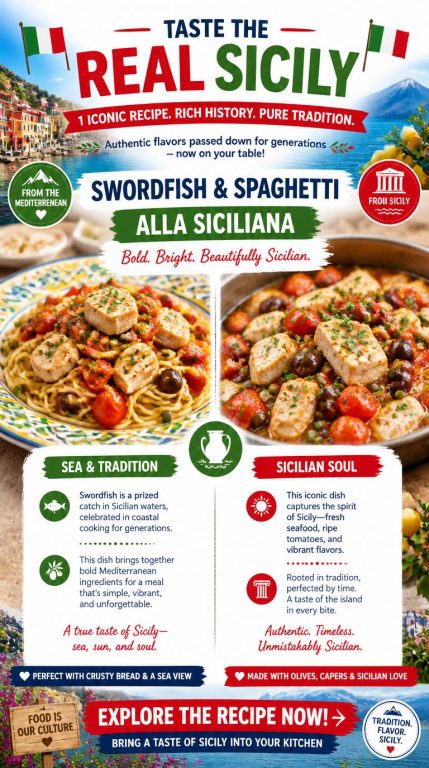
Creative Variations
The classic Sicilian Swordfish and Spaghetti recipe adapts beautifully to different ingredients and flavor profiles. One popular variation substitutes tuna for swordfish, which offers a more robust flavor while maintaining the dish’s Mediterranean character. I recommend trying the traditional combination with eggplant and mint, which adds a sweet earthiness to the Swordfish and Spaghetti recipe. This pasta with swordfish and aubergine creates layers of texture and flavor that complement the fish perfectly.
Ingredient Additions I Enjoy:
- Ground Sicilian pistachios for a nutty crunch
- Fresh basil instead of mint for a different herbal note
- Capers and olives for extra briny depth
- Red pepper flakes for subtle heat
I have experimented with different pasta shapes beyond spaghetti for the Swordfish and Spaghetti recipe. Reginette, rigatoni, and penne all work well because they capture the sauce effectively. The key is choosing pasta that will hold onto the tomato sauce and small pieces of swordfish in the Swordfish and Spaghetti recipe. For the sauce, I sometimes use cherry tomatoes instead of regular tomatoes, which creates a lighter, quicker preparation that’s ideal for summer meals. Adding toasted breadcrumbs as a garnish brings essential Sicilian texture to the finished Swordfish and Spaghetti recipe.
White wine adds acidity and brightness when deglazing the pan after searing the swordfish for the Swordfish and Spaghetti recipe. This simple addition enhances the overall flavor without overpowering the delicate fish.
Recommended Pairings
Serve this Sicilian Swordfish and Spaghetti recipe with a crisp white wine that complements the dish’s fresh flavors. A Sicilian Grillo or Catarratto works beautifully, as their mineral notes balance the richness of the swordfish in the Swordfish and Spaghetti recipe. For a complete Sicilian meal, start with a simple antipasto of marinated olives, capers, and roasted peppers. These Mediterranean appetizers prepare the palate without overwhelming it before the main course of Swordfish and Spaghetti recipe.
Wine Pairings:
- Grillo (white wine from Sicily)
- Catarratto (light, crisp white)
- Vermentino (aromatic and fresh)
- Etna Bianco (volcanic minerality)
A fresh green salad dressed with lemon and olive oil makes an ideal side dish for the Swordfish and Spaghetti recipe. Keep it light to let the Swordfish and Spaghetti recipe remain the star of the meal. Arugula or mixed greens with shaved fennel add a peppery crunch that contrasts nicely with the tender swordfish.
For dessert, finish with something citrus-based. Lemon granita or orange sorbet cleanses the palate and maintains the bright, summery feel of the Swordfish and Spaghetti recipe meal. Fresh fruit like figs or peaches also works well during their season.
Side Dish Options:
- Green salad with lemon dressing
- Grilled vegetables
- Crusty Italian bread
- Sautéed greens with garlic
Always serve the Swordfish and Spaghetti recipe with good-quality bread for soaking up any remaining sauce. A rustic Italian loaf or focaccia adds substance to the meal without competing with the main flavors of the Swordfish and Spaghetti recipe.
Comparisons to Other Regional Dishes
When I explore this Sicilian Swordfish and Spaghetti recipe, I notice it shares DNA with other Southern Italian recipes while maintaining its distinct identity. The Swordfish and Spaghetti recipe bears similarities to pasta alla Norma, another Catanian specialty that combines eggplant, tomatoes, and ricotta salata. What sets the Swordfish and Spaghetti recipe apart is the substitution of meaty fish for cheese, creating a heartier, protein-rich meal that reflects Sicily’s coastal location and fishing traditions.
Traditional Mediterranean cooking often follows this pattern of regional variation. The same core ingredients—tomatoes, eggplant, garlic, and olive oil—appear throughout southern Italy, but each region adds its signature touch to dishes like the Swordfish and Spaghetti recipe.
Key Differences from Similar Dishes:
- Pasta alla Norma: Uses ricotta salata instead of seafood
- Pasta con le Sarde: Features sardines, wild fennel, and pine nuts
- Pasta allo Scoglio: Contains mixed shellfish rather than a single fish type
- Neapolitan Seafood Pasta: Typically uses a lighter, oil-based sauce instead of tomato
The swordfish and eggplant combination represents a distinctly Sicilian approach to Mediterranean recipes. The Swordfish and Spaghetti recipe balances the robust texture of swordfish with the soft, creamy consistency of fried eggplant. The mint or basil garnish adds brightness that other regional pasta dishes might achieve through lemon or white wine.
This Swordfish and Spaghetti recipe demonstrates how Southern Italian recipes adapt to local ingredients while maintaining foundational cooking techniques.

Swordfish and Spaghetti Recipe Cooking Tips
Swordfish and Spaghetti Recipe From Sicily Cooking Tips
• Swordfish and Spaghetti is known for its fresh Mediterranean flavors, tender seafood, and simple Sicilian preparation.
• Fresh swordfish is the star ingredient and should have a firm texture and clean ocean aroma.
• Cut the swordfish into evenly sized cubes or bite-sized pieces for consistent cooking.
• Avoid overcooking swordfish because it can become dry and tough.
• Spaghetti is the traditional pasta choice and pairs beautifully with seafood-based sauces.
• Extra-virgin olive oil provides the foundation of the dish and adds authentic Sicilian flavor.
• Garlic is commonly used to create a savory aromatic base.
• Cherry tomatoes or fresh tomatoes add sweetness and acidity.
• Capers contribute a briny flavor that complements the swordfish.
• Black olives are often included for additional Mediterranean character.
• Fresh parsley adds color and brightness.
• A touch of red pepper flakes can provide gentle heat if desired.
• Reserve a small amount of pasta water to help bind the sauce and pasta together.
• Toss the pasta and swordfish gently to avoid breaking up the fish.
• Fresh lemon zest or juice can enhance the seafood flavors just before serving.
• The flavor should balance tender swordfish, sweet tomatoes, briny capers, olive oil, garlic, and fresh herbs.
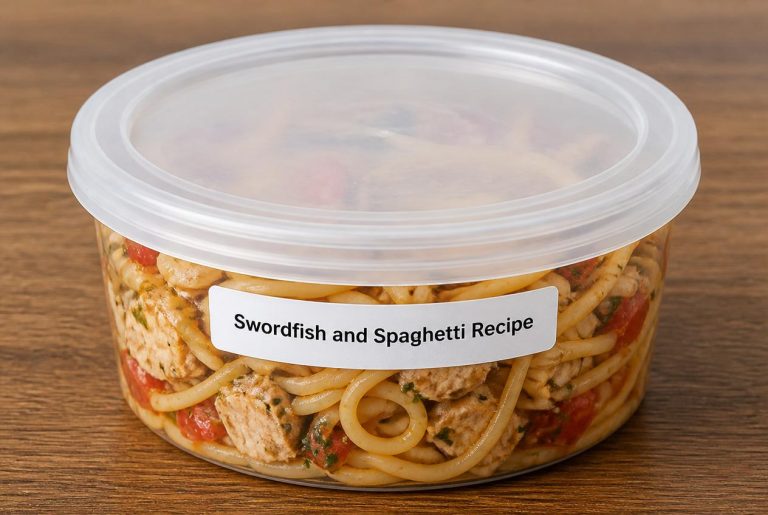
Swordfish and Spaghetti Recipe Storage Tips
Swordfish and Spaghetti Recipe From Sicily Storage Tips
• Allow the pasta and swordfish to cool before transferring them into storage containers.
• Store refrigerated in airtight containers to preserve freshness.
• Keep the pasta and seafood together if already combined.
• Refrigeration may cause the pasta to absorb some of the sauce, which is normal.
• Reheat gently over low heat to avoid drying out the swordfish.
• Add a small splash of water or olive oil during reheating if needed.
• Tomato, garlic, and herb flavors often deepen after overnight refrigeration.
• Freezing is possible, although the texture of the swordfish may soften slightly after thawing.
• Defrost frozen portions gradually in the refrigerator before reheating.
• Fresh herbs and lemon are best added after reheating.
• Use clean utensils when handling leftovers to help maintain freshness.
• Seafood pasta dishes are generally best enjoyed within a shorter refrigerated storage period for ideal quality and safety.
• Keep away from strongly scented foods because seafood readily absorbs odors.
• Slight softening of the pasta during storage is normal.
• Discard leftovers if the fish, pasta, or sauce develops sour odors, slime, mold, or unusual discoloration.
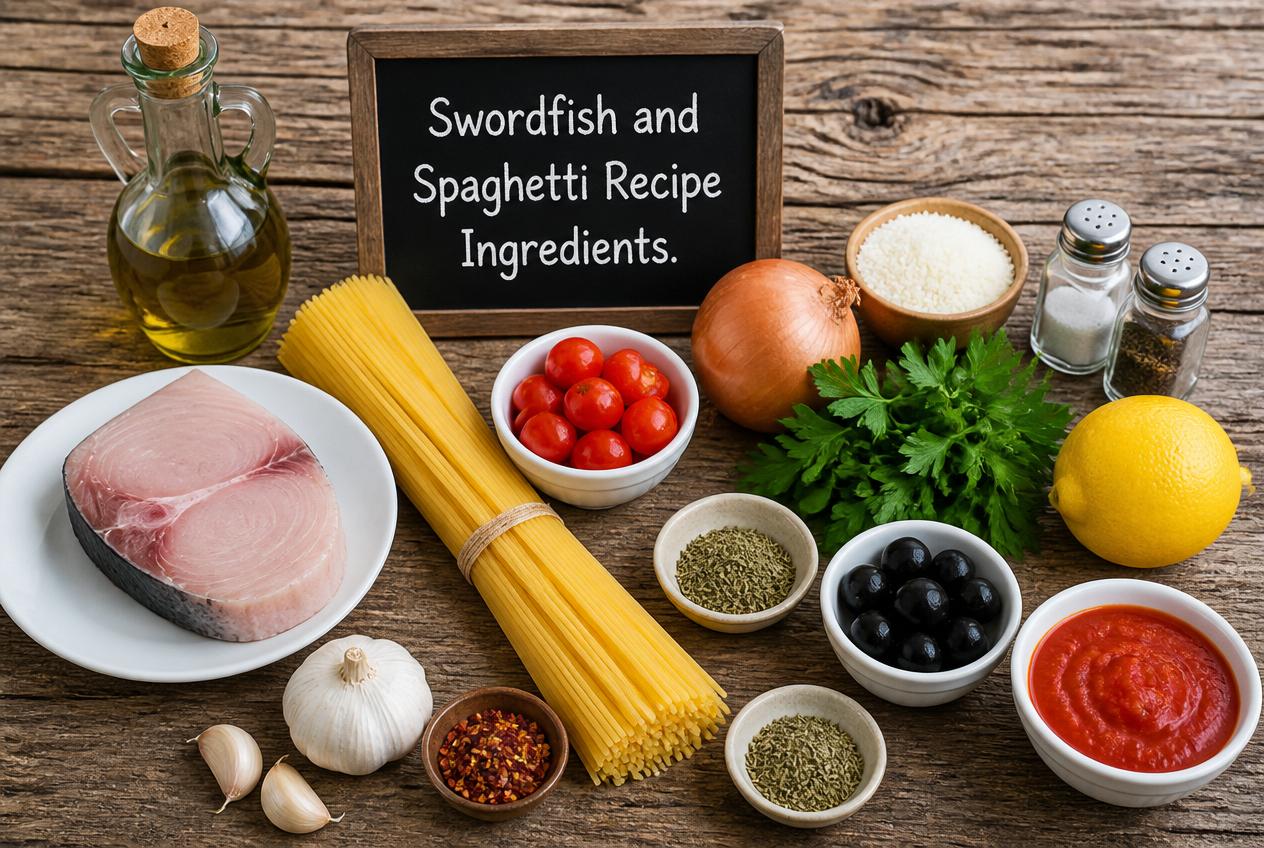
Swordfish and Spaghetti Recipe From Sicily
Ingredients
- 12 oz linguine pasta 320 g
- 3/4 lb swordfish 300 g
- 1 ½ cup cherry tomatoes 250 g
- 2.5 oz taggiasca olives 70 g
- 1 clove garlic
- thyme
- 3 tbsp Extra virgin olive oil
- fine salt to taste
- black pepper to taste
Instructions
- Begin by bringing a large pot of generously salted water to a boil. This will be used later to cook the pasta.
- While the water is heating, wash the cherry tomatoes thoroughly and cut them into halves or quarters, depending on their size.
- Trim away any skin from the swordfish, then cut the fish into slices and finally into cubes approximately ½ to ¾ inch in size. Keeping the pieces uniform ensures even cooking and helps them distribute evenly throughout the finished dish.
- Heat olive oil in a large sauté pan or skillet over medium heat. Add the whole garlic clove and thyme sprigs, allowing them to gently infuse the oil with flavor.
- Once fragrant, add the cherry tomatoes. Season with salt and freshly ground black pepper and stir to coat the tomatoes in the flavored oil.
- As the tomatoes begin to soften, add a small splash of the pasta cooking water. The moisture helps the tomatoes break down and creates the foundation of a light sauce.
- Cook for several minutes over medium-high heat until the tomatoes begin releasing their juices and become slightly softened while still retaining some shape.
- Once the water reaches a rolling boil, add the linguine and cook according to the package directions until al dente.
- While the pasta cooks, continue preparing the sauce.
- Stir the olives into the tomato mixture and cook briefly to allow their flavor to blend with the sauce.
- Add the cubed swordfish and gently stir everything together. Continue cooking for several minutes until the fish becomes opaque and is just cooked through. Swordfish cooks quickly, so avoid overcooking to keep it moist and tender.
- Once the fish is cooked, remove and discard the garlic clove.
- When the pasta reaches al dente, drain it, reserving some of the cooking water.
- Transfer the pasta directly into the skillet with the swordfish sauce. Add a ladleful of the reserved pasta water and toss everything together thoroughly.
- The starchy pasta water will help emulsify the sauce, creating a silky coating that clings to the linguine while bringing all the flavors together.
- Turn off the heat and finish the pasta with a generous drizzle of extra virgin olive oil.
- Toss one final time to coat the pasta evenly. The uncooked olive oil adds richness and a fresh Mediterranean flavor that enhances the swordfish and tomatoes.
- Serve immediately while hot.
- This elegant Mediterranean pasta combines tender swordfish, sweet cherry tomatoes, briny olives, fragrant thyme, and silky linguine in a light yet flavorful sauce. The simplicity of the ingredients allows the fresh seafood and olive oil to shine, making it a perfect dish for both casual dinners and special occasions.
Swordfish and Spaghetti Recipe Frequently Asked Questions
Preparing swordfish with spaghetti involves specific techniques for cutting the fish, controlling cooking time, and selecting the right aromatics. The Swordfish and Spaghetti offers the choice between tomato-based or lighter preparations, depending on regional variations within Sicily. Mastering the Swordfish and Spaghetti brings the flavors of Sicily to your kitchen and celebrates the best of Mediterranean cooking.
What is the traditional Sicilian method for preparing spaghetti with swordfish?
The traditional Sicilian approach for a Swordfish and Spaghetti involves searing the swordfish before simmering it in sauce, which creates layers of flavor. I cut the fish into cubes or strips, then quickly brown it in olive oil with garlic. After searing, I remove the fish temporarily and build the sauce in the same pan, then return the swordfish near the end of cooking to finish gently in the sauce and prevent overcooking.
Many Sicilian versions of the Swordfish and Spaghetti recipe incorporate eggplant alongside the fish. I salt the eggplant first to remove excess moisture and bitterness. This step enhances the overall flavor and texture of the Swordfish and Spaghetti.
Which cut of swordfish works best for a pasta sauce, and how should it be cubed or sliced?
For the best Swordfish and Spaghetti recipe, I use swordfish steaks from the center of the fish because they provide uniform thickness and texture. I cut the meat into cubes about three-quarters to one inch in size or slice it into strips about half an inch thick. Cubes allow the fish to remain distinct throughout the pasta, while strips break apart slightly and integrate more fully into the sauce.
Flash-frozen swordfish retains its flavor and texture better than many other fish varieties, making it ideal for a Swordfish and Spaghetti. I remove the dark bloodline along the center of the steak before cutting, as it can taste metallic and affect the final Swordfish and Spaghetti.
How do you prevent swordfish from becoming dry or tough when cooking it for pasta?
I prevent dryness in the Swordfish and Spaghetti recipe by searing the swordfish pieces for only one to two minutes per side over medium-high heat. I remove the fish from the pan while it is still slightly translucent in the center. When I add the swordfish back to the sauce during the final three to four minutes of cooking, it finishes gently and stays tender for the Swordfish and Spaghetti.
The residual heat from tossing with hot pasta continues cooking the fish slightly, so I undercook the swordfish initially. This approach ensures the Swordfish and Spaghetti remains moist and flavorful.
What are the most authentic Sicilian seasonings and aromatics to use with swordfish and spaghetti?
Garlic and extra virgin olive oil form the foundation of an authentic Sicilian Swordfish and Spaghetti recipe. I use fresh oregano or dried Sicilian oregano for its intense flavor. Capers and olives add briny, savory notes that define the Swordfish and Spaghetti and evoke Sicilian coastal cooking.
Fresh mint is traditional in some Swordfish and Spaghetti preparations, especially those including eggplant. I always finish the Swordfish and Spaghetti with toasted breadcrumbs instead of grated cheese, and fresh parsley brightens the dish. Red pepper flakes add subtle heat to the Swordfish and Spaghetti.
Should spaghetti with swordfish be made with fresh tomatoes, lemon, or a creamy sauce?
Tomato-based versions of the Swordfish and Spaghetti recipe are common throughout Sicily, especially when eggplant is included. I use fresh, ripe tomatoes when available, or quality canned San Marzano tomatoes during other seasons for the Swordfish and Spaghetti recipe. Lighter preparations without tomato highlight the delicate flavor of the swordfish, relying on olive oil, garlic, white wine, and fresh lemon juice to create a bright sauce for the Swordfish and Spaghetti .
Creamy sauces are not traditional in a Sicilian Swordfish and Spaghetti. I avoid adding cream or butter to the Swordfish and Spaghetti recipe, as these ingredients mask the fish’s natural taste and do not reflect authentic Sicilian cooking. For the best results, I always focus on fresh, high-quality ingredients in my Swordfish and Spaghetti.
What side dishes and wines pair best with a Sicilian swordfish spaghetti dish?
I serve this Swordfish and Spaghetti recipe with simple vegetable sides that don’t compete with the main dish. A crisp fennel and orange salad or grilled zucchini dressed with lemon complements the Swordfish and Spaghetti recipe beautifully. These fresh flavors highlight the Swordfish and Spaghetti recipe without overpowering it.
Crusty Italian bread helps soak up the flavorful sauce from the Swordfish and Spaghetti recipe. I keep the bread warm and drizzle it with good olive oil to enhance the Swordfish and Spaghetti experience. The bread makes a satisfying addition to the Swordfish and Spaghetti recipe meal.
Sicilian white wines pair naturally with the Swordfish and Spaghetti recipe. I choose Grillo, Carricante, or Etna Bianco, which have enough body to match the fish in the Swordfish and Spaghetti. If you prefer red wine, a light-bodied Frappato also works well with the Swordfish and Spaghetti recipe. Enjoying the right wine enhances every bite of the Swordfish and Spaghetti.

Recipes are gathered in person and written for real-world cooking conditions.
- 10 Hungarian Dessert Recipes Passed Down Through Generations - July 25, 2026
- 11 Easy English Recipes Anyone Can Make - July 25, 2026
- Hungarian Kifli Recipe - July 25, 2026