
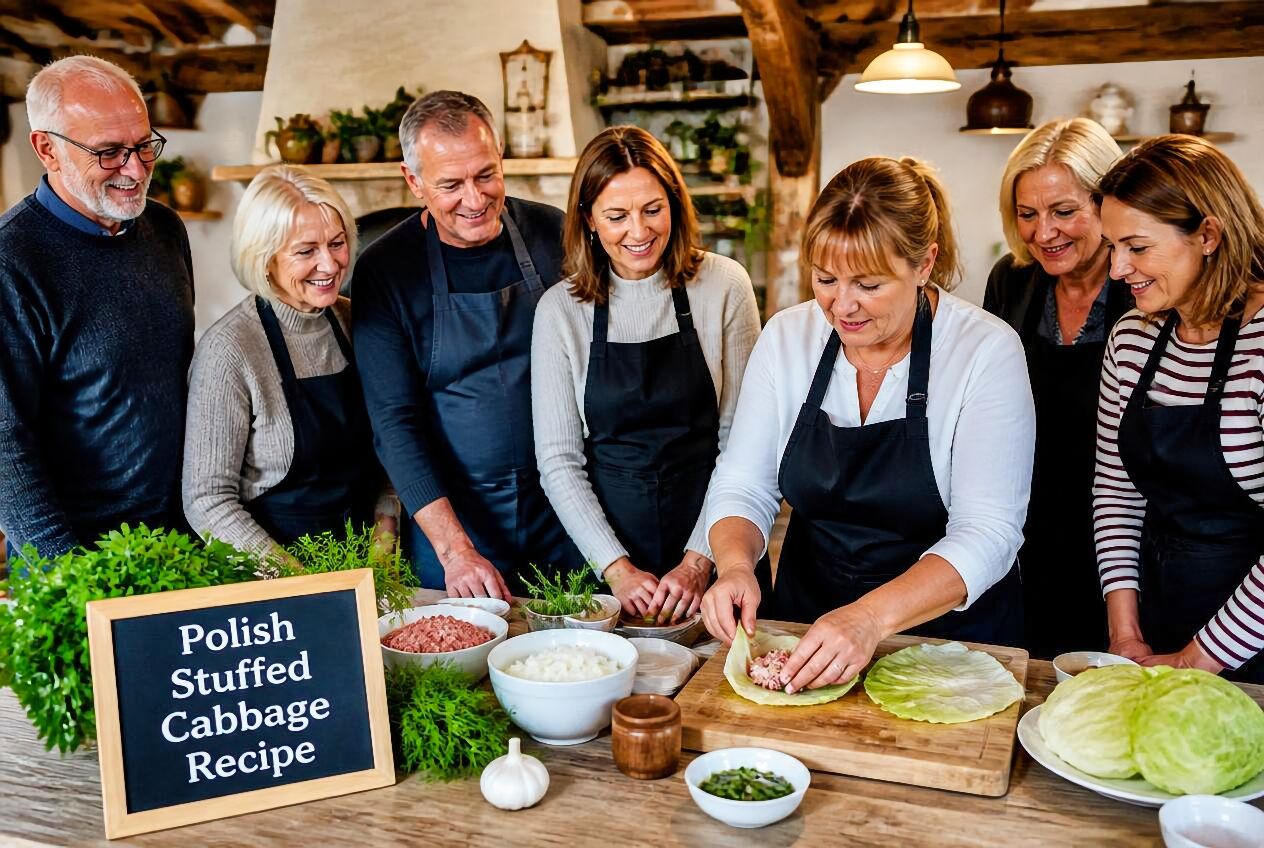
Polish stuffed cabbage recipes, known as Halupki or Gołąbki, brings together tender cabbage leaves wrapped around a savory filling of ground meat and rice, all simmered in tomato sauce. This Polish stuffed cabbage recipe stands as a staple in Polish and Eastern European kitchens, passed down through generations as a hearty family meal. Preparing a Polish stuffed cabbage recipe takes some patience, but the result is a deeply satisfying comfort food perfect for feeding a crowd.
Halupki features cabbage leaves filled with a mixture of ground beef or pork (or both), rice, onions, and seasonings, then baked or simmered in a rich tomato sauce until tender. You can prepare this Polish stuffed cabbage recipe in a slow cooker, oven, or on the stovetop depending on your preference and schedule. Each method delivers delicious results with minimal hands-on time once the rolls are assembled.
This Polish stuffed cabbage recipe walks you through the traditional preparation method, offers tips for making the cabbage leaves pliable, and guides you to a flavorful filling and perfect texture. Whether you want to reconnect with your heritage or simply add a new comfort food to your rotation, this Polish stuffed cabbage recipe delivers wholesome, home-cooked flavors that make the effort worthwhile.
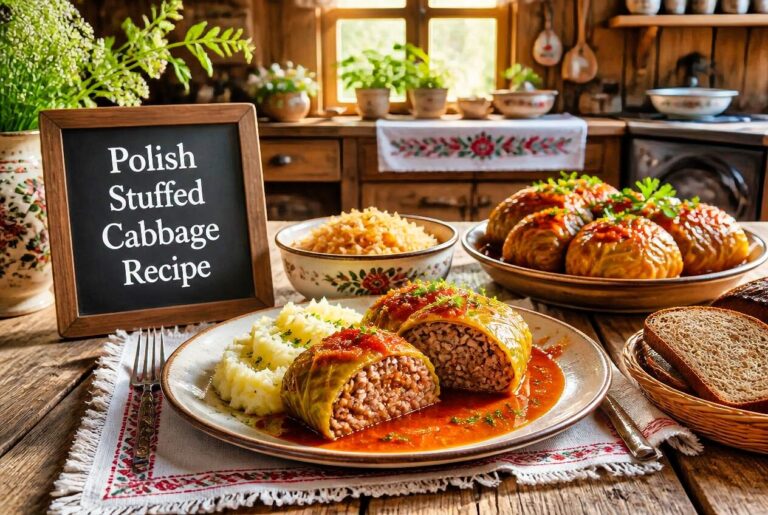
Polish Stuffed Cabbage Recipe
Key Takeaways
- Polish stuffed cabbage recipe features ground meat and rice wrapped in cabbage leaves and cooked in tomato sauce
- This Polish stuffed cabbage recipe adapts easily for crockpot, oven, or stovetop cooking methods
- Make-ahead preparation and variations allow for flexibility in ingredients and timing
Description and Historical Information
Halupki represents one of the most cherished traditional Polish stuffed cabbage recipes passed down through generations. This classic Polish stuffed cabbage recipe brings together tender cabbage leaves wrapped around a savory filling of ground meat, rice, onions, and seasonings, all simmered in a rich tomato sauce.
The dish goes by several names across Eastern Europe. In Poland, people commonly call it Gołąbki or Golumpki, while Slovak and Ukrainian communities refer to it as Halupki. The name Gołąbki literally translates to “little pigeons” in Polish, referencing the rolled shape of the cabbage parcels.
Historical Background:
| Aspect | Details |
|---|---|
| Origin | Eastern European, with variations across Poland, Slovakia, Ukraine, and Hungary |
| Traditional Role | Served at family dinners, holidays, and special gatherings |
| Cultural Significance | Immigrant staple that preserved culinary heritage |
This Polish stuffed cabbage recipe stands as quintessential Polish comfort food that has sustained families for centuries. The recipe emerged from practical necessity, using affordable ingredients like cabbage, rice, and modest amounts of meat to create filling, nutritious meals.
What makes this Polish stuffed cabbage recipe so enduring is its adaptability. Families customize their versions while maintaining core elements, creating unique Polish family recipes that reflect regional and personal preferences. Some cooks use all beef, others combine beef and pork, and vegetarian versions have also emerged over time.
This old-fashioned Polish stuffed cabbage recipe remains a staple in Polish cuisine today, connecting modern cooks to their culinary roots. For additional Polish recipes and culinary traditions, visit Polish Housewife.
Chef’s Tips
I always blanch cabbage leaves in boiling water for 2-3 minutes to make them pliable. This step prevents tearing when rolling and ensures even cooking in your Polish stuffed cabbage recipe.
When preparing the filling for a Polish stuffed cabbage recipe, I avoid overmixing the meat and rice combination. Overworking the mixture creates dense, tough rolls instead of tender ones.
Key techniques I use:
- Remove the thick center vein from each cabbage leaf with a sharp knife
- Use day-old cooked rice rather than freshly made for better texture
- Keep rolled cabbage seam-side down in the baking dish to prevent unraveling
- Cover rolls completely with sauce to prevent drying during baking
Making a Polish stuffed cabbage recipe a day ahead lets the flavors meld together overnight, and reheating actually improves the taste. Store covered in the refrigerator for up to three days.
For freezing, arrange uncooked rolls on a baking sheet until frozen solid, then transfer to freezer bags. They keep for three months and you can bake them directly from frozen with an extra 15-20 minutes of cooking time.
Using a combination of ground pork and beef creates the most flavorful filling for your Polish stuffed cabbage recipe. The pork adds richness while beef provides a hearty base.
Monitor the liquid level during baking. If the sauce reduces too much, add small amounts of water or tomato juice to maintain moisture. The cabbage should be fork-tender but not mushy when done.
Make-Ahead Instructions
Polish stuffed cabbage recipe works perfectly for preparing in advance, making it ideal for busy weeknights or special gatherings. The flavors improve after resting, which makes advance preparation even more worthwhile.
For Partial Preparation:
Assemble the cabbage rolls up to 24 hours before cooking your Polish stuffed cabbage recipe. After rolling them, place them in the baking dish, cover tightly with plastic wrap, and refrigerate. Keep the tomato sauce separate in an airtight container in the refrigerator. When ready to cook, pour the sauce over the rolls and add 15-20 minutes to the baking time since they’ll be cold.
For Full Make-Ahead:
Fully cook the Polish stuffed cabbage recipe and store it in the refrigerator for up to 3 days. Once baked, let them cool completely before covering the dish tightly. To reheat, cover with foil and bake at 350°F for 30-40 minutes until heated through.
Freezing Options:
| Method | Storage Time | Best Practice |
|---|---|---|
| Uncooked rolls | 2-3 months | Freeze without sauce, add sauce when baking |
| Cooked rolls | 2-3 months | Freeze in sauce for best results |
Always freeze your Polish stuffed cabbage recipe in a freezer-safe dish or divide them into portions using airtight containers. When freezing cooked rolls, make sure they’re completely submerged in sauce to prevent freezer burn.
To cook from frozen, thaw overnight in the refrigerator. If short on time, bake them directly from frozen by adding 45-60 minutes to the cooking time and keep the dish covered throughout.
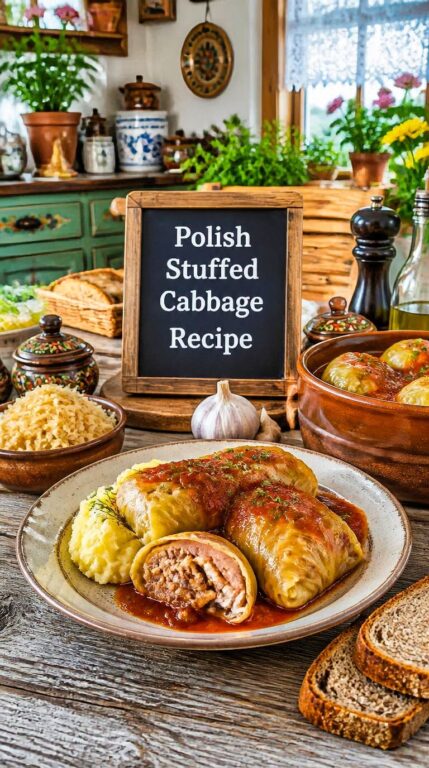
Polish Stuffed Cabbage Recipe
Variations
Polish stuffed cabbage recipe varies significantly across Polish households and regions. The most common variation involves the protein choice—some cooks use all beef, while others prefer a combination of ground beef and pork for added richness and flavor.
Rice alternatives offer another way to customize a Polish stuffed cabbage recipe. Substitute the traditional white rice with brown rice, barley, or even quinoa for a different texture and nutritional profile.
The sauce presents numerous opportunities for personalization. While tomato-based sauces dominate in a Polish stuffed cabbage recipe, you can try:
- Mushroom cream sauce
- Sauerkraut juice with tomato paste
- Plain tomato sauce with sugar for sweetness
- Tomato soup concentrate
Vegetarian versions have become increasingly popular. Replace the meat with mushrooms, lentils, or a combination of grains and vegetables while keeping the traditional cabbage wrapping intact for your Polish stuffed cabbage recipe.
Some cooks add sauerkraut between the layers of cabbage rolls, creating a tangy contrast. Others incorporate different vegetables into the filling, such as finely grated carrots or celery.
Regional differences matter too. Eastern European communities sometimes add raisins or dried fruit to the filling for a sweet-savory profile. The wrapping technique can vary—some prefer large rolls while others make smaller, bite-sized versions.
Cooking methods also differ among families. Prepare your Polish stuffed cabbage recipe in the oven, on the stovetop, or in a slow cooker, each method producing slightly different textures in the cabbage leaves.
Related Recipes
If you enjoyed making a Polish stuffed cabbage recipe, explore other Polish comfort foods that share similar hearty, satisfying qualities.
Pierogi recipes are a natural next step in your Polish cooking journey. These filled dumplings feature tender dough pockets stuffed with potatoes, cheese, sauerkraut, or meat. They complement a Polish stuffed cabbage recipe perfectly at family gatherings.
Kielbasa recipes offer another excellent option for expanding your Polish recipe collection. This flavorful smoked sausage works beautifully in one-pot meals, paired with sauerkraut and potatoes, or sliced into hearty soups. Serve kielbasa alongside cabbage rolls for a complete Polish feast.
Here are additional dishes that pair well with a Polish stuffed cabbage recipe:
- Cabbage soup – Uses similar ingredients in a warming broth format
- Polish sauerkraut (bigos) – A hunter’s stew with cabbage and various meats
- Stuffed peppers – Apply the same meat and rice filling technique to bell peppers
- Polish potato pancakes (placki ziemniaczane) – Crispy side dish that complements the tender cabbage rolls
- Lazy cabbage rolls (golabki leniwe) – A deconstructed version when you want the same flavors with less assembly work
These recipes utilize similar ingredients and cooking methods, making them practical additions to your repertoire. Mastering a Polish stuffed cabbage recipe gives you the foundational skills needed for many other traditional Polish dishes.
Recipe Comparison
Polish stuffed cabbage recipe shares core elements with stuffed cabbage dishes across Eastern Europe and Slavic regions, though each tradition brings distinct flavors and techniques. Modern interpretations have expanded beyond meat-based fillings to accommodate plant-based diets.
Comparison With Classic Eastern European Variations
While a Polish stuffed cabbage recipe uses a straightforward beef and rice filling with tomato sauce, other Eastern European recipes introduce unique characteristics. Ukrainian versions often incorporate both pork and beef, creating a richer filling. The Polish gołąbki typically uses a higher ratio of meat to rice compared to halupki.
Slovak and Czech variations sometimes include sauerkraut in the sauce, adding tanginess. Russian golubtsy often features buckwheat instead of rice and includes more dill in the filling. Hungarian töltött káposzta stands apart by using paprika-heavy seasoning and sour cream in the sauce.
The cooking liquid varies significantly across Slavic recipes. Some authentic Eastern European food traditions use bone broth rather than plain tomato sauce. Others add bay leaves, caraway seeds, or mushrooms to the braising liquid. These regional differences reflect local ingredient availability and family traditions passed through generations.
By mastering a Polish stuffed cabbage recipe, you gain a foundation for exploring the rich variety of Eastern European comfort foods and adapting them to your taste and family traditions. Try different variations and discover your favorite Polish stuffed cabbage recipe for any occasion.
Comparison With Contemporary Vegetarian Versions
I’ve observed that vegetarian halupki replaces ground meat with lentils, mushrooms, or plant-based crumbles while maintaining the traditional rice component. The texture differs slightly, as vegetables release more moisture during cooking than meat does. Many cooks experimenting with a Polish stuffed cabbage recipe find that these substitutions still deliver satisfying results.
Many contemporary versions use quinoa or bulgur instead of white rice for added nutrition. The filling often includes finely chopped walnuts or sunflower seeds to replicate the density of meat. Nutritional yeast frequently appears in vegetarian adaptations to provide umami depth, and these ingredients have become common in the modern Polish stuffed cabbage recipe.
The tomato sauce usually stays the same in plant-based versions. Some cooks add smoked paprika or liquid smoke to compensate for the absence of meat’s savory notes. Vegetarian halupki typically requires less cooking time since the filling components cook faster than raw meat, making this Polish stuffed cabbage recipe ideal for busy weeknights.
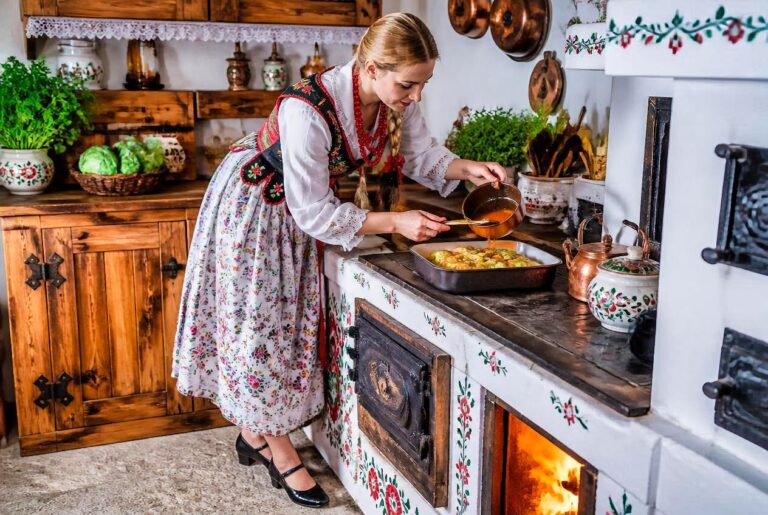
Polish Stuffed Cabbage Recipe Cooking Tips
Polish Stuffed Cabbage Recipe Cooking Tips
• Polish Stuffed Cabbage, known as Gołąbki, is a traditional comfort dish featuring tender cabbage leaves wrapped around a savory filling and slowly cooked until flavorful and tender.
• Large green cabbage heads are commonly used because their leaves can be separated and rolled more easily.
• Blanch or steam the cabbage leaves to soften them and make rolling easier.
• Trim the thick center ribs of the leaves to improve flexibility and ease of assembly.
• Ground pork, beef, or a combination of meats are commonly used in the filling.
• Rice is a traditional ingredient that helps bind the filling and adds texture.
• Finely chopped onions contribute sweetness and depth of flavor.
• Garlic, parsley, marjoram, and black pepper are commonly used seasonings.
• Mix the filling thoroughly to distribute ingredients evenly.
• Avoid overfilling the cabbage leaves, which can make rolling difficult and increase the risk of splitting.
• Roll the cabbage tightly enough to hold its shape while allowing room for the rice to expand during cooking.
• Arrange the rolls seam-side down in the cooking vessel to help maintain their shape.
• Tomato sauce, broth, or a combination of both is often used to provide moisture and flavor.
• Slow cooking allows the cabbage to become tender and the filling to fully develop its flavor.
• Baste occasionally if needed to keep the rolls moist during cooking.
• Fresh parsley or dill provides a traditional garnish and fresh flavor contrast.
• The flavor should balance tender cabbage, savory meat, aromatic seasonings, rice, and rich cooking sauce.
• Serve hot with mashed potatoes, rye bread, or sour cream if desired.
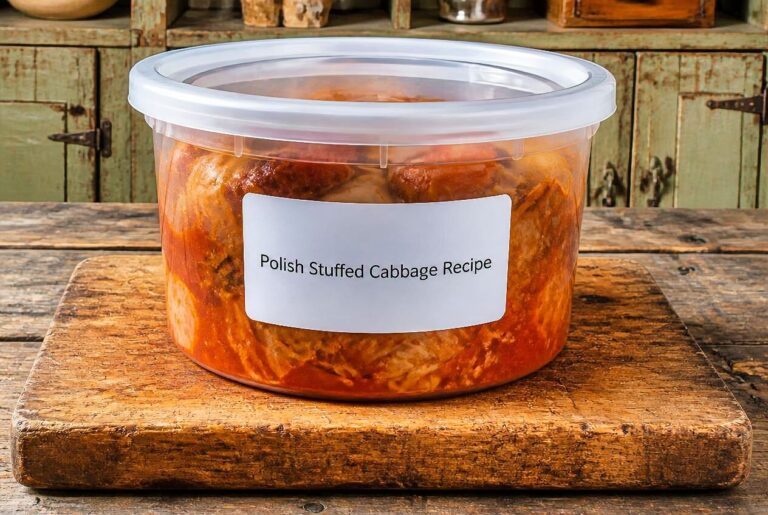
Polish Stuffed Cabbage Recipe Storage Tips
Polish Stuffed Cabbage Recipe Storage Tips
• Allow the stuffed cabbage rolls to cool before transferring them into storage containers.
• Store refrigerated in airtight containers to preserve freshness and moisture.
• Keep the rolls covered with some of their cooking sauce to help prevent drying out.
• Refrigeration often improves flavor as the cabbage, filling, and sauce continue to meld together.
• Reheat gently on the stovetop, in the oven, or in the microwave until thoroughly heated.
• Add a small amount of broth or sauce if the rolls appear dry during reheating.
• Cover while reheating to help retain moisture.
• Meat, rice, and herb flavors often become more pronounced after overnight refrigeration.
• Individual portions can be stored for convenient reheating.
• Freeze portions or full batches in airtight freezer-safe containers if desired.
• Wrap tightly to help prevent freezer burn and preserve quality.
• Defrost frozen rolls gradually in the refrigerator before reheating.
• Use clean utensils when serving leftovers to help maintain freshness.
• Keep away from strongly scented foods because cabbage dishes readily absorb surrounding odors.
• Label storage containers with the preparation date for easier inventory management.
• Avoid repeated freezing and reheating cycles, which can negatively affect texture and consistency.
• Check for signs of spoilage such as sour odors, slime, mold, unusual discoloration, or texture changes before consuming leftovers.
• For best quality, enjoy refrigerated and frozen portions while the cabbage remains tender and the filling retains its flavor.
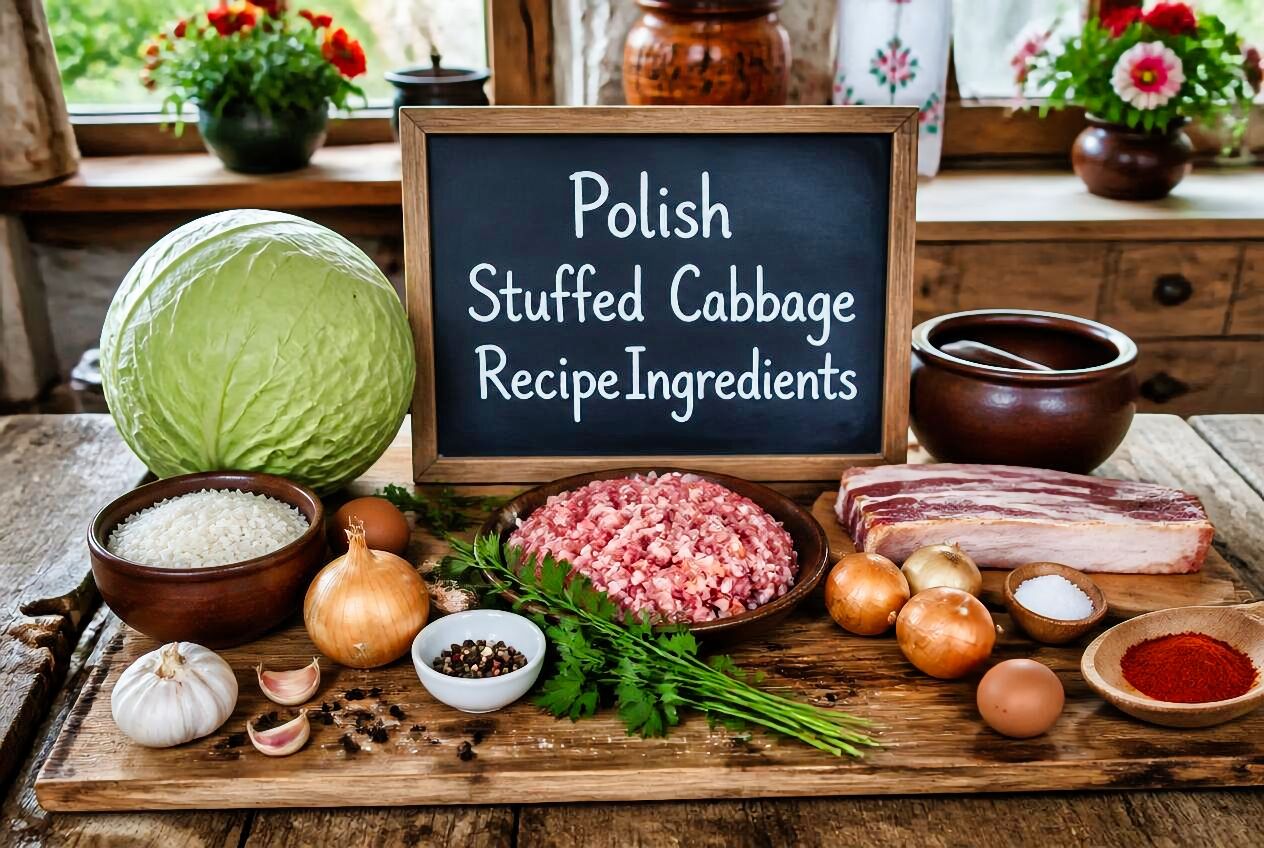
Polish Stuffed Cabbage Recipe
Ingredients
- 1½ lbs pork
- ½ cup dry rice
- 1 onion large yellow or sweet onion chopped
- 1 clove garlic minced
- 2 tbsp butter
- 1½ tsp salt
- ½ tsp black pepper
- ½ tsp marjoram optional
- 4 cups chicken broth Better than Bouillon – 1 tablespoon per 2 cups of hot water
- 4 tbsp tomato paste
- 4 tbsp all-purpose flour
Instructions
- Begin by preheating your oven to 375°F (190°C).
- Place the rice in a small saucepan and add 1 cup of water along with a pinch of salt. Bring the water to a boil over medium-high heat.
- Once boiling, reduce the heat to low, cover the pot, and simmer for approximately 15 minutes, or until the rice is tender and all of the liquid has been absorbed.
- Remove the rice from the heat and set it aside to cool completely. Cooling the rice before mixing it with the meat helps maintain the proper texture of the filling.
- Using a paring knife, carefully cut around and remove the core from the cabbage.
- Bring a large pot of water to a boil. The pot should be large enough to hold the entire cabbage head.
- Carefully lower the cabbage into the boiling water and cook for 15 to 20 minutes. If the cabbage is not fully submerged, turn it over halfway through the cooking time.
- The goal is to soften the leaves enough that they can be removed and rolled without tearing.
- Using two large forks or tongs, carefully lift the cabbage from the hot water and transfer it to a tray or large bowl to cool.
- Once cool enough to handle, gently separate the leaves one at a time. Reserve the large outer leaves, as they will be used to line the baking dish.
- Using a small knife, trim away the thick, tough portion of the center rib from each leaf. This makes rolling the cabbage much easier and helps create evenly shaped rolls.
- While the cabbage cools, melt 2 tablespoons of butter in a skillet over medium heat.
- Add the chopped onions and sauté for approximately 5 minutes, stirring occasionally, until they become soft and lightly golden.
- Add the minced garlic and cook for an additional 1 minute, just until fragrant.
- Remove the skillet from the heat and allow the onion mixture to cool.
- In a large mixing bowl, combine the ground meat, cooled rice, and the onion-garlic mixture.
- Season with salt, black pepper, and marjoram. Mix everything together thoroughly until the filling is evenly combined.
- The mixture should be moist, flavorful, and easy to shape.
- Line the bottom of a 9 x 13-inch baking dish with the reserved outer cabbage leaves. This helps prevent the rolls from sticking and protects them during baking.
- Lay a prepared cabbage leaf flat on your work surface.
- Place approximately 2 to 4 tablespoons of filling in the center of the leaf, depending on its size.
- Fold the sides of the leaf inward over the filling, then roll the leaf up tightly from the bottom, much like rolling a burrito or wrap.
- Place each finished cabbage roll seam-side down in the prepared baking dish.
- Continue until all of the filling has been used and the baking dish is filled with neatly arranged rolls.
- Pour the chicken broth into a saucepan and bring it to a gentle simmer.
- Place the tomato paste in a measuring cup or bowl and add a small amount of the hot broth. Stir until the tomato paste is completely dissolved and smooth.
- Pour the tomato mixture back into the saucepan and bring it back to a gentle boil.
- In a separate cup, whisk the flour together with ½ cup cold water until completely smooth and free of lumps.
- Slowly whisk this flour mixture into the simmering broth.
- Cook the sauce for approximately 5 minutes, stirring frequently, until it thickens slightly.
- Taste the sauce and adjust the seasoning with salt and pepper if necessary.
- Pour the prepared tomato sauce evenly over the cabbage rolls, making sure all of the rolls are coated.
- Cover the baking dish tightly with aluminum foil.
- Place the dish in the preheated oven and bake for approximately 90 minutes.
- During this long, gentle baking time, the cabbage becomes meltingly tender while the flavors of the filling and sauce blend together beautifully.
- Remove the cabbage rolls from the oven and allow them to rest for 10 to 15 minutes before serving.
- This brief resting period helps the rolls hold their shape and allows the sauce to settle.
- Carefully transfer the cabbage rolls to serving plates and spoon some of the tomato sauce over the top.
- These baked cabbage rolls are a classic comfort food found throughout Poland and Eastern Europe. Tender cabbage leaves wrapped around a savory filling of meat, rice, onions, and herbs are slowly baked in a rich tomato sauce until everything becomes wonderfully flavorful and satisfying.
- Serve with a fresh salad, crusty bread, or boiled potatoes for a complete meal. The leftovers are often even better the next day, making this dish a favorite for family gatherings and special occasions alike.
Polish Stuffed Cabbage Recipe Frequently Asked Questions
Preparing a Polish stuffed cabbage recipe involves specific techniques for handling cabbage, selecting ingredients, and managing cooking times to achieve authentic results. Understanding these details helps ensure your stuffed cabbage rolls turn out tender, flavorful, and intact. Mastering these steps is essential for any Polish stuffed cabbage recipe enthusiast.
What is the best way to soften cabbage leaves for rolling without tearing them?
Boil the entire head of cabbage to soften the leaves properly. Remove the core first, then place the cabbage in a large pot of boiling water for 2-3 minutes until the outer leaves become pliable. This method helps you achieve perfect leaves for your Polish stuffed cabbage recipe.
As leaves soften, peel them away with tongs and set them aside to cool. If inner leaves remain stiff, return the cabbage to the boiling water for another minute or two. Consistent results matter when preparing a Polish stuffed cabbage recipe.
Another effective method is freezing the whole cabbage head overnight, then thawing it completely. This breaks down the cell structure and makes the leaves naturally flexible without boiling. Both techniques work well for any Polish stuffed cabbage recipe.
Which meat blend produces the most traditional flavor and texture in stuffed cabbage rolls?
Use a combination of ground pork and ground beef in equal parts to create the most authentic taste in your Polish stuffed cabbage recipe. The pork adds moisture and richness, while the beef contributes a deeper, savory flavor. This blend is a classic choice for a traditional Polish stuffed cabbage recipe.
Some traditional recipes use all ground pork, which produces a slightly sweeter, more delicate filling. Ground beef alone works but can result in a drier texture unless you add extra fat or liquid to the mixture. Always choose meats with 15-20% fat content to keep the filling moist during the long cooking process for your Polish stuffed cabbage recipe.
How do you prevent stuffed cabbage rolls from falling apart during cooking?
Place the cabbage rolls seam-side down in the cooking vessel to prevent them from unraveling as they simmer or bake. Pack the rolls snugly against each other in the pot or baking dish for extra support. Layer any torn or extra cabbage leaves on the bottom and between layers to cushion the rolls, which is especially helpful in a Polish stuffed cabbage recipe.
Roll the cabbage leaves tightly but not too tightly. The filling expands slightly as the rice cooks, so leaving a small amount of room prevents the leaves from splitting. This attention to detail ensures your Polish stuffed cabbage recipe delivers perfect rolls every time.
What is the best tomato-based sauce option when using canned tomato soup versus homemade sauce?
Canned tomato soup creates a sweeter, creamier sauce that many consider traditional for a Polish stuffed cabbage recipe. Dilute it with water or broth to achieve the right consistency and add seasonings like salt, pepper, and sometimes a touch of sugar. This option offers a nostalgic flavor for your Polish stuffed cabbage recipe.
Homemade sauce made from crushed tomatoes, tomato sauce, or tomato puree offers more control over flavor and acidity. Combine crushed tomatoes with sautéed onions, garlic, and a pinch of sugar to balance the acidity. Both options work well, so choose based on your preferred taste for your Polish stuffed cabbage recipe. For more sauce ideas, you can visit Polish Your Kitchen.
How long should cabbage rolls be baked or simmered to ensure the filling is fully cooked?
Bake halupki covered at 350°F for approximately 90 minutes to 2 hours. The rice needs adequate time to cook through completely, and the cabbage should become very tender. This cooking time is standard for a Polish stuffed cabbage recipe.
When simmering on the stovetop, maintain a gentle simmer for at least 1.5 to 2 hours. Check periodically to ensure there’s enough liquid and add more if needed to prevent sticking. Using a slow cooker requires 6-8 hours on low or 3-4 hours on high, making it convenient for a Polish stuffed cabbage recipe. Ensure the internal temperature of the meat filling reaches 165°F for food safety in your Polish stuffed cabbage recipe.
Can cabbage rolls be made ahead, frozen, and reheated without losing quality?
I frequently freeze halupki either before or after cooking with excellent results. For uncooked rolls, I arrange them on a baking sheet, freeze them until solid, and then transfer them to freezer bags for up to 3 months. When preparing a Polish stuffed cabbage recipe, this method helps preserve both texture and flavor.
Cooked cabbage rolls also freeze well. I cool them completely, portion them with sauce into airtight containers, and freeze them for up to 3 months. Using a Polish stuffed cabbage recipe ensures authentic taste even after freezing, making it easy to enjoy homemade meals anytime.
I thaw frozen rolls in the refrigerator overnight, then bake them covered at 350°F for 45-60 minutes until they heat through. Adding extra tomato sauce or broth keeps the Polish stuffed cabbage recipe moist during reheating. You can find more tips for freezing and reheating cabbage rolls at Polish Housewife.
Using a Polish stuffed cabbage recipe allows you to prepare large batches in advance. The Polish stuffed cabbage recipe adapts well to freezing, so you can always have a comforting meal ready. Many families rely on a Polish stuffed cabbage recipe for holidays and gatherings because of its convenience and flavor.
When you follow a Polish stuffed cabbage recipe, you can experiment with different fillings and sauces. The Polish stuffed cabbage recipe remains delicious whether you freeze it before or after cooking. Try using a traditional Polish stuffed cabbage recipe to bring authentic flavors to your table.
With the right Polish stuffed cabbage recipe, you can easily plan meals ahead. The Polish stuffed cabbage recipe is perfect for busy weeknights, special occasions, or sharing with friends and family. Enjoy the satisfaction of a classic dish by using your favorite Polish stuffed cabbage recipe.

Recipes are gathered in person and written for real-world cooking conditions.
- 10 Hungarian Dessert Recipes Passed Down Through Generations - July 25, 2026
- 11 Easy English Recipes Anyone Can Make - July 25, 2026
- Hungarian Kifli Recipe - July 25, 2026