
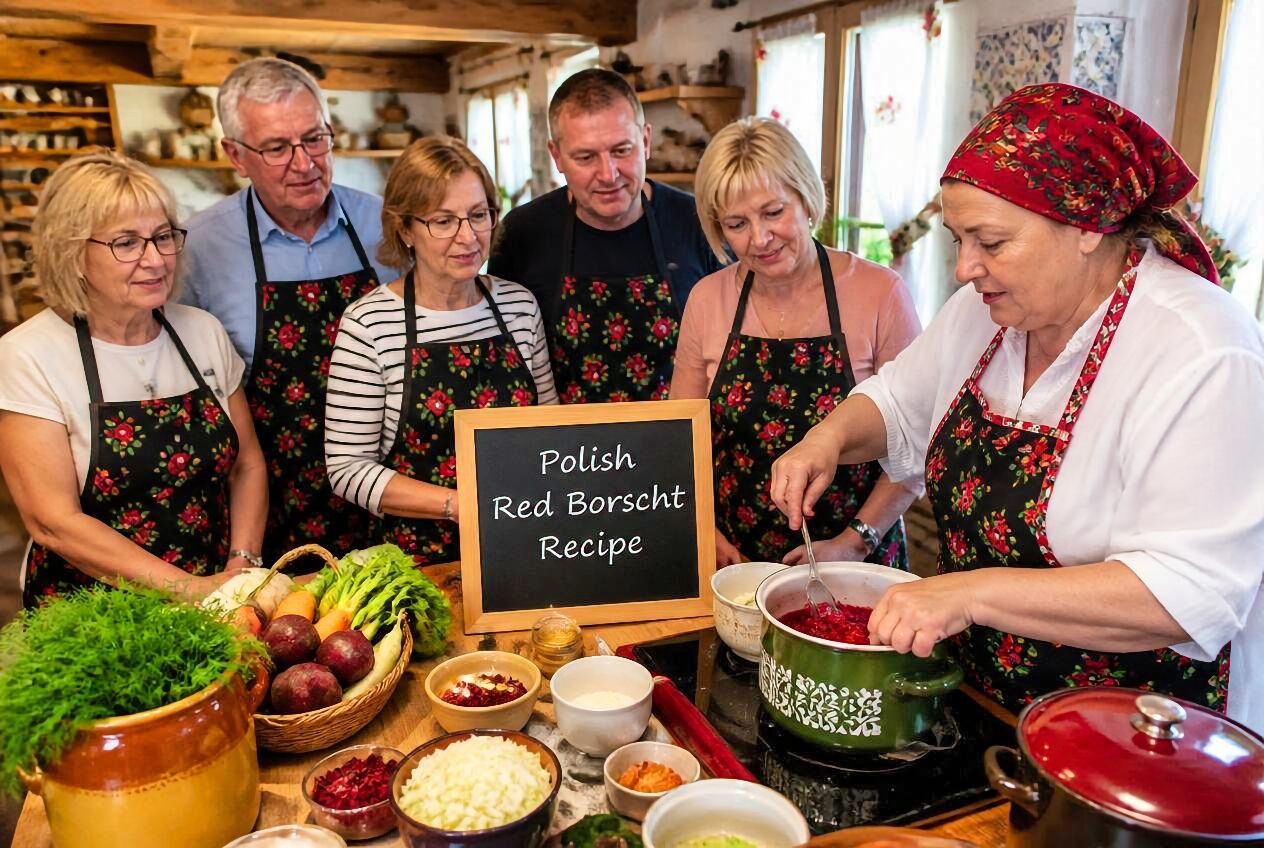
Polish red borscht recipe, known as barszcz czerwony, is a clear beetroot soup that holds a special place in Polish cuisine, particularly during Christmas Eve celebrations. This vibrant ruby-red soup combines beets, vegetables, and aromatics to create a tangy, earthy broth that’s traditionally served with small mushroom dumplings called uszka. I’ve made the Polish red borscht recipe countless times, and it always brings warmth and comfort to the table.
What sets the Polish red borscht recipe apart from other beet soups is its clarity and bright color. Unlike the thick, hearty Ukrainian version, this Polish classic is a refined, clear broth that showcases the pure flavor of beets. The soup gets its distinctive tang from fermented beets or a combination of lemon juice and proper seasoning, creating a balanced taste that’s both refreshing and satisfying.
I’m sharing my approach to the Polish red borscht recipe, which respects tradition while remaining accessible for home cooks. Whether you’re preparing it for a holiday gathering or simply want to explore authentic Polish comfort food, this Polish red borscht recipe will guide you through creating a soup that’s as beautiful as it is delicious.
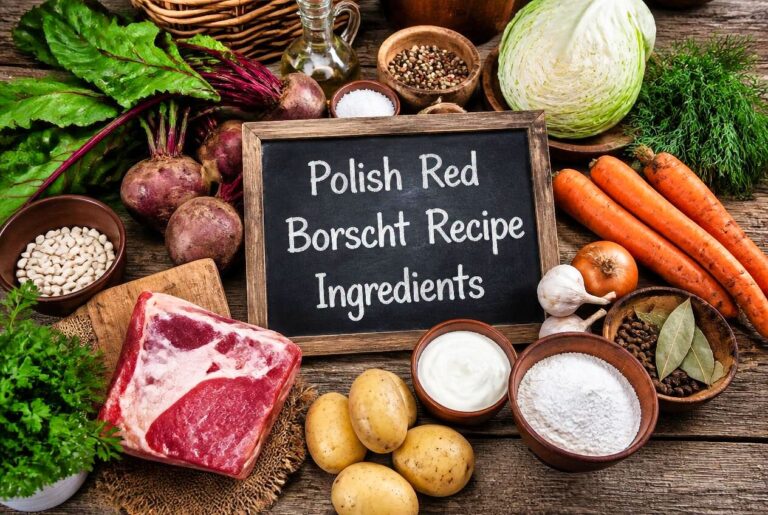
Polish Red Borscht Recipe Ingredients
Key Takeaways
- Barszcz czerwony is a clear, tangy beetroot soup that’s traditionally served on Polish Christmas Eve
- The Polish red borscht recipe requires both raw and cooked beets to achieve the authentic flavor and vibrant red color
- This versatile soup can be made ahead and pairs perfectly with mushroom dumplings or served on its own
Description and Historical Information
Barszcz czerwony is a clear, ruby-colored beetroot soup that stands as one of the most iconic traditional Polish recipes. The Polish red borscht recipe delivers its distinctive tangy flavor from fermented beets or a combination of cooked and raw beets balanced with lemon juice. Unlike the hearty Ukrainian borscht many people know, the Polish red borscht recipe is traditionally served as a light, strained broth.
The soup holds deep cultural significance in authentic Polish food traditions. It’s most commonly prepared for Wigilia, the Christmas Eve dinner, where it appears as part of the twelve-dish feast. Many Polish family recipes pass down specific methods for achieving the perfect balance of earthiness and acidity in the Polish red borscht recipe.
Key Characteristics:
- Clear, strained broth (not chunky)
- Vibrant red color from beets
- Tangy, slightly sour taste
- Often served with uszka (small mushroom dumplings)
The history of the Polish red borscht recipe traces back centuries in rustic Polish cooking. Traditional foods from Poland often reflect both religious observance and seasonal ingredients, and barszcz czerwony exemplifies both. The clear version specifically developed as a fasting-appropriate meal for Catholic holidays.
Old-fashioned Polish red borscht recipes often begin with a fermented beet starter called zakwas, which requires several days of preparation. Modern versions sometimes simplify this process while maintaining the authentic taste that defines the Polish red borscht recipe.
The Polish red borscht recipe appears not only at Christmas but also during Easter celebrations and other significant family gatherings. This versatility has cemented its place among foods from Poland that continue to be prepared by new generations.
Chef’s Tips
I always prepare my beet broth a day ahead when making the Polish red borscht recipe. This allows the flavors to develop fully and gives me time to adjust the balance between sweet and sour notes before serving.
Key Preparation Techniques:
- Use a mix of raw and cooked beets to achieve the proper depth of flavor
- Strain the soup through cheesecloth for that traditional crystal-clear appearance
- Add lemon juice gradually, tasting as you go to prevent over-souring
Grating rather than chopping the beets releases more color and flavor into the broth for the Polish red borscht recipe. For homemade Polish red borscht recipes like this one, the quality of your vegetables matters significantly, so I source the freshest beets I can find.
When balancing flavors in the Polish red borscht recipe, I taste the soup multiple times during cooking. The goal is a harmonious blend where neither the sweetness nor the tanginess dominates. If the soup tastes too earthy, I add a small amount of sugar. If it’s too sweet, more lemon juice corrects it.
Storage and Serving Notes:
- The Polish red borscht recipe keeps well in the refrigerator for up to 5 days
- Reheat gently to preserve the bright color
- Serve piping hot with uszka or alone in cups
For easy Polish red borscht recipes, mise en place is essential. I chop all vegetables before starting and keep my broth ingredients measured out. This makes the cooking process smoother and helps me focus on achieving the right consistency and taste that makes the Polish red borscht recipe authentic and memorable.
Make-Ahead Instructions
I find that the Polish red borscht recipe is an excellent soup for advance preparation, as the flavors actually improve after resting in the refrigerator. The Polish red borscht recipe can be made up to 3 days ahead of serving time.
After preparing the Polish red borscht recipe, I let it cool completely at room temperature before transferring it to an airtight container. I store it in the refrigerator, where it will maintain its quality and flavor. When I’m ready to serve, I simply reheat the soup gently on the stovetop over medium heat, stirring occasionally.
For longer storage, I freeze the Polish red borscht recipe in portions for up to 3 months. I use freezer-safe containers or heavy-duty freezer bags, leaving about an inch of headspace to allow for expansion. I label each container with the date to track freshness.
To thaw frozen Polish red borscht recipe, I transfer it to the refrigerator 24 hours before serving. Alternatively, I reheat it directly from frozen on the stovetop over low heat, stirring frequently to prevent scorching. If I plan to serve the borscht with uszka dumplings, I prepare and freeze them separately. I keep uncooked dumplings on a parchment-lined tray in the freezer until solid, then transfer them to a freezer bag. I cook them directly from frozen when ready to serve.
Important note: I always adjust the seasoning after reheating, as flavors can mellow during storage. I taste and add salt, lemon juice, or sugar as needed to restore the proper balance in the Polish red borscht recipe.
Variations
While I appreciate the classic clear Polish red borscht recipe, there are several regional and personal variations worth exploring. Some cooks add white beans or potatoes to make the soup more substantial, transforming it from a clear broth into a heartier meal.
The Ukrainian version tends to be thicker and often includes cabbage, while the Polish red borscht recipe maintains its characteristic clarity. Some families in eastern Poland add a touch of horseradish for extra tang.
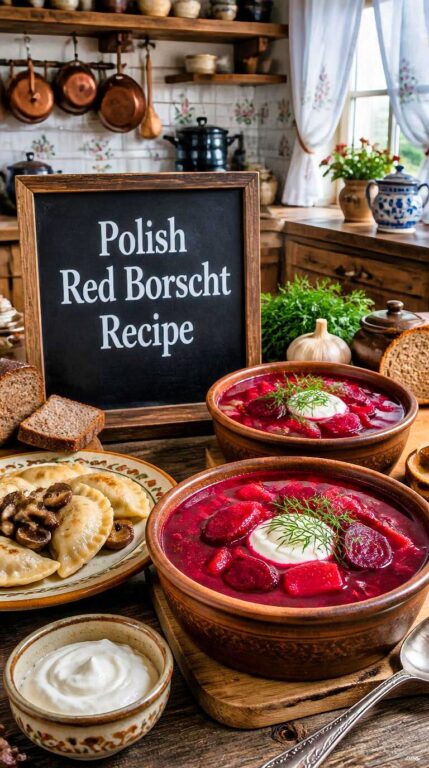
For Christmas Eve, I typically serve the Polish red borscht recipe completely clear with mushroom dumplings called uszka. During other times of the year, I sometimes prepare the Polish red borscht recipe with meat stock instead of vegetable broth for deeper flavor.
Common variations include:
- Adding sour cream or kefir for a creamy pink version
- Including hard-boiled eggs as a garnish
- Using different souring agents like kvass, vinegar, or fermented beet juice
- Incorporating marjoram or allspice for varied spice profiles
- Serving hot or chilled depending on the season
I’ve experimented with both fermented and quick versions of the Polish red borscht recipe. The fermented method uses naturally soured beet juice and requires several days of preparation, while the quick version relies on lemon juice or vinegar for acidity and can be ready the same day.
Some modern adaptations of the Polish red borscht recipe include roasting the beets beforehand for a deeper, caramelized flavor. I occasionally add parsnips or celery root to enhance the vegetable base, though purists might prefer keeping the ingredient list minimal.
Related Recipes
If you enjoyed making this traditional Polish red borscht recipe, I recommend exploring other Polish soups that bring the same comforting warmth to your table. Żurek, a sour rye soup with kielbasa and hard-boiled eggs, offers another taste of Polish comfort food recipes. White borscht provides a creamy alternative to the red version, perfect for Polish Easter recipes.
Pierogi recipes are essential companions to the Polish red borscht recipe. I suggest trying classic potato and cheese pierogi, sauerkraut and mushroom pierogi (especially for Polish holiday recipes), or sweet cheese pierogi for Polish desserts. These dumplings work beautifully as Polish appetizers or Polish side dishes.
For hearty Polish recipes that complete your meal, consider these options:
- Bigos (Hunter’s Stew) – Polish cabbage recipes featuring sauerkraut, fresh cabbage, and various meats
- Kotlet Schabowy – Breaded pork cutlet, ideal for Polish family dinners
- Gołąbki – Stuffed cabbage rolls combining Polish cabbage recipes with Polish potato recipes
- Kielbasa recipes – Grilled or pan-fried Polish sausage recipes served with mustard and rye bread
Polish potato recipes like kopytka (potato dumplings) or placki ziemniaczane (potato pancakes) make excellent Polish side dishes. For easy Polish dinner recipes, I recommend kielbasa with sauerkraut or Polish meatballs in mushroom sauce. For more Polish red borscht recipe inspiration, visit Polish Your Kitchen.
During the holidays, expand your Polish Christmas recipes beyond the Polish red borscht recipe with kutia (wheat berry pudding) or makowiec (poppy seed roll). These Polish meal ideas showcase the rich culinary traditions that make the Polish red borscht recipe and other Polish dishes for family dinners so memorable.
Recipe Comparison
The Polish red borscht recipe differs significantly from other Eastern European versions of this beloved soup. While Ukrainian borscht is hearty and thick with cabbage, potatoes, and meat, the Polish red borscht recipe for Christmas remains clear and light.
The traditional Polish red borscht recipe uses fermented beet juice or zakwas, which creates a distinct tangy flavor. Many Slavic recipes incorporate sour cream directly into the soup, but I serve my barszcz czerwony clear, offering sour cream on the side or pairing it with uszka dumplings.
Key differences in authentic Eastern European food traditions:
| Polish Barszcz | Ukrainian Borscht | Russian Borscht |
|---|---|---|
| Clear broth | Thick consistency | Moderately thick |
| Beets, mushrooms | Beets, cabbage, potatoes | Beets, cabbage, meat |
| Fermented base | Fresh vegetables | Meat stock base |
| Served at Wigilia | Everyday dish | Everyday dish |
The Polish red borscht recipe emphasizes the pure beet flavor without competing ingredients. The soup balances sweet and sour notes through fermentation rather than adding vinegar, which some simplified recipes suggest.
Eastern European recipes for borscht also vary in serving temperature. I serve my Christmas Polish red borscht recipe hot, though cold versions exist for summer. The Lithuanian and Belarusian variations fall somewhere between the Polish and Ukrainian styles, incorporating elements from both traditions.
The Polish red borscht recipe stands out among Slavic recipes for its ceremonial role during Christmas Eve and the meticulous process of achieving that crystal-clear ruby broth.
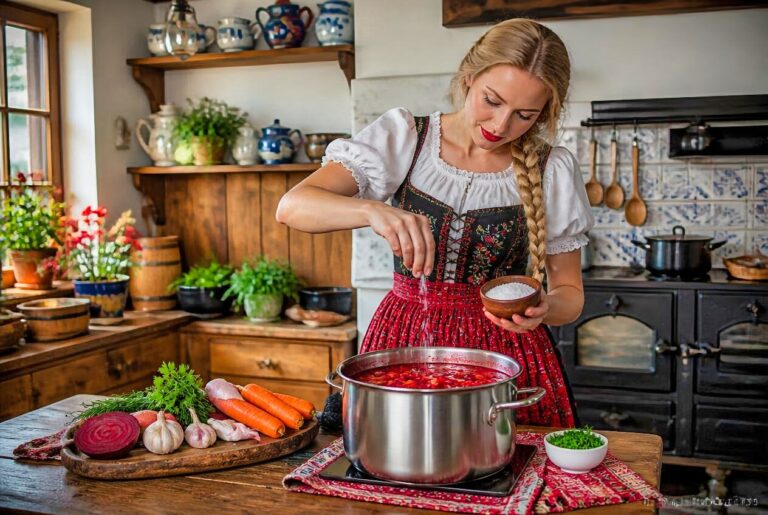
Polish Red Borscht Recipe Cooking Tips
Polish Red Borscht Recipe Cooking Tips
• Polish Red Borscht, known as Barszcz Czerwony, is a traditional soup celebrated for its vibrant ruby color, earthy beet flavor, and delicate balance of sweetness and acidity.
• Fresh beets are the signature ingredient and provide the soup’s characteristic color and flavor.
• Choose firm, deeply colored beets with smooth skin for the best results.
• Peel and slice the beets evenly to encourage consistent flavor extraction.
• Vegetable broth is traditionally used for Christmas Eve versions, although meat-based broths may be used in other preparations.
• Carrots, celery root, parsley root, onions, and garlic help create a flavorful aromatic base.
• Simmer the vegetables gently to develop a clear, well-balanced broth.
• A small amount of beet fermentation liquid, vinegar, or lemon juice is often added to provide the soup’s characteristic tanginess.
• Acidic ingredients also help preserve the soup’s vibrant red color.
• Bay leaves, allspice, black pepper, marjoram, and parsley are commonly used seasonings.
• Avoid prolonged vigorous boiling after adding the beets, which can dull the color and alter the flavor.
• Strain the soup if a clear traditional presentation is desired.
• Taste and adjust the balance of sweetness, acidity, and seasoning near the end of cooking.
• Mushrooms may be added in some regional variations for additional depth.
• Uszka (small mushroom-filled dumplings) are a traditional accompaniment during holiday meals.
• Fresh parsley or dill provides a bright finishing touch.
• The flavor should balance earthy beets, savory broth, mild sweetness, aromatic spices, and gentle acidity.
• Serve hot for the most traditional presentation and flavor experience.
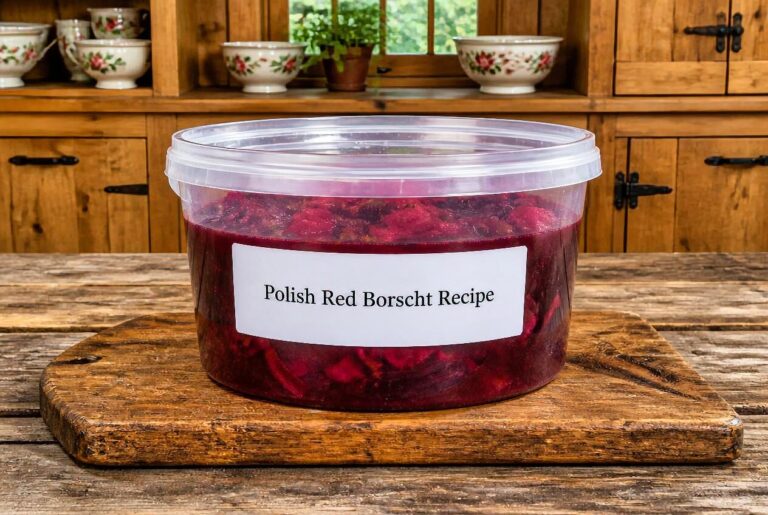
Polish Red Borscht Recipe Storage Tips
Polish Red Borscht Recipe Storage Tips
• Allow the soup to cool before transferring it into storage containers.
• Store refrigerated in airtight containers to preserve freshness and color.
• Refrigeration often improves flavor as the beet and spice notes continue to blend together.
• Reheat gently on the stovetop or in the microwave until thoroughly heated.
• Avoid vigorous boiling during reheating to help preserve the soup’s color and flavor.
• Stir occasionally while reheating to distribute heat evenly.
• Add a small amount of broth or water if the soup becomes too concentrated during storage.
• Store dumplings, noodles, or other accompaniments separately when possible.
• Beet flavors often become more pronounced after overnight refrigeration.
• Individual portions can be stored for convenient reheating.
• Freeze portions in airtight freezer-safe containers if desired.
• Wrap tightly to help prevent freezer burn and preserve quality.
• Defrost frozen portions gradually in the refrigerator before reheating.
• Use clean utensils when serving leftovers to help maintain freshness.
• Keep away from strongly scented foods because soups can absorb surrounding odors.
• Label storage containers with the preparation date for easier inventory management.
• Check for signs of spoilage such as sour odors beyond the intended acidity, mold, unusual discoloration, or texture changes before consuming leftovers.
• For best quality, enjoy refrigerated and frozen portions while the soup retains its bright color and balanced flavor.
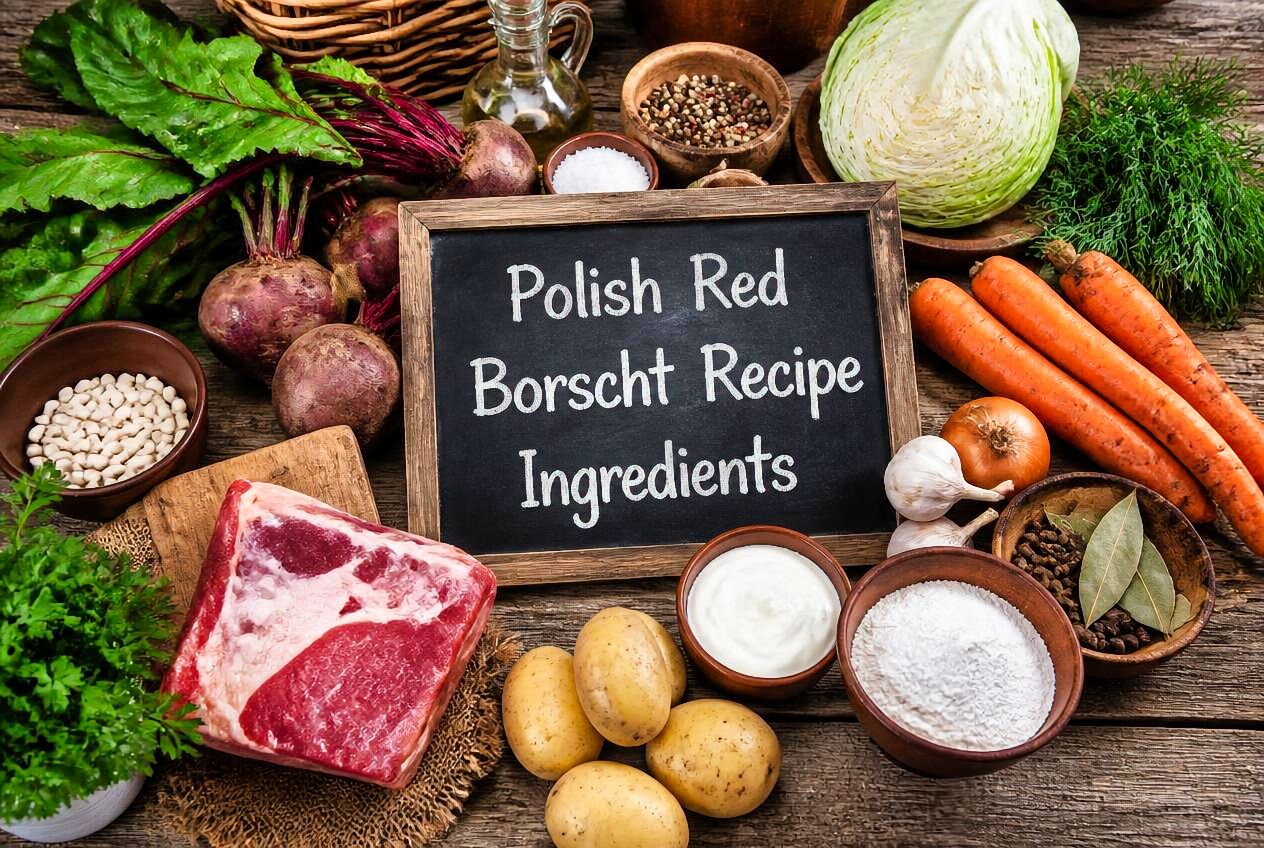
Polish Red Borscht Recipe
Ingredients
- 4 Carrots medium size
- 1 Parsnip medium size
- 1/2 Celery root If it's big then 1/4 will be enough
- 1 Leek
- 4 sprig Parsley
- 1 cup Mushrooms Dried Porcini
- 2 Bay leaves
- 4 whole Allspice
- 6 Beets medium size
- 1 Apple sliced with the skin
- 3 cloves Garlic peeled
- 2 tbsp White Vinegar peeled
- 1 tbsp Lemon Juice freshly squeezed
- 2 teaspoon Sugar + more if needed
- 2 tbsp Salt + more if needed
- 1/4 teaspoon Marjoram dry
- pepper Freshly ground to taste
Instructions
- Begin by placing the dried mushrooms in a heatproof bowl.
- Pour enough boiling water over them to cover completely and allow them to soak for approximately 5 minutes. This brief soaking softens the mushrooms and helps release their earthy flavor, which will enrich the broth.
- Once softened, set the mushrooms aside while preparing the vegetables.
- Peel and wash the carrots, parsnips, celery root, and any other root vegetables being used. Clean the leek thoroughly to remove any trapped dirt.
- Cut all of the vegetables into large chunks. Since they will eventually be strained out of the soup, precise cutting is unnecessary.
- Having the vegetables cut into larger pieces makes them easier to remove later while still allowing them to impart plenty of flavor to the broth.
- Place the prepared vegetables and the soaked mushrooms into a large stockpot.
- Pour in 10 cups of water, then add the salt, bay leaves, and allspice berries.
- Bring the mixture to a boil over medium-high heat. Once boiling, reduce the heat slightly and allow the broth to cook uncovered for about 30 minutes.
- During this time, the vegetables and mushrooms will create a flavorful aromatic stock that forms the foundation of the borscht.
- While the broth is simmering, prepare the beets.
- Peel the beets and cut them into slices approximately ½ inch thick.
- Peel the garlic cloves and slice them thinly. Peel the apple and cut it into slices or chunks.
- The apple adds a subtle natural sweetness that balances the earthy flavor of the beets and the acidity added later.
- After the broth has simmered for 30 minutes, add the sliced beets, garlic, and apple to the pot.
- Stir in the marjoram, sugar, and any additional salt called for in the recipe.
- To help preserve the brilliant ruby-red color of the beets, add 1 tablespoon of vinegar and 1 tablespoon of lemon juice at this stage.
- Allow the soup to continue cooking uncovered for another 30 minutes, giving the beets plenty of time to release their color and flavor into the broth.
- As it cooks, the broth will gradually develop its characteristic deep crimson hue.
- Once the beets are tender and the broth is richly colored, add the remaining vinegar.
- Taste the borscht carefully and adjust the balance of flavors as needed.
- Depending on the sweetness of the beets and apple, you may wish to add a little more vinegar for brightness, additional sugar for balance, or extra salt and pepper to enhance the overall flavor.
- A well-made clear borscht should have a harmonious balance of sweet, earthy, and pleasantly tangy notes.
- Remove the pot from the heat.
- Using a fine-mesh strainer, carefully strain the soup into a clean pot, bowl, or serving vessel.
- Discard the vegetables, mushrooms, and seasonings, as they have already contributed their flavor to the broth.
- For an especially clear and elegant presentation, strain the soup a second time through a very fine sieve or cheesecloth.
- Serve the borscht piping hot in mugs or bowls.
- Traditionally, clear Polish Christmas Eve borscht is often served alongside mushroom-filled pierogi, which complement the bright, tangy broth beautifully. It may also be enjoyed on its own as a warming drink served in cups or mugs.
- The finished soup should be brilliantly red, crystal clear, and full of complex flavor from the vegetables, mushrooms, beets, and aromatic spices.
- This classic Polish clear beet soup, known as barszcz czerwony, is a beloved holiday tradition and one of the most elegant examples of how simple ingredients can create a deeply flavorful and beautiful dish.
Polish Red Borscht Recipe Frequently Asked Questions
Polish barszcz czerwony differs from its Ukrainian counterpart in consistency and preparation, while achieving the signature clear red color requires specific techniques. Traditional seasonings, broth choices, cooking methods, and accompaniments all play crucial roles in creating an authentic Polish red borscht recipe.
What is the difference between Polish barszcz and Ukrainian borscht?
Polish barszcz czerwony is a clear, refined broth with a translucent appearance, while Ukrainian borscht is a hearty, chunky stew filled with vegetables and often meat. The Polish red borscht recipe focuses on extracting pure beet flavor through straining, creating an elegant soup typically served in small portions or mugs. Polish barszcz often incorporates fermented beet juice or kvass for tanginess, while Ukrainian versions rely more on vinegar or lemon juice for acidity, resulting in distinct flavor profiles.
Ukrainian borscht includes cabbage, potatoes, tomatoes, and carrots left in the soup, resulting in a thick, meal-like consistency. The Polish red borscht recipe emphasizes clarity and beet essence, whereas Ukrainian borscht celebrates a medley of vegetables and heartier textures. Each tradition offers a unique approach to beets and soup-making, making both versions beloved in their respective cultures.
How do you make a clear, deep-red beet broth without it turning brown?
I add a small amount of lemon juice or vinegar to the cooking liquid right at the start to preserve the vibrant red color. The acidity keeps the betalain pigments in beets from oxidizing and turning brown, which is essential for a successful Polish red borscht recipe. I never overcook the beets, as excessive heat can dull the color, and gentle simmering rather than boiling vigorously helps maintain that jewel-like red hue.
For maximum clarity, I strain the broth through cheesecloth or a fine-mesh sieve after cooking. Some versions of the Polish red borscht recipe call for both raw and cooked beets, which naturally intensifies the color. These steps ensure the soup retains its signature appearance and flavor.
What ingredients are traditionally used to season Polish red beet soup (garlic, marjoram, vinegar, sugar)?
I always include garlic, which provides an essential aromatic base for an authentic Polish red borscht recipe. Fresh garlic cloves simmered in the broth add depth without overpowering the beet flavor. Dried marjoram is my go-to herb for this soup, offering an earthy, slightly sweet note that complements the beets perfectly.
Balancing sweet and sour is critical in any Polish red borscht recipe, so I use both sugar and vinegar or lemon juice. The sugar rounds out the earthy beet flavor while the acid brightens the entire soup and aids in color retention. I also include allspice berries, bay leaves, and black peppercorns for complexity, ensuring every bowl is aromatic and flavorful.
Can Polish red beet soup be made with meat or bone broth, and which cuts work best?
I can make the Polish red borscht recipe with either vegetable stock or meat broth, though the Christmas Eve version traditionally remains vegetarian for religious fasting purposes. Outside of Wigilia, meat-based versions are completely acceptable and add a different depth to the soup. When I use meat broth, I prefer beef shanks, short ribs, or oxtail for their rich gelatin content, while pork ribs also work well and add a subtle sweetness that complements the beets.
I simmer the bones for several hours before adding the beets and vegetables, which creates a robust foundation that enhances the overall depth of the Polish red borscht recipe. This approach ensures the beet flavor remains at the forefront while the broth gains body and richness. Meat-based Polish red borscht recipes are perfect for those seeking a heartier soup experience.
How do you make a slow-simmered, old-fashioned beet soup while keeping the flavor balanced?
I start by preparing a fermented beet starter several days in advance, or I use a combination of cooked and raw beets with added acid as a shortcut. The fermentation adds complexity that quick methods cannot replicate in a Polish red borscht recipe. During the long simmer, I add vegetables like carrots, parsnips, celery root, and onions to build a layered flavor profile, and I keep the heat low to avoid bitterness.
Tasting and adjusting is essential for balance in any Polish red borscht recipe. I add sugar in small increments if the soup tastes too earthy, and lemon juice or vinegar if it needs brightness. The goal is a harmonious sweet-sour-earthy combination where no single element dominates, making the Polish red borscht recipe a timeless classic.
By following these steps, anyone can create a flavorful and balanced Polish red borscht recipe at home. For more inspiration and traditional recipes, visit [Polish Your Kitchen](https://www.polishyourkitchen.com). The Polish red borscht recipe remains a staple of festive and everyday meals, cherished for its vibrant color and complex flavors.
What are the best traditional garnishes and sides to serve with beet soup, such as uszka or sour cream?
I serve barszcz czerwony most often with uszka, small mushroom-filled dumplings that float in the clear broth. These delicate pierogi are the classic Christmas Eve accompaniment and add a savory, umami element. When preparing a Polish red borscht recipe, uszka truly elevates the dish and brings out its festive character.
Fresh dill sprinkled on top provides an herbal contrast, though I use it sparingly. Some people add a dollop of sour cream, which creates a beautiful visual contrast and adds richness, though this is not traditional for the fasting version. If you want to try a classic Polish red borscht recipe, consider adding dill or sour cream for extra flavor and color.
I also enjoy serving the soup with krokiety, thin crepes rolled around sauerkraut and mushroom filling, then breaded and fried. Crusty rye bread on the side is another excellent option for soaking up the flavorful broth. The Polish red borscht recipe pairs well with both krokiety and rye bread, making your meal more satisfying. For more inspiration on traditional pairings, visit Polish Housewife.
When you make a Polish red borscht recipe, experiment with different garnishes to discover what you enjoy most. Uszka, dill, sour cream, krokiety, and rye bread are among the most beloved choices. Whether you prepare the Polish red borscht recipe for a holiday or an everyday meal, these sides and garnishes will enhance its flavor and tradition.
Remember to serve your Polish red borscht recipe hot, with your chosen accompaniments arranged attractively. The Polish red borscht recipe not only delights with its taste but also with its vibrant color and festive presentation. Sharing a Polish red borscht recipe with friends and family brings warmth and tradition to any table.
Try using a Polish red borscht recipe that incorporates homemade broth for the richest flavor. You can adjust the Polish red borscht recipe to your taste by varying the amount of beetroot, garlic, or spices. Every Polish red borscht recipe offers a unique take on this beloved soup, so don’t hesitate to experiment and make it your own.

Recipes are gathered in person and written for real-world cooking conditions.
- 10 Hungarian Dessert Recipes Passed Down Through Generations - July 25, 2026
- 11 Easy English Recipes Anyone Can Make - July 25, 2026
- Hungarian Kifli Recipe - July 25, 2026