
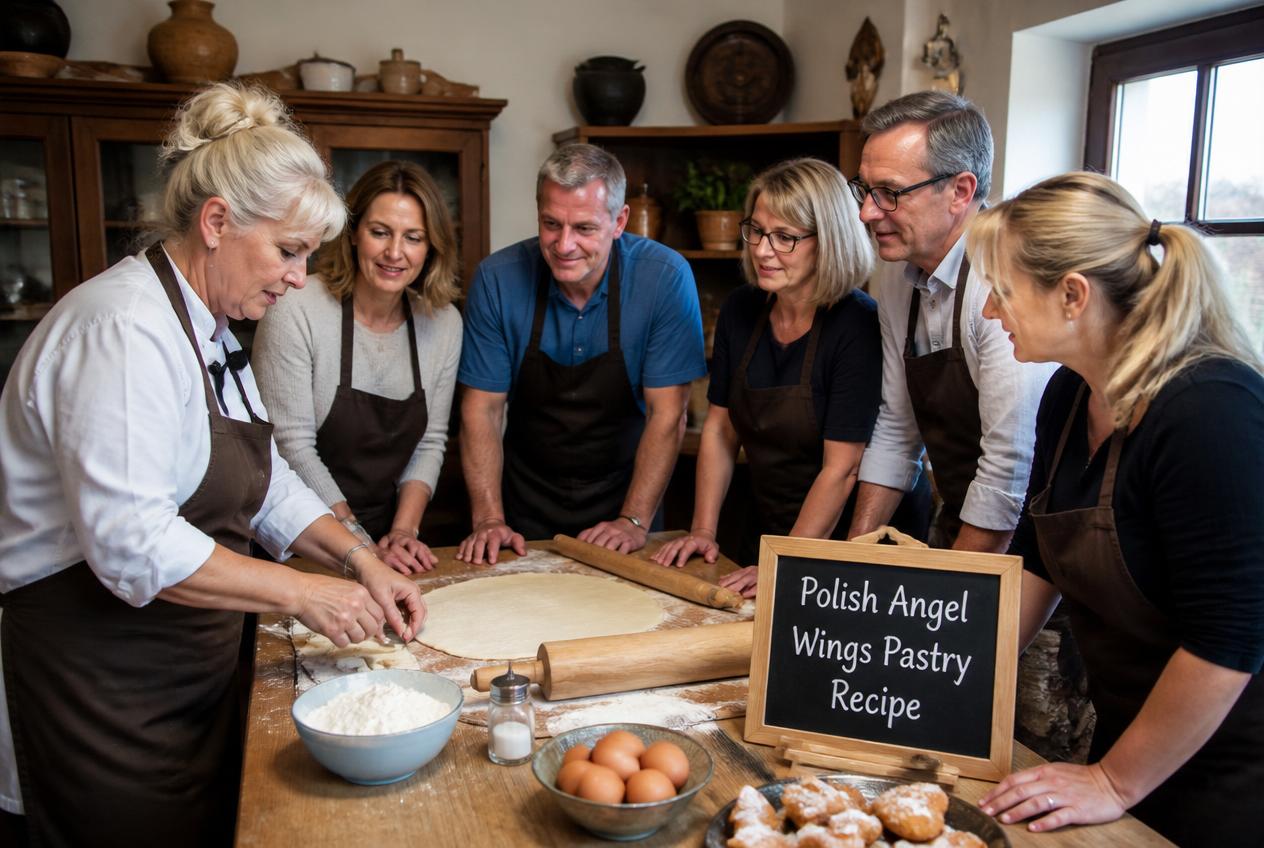
Polish angel wings recipes, known as chrusciki or faworki, are delicate deep-fried pastries that have been a cornerstone of Polish celebrations for generations. I have made these crispy, ribbon-shaped cookies countless times, and they always impress with their light texture and elegant appearance. Traditionally, people serve Polish angel wings recipe during Fat Thursday and Christmas, and the treats require just a handful of simple ingredients and some patience to create their signature twisted shape.
Bakers make these golden pastries from a tender dough, roll it thin, cut it into strips, twist it through a center slit, and fry it until crisp before dusting generously with powdered sugar. The result is a cookie that melts in your mouth while offering a satisfying crunch. The combination of eggs, flour, and a touch of spirit in the dough creates the perfect balance of flavor and texture in every Polish angel wings recipe.
Chrusciki stand out for their versatility and the memories they create. I serve Polish angel wings recipe at holiday gatherings, weddings, and casual family dinners, and they always disappear quickly. Making Polish angel wings recipe becomes a cherished tradition, bringing family members together in the kitchen to twist and fry batch after batch of these beautiful cookies.
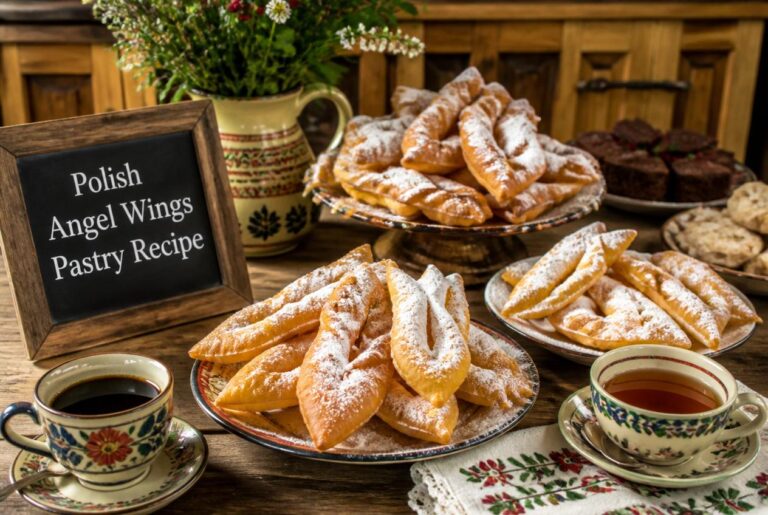
Polish Angel Wings Pastry Recipe
Key Takeaways
- Polish angel wings recipe uses a simple egg-based dough that’s rolled thin, twisted, and fried until crispy
- These delicate cookies are customarily prepared for Fat Thursday and Christmas but work well for any celebration throughout the year
- The recipe requires patience for rolling and shaping, but the light, crispy results dusted with powdered sugar are worth the effort
Description and Historical Information
Chrusciki, also known as faworki or angel wings, represent one of the most beloved traditional Polish recipes passed down through generations. These delicate pastries consist of thin ribbons of dough twisted into elegant shapes, deep-fried until golden and crispy, then dusted generously with powdered sugar. The Polish angel wings recipe remains a staple at celebrations and family gatherings.
The dough is remarkably simple, typically made from flour, eggs, sour cream or cream, butter, and often a splash of spirit like rum or vodka. The distinctive texture—light, crispy, and almost impossibly delicate—makes the Polish angel wings recipe unique among pastries.
Traditional Occasions for Polish Angel Wings Recipe:
- Fat Thursday (Tłusty Czwartek)
- Carnival season
- Christmas celebrations
- Weddings
- Special family gatherings
In Polish cuisine, the Polish angel wings recipe holds a special place as a festival food. This classic Polish dish has remained largely unchanged over centuries, with Polish family recipes still following the same fundamental techniques.
The name “chrusciki” comes from the Polish word meaning “small dry branches,” referring to their crisp, brittle texture. The alternative name “faworki” comes from the word for “favors” or “ribbons,” describing their decorative appearance.
These traditional foods from Poland require skill to master. Bakers roll the dough paper-thin, cut it into precise strips, and twist it through a center slit to create the characteristic wing shape. When fried in hot oil or lard, the pieces puff slightly and develop their signature golden color and crispy texture that crumbles at the slightest touch. The Polish angel wings recipe rewards patience and practice.
Chef’s Tips
When I make Polish angel wings recipe at home, I use room temperature ingredients to achieve the right dough consistency. Cold eggs and butter won’t incorporate properly, resulting in a tough texture instead of the delicate, crispy pastry these cookies are known for.
I always roll my dough as thin as possible, ideally to about 1/8 inch thickness. The thinner the dough, the crispier and lighter your Polish angel wings recipe will be. Using a pasta machine makes this process easier and ensures uniform thickness.
Temperature control is critical when frying. I keep my oil at 375°F (190°C) using a thermometer. If the oil is too hot, the cookies brown before cooking through. If it’s too cool, they absorb excess oil and become greasy.
I fry only 2-3 pieces at a time to prevent overcrowding and maintain consistent oil temperature. Each batch takes just 30-60 seconds, turning once when the first side is golden.
For the best results with the Polish angel wings recipe:
- Work quickly with the dough to prevent drying
- Cut slits in the center and pull one end through to create the characteristic twist
- Drain fried cookies on paper towels immediately
- Dust with powdered sugar only after they’ve cooled completely
I store my Polish angel wings recipe in an airtight container at room temperature, where they stay crisp for up to one week. Avoid refrigerating them, as moisture will make them lose their signature crunch.
Make-Ahead Instructions
Polish angel wings recipe dough actually benefits from advance preparation. I make the dough up to 24 hours ahead and store it in the refrigerator, wrapped tightly in plastic wrap.
When I prepare the dough in advance, I let it rest in the fridge for at least 2 hours before rolling. This resting period makes the dough easier to work with and helps achieve that characteristically thin texture required for the perfect Polish angel wings recipe.
Dough Storage Options:
- Refrigerator: Wrap tightly in plastic wrap for up to 24 hours
- Freezer: Store for up to 1 month in an airtight container or freezer bag
If I freeze the dough, I thaw it overnight in the refrigerator before use. I bring it to room temperature for about 15-20 minutes before rolling to make it more pliable for the Polish angel wings recipe.
I do not recommend frying the cookies ahead of time, as they lose their signature crispness when stored. However, I cut and shape the raw dough pieces up to 2 hours before frying. I place them in a single layer on parchment-lined baking sheets and cover them loosely with plastic wrap.
For the best Polish angel wings recipe, I fry chrusciki on the day I plan to serve them. If I must store fried cookies, I keep them in an airtight container at room temperature for up to 3 days. I wait to dust them with powdered sugar until just before serving, as the sugar can dissolve and create a less appealing appearance.
Variations
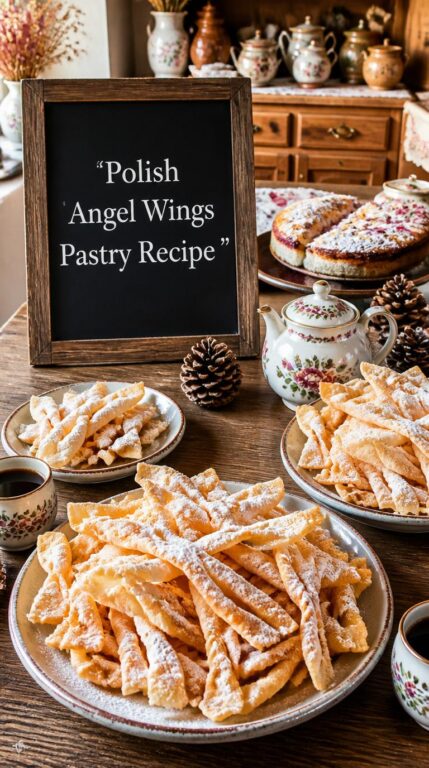
Polish angel wings recipe adapts beautifully to different occasions and preferences throughout the year. While the base recipe remains consistent, small changes can create distinct variations suited to specific Polish holidays and celebrations.
For Polish Christmas recipes, I add a touch of vanilla extract or almond extract to the dough for enhanced flavor. Some bakers incorporate rum or brandy into the mixture, which adds depth and complements the traditional holiday spirit in the Polish angel wings recipe.
During Polish Easter recipes preparations, I sometimes include lemon zest in the dough for a bright, citrusy note that pairs well with spring celebrations. Orange zest works equally well and provides a subtle aromatic quality to the Polish angel wings recipe.
Polish holiday recipes across different regions show interesting differences:
- Texture variations: Some recipes use sour cream while others rely solely on egg yolks for richness
- Shape differences: Traditional ribbon twists, bow tie shapes, or simple strips with a center slit
- Flavoring options: Cardamom, nutmeg, or anise can replace or supplement vanilla
- Sweetness levels: Adjusting powdered sugar coating from light dusting to generous covering
I’ve also prepared gluten-free versions of the Polish angel wings recipe using specialized flour blends, though the texture differs slightly from traditional chrusciki. The dough requires gentle handling and slightly different rolling techniques.
Fat Thursday celebrations often feature Polish angel wings recipe alongside pączki, and I prepare larger batches during this time. The pastries remain a versatile treat that adapts to personal tastes while maintaining their characteristic crispy, delicate nature.
Related Recipes
After making Polish angel wings recipe, I often want to explore more traditional Polish treats. These delicate angel wings pair beautifully with other classic dishes from Polish cuisine and expand your dessert repertoire.
Pączki are essential Polish donuts traditionally served on Fat Thursday, just like Polish angel wings recipe. I recommend trying these jam-filled, deep-fried pastries as they use similar techniques to angel wings. Both require careful frying and result in wonderfully indulgent treats.
Pierogi represent another cornerstone of Polish cooking that I frequently prepare alongside Polish angel wings recipe during holidays. While pierogi are savory dumplings rather than desserts, they showcase the same attention to dough craftsmanship. Mastering pierogi dough helps with the delicate handling required for Polish angel wings recipe.
For those interested in more Polish desserts, I suggest exploring these options:
- Kolaczki – buttery cream cheese cookies filled with fruit preserves
- Mazurek – a flat shortbread-style cake topped with nuts or dried fruit
- Sernik – Polish cheesecake made with farmer’s cheese
- Babka – sweet yeast bread with chocolate or cinnamon swirls
Pączki recipes work particularly well when planned together with Polish angel wings recipe since both are traditional Carnival treats. I often prepare them during the same cooking session, as they share the deep-frying process.
If you enjoy working with delicate pastry dough, French beignets or Spanish churros offer similar satisfaction. These international treats require comparable frying skills and deliver that same crispy, sugary finish that makes Polish angel wings recipe so irresistible.
Recipe Comparison
While Polish angel wings recipe shares similarities with other fried pastry traditions across Europe, the Polish version has distinct characteristics in its dough composition and preparation method that set it apart from related recipes.
Contrast With Traditional Faworki
Polish angel wings recipe and faworki often appear interchangeably in Polish cooking, though regional variations exist. The main difference lies in the dough enrichment and cutting techniques. Traditional faworki recipes from certain Polish regions incorporate more egg yolks and may use sour cream or cream cheese, creating a richer dough. Some faworki variations also include rum or vodka in the dough, which helps create an extra-crispy texture during frying.
The cutting patterns differ as well. I make Polish angel wings recipe by cutting diagonal strips with a center slit for twisting, while some faworki recipes call for wider ribbons or different decorative cuts. Both belong to authentic Eastern European food traditions, particularly within Slavic recipes passed down through generations.
Comparison to Italian Crostoli
Italian crostoli (also called cenci or chiacchiere) resembles Polish angel wings recipe in appearance and preparation. However, key differences exist in the dough formulation. Crostoli typically contains less butter and fewer egg yolks than Polish angel wings recipe, resulting in a lighter, less rich flavor profile.
The texture also varies significantly. My Polish angel wings recipe produces a more delicate, flaky pastry that practically dissolves on the tongue, while crostoli tends to be slightly crunchier and sturdier. Eastern European recipes for Polish angel wings recipe often include sour cream or cream, which Italian versions omit. The flavoring differs too—crostoli frequently features citrus zest or vanilla, whereas Polish angel wings recipe relies on subtler notes from spirits and eggs.
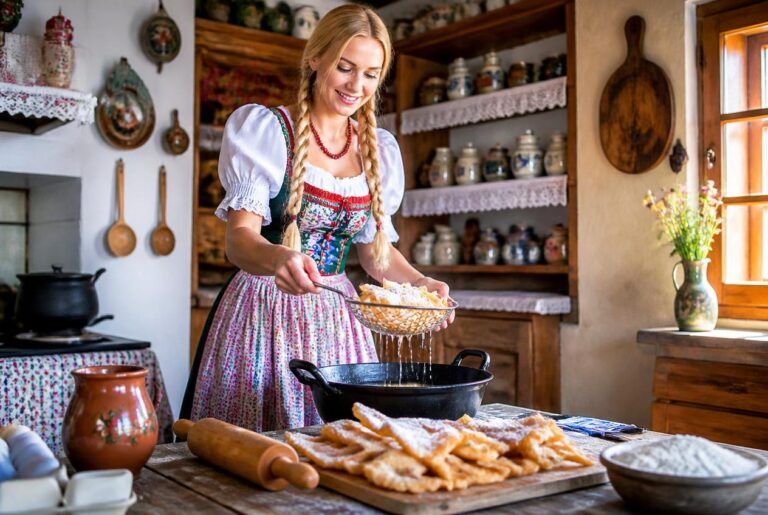
Polish Angel Wings Pastry Recipe Cooking Tips
Polish Angel Wings Recipe Cooking Tips
• Polish Angel Wings, known as Chruściki or Faworki, are delicate fried pastries celebrated for their crisp texture, light sweetness, and elegant twisted shape.
• These pastries are traditionally prepared for festive occasions, especially during the Carnival season.
• A rich dough containing egg yolks helps create the characteristic tender and crisp texture.
• Knead the dough thoroughly until smooth and elastic.
• Some traditional methods involve beating or rolling the dough repeatedly to incorporate air and improve crispness.
• Allow the dough to rest before rolling to make it easier to handle.
• Roll the dough extremely thin, as thin dough produces the lightest and crispiest Angel Wings.
• Cut the dough into strips and create the traditional twisted shape before frying.
• Avoid using excessive flour while rolling, which can affect texture during frying.
• Maintain a steady frying temperature to ensure even cooking and proper browning.
• Fry only a few pieces at a time to prevent overcrowding and temperature fluctuations.
• Angel Wings should fry quickly and develop a light golden color.
• Drain briefly on paper towels to remove excess oil.
• Dust generously with powdered sugar after cooling slightly.
• Vanilla, citrus zest, or a small amount of spirits may be added to the dough for additional flavor.
• Properly prepared Angel Wings should be crisp, delicate, and light rather than dense or greasy.
• The flavor should balance buttery pastry notes, subtle sweetness, and a delicate crunch.
• Serve shortly after preparation for the best texture and eating experience.
Polish Apple Pie Recipe Storage Tips
Polish Angel Wings Recipe Storage Tips
• Allow the pastries to cool completely before transferring them into storage containers.
• Store in airtight containers to help maintain crispness and freshness.
• Place parchment or wax paper between layers to help prevent breakage.
• Keep the pastries in a cool, dry location away from humidity.
• Excess moisture can quickly soften their delicate crisp texture.
• Powdered sugar may absorb moisture over time and can be refreshed before serving if desired.
• Avoid refrigeration, which may negatively affect crispness.
• Store away from direct sunlight and heat sources.
• Use rigid containers when possible to help protect the fragile pastries from crushing.
• Freeze unfrosted pastries in airtight freezer-safe containers if desired.
• Wrap tightly to help prevent freezer burn and preserve quality.
• Defrost frozen pastries at room temperature before serving.
• Refresh with a light dusting of powdered sugar after thawing if needed.
• Use clean hands or utensils when handling stored pastries to help maintain freshness.
• Keep away from strongly scented foods because fried pastries readily absorb odors.
• Label storage containers with the preparation date for easier inventory management.
• Discard the pastries if they develop rancid odors, unusual discoloration, mold, or other signs of spoilage.
• For best quality, enjoy the Angel Wings while they remain crisp, light, and freshly flavored.
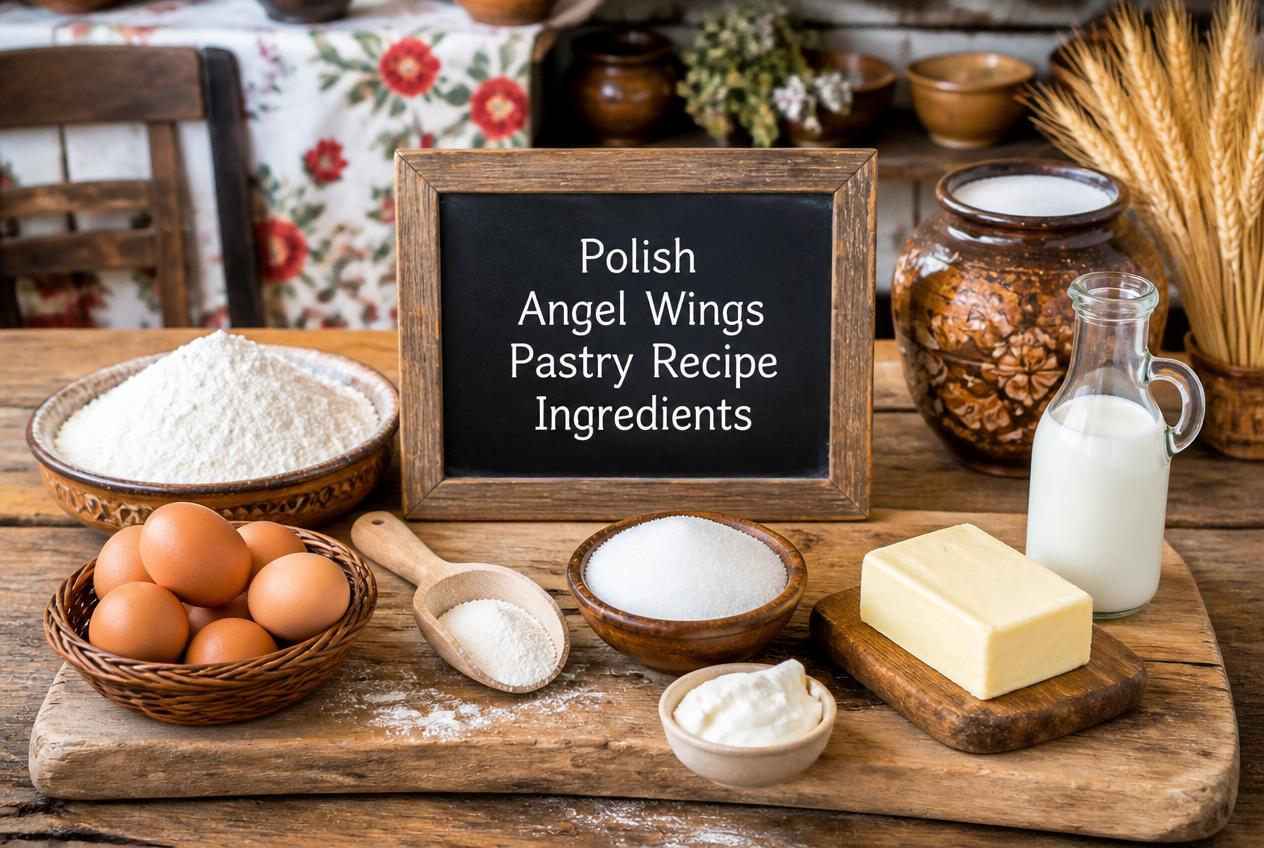
Polish Angel Wings Recipe
Ingredients
- 2 cups flour
- 1 tablespoon sugar
- 1/4 teaspoon salt
- 3 egg yolks
- 3 –5 tablespoons heavy cream or sour cream
- 1 tablespoon spirits I used Soplica, but any whiskey or rum will do
- 1/2 teaspoon vanilla optional
- 1 teaspoon citrus zest optional
- lard for frying
- powdered sugar for dusting
Instructions
- Place the flour, sugar, and salt into a mixing bowl and stir to combine. Add the egg yolks, heavy cream, spirits, and any optional vanilla or citrus zest. Mix until the ingredients come together into a soft dough. Transfer the dough to a lightly floured work surface and knead until smooth and elastic.
- Continue developing the dough by rolling and folding it repeatedly. Traditional Chruściki dough benefits from extra handling because it helps create the delicate, crisp texture the pastries are known for. Once the dough is smooth and springy, cover it and allow it to rest briefly before rolling.
- Divide the dough into smaller portions for easier handling. Roll each portion very thin on a lightly floured surface. Cut the dough into strips approximately 1 inch wide and 4 inches long. Make a small slit in the center of each strip and gently pull one end through the opening to create the traditional twisted angel-wing shape.
- Place the lard in a deep skillet, Dutch oven, or heavy saucepan and heat it until ready for frying. The fat should be hot enough that a small piece of dough rises quickly to the surface and begins to cook without browning too rapidly.
- Carefully add a few pastries at a time to the hot lard. Fry briefly on one side until lightly golden, then turn and cook the opposite side. These pastries cook very quickly, so watch them closely to prevent over-browning. Remove them with a slotted spoon and transfer them to paper towels to drain.
- Allow the fried pastries to cool slightly before arranging them on a serving platter. Generously dust them with powdered sugar while they are still slightly warm so the sugar adheres well to the surface.
- Serve the Chruściki once cooled. Their light, crisp texture makes them a traditional favorite during Carnival season, especially for Fat Thursday celebrations. They pair well with coffee, tea, or hot chocolate.
Polish Angel Wings Recipe Frequently Asked Questions
Polish angel wings recipe requires specific techniques and ingredients to achieve their signature delicate texture. Understanding proper dough preparation, frying methods, and storage practices ensures consistent results with every Polish angel wings recipe.
What ingredients are traditionally used to make Polish angel wings?
I use egg yolks as the base of traditional Polish angel wings recipe dough, which creates the rich, tender texture. The recipe calls for flour, sugar, sour cream, and a small amount of brandy or rum for flavor and tenderness.
Salt and sometimes vanilla extract enhance the taste. The alcohol isn’t just for flavor; it helps create the characteristic crispy, light texture by evaporating quickly during frying. With the right Polish angel wings recipe, you can create this beloved treat for any celebration.
How do you roll and cut the dough to achieve the classic twisted shape?
I roll the dough very thin, approximately 1/8 inch thick or thinner. The thinner the dough, the crispier and lighter the final pastry will be. For the perfect Polish angel wings recipe, achieving this thinness is essential.
I cut the dough into strips about 1 to 1.5 inches wide and 4 to 5 inches long. I make a small slit lengthwise in the center of each strip, then pull one end through the slit to create the twisted bow tie shape. This technique is key for an authentic Polish angel wings recipe.
What technique helps ensure the pastries fry up light and crispy rather than dense?
Rolling the dough extremely thin is the most critical factor. I aim for dough so thin I can almost see through it, which is crucial for a Polish angel wings recipe. I let the dough rest in the refrigerator before rolling, making it easier to handle and roll thin. The combination of thin dough and alcohol in the Polish angel wings recipe creates steam during frying, resulting in light, airy pastries.
What is the best oil temperature for frying to prevent greasiness or burning?
I maintain the oil temperature between 350°F and 375°F. At this temperature, the pastries cook quickly and don’t absorb excess oil, which is vital for a Polish angel wings recipe. I test the temperature by dropping a small piece of dough into the oil. If it sizzles immediately and rises to the surface, the oil is ready. The angel wings should take only 30 to 60 seconds per side to turn golden brown for the best Polish angel wings recipe results.
Can the dough be made ahead of time, and how should it be stored before frying?
I make the dough up to 24 hours in advance and store it wrapped tightly in plastic wrap in the refrigerator. Resting time improves the texture and makes the dough easier to roll thin, which is important for a Polish angel wings recipe. Before rolling, I let the dough sit at room temperature for about 15 minutes to take off the chill. This step prevents cracking when I roll it out, ensuring a smooth process for your Polish angel wings recipe.
How should the finished pastries be stored to keep them crisp for longer?
I store completely cooled chrusciki in an airtight container at room temperature. The Polish angel wings recipe stays crisp for up to one week when you store them properly. Use the Polish angel wings recipe to make sure your pastries remain fresh and delicious throughout the week.
I place parchment or wax paper between layers to prevent them from sticking together. Moisture ruins the crispness, so I always avoid refrigerating the Polish angel wings recipe. If the Polish angel wings recipe loses some crispness, I briefly warm the pastries in a low oven to restore their texture. For more tips and tricks, visit Polish Your Kitchen.
When you use the Polish angel wings recipe, remember to keep the pastries in a dry place. The Polish angel wings recipe works best when you follow proper storage methods. Consistently using the Polish angel wings recipe helps you enjoy crisp, delicious pastries every time.
Layering the Polish angel wings recipe pastries with parchment or wax paper makes a big difference. To ensure the Polish angel wings recipe yields the best results, always store them at room temperature. The Polish angel wings recipe provides a delightful treat that stays fresh when handled correctly.

Recipes are gathered in person and written for real-world cooking conditions.
- 10 Hungarian Dessert Recipes Passed Down Through Generations - July 25, 2026
- 11 Easy English Recipes Anyone Can Make - July 25, 2026
- Hungarian Kifli Recipe - July 25, 2026