
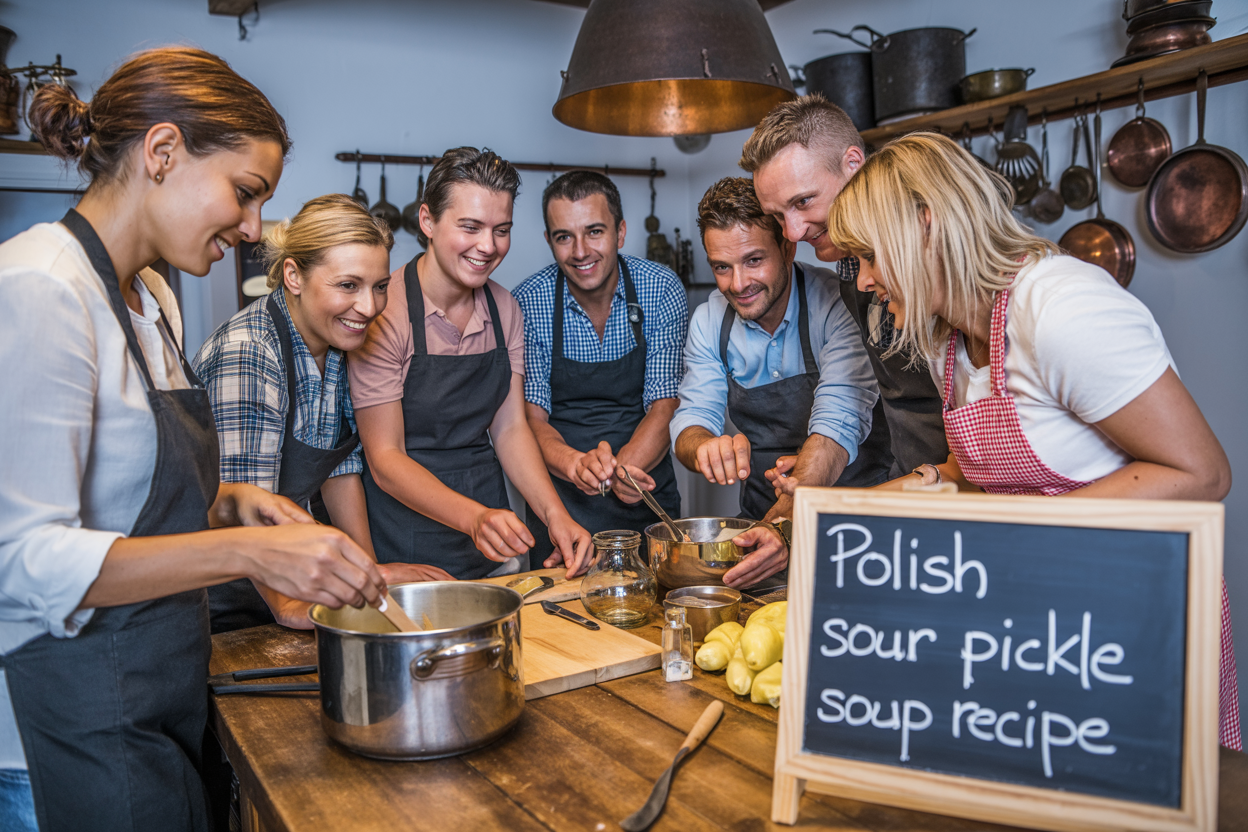
Polish sour pickle soup recipes, known as Zupa Ogórkowa, stands as one of Poland’s most beloved comfort foods that transforms tangy dill pickles into a warming, creamy soup. This traditional dish combines brined dill pickles with potatoes, carrots, and sour cream to create a unique balance of sour and savory flavors. The soup’s distinctive taste comes from using vinegar-free, fermented pickles and their brine, which gives the dish its characteristic tanginess. The Polish sour pickle soup recipe delivers a comforting meal with every bowl.
While Zupa Ogórkowa remains widely popular throughout Poland, it’s less known in other parts of the world, making it a hidden gem worth discovering. This hearty Polish sour pickle soup recipe serves as the perfect meal for cold weather, though its refreshing qualities make it enjoyable year-round. The recipe combines traditional Polish techniques with practical methods that ensure your potatoes stay tender and your sour cream doesn’t curdle.
This Polish sour pickle soup recipe takes humble, everyday ingredients and transforms them into something memorable. The authentic preparation methods, expert tips for getting the flavors just right, and ways to adapt the Polish sour pickle soup recipe to your preferences all help maintain its essential character.
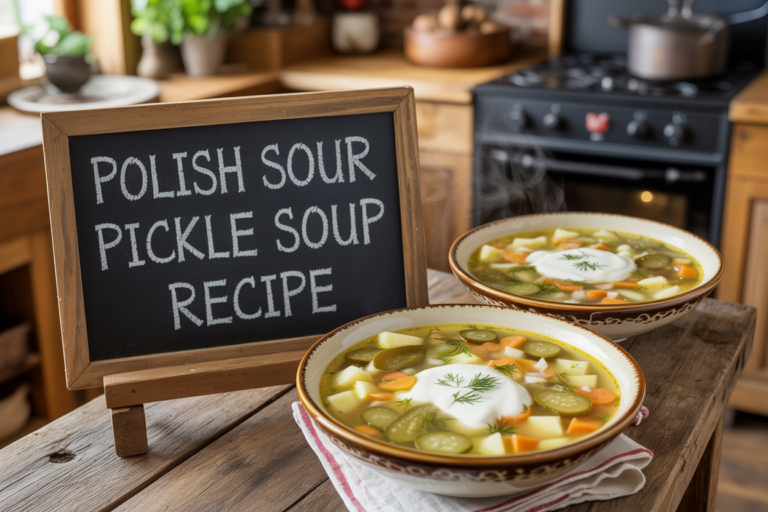
Polish Sour Pickle Soup Recipe
Key Takeaways
- Zupa Ogórkowa is a traditional Polish sour pickle soup recipe that combines tangy fermented pickles with potatoes and sour cream for a unique comfort dish.
- The Polish sour pickle soup recipe requires specific techniques to prevent curdling and maintain proper texture while balancing sour and savory flavors.
- This versatile Polish sour pickle soup recipe can be adapted with different ingredients and pairs well with various sides.
Origins and Cultural Significance
Zupa Ogórkowa stands as one of Poland’s most cherished traditional soups, with roots stretching back centuries in Polish culinary history. The Polish sour pickle soup recipe emerged from the practical need to preserve cucumbers through fermentation, a technique that allowed Polish families to enjoy vegetables throughout harsh winters. The soup’s distinctive sour flavor comes from naturally fermented dill pickles, made without vinegar through a brining process. This fermentation method has been passed down through generations, making the Polish sour pickle soup recipe an integral part of traditional foods from Poland.
In Polish culture, Zupa Ogórkowa represents more than sustenance. It embodies comfort, warmth, and familial connection during cold months. Many Polish families consider the Polish sour pickle soup recipe a staple dish that appears regularly on dinner tables, particularly in winter.
Key Cultural Elements:
- Served at family gatherings and everyday meals
- Represents resourcefulness in Polish cooking traditions
- Featured in Polish restaurants and delis worldwide
- Connects Polish communities to their heritage
The Polish sour pickle soup recipe enjoys popularity beyond Poland’s borders, where Polish immigrants have introduced it to new audiences. Foods from Poland like Zupa Ogórkowa maintain their authentic preparation methods even in diaspora communities, preserving cultural identity through cuisine. The accessibility of the Polish sour pickle soup recipe, with its simplicity and reliance on fermented pickles, demonstrates the ingenuity of Polish home cooking.
Expert Preparation Strategies
I always select the right pickles for the Polish sour pickle soup recipe. Traditional fermented dill pickles work best, not the vinegar-based varieties. The naturally brined cucumbers provide the authentic sour flavor that defines this soup.
Preventing Common Mistakes
The most critical step is tempering the sour cream before adding it to the hot broth. I take a ladle of warm soup and slowly whisk it into the sour cream in a separate bowl. This gradual temperature adjustment prevents curdling when I add the mixture back to the pot.
I keep the Polish sour pickle soup recipe at a gentle simmer rather than a rolling boil. High heat causes the dairy to separate and ruins the smooth, creamy texture.
Ingredient Preparation
For the potatoes, I use starchy varieties that break down slightly during cooking, which naturally thickens the broth. I cut them into uniform pieces to ensure even cooking. I grate the pickles on a coarse grater rather than chopping them. This releases more of their tangy juice into the soup. I also reserve some pickle brine to adjust the sourness level at the end.
Building Flavor Layers
I sauté the onions and garlic in butter until translucent before adding the broth. This creates a flavor base that supports the pickle tang. Fresh dill goes in at the end of cooking to preserve its bright, herbaceous notes. Dried dill loses its impact during long simmering. The Polish sour pickle soup recipe benefits from this careful layering of flavors.
Advance Preparation Guidelines
I recommend preparing Polish sour pickle soup recipe components up to 48 hours in advance for optimal flavor development. The soup base, including cooked vegetables and broth, can be refrigerated in an airtight container and reheated when needed. This approach helps the Polish sour pickle soup recipe develop deeper flavors.
Make-Ahead Components:
- Vegetable prep: Dice carrots, celery, and potatoes up to 24 hours ahead and store in cold water.
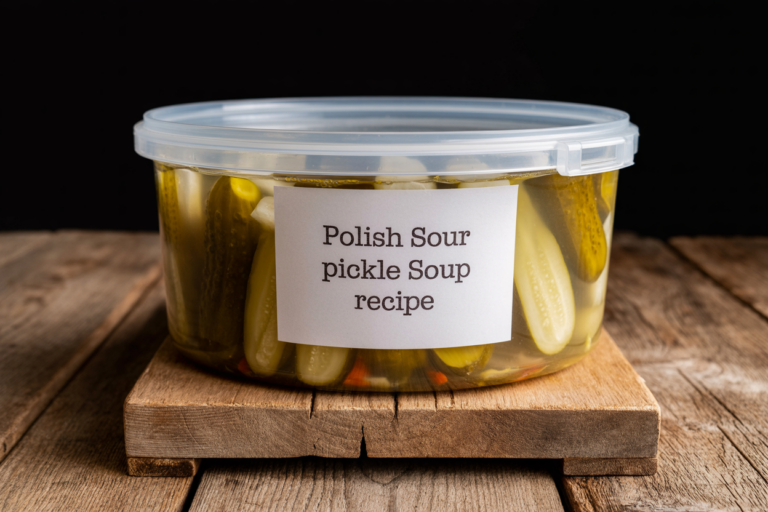
- Pickle preparation: Grate or dice pickles and refrigerate in their brine to prevent browning.
- Broth base: Cook the full soup base 1-2 days ahead; flavors actually improve with time.
- Fresh herbs: Chop dill up to 6 hours before serving and wrap in damp paper towels.
Adding sour cream and final seasonings right before serving produces the best texture for the Polish sour pickle soup recipe. The dairy can separate or become grainy when reheated, so I always hold it back until the last moment. For freezing, I prepare the Polish sour pickle soup recipe without potatoes, sour cream, or fresh herbs. These ingredients don’t freeze well and can become mushy or separated. The base freezes successfully for up to 3 months in freezer-safe containers.
When ready to serve frozen Polish sour pickle soup recipe, I thaw it overnight in the refrigerator, then add freshly cooked potatoes during reheating. I stir in the sour cream off heat and garnish with fresh dill just before serving. This method preserves the soup’s creamy texture and bright flavors. After reheating, I taste and adjust seasoning, as refrigeration can dull flavors. A splash of pickle brine often restores the proper tangy balance.
Creative Adaptations
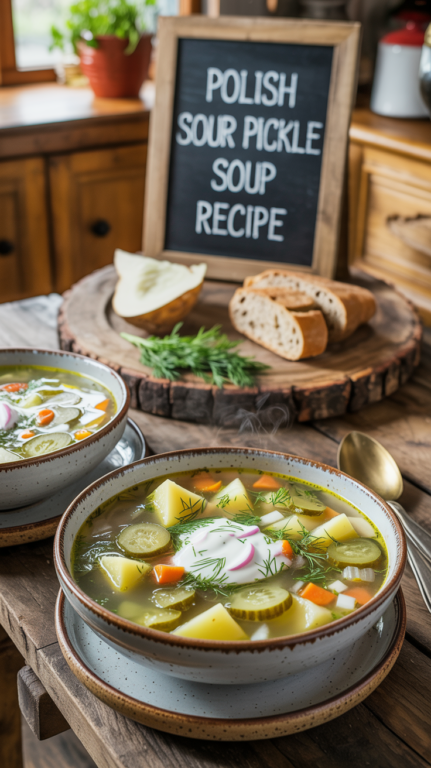
Zupa Ogórkowa, or Polish sour pickle soup recipe, serves as an excellent base for experimentation while maintaining its essential tangy character. The traditional recipe welcomes modifications that can transform it into entirely new variations.
Protein Additions
I often add shredded chicken, smoked kielbasa, or crispy bacon to create a more substantial meal. For a vegetarian option, I incorporate white beans or chickpeas. These additions provide extra heartiness without overpowering the pickle’s brightness.
Vegetable Variations
Beyond the standard carrots and potatoes, I experiment with parsnips, celery root, and leeks. Adding shredded cabbage connects the Polish sour pickle soup recipe to other Polish cabbage recipes, creating a hybrid that nods to traditional kapusniak. The cabbage absorbs the pickle brine beautifully and adds textural contrast.
Grain Enhancements
I sometimes include pearl barley or rice to make the Polish sour pickle soup recipe more filling. These grains soak up the tangy broth and create a comforting, porridge-like consistency that works particularly well for winter meals.
Modern Twists
For a contemporary approach, I substitute Greek yogurt for sour cream, which provides similar creaminess with less richness. Fresh herbs beyond dill—like parsley, chervil, or tarragon—add complexity. I also experiment with adding a splash of white wine during cooking for additional depth.
Spice Adjustments
While traditional recipes keep spices minimal, I occasionally add smoked paprika, caraway seeds, or a bay leaf. These subtle additions enhance the Polish sour pickle soup recipe without compromising its authentic pickle-forward profile.
Complementary Dish Suggestions
The Polish sour pickle soup recipe pairs beautifully with traditional Polish dishes that balance its tangy, sour flavor profile. The soup’s acidity and creaminess work particularly well alongside hearty, savory accompaniments.
Classic Polish Pairings:
- Kielbasa – Grilled or pan-fried Polish sausage complements the soup’s brightness.
- Pierogi – Potato and cheese pierogi or meat-filled varieties contrast nicely with the soup’s tang.
- Rye bread – Dense, dark rye bread is perfect for dipping and soaking up the flavorful broth.
- Potato pancakes (placki ziemniaczane) – These crispy cakes add textural variety to the meal.
I’ve served the Polish sour pickle soup recipe as part of larger Polish feasts where multiple dishes are presented family-style. In that context, I include other Polish soups like barszcz or żurek to give guests variety while maintaining an authentic theme. For a lighter meal, I simply pair the Polish sour pickle soup recipe with crusty bread and butter. The soup itself is substantial enough to serve as a main course, especially when it contains potatoes and hearty vegetables.
When planning kielbasa or Polish sausage recipes to serve with this soup, I keep preparations simple. Grilling, roasting, or sautéing with onions allows the sausage to shine without overwhelming the delicate pickle broth. The Polish sour pickle soup recipe truly showcases the best of Polish comfort food traditions. For more inspiration and tips, you can visit Polish Your Kitchen for additional Polish sour pickle soup recipe ideas.
Comparative Analysis With Similar Soups
Zupa Ogórkowa shares its culinary DNA with several other Eastern European recipes that rely on fermented ingredients and sour flavor profiles. Russian rassolnik also uses pickled cucumbers as a base ingredient, but it typically includes pearl barley and kidneys, giving it a heartier texture than the Polish version. Lithuanian agurku sriuba is nearly identical to Zupa Ogórkowa, reflecting the shared culinary history between these two nations, and both Slavic recipes emphasize fermented cucumbers and dill, though Lithuanian versions sometimes incorporate more root vegetables.
Key Differences Among Similar Soups:
| Soup | Origin | Main Distinguishing Feature |
|---|---|---|
| Zupa Ogórkowa | Poland | Creamy base with potatoes |
| Rassolnik | Russia | Pearl barley and organ meats |
| Agurku Sriuba | Lithuania | Similar to Polish but lighter broth |
| Schtschi | Russia | Cabbage-based with sour element |
Authentic Eastern European food in this category relies on naturally fermented vegetables rather than vinegar-based pickles. Western pickle soups might use sweet pickles or vinegar-heavy varieties, but traditional Slavic recipes demand naturally brined cucumbers for their probiotic benefits and complex flavor. The Polish sour pickle soup recipe stands out for this reason, offering a unique taste experience.
The sour cream finish creates a velvety texture that distinguishes these soups from Western vegetable soups. The combination of tangy pickles and rich dairy creates a balance that’s distinctly regional, and the Polish sour pickle soup recipe truly highlights this harmony.
Polish Sour Pickle Soup Recipe Cooking Tips
Polish Sour Pickle Soup Recipe Cooking Tips
• Polish Sour Pickle Soup, known as Zupa Ogórkowa, is a traditional comfort soup celebrated for its creamy texture, tangy pickle flavor, and hearty ingredients.
• Authentic fermented dill pickles provide the characteristic sour flavor that defines the soup.
• Grate or finely chop the pickles to help distribute their flavor evenly throughout the broth.
• Reserve some pickle juice, which can be added to enhance the soup’s tanginess.
• Potatoes are commonly used and contribute body and heartiness to the soup.
• Cut the potatoes into uniform pieces to promote even cooking.
• Carrots, celery root, parsley root, and onions are traditional vegetables that add sweetness and depth.
• Chicken, pork, beef, or vegetable broth can serve as the flavorful base.
• Sautéing the vegetables before adding them to the broth can deepen their flavor.
• Bay leaves, black pepper, parsley, and dill are commonly used seasonings.
• Add the pickles after the potatoes have begun cooking, as acidic ingredients can slow potato softening.
• Sour cream is often incorporated to create a creamy texture and mellow the acidity.
• Temper the sour cream with hot broth before adding it to help prevent curdling.
• Simmer gently after adding dairy ingredients rather than boiling vigorously.
• Taste and adjust the balance of salt, acidity, and seasoning near the end of cooking.
• Fresh dill provides a traditional garnish and bright flavor.
• The flavor should balance tangy pickles, creamy broth, tender vegetables, and aromatic herbs.
• Serve hot with crusty bread or rye bread for a traditional accompaniment.
Polish Sour Pickle Soup Recipe Storage Tips
Polish Sour Pickle Soup Recipe Storage Tips
• Allow the soup to cool before transferring it into storage containers.
• Store refrigerated in airtight containers to preserve freshness and flavor.
• Refrigeration often improves the soup as the pickle, vegetable, and herb flavors continue to blend.
• Reheat gently on the stovetop or in the microwave until thoroughly heated.
• Avoid vigorous boiling during reheating if sour cream or dairy has been added.
• Stir occasionally while reheating to maintain a smooth consistency.
• Add a small amount of broth if the soup thickens excessively during storage.
• Fresh dill garnishes are often best added immediately before serving.
• Individual portions can be stored for convenient reheating.
• Freeze portions in airtight freezer-safe containers if desired.
• Wrap tightly to help prevent freezer burn and preserve quality.
• Dairy-based soups may experience slight texture changes after freezing and thawing.
• Defrost frozen portions gradually in the refrigerator before reheating.
• Use clean utensils when serving leftovers to help maintain freshness.
• Keep away from strongly scented foods because soups readily absorb surrounding odors.
• Label storage containers with the preparation date for easier inventory management.
• Check for signs of spoilage such as sour odors beyond the normal pickle aroma, mold, unusual discoloration, or texture changes before consuming leftovers.
• For best quality, enjoy refrigerated and frozen portions while the soup retains its creamy texture and bright pickle flavor.
Polish Sour Pickle Soup Recipe
Ingredients
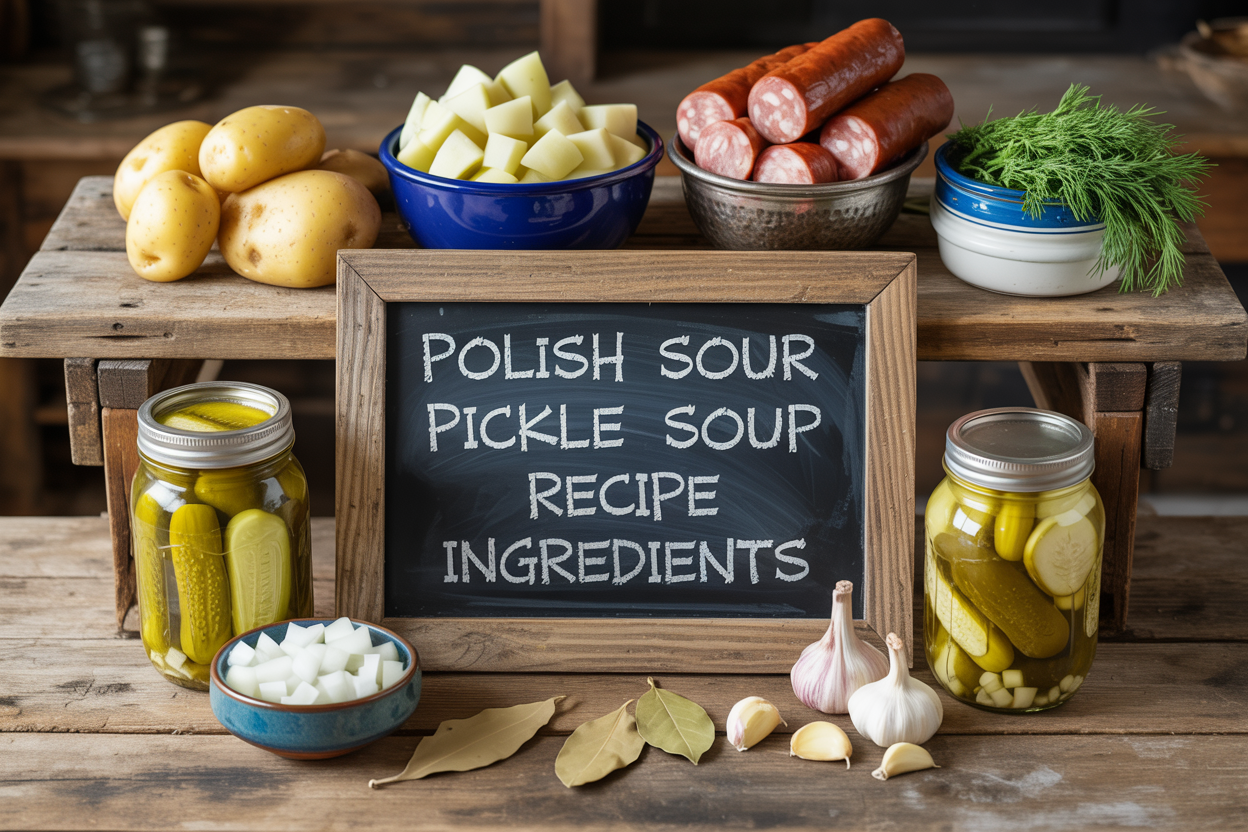
- 1 large yellow onion peeled and chopped (or 3 small onions)
- 2 large carrots peeled and chopped
- 2 large stalks celery chopped
- 5 large cloves garlic peeled and crushed
- 1 pound yellow potatoes peeled and cubed into ½-inch pieces
- 1 cup diced dill pickles
- 4 tablespoons unsalted butter
- 4 cups chicken stock or vegetable stock for a vegetarian option
- ¾ cup sour cream
- ¼ cup pickle juice dill
- ¾ teaspoon salt
- ¼ teaspoon black pepper
- 3 berries allspice dried whole or 1 pinch ground allspice
- 3 tablespoons fresh dill minced
- Sour cream for garnish
- Fresh dill for garnish
- Sourdough bread buttered
Instructions
- Begin by placing a 5-quart soup pot over medium heat and adding the butter. Allow the butter to melt almost completely, coating the bottom of the pot.
- Add the chopped onion, carrot, and celery. Cook the vegetables for approximately 5 minutes, stirring occasionally, until they begin to soften and release their natural sweetness. The vegetables should become tender but not browned.
- Stir in the crushed garlic and cook for an additional 30 seconds, stirring constantly. This brief cooking time allows the garlic to become fragrant without burning, which would make it bitter.
- Add the cubed potatoes, diced dill pickles, chicken stock, salt, black pepper, and allspice berries to the pot.
- Stir everything together thoroughly, making sure the vegetables are evenly distributed throughout the broth.
- Increase the heat and bring the soup to a gentle boil. Once boiling, reduce the heat to maintain a steady simmer.
- Cover the pot and cook for approximately 10 minutes, or until the vegetables are tender but still retain their shape. The potatoes should be easily pierced with a fork while remaining intact.
- As the soup cooks, the flavors of the pickles, allspice, and vegetables will blend together to create a uniquely tangy and savory broth.
- Once the vegetables are tender, use a potato masher to gently mash some of the potatoes and vegetables directly in the pot.
- Avoid completely pureeing the soup. The goal is to create a rustic texture with some vegetables remaining chunky while others break down slightly into the broth.
- This technique naturally thickens the soup and gives it a hearty, comforting consistency without the need for additional flour or starch.
- Remove the pot from the heat before adding the dairy.
- Stir in the sour cream, dill pickle juice, and freshly minced dill. Mixing these ingredients off the heat helps prevent the sour cream from curdling and preserves the fresh flavor of the dill.
- The pickle juice adds a bright, tangy finish that balances the richness of the sour cream and complements the vegetables beautifully.
- Taste the soup and adjust the seasoning if necessary, adding additional salt and freshly ground black pepper to suit your preference.
- Ladle the hot soup into serving bowls.
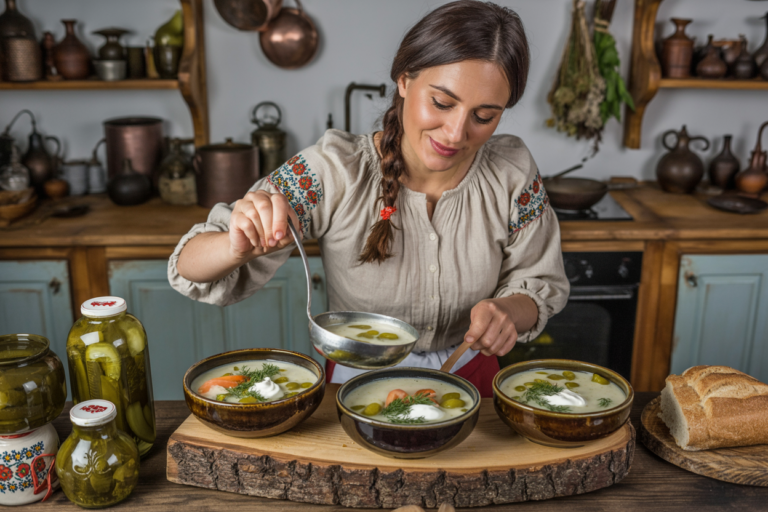
- Top each bowl with a dollop of sour cream and a sprinkle of fresh dill for a traditional presentation. The extra sour cream adds richness while the dill contributes a fresh herbal aroma.
- Serve immediately alongside thick slices of buttered sourdough bread or crusty rustic bread, perfect for soaking up the flavorful broth.
- This comforting dill pickle soup is a beloved Eastern European-inspired dish that combines tender vegetables, creamy broth, fresh dill, and the distinctive tang of dill pickles. The result is a surprisingly balanced soup that is rich, hearty, and pleasantly bright.
- The potatoes provide body, the sour cream creates a silky texture, and the pickle juice adds a refreshing acidity that keeps the soup from feeling heavy. Paired with warm bread, it makes a satisfying meal that's perfect for chilly days, family dinners, or whenever you're craving something both comforting and unique.
Polish Sour Pickle Soup Recipe Frequently Asked Questions
Traditional Polish sour pickle soup recipe requires specific ingredients and techniques to achieve the authentic tangy, creamy balance that defines this dish. The type of pickles, preparation methods, and proper handling of dairy components all significantly impact the final result. If you want to master the Polish sour pickle soup recipe, understanding these details will help you achieve the best flavor.
What type of pickles are best to use for traditional Polish pickle soup?
I always use naturally fermented dill pickles preserved in brine without vinegar. These pickles provide the distinctive sour flavor that characterizes an authentic Polish sour pickle soup recipe. Vinegar-based pickles create a harsh acidity rather than the complex, mellow sourness that fermented cucumbers deliver. I look for pickles labeled as naturally fermented or brined, often found in the refrigerated section or at European markets to ensure the best Polish sour pickle soup recipe results.
How do you keep pickle soup from becoming bitter or overly sour?
I taste the pickles before adding them to assess their sourness level. If they’re extremely sour, I reduce the quantity or balance them with additional potatoes and broth. Adding the pickle brine gradually allows me to control the soup’s tanginess. I start with small amounts and adjust based on taste preferences. The sour cream also helps mellow the acidity when stirred in at the end, ensuring the Polish sour pickle soup recipe has just the right flavor.
Should the potatoes be cooked in the broth before adding grated pickles?
I cook the potatoes in the broth until they’re nearly tender before adding the pickles. This prevents the potatoes from becoming mushy, as the acid from pickles slows their cooking process. The potatoes typically need 10-15 minutes depending on their size. Once they’re fork-tender but still hold their shape, I add the grated pickles and continue cooking for another 10 minutes so the Polish sour pickle soup recipe develops the perfect texture.
How can you thicken pickle soup without making it heavy?
I rely on grated potatoes as a natural thickener for the Polish sour pickle soup recipe. As they cook, they release starch that gives the soup body without added flour. If I need more thickness, I mash a few potato pieces against the pot’s side with a spoon. Some recipes call for a light roux made from butter and flour, but I find this unnecessary when using enough potatoes in a Polish sour pickle soup recipe.
What is the correct way to add sour cream so it doesn’t curdle?
I temper the sour cream before adding it to the hot soup. This means mixing a few spoonfuls of warm broth into the sour cream first to gradually raise its temperature. I remove the pot from direct heat before stirring in the tempered sour cream. I never let the soup boil after adding sour cream, as high heat causes it to separate and curdle, which is especially important for a Polish sour pickle soup recipe.
When making a Polish sour pickle soup recipe, always use high-quality ingredients and follow traditional methods. The best results come from naturally fermented pickles, careful handling of dairy, and balancing flavors to achieve that signature tangy-creamy taste. For more tips and inspiration on the Polish sour pickle soup recipe, you can explore authentic Eastern European cooking guides online.
To summarize, the Polish sour pickle soup recipe is unique for its use of naturally fermented pickles, creamy sour cream finish, and careful balancing of flavors. Whether you’re comparing it to other Eastern European soups or perfecting your own, the Polish sour pickle soup recipe remains a standout dish for its tradition and taste. Try the Polish sour pickle soup recipe for your next meal and enjoy a true taste of Poland!
Can pickle soup be made ahead, and how should it be stored and reheated?
I frequently make Polish sour pickle soup recipe a day ahead, as the flavors develop and deepen overnight in the refrigerator. The Polish sour pickle soup recipe stays fresh in an airtight container for up to 4 days. Preparing the Polish sour pickle soup recipe in advance allows the ingredients to blend perfectly, enhancing the overall taste.
When I reheat the Polish sour pickle soup recipe, I use low to medium heat and stir occasionally to prevent scorching. I make sure not to boil the Polish sour pickle soup recipe during reheating, especially if sour cream has already been added. If the Polish sour pickle soup recipe thickens too much during storage, I thin it with additional broth to restore its original consistency. For more tips on storing soups, you can visit [Serious Eats](https://www.seriouseats.com/).

Recipes are gathered in person and written for real-world cooking conditions.
- 10 Hungarian Dessert Recipes Passed Down Through Generations - July 25, 2026
- 11 Easy English Recipes Anyone Can Make - July 25, 2026
- Hungarian Kifli Recipe - July 25, 2026