
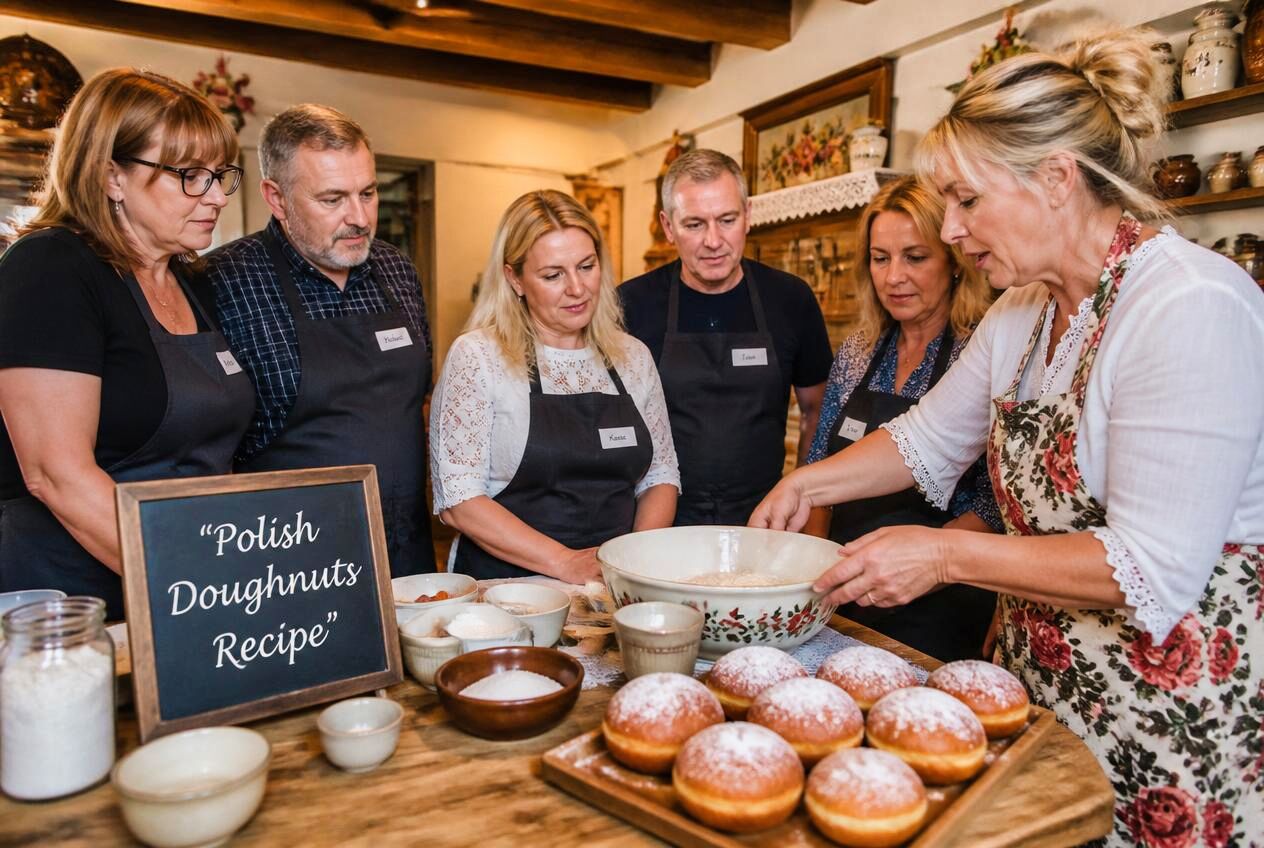
Pączki are traditional Polish doughnuts recipe that have captured hearts far beyond Poland’s borders. These rich, pillowy treats are made from a yeasted dough enriched with eggs, butter, and milk, then deep-fried until golden and filled with jam, custard, or other sweet fillings. Pączki are traditionally enjoyed on Fat Thursday in Poland and Fat Tuesday in America as a final indulgence before Lent begins, but their irresistible flavor makes them worth making any time of year. If you want to master the Polish doughnuts recipe, this guide will help you achieve bakery-quality results at home.
I’ve perfected this Polish doughnuts recipe to help you create authentic pączki at home with a texture that’s both light and decadent. You need patience as the dough rests, but making pączki from scratch delivers an incomparably better result than store-bought versions. Each doughnut emerges from the oil with a delicate exterior and soft, airy interior that practically melts in your mouth.
Whether you fill them with rose petal preserves, prune jam, or vanilla custard, these doughnuts deliver a truly special experience. I’ll walk you through each step of the Polish doughnuts recipe, from mixing the enriched dough to achieving the perfect frying temperature, so you can bring this beloved Polish tradition into your own kitchen.
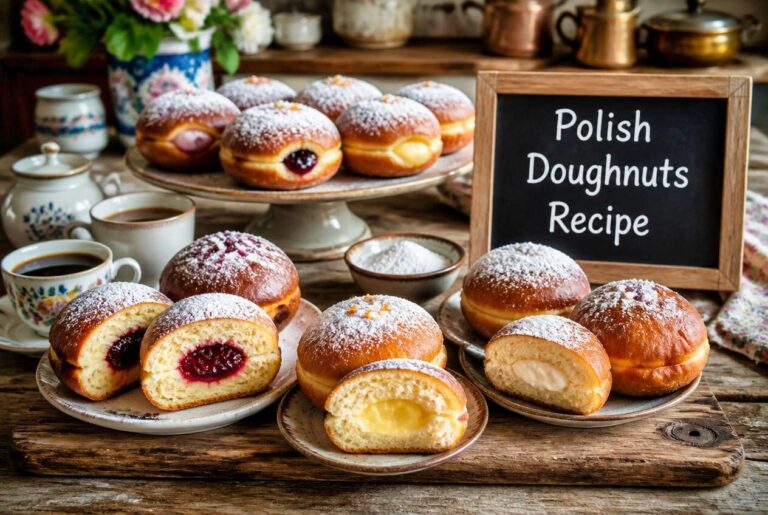
Polish Doughnuts Recipe
Key Takeaways
- Pączki are enriched Polish doughnuts traditionally made for Fat Thursday or Fat Tuesday and filled with jam or custard
- The Polish doughnuts recipe requires patience for proper dough rising but results in exceptionally light and fluffy doughnuts when fried correctly
- You can customize fillings and toppings while maintaining the authentic character of these classic Polish treats
Description and Historical Information
Pączki are traditional Polish doughnuts that hold a special place in Polish cuisine and cultural celebrations. These rich, tender pastries are deep-fried and characteristically filled with fruit preserves, most commonly rose petal jam or raspberry jam, though custard and cream fillings are also popular. The Polish doughnuts recipe is central to many family gatherings and festive occasions.
The dough itself distinguishes pączki from standard doughnuts. Authentic Polish doughnuts recipes call for a generous amount of eggs, butter, and sometimes alcohol like vodka or rum, creating an exceptionally soft and fluffy texture. The exterior is typically coated with powdered sugar, granulated sugar, or a sweet glaze.
Historical Origins
The history of pączki dates back to the Middle Ages in Poland. These pastries began as savory items filled with meat or pork fat, served in Polish courts and villages as symbols of prosperity and wealth. Over centuries, pączki evolved into the sweet treats we recognize today, closely tied to Polish religious and cultural practices, particularly the tradition of using up rich ingredients like lard, sugar, and eggs before Lent.
Cultural Significance
Pączki are most famously associated with Fat Thursday (Tłusty Czwartek), which falls on the Thursday before Ash Wednesday. On this day, bakeries across Poland produce millions of these doughnuts. This tradition is an essential part of the Polish doughnuts recipe’s history, celebrated not only in Poland but also in Polish communities worldwide, especially around Mardi Gras season.
Chef’s Tips
I always make sure my ingredients are at room temperature before starting, especially the eggs and butter. This helps create a smoother dough that rises more evenly. When kneading the dough for the Polish doughnuts recipe, I recommend using a stand mixer with a dough hook for at least 10 minutes. The dough should be soft and slightly sticky but pull away from the bowl sides. If mixing by hand, expect to knead for 15-20 minutes.
Proofing is critical for authentic pączki. I let the dough rise in a warm, draft-free spot until it doubles in size. During winter months, I place the bowl in my turned-off oven with just the light on. For frying, I maintain my oil temperature between 350-365°F. Too hot and the outside burns while the inside stays raw. Too cool and the doughnuts absorb excess oil and become greasy.
I always fry pączki on their risen side first, which creates that characteristic pale band around the middle. Each side needs about 2-3 minutes until golden brown. My filling approach for the Polish doughnuts recipe uses a long piping tip inserted from the side, keeping the doughnuts looking traditional and preventing the filling from leaking during storage.
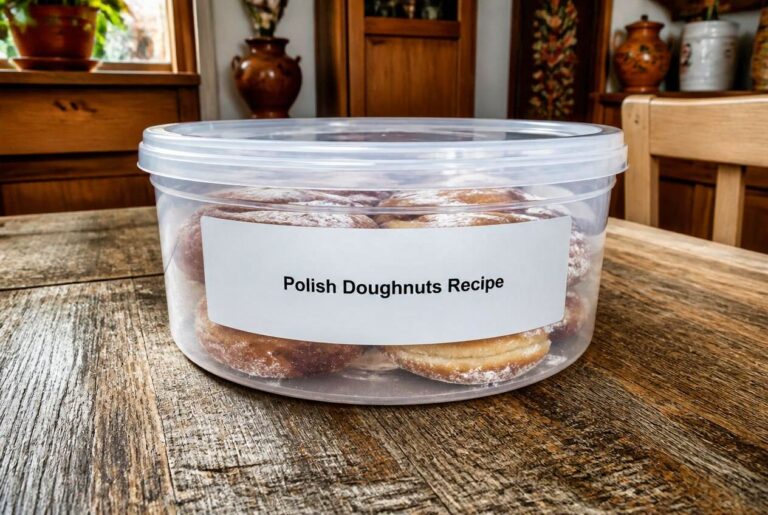
Fresh pączki taste best within 24 hours of making them. Store them at room temperature in an airtight container, never in the refrigerator as this dries them out. Finally, I dust with powdered sugar or glaze them only after they’ve cooled completely. This prevents the topping from melting or becoming soggy.
Make-Ahead Instructions
Prepare the Polish doughnuts recipe dough in advance to make the process more manageable. You can prepare the dough through the first rise, then cover it tightly with plastic wrap and refrigerate it overnight for up to 24 hours. When ready to continue, remove the dough from the refrigerator and let it come to room temperature for about 30-45 minutes before shaping. This cold fermentation method actually improves the flavor and texture of the doughnuts.
For shaped doughnuts, cut and shape the pączki, then place them on parchment-lined baking sheets. Cover them loosely with plastic wrap and refrigerate for up to 8 hours. Allow them to complete their final rise at room temperature before frying, which takes about 45-60 minutes. I don’t recommend freezing uncooked pączki dough, as it affects the yeast activity and texture. However, you can freeze fully cooked and cooled pączki for up to 2 months.
Here’s my storage guide for the Polish doughnuts recipe:
- Wrap each doughnut individually in plastic wrap
- Place wrapped pączki in an airtight freezer bag
- Remove as much air as possible before sealing
- Label with the date
To serve frozen pączki, thaw them at room temperature for 1-2 hours. Warm them briefly in a 300°F oven for 5 minutes to refresh their texture. Fill them just before serving for the best results, as pre-filled pączki can become soggy during freezing and thawing.
Variations
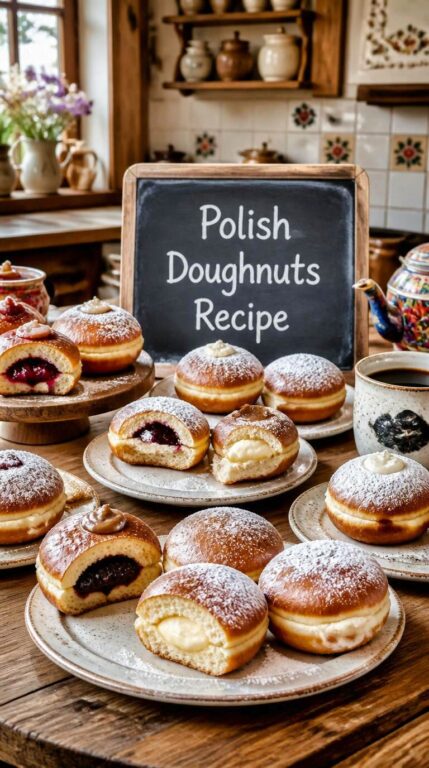
While traditional Polish doughnuts recipe versions are filled with rose petal jam or prune preserves, modern versions embrace a wide range of fillings. Raspberry jam, strawberry preserves, and apricot jam are popular fruit-based options that offer bright, sweet flavors. Custard-based fillings have become increasingly common. Vanilla custard, chocolate custard, and Bavarian cream provide rich, creamy alternatives to fruit preserves. Some bakers use pastry cream or pudding for a smoother texture.
Popular Filling Options:
- Rose petal preserves (traditional)
- Prune jam (traditional)
- Raspberry or strawberry jam
- Apricot preserves
- Vanilla custard
- Chocolate custard
- Bavarian cream
- Advocaat (egg liqueur)
The toppings can vary as well. I typically see pączki finished with powdered sugar, but icing glazes are equally traditional. A simple lemon glaze adds citrus notes, while plain white icing keeps things classic. Some versions feature orange or vanilla-flavored glazes. For the dough itself, traditional Polish doughnuts recipe versions call for lard as the frying medium, but many modern recipes use vegetable oil or shortening instead. The dough can also be enriched with additional egg yolks for extra richness or include ingredients like rum or lemon zest for added flavor complexity. Regional variations exist throughout Poland as well. Some areas prefer their pączki larger and more spherical, while others make them slightly flatter with more filling.
Related Recipes
If you enjoyed making pączki, explore other traditional Polish dishes that share similar techniques or cultural significance. Pierogi recipes are an excellent starting point, as they involve working with dough and can be filled with sweet or savory ingredients, much like the Polish doughnuts recipe. For more ideas, visit Polish Your Kitchen for authentic Polish recipes.
I often pair my pączki-making sessions with preparing other Polish desserts throughout the year. Sernik (Polish cheesecake) and makowiec (poppy seed roll) complement pączki beautifully for festive gatherings. Polish Christmas recipes offer wonderful variety during the holiday season. I particularly enjoy making kutia (wheat berry pudding), pierniki (spiced honey cookies), and barszcz (beetroot soup) served with uszka (small dumplings). These dishes showcase the depth of Polish culinary traditions beyond fried doughs.
For Polish Easter recipes, I suggest trying babka wielkanocna (Easter yeast cake), mazurek (shortbread topped with various toppings), and żurek (sour rye soup). These recipes maintain the celebratory spirit found in the Polish doughnuts recipe. If you’re interested in savory Polish cooking, kielbasa recipes provide hearty options. I use Polish sausage in bigos (hunter’s stew), grilled preparations, or served alongside sauerkraut and potatoes.
My favorite combinations with the Polish doughnuts recipe include:
- Pączki with chrusciki (angel wings) for Fat Thursday celebrations
- Pierogi filled with cheese and potato or sweet cheese for year-round enjoyment
- Kielbasa with fresh rye bread and pickles for casual meals
These recipes help me maintain a connection to Polish culinary heritage while expanding my cooking repertoire. By following the Polish doughnuts recipe, you can bring a taste of Poland into your home and share it with loved ones all year round. The Polish doughnuts recipe offers endless possibilities for fillings, toppings, and creative twists, ensuring each batch is unique and delicious. Try the Polish doughnuts recipe for your next celebration or family gathering, and enjoy the rich tradition it brings to your table. With each attempt at the Polish doughnuts recipe, you’ll become more skilled and discover new ways to personalize these beloved treats. The Polish doughnuts recipe is truly a celebration of culture, flavor, and homemade comfort.
Recipe Comparison
I’ve noticed that pączki recipes vary significantly from other doughnut types, particularly in their preparation method and ingredients. The key difference lies in the enriched dough, which contains higher amounts of eggs, butter, and milk compared to standard American doughnuts. Anyone searching for a Polish doughnuts recipe will find that these ingredients create a unique richness.
Key Distinctions:
| Feature | Pączki | Regular Doughnuts |
|---|---|---|
| Fat content | High (eggs, butter, milk) | Moderate |
| Frying temperature | Lower (around 325-335°F) | Higher (365-375°F) |
| Frying time | Longer | Shorter |
| Filling method | Injected after frying | Often filled before or not at all |
| Traditional fat | Lard | Vegetable oil |
When I compare pączki to other Eastern European recipes, I find similarities in the rich, yeasted dough tradition. Many Slavic recipes emphasize dense, butter-heavy pastries that require extended proofing times. The Polish doughnuts recipe stands out for its use of luxurious ingredients and careful technique.
The lower frying temperature I use for pączki creates their signature white horizontal line around the center. This technique allows the dough to puff properly without burning the exterior. Regular doughnuts fried at higher temperatures develop a more uniform golden color, but the Polish doughnuts recipe delivers a distinct appearance and texture.
Traditional fillings also set pączki apart. I use prune jam, rose petal preserves, or thick custard rather than the lighter glazes found on American doughnuts. The dough-to-filling ratio stays more balanced, with filling added through injection. When making a Polish doughnuts recipe, the choice of filling makes a big difference.
The resting periods in pączki recipes are longer than most doughnut preparations, often requiring multiple rises totaling several hours. Following the Polish doughnuts recipe closely ensures the dough develops the right texture and flavor.
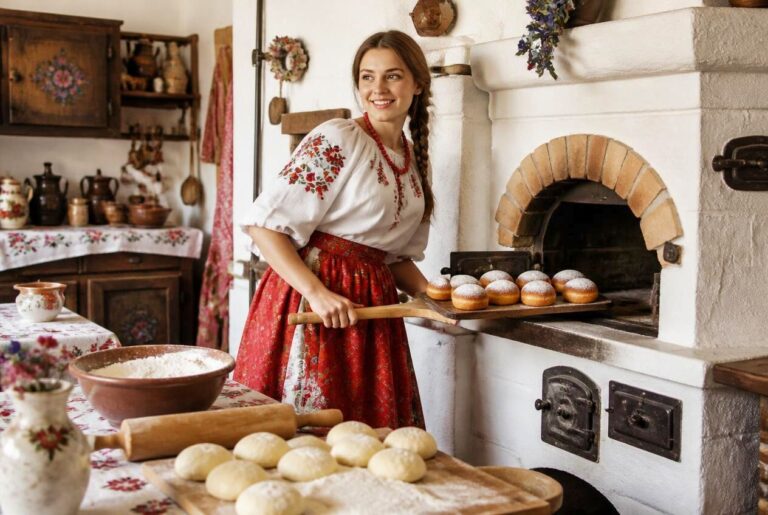
Polish Doughnuts Recipe Cooking Tips
Polish Doughnuts Recipe Cooking Tips
• Polish Doughnuts, known as Pączki, are traditional pastries celebrated for their light texture, rich flavor, and sweet fillings.
• Pączki are commonly enjoyed during festive occasions, especially before Lent.
• Use fresh yeast or properly stored active dry yeast to ensure a soft, airy dough.
• Warm milk and other liquids should be comfortably warm rather than hot to encourage yeast activity.
• Eggs, butter, and sugar contribute richness and tenderness to the dough.
• Knead the dough thoroughly until it becomes smooth and elastic.
• Allow the dough sufficient time to rise until noticeably expanded and light.
• Avoid adding excessive flour during kneading, which can produce dense doughnuts.
• Traditional fillings include rosehip preserves, fruit jams, custard, or sweet cream fillings.
• Allow fillings to cool completely before using if homemade.
• Shape the doughnuts evenly to promote consistent frying and appearance.
• Allow shaped doughnuts to proof before frying for a lighter texture.
• Maintain a steady frying temperature to ensure even cooking and prevent excessive oil absorption.
• Avoid overcrowding the frying vessel, which can lower the oil temperature.
• Fry until golden brown on both sides and fully cooked through.
• Fill the doughnuts after frying and cooling slightly if using injected fillings.
• Dust with powdered sugar or glaze for a traditional finishing touch.
• The flavor should balance soft dough, rich filling, gentle sweetness, and a light golden crust.
Polish Doughnuts Recipe Storage Tips
Polish Doughnuts Recipe Storage Tips
• Allow the doughnuts to cool completely before transferring them into storage containers.
• Store in airtight containers to help maintain softness and freshness.
• Filled doughnuts may require refrigeration depending on the type of filling used.
• Keep doughnuts tightly covered to prevent drying and staling.
• Doughnuts are generally best enjoyed the day they are made for optimal texture.
• Refrigerated doughnuts should be brought closer to room temperature before serving for improved flavor.
• Reheat briefly if desired to refresh softness and aroma.
• Avoid excessive microwave reheating, which can make doughnuts chewy.
• Store powdered sugar toppings separately if possible and refresh before serving.
• Freeze unfilled or filled doughnuts in airtight freezer-safe containers if desired.
• Wrap tightly to help prevent freezer burn and preserve quality.
• Defrost frozen doughnuts gradually at room temperature before serving.
• Refresh thawed doughnuts with a light dusting of powdered sugar if needed.
• Use clean hands or utensils when handling stored doughnuts to help maintain freshness.
• Keep away from strongly scented foods because pastries readily absorb surrounding odors.
• Label storage containers with the preparation date for easier inventory management.
• Discard doughnuts if mold, unusual odors, filling spoilage, or texture changes indicate deterioration.
• For best quality, enjoy the doughnuts while they remain soft, fresh, and flavorful.
Polish Doughnuts Recipe
Ingredients
- 1 1/2 cups milk
- 4 teaspoons active dry yeast
- 1/2 cup sugar
- 1/2 teaspoon salt
- 6 egg yolks
- 1/4 cup butter melted and cooled
- 1 tablespoon vodka
- 1 teaspoon vanilla
- 5 cups all-purpose flour
- Oil for frying
Instructions
- Rose petal jam, plum butter, or other thick jam
- Warm the milk until it is comfortably warm but not hot. Pour it into a large mixing bowl and stir in the yeast and a small amount of the sugar. Allow the mixture to stand for several minutes until it becomes foamy and active. This step confirms that the yeast is working properly.
- Add the remaining sugar, salt, egg yolks, melted butter, vodka, and vanilla to the yeast mixture. Stir until combined. Gradually add the flour, mixing until a soft dough forms. Transfer the dough to a lightly floured surface and knead until smooth and elastic. The finished dough should be soft and slightly tacky but easy to handle.
- Place the dough in a lightly greased bowl and cover it with a clean towel or plastic wrap. Allow it to rise in a warm location until doubled in size. This usually takes about 1½ to 2 hours depending on room temperature.
- Turn the risen dough onto a lightly floured surface and roll it to an even thickness. Cut rounds using a biscuit cutter or drinking glass. Place a small amount of jam in the center of half the rounds. Top with the remaining rounds and press the edges firmly to seal. Arrange the doughnuts on a parchment-lined baking sheet.
- Cover the shaped Pączki and allow them to rise again until noticeably puffy. This second rise helps create the light interior texture that traditional Polish doughnuts are known for.
- Heat the oil in a deep pot or fryer to the temperature recommended by the source recipe. Carefully lower a few doughnuts into the hot oil at a time, avoiding overcrowding. Fry until golden brown on one side, then turn and cook the other side until evenly browned. Transfer the finished doughnuts to paper towels or a cooling rack to drain excess oil.
- Allow the doughnuts to cool slightly. Dust generously with powdered sugar before serving. If desired, additional filling can be piped into the doughnuts after frying.
- Serve the Pączki fresh on the day they are made. These rich Polish doughnuts are traditionally enjoyed on Fat Thursday (Tłusty Czwartek) and are commonly filled with rose petal jam, plum preserves, or other fruit fillings.
Polish Doughnuts Recipe Frequently Asked Questions
Traditional Polish doughnuts require specific ingredients and techniques to achieve their characteristic richness and tender texture. Understanding the proper frying temperature, dough handling, and pronunciation helps ensure authentic results. Anyone interested in a Polish doughnuts recipe should pay close attention to these details.
What ingredients are required to make traditional Polish-style doughnuts at home?
I use a rich yeast dough base that includes wheat flour, eggs, milk, and butter as the essential components. The high proportion of eggs and butter distinguishes these from standard doughnuts and creates their signature tender crumb. For an authentic Polish doughnuts recipe, these ingredients are non-negotiable.
I also incorporate sugar, yeast, and a small amount of salt into the dough. Some recipes call for additional flavorings like vanilla extract or citrus zest. For filling, I typically use rose petal preserves, prune jam, raspberry jam, or custard. Choosing the right filling is a key part of any Polish doughnuts recipe.
How do you achieve a light, fluffy texture in the dough without making it dense?
I ensure the dough contains adequate fat from both butter and egg yolks, which tenderizes the gluten structure. The key is not overworking the dough once the ingredients are combined. A Polish doughnuts recipe usually emphasizes gentle handling for the best results.
I allow sufficient time for the yeast to develop, which creates air pockets throughout the dough. The dough should feel soft and slightly sticky rather than stiff. I avoid adding too much flour during kneading, as excess flour makes the finished doughnuts heavy and dense. Following these steps keeps the Polish doughnuts recipe light and airy.
What is the correct method for proofing the dough to ensure proper rise and structure?
I let the dough rise in a warm, draft-free location until it doubles in size for the first proof. This typically takes 60 to 90 minutes depending on room temperature. Every Polish doughnuts recipe relies on proper proofing for the perfect crumb.
After shaping the doughnuts into slightly flattened balls, I proof them a second time. I place them on a floured surface and cover them with a clean kitchen towel. This second rise usually requires 30 to 45 minutes until the doughnuts look puffy and hold a slight indentation when gently pressed. The Polish doughnuts recipe recommends patience during this stage.
What oil temperature is recommended for frying to prevent undercooking or excessive browning?
I maintain the oil temperature between 350°F and 365°F for optimal results. At this temperature range, the doughnuts cook through completely while developing a golden-brown exterior. Monitoring the oil temperature is essential for any Polish doughnuts recipe.
I use a thermometer to monitor the oil throughout frying since the temperature drops when doughnuts are added. If the oil is too hot, the exterior burns before the interior cooks. Too cool, and the doughnuts absorb excess oil and become greasy. The Polish doughnuts recipe always calls for careful frying.
I traditionally use lard for authentic flavor, though vegetable oil or another neutral frying oil works well. This choice affects the final taste of the Polish doughnuts recipe.
Can these doughnuts be baked instead of fried, and what adjustments are needed for best results?
I bake these doughnuts as a lighter alternative, though the texture and flavor differ from traditional fried versions. I preheat the oven to 375°F and brush the shaped doughnuts with melted butter before baking. Baking can be an option in a modern Polish doughnuts recipe.
Baked versions require about 12 to 15 minutes until golden brown. I brush them with additional melted butter immediately after removing them from the oven to add moisture and richness. The texture will be more similar to a sweet roll than a traditional fried doughnut. A Polish doughnuts recipe adapts well to baking with these adjustments.
In summary, following a Polish doughnuts recipe involves careful ingredient selection, proper proofing, and attention to frying or baking technique. Anyone seeking the authentic taste of pączki should try a Polish doughnuts recipe and enjoy the unique results. For more inspiration, you can visit this Polish doughnuts recipe resource to explore additional tips and variations.
How is the name pronounced, and what are the key differences between this style and standard yeast doughnuts?
I pronounce pączki as “pownch-kee” with pączek (punch-ek) as the singular form. The word paczki without the special character means packages in Polish. If you are searching for a Polish doughnuts recipe, knowing the correct pronunciation will help you find authentic results.
Polish doughnuts contain significantly more eggs and butter than standard American yeast doughnuts, which creates a richer, more tender texture. The dough feels denser and more brioche-like. I shape them into slightly flattened spheres rather than rings, and I fill them before or after frying instead of leaving them plain. If you want to try a Polish doughnuts recipe, be prepared for a more decadent treat than your usual yeast doughnut.
The cultural significance also sets Polish doughnuts apart, as people traditionally eat them on Fat Thursday in Poland and Fat Tuesday in the United States as a final indulgence before Lent begins. When you follow a Polish doughnuts recipe, you participate in a delicious tradition that celebrates heritage and community. For more information on the tradition, you can visit Poland’s official tourism site.
If you are looking for a Polish doughnuts recipe, you should gather ingredients like eggs, butter, flour, and yeast. Many Polish doughnuts recipe variations include fruit preserves or custard for the filling, making each bite unique. To achieve the best results, follow a Polish doughnuts recipe that provides step-by-step instructions for kneading, proofing, and frying the dough.
Trying a Polish doughnuts recipe at home can be a fun and rewarding baking project. You can experiment with different fillings, such as rosehip jam, plum butter, or vanilla custard, to find your favorite version of the Polish doughnuts recipe. Enjoying the finished product with family and friends brings the tradition of the Polish doughnuts recipe to life in your own kitchen.
Remember, a Polish doughnuts recipe requires patience, as the dough needs time to rise for the perfect texture. The effort pays off when you bite into a warm, pillowy treat made from a traditional Polish doughnuts recipe. Don’t hesitate to share your results or look for more inspiration by browsing other Polish doughnuts recipe ideas online.
Whether you are celebrating a holiday or simply craving something sweet, a Polish doughnuts recipe offers a delightful way to enjoy a classic dessert. The process of making a Polish doughnuts recipe from scratch connects you to generations of bakers who cherish this beloved treat. For your next baking adventure, let the Polish doughnuts recipe guide you to a delicious and memorable experience.

Recipes are gathered in person and written for real-world cooking conditions.
- 10 Hungarian Dessert Recipes Passed Down Through Generations - July 25, 2026
- 11 Easy English Recipes Anyone Can Make - July 25, 2026
- Hungarian Kifli Recipe - July 25, 2026