
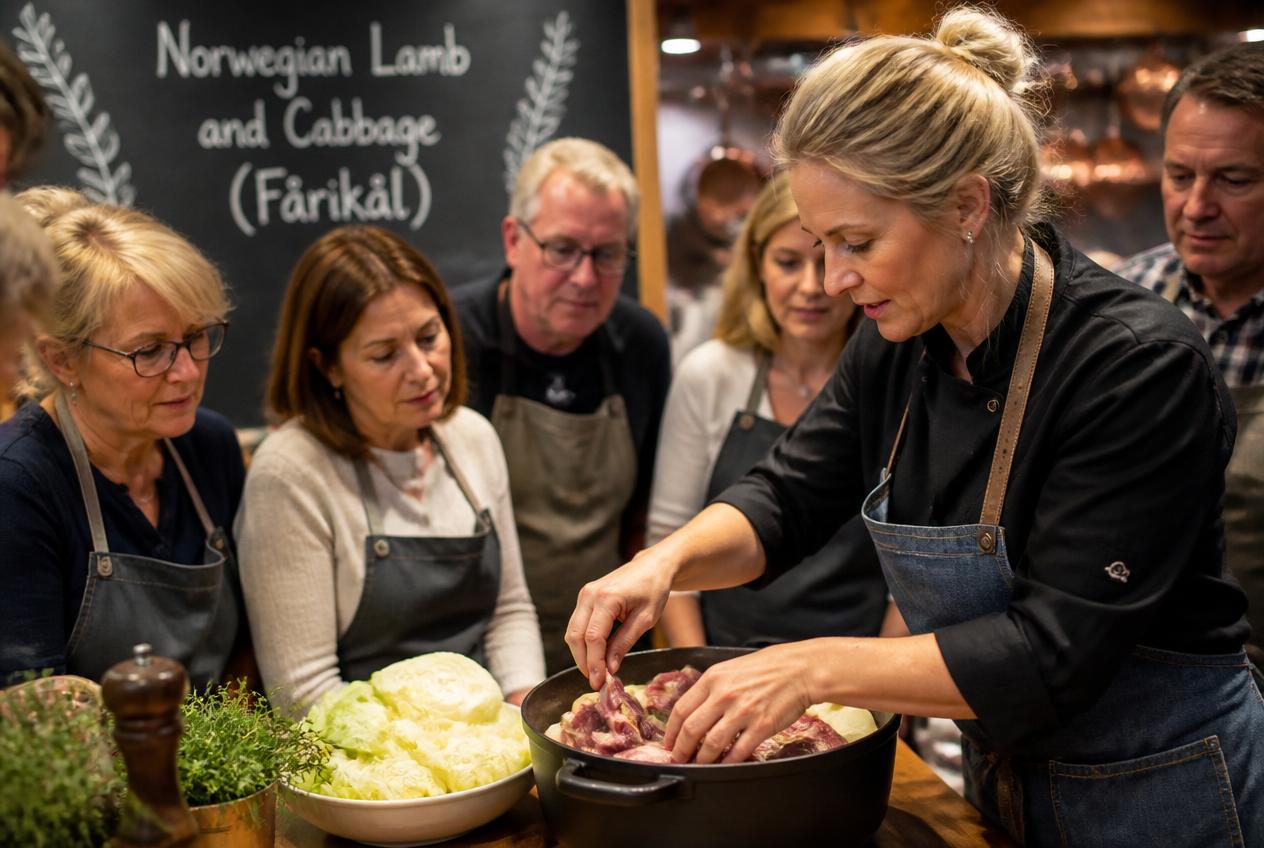
I’ll be honest with you: when I first heard about Norway’s national dish, I was skeptical. Fårikål is Norway’s national dish that comes together with just four basic ingredients—lamb or mutton, cabbage, salt, and whole black peppercorns—layered and simmered until everything’s meltingly tender. Norwegians love it so much, they even gave it its own holiday on the last Thursday in September.
What gets me about Norwegian Lamb and Cabbage (Farikal) is how something so stripped down can taste so comforting. You basically toss meat and cabbage in a pot, walk away, and somehow end up with a meal that feels like a hug. The lamb falls apart, the cabbage turns silky, and the broth? It’s so rich you’ll start questioning why you ever complicated weeknight dinners.
Whether you’re craving a cozy fall meal or just want to flex some Viking kitchen skills, Norwegian Lamb and Cabbage (Farikal) delivers. I’ve made it more times than I can count, and I’m still not tired of it.
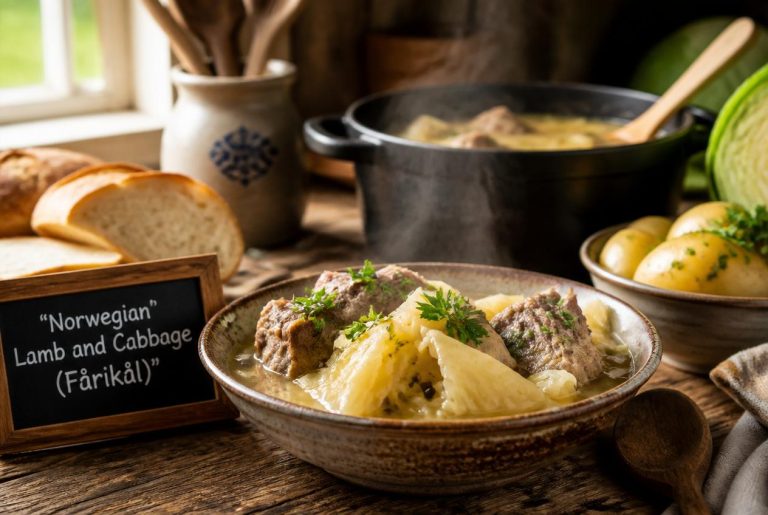
Norwegian Lamb and Cabbage (Fårikål)
Key Takeaways
- Norwegian Lamb and Cabbage (Farikal) keeps things simple—minimal ingredients, barely any effort, max flavor thanks to slow simmering.
- You can tweak the classic recipe and still keep the soul of the dish intact.
- If you store it right, leftovers taste even better the next day.
Declassifying Farikal: History and Context
Honestly, when someone told me Norway’s national dish was just lamb and cabbage, I thought it was a joke. But Norwegian Lamb and Cabbage (Farikal) earned its spot for a reason.
Back in 1972, a radio show called Nitimen asked Norwegians to vote for a national dish. Farikal won, hands down. People wanted their meat and cabbage.
So what’s the big deal about this stew? Here’s the rundown:
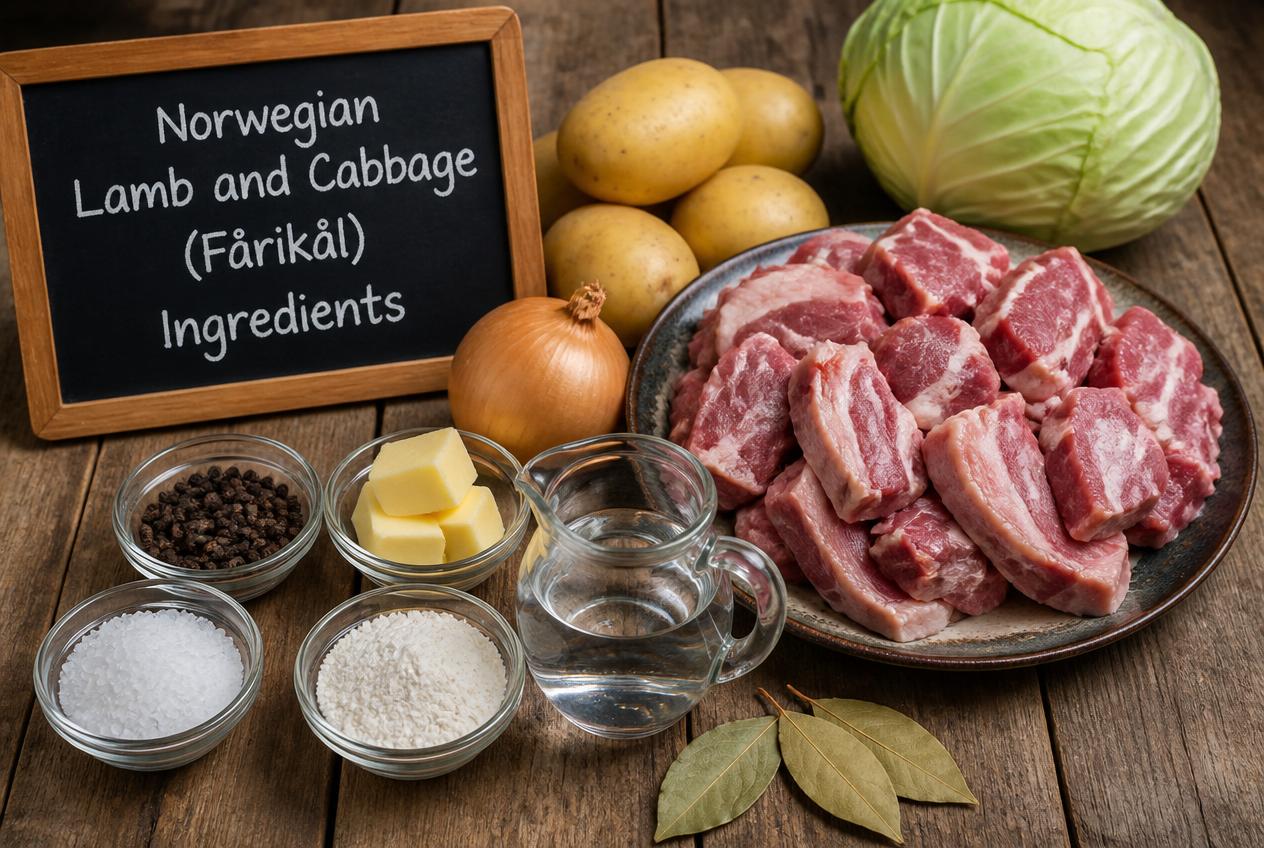
- Simple ingredients: Mutton or lamb (with bone), cabbage, whole black peppercorns, salt, water
- Long, gentle simmer: Several hours until everything’s tender
- Classic sides: Boiled potatoes with the skins left on
Norwegian Lamb and Cabbage (Farikal) didn’t just win once. In a 2014 poll, it snagged 45% of the votes and kept its title.
The ingredients themselves are pure Norway. Sheep have been a part of Norwegian farms for ages. If you compare a leg of lamb to a map of Norway, there’s a weird resemblance. Cabbage has been a staple crop here since the Old Norse days.
Norwegian Lamb and Cabbage (Farikal) comes out the most when autumn hits and the air turns cold. That’s when Norwegian cooks start layering lamb and cabbage into pots. Whole peppercorns bring just the right amount of bite—enough to keep things interesting, never overpowering.
Surviving Norwegian Cooking: Pro Tips
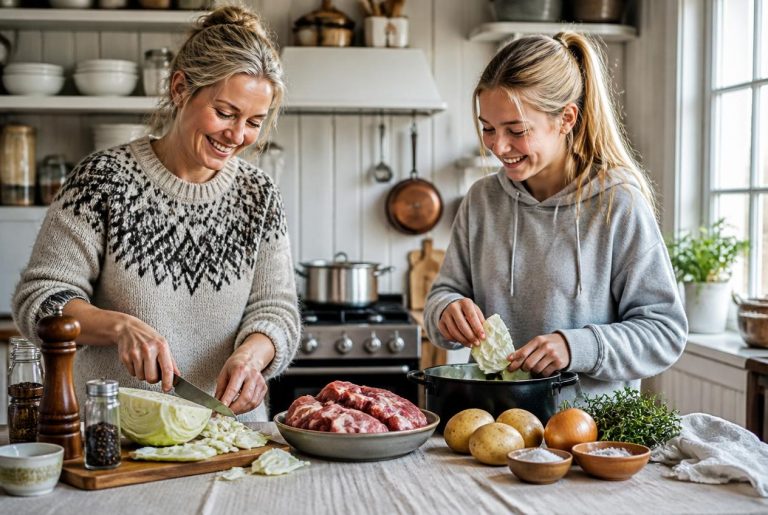
Making Norwegian Lamb and Cabbage (Farikal) doesn’t require fancy moves. Trust me, if you can layer and simmer, you’re set. The beauty of it is how hands-off it is.
If you ask me, use whole black peppercorns—not ground. They hold up through hours of cooking and infuse the broth without turning it into a pepper explosion.
I like to mix up the lamb cuts. Combining stew lamb and shanks gives you a nice variety in texture, and the shanks make the broth richer.
Here’s what I wish I knew sooner:
- Don’t keep lifting the lid—just let it do its thing
- Make it a day ahead—it’s even better the next day
- Go for a heavy pot—it spreads the heat and keeps things from burning
- Cut the cabbage thick—thin slices just disappear
I also learned that you shouldn’t go wild with the salt. Start light, taste later. The lamb brings a lot of flavor as it cooks, so you don’t need to overdo the seasoning.
The best part? Norwegian Lamb and Cabbage (Farikal) is almost impossible to mess up. I’ve overcooked it, used the wrong cabbage, and it still came out tasty every time.

Norwegian Lamb and Cabbage (Fårikål)
Twists on Tradition: Creative Farikal Variations
Some purists might get dramatic, but Norwegian Lamb and Cabbage (Farikal) is so forgiving you can have a little fun with it. I’ve played around with a few twists, and the dish still feels totally Norwegian.
Sometimes I’ll toss in root vegetables like carrots, parsnips, or potatoes to bulk it up. A bay leaf or two adds an earthy note—just don’t go overboard or you’ll upset the grandmas.
Swapping water for beer makes the broth richer and maltier, which I love. Dark beer especially gives the lamb a deeper flavor. I’ve also tried a splash of apple cider—adds a light sweetness that works with the cabbage.
Other variations I’ve dabbled with:
- Herbs: Fresh thyme, rosemary, or dill
- Spices: Juniper berries, caraway, or mustard seeds
- Liquids: Chicken stock, veggie broth, or hard cider
- Extra veggies: Leeks, turnips, celery root
My most rebellious move? Browning the lamb in butter first. It’s not traditional, but the flavor is wild. Some modern recipes are cool with this kind of thing.
Even with tweaks, Norwegian Lamb and Cabbage (Farikal) should still taste like a Norwegian autumn—not like you dumped in the whole spice rack.
Storing Farikal so Your Vikings Don’t Eat It All at Once
Norwegian Lamb and Cabbage (Farikal) stores like a dream, so you can actually hide some for later (if you’re lucky). The trick is sneaking it into the fridge before anyone else notices.
Honestly, this dish is even better on day two. The flavors deepen, the lamb gets even softer, and the broth thickens up in the best way.
Refrigerator Storage
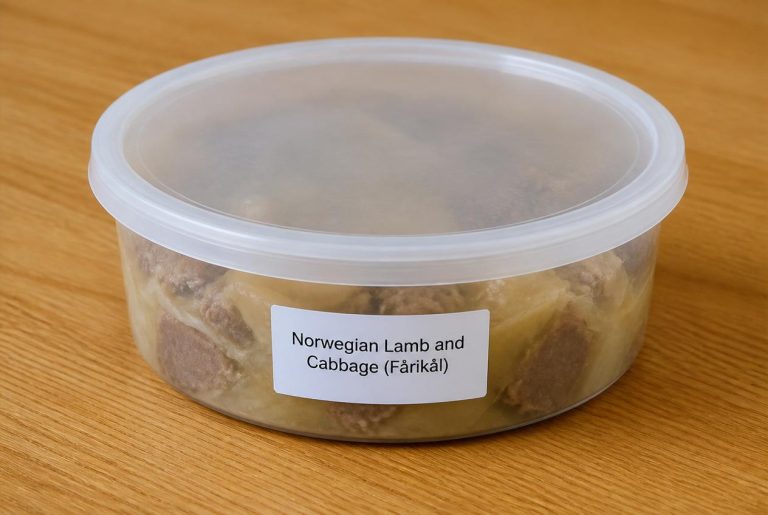
I let Norwegian Lamb and Cabbage (Farikal) cool to room temp, then move it into an airtight container. It keeps for 3-4 days, easy.
The broth thickens as it chills, which is totally normal. When you reheat, just add a splash of water if you need to loosen it up.
Freezer Storage
Want to stash some away? Freeze Norwegian Lamb and Cabbage (Farikal) in airtight containers for up to 3 months. I like to portion it out for quick lunches.
Leave a little space at the top—the liquid will expand in the freezer.
Reheating Tips
I always reheat Norwegian Lamb and Cabbage (Farikal) slowly on the stovetop. Low and slow keeps the lamb tender. If you’re in a hurry, microwave works, but it’s not quite the same.
Storage Timeline at a Glance
| Location | Duration | Best For |
|---|---|---|
| Counter | 2 hours max | Cooling down |
| Refrigerator | 3-4 days | Quick meals |
| Freezer | Up to 3 months | Future cravings |
Honestly, the hardest part is not eating the whole pot in one go.
Norwegian Lamb and Cabbage (Fårikål) Cooking Tips
Norwegian Lamb and Cabbage (Farikal)
Ingredients
- 6 lb lamb meat
- 6 lb cabbage
- 8 tsp whole black peppercorns
- 4 tsp salt
- 3 cups water
Instructions
- Begin by rinsing the cabbage thoroughly under cold running water to remove any dirt or debris hidden between the leaves. Drain well and cut the cabbage into wedges approximately 2–4 centimeters thick. Keeping the wedges fairly large helps them maintain their shape during the long cooking process while still becoming tender and flavorful. If needed, trim away any damaged outer leaves, but leave enough of the core attached to help hold each wedge together as it cooks.
- Choose a large, heavy-bottomed pot or Dutch oven that can comfortably hold all of the cabbage and meat. Begin by placing the meat in the bottom of the pot with the fatty side facing downward. As the stew cooks, the fat will slowly render and add richness to the broth. Add a layer of cabbage wedges over the meat, then season lightly with salt and pepper. Continue alternating layers of meat and cabbage, sprinkling salt and pepper between each layer to ensure the flavors are evenly distributed throughout the stew.
- If you prefer not to have loose peppercorns in the finished dish, place them in a small spice bag, tea infuser, or other suitable container before adding them to the pot. For a slightly thicker cooking liquid, some cooks like to sprinkle 2–4 tablespoons of flour evenly between the layers. As the stew simmers, the flour blends with the cooking juices to create a light, flavorful sauce.
- Pour enough water into the pot to partially cover the ingredients without completely submerging them. Place the pot over medium-high heat and bring everything to a gentle boil. Once boiling, reduce the heat to low so the liquid maintains a slow, steady simmer. Cover the pot with a lid and allow the stew to cook for approximately 2 hours.
- During this time, the cabbage will soften and absorb the savory flavors of the meat, while the meat itself becomes increasingly tender. The rendered fat, seasonings, and natural juices from the cabbage will combine to create a rich broth. Check the pot occasionally to ensure there is still enough liquid and add a small amount of water if necessary. The stew is ready when the meat is fork-tender and can be easily pulled apart with minimal effort.
- Carefully transfer portions of the tender meat and cabbage to serving plates or shallow bowls, spooning some of the flavorful cooking liquid over the top. Serve the stew piping hot alongside boiled potatoes, which are ideal for soaking up the savory broth. For a traditional Scandinavian accompaniment, offer crispbread on the side for added texture or a spoonful of lingonberry jam, whose sweet-tart flavor provides a delicious contrast to the rich meat and cabbage. The simple ingredients and slow cooking create a comforting, hearty meal that is even better when enjoyed fresh from the pot.
Norwegian Lamb and Cabbage (Farikal) Frequently Asked Questions
The right lamb cut and a gentle simmer make all the difference between meat that falls apart and tough chunks you’ll regret. If you nail the peppercorns, potatoes, and reheating, your Norwegian Lamb and Cabbage (Farikal) will taste like something worth celebrating.
What cut of lamb makes the stew taste like a cozy Norwegian hug instead of a chewy science experiment?
I always grab bone-in cuts like neck, shoulder, or shank for Norwegian Lamb and Cabbage (Farikal). These have enough fat and bone to break down and flavor the stew.
The bones boost the broth, and the fat keeps everything juicy. Skip lean cuts—they dry out fast, and nobody wants that.
Do I really need whole peppercorns, or can I fake it without the stew calling the authorities?
Whole black peppercorns are a must for Norwegian Lamb and Cabbage (Farikal). They slowly release flavor as everything simmers together.
Ground pepper just makes the broth bitter. I toss in about 10-15 peppercorns per layer of meat and cabbage. It’s the perfect amount of kick.
How long should I simmer it so the cabbage turns tender and not into a sad pile of surrender?
I simmer Norwegian Lamb and Cabbage (Farikal) for 1.5 to 2 hours on low. The lamb turns buttery soft and the cabbage melts into the broth.
You’ll know it’s done when the meat slides right off the bone. The cabbage should be soft but not a soggy mess—just right.
Can I make it in a slow cooker without the lamb staging a flavor walkout?
Absolutely, I’ve tossed together Norwegian Lamb and Cabbage (Farikal) in a slow cooker and, trust me, the lamb held onto its flavor. Just layer everything as you would in a regular pot—no need for any fancy tricks.
Set the slow cooker on low for 6-8 hours, or crank it to high for about 4-5 hours. Honestly, the slow cooker nails that gentle simmer, and I don’t have to hover over the stove wondering if I’m about to scorch dinner. Norwegian Lamb and Cabbage (Farikal) turns out just as cozy and rich, maybe even better, since I can just walk away and let it do its thing.
What are the best potatoes to serve with it so they don’t just sit there like bland sidekicks?
I usually boil up some waxy potatoes—think Yukon Gold or red potatoes. Plain boiled potatoes are the traditional side for Norwegian Lamb and Cabbage (Farikal). They’re not flashy, but they work.
Skip the mashed or roasted potatoes. Plain boiled spuds soak up all that broth from Norwegian Lamb and Cabbage (Farikal) and become these little flavor bombs. Honestly, I wouldn’t bother with anything else—sometimes simple just wins. Norwegian Lamb and Cabbage (Farikal) practically demands it. If you’re looking for tradition and taste, Norwegian Lamb and Cabbage (Farikal) with those basic boiled potatoes is the way to go. I mean, who needs a sidekick trying to steal the spotlight?
How do I store and reheat leftovers so it tastes even better tomorrow (like stew’s revenge plan)?
When I’ve got leftover Norwegian Lamb and Cabbage (Farikal), I just toss it in an airtight container and stash it in the fridge—four days is usually my max. Honestly, Norwegian Lamb and Cabbage (Farikal) seems to get even tastier after a night in the fridge. All those flavors cozy up together and something just clicks.
For reheating, I usually go with the stovetop. I warm Norwegian Lamb and Cabbage (Farikal) slowly over low heat, and if it looks a little thick, I splash in some water. Sure, you can use the microwave if you’re in a rush, but the stovetop keeps the meat in Norwegian Lamb and Cabbage (Farikal) nice and tender. Nobody wants rubbery lamb, right? Norwegian Lamb and Cabbage (Farikal) really shines when you give it a little extra love the next day. If you ask me, leftovers are half the fun with Norwegian Lamb and Cabbage (Farikal).

Recipes are gathered in person and written for real-world cooking conditions.
- 10 Hungarian Dessert Recipes Passed Down Through Generations - July 25, 2026
- 11 Easy English Recipes Anyone Can Make - July 25, 2026
- Hungarian Kifli Recipe - July 25, 2026