
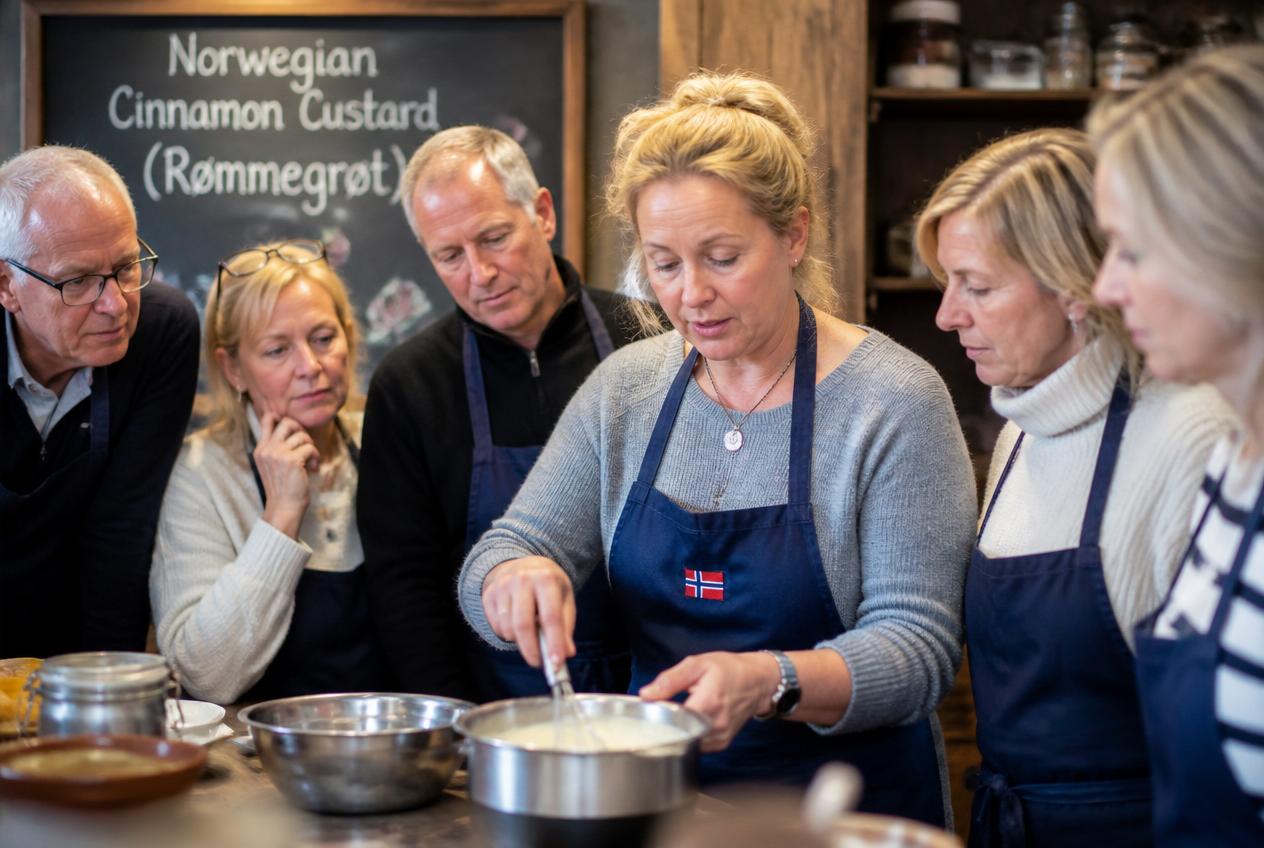
Alright, confession time: the first time I tasted Norwegian Cinnamon Custard (Rommegrot), I genuinely wondered if someone was pulling my leg. How could a simple-looking porridge pack so much buttery, creamy punch? Norwegian Cinnamon Custard (Rommegrot) is a traditional Norwegian cream porridge made with sour cream, milk, and flour, then finished with melted butter, cinnamon, and sugar. This creamy comfort food has warmed Norwegians for centuries. Once you dig in, you’ll see why families keep their Norwegian Cinnamon Custard (Rommegrot) recipes under lock and key.
The best part? Norwegian Cinnamon Custard (Rommegrot) fools people into thinking you spent all day sweating over the stove, when really, you just stir a pot and let the magic happen. As it cooks, the warm porridge releases its own butter—honestly, it feels like a neat little chemistry trick.
Serve Norwegian Cinnamon Custard (Rommegrot) for breakfast, dessert, or just as a winter treat. I’ve watched full-grown adults jostle for the last spoonful at family gatherings. Let me walk you through how to make this traditional Scandinavian recipe so you can start your own Norwegian Cinnamon Custard (Rommegrot) feuds at home.
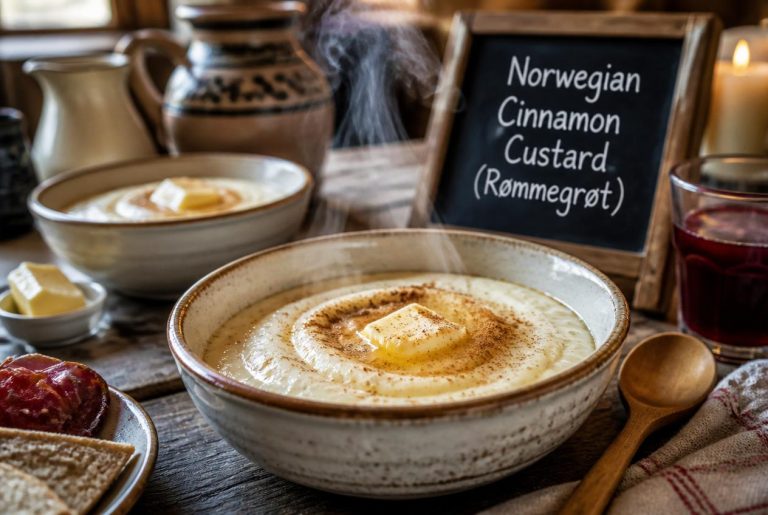
Norwegian Cinnamon Custard (Rømmegrøt)
Key Takeaways
- Norwegian Cinnamon Custard (Rommegrot) is a rich Norwegian porridge that makes its own butter as it cooks
- You can switch up the toppings and try variations beyond the classic cinnamon and sugar
- Store Norwegian Cinnamon Custard (Rommegrot) properly, and you’ll enjoy leftovers for days
Rommegrot Origins: The Ancient Art Of Sweet Suspense
Norwegian farm culture basically dared people to turn extra dairy into something as over-the-top as Norwegian Cinnamon Custard (Rommegrot). The name says it all—“rømme” means sour cream, “grøt” means porridge. Simple, but the flavor is anything but.
This wasn’t some everyday breakfast. Norwegian Cinnamon Custard (Rommegrot) was reserved for holidays and special celebrations, not just any old Tuesday.
I like to imagine it as Norway’s way of making people wait for the good stuff. You had to survive a long winter or make it to Christmas before you got a bowl of Norwegian Cinnamon Custard (Rommegrot). That kind of anticipation made it taste even better.
Traditionally, people used Norwegian sour cream with 37% fat—though there’s a lighter 20% version for the fun-averse. Mix sour cream, whole milk, wheat flour, butter, and salt, and you’ll get something that’s honestly like edible clouds.
What makes it special:
- Loaded with rich, real dairy
- Saved for big occasions
- Topped with cinnamon, sugar, and melted butter
- Sometimes served with raspberry juice
Patience is key. You simmer and stir Norwegian Cinnamon Custard (Rommegrot) until the butter starts to separate, and it’s so worth the wait.
Top-Secret Custard Tips (Don’t Tell Grandma!)
I’ve picked up a few sneaky tricks for perfect Norwegian Cinnamon Custard (Rommegrot) over the years—tricks that would probably get me a stern look from a Norwegian grandma.
Use a whisk instead of a wooden spoon. Old-school cooks swear by their wooden spoons, but I say a whisk beats lumps every time. Just keep whisking like your sanity depends on it.
Here’s my go-to list:
- Room temperature ingredients—Cold milk will mess with your custard
- Heavy-bottomed pot—Thin pots burn the bottom way too fast
- Patience—Cranking up the heat won’t speed things up (I’ve tried, it just burns)
- Sift your flour—Stop clumps before they start
I always stick with medium-low heat for Norwegian Cinnamon Custard (Rommegrot). The first time I rushed, the milk scorched and the whole kitchen smelled like regret.
Don’t leave the pot alone. I once checked my phone for a minute—came back to a scorched mess. Lesson learned.
If I add the flour slowly and whisk constantly, the texture turns out silky. Dump it all in at once? You’ll be chasing flour blobs for ages. Not fun.

Norwegian Cinnamon Custard (Rømmegrøt)
Plot Twists: Norwegian Cinnamon Custard Variations
Norwegian Cinnamon Custard (Rommegrot) doesn’t have to stay in its creamy lane. Sometimes I’ll add fresh berries or diced apples for a fruity bite that cuts the richness. It’s not traditional, but it’s really good.
Spice Swaps
I like mixing things up:
- Swap cinnamon for cardamom and honey—it’s got a floral vibe
- Add a splash of vanilla extract to the milk
- Stir in vanilla bean seeds if you’re feeling fancy
Norwegian-Inspired Mashups
Sometimes I’ll crumble Norwegian brown cheese (brunost) on top for a sweet-salty punch. The caramel flavor with the creamy Norwegian Cinnamon Custard (Rommegrot) is wild—in a good way.
For holidays, I’ll top Norwegian Cinnamon Custard (Rommegrot) with cloudberry jam instead of cinnamon-sugar. It looks fancy, but takes zero extra effort.
Seasonal Fun
I’ve borrowed from Norwegian cinnamon buns too—swirling in cinnamon-sugar butter before serving. You get little sweet pockets in every bite. It’s kind of addictive.
None of these twists require complicated steps or weird ingredients. I just see what’s in the kitchen and go for it. Sometimes I serve Norwegian Cinnamon Custard (Rommegrot) with a drizzle of butter and whatever toppings sound good that day. It’s hard to mess up, honestly.
Stashing Your Spoonfuls: Storage Tricks That Work
I figured out pretty quickly that Norwegian Cinnamon Custard (Rommegrot) won’t last if you leave it out. It’s not immortal, sadly.
The silver lining: Norwegian Cinnamon Custard (Rommegrot) keeps well in the fridge. I scoop leftovers into an airtight container once it cools. It stays good for three or four days—plenty of time to sneak a spoonful or two.
Here’s what I do:
- Let it cool to room temp
- Use a tight-lid container
- Press plastic wrap right on the surface to stop a skin from forming
- Label it with the date (because I’ve played food roulette before and lost)
When I want more Norwegian Cinnamon Custard (Rommegrot), I reheat it on the stove over low heat with a splash of milk, stirring the whole time. The microwave works, but I use short bursts and stir often—it gets clumpy if you rush.
I’ve tried freezing Norwegian Cinnamon Custard (Rommegrot), but the texture gets a bit weird and grainy when thawed. If you’re not picky, it’s fine, but I’d rather just make a smaller batch and skip the freezer drama.
Pro tip: Stash any leftover butter and cinnamon sugar separately. They’ll stay fresher, and you can top your reheated Norwegian Cinnamon Custard (Rommegrot) with stuff that actually looks nice.

Norwegian Cinnamon Custard (Rømmegrøt) Cooking Tips
Norwegian Cinnamon Custard (Rømmegrøt) Recipe Cooking Tips
• Rømmegrøt is known for its rich creamy texture, buttery flavor, and warm cinnamon topping.
• Full-fat sour cream is essential for achieving the traditional richness and smooth consistency.
• The dish is traditionally made by gently heating sour cream until natural butterfat separates.
• Flour is added gradually to help thicken the porridge and create its signature texture.
• Stir continuously to prevent lumps from forming.
• Whole milk is often added slowly to achieve a smooth, creamy consistency.
• A pinch of salt balances the richness and enhances the flavor.
• Low, gentle heat helps maintain a silky texture without scorching.
• The porridge should be thick and creamy but still spoonable.
• Melted butter is traditionally served on top or in a small well in the center.
• Cinnamon and sugar are classic toppings that complement the rich dairy flavor.
• Some families serve Rømmegrøt alongside cured meats for a sweet-and-savory contrast.
• Serve warm for the most authentic flavor and texture.
• The flavor should balance rich creaminess, buttery notes, mild tanginess, and sweet cinnamon.
• Rømmegrøt is especially popular during holidays, festivals, and Norwegian cultural celebrations.
Norwegian Cinnamon Custard (Rømmegrøt) Storage TIps
Norwegian Cinnamon Custard (Rømmegrøt) Storage Tips
• Allow the porridge to cool before transferring it into storage containers.
• Store refrigerated in airtight containers to preserve freshness.
• Refrigeration will cause the porridge to thicken considerably, which is normal.
• Add a small amount of milk when reheating to restore a creamy consistency.
• Reheat gently over low heat while stirring frequently.
• Avoid high heat because dairy-based porridges can scorch or separate.
• Cinnamon and dairy flavors often deepen after overnight refrigeration.
• Portioning before storage makes reheating easier later.
• Freezing is generally not recommended because the texture may become grainy after thawing.
• Use clean utensils when handling leftovers to help maintain freshness.
• Dairy-based dishes are generally best enjoyed within a short refrigerated storage period for ideal quality and safety.
• Keep away from strongly scented foods because cream-based dishes absorb odors easily.
• Slight separation during storage is normal and can usually be stirred back together during reheating.
• Discard leftovers if the porridge develops sour spoilage odors, curdling, mold, or unusual texture changes.
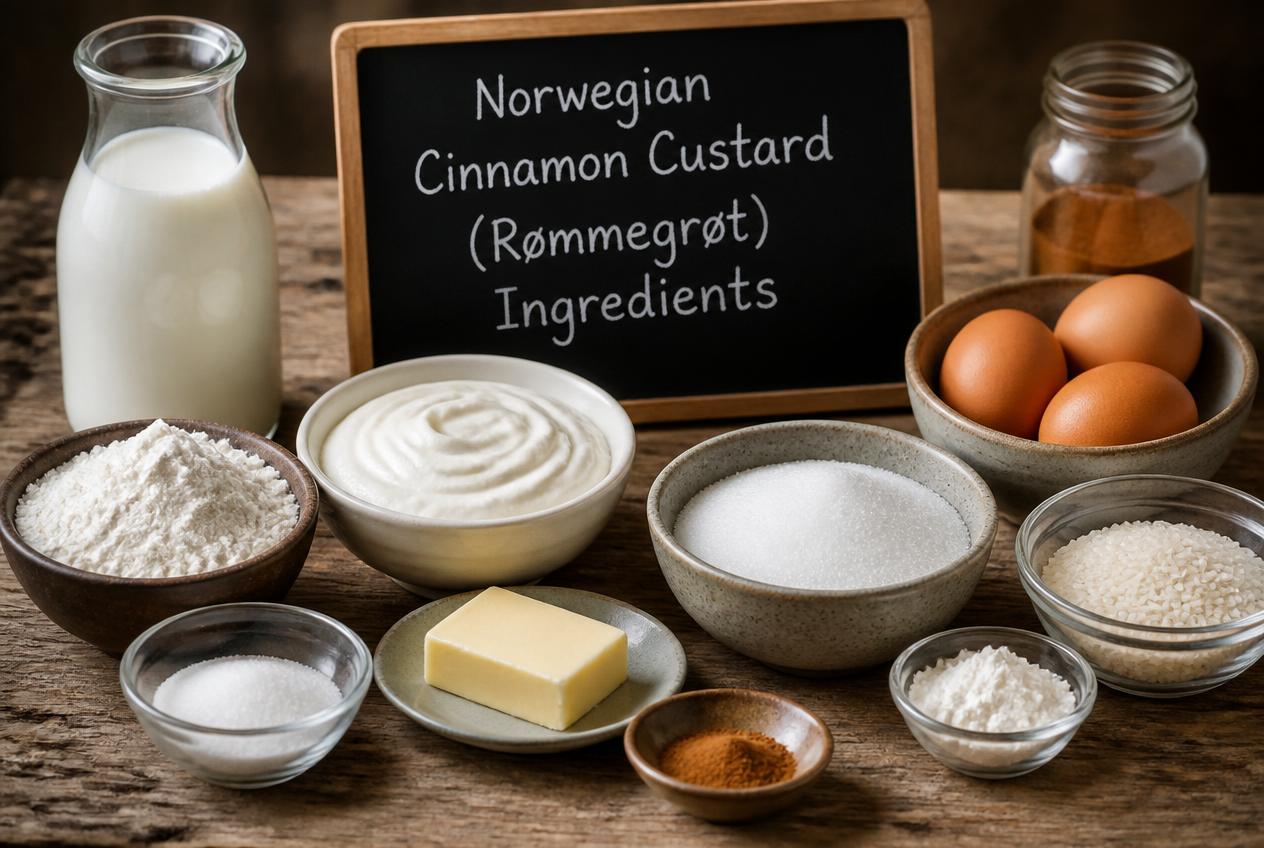
Norwegian Cinnamon Custard (Rommegrot)
Ingredients
- 1 quart whole milk.
- ¾ cup all-purpose flour.
- ¼ cup granulated sugar.
- ⅛ teaspoon Morton kosher salt.
- ½ cup salted butter plus more for serving.
- Cinnamon-sugar.
Instructions
- Pour the milk into a heavy-bottomed saucepan and place it over medium heat. Warm the milk gradually, stirring constantly with a whisk or wooden spoon to prevent it from scorching on the bottom of the pan. Continue heating until the milk reaches approximately 195°F (90°C), just below a full boil. You may notice small bubbles forming around the edges and steam rising steadily from the surface. Taking your time during this step helps develop a smooth, creamy texture and prevents any burnt flavors from affecting the finished porridge.
- While the milk is heating, combine the flour, sugar, and salt in a separate bowl. Whisk the dry ingredients together thoroughly until evenly blended. This step helps distribute the sugar and salt throughout the flour, ensuring a smoother consistency when the mixture is incorporated into the milk. Breaking up any lumps now will also make it easier to achieve a silky final texture.
- In a small saucepan or skillet, melt the butter over medium heat. Allow it to melt slowly, stirring occasionally if needed. The butter should become completely liquid but should not brown. Keeping the butter at a gentle temperature ensures it blends smoothly with the flour mixture and contributes a rich flavor to the porridge.
- Gradually add the flour mixture to the melted butter, stirring continuously until a thick, smooth paste forms. This mixture should resemble a soft roux. Make sure there are no dry pockets of flour remaining. Combining the flour with butter first helps prevent lumps from forming later when it is added to the hot milk and creates a smoother, creamier finished dish.
- Carefully stir the flour-butter paste into the hot milk, whisking constantly to ensure it disperses evenly. Continue stirring as the mixture returns to a boil. As it heats, the flour will begin to thicken the milk, transforming it into a smooth, creamy porridge. Once the mixture reaches a gentle boil, reduce the heat to low and continue cooking for about 5 minutes, stirring frequently to prevent sticking. The porridge should become noticeably thicker while remaining smooth and spoonable. If it becomes too thick for your preference, a small splash of warm milk can be stirred in to loosen the consistency.
- Ladle the hot porridge into serving bowls while still warm and creamy. Drizzle a little melted butter over each serving, allowing it to pool slightly on top. Finish with a generous sprinkle of cinnamon-sugar, which adds warmth, sweetness, and a traditional finishing touch. Serve immediately while the porridge is hot for the best flavor and texture. The rich butter and fragrant cinnamon-sugar create a comforting, classic topping that perfectly complements the creamy porridge beneath.
Norwegian Cinnamon Custard (Rommegrot) Frequently Asked Questions
Norwegian Cinnamon Custard (Rommegrot) brings up a lot of questions—like how to say it, what’s in it, and whether it’s a breakfast, dessert, or something in between. It uses basic dairy staples, tastes super creamy and rich, and stands apart from regular porridges in both texture and prep.
How do you pronounce rømmegrøt without sounding like you’re summoning a fjord spirit?
I say “RUM-meh-gruit,” rolling the R if I feel dramatic. The ø is kind of like the “u” in “hurt.” I’ve butchered it plenty of times, but my Norwegian friends get the idea. Honestly, if you try, you’re already winning.
Just imagine gargling while saying “room,” then add “grit” at the end. Even if you sound like you’re casting spells, people know what you mean when you hand them a bowl of Norwegian Cinnamon Custard (Rommegrot).
What ingredients do I need to make this creamy Norwegian porridge, and which ones are likely already hiding in my fridge?
You’ll need heavy cream, whole milk, all-purpose flour, butter, and salt for the base. Odds are you’ve got milk, flour, butter, and salt lurking in your kitchen already.
I usually have to pick up heavy cream. For the topping, grab cinnamon and sugar—most spice cabinets have those anyway. Norwegian Cinnamon Custard (Rommegrot) doesn’t ask for much, ingredient-wise.
What does this dish taste like—dessert, breakfast, or a delicious identity crisis?
It’s rich, creamy, and just sweet enough with warm cinnamon. Norwegian Cinnamon Custard (Rommegrot) is definitely having an identity crisis, and I’m here for it.
I’ll eat Norwegian Cinnamon Custard (Rommegrot) for breakfast when I want something cozy and filling, or as dessert when I need a comforting finish to dinner. The texture is smooth and pudding-like, with a buttery flavor that makes me wonder why I ever bother with plain oatmeal.
What’s the most traditional way to make it, and how do I avoid angering someone’s Norwegian grandma?
The traditional method for Norwegian Cinnamon Custard (Rommegrot) starts by cooking flour in melted butter before you slowly whisk in warm milk. You want to keep going until it turns thick and creamy. Personally, I heat the cream first until the fat floats up, then I stir in flour and make a roux. There’s a bit of an art to it—nothing too fussy, but you’ll know when it feels right.
Adding the liquid gradually and whisking the whole time makes all the difference. For serving, I let some melted butter pool on top, then I go heavy on the cinnamon and sugar. If you skip that butter pool, well, expect a Norwegian grandma to give you the side-eye. Norwegian Cinnamon Custard (Rommegrot) just isn’t the same without it. I mean, why risk it?
Can I make it in the microwave, or is that a one-way ticket to culinary exile?
Honestly, I wouldn’t risk making Norwegian Cinnamon Custard (Rommegrot) in the microwave. The stovetop lets me control the texture and keeps things from turning into a lumpy mess. Sure, it takes a little patience, but that’s part of the charm, right?
Norwegian Cinnamon Custard (Rommegrot) really needs constant stirring and a careful hand with the heat to get that silky, smooth texture. If you try microwaving it, chances are you’ll end up with uneven, grainy spots. No amount of whisking will save it after that. I just stick with my saucepan—it’s worth the extra effort for real Norwegian Cinnamon Custard (Rommegrot).
Norwegian Cinnamon Custard (Rommegrot) might seem simple, but there’s a reason people keep coming back to the old-school way. The flavor, the texture, the ritual—it all just works. If you want to impress, or just avoid a stern lecture from someone’s grandma, make Norwegian Cinnamon Custard (Rommegrot) the classic way. Trust me, it’s worth it.
What’s the difference between this and other Norwegian cream-based puddings or porridges?
Norwegian Cinnamon Custard (Rommegrot) is flour-thickened, not grain-based like rice pudding. Norwegian rice porridge (risgrøt) uses rice cooked in milk until it turns tender and creamy. With Norwegian Cinnamon Custard (Rommegrot), I start by making a roux from butter and flour, which is honestly a fun twist on the usual pudding routine.
The texture of Norwegian Cinnamon Custard (Rommegrot) comes out smoother and more pudding-like, not at all like risgrøt’s grainy vibe. In my experience, Norwegian Cinnamon Custard (Rommegrot) tastes way richer and more buttery. Risgrøt, on the other hand, just feels lighter and a bit more delicate, probably because of those rice grains. If you’re craving something truly decadent, Norwegian Cinnamon Custard (Rommegrot) is the one to try. I mean, who can resist that creamy, custardy goodness?

Recipes are gathered in person and written for real-world cooking conditions.
- 10 Hungarian Dessert Recipes Passed Down Through Generations - July 25, 2026
- 11 Easy English Recipes Anyone Can Make - July 25, 2026
- Hungarian Kifli Recipe - July 25, 2026